

Ted Chapin was chosen by the Rodgers and Hammerstein families to run their office. He expanded it into the Rodgers & Hammerstein Organization, which is responsible for management of the copyrights created by Richard Rodgers and/or Oscar Hammerstein II... Read More
From the show: The Producer's Perspective Podcast with Ken Davenport
Featured Shows
About
Ted Chapin was chosen by the Rodgers and Hammerstein families to run their office. He expanded it into the Rodgers & Hammerstein Organization, which is responsible for management of the copyrights created by Richard Rodgers and/or Oscar Hammerstein II. On his watch, there have been new major productions of their musicals on Broadway (seven Tony Awards for Best Revival so far), in London, and around the world. In addition, he brought in the representation of other extraordinary musical artists including Irving Berlin. In addition to revivals, he has encouraged new Broadway productions, among them Irving Berlin’s White Christmas, State Fair, A Grand Night for Singing, and Holiday Inn as well as major television productions such as The Sound of Music Live! on NBC.
I was thrilled when Ted accepted my invite to appear on my podcast, because I knew he’d drop some wisdom bombs for all of us to learn from, and boy did he. Tune in and listen to Ted talk about all things theater, R&H and more, including . . .
- His secret trick to pronouncing Hammerstein the correct way (and hear me get it right, then wrong, then right again . . . oh boy).
- What happens when the copyrights on the R&H classics expire?
- Would Oklahoma! be a hit if it were produced today?
- What the @#&$ is the Tony Administration Committee and what does it do anyway?
- How he decides what can be done and can’t be done in new R&H productions (and hear how he almost had to shut one down – and why it was a tougher decision than you’d think).
Keep up with me: @KenDavenportBway
Transcript
This transcript was automatically generated and might contain errors.
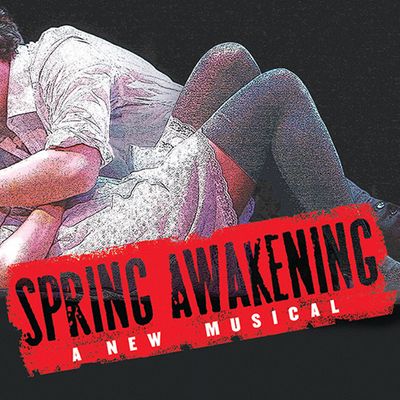
[0:09] Ken Davenport: Hey everybody, Ken Davenport here. Listen, as of today, the day of the release of this podcast, there are only 88 performances of Spring Awakening left. So you've got only 88. Get that 88 more chances to see it, and then it is poof, gone. So go see it. If you are listening to this on Tuesday, then there are only 87 chances left. And Wednesday, 86, you get the idea. If you're listening to this a year from now, you're screwed. So go see Spring Awakening today. On with the podcast.
[0:41] Ken Davenport: Hello, everybody. Welcome back to the Producers Perspective Podcast. I'm Ken Davenport. Thank you so much for listening. You know, I've been lucky enough to have so many different professions and industry leaders on the podcast. We've had directors, designers, producers, and today we have a president. We have someone who sits in one of the most unique chairs in the business and who guards some of the greatest treasures the musical theater has to offer. It's my honor to have on the podcast today the president and executive director of the Rodgers and Hammerstein Organization, Mr. Ted Chapin. Welcome, Ted.
[0:46] Ted Chapin: Thank you.
[1:20] Ken Davenport: You actually said it right the first time.
[1:21] Ted Chapin: Oh, that's okay. No, but Bill Hammerstein said to me, like Steinway pianos, Hammerstein. So that's the thing think you're a member, but it doesn't really matter.
[1:29] Ken Davenport: Great. As the president of R&H, Ted has spearheaded over 20 award-winning Broadway and London revivals of Rodgers and Hammerstein work, including the most recent and incredible productions of The King and I and South Pacific. He's the past chairman of the Board of Trustees of the American Theater Wing, has sat on countless boards of some of the most important arts organizations in the land. He guest lectures at all the top schools, was a Tony nominator, and is now a member of the Tony Administration Committee, published author, which we will get to because he wrote a great book. So you can see Ted's capable hands have helped guide our industry in so many different areas over the years. So, Ted, how does one get to be president of R&H? Like, how did this all begin?
[2:09] Ted Chapin: Well, that's such an awesome introduction. I hear that and I think I'd like to meet that guy. He sounds very impressive. And then I think I gotta my MetroCard's gotta be full when I go in the subway, so I'm just like everybody else, I feel. The fact is that I grew up in New York and loved the theater and always wanted to be part of it. I think in retrospect, the lucky thing was I didn't want to be that. I didn't want to be an actor. I didn't want to be a director. I didn't want to be a writer. I wanted to be, as somebody once said, I want to be in the room where it happens. And that's basically how I started by figuring out that if you're a production assistant, you can be in the room where it happens.
You can just take it all in. So, in a funny way, the fact that I did all, you know, I did production assistant jobs, I did assistant directing jobs, I ran the musical theater lab where Stuart Ostro started. There's a sort of eclectic background in my twenties, all of which came to a wonderful head the day Mary Rogers called me and said, I think they could use you at Rodgers and Hammerstein. She had seen the work I'd done at the musical theater lab, and she was a friend of my parents, so I knew her socially. And she just said, I think they could use you at the Rodgers and Hammerstein office. Here's their number, give them a call. I'll see you later. Goodbye. And it was a year or so after Rodgers had died, and nobody in the families quite knew what to do.
It is true that Richard Rodgers and Oscar Hammerstein, when they started to write together, both having years of experience writing the musical theater, they knew how the business worked. So when Oklahoma!, their first show hit big, they and their advisors said, let's control our destiny. Let's do everything out of our office. Let's be our own Samuel French, let's be our own Warner Chapel, let's in fact produce our own movies, let's produce our own shows. So that's why there even is such a thing as the Rodgers and Hammerstein office where all the rights are centralized in one location. So Mary called, and the families knew that they owned this place. They knew that checks came from this place, but they didn't really know a lot more than that.
So my going down there and saying, sure, what is it that you're talking about? And the idea was I would spend a year and learn the ropes in the hopes that I could then take over. And I think I ended up spending two years there because it was more complicated than I thought. I didn't know what music publishing actually was. I didn't know the difference between a first class right and a second class right. I didn't know what grand rights were. I mean, there are all these terms that I didn't know. By the time I learned them, it was, you know, Bill Hammerstein, who was wonderful, said, Do you want this job? And I said, Yeah, I do. And so I became the executive director. I actually only took on the title president when we brought the publishing company in-house, and I hired a very smart woman who had worked at Chapel to be the head of it.
And she said, I need to be president of Williamson Music, our company, because in the music publishing world, that means something. And it was the first person who said to me, So Maxine's the president and you're the executive director. I thought I should probably straighten that out. So then I added president. I mean, all these titles are kind of silly, but that's why. The answer long-winded answers your question. That's why I have the title president.
[5:24] Ken Davenport: And how long have you been there now?
[5:26] Ted Chapin: I've been there for 32 years. I have gray hair, you can see silver, maybe. I didn't have any when I started. But it's been a great, great time because I have said and I will say again, no two days have ever been the same. And that's the fun.
[5:42] Ken Davenport: So imagine you're at a cocktail party in like I don't know, East Wichita, Kansas, which may not get a lot of Broadway activity, and someone says to you, Hey Ted, nice to meet you. What do you do? How would you describe it at a cocktail party to someone who doesn't know our business and who hasn't seen Oklahoma! of what you do?
[6:03] Ted Chapin: Well, at a dinner party last night at the Waldorf, not dissimilar to what you're describing, I said entertainment. I started by with these Brazilian bankers. Entertainment is where I started. But where I get to very quickly is I will say the Rodgers and Hammerstein musicals, and then I will say The Sound of Music. Because that's the signature. And it was actually the guy who does the printed music for us several years ago, said he hired a new secretary who didn't know Oklahoma!, didn't know The King and I, didn't know who Rodgers and Hammerstein were, but knew The Sound of Music. And so he said to me, that's your ticket in. That's your way in, just so you know that. You know, be realistic about it. So that's always, you know, you know The Sound of Music. Have you seen The Sound of Music? That's, you know, that's the guys that I work for, and you know, that's the way in.
[6:51] Ken Davenport: So when Mary Rogers called you and you were like, okay, I'll go over there. Did you like the R&H stuff? Like, did you have a position to love it?
[6:59] Ted Chapin: That's a really interesting question because I grew up at a time when I could have seen the original production of The Sound of Music. I probably could have seen Flower Drum Song, but I would have been taken to it as a very young child. But my parents, even though my father worked at Columbia Records that put the cast album of The Sound of Music out, they didn't take me to The Sound of Music. They took me and my brothers to Bye Bye Birdie, because that was a little hipper. So I always think how interesting. I knew the recordings. I saw the productions that were done at the New York State Theater, part of the music theater of Lincoln Center, one of the derived, created constituencies of Lincoln Center that only lasted a few years. So I knew of the Rodgers and Hammerstein musicals. I listened to the recordings. I didn't actually have a direct relationship to them as much as I had to other shows that I had seen and loved at that time.
[7:57] Ken Davenport: So you say that no two days are alike. Give me an example of a typical or atypical day. What kind of calls do you get?
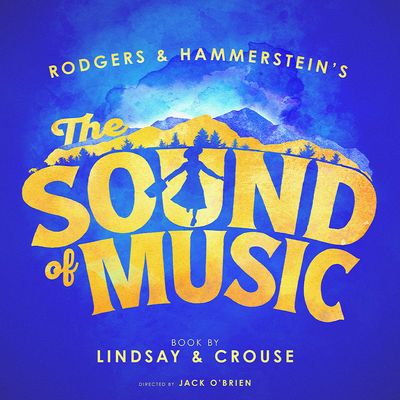
[8:03] Ted Chapin: Well, I mean, I always like to answer that question starting with today, because today is the day, and I went to the office in the morning. A lot of conversations today were happily about the new production of The Sound of Music that is playing at the Amundsen that Jack O'Brien directed. And again, it's that production is in some ways the quintessential example of what my job is. I found out a few years ago that Jack O'Brien and Margot O'Lyon had gone to Moscow on a State Department visit and had been asked to go and see a dress rehearsal of what is referred to as the first authorized production of The Sound of Music in Russia. Don't think it was the first, but it's the first that we got any royalties from.
And he was very moved by what he saw, and Margot told me, You gotta get Jack to tell you about that production. So I got Jack to tell me about that production. At the same time that Ken Gentry, who runs Networks, had been saying to me, it's time for a Sound of Music to tour the country. Audience survey, all those very well-run theaters across the country that take touring productions, they do audience surveys and they throw out titles and The Sound of Music is on everybody's list. It's time for a Sound of Music. So what I did was kind of put it all together, because for Jack O'Brien, three-time Tony Award-winning director, to direct a touring production is not normal. For networks to hire Jack O'Brien to direct a production is not normal.
So my challenge, and frankly, it was a great challenge, is to see, let's see if we could all put this together, and everybody could step up their game a little bit so we could do a touring production that is as good as anybody can make it. And it opened last week to very good reviews. So now, what's the future? That's the fun. That's the fun part of them today. I mean, you're basically doing the work of a producer. And in fact, through an ironic slight change in the way Rodgers and Hammerstein is organized, I'm actually one of the named producers of that production, which came about after the fact. But yeah, so that's that. And then we had a video conference with Bert Fink, our colleague in London, who went who basically said that with the exception of Pipe Dream and what was the other one?
Pipe Dream and not even Allegro, not even Me and Juliet, but Pipe meant something. He has activity for every one of the Rodgers and Hammerstein musicals somewhere in the UK. The fact is, these are 50-year-old plus shows that the challenge and the fun is to keep them alive, to keep new generations of people discovering them. Because I have an answer to your question about how much I knew them when I started, I didn't know them that well, but I boy have I come to respect them because they are first-rate works of theater. And that's why when Lincoln Center does South Pacific or The King and I and puts the production in the hands of Bart Schear and he examines every word and finds things. But no one's ever focused on it the way Bart did.
So you never lose that thread throughout the evening. Jack's done some of the same things in The Sound of Music. You know, just what's on the page, what's a cliché? Let's push that aside. Let's see what the words actually say and what the music says, and then let's direct a production from there. So the more we can do those, I believe, the more people will have a good experience with them in the theater, and then hopefully leave and think about them and buy a recording or listen, download, and then they'll think, wow, that's a good, good, I like that stuff. What else did they write? You know, and that's what we, that's what I've been able to do for 30 years. And it, you know, it's always changed slightly, but it's always been interesting.
[11:52] Ken Davenport: Let's talk some numbers. How many productions of The Sound of Music are there around the world in a given year?
[11:56] Ted Chapin: You know, I don't actually know that. We've said for years that we licensed about 2500 different productions, and The Sound of Music is our top that well, it's interesting. The bookends, Oklahoma! and The Sound of Music are our most often performed Rodgers and Hammerstein shows. Probably about 600, 700 productions a year, I guess.
[12:12] Ken Davenport: And what is it that you think gets people coming back and back to re-explore these? And in small, I mean, these are high schools and community theaters. Why the craving for this?
[12:23] Ted Chapin: I just think they're very, very well written. And I think what people, what a lot of the younger generation have discovered is how hard the musical theater is. That alchemy of speaking, singing, movement, dancing, you know, as somebody said, you know, in a musical, when you can no longer speak, you sing, when you can no longer sing, you dance. Easy to say, very, very hard to construct a story in which you can validate all of those things and make it interesting and enlightening to an audience. So I think, you know, as there are now programs of how to create musicals and workshops, and you know, I mean, I have said it's not a popular thing to say, but you can get any musical on these days. And I'm not sure that's a good thing.
It you may never get the second time on, but you can you can find a workshop, you can find a place to, you know, you can get it done. But in the old days, there was kind of a process. In the sort of Broadway world, there was a process by which people would learn as they went along. You know, the fact that John Cander wrote dance music for Irma La Douce and Gypsy before he wrote his first musical, and it was a flop before the second musical. I mean, those kind of built-in training grounds are very different today. That's a little bit off the path, but I think the fact is, as people are learning how shows should be constructed, there's always Rodgers and Hammerstein to go back to to realize, oh my God, you know, that first scene in The King and I on the ship gives you so much information without anybody telling us anything.
It's characters in a situation talking to each other, and you find out she's arriving in Bangkok, it's scary. The king is sending his people to come down, she has a young son, she's brave, and she figures out how to buck herself up with a kind of silly throwaway kind of song, I was a little happy to. I mean, you know, and then the crowd home comes, and so the king has a I mean, there's just all this information without anybody having to look out at us and saying, we are approaching Bangkok, it's a scary place, I'm coming from somewhere else, you know, that kind of stuff. So it's very tricky to figure out how to create characters and situations and make them valid for the time that and the locale and the and the style of the music and the style of the show. And that's what Rodgers and Hammerstein really, really did well and can withstand thorough study in order to guide any creator of musical.
[14:50] Ted Chapin: If Oklahoma opened in 2016 as a new musical, do you think it would be a hit based on what today's audiences want? That's a really, really good question. Um, I think if it opened in 2016, looking and feeling like the production that opened in 1943, it would not be a success at all. Um, among other things, the sophistication of scenery and lighting has come a very long way. So you know, those original productions of Rogers and Hammerstein's kind of look like high school productions when you see the photographs today. So I think I don't think anybody would reject that. I certainly think from what the Trevor Nunn production and Susan Stroman production was like in London, there would be every reason to think that that kind of version of Oklahoma done brand new today would be very exciting to everybody because the libretto is really strong, the story of it is fairly simple, but the way it's told is very complex and very emotional, and you know, again, a thing to understand.
You don't need a complicated story if the way you've set up the people who are part of the story are themselves interesting and the situations are interesting. Who is that peddler? Is he really from Persia or is he from the Lower East Side? I mean, all these questions that would be taken up anew if it were a brand new musical today, but I think the basic show still stands up.
[16:17] Ken Davenport: So you are in this very difficult position. Some might say it's an enviable position, but it's probably much more challenging than those of us on the outside ever think. In fact, so I first met you when I was general managing the Ken Gentry Cinderella that was going out. And I remember first being told, like, it's got to go past Ted, it's gotta go past everything I think of Ted's approval, and we were all so nervous you coming in the room on the first day, because you are the safeguard for these incredible pieces of work. How does that feel for you? Number one, and how do you channel the author's original intent? Obviously, they're not here to tell you yes, I'd allow this, no, I wouldn't allow this. Where do you get your guila?
[17:01] Ted Chapin: That's a very, very good question. First of all, I'm a hired hand. I mean, the Rogers and Hammerstein catalog is vast enough that the two families could hire somebody to be in charge of everything that they have inherited. I say that because there are a lot of estates that have people who have enormous emotional connections to what their father, their grandfather, their grandmother, whatever wrote. And that's more complicated to have on top of everything else an emotional connection. I don't have that. My emotional connection is to the theater. You know, I'm an emotional theater goer. If I like, you know, I know what I like. So starting with that, number one. Number two, when I started, I worked for Dorothy Rogers, widow of Richard Rodgers, and Bill Hammerstein, oldest son of Oscar.
Bill was a producer and director in his own right, had been doing the sort of management of copyrights longer than Dorothy certainly had, and was very wise. He seemed a little slow perhaps, but he wasn't. He was very wise and just didn't want to let things take their time. Dorothy was incredibly smart, but had had nothing to do with the office. Her mandate was to keep Richard Rodgers' music alive. So I learned from my bosses, and I made a couple of little mistakes, and I learned where the lines are drawn, where I could come into Cinderella and say that's not good or that is good, and when I had to defer to the people who actually owned everything. And that was a challenge, but as far as I was concerned, it was a good challenge because I was willing to say, I think this is X, Y, and Z. Do you want to come and see it yourself?
And they mostly would say, No, we trust you, I think that's fine. Or no, that is something I'd like to see. So, in a way, what I learned without any job description is you know, where the lines need to be drawn, drawing on my experience, my you know, love of the theater, and you know, just trying to go with my instincts as much as I can. A lot of people who do the sort of estate management, as I said before, either emotional members of the family or they're lawyers, you know, and they have a very different mandate because they're always terrified they're gonna do the wrong thing. My feeling was I'm sure I'm gonna do the wrong thing sometimes. That's part of it. I actually said yes to a production of South Pacific, which happened in Los Angeles, and I remember going out with Bill Hammerstein to see it, and as we were driven back to our hotel from the music center in, you know, like a pimpmobile, like a white limo that was three blocks long.
Um, and I remember sitting in the back of that thinking, gee, if I were Bill and I were sitting next to the young guy at the office who's encouraged this production, I might not be so thrilled with this guy. But the good thing was Bill was enough of a person, he was the person who had seen enough in the past, and he knew that it was all you know an arc. And I was very honest. I said, gee, this didn't go very well, did it? You know, and what are we gonna do and you know how are we gonna deal with this? Um, I think we're still old royalties for that production. Um, so it was basically follow your instinct, follow your instinct and um be honest in this situation of that Cinderella. It wanted to put a little modern spin on it, um, which had been proven, you know, effective in the remake for television.
So everybody knew it was gonna be a little different. There were a couple of things you may recall in the music I wasn't wild about, but it you know, it's a dialogue. It's like I don't have the right answer, but it's like, you know what, I've learned enough by osmosis to say that's going too far. But it's my, you know, it's my opinion based on what I've learned. It's not you. I mean, I would never want to say you absolutely must do that because it's the collaboration. The theater's a collaboration, and as you know as well as anybody, every time you have it absolutely lined up, this is exactly what's gonna work. Somebody throws you a curveball, it's like, wow, that didn't that never occurred to me.
[21:04] Ken Davenport: Any crazy stories about productions you've had to shut down for just being totally absurd and ridiculous?
[21:10] Ted Chapin: Well, the infamous production was Anne Bogart's production of South Pacific at NYU. And again, there's an interesting lesson to be learned. I had a visit from John Wolp and Evangeline Morphos, who were both of them involved with NYU. They came to see me because this was a production of South Pacific that had been properly licensed, and they said to me, we haven't changed a word. Uh-oh. You know that's time. Exactly. Exactly. So I said, Oh, what is it? Well, they had the concept of the production was that it was being performed by people who were coming back from the war experience because Anne was smart enough to realize that while the war is a very important part of South Pacific, the play doesn't actually take place in the war.
It's on the periphery, it's people who are involved in it. So her idea was these are people who had been in the war, and as part of rehabilitation coming back into society, they were going to do this play. Okay. And there were some very odd things about it. Um, my recollection is that the girl who played Nellie Forbush was standing at the piano as the audience walked in, going, I'm in love, I'm in love, I'm in love, I'm in love, I'm in love. Some scenes were performed by four different couples, and in some instances, the lines would bounce around. So the answer is they didn't change the words, they reassigned them and they changed it around, and there were things about the production that were clearly not what South Pacific was intended to be.
My dilemma was it was fascinating. It was absolutely fascinating, and it delivered South Pacific, not necessarily in the way that audiences would expect. But I sat there in a funny way because it was fairly early on when I was there, and I thought to myself, you know, this is a very strong piece of material. This is a really strong piece of material. So we did not shut them down. We didn't extend their contract, which they asked. So that's where we got the bad reputation for having shut them down. Um, but I remember at the time thinking, you know, there's a production of this show to be done before this kind of production happens. Because this town hasn't seen it in a long time. And I had we had to wait almost 20 years, probably until the Bart Sher and the Lincoln Center production happened.
And you know, it was the serendipity of a lot of different things going on, light in the piazza, you know, written by Adam Gettle, grandson of Rogers, you know, that Mary was very enthusiastic about. I was sent out to Sundance, and then we all went out to Seattle to see it. And it ended up at Lincoln Center Theater with Bart Sher, who nobody knew who he was, you know, and it was based on that having been a success that Andre Bishop thought, oh, put them on South Pacific. And again, it's all a mosaic. You just have to be both patient and also forward thinking about when this connecting with that, which may be a bit of a surprise, and this connected with that. And again, in the theater, sometimes it all works in a nice way, and sometimes it doesn't.
[23:54] Ken Davenport: Do you think there will continue to be these big revivals of these shows 50 years from now? Will it just continue like this? And part B of this question is explain a little bit about the copyright situation that you, I'm sure, are dealing with now.
[24:09] Ted Chapin: Yeah, the current United States copyright law gives the shows and songs that are of the Rogers and Hammerstein era a copyright life of 95 years from the date that it was first registered for copyright. So Showboat is the first one in our camp that's going to go into the public domain in this country in 2022. So it's not that far away. Wow, that is that's pretty far. Then 15 years later, you know, starts Oklahoma, and you know, and then nobody knows what's going to happen. I put before you what happened with Gilbert and Sullivan. They were rigidly controlled when they had copyright protection. You could only do them the way the D'Oyly Carte wanted them done. Then when they fell out of copyright, they kind of fell out of fashion.
Perhaps if Gilbert and Sullivan had allowed other people to do them then in different ways, they wouldn't have fallen off the cliff. I mean, yes, there are occasional brilliant productions that are plot and re-rethought. But in terms of Rogers and Hammerstein, I doubt that I will be around when the major RH shows start to go in the public domain. And what will happen, you know, I don't know. They are big shows for the economics of the commercial Broadway and touring world these days. We try to be as cooperative as we possibly can be to cut the cast size down, to cut the orchestra size down so that they can be as economically feasible as possible, but still have enough of what makes the shows work.
The other irony that's happening now is the opera companies are discovering them. And of course, they have, you know, 70-piece orchestras usually on staff. And for them doing a Rogers and Hammerstein musical, they get to send half the orchestra home. You know, but and that I'm not sure that's the right kind of movement, but that's one place where the lyrical drama, musical drama has a life that has for many years been seen not in a commercial way, but in a kind of not-for-profit, you know, world that may end up being where some of these shows will end up having more of a life. But I like seeing them in theaters. They were designed for theaters. I mean, they were designed for the same theaters that you know that you're doing shows in here now.
Um, the orchestra pits have been buried, you know. You know, they used to be, you know, visible. You know, and when there were not amplified amplification was not in the theater, so you had to design the orchestrations acoustically so that the orchestra would be balanced by being, you know, and those wonderful old pictures of Richard Rodgers conducting Oklahoma and you can see the orchestra. Now there are very expensive tickets there, seats there, but in those days that it was important to balance it all.
[26:49] Ted Chapin: RH wrote how many musicals did they write together? Nine musicals for Broadway, one movie, and one television show. Over the course of how 17 years. 17 years, nine musicals, about two a year. Well, one every other year. 43, basically 43, you know, Oklahoma in 43, Carousel in 45, Allegro in 47, South Pacific in 49, King and I in 51, Me and Juliet in 53, Pipe Dream in 55, then Cinderella in 57, Flower Drum Song 58, Sound of Music 59, and Hammerstein died in 1960. So I mean, it's interesting. I once asked James Hammerstein how his father dealt with a setting of lyrics by Rogers if he didn't like it. Because I figured in, you know, for that many shows in that time period, there wasn't a lot of time for arguments and getting mad at each other.
And his answer was that there was a verse to Love Look Away and Flower Drum Song, and when Oscar Hammerstein heard the way Rogers said it, Oscar Hammerstein cut it. And I thought that's a really telling thing. Now I then went to look at it because it actually is in the published sheet music, and I don't think either the lyrics or the music are very good. So I think I and my theory is that Rogers, when Rogers wasn't inspired by a lyric from Hammerstein, he just sort of started Umchick, Umchick, Umchick, and wrote some melody in a two-four tune of not much consequence. Um, because when he was inspired, he had no problem coming up with melodies that were a lot of times very surprising and harmonically surprising. But the verse of Love Look Away is not their best work. But these guys are the most prolific writers the theater has ever had.
[28:29] Ken Davenport: Do you think it's possible to write that much today? Like we don't see the big hit makers on Broadway now are not writing a musical every other year.
[28:39] Ted Chapin: Lynn Manuel, of course, now with Hamilton, of course, his second from In the Heights. Right. But how many years was it? It's like probably five or two.
[28:45] Ken Davenport: Correct, yeah, at least, I think.
[28:49] Ted Chapin: So why is that? Well, I think there are a lot of distractions in this day and age. Um, I mean, everybody talks about the computers and the phones and all that stuff. And it's very easy to find things to distract your attention. But I do think it's fair to say that you know, when Rogers and Hammerstein were working, and Cole Porter and Lerner and Loewe, and you know, there were fewer of those kinds of distractions. So that the idea of focusing on work was, I think, probably easier. They talked a lot about their shows. Hammerstein went to his house in Doylestown with his standing desk, went into his study at nine o'clock in the morning, came out for lunch, you know, afternoon played tennis. And you know, there was a kind of discipline that they had that I think it's possible today, but it's very, very hard.
[29:36] Ted Chapin: I mean, in a funny way, Hammerstein wrote Allegro about that, about how when you become successful, there are all these things that grab at you. Um, you know, to be on committees, to be on boards that take you away from the thing that got you to that position to begin with. Um, as sometimes said years later, a fairly esoteric idea to write about, something which he Sondheim did not understand in 1947 when he was the gopher. But when I when we talked about it a few years ago, he now did understand it. So I do think that's the case. They also, you know, they had worked for many, many years beforehand. So by the time they start to write together, I think it was very clear that they saw the same kind of theater.
There's a consistency to the Rodgers and Hammerstein shows, even though they take place in Siam, you know, in the Oklahoma territory, in Austria, in different locales, and with different people and different personalities. But I think there are some basic storytelling, theatric storytelling things that both guys understood instinctively, so that when they wrote, you know, thus when they got to The Sound of Music, they knew that the Mother Abbess needed to be the older, wiser person who at the point in the story where the lead needs to get a little push that that was the Mother Abbess who had antecedents in Aunt Eller in Oklahoma and Nettie Fowler in Carousel and in Bloody Mary in South Pacific.
And interestingly, both Lady Thiang and the Kralahome in The King and I, a variation on the theme, but something wonderful. I mean, that's that's the same kind of, you know, you don't know that you need this, but I need to tell you this. And now's the time, and you need to go to him. You know, and I mean there's a one of my favorite scenes in The King and I is after she sings Something Wonderful, and Mrs. Anna listens and realizes okay, okay, I do need to go, you know, swallow my pride and go back and talk to him. And when she goes, the Kralahome comes from out of the shadows and said, Did it work? You know, and originally, I found out by looking in the files, that song was to be sung by the Kralahome, not by Lady Thiang.
Again, you know, part of my fun is I get access to the files. And to see the other thing, and any young writer listening to this, understand that every Rodgers and Hammerstein show was as much rewritten as it was written. Because the first outlines of shows that Hammerstein would put together with song titles, there's hardly a song title that ended up as the title of the song that ended up in the show. And Eller's song She Likes You Quite a Lot. Not only did that song never show up, but Ann Eller didn't have a song. Um, Face Life. Face Life was Climb Every Mountain. The first idea of, you know, and again, in Hammerstein's titles, the essence of what the song needs to be is there. But you know, he would he would he was not afraid of writing something down that wasn't good enough.
And then he had to go back and think, okay, how do I get how does the Mother Abbess say to Maria, you have to face your life, you have to face the life that you were born to live. And interestingly, in that instance, Climb Every Mountain was at first a personal song. I will forward every stream, I will climb every hill, I will this, and then you can see through his drafts, it when then got turned around to you know, the Mother Abbess saying, you will do this. You know, you're right, you don't think of these shows having gone through the same developmental process that we go through every day, but of course they did. And don't any, you know, don't ever think that you know, rewriting and throwing stuff that you love out is a bad thing.
It it's it's the collaboration of the musical theater, and that never, never changes. Also, get enough of an audience so you can listen to them because individually they are worthless, but as a unit, they tell you everything you need to know. The other big tip that I've never realized until you just started to say it is how much location, specific location had to do with their musical. Oklahoma, Siam, Austria. And where Rodgers' genius is in evidence is he always managed to give you enough of a signature. Oklahoma starts in what sounds like a square dance. You know, kind of as Turkey in the Straw. You know, South Pacific has those ballet high, that you know, there's something about that melody and those harmonies that makes you think you're somewhere slightly exotic, a slightly different exotic thing in The King and I. You know, Lonely Goatherd in The Sound of Music.
But he was never slavish to it. You know, I always like to point out that you know the penultimate emotional and dramatic moment in The King and I is a polka. Shall we dance? What I ask you, does a polka have to do with either the King of Siam or a wealth school teacher? But they knew how to do it, and the audience never says why a polka. You are so at the moment, you are so I mean, it just was the right, it was the right thing at the right time. And that they learned from experience. And you just you learn the more you do. Yeah, give the audience what they want at that moment.
[34:40] Ken Davenport: So you're obviously this incredible safeguard of these musical theater treasures. I could think of no better person to also be a safeguard of the big prize of the musical theater. You've been a Tony nominator before, but I want to talk about your position as part of the Tony Administration Committee, which is this very mysterious committee that I'm actually composing a letter to right now just Great Awakening. Um can you tell us a little bit about white smoke or black?
[35:07] Ted Chapin: Yes, white smoke or black smoke, eligible or non-eligible, uh revival or new musical. Uh, can you tell us a little bit about this committee?
[35:14] Ted Chapin: Sure. Um, first of all, just brief background. Bill Hammerstein was on the board of the American Theater Wing. And in the mid-1980s, the league and the wing had a rapprochement about how the Tonys should be operated because the wing owns the Tony Awards, but they're given for shows that are produced by the league members. So at the rapprochement, the wing needed 10 people on the on one side of the administration table, and they didn't have the warm bodies, frankly. So at that point, um Isabel Stevenson said to Bill Hammerstein, what about the kid at the new kid at your office? So the new kid at your office, I was asked, Do I want to be on the administration committee? So I was on the administration committee.
And it was a very eye-opening experience because it was very much, you know, okay, come into the operating room now. You know, whether you know what's going on, you're gonna see it, and you're gonna see it in all its glory or gory as the case may be. But that having been said, it is and should be a perfectly honorable partnership between these two organizations. It's good for the for the league to have somebody who's a little bit removed from it. I mean, part of the challenge of the wing has been to get people who do sit on the wing side of the table, who are not conflicted, who know the theater, who care about the theater, and are ready to have enough of an overview that if somebody on the on the producer's side kind of wants to push something in a direction that may be a little more personally generated than big picture generated, just to have a checks and balances in there.
So, that being said, I've been on the committee for many, many years. We are the committee that decides or approves of where the categories are. And there are always interesting places where there are discussions. I put before you projections as one. Projections is something that is becoming more and more important in the world of is it scenery? Is it lighting? Is it, you know, these are the kind of things. So we have these discussions. That committee can and has made the determination that these projections in this given production are part of scenery. So we have the ability to say those are joined together. Or it's lighting, or it's not eligible at all. We do seek guidance from producers, which I think is right, but there are times when everybody for a variety of reasons, the producer doesn't want to make that determination.
He has relationships with these people, and the designers may not all agree on how it is. So that there being an administration committee who's supposed to look at the overall and say, no, in this instance, this we feel makes sense. It's difficult to do it correctly all the time, but there's a valiant effort that's made to do that. So yeah, that's the administration committee, and then we I actually chaired that committee until I became the chairman of the wing, and then I stayed that, and then you know, now it's become sort of the chairman of the thing of the wing, you know, chairs that committee, and it's a it's a large room, and it takes some wrangling. Uh that's a room I'm not sure I want to be in.
[38:18] Ken Davenport: I think we want you in there.
[38:19] Ted Chapin: Okay.
[38:20] Ken Davenport: Great. So look, you are uh obviously are such an expert in given a master class and some of the classics of musical theater right now. You see everything, of course. What do you think about the current state of musical theater writing on Broadway today?
[38:34] Ted Chapin: I think there's a lot of really good stuff going on. I think the um I and I look at isolated examples like Next to Normal, you know, like If/Then shows that are not what you would expect. If anybody thinks that Broadway musicals are a cliché, these are not clichés. They are shows that have the, if I may, old fashioned kind of passion for telling a story in a way, and they when they are successful in the Broadway community, that's really, really important. At the same time, the institutional, the Disneys, those kinds of organizations that are relatively new to Broadway, creating a kind of entertainment that is as certainly as theatrically good as other things. That's important as long as it's put in the proper perspective and doesn't overshadow the other original stuff.
They both can exist side by side, and I think they tend to exist that way. And the more both can be encouraged, the happier I am. Good revivals can fit in between there, thank you very much. But I think for the most part, there's some really good stuff going on. I mean, I felt last season was remarkably good on a lot of different levels, and I even found myself saying, I hope everybody really is aware of that. I mean, the level of production is good, the level of it's you know, the bar at which that is set for Broadway should be high, and I think for the most part is high. And I think last season was, you know, was a pretty good example of some very good stuff.
[40:05] Ken Davenport: So my last question, Ted, I want you to imagine that the genie from Aladdin comes to your office and knocks on your door and says, Ted, I want to thank you. I want to thank you for your incredible work safeguarding these incredible treasures and giving us these incredible revivals, South Pacific and The King and I, and all the work you've done on the wing and on the administration committee. And so I'm going to grant you one wish. What's the one thing that drives you so crazy about Broadway that gets you so angry that keeps you up at night that you would want this genie to wish away in an instant?
[40:43] Ted Chapin: Only one thing. I know, I can see your mind going, there's a list of a hundred. No, no, no, no. That's a very, very good question. Um, I I think I'll only preface the answer if I can find an answer by saying that that very little keeps me up at night. Um I was fired when I was 24 years old, right around the time that I had a show that I produced that closed out of town on the way I was going to be the youngest producer on Broadway in a many, many moons ago. And I've always been grateful to the fact that that was a devastating experience for me when I was 24 years old. So everything since then I look at, and it's like it's all nothing can ever have that effect on me. That having been said, uh so there isn't anything that keeps me up at night with anger about this.
But if there's a wish that I could have, it's that the world that we live in would acknowledge what the live theater is all about in a way, in a cultural way that they don't recognize today. When you look at Entertainment Weekly Magazine, and one out of every 10 issues has two pages on the stage, you know, and then I page through it and I see endless bad television shows and endless books that I don't care about. And I just think, okay, I'm not, again, I say I'm not angry, I don't care about that stuff. But I look at it and I think, you know, why isn't the live theater elevated to a position where people can recognize it and embrace it in a way that makes people accept it as the way so much else in our culture is accepted.
Um toward that end, I love seeing on CBS the nightly news, a little piece on your Spring Awakening at the end. The more that there is of that, the more that I mean, I promise you there's a kid in a wheelchair in East Lansing, East, whatever, you know, Snowshoe, Nebraska, who saw that because her or his parents were watching it, unfortunately, and noted it and noted it and saw a woman, a young woman in a wheelchair who's made a success as a performer. That's the kind of thing the more that the people who make the decisions about what gets circulated in the discussion about our cultural world can embrace what live theater is. That's that's my wish for that, Genie.
[42:59] Ken Davenport: It's a great wish, and I have to say that uh your work in allowing the Sound of Music, telecast, the live telecast on television, all the efforts you're making there. I thank you for that because that that is obviously doing just that.
[43:12] Ted Chapin: That's part of it. That's all part of it. And we need that desperately. I can't thank you enough for doing this. Uh you can, all of you listeners can understand why uh Ted is one of the most respected people in our industry. He's one of the smartest guys I know. Thank you so much for being here again for giving us this incredible masterclass. Uh, make sure, by the way, uh Ted wrote this great book called Everything Was Possible, which is the story of the birth of Follies from his perspective, right? The production assistant's perspective. Um, and it's very near and dear to my heart because that's how I started as well as as a PA, and it's a great read. So thanks so much. And tune in next time. Someone that Ted mentioned, Susan Stroman on the podcast next week. Thanks so much.
[43:52] Ken Davenport: Hey everybody, don't forget, only 88 more chances for you to see Spring Awakening. Time is running out. Tick, tick, tick. Do not miss it. I'm gonna be a producer.
© Broadway Podcast Network, All Rights Reserved