

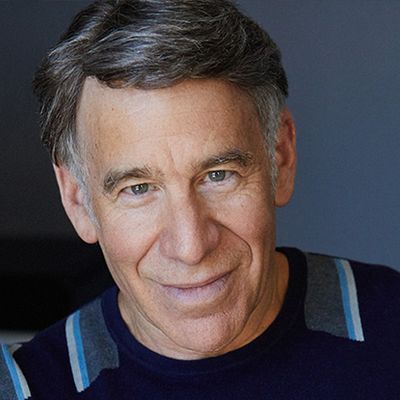
Stephen Schwartz is an American musical theatre lyricist and composer. In a career spanning over four decades, Schwartz has written such hit musicals as Godspell (1971), Pippin (1972), and Wicked (2003)... Read More
From the show: The Producer's Perspective Podcast with Ken Davenport
Guests
Featured Shows

About
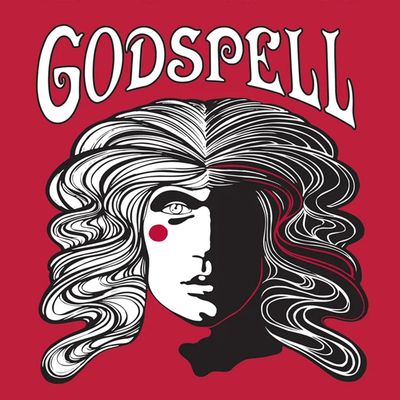
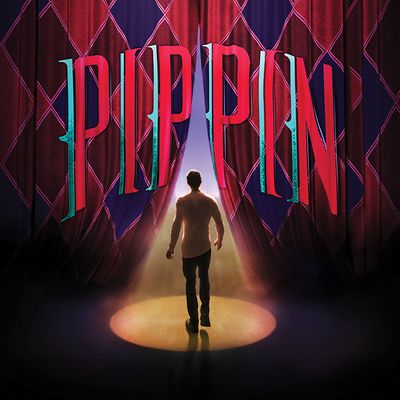
Stephen Schwartz is an American musical theatre lyricist and composer. In a career spanning over four decades, Schwartz has written such hit musicals as Godspell (1971), Pippin (1972), and Wicked (2003). He has contributed lyrics to a number of successful films, including Pocahontas, The Hunchback of Notre Dame, The Prince of Egypt (music and lyrics), and Enchanted. Schwartz has won the Drama Desk Award for Outstanding Lyrics, three Grammy Awards, three Academy Awards, and has been nominated for six Tony Awards. He received the 2015 Isabelle Stevenson Award, a special Tony Award, for his commitment to serving artists and fostering new talent.
I first met Stephen when we started putting together the revival of Godspell and was immediately blown away by his ability to get to the heart of any musical moment and mine it for all that it’s worth . . . but at the same time he had an innate understanding of the business of Broadway. I remember thinking one day during a meeting that if he wasn’t composing Broadway megahits like Wicked and Pippin or writing Academy Award-winning tunes like “Colors of the Wind,” this guy would have made a helluva Producer.
And thankfully, he sat down with me once again . . . and this time, I turned on the recorder, and got this podcast, where Stephen and I talk about all things including Broadway and beyond, like:
- The big shock Stephen got when he started his 2nd show on Broadway.
- Why he won’t tell you what his favorite song is . . . and what Stephen Sondheim has to do with it.
- The moment he knew Wicked had to be a musical.
- How he can work for a year on a show without writing one note of music . . . and why that is so important.
- What he tells every single one of his collaborators before they start working together on a show.
Enjoy this master class in writing and producing and surviving in the business of Broadway.
Keep up with me: @KenDavenportBway
Transcript
This transcript was automatically generated and might contain errors.
[0:00] Ken Davenport: I wanna be a producer with a hit show on Broadway.
[0:07] Ken Davenport: I wanna be a producer.
[0:10] Ken Davenport: Hey guys, real quick, I want to thank you all for tuning in for our historic live stream last week. I know so many of you guys tuned in and wanted to give you a heads up that we're gonna release the data on the live stream this week on the blog. So make sure you subscribe to the blog, the producers perspective.com. You won't believe the results.
[0:27] Ken Davenport: Hi everybody, Ken Davenport here. You're listening to the Producer's Perspective podcast, and what a guest we have today. I'm thrilled to be sitting across my desk from three-time Academy Award winning, three-time Grammy Award winning composer lyricist Stephen Schwartz. Welcome, Stephen.
[0:43] Stephen Schwartz: Hey Ken. Good to see you always.
[0:45] Ken Davenport: So I'm not gonna waste my time with too big of an intro here because we all know who he is. Um but as I was looking over his credits, of course, it reminded me of the fact that Stephen has written some of the world's most popular musicals, popular in quotes, of course. Um Godspell, Pippin, Wicked, uh, not to mention movies, Pocahontas, Hunchback of Notre Dame, which is now a stage musical, and so many others. Opera choral, you do it all. But let's start at the beginning. When did you start writing music? Like your first sitting down at the piano and saying, Oh, I'm gonna write this thing.
[1:19] Stephen Schwartz: Probably when I was about six or seven, um my uh parents have told me, of course, I don't really remember this, but they've told me that I was very into music as a kid, that I like to listen when I was in my playpen or whatever those things were called. Um apparently I liked opera then, even then, uh, because my folks have told me that they had a recording of a soprano, which I called the High Lady, and I used to like to listen to the High Lady, and I think I had one of those little plastic um phonographs because in those days you had discs, you know, that wasn't CDs or or podcasts or streaming. Um, and then my folks moved when I was about six years old to the suburbs of Long Island, and it so happened that we lived next door to a composer whose name was George Kleinsinger, who had written uh some very popular what we would now call concept albums, including something called Tubby the Tuba, which was about the you know orchestra, etc. But one of the albums that he had written was called Archie and Mahitabell, and it got turned into a Broadway show, which did not wind up lasting all that long.
It was um called Shinbo and Alley. Um Archie, the character of Archie was um a cockroach who was played by Eddie Bracken, and he was in love with an Alley cat named Mahidabelle, who was played on the record by Carol Channing, and on Broadway by Eartha Kitt, and um it had a whole chorus of dancers, some of whom became famous, like Jacques Dambois, but but the the critics were not kind to it and wondered in their reviews why anyone would want to see a musical with a lot of dancing cats, which proves the importance of timing. Anyway, when George was working on the show, my parents would go next door because they were friendly, and I would come with them sometimes, and he would play whatever he had been working on.
And um, I am told, again, I have no memory of this, that then when they would go off to have a drink or whatever, that I would go to the piano and pick out the tune. And so after a couple of times of this, George suggested to my parents that maybe they might get me a piano and that I might start piano lessons. So I was about six or seven when that happened. And right away I started writing songs. And then subsequently, a couple of years later, when Chin Bon Ali was founding on Broadway, I think I was about nine, my parents took me to see it, and that was my first Broadway show, and that sealed my fate. I was doomed from then on.
[4:07] Ken Davenport: Do you remember like the first song you ever wrote, or the first one you remember writing?
[4:07] Stephen Schwartz: The first one I remember was for a puppet show uh that my sister and I were putting on for our parents and subsequently for neighborhood children, which was called High Dog, High H I Comma, um, which I think was a story of a dog who ran away from home to the heartbreak of his master, etc. But ultimately returned and all ended happily. And there was a song in it, there were several songs, but the only one I remember was a song called Little Lullaby, and that's the first thing that I remember having written.
[4:49] Ken Davenport: Was it good?
[4:51] Stephen Schwartz: Not particularly, no. Um, it had a tune though.
[4:56] Ken Davenport: I'm sure it did. So you've written in obviously a lot of different mediums, and obviously it's easy to see why you fell into the theater very young. Parents, we hear this a lot. Parents bringing you to a neighbor's house. But what specifically about the theater were you attracted to? Because uh you could have taken that love of music and said, you know what, I'm gonna write pop songs for the rest of my life, or I'm gonna write country music.
[5:20] Stephen Schwartz: Well, most of the songwriters of my generation did write pop songs, you know. There were very few of us who went into theater. You know, me, Alan Mencken, Andrew Lloyd Weber, um, you know, rather small list. Most of them were busy being, you know, James Taylor and Joni Mitchell and people like that. So what about it? Why, why did you you know?
[5:45] Stephen Schwartz: I don't know. I don't I think it's very difficult when you ask people what made them fall in love with the theater and with musical theater in particular. I think it has something to do with storytelling because it's still the thing that I like to do best. And my sort of fascination with how you could tell stories and feel emotion and if you wrote it correctly, incite emotion in others um through the use of music as a storytelling device.
[6:17] Ken Davenport: So tell me about how the the story of how it all real began at Carnegie Mellon, you were at, right?
[6:25] Stephen Schwartz: Yeah, I well, when I I took I started taking piano lessons at George Kleinsinger's suggestion, and then um when I was in high school, because we lived not that far from New York City, um, I went to a high school called Miniola High School on Long Island. Um I got a scholarship to Juilliard, and I used to take the train into the city every Saturday and go to the preparatory division of Juilliard and study piano, and then when it became quite clear to me and everybody that I wasn't going to be a concert pianist, I switched and became a composition major. But that was great at Juilliard. You know, I took sight reading and a lot of theory and um orchestration and it was very helpful. I I do admit that sometimes I would play hooky unbeknownst to my parents, and I'd get off the subway in the 50s and I'd go and you know get standing room for a show.
But usually I went to I actually showed up at school. Um and then when it was time to go to college, I actually applied originally to just a couple of the Ivy League schools, Harvard and Yale, because I had very good college board scores. Uh I think because I liked tests and I didn't quite understand that this was serious and I was supposed to be nervous about it. It just seemed like a game to me. Consequently, I did quite well on them, and everyone said to me, Oh, well, you're gonna get in anywhere you apply. So I applied to Harvard and Yale, and I didn't get into either of them. So it was now April of my senior year of high school, and I hadn't gotten into college. And my dad, again, the the the parental um uh, you know, effect.
My my dad was working on the New York World's Fair. He was supplying some um things that were being being used in the exhibits. And one of the exhibits was designed by Joe Miles Zener, who was a famous Broadway designer, and my dad was talking to his assistants one day, saying how his son hadn't gotten into college, and they said, Well, if your son is interested in theater, he should maybe look at Carnegie Mellon, which I had never heard of. Um, and so I applied there late and did get in, and that of course, again, sealed my fate and changed my uh, you know, my changed my life, and I think for the better.
[8:45] Ken Davenport: I think we would all agree for that for sure. Uh, I'm wondering actually, you talk about taking tests, and it was easy for you. I'm wondering if we studied all the composers' test taking scores, if they'd all be good, because you it's making little circles and dots filling those. Some people I I think some people are good test takers and some people are not. I really do think it has to do with your attitude. I think if you really understand that this is actually going to affect you in some way, then probably you don't do quite so well. And if you just think it's like a mind game that like a puzzle that you would do just for, you know, to pass the time, then you do quite well at it.
[9:21] Ken Davenport: So Carnegie Mellon is obviously where Godspell was born. Right.
[9:25] Stephen Schwartz: And I know this story, of course, very well, having produced the revival.
[9:30] Ken Davenport: The wonderful revival.
[9:31] Stephen Schwartz: Oh, yeah, one of my favorite things. I've just never been a part of.
[9:34] Ken Davenport: But many people may not know how it happened in terms of how you became associated with the show.
[9:40] Stephen Schwartz: Well, um, when I was at Carnegie, I was actually a directing major because in those days there was no musical theater program as part of the drama department at all. But if you were a director, you got to take everything. Um acting and design at as well as as directing and everything. It was the most comprehensive major, and since I wanted to um work in theater, I thought that was maybe the best thing for me to do. At Carnegie Mellon, at that time there was an extracurricular organization called Scotch and Soda. And every year they put on an original musical, which was written, produced, performed, etc. by students. The drama students were not allowed to be in it so that the rest of the uh campus could have a chance to be in a show, but we did basically write it and design it, etc. And I kind of signed up my freshman year at Orientation, and I had to audition for them, and they turned out they needed someone to help write the songs that first year.
So my four years at Carnegie each year I co-wrote an original musical. So by the time I left, I had done four musicals, or actually three musicals and quite a terrible one act opera, which is what I did my senior year. Um, but my junior year, the show that I did with a friend of mine was a show called Pip and Pivon, which was sort of a musical kind of lion in winter, you know, medieval melodrama and um court intrigue, etc. And obviously over time that developed and it dropped the second Pivot from its name. Why it was there in the first place, I don't know anymore. Um, but anyway, that was you know what I came to New York with and subsequently uh was able to introduce a producer, etc. But um meanwhile, after I left Carnegie, a director named John Michael Teblack for his senior project had the idea to do a musical based on the um book the book of St. Matthew, the Gospel According to St. Matthew, and a couple of verses of Luke or something thrown in, and that was Godspell, and um it didn't really have an original score, it kind of had background music by a band that was there, and some of the kids in the show wrote um some tunes to some episcopal hymns, etc. And I think they used some found music as well.
Anyway, it was very, very successful at Carnegie, and John Michael subsequently got an opportunity to do it at an off off Broadway theater called the Cafe La Mama, and so it was uh there for I don't know, four weeks or so, and out of the blue, I got a phone call from the office of producers Agreed Lansbury and Joseph Peru, for whom I had auditioned the score for Pippen about nine months before, and they were not interested at all in Pippen. But when they saw Godspell at the Cafe La Mama, and they thought it had commercial potential, but needed an actual score, they called me. Now they claim they called me right away, but I don't believe this because I didn't get the call from them until the day before it was going to close.
And also they were not fools. So I assume what they did was call every known composer in New York, and all of them turned it down. And finally, in desperation, as the show was about to leave Cafe La Mama, they finally said, Well, what about that kid with that strange musical about Charlemagne? I mean, maybe we'll call him. And I went down to the Cafe La Mama the day after my 23rd birthday, and I saw it, and um discovered that many people that I knew from Carnegie Mellon were in it, and I had known John Michael at Carnegie Mellon, you know, and I signed on to do it, and suddenly I had this off Broadway show.
[13:44] Ken Davenport: So let's talk about that suddenly aspect because you you come out of college, you have a show with you that you wrote in college, or you're starting to shop around Godspell, Godspell obviously takes on a life of its own, and immediately you are Stephen Schwartz hit of New York. You've got hits, you've got shows going on here now. What was it like to all of a sudden be what you were dreaming about or thinking about?
[14:08] Stephen Schwartz: Well, that part was great, but I think I had such romantic illusions about the musical theater and New York theater and what that was, and I really didn't understand the actual sort of professional way that New York theater works.
[14:27] Stephen Schwartz: And um, and that was extremely disillusioning ultimately. Not on Godspell, because on Godspell we were all just kids, and so we were just working together, and it was kind of like doing a show in college, except that eventually you got reviewed, though we didn't even really think about the fact that we were going to get reviewed and that people were gonna have to pay money to you know buy tickets if they wanted to see it and all that. So that was you know a pretty exhilarating and fun experience. And then I worked on the Bernstein Mass, and that was interesting and fun because uh Len Bernstein was such an amazing man, and he was the closest I've ever had to a mentor. But meanwhile, Pippin had gotten optioned, and about a year after Godspell uh opened was when Pippin opened, so we went into you know, rehearsal, and I was actually developing the show while Godspell was happening, but um, you know, right after Godspell opened, Bob Fosse came in as um as the director, and you know, suddenly I was in the world of professional Broadway theater.
That was a very different world, and it took me quite a long time to learn how to adjust to that. I think I finally adjusted to it about the time I did Wicked. So it took about 40 years for me to just to adjust. I mean, obviously Well, it's really mean. And people are, you know, extremely territorial, I found. And, you know, the outside world, everybody's wishing for you to fail. And it's very, it's it's really not a nice business, at least in my experience. Really, the only kind of happy experience I ever had doing a show for New York was that original Godspell. And the revival, revivals are different. You know, the revival I did with you was a lot of fun. The Pippin revival I did with Diane Paulus and uh for the Weisslers, that was a lot of fun. But an original musical is really not fun, at least not in my experience. Especially with Fosse leading the charge. Well, that was a bit of a baptism of fire, yeah.
[16:48] Ken Davenport: Let's talk. So you talk a little bit generally about musicals. I'm sure now, especially, of course, people are throwing ideas for musicals at you all the time. Oh, do you want to work on this? Do you want to work on this? What makes a good idea for a musical for you? What makes you go, oh yeah, that I can I can get into, or that seems the right thing to do in song?
[17:08] Stephen Schwartz: Well, again, I think it's an instinct. It's just coming across an idea and being excited by it and thinking this is something I would really like to see myself. And it's a world or an idea that I want to, or I'm willing to be in for five years, because it takes about five years to, you know, from the time you get an idea to actually getting the show on, you know, Godspell is the exception. Um, but like, for instance, with Wicked, I was out in Hollywood at that point and working very happily in animation, um, enjoying it very much. As I said, I did not particularly enjoy working in New York theater, and so I thought, well, you know, I really don't want to do that again since I'm having this very nice life and career out here.
And then I went on um a vacation, actually, uh, an unexpected vacation for a couple of days in um Hawaii with some friends who happened to be there and called me and said, you know, come join us. And we went snorkeling one day, and on the boat on the way back, um, one of my friends, um, the folk singer Holly Near said, Oh, I'm reading this really interesting book. It's called Wicked, and it's kind of the Oz story from the Wicked Witch's point of view, and I just thought, well, that's just the best idea I've ever heard. And it's so me in so many ways, and so I need to do this, and it was obvious that it had to be a show, and it was obvious that it was going to be big in terms of the number of people, and you know, just it was just a big idea, so that meant it was going to be a Broadway show. And so I thought, like, well, I really want to do this idea, and it's worth it to me to suffer through doing it on Broadway.
[19:05] Ken Davenport: And how long did it take from that moment until it opened?
[19:08] Stephen Schwartz: Well, about five years. Yeah. That was in fact, maybe a little longer than that. I think that was 90. No, it was five years. That was 1998. And most of it. And show up in 2003. Besides Godspell, obviously, we know that came through John Michael. Have most of your ideas for musicals been things like that that you've have you've found and you've almost like an entrepreneur developed?
[19:32] Stephen Schwartz: Sometimes, I mean, I it it I think it's, you know, it's it sort of depends in terms of well, um, Pippin was actually the idea of a friend of mine at Carnegie Mellon, and then he subsequently didn't want to get involved once it came to New York, he sort of had moved past and he just was doing it for college. Um, but he does have a nice little piece of the show, so it's it has been good to him as he deserves because it was his idea. Um, the next show I did was The Magic Show, and that was um the producers again, Edgar and Joe, who had produced Godspell, were up in Toronto and happened to see this magician, Doug Henning, and thought that a musical could be built around him, and they knew that I liked magic, so they called me about that.
Um, Working was like Wicked, in that I stumbled on the idea. I stumbled on a description of the book Working, and I just was very taken with it and thought that was something I'd like to explore. But Children of Eden was an idea that was brought to me, actually, not originally to be a show. It was originally brought to me to be like uh a summer show at the Radio City Music Hall, you know, kind of like the Christmas show or the Easter show. This was going to be the glory of creation. Um, and it was brought to be by a designer friend of mine named Charles Lisendi, and then it developed into a show. But but in all cases, it's hearing an idea and just it something resonates inside, and I just feel like that's my territory, or there's something about it that speaks to me, and it's something I'd like to see in the theater, and then that's why I do it.
[21:16] Ken Davenport: And the your first step when you get an idea like that, or when someone calls you and says an idea, do you sit down at the piano first? And are you a music lyrics? Well, that's the generic way to ask the same question. But what is your first instinct when you said, Oh, I want to write Wicked? I'm gonna write Wicked.
[21:30] Stephen Schwartz: My first instinct was to was to try to um to try and do an outline. How how could this book be structured as a show?
[21:44] Ken Davenport: And you're not the book writer. This is as a songwriter, you say, Yeah, this is important to know the story.
[21:50] Stephen Schwartz: Absolutely. Well, this is what I was saying earlier, that I think what appealed to me about musical theater was the combination of music and telling a compelling story. So for me, it's first what is that story, and how is it going to be structured? And that's something I would I collaborate on with the book writer, because I don't write book myself, nor should I, because I'm not good at it. But in the case of Wicked, you know, I found um Winnie Holtzman and asked her to do it with me, and then I sort of showed her this outline I had come up with, and obviously it was very rudimentary, though there were some things about it that never changed that were the same in the you know, when the show opened, but virtually everything changed.
But it's sort of the beginning, the end of the first act, and the end of the show never changed. Um, and then Winnie came aboard, and we spent a year outlining the show before we wrote anything. I fooled around with little tunes and themes, and you know, this music sounds like it could be for alphabet, or this sounds like it might be something that the citizens of Oz would sing, but we really waited until we had the story. I once read um an article about our interview with J.K. Rowling, and she talked about her process in writing the Harry Potter series, and that she spent an entire year working out the world and the rules of the world and a kind of vague outline of all seven books before she wrote anything. And I really understand that kind of process.
[23:39] Ken Davenport: Yeah, and you can always redecorate the rooms or combine rooms or tear down a room or whatever, but if you don't have a foundation, you're just, you know, you're building an air.
[23:50] Stephen Schwartz: Okay, here's uh my first James Lipton type question for you.
[23:54] Ken Davenport: Here we go.
[23:55] Stephen Schwartz: Uh-oh, I'm so bad at these. I hope you're not gonna ask me like my what color I would be or something.
[24:00] Ken Davenport: So what color would you be?
[24:02] Stephen Schwartz: No, I want you to imagine, and you're such a great person to ask this question because your body work is so epic. I want you to imagine the Smithsonian calls and says Okay, Steven, we have room in the institute for one of your shows, but I'm gonna say this. One song. One song of yours that you can put here to be forever preserved. What song would you choose of yours?
[24:29] Stephen Schwartz: Uh I would choose the last song in um Children of Eden in the beginning. I mean, is it in the beginning? In the Hobby? Yes, in the beginning. It's Let There Be and In the Beginning. Yes, the final song of Children of Eden. Children of Eden is the show that is most personally significant to me. And I think that song so represents kind of my worldview in so many ways that I think if I had to have one song that represented me, it would probably be that. And if not that it would probably be for be for good from Wicked.
[25:10] Ken Davenport: And now the reverse question. They're not necessarily my favorite songs, by the way. What's your favorite?
[25:16] Stephen Schwartz: Oh no, I won't answer that. I'll never answer that question. I'll tell you why. I once read an interview with Stephen Sondheim years and years ago, and someone asked him what is his favorite song, and he said, Someone in a tree from uh Pacific Overtures. And I found that I could never hear the song again without just listening to it in terms of why is this his favorite? And really, and you know, it's good, but why is this one the one he likes and so on? And I became so di I could never experience the song. And so I decided I would never answer questions like that. He he probably likes people asking all those questions as they listen to his side. Well, I'll bet if someone had asked him the week after he gave that interview, what is your favorite song? I'll bet he would have said something else. I think it was just that day what was his favorite, and now he's stuck with that answer. So that's another reason I'm not gonna answer those questions.
[26:15] Ken Davenport: I'll ask you a derivative. We'll see if you answer this one. What's your favorite song that you haven't written?
[26:21] Stephen Schwartz: Both sides now by Joni Mitchell.
[26:24] Ken Davenport: That one came out quick.
[26:25] Stephen Schwartz: Oh, because it's it's always been my favorite song since the first time I heard it. And any time that if I move into a new house or anything like that, I the very first thing I have to do is go to the piano and play that song. Just to bless it in some way.
[26:42] Ken Davenport: Maybe you can play mine after we should be here.
[26:43] Stephen Schwartz: I can play both sides now for you.
[26:46] Ken Davenport: Uh so now the reverse question. Obviously, you write music, you write lyrics. Is there any lyric of yours that you've heard now over that you'd be like, oh, you know what? I could have done better with that.
[26:55] Stephen Schwartz: Oh, sure.
[26:57] Ken Davenport: So what's your course? What's your least favorite?
[27:01] Stephen Schwartz: Oh, well, I wouldn't say this was necessarily my least favorite. There's a long list. But I think because you and I are talking, and there's in in Godspell, you know, there's the song A Last for You, and it's a you know, sort of angry and serious song for the character of Jesus. And he sings Um You Snakes, You Vipers Brood, which is directly from uh St. Matthew, and then he sings You Cannot Escape Being Devil's Food. And I just think that's so inappropriate for that song. I thought it was so clever when I thought of it, and I just I would never do that now. But there are you know, there are lots and lots of lyrics that I you know of mine that I just think, oh gosh, I wish I'd done better. You know, sometimes you just run out of time, and it's just you just think, well, I have to have this song here, and I have to tell the story, and I just don't really have a good line for this part of the song, but this is the best I can do, and maybe someday I'll think of a better line and I'll fix it.
You know, um, in Pippin, the song Extraordinary. I thought there were just not very good lines in there and jokes that didn't work at all, and then when I got to do the revival, I just changed it. The magic of theater, it evolves. You can do you can change it. You can't change film. That's the that's one of the best things about theater is that it's live and you can always make it better, or and sometimes make it worse. But but yes, it's not preserved forever in aspic.
[28:31] Stephen Schwartz: You can do things about it. But you work on the left coast a lot, obviously, with animation. Do you enjoy that work? How is it different? What's the process for you? In some ways, the basic process is the same because it's still storytelling and using music to tell stories. Right now I'm working on a movie. I'm collaborating with Alan Menken, and we've done a lot of movies together, and we're collaborating on a new movie. And once again, the very first thing we're doing is with the screenwriter and one of the stars who's the main focus of the movie. We're just working out that story. So that part is the same. I think when you write for movies, you have to be aware that the camera has to be in motion.
You can't just have a character who's going to stand in the middle of the stage and sing for three and a half minutes, which can be very, very exciting in theater and not so much on film. There's only so many times the camera can go in a circle around somebody. So I think you have to really think about how can this be a motion picture? But other than that, it's pretty much the same process. There is something sort of both frustrating but also comforting about the fact that you can't change it and you're just stuck with it.
[29:52] Ken Davenport: Oh well. So Joe Mantello did the podcast last week.
[29:56] Stephen Schwartz: Oh, wow, okay. And he was talking about Wicked, of course, and he said, you know, Wicked's response when we opened up Broadway was very interesting in that the weekly publications gave some great reviews. The dailies weren't so great. Talk to me about your feelings about critics.
[30:09] Stephen Schwartz: Well, I describe it differently than Joe. He's accurate, but the difference between the dailies and weeklies is that the dailies are New York and the weeklies are national. For whatever reason, I have never been a critic darling in New York. I always get bad reviews in New York, and I tend to get much better reviews from national press or from press in other cities. Maybe it's just that New York is so much more sophisticated, and I'm not quite up to that level. I don't know. But they've never liked my work. And so I've just given up even worrying about it. I just, you know, do what I do and hope I can get by the critics, but I warn everybody I'm working with that if we open in New York, the show's gonna get bad reviews from the New York critics. I've never gotten a good review in the New York Times. Well, ever.
[31:06] Ken Davenport: If there's ever an example that reviews do not matter, it would be you then.
[31:11] Stephen Schwartz: Well, sometimes, sometimes they do matter. And it's very frustrating. You know, you mentioned that Hunchback of Notre Dame had been turned into a stage show. It is probably the best show that I have ever been a part of. That production and that show. And once again, it got absolutely glowing reviews out of town or on the west coast. And I've never been involved with a show that got that kind of audience response. You know, more than Wicked, more than Godspell. The show every night got a standing ovation before it ended, during the last number. By the time the number was over, people were on their feet screaming and cheering and weeping, etc. And then it opened at the Paper Mill Playhouse, and the New York critics came to see it and just decided that it wasn't appropriate for Disney to be producing something like that or to be involved with that.
I don't know what they were talking about. But anyway, that was the end of that. So sometimes the critics just kill it. You know, you need a very strong, devoted producer who is determined to try and reach the audience over or in spite of the critics, you know. We were able to do that with Wicked, we were able to do that with Pippin, etc., but not always.
[32:43] Ken Davenport: And you worked with your son on Hunchback, Scott, who he's one of my favorite directors to work with. He's a terrifically talented director, he's actually done this podcast. And so how was that process to work with a family member and your son when he gave you notes? Did he ever tell you, "Dad, this song is in here"?
[33:02] Stephen Schwartz: But he's been doing that for years, you know, and vice versa. I mean, we have become so collegial in terms of how we relate to one another, obviously not as father and son, but when we're working as professionals, you know, I've always asked him to come see shows I'm working on. I asked him to come see Wicked. He had very, very helpful suggestions. He came to an early reading of that. I just went to the first preview of a new show that he's doing and called him today and said, "Well, here's what I got for you. Here are the notes I have for you for whatever they're worth." We've always done that. And so it was really simply like working with a colleague you like and respect, but he has no bones about saying what he thinks doesn't work, and frankly, neither do I.
[33:52] Ken Davenport: That's exactly how that relationship should be. Like, as you know, it was really no different in that regard than working with Joe Mantello or Diane Paulus. So a producer comes to you today that you may not know and says, "I want to produce Children of Eden, I want to produce Godspell, I want to produce something." What do they have to say or do or show you in order for you to give them the rights to your work? What are you looking for?
[34:25] Stephen Schwartz: I'm looking to understand what, number one, why do they want to do it? And number two, how do they see it? Not necessarily, you know, the curtain will go up and we'll see this or that, but what is their big picture of the show? What's their emotional response to the show? Does that resonate with me? You know, with Pippin, Diane came to me and had this idea to do the show set in a sort of circus, which I didn't really understand what she was talking about. It seemed kind of like a hackneyed idea to me, but I was a big fan of her work, and there I just thought, well, it should, you know, sure, we'll see it at ART, and if it works, great. And if it doesn't, you know, it was just another regional production of Pippin that didn't quite come off.
And then when I saw what she had in mind in rehearsal, I started to understand what she was talking about. So sometimes it's just the person and your feeling about that. You know, when you came and talked about Godspell, there wasn't a very, it wasn't like, "Well, we're gonna set it here and we're gonna do it like this." It was just your response to the material and sort of a passion that I felt from you about the show that made me feel it would be fun to work with you.
[36:00] Ken Davenport: You were obviously a young writer when you came onto the scene. Do you think it's easier or harder for young writers today to get involved in writing for Broadway?
[36:12] Stephen Schwartz: I think in some ways it's harder because it's so expensive now, and also when I was starting, it was the transition from theater music to more what we call pop music or rock music or however you want to describe it, and very few people were writing that style of music for theater, and producers who were older didn't really understand it that well and didn't exactly know how to find that kind of music. So I think there was an opportunity for people like me who wrote in that style to get an early entree. But that being said, you know, there are a lot of young writers who are very, very talented and getting produced, you know, Benj Pasek and Justin Paul who are good friends of mine, and Griffin and Matt who are doing Invisible Thread.
I mean, that's a show actually that I brought to Diane, you know, and of course Lin-Manuel. And if people are really talented, I think they get an opportunity. Advice for any young writers out there listening, my advice would be to write something, to have something that you have written that you can show. That's what happened for me is that I came to New York with this show called Pippin. Even though by the time it opened in New York, not one single word, note, or lyric of the show was the same as the show that came out of Carnegie Mellon. Nevertheless, I had written something, and people could hear it and say, "Oh, I think this guy could maybe do this."
[38:00] Stephen Schwartz: You know, I was speaking about Avenging Justin a moment ago, and I first met them because they sent me this collection of songs.
[38:14] Ken Davenport: Edges.
[38:14] Stephen Schwartz: Edges, yeah. They sent that to everybody. Well, I heard it, and I thought, I mean, they just did it at University of Michigan with a bunch of kids who were in the musical theater program at University of Michigan. Now, that happens to be one of the three best musical theater programs in the country, so they had very talented kids, but nevertheless, that's what they were. And you know, I heard the songs and thought they were really talented and ultimately communicated with them and gave them some feedback, etc. But the point is that other people heard this work too, and it wasn't as if anybody was ever going to produce Edges, but they heard that these guys could do this kind of work and have the opportunity to do other shows.
[39:02] Ken Davenport: I'm so glad you brought them up because I talk about them a lot. They burst on the scene as well, but again, they had this portfolio, this thing that they had done. And when I say they sent it to everyone, I got on my desk, it got on everybody's desk because they had a resume, a picture and resume, if you will, like an actor with a body of work. And you listen, and you know, if you listen and it was good. Yeah, if you listen and you think, "Oh, well, this isn't very good," you know, you'll listen to a song or two and that'll be the end of it. But if you listen to something and think, "Oh wait, these guys are really talented, they don't know what they're doing yet, but they're really talented," then yeah, then you pursue that.
[39:43] Ken Davenport: Okay, my last question, it's another Lipton-like question. So get ready for it. What's your favorite or what color are you? I want you to imagine that the genie from Aladdin comes a knocking on your door and says, "Stephen, your contributions to the American musical theater are so great. And I want to say thank you for everything you've done. And frankly, your advice for writers, not only here on this podcast, but I know you work with a lot of young writers, and you've helped me and my writers a lot. So this genie wants to thank you for all of that. He wants to grant you one wish. One wish to change the one thing that drives you the craziest about Broadway. The one thing that makes you so angry, that keeps you up at night, that makes you fly off the handle. The one thing that you really hate about this industry. Only one, though. What's the one thing you'd ask this genie to change?
[40:39] Stephen Schwartz: That's hard to think of one because I can think of a few. But I, you know, I just wish the Broadway theater were a nicer place to work. That has to do with critics. It has to do with the sort of, you know, it's not enough for me to succeed; everybody else has to fail attitude. We're just putting on shows, and they're not all gonna be good, but everybody's just trying to do the best he or she can, and I just wish it weren't so mean.
[41:16] Ken Davenport: Yeah, you know, when you talk about how you felt with Godspell and coming here and then realizing it was all different. Sometimes I say exactly what you just said, but in the terms of if we could all just remember why we started doing this, and the Godspell in our own life, whether that was at college or whatever, it would be a better place.
[41:37] Stephen Schwartz: Well, I mean, I do theater in a lot of other places, and I have a really good time. You know, I'm doing a show now that's going to premiere in Vienna next year, and I'm just having so much fun on it. And maybe as it gets close to production, it won't be as much fun. But right now it's a lot of fun, and there's no reason really that that couldn't be true of Broadway. It's just not right now. So that would be my wish.
[42:05] Ken Davenport: Well, it's a good one. Thank you so much for everything you've done for the theater and for me personally. And thank you for being here. All of you, thanks so much for listening, and stay tuned for the next one. Don't forget if you want to see the data, viewers, where they came from, all the stuff on the Daddy Long Legs live stream, subscribe to the blog, theproducersperspective.com. You'll get it emailed straight to you exclusively on the blog this week.
© Broadway Podcast Network, All Rights Reserved