

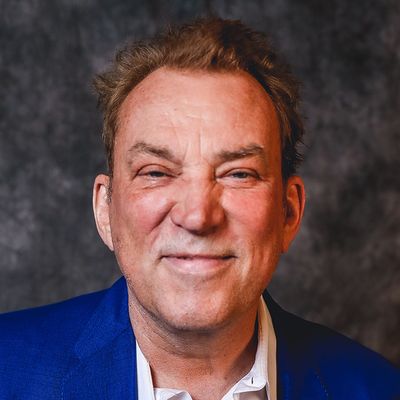
Des McAnuff is the American-Canadian former artistic director of the Stratford Shakespeare Festival and director of such Broadway musical theatre productions as Big River, The Who's Tommy and Jersey Boys... Read More
From the show: The Producer's Perspective Podcast with Ken Davenport
Guests
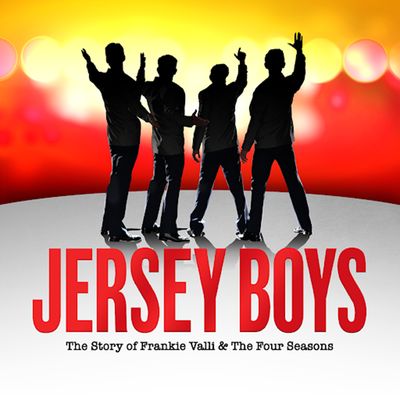
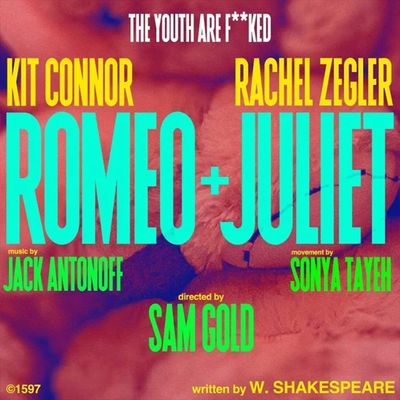
Featured Shows

About
Des McAnuff is the American-Canadian former artistic director of the Stratford Shakespeare Festival and director of such Broadway musical theatre productions as Big River, The Who's Tommy and Jersey Boys. He was artistic director of the La Jolla Playhouse, which he revived in 1983, during which time the theatre won more than 200 awards. For the Playhouse, he directed Romeo and Juliet, A Mad World, My Masters, Big River, As You Like It, A Walk in the Woods, Two Rooms, 80 Days, Macbeth, Three Sisters, Elmer Gantry, Much Ado About Nothing, The Who's Tommy, and How to Succeed in Business Without Really Trying. He has directed two motion pictures, The Adventures of Rocky and Bullwinkle (2000) and Cousin Bette (1998).
Des has directed some of my favorite shows on Broadway. On top of his directorial credits, Des has been the Director-In-Charge at both the La Jolla Playhouse and the Stratford Festival, taking both organizations to new heights during his reign.
As you can imagine, he and I had a lot to talk about, including . . .
- How starting a theater company with other like-minded up-and-comers helped launch his career (that theater company is the now powerhouse producing org, The Dodgers, by the way).
- How he develops a show . . . which is never the same way twice.
- How the Broadway/Regional Theater enhancement model was born . . and why he thinks what’s happening in that market today is “dangerous.”
- The challenges of creating a musical with pre-existing music (Tommy, Jersey Boys) and his tips on how to do it.
- What show (or should I say “shows”?) he’s dying to direct . . . and why.
Keep up with me: @KenDavenportBway
Transcript
This transcript was automatically generated and might contain errors.
[0:10] Ken Davenport: Hey everybody, Ken Davenport here. You're listening to the Producer's Perspective podcast. Super excited to have yet another superstar Broadway director with us today. This one is so special. From what I hear, he's a citizen of two countries, in fact. Welcome to the American and the Canadian Tony Award-winning director, Des McAnuff. Welcome, Des.
[0:30] Des McAnuff: Thank you so much.
[0:31] Ken Davenport: So some of Des's credits, Big River, The Who's Tommy, revivals of How to Succeed in Business, which was such a thriller. I loved that production. Guys and Dolls, 700 Sundays with Billy Crystal, and that little teensy-weensy hit called Jersey Boys. But the credits go on and on. Go check out his IBDB page if you want to learn more. In addition to all that stuff, Des was the artistic director of the famed La Jolla Playhouse and also the Stratford Shakespeare Festival as well. He's directed opera, a few movies, directed everything except traffic. That's my big joke. So we'll just stop there. How did you get started in the biz? Let's go way back to the beginning. Where did it all begin for you?
[1:10] Des McAnuff: You know, I think I more or less backed into the theater, and I certainly backed into directing. I think that's common with directors. I think it's perhaps it's happening now that young people might set out at high school to decide to be theater directors, but I think that's probably still quite rare. I grew up mainly, of course, my teenage years happened in the 60s and into the early 70s, and at that time everyone, every guy had to be in a rock and roll band. That was essentially the only way to meet girls. You know, so I played guitar and I started composing music, and one thing sort of led to another. I ended up auditioning for Hair when it came to Toronto, which is where I grew up, and I didn't get into the company.
I got fairly far along in the process and actually did a couple of workshops and I suppose in a most arrogant way. I thought to myself, why write songs? You know, I'd done some high school plays, I can do this. So I wrote a musical and I composed the songs, and I went to a very, very large high school, which was really musical, and a lot of great musicians, and I went to my high school teacher in the spring and said, I'm gonna write this musical over the summer. If I come up with it, will you produce this instead of MAME, which is what they were planning to do as this whole show? And he said, sure, you know, I'll look at it. Not believing for a second that I'd actually do it. So the first day of school in September, I came in with my script and my guitar, and he got the music teacher and a couple of people together, and I auditioned the score for them and gave them the script, and God bless them, they decided to do it. So that's how I really got involved in the theater. There was no decision beyond that.
[3:22] Ken Davenport: What was the show called? I mean, what was it about?
[3:25] Des McAnuff: It was called Urbania, and it was about a kind of city of the future. This was at the time of the Vietnam War and so on. And so it was about a group of, I suppose, rebels inside the city, underground, rebelling against a kind of totalitarian regime. So that's what it was about. And I think it had a cast of 50, and I had a spectacular band, and I see many of these people to this day. You know, we get together socially once in a while. If I have a show in Toronto, I'll invite people to that, and so I still see them, and I think for all of us it was a kind of life-changing experience, even for those that had nothing to do with the theater beyond that. It was that moment in high school when I guess a bunch of people come together and do something.
I guess it's the equivalent of being on a championship football team or something like that. MTI, if you're listening, there's an original Des McAnuff musical waiting to be put into a catalog and licensed to high schools all over the country.
[4:34] Ken Davenport: So, what was the first directing job that you had?
[4:38] Des McAnuff: Well, I started as a composer and a writer, and that went on for a while. And I went through a period in Toronto. I mean, this is hard to kind of fathom now, but in Toronto there was a really vibrant theater scene. It was an explosion in the 1970s, and there were a number of reasons for this. Canada was developing its national identity. There were grants from the government, the liberal government at that time, and they managed to seed a lot of arts organizations. So almost overnight in Toronto, there must have been 15 or 20 equity theaters, small theaters mainly, and so it was possible to, you know, actually make a living as a writer. I also worked a little bit for the CBC for the television network and so on.
But I was only about twenty or twenty-one, and I in fact intentionally stopped writing music for a while because I felt like I was getting too many opportunities as a composer, not enough as a writer. And I know again, this sounds far-fetched, but if you had leadership skills of any kind, if you could basically string a couple of sentences together, and you were a writer and a composer, maybe even a leading actor, it was almost expected at some point, you know, that you would direct. And so I directed a production of The Bacchae, and I also did an adaptation of Marlowe's Doctor Faustus. And when I arrived in New York at the tender age of 23, I had a resume as a writer and so I immediately got a job here at what was then called the Chelsea Theater Center, and it was only because I was so, you know, hideously young compared to other people in the scene, and that had everything to do with Toronto, and probably not an awful lot to do with me.
[6:45] Ken Davenport: We're gonna go back into your background in a bit, but I wanna digress because you talk about Toronto. I actually worked for LiveEnt for three years, so I certainly know about the vibrancy of the Toronto market or what it was. It obviously has changed a lot. It's just not what it was, certainly 10, 20 years ago, never mind thirty or forty. What do you think happened? Why isn't it the way it used to be?
[7:08] Des McAnuff: You know, I what the not-for-profit scene, the so-called alternative theater scene, again exploded at the time. There were resources and tremendous resources and an appetite. I remember a time when you could mention Young Street in a play and get applause in the audience. So I was very young at that point. And you know, we passed through that quite quickly. And then like any art scene, you require young people, students certainly, and others that have an appetite for such things. And that went on for a long time. The other explosion that happened in Toronto had much more to do with the commercial theater scene, and that happened really in more in the 80s and 90s. And that was, you know, Garth Drobinsky, who was an entrepreneur and saw an opportunity in Toronto to develop shows for New York and London and other places in the world.
And obviously I should mention that the Murvishes to a fellow named Aubrey Dan was involved for a while, and Toronto's a fairly large market, so that made sense for a while. I'm not sure that it was tremendously lucrative. So the commercial theater, unfortunately, it's supposed to be about hopefully creating art, or certainly creating quality work, hopefully art. But it also, you know, it's the halls of commerce, so one is required to pay investors back, and although this happens quite rarely, as we both know, there's a goal to actually make money for those investors. And I'm not sure that happened all that successfully in Toronto, even though there were certainly some notable successes. I think you have to have a lot of passion to produce theater, and I think Toronto continues to be an extraordinary art scene.
I want to say it is a fantastic place for the arts. I think the commercial theater and maybe the alternate theater have gone back into balance. I believe Toronto is considered one of the four largest art scenes in the world, along with London, Paris, and New York. So that in itself is pretty, I think, astonishing. I think at one time the alternate theater and the commercial theater overshadowed some of the other forums, and I don't know whether they've caught up or the theater's fallen behind. I like to think that the others have caught up.
[10:07] Ken Davenport: So let's get back to you. So you arrive in New York at the tender age of 23, you're working at the Chelsea Arts Center. How do you go from that to Broadway? What was the first Broadway gig that you got?
[10:20] Des McAnuff: You know, just a step in between. I worked at Chelsea at the Chelsea Theater Center, and then became and then we started Dodgers. So that would have been 1978. So I was still quite young. I would have been 26 and partnered with Michael David, and we've done many, many shows together, and we're still, you know, close friends. I actually have an office about 50 feet from his to this day. And so I started working for Chelsea and then went to the Dodgers. And while we were a not-for-profit organization, my partners definitely had ambitions in the commercial theater. One of my partners at that time was Rocco Landisman, who ended up being one of the producers along with Michael on my first Broadway show, which was Big River.
So I met those guys the first summer, the first year I was in New York. I think I met Michael David in July. I moved here at the end of May, and so that definitely opened some doors, and then I worked for Joseph Papp, and I worked for Mr. Papp both as a playwright and as a director. And I suppose it was—I don't want to say it was inevitable, but it was not unusual that I would end up doing a Broadway show.
[11:47] Des McAnuff: And uh Rocco basically uh it was his first Broadway show and came to me and said, Would I like to do this adaptation of Huckleberry Finn? And I said, Well, yeah, and so we did.
[11:58] Ken Davenport: So talk a little bit about that, how that the Dodgers were formed, because I find so many artists come to New York and it's a collaborative art form, and it sounds like obviously those relationships were a big springboard for you. Docco going, hey, you want to do this because you were in that organization. How did it come about?
[12:17] Des McAnuff: You know, uh uh Michael David uh doesn't even remember this conversation, but we were working for another organization, and I was actually uh the uh the dramaturg, as we say here in America, the dramaturge, as we say in Canada, as well as being a director, I directed for the company and so on. And Michael was uh the executive director for the Chelsea. And basically one night we he had I didn't even know we had a car. We were in Brooklyn at the Brickline Academy, and we went out for this drive, and he said, What do you think of starting a theater with a couple of our other colleagues, uh Ed Strong and Sherman Warner, and you know, again, it was a life-changing moment for me, one that he doesn't even remember, and it just seemed to make sense.
We we we were all we called ourselves associate directors. I think he more or less took the role of producer. I more or less took the role of artistic director because I happen to be the one that directed plays. And uh we started, I think we made $170 a week each when we were working, which was probably about 10 or 12 weeks of the year. And uh we started producing theater as a group, and again, because I was the one who directed, I uh I got you know a number of projects and uh projects that I wanted to develop or that others wanted me to develop. And I was in a very exciting theater. And then as I started going in, starting working for uh Joe Papp and they started kind of branching off into the commercial theater, and we kept we've kept this association all these years.
When I went to Lahoya, you know, uh uh we continued to to uh maintain you know close ties and uh we come together when we have an artist or an artistic reason to do to do that to come together. It's it's never really been motivated by you know um uh you know necessarily feeling like we have some huge commercial you know opportunity.
[14:30] Ken Davenport: I mean Tommy is a great example because you know, uh I remember somebody one of the from one of the foundations said to me, Well, what do you think of when you're doing something that's commercial like that? He said, Wait a minute. You know, we did a a stage version of a rock and roll album that's 20 years old, more than 20 years old. And when we did it, there was no sense that we were going to Broadway, you know. We we we were doing it because we we happened to love this particular piece, and it turned out that it touched a nerve. But if I knew how to do that to me, I would be in a different kind of business. I would be doing that all the time. If I knew I was saying hey, I know how to create a huge show. So you you do things that you want to do, and that's what always been the case with me from Christine.
[15:18] Des McAnuff: Yeah, it's such a great point. Every time I've sat down and thought, oh, I should do this project because it will make money, it usually never does, actually. It's you have to do what you love, and then out of that is born something like Tommy, which I was in rehearsals. My first job was the production assistant on My Fair Lady with Richard Chamberlain in 93.
[15:39] Ken Davenport: I remember.
[15:40] Des McAnuff: We were rehearsed right underneath you.
[15:42] Ken Davenport: Oh my god.
[15:43] Des McAnuff: And ever sorry. Everybody was talking about the excitement of upstairs. I remember you guys got like uh show jackets like as a gift uh as you were leaving to go to Broadway from that. We were all very jealous.
[15:55] Ken Davenport: Um you've developed a lot of new musicals like that. When do you like to get involved with a show, uh new musical early in the process? Do you like drafts to be done?
[16:07] Des McAnuff: First of all, I I I just want to say I do love doing musicals, but I also love doing new plays, and I particularly love doing classical plays. Um and what's one of the things that took me to Stratford in Canada is that you know, I love to do Shakespeare, and so I got to, you know, that's a very large company of actors. So musicals, it's it's kind of like part of what I want to see on my dinner play, but I I think it's always been somewhere around, you know, I don't know, fifteen, twenty percent of, you know, what I've managed to do, which is about right. I think they all kind of inform each other. The thing I would say about musicals to answer your question is I don't think there's a recipe for developing.
Uh I'm working on a project or sort of cooking up a project with uh a writer named Robert Carey. He once came to me with a project uh called Palm Beach, very good musical, which was more or less complete. Um it was a complete scripteta score. Uh I don't think we added a song during the time I worked with them. I did chop it up some in terms of uh moving locations around because we could do that at La Hoya was in a a huge Palm Beach mansion, and we wanted to kind of go all through the mansion over the course of the play. But other than that, I think that was a directorial contribution. It was his project and and the composers. It was his play. I'm perfectly happy doing that. If somebody comes along and sh and asks me a a musical and it's it's more or less complete, you go, wow, look at this. Away we go. Rehears all, you know, and and we'll go into auditions. A lot of the time that doesn't happen. And sometimes you do want to get involved.
[17:58] Ken Davenport: Uh often you want to get involved as a storyteller. Musicals have to be very efficient, as you know. You've got probably about 45 minutes of real storytelling, of real play. And I mean, everybody says, ah, the musical numbers move the quad along. Well, they do to some extent. A lot of that sleight of hand, they definitely expand the piece emotionally, and they take you someplace. Uh you know, the plays normally can't take you emotionally. There there's a heightened sense of uh kind of an emotional journey. So you have to be very concise, and it's an advantage sometimes to have the director in on that process early on.
[18:43] Des McAnuff: I think people that probably don't create musicals have the illusion, including people that write about them, that somehow somebody goes off to their cabin in the woods and cooks up this script, and you know, on now, I guess on the word processor in the old days on the typewriter, hammers it up, hands it to the director, the director goes to the designer. And you know, anyone who does this really understands that that's not the case. It's never that neat and tidy. Uh, there's an awful lot of overlap, uh, it truly is collaborative, and sometimes it's an advantage to have the director in right from the get go, from the point you're a storyboarding or creating outlines.
[19:33] Des McAnuff: Uh I've done musicals that have come from so many different directions from great novels, from rock and roll albums, a how to book, the flaming lifts. We did a piece called Yoshimi Battles the Pink Robots, a wonderful band, uh brilliant guy, uh Wayne Coin. And that show came together from three different rock and roll albums. So they have sometimes they it's a circuitous route that takes you to the musical, and uh depending on that route, uh, you may find it helpful to be involved as a director.
[20:11] Ken Davenport: So you've actually directed a number of shows that have come with preexisting catalogs, if you will, or pre existing music. Uh, you know, some people may call Jersey Boys one of the most successful jukebox musicals of all time.
[20:24] Des McAnuff: I actually don't use that word jukebox musical. I think it is wrong. I think it's a biomusical, if anything. I think that's true. Uh, but the music came. It wasn't like you were gonna be like, uh, that one's not good enough, Frankie. Go write something else, come up with a different song and rewrite the second verse, and what about a different bridge? So you did have stuff to work with.
[20:46] Ken Davenport: How how challenging how much more challenging is that than working on something new where you can send the writers off to write?
[20:54] Des McAnuff: You know, first of all, on that particular project, I did have Marshall Brickman and Rick Ellis uh, you know, writing uh, and so it was very much a kind of new musical in that way. And uh, you're quite right. I I would call it a biography too. I think there probably is there may be such a thing as a jukebox musical. I uh I always associate that with the idea that you make up a storyline, and you know, you've got existing songs and you make up a s you know story, uh, which has been going on forever. I mean, people have been doing this, you know, uh for for a very long time.
[21:28] Des McAnuff: And by the way, even with so-called new musicals, with you know, I I can tell you for with great certainty that most new musicals involved with new compositions, songs that have come from the trunk, songs that have been rejected for other shows, songs that have never been recorded by the composer. So, you know, you're always doing a little bit of that. I think there's always uh uh a little bit of borrow and steal on all of these shows. Um, you know, I I think you have to have a pretty strong idea. I mean, Marshall Brickman says something very smart about Jersey Voice. He says if it was about four physicists, there wouldn't be a score.
[22:10] Ken Davenport: No, they wouldn't sing, there wouldn't be any songs.
[22:12] Des McAnuff: So it happened to be about a band, and that gave us a great excuse. And it's actually fairly simple the way it operates as a show, and I obviously seems to be still pretty effective after 10 years. Um the songs in the first act when they're they're basically, you know, you could I suppose I'd almost describe them as hoodlums. They're certainly juvenile delinquents, and they you know, I think uh two of them had spent sixteen years of time in the in reform school in the penitentiary, a total of sixteen before they took off. So you have these really innocent songs, and meanwhile they're kind of dealing with the the mafia. There's a juxtaposition there that's really delicious.
[22:56] Des McAnuff: As the band gets more experienced, more successful, more jaded, the songs start to advance the piece in a kind of thematic fashion. So you get into songs like Begin and Stay and Let's Hang On. All of all of the songs from really the end of the second act to the end of the show have some kind of thematic relationship with the storyline.
[23:25] Des McAnuff: So I think you have to, if you're dealing with anything that's preexisting, if you're actually inventing something, you know, a biography or some other story, then you have to have a way into that experience that's going to be meaningful to an audience.
[23:42] Des McAnuff: And I don't know how often have I done it. I guess I did it on Yoshimi, which was a completely different experience because I just listened to a bunch of music by the Flaming Lips, and based on an incident in their lives, I got this notion, you know, listening to the songs. And they were kind enough to let me kind of develop that very, very different experience from Jersey Boys. Tommy, of course, was conceived as a story, even though it's more of a concept album in many ways. There is the story implied there. So that I already had a lot of architecture to work with with that one. I think anytime you're working with a classic musical, you're working with something that somebody's already done that work for you, but you can't, when you're doing the classic, you obviously have to pay attention to the original intentions.
And so I don't know, I find all of these experiences different. The one thing I wouldn't want to do is, you know, I try not to repeat, you know, I try to end, I mean it's a dilettante paradise being a director, right? Because you can sort of enter a new solar system, you know, every time you come out of the box. And it's great to take advantage of that. I'm not sure I would be all that good at trying to repeat something anyway. I think I would, I don't think I'd have the gumption to, you know, it's hard work. And I think part of it, the thing that makes it a privilege and exciting is of course is that it's an adventure.
[25:37] Des McAnuff: You've been an artistic director as well of two of these BMOs, regional theaters from Stratford and La Jolla. You enjoy heading up these giant institutions and being from the other artistic director I've talked to. It's not just about, oh, I pick some plays, I direct the play that I want to. You become really a producer of these theaters in a way, even though you have managing directors. What's that experience like?
[26:03] Des McAnuff: I have enjoyed it tremendously. I would say that La Jolla Playhouse, which, you know, this is complete institutional egotism, but I do think it is one of the great theaters in North America. It was just a fantastic opportunity to be there from the get-go. You know, there was really no organization when I started that they'd ever produced a season for 20 years, and that had been SummerStock. So that was a fantastic thing to go through as a young director. I was only 30 when I went there. And I really considered that my greatest role in launching that theater. There were many others involved, of course, and many other directors, but my role in launching that artistic theory, it probably is my greatest accomplishment, and that's the accomplishment I'm perhaps most proud of.
You know, I think it's a whole spectrum of experiences. I think you have to have a sense of duty to run a theater. I think if you're doing it for opportunity for your own opportunity, you probably figure out pretty quickly that there might be better ways to fulfill yourself. You know, often you become, as director, as artistic director, you have to, you always have to be responsible for what's going on with the institution. And, you know, when you're a freelancer and you're sort of a guest at a theater, you don't have to worry too much about the bottom line, but when you're running a theater, the audience, they become your family in a sense, and the donors and the staff. And so you have to be worried about people's health care, or you should be doing that.
And so I think you have to look at it as if you're doing your duty and you're supporting others. You know, you're not just doing it so that you can get to direct that, you know, revenge tragedy you've always wanted to do. What's great about it is you get to support other people. And I think the people that brought me to Hawaii wanted to help me fulfill my dreams as an artist. And so it was very easy for me to translate that into fulfilling other people's dreams. So when directors came to me, I wanted to do my best to fulfill their dreams. And I didn't just choose plays off of a menu and pick hirelings to come in to do them. If you're going to direct a play, you need to have some vision, you have to have a reason to do it.
And so it makes much more sense to ask directors what they want to do. And so I did spend a lot of time trying to encourage people to come up with ideas and then to support them when they were executing those ideas. It was great. I really enjoyed it. I'm very happy though to wake up in the morning and for the most part get to concentrate on my own projects. And, you know, because I'm so used to the other things, there are times when that feels a little selfish. Like I feel like I should be, you know, going off to talk to the Rotarians or doing the various things that you do running a theater. But, you know, ultimately I really enjoy being, you know, my beautiful wife is an artist and a sculptor, and so she has a studio that's close to where I work, and I love that not having to go off and, you know, make sure whatever that the telemarketing people are being well taken care of or whatever it happens to be. On the other hand, I don't resent, report, regret a single minute of the time I spent running the theater. It was just fantastic.
[30:29] Des McAnuff: One of the things that I will also say I think is one of your greatest accomplishments is at La Jolla, I really credit with you as helping to create the structure of the bridge from the regional theater to Broadway. La Jolla has pumped out so many shows, many of them directed by you, that have gotten here and developed this idea of the enhancement model of the producers going to regionals. How did that begin for you there? And how important is that to Broadway today, do you think?
[31:01] Des McAnuff: You know, I think it's important, and I think it can be dangerous. And I'll tell you why, and I'll answer the question first. You know, in the early 80s, we started the playoffs, and it was unusual to give birth to a new arts institution. I mean, this again was something that was coming back to life, but we'd been dormant for so long. It was a clean sheet project, as they would say in the airline industry. It was a brand new airplane. And, you know, it was a time when I think there was a feeling that there was a lot of talk in those days about an artistic deficit, and there was a sense that Broadway had become very expensive, and that there were a lot of theatrical producers and entrepreneurs that were waiting for product would be the term at the time.
And then the resident theaters were often waiting for Broadway hits from two years ago. They're waiting for the rights to become available so that they could, you know, put together a season of plays. So there was a sense that everybody was kind of waiting for everybody else. And I think with the Playhouse, while we had no, we had a little bit of a financial memory, a legacy that had been left us, but not an awful lot, but a little bit. Well, I think we had the sort of ability to, we had no habits, I think is one way to put it. You know, we had no habits, we hadn't developed any institutional habits, and that can be a great thing when you're starting something up. So I think we were able to follow our impulses, to do work we really believed in.
And it became very clear that if you were going to do work with Google musicals, that the resources of a not-for-profit theater were kind of inadequate. And so because I was working with people like Rocco, who was one of the first producers to support work that way, I felt comfortable doing the not-for-profit thing and inviting people that had rights to commercial shows to work with us to develop these pieces. The thing is we had very strict rules about responsibility. You know, when we produced a show, we called the shots in terms of what happened at our theater, you know, the artistic decisions that were made. We didn't expect to call the shots once the show moved on, and somebody forgives someone else had their first-class rights.
They had to then call the shots. So you have to have a certain amount of trust going into a situation like that because, needless to say, people are going to have strong opinions, and I think we managed to do that very successfully. I can remember one or two occasions during the time I was there when it was uncomfortable when people thought of it as just an out-of-town tryout. And but I can only honestly think of one or two times. I think the downside for the not-for-profit organizations is that you don't want to become addicted to that kind of funding. Now, anyone who's run a theater will tell you that people that work in for-profit are necessarily not necessarily more opinionated than people that come from other kinds of funding.
You know, people from foundations can have awfully strong opinions, and they can be telling you what you should be doing too. The National Endowment for the Arts has been known to do that, to say, well, this is the kind of work we're going to fund.
[35:07] Des McAnuff: So, uh, everybody's got some sort of an agenda. I think it's really important for all theaters to make their own decisions. And even if that million dollar enhancement, or in this day and age, it's more like two and three million dollars, if that looks really juicy to you, you know, be aware, because, uh, you know, integrity is not something you can just have Mondays, Wednesdays, and Fridays. If you have artistic integrity, it's got to be a full-time thing. So if you're taking funding from anyone, be sure that they understand that you're actually making the artistic decisions.
[35:46] Ken Davenport: Fantastic advice coming from you to all these regional theaters and for me to hear, because I've spoken to so many of these regional theaters, and I'm taking calls from people saying, "Hey, Ken, do you have anything that you can bring to us that you would enhance?" because they are looking to fill that void budgetarily rather than artistically. And I have great sympathy for that. I mean, the whole co-production thing can be really difficult, and you end up feeling like a car salesman. And I'm sure that, not to disparage car salesmen, but you know, you feel like you're calling up and saying, "You know, I got a four-character, you know, what do you like it? Send you the four-character in March.
Can you give me the..." and you know, suddenly you're not really making, you know, decisions for the right reasons. And, uh, it's really hard. I mean, many of the resident theaters, they have small auditoriums, you know, they don't pregenerate an awful lot of so-called earned income. All the other contributed stuff is earned too, believe me. Uh, so you know, it is a struggle. And I guess the most important thing is for all of us to try to be involved in one way or another philanthropically and to really, you know, put back.
[37:00] Des McAnuff: The thing I love about partnership with, you know, a Rocco Landism is a Michael David. When you have a success, that creates a whole new income stream for the not-for-profit theater. And that money in turn creates more plays, more musicals, you know, more new work, puts more artists to work, and becomes, you know, you're a perfect circle when that happens. You know, you're getting, and this is what, of course, Joe Papp did so brilliantly. Uh, he got, uh, Louester Mertz to contribute all of the underwriting for A Chorus Line, and A Chorus Line created an entire theater scene. Uh, and, uh, you know, I had the privilege of enjoying, uh, productions that were based on the profits from A Chorus Line, and I think Michael Bennett and Joseph Papp and Louester Mertz and everybody that contributed so that it can be a really good thing. It's dangerous though. It can be dangerous. Those relationships can be perilous, and you need to have very clear rules about how it works.
[38:14] Ken Davenport: Um, and sometimes the opposite works. You know, you produce a show, you're very proud of that. You go to Broadway. I've had this happen too. You go to Broadway and the commercial producer's taken over. Maybe it's even a director that's a friend of yours that's been, and you look at the just go, "What are you doing? What have you done?" But you don't really have the right to say, "You know what, you can't do that," because you entered into that relationship. So once they've taken it over, you have to be careful. You don't want to sleep with just anybody. Be safe. Be safe. Practice safe. Safe enhancement.
[38:55] Des McAnuff: Uh, you talked about your love of classic plays, but you also do musicals and new and revivals. Is there a project you have not done, a play or musical that you've not done that you would drop everything for? Someone came to you and said, "I want you to direct this on Broadway."
[39:10] Des McAnuff: Well, I have a certain gargantuan thing I would love to do. I would love to do Othello. I've become, uh, not to name drop, but I've become friends with, uh, good friends with, with, uh, Christopher Plummer. And I happen to think he's the, you know, perhaps the great classical actor of our time, is certainly one of them. And, uh, in North America, I would say he's without question the great classical actor. And I got to see, you know, with James Earl Jones do Othello years ago, um, which, uh, brand, uh, friend and, uh, Barry Weisler produced, and, uh, it was just, you know, they were, it was an astonishingly good piece of work and Mr. Plummer was transcendent. Uh, and so I would love, now that that's far enough in the past, and I don't think you'd want to play it again. So I'd love to tackle that.
[40:03] Des McAnuff: Um, I, I, the thing I would really love to do, I would love to do at some point in my life if I get the chance to do Richard II through Henry the Fifth, which of course includes the two parts of Henry the Fourth in the middle, the great tetralogy. Uh, we don't get to see it done very often. Uh, certainly the great tragedies are, uh, you know, the pieces that you really, you know, grow up, you know, worshiping, uh, you know, Hamlet, Lear, uh, you know, Othello, Macbeth, these are without question, you know, the greatest plays. And you think about Shakespeare with other artists, you know, if you get to sculpture and painting and so on, it's, it's, you know, if you take the ten greatest creations, you're generally going to have nine or ten artists.
With plays, I think you've got the ten greatest plays and probably seven of them are by Shakespeare. But the one that I think we don't get to see as much is this huge historical mural, you know, that this great tetralogy that he wrote, uh, you know, right at toward the end of the, uh, the 1590s when he was a young dramatist. And I think that is just, uh, a, you know, a work of genius that is beyond human comprehension. And I would love, I, I would find it very daunting and humbling to tackle it, but with the right company, I'd love to do that.
[41:33] Des McAnuff: And I would even, you know, there are a couple of directors I, I'm sure that, you know, uh, I would enjoy doing that with if it, if it became too much and maybe you divide the plays up in, uh, in some way. So that would, uh, definitely be a dream. I'd also love to do, uh, a film of Shakespeare. I mean, I, I, uh, I did an adaptation some years ago of, uh, actually a writer named Chip Hand more accurately did an adaptation and I, I worked on this, uh, of Romeo and Julia. And the nice thing about being a director is, um, you know, maybe you can only play Romeo until you're 34 or 35, but you can direct it until you're 90 or beyond, I suppose. So, um, that's, I'd still like to do that too.
[42:22] Ken Davenport: That's so true, and for so many people out there if your acting career isn't going the way you want it to, but think about directing.
[42:28] Des McAnuff: That's right, or switch to Macbeth and then Lear, you know, that's what you have to do. So I was also thinking about those Henry's and all those histories like the original Game of Thrones, that Shakespearean series there.
[42:40] Ken Davenport: Uh, okay, last question, um, which is, uh, I'm calling my genie question. I want you to imagine that the genie from Aladdin comes and knocks on your door and says, as you've done such a fantastic job of such a diverse, amazing, uh, selection of material from the classics to Jersey Boys to the work that you've done in the regional theaters at building these institutions. Uh, I want to grant you one wish. Uh, a reward for all your hard work and dedication to the American and Canadian theater.
[43:11] Des McAnuff: Oh my god. The one wish, uh, is this. I want you to think about what drives you so crazy about Broadway, gets you angry, gets you mad, keeps you up at night. Oh, if only this were different. What's the thing you would ask this genie to change with this one wish?
[43:28] Des McAnuff: I, I would wish that it was less expensive. And, uh, I think great work is being done. Uh, I, I think, you know, this has been a, uh, I think a most, uh, encouraging time. I think Janine Tesori is a wonderful composer. I think Hamilton's very exciting. I think there's some really good, uh, plays, uh, uh, uh, going on. Um, I think it's become so expensive that there is, uh, a tendency to want to go to stars, to people that can, you know, uh, uh, uh, you know, attract, uh, ticket buyers at an outrageous level so that, you know, you can, you can kind of, uh, uh, get the investors' money back. And I don't know what the solution is to that ultimately because it's not like, uh, uh, the working actor is becoming wealthy working on Broadway as, as we know.
Uh, stars make can make very good money, but the chorus, uh, woman who's, you know, doing eight shows a week and understudy rehearsals and the whole deal, you know, they're making perhaps a living, but not a great living.
[44:47] Des McAnuff: So I'd love to see that. And if the genie would really sit down and talk to me, I would say to the mayor's office that they could do things that would really help. We, we kick and scrape to get rehearsal space. The commercial theater brings in an, uh, an astonishing amount of money to the city in the billions. And it would be really nice if there was some attention paid to that. Uh, beautiful place to work, a nice rehearsal facility, maybe that was affordable for, for, uh, producers and, uh, perhaps, uh, not-for-profit groups too. I mean, there are a lot of things I think one could do to, uh, improve, uh, the whole Broadway culture that would affect the art and that might ultimately, uh, affect ticket prices.
I think, you know, I think there's lots of great things to give me. I think groups coming together and saying, uh, we're going to pay for tickets for students, and you know, we, we guarantee that students can get, you know, and for a lot of students, $10 is an enormous amount of money. But, you know, I think that kind of work, uh, really needs to be done so that it doesn't become elitist, so that the, you know, Broadway remains open for the people.
[46:13] Ken Davenport: Well, I'm certainly not a genie, but I'm very thankful that you sat down to talk to me today. Uh, and I'm sure everyone out there is just as thankful. Thank you so much for spending time with us. Thanks to all of you out there for listening. We've got some great guests coming up, so don't forget to subscribe. You don't want to miss them. Thanks so much. We'll see you next time. Look out, Broadway here I come.
© Broadway Podcast Network, All Rights Reserved