

Todd Haimes (Artistic Director/CEO) joined Roundabout as the Executive Director at the age of 26. From 1983 to 1990, he served in that position, overseeing the company's finances, marketing and fundraising. Mr... Read More
From the show: The Producer's Perspective Podcast with Ken Davenport
Featured Shows
About
Todd Haimes (Artistic Director/CEO) joined Roundabout as the Executive Director at the age of 26. From 1983 to 1990, he served in that position, overseeing the company's finances, marketing and fundraising. Mr. Haimes has been the Artistic Director of Roundabout Theatre Company since July 1, 1990, and he became the Artistic Director and CEO in 2015. Mr. Haimes is the former President and currently serves on the Board of The Alliance of Resident Theatres/New York – the service organization representing all not-for-profit theatres in New York City – and he is a member of the Broadway League Executive Committee. He is the recipient of the 2013 Lucille Lortel Lifetime Achievement Award and was named a Crain’s New York Business 40 Under 40 honoree in 1992.
It was under Todd’s leadership that the Roundabout Theater emerged from bankruptcy, acquired three (!) Broadway houses, and expanded its mission to produce classic musicals which eventually yielded productions like Cabaret with Alan Cumming.
So how did this all happen? You’ll find out on this week’s podcast, where Todd tells me . . .
- Why he’s an Artistic Director that doesn’t direct.
- The three seminal moments that made Roundabout what it is today.
- How Roundabout almost went bust . . . more than once, and how his gut turned it around.
- Why never having a “master plan” was the best plan anyone could ever make.
- Why he hates premium pricing.
Keep up with me: @KenDavenportBway
Transcript
This transcript was automatically generated and might contain errors.
[0:09] Ken Davenport: Hello everybody, this is Ken Davenport, and welcome back to the Producer's Perspective podcast, episode number seven. We've talked to a lot of folks already in the first few episodes that have had a major impact on the Broadway landscape over the last few decades. But today we're going to talk to someone that has perhaps had the biggest impact on the Broadway landscape, both literally and figuratively. My guest today is Todd Haimes, the artistic director of arguably the most powerful and most significant nonprofit theater company in the country, if not the universe. I'm talking, of course, about the Roundabout Theatre Company, which, and this is direct from their website, and I really couldn't believe it when I read it myself, has over the years been recognized with 29 Tonys, 41 Drama Desk Awards, 50 Outer Critics Circle Awards, 9 Obies, and 5 Oliviers on top of that for its production of classic plays and musicals.
In addition, under Todd's leadership, Roundabout has acquired and now operates three Broadway theaters. These were three Broadway theaters that actually didn't exist before in their current incarnation. So you know how we talk about how Broadway has boomed over the last couple of decades, increased attendance growth? Well, the guy sitting in front of me right now has had a lot to do with those increases in numbers. Welcome, Todd.
[1:23] Todd Haimes: Thank you.
[1:24] Ken Davenport: What's funny is that, you know, I always think about Roundabout starting with you. You know, if someone said, when did Roundabout start, I would say, oh, when Todd Haimes started and founded Roundabout, but that's actually not the case. Can you tell me a little bit about the history?
[1:38] Todd Haimes: We started in 1965 by Gene Feist. We're coming up on our 50th anniversary this year. And it was a theater that was meant to do the classics. It was always a subscription theater. The first subscription, I think, was five dollars a play for three plays. The first play was The Father. They started with a light play, and they were down in a basement supermarket in Chelsea. And Gene taught part-time, no, I guess full-time, before I knew him, at high school in Yonkers, I think, and founded this theater, and then subsequently took on a partner, a much younger partner, named Michael Freed. So it was Gene Feist and Michael Freed. To make a long story short, from 1965 to 1983 marked a period of decent artistic success.
Ironically, they were one of the first not-for-profit theaters to bring in stars. People like Malcolm McDowell and Tammy Grimes and people like that. Malcolm McDowell did a highly acclaimed production of Look Back in Anger. And they acquired another theater on 23rd Street, which is now a movie theater, but then they acquired it and it was a 300-seat theater off-Broadway. They built up a subscription audience of about fifteen thousand people. That's the good news. The bad news is that the theater was terribly mismanaged. Without being mean to people who, uh, Michael Freed, I don't know, and Gene has passed away. And I like, in a certain way, I loved Gene, but they didn't know how to run a theater.
They had ideas, but they didn't know how to run the actual theater. So in 1977, the theater went into bankruptcy, Chapter Eleven. And this was one of the first not-for-profits in history to go into Chapter Eleven. Now bankruptcy is a business tool. Every company goes into bankruptcy and starts again, and every airline has been in bankruptcy and they're all doing great. But in those days, bankruptcy was like the Scarlet Letter. If you were in Chapter Eleven, first of all, you were in big trouble with the court, and second of all, you had to disclose it and nobody would contribute money because they knew it was an unstable organization. So Michael Freed, who was more in charge of the business affairs department of the theater, was kind of let go by the board of directors when they discovered in horror that by the time 1983 rolled around, the debt had actually gotten bigger, not smaller.
And the bankruptcy court was getting very, very, very anxious, and it could have liquidated the company. The only reason they didn't liquidate the company is that there were no assets to liquidate. And so Michael was kind of let go. And I was not a party to that because that was before me, obviously. I had sent my resume in to Roundabout for a job, and I'd been warned not to work there by everybody. They said that Feist and Freed were really heist and greed. But I was looking for a job for personal reasons. I had to stay in New York City. So I sent my resume in, and one day I got a call from Gene Feist who said, would you like to come work for us? And I said, you know, I really don't want to be the number three person there, meaning work for Michael Freed.
And he said, well, things have changed. Why don't you come in and see me? And I came in and he said, it's for the managing director job. Michael's no longer with us. So I said, well, you know, I would consider that. And I met with the chairman of the board, who I still am friendly with, a man named Chris Yeagan, who had given a lot of money to the theater, and he told me as much of the problems as he knew. He told me certainly that they had been in Chapter Eleven for six years. There were tax issues, to put it mildly. There were catastrophic cash flow issues because the deficit was bigger than the annual budget. I was twenty-six years old, and I figured, look, I have to stay in New York City because my wife was in an internship program at New York.
And I remember thinking at the time, which is funny looking back thirty-one years, I remember thinking at the time, looking at the different theaters, thinking, well, I don't think Barry Grove's gonna go anywhere soon. And I was right, he didn't go anywhere soon, he's still there doing great. So I thought, what the fuck? I have nothing to lose, I have no kids yet, whatever. So I took the job for like twenty-five thousand dollars a year, and immediately, like the next week we couldn't meet the payroll, and I realized that things were worse than even Chris Yeagan had described. Not because he kept it from me, but because he didn't realize it. We used to go, I used to go every week for the first month to Chris Yeagan's office in New Jersey and pick up the cash to pay the actors.
It was that bad. Finally, about a month after getting to Roundabout, so this would be somewhere in late February of 1983, I had been there about a month. The board of directors met and voted to close the theater. It was a very, obviously a very sad meeting. The board was very upset because they had potential liability, legal liability and financial liability because there were tax issues involved. And they went off to write a press release closing the theater, several of the board members. And I went home totally depressed. But you know, to be quite honest with you, I wasn't suicidal because I had been there a month, you know. I was just depressed. The next morning, Chris Yeagan called me and said, we've decided to give up one more shot.
I have no idea why he made that decision. I've never asked him. I should have. I still can. Maybe it was 'cause he felt sorry for me 'cause they had just hired me or whatever. But he said, we'll give it one more shot and the next day a check arrived from Chris's mother, and I'll never forget, it was like one of those old-fashioned checks with like a swan flying on it and it was for a hundred thousand dollars. And I'd never seen a check for a hundred thousand dollars in my life. And she said, hope this helps. That was a little post-it saying hope this helps. And that check and then Chris made a contribution himself to his family, I think of about twenty-five thousand, and that check allowed us to get to our next show, which allowed us to do the renewal for the next season, which allowed us to keep going.
And after that year, that year was already two-thirds over or half over, we lost money. But after that year, for the next twenty years we never lost money again. And it turned out, again to make a long story short, that the theater was a theater that actually had an artistic purpose, a valid mission. It was just terribly mismanaged. So it was kind of a going concern that was mismanaged as opposed to a theater that had no business being in business. And so luckily for me, I had gone to business school and it turned out that my background in business really helped a lot. I didn't know I'd need it that much, but the minute I started managing the theater properly, which involved doing a whole variety of things which I could go into or not go into, but the minute I started managing the theater properly, it turned around and started making money.
Not huge amounts of money, but making money. It took us about three or four years to dig out of Chapter Eleven. It was one of the longest Chapter Elevens in history. But we came out of Chapter Eleven and the theater continued with its fifteen thousand subscribers doing work that was, I would say, of mixed quality, sometimes good and sometimes not so good. In 1989, Gene Feist decided to retire. I'd been there six years and it was never part of my master plan to be an artistic director because in those days every artistic director was a director, and I'm not a director and I have no interest in being a director, and I have the talent. But when Gene was retiring, I thought, you know, I could do that job as a producer.
I mean, for two hundred years there have been producers. You know, this whole concept of director, artistic directors and managing directors both were going to the board of directors was a phenomenon that started in the sixties. It didn't exist before then. Before then there were producers. So I said to the board, would you give me the opportunity to be the artistic head of the theater as well? And I think, and I'm not being self-deprecating, I really wasn't quite qualified for it. But they felt had they done a national search, they would have probably hired like somebody good like Mark Lamos or something like that, thinking of the names around in those days. But I think they felt an obligation to give me a shot because I had gotten them out of the hole and out of Chapter Eleven and out of financial risk and all that stuff.
And so they let me be head of the theater, and I toyed with the idea of calling myself producer 'cause that's what I think of myself as, but I called myself artistic director because I just wanted to make it clear, since the theater didn't have the best artistic reputation, I just wanted to make it clear that I was making the artistic decisions. And so that's how I became the artistic director of the theater in around 1989-90.
[11:01] Todd Haimes: In retrospect, I sort of didn't know what I was doing because the theater had not really developed a lot of good relationships with directors. In fact, in the six years or seven years that I was managing director, we never had one director back, I don't think. And here was this kid that nobody ever heard of suddenly being artistic director, and in those days it was considered a little bit of heresy to move from management to artistic. So now, of course, if you look in New York, the majority of the theaters are run by non-directors, but in those days that wasn't the case. So my first season was a little bit put together slapdash, but we got through it, and it was a learning curve for me, and the subscribers were shockingly low.
Then I forgot to mention the course of this timeline, that when I got to the theater in 1983, the landlord was threatening to throw Roundabout out because they hadn't paid rent, shockingly. I was very good about paying rent and sucking up to the landlord, which was the ILGWU, but they evicted us on Christmas of 1984, and so we had to find another theater quickly. And we found this union hall, also ironically controlled by somebody at the ILGWU that liked us. We found this union hall at Union Square that we converted from a union hall. Literally a union hall. I went there and there was a plumbers' union meeting. We spent a million dollars. We got the board to put, and we were still in Chapter Eleven. We got the board to put up loans of a million dollars and we converted it into what's now called the Union Square Theater, but was then the Roundabout Theater.
[12:51] Todd Haimes: So we were on Seventeenth Street in Union Square, just at the moment when it was starting to become a decent neighborhood. The same month that we started performances there, Danny Meyer opened his first restaurant called Union Square Cafe, and this whole neighborhood started to change. So we anyway, we were reasonably successful there. I was still the managing director in those days. We were reasonably successful there. Then years pass and our initial lease, which I think was five or six, seven years, was set to expire, and the union liked us but didn't want to commit to a long-term lease because they thought they might sell the building. So they wanted us to be on a year-to-year lease, which we were, and I thought this was no way to run a business.
That you can't have an institution that doesn't know if it's gonna have a building in the following year. Um and Roundabout was always dedicated to the subscription concept and to having just the subscribers having a home. And so a lot of things happened. And I became, as I said, artistic director. We were faced with this space issue of where the theater was gonna have a permanent home, and I started looking around the city for a place that we could get at least five, seven, ten-year lease. And it was in that environment that I discovered something called the Criterion Center, which was a theater that a man named Charlie Moss had built, and it was a five hundred seat Broadway theater and a cabaret space next to it.
He hadn't had much success there artistically, and I approached him about us renting it, and to make a very long story short, he agreed to rent it to us for I think seven years at a very reasonable price, a price that would be shocking today. And I had to convince the board that people would actually come to Times Square. But the theater was nice, it had a nice lobby, big lobby, and I also had to get the stagehands unions and the actors unions to all agree to give us concessions because if we were on a full Broadway contract, we'd go out of business due week. But the stagehands were terrific, terrific, and they gave us a really good deal, as did the other unions, Actors Equity and the others, and so we moved to Broadway.
It was not my master plan to move to Broadway, it was my master plan to find the theater. Just so happened that the theater was on Broadway. So suddenly we were a Broadway theater, and that really marked a turning point in the theater's history because being on Broadway as most people know gives you a lot more attention, visibility, and makes you eligible for Tony Awards. And so that's how I ended up as artistic director of the Roundabout Theater in 1990 or 91 on Broadway for the first time.
[15:44] Ken Davenport: I actually want to go back for a sec, which is so you when you were twenty-five, or when you sent your resume off. Now, I'm fascinated with the fact that you actually think of yourself as a producer because I think a lot of people do think you have uh as a producer. And you could have gone either way, it seems to me. I mean, with your business mind, with your artistic sensibilities, with your experience in the theater, you could have said I want to be a commercial producer, but you started looking at non-profit institutions. Why?
[16:12] Todd Haimes: I never had any, I can't explain why, Ken, but I never had any interest in being a commercial producer. I knew in college that I wanted to be. If you read my application to Yale for business school, it says I want to be a managing director of a major not-for-profit theater institution. It actually said that. And what about it? I don't know. I mean, I knew I loved theater, but I don't know why I didn't want to be a commercial producer. I didn't know anything about the commercial world. To me, it just remember commercial theater was doing very poorly at that time.
[16:50] Ken Davenport: Well, that's a good reason.
[16:51] Todd Haimes: Um fundraising in that sense of trying to get people to invest in shows was something that scared me, still does today. Um, and I knew I wanted to work in that collegial not-for-profit environment. I just knew it. I cannot explain why.
[17:11] Ken Davenport: But so you that's a great point that you made. You said that um because of course a lot of people, a lot of my readers and listeners, their biggest fear is raising money. Um, but I'm sure a large part of what you do here, or especially in those early days, was trying to get somebody's mother to write you another hundred thousand dollar check with a swan on it. So, certainly you is fundraising still a large part of what you do now?
[17:35] Todd Haimes: It is, um, and becoming larger and larger. Um, and but I have a staff of 12 people who do nothing but fundraising, and Julia Levy, our executive director, is fantastic at it. And Linda Gregory, our development director, is fantastic at it. So I really come in when I'm needed. It occupies no more than twenty percent of my time. And uh I still find it to be frank, Ken, I still find it difficult to ask for money, even though I believe in the cause. I remember, you know, the first time I asked somebody for a million dollars, I couldn't get the words out of my mouth. I was like, mm, you know, I just couldn't get the words out of my mouth.
[18:19] Ken Davenport: Did they give it to you?
[18:21] Todd Haimes: No.
[18:22] Ken Davenport: You got a million from somebody else.
[18:24] Todd Haimes: We got something from this person, and this person has since done wonderful things for us. But no, we didn't get the million then. But I just almost knew I wanted to be in the not-for-profit theater. I was lucky. You know, a lot of people don't know what they want to do, you know. I knew this is what I wanted to do. I had no thought of being an artistic director, it just never entered my mind. It was just they were directors. And as you said that fundraising maybe twenty percent of your time, what's the divide the other 80% for me? What's the typical day or year for you in terms of your responsibilities?
[18:59] Todd Haimes: I would say probably forty percent of my time is spent planning future productions, which is getting harder and harder as to some extent um Broadway has adapted excuse me, has adopted the Roundabout model of doing revivals of classics with stars. And uh there's a reason I think that's happened, which we can go into, but in any case I have to do great plays and I have to get great actors to be in them and I pay them thirteen hundred dollars a week instead of a hundred thousand a week. So that is an enormous challenge and uh harder than it was five years ago. Also the definition of star on Broadway has become so heightened that people and I and and I say this with no disparagement, people who used to sell tickets, people at the level of let's say I'm trying to think of a good example.
Well in the old days Phil Bosco and but more currently people like Victor Garber or great actors, Cherry Jones, they don't sell tickets on their own now because they're competing against Bradley Cooper and you name it, you know, Catherine Zeta Jones, star after star after star. And so there's an enormous amount of pressure for us to do quality work, stick to our mission, which has expanded greatly since I took over the mission has, but also get stars. A good example would be we did a production of The Winslow Boy last year. It got unanimously raved reviews and it didn't sell any tickets because it starred Roger Reese, who's one of the great actors of our generation, but not a big TV star or movie star.
And the theater needs earned income. It needs about sixty-five percent earned income. We have the largest budget of any not-for-profit in America. Most people don't know that. And um so there's more and more pressure to get stars, and of course, being a not-for-profit theater, you know, I feel an obligation to get stars who I really believe can deliver, not just show up and sell tickets and be mediocre, but actually show up and be brilliant and sell tickets. You have this added pressure.
[21:15] Ken Davenport: I was I was just feeling for you as you said all this, because of course, I always say that a producer is only as good as his next show. So I spend probably twenty to thirty percent of my time trying to plan out what's coming, what's coming, but I don't have to do something. Like I I can say, okay, I'm not doing anything this spring. You have to. You do how many shows a year in your season?
[21:37] Todd Haimes: Seven.
[21:37] Ken Davenport: Seven.
[21:38] Todd Haimes: Plus a black box, but seven shows a year that you produce.
[21:42] Ken Davenport: And there you have to fill them.
[21:44] Todd Haimes: And not only do we have to fill them, but we have to get we just signed an actor, I can't tell you his name because we haven't announced it yet, for our first slot next season. And he had to fit into our slot. Not only did we have to convince him to do theater and make his Broadway debut, not only did we have to convince him to do this play with this director, not only did we have to convince him to work for $1,300 a week, but we have to convince him to do it on our dates. And so it is really, really, really complicated, which is why sometimes I'm planning 2017 now, in addition to planning 2016 and doing 2015. But it has gotten much harder and put more pressure on fundraising because earned income is is much more variable now.
The traditional model for fundraising in America is forty percent unearned income, sixty percent earned income. That's typical for theater, and we're still at about thirty percent unearned income, and we've got to get her up to about forty percent on earned income.
[22:47] Todd Haimes: So you had the back in the day, the Criterion Center, which I remember seeing shows there, and now flash forward uh and you have a few venues. What was the impetus for you to go after obviously the Criterion Center went away.
[23:01] Todd Haimes: Well, no, what actually happened was this. I saw the handwriting on the wall that Times Square was improving. At the same time, the Times Square Redevelopment Organization, headed by Cora Khan, was trying to figure out what to do with the theaters on 42nd Street. Disney had jumped in, and Cora was building um children's theater, but there was nobody else there. This was pre-Garth Jabinski and all that. But there was one theater that they really wanted to develop, which was the Selwyn Theater. And I remember meeting with her and saying, We'd like that theater, please. And she basically said yes, and again, because out of really uh not desperation is the wrong word, but real need, gave us a very fair, very, very fair rental price on it and a sixty-year lease.
The only problem was we had to renovate it. I went back to the board and I said, Okay, I got this great theater, we only have to raise seven or eight million dollars. And they said, You're out of your mind, we're at the Criterion Center. I said, I'm telling you we're gonna get evicted from the Criterion Center. And we went back and forth and back and forth, and I finally convinced the board to go forward with the lease on the Selwyn. And about six months after we signed the lease, we got the eviction notice from the Criterion Center. Of course, the seven to eight million dollar innovation turned out to be something closer to twenty-five million dollars.
[24:28] Ken Davenport: Oh my goodness.
[24:28] Todd Haimes: Because of uh all the landmark requirements and all the amenities that we had to put into the space. But the city was incredibly generous in capital funds, and I think I I'd have to check on the number, but they gave us about half the money, the city and the state. And the other twelve million or whatever it was we managed to raise and we opened the theater. We were the f I guess the first person to put a corporate name on the theater. There was a lot of hubbub about it. I didn't think about it for five seconds. When American Airlines said we want to pay you to put our name on the theater and we want to have no artistic involvement, just put our name on the theater and give you tickets, plane tickets, I thought about it for about thirty seconds and said yes.
And then there was this whole hub in the press about selling out and sell the Selwyn name, how could they take it off and well the Selwyn's were like two crooked producers that from the pac it wasn't like it was named after Helen A this you know I I still would have taken probably Helen Hayes' name off of it, but it wasn't honored. So there was drama about that, but we moved into that theater I think in around two thousand two.
[25:43] Todd Haimes: The first play was The Man Who Came to Dinner, Jerry Zach's directing with Nathan Lane. Within the next five years of moving into the American Airlines theater, there were three seminal moments that really had a profound and long-term impact on the theater. The first was a woman named Natasha Richardson approached me and she was unknown in America, but I knew who she was. I went to England and I saw shows in England, and I had met her and her father together and she wanted to do a play called Anna Christie on Broadway. She had gone to Lincoln Center and they'd passed, and she had gone to Circle in the Square and they had passed. Circle in the Square still operated then as a not-for-profit. So I was the only person left.
And she came to meet me and she said, I want to do Anna Christie on Broadway. Will you consider it? And I said, Yes. Made the decision as quickly as I made the American Airlines decision. And 'cause I knew she was a great actress. And she said, I'd like to get I met this guy who I think would be brilliant in it, named Liam Neeson, and I'd like to get him to play the other role. And I'm embarrassed to say publicly on your podcast that I didn't know who Liam Neeson was. He had done Dark Man and he had done a couple of movies, but I just didn't know who Liam Neeson was. But I had heard that he was great. So we made the offer to Liam Neeson, and one day, I'll never forget this 'cause it changed our lives.
One day I got a Western Union telegram. Remember Telegrams? And the telegram said Liam Neeson accept your offer. And I said, Great. I mean, I was not like jumping around for joy. I was like, good, we have the show cast, and we cast Rip Torn as the third person in Anne Mirror, and we did it. And this was, I think, our second year on Broadway. And the show became a sensation. The reviews were people still talk about that production. People who couldn't have possibly seen it insist they saw it. And of course, there was the drama of Natasha and Liam falling in love. Because Natasha was married to Robert Fox at the time, and Liam was quite the ladies' man. And they fell in love during the production. And it won the Tony Award for Best Revival. And that really put us on the map as a theater to be taken seriously on Broadway.
[28:15] Todd Haimes: The second thing that happened was part of my artistic vision, quote unquote, and I say that almost sarcastically because I still don't think of myself as an artist, but part of my artistic vision from the beginning had been to expand the mission of the theater from doing just Ibsen and Sean Chekhov to doing more contemporary classics. So we started doing Arthur Miller, Brian Friel, Harold Pinter, people like that. But then I thought, when we were in the Criterion Center, you know, the one sort of indigenous American theatrical art form is the musical theater. And Guys and Dolls is revived every five years, and Fiddler on the Roof has revived every five years. Now, remember, we're going back to the early 2000s, and Man of La Mancha is revived every five years, but I think there are musicals worthy of revival that a not-for-profit theater should do that are not gonna get a Broadway commercial revival or don't seem to be getting one.
So we started what we pompously called the Great American Musical Theater series, and we decided to do as our first musical A Funny Thing Happened on the Way to the Forum. Nobody will remember this except me, but I was dealing with Steve Sondheim's agent Flora Roberts, who didn't even know who I was, and convinced her to let us pursue it. So we announced it, and then Jerry Zaks, who was already very, very famous, said to Flora Roberts, I want to do A Funny Thing Happened on the Way to the Forum with Nathan Lane, and the rights were pulled from us so fast that like you could hear the wind whistling as the writer. So I had announced the Great American Musical Theater Series and I had no musical.
I had met a young, very young man who had directed an off-Broadway play called Musical, which was a compilation of Candor and Ebb's work called And the World Goes Round, and I thought it was brilliantly done. He was the director, and a young woman named Susan Stroman was the choreographer. And he'd come in and pitched me several months earlier, She Loves Me. And at the time I didn't pay much attention for two reasons. One, we were doing A Funny Thing Happened on the Way to the Forum. And two, I really didn't know She Loves Me well. I take no credit for it. I knew what it was, I heard some of the songs like "Ice Cream" but it was not a musical that I knew well, and I didn't really do anything about it until I lost Forum, and I called Scott up, Scott Ellis, was this the young man the next day and said, do you want to talk about She Loves Me for the spring?
I know it's short notice. And he said, Sure. So we went and decided to do She Loves Me. I didn't know anything about producing musicals. I honestly thought that the way you produced a musical is you took a play and added an orchestra, and that was a musical. And as anybody in the theater knows, now of course musicals cost probably three times as much as plays, if not more, and are much more complicated than adding an orchestra. So we produced She Loves Me and spent more money than we had ever spent in anything. I mean, the budget got and I prided myself on controlling budgets, that was my background. But the budget, Tony Walton designed it, the budget got totally out of control, and had She Loves Me failed, not only would the theater have lost a lot of money that year, but we never would have done another musical because the board never would have let us do another musical.
But Scott did a brilliant job with it, and it became a huge hit and sold out completely and transferred commercially to Broadway, and that started us on the path towards doing musicals, which we've done probably fifteen of since then. But that was a seminal moment because we were close to abandonment at that moment in terms of the musical theater.
[32:25] Todd Haimes: We get down to the quick. The third seminal event was a couple of years later, a man named Sam Mendes, who was unknown completely in America, but was known as a sort of young hot director, very young, I mean, I don't know, 30-year-old director in London, directed a production of Cabaret that was very different than typical Cabaret production. It was very gritty, it starred Jane Horrocks, who could barely sing. Songs were taken from it that had been in it, and songs were added that had not been in it, and it was just a whole new take on Cabaret, a much darker take on the piece. And Joe Masteroff happened to write the book for She Loves Me and Cabaret, and he said, It's the most brilliant thing I've ever seen in my life, you've gotta see it.
Well, I couldn't get to London to see it. It only ran for like eight weeks at the Donmar Warehouse. And has never been seen in London since Sam's production. But I saw the tape of it. They made a tape of it. And I said, I wanna do this. This would really be cool. So I called this guy Sam Mendes up and I said I want to do it. And he said, Absolutely fine. I'd love you to do it. The only problem is you have to do it in a 500 seat cabaret space, no more than 500 seats, and it has to be a cabaret space. And I'm like, where the fuck am I gonna find the 500 seat cabaret space? So I spent I'm gonna abridge the story because I could write a book about Cabaret. I hope you do write that book. I spent two to three years and oh, the other caveat was we had to bring over Alan Cumming, who was completely unknown to play the lead.
That was those were his two caveats. John Alan Cumming didn't have a green card, so we had to spend two years getting Alan Cumming a green card, because in those days we couldn't use actors without green cards. And finally I found through the auspices of Douglas Durst, the real estate developer who was on our board and has found us every theater we've ever had. It's in Saints. He said, you know, there's this space that used to be Club Xenon, and now it's being operated as a nightclub. It's on 43rd Street, and maybe you could talk make a deal with them where you could do the show and then they could have their nightclub afterwards. You know, I think back on this and I think I must have been out of my mind.
So we negotiated with these guys who were truly thugs. I mean, it was like dealing with scary people. And we actually came to a deal where we would be there every night doing the show at eight o'clock. At 10:30, we would strike the set, and it would be a club from 11 to four in the morning. And we did that for a number of months. The show opened, Natasha Richardson joined Alan Cumming. The show opened to unbelievably rave reviews. And then the building next door to we called it the Kit Kat Club. And they called it the Kit Club 2 because they thought that would be cool for the name of their nightclub. It was not an amicable relationship with the nightclub owners. We didn't mix too well. They threatened people's lives.
It was lovely. But we were there and we had a hit. And then they were building the Condé Nast building, and the scaffolding on the Condé Nast building collapsed across the street, killing people and closing the street. I mean, it was a disaster. And we didn't know if the street was going to be closed for three weeks or three months, and nobody could tell us. So we had this hit show and nothing to do with it. We closed it. And Douglas Durst again said, you know, I think at the old Studio 54, they were gonna rent it to some sort of rides like in Disney World where you're on a seat and the seat moves and everything like that. And I think they lost their tenant. You should speak to them. So we went to speak to the people at Studio 54, who were very nice, and there was nothing in the building, there was no stage, there was just an empty space and a mezzanine, but that was it.
And they agreed to rent us Studio 54 and we went to our board and said we need a million and a half dollars, which in those days was a lot of money, to make Studio 54 into the new Kit Kat Club. The other advantage being it had a thousand seats instead of five hundred seats so we could actually run it as a commercial production. And we really debated it because a million and a half dollars were a lot of money and we didn't know how long the show would run. But obviously we ultimately decided to do it. We moved to Studio one weekend we literally we built the Kit Kat Club, the old small Kit Kat Club ended up reopening three weeks later. It only was closed for three weeks. So we started performances there again, but we were already moving to Studio 54 because it made more economic sense.
So while it was playing at the Kit Kat Club, we were building a new Kit Kat Club at Studio 54. And I'm not kidding, one weekend we just moved the show. We built we had built a new set that replicated the old set and one weekend we just moved in, tacked and opened the next week at Studio 54. It was like let's put on a play, only the Broadway version. It won like fifteen Tony Awards and ran six and a half years. So those were the sort of the three seminal events between 2001 and 2000 and whatever that transformed the theater from a sort of minor blip on the Broadway landscape into some sort of force on Broadway.
[38:40] Ken Davenport: And now of course Flash Florida and you have another theater on top they have the Stephen Sondheim now with Beautiful as in residence. So as you were coming up and acquiring these theaters and becoming more of a major player in the real estate game on Broadway, what did you get any flack from the other theater owners? What was their response? Was it, oh he's got the American Airlines, that's fine. But when you started to get a couple others, were they like, hey, what's happening over there?
[39:05] Todd Haimes: To answer the question diplomatically, I think that every time a not-for-profit, and I include Lincoln Center and Manhattan Theatre Club in this group, every time a not-for-profit theater wins a Tony Award, it's a knife in the heart of a commercial theater producer. Even though a lot of them are my friends and friendly to me, I think they would like it if we would go away. They seem to think we have some sort of wonderful advantage. We really don't, but they seem to think we do. The reality is I get paid a salary, my salary is public. If I produced Cabaret as a commercial producer, I would have made ten million dollars. I made nothing. I got a twenty-five thousand dollar raise, you know, so I wouldn't say that the commercial producers were thrilled that we were becoming more and more of a force.
The opportunity came up and this is all incredibly ironic, when the new building was built, which is now the Bank of America Tower, it was built by guess who? Douglas Durst, who was on our board and as a concession for knocking down the old Club Xenon Kit Kat Club, he was required by the city to build a new theater. And I think they gave him extra floors because of that as a consolation prize. So we, you know, it was good for him too. And Douglas being the man that he is could have just built any sort of dumpy theater and fit the requirements because they didn't really, they weren't that stringent. But instead he built a thousand-seat state-of-the-art theater. Exquisite theater. And all this was going on I had nothing to do with it.
And one day Douglas called me and said to put it nicely basically said, you know, I don't really want to deal with these commercial theater producers who are interested in the theater. I want, because remember we were just a tiny blimp in this giant multi-billion dollar building. I want somebody to run the theater that I can trust who I know will keep it open and do good work and whatever and is it something that you'd be interested in? And I said absolutely and the board said you're out of your mind. You are completely, you're becoming like a megamaniac. They didn't trust you after all this time you made. They thought I was crazy. Another theater, um, and but Douglas bless his heart gave us a very reasonable, very reasonable rent and I made the case to the board that we could use it both.
I remember going through all these spreadsheets and everything that we could use it both to produce and also to rent to generate income that would go back to the not-for-profit purpose of the institution. And I don't think they truly believed me but you know the board was very dedicated to me. They have been, you know, the theater was doing it well and they've always been incredibly supportive of me, even from those first days when they paid the payroll in cash, you know. Um, and so they agreed to sign the lease for the Stephen Sondheim, what became the Stephen Sondheim Theater, and we started with that was our third Broadway theater and um we produced Bye Bye Birdie there, we produced Anything Goes there, which was a huge success.
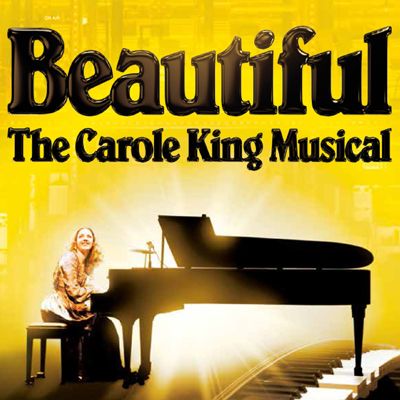
And then we decided we were gonna, for reasons which I can't remember because the years blur, but we were doing a musical at Studio 54, and I wanted to rent out the Stephen Sondheim Theater for a few months because we didn't need to use it. And I saw that this musical was announced, this Carole King musical was announced. I didn't know anything about it except that I'm obsessed with Carole King because I'm of that generation, and I figured if I'm obsessed with Carole King, anybody over the age of forty-five probably, which is the target theater audience, probably has interest in Carole King too. So at least it'll run four or five months and we'll generate some income and then we can use it for whatever we need to use it for.
So I went after very aggressively Beautiful. We gave them a big, a good deal, and uh it turned out to be it's been running at a hundred percent capacity from the first day and probably will be there for three or four years, which was not part of our plan, but which has helped a lot financially the theater in terms of our budget. And um we will produce there again when Beautiful ends. I just have no idea when Beautiful will end.
[43:45] Ken Davenport: So I love about, which is obviously a repeated theme in your life, this making a very, having to make a very quick decision, thirty seconds or less, whether it's the Tosha, whether it's American Airlines or even the theater here, uh, and you just go in with your gut and doing it, and you said, I have no master plan, I have no master plan, it just happens. I think great producers and uh leaders have great instincts and know how to adapt to the environment. I think you saw what was coming in Times Square and you made choices that obviously paid off. So think ahead now. Do you have a master plan for the next 20 years of Roundabout? Is there something more you want? You want more theaters?
[44:21] Todd Haimes: Don't want more theaters. First of all, I think your point is well taken, and I and I I think that while I didn't have a master plan, I did have the ability to seize on opportunities that other people might not have seized on. If I felt in my gut, and I still feel this way about productions, if I feel in my gut a hundred percent sure that something's gonna be successful, I'm usually right. The problem is sometimes I only feel 50% sure, and then sometimes it's a disaster, you know. But when I, and I was a hundred percent sure that buying Studio 54 was the right decision and that going to Sondheim was the right decision. In terms of the future, um what I'd like to be able to do is stabilize the theater.
Not that the theater is unstable financially, but build up a large endowment and have it truly be stable so that we can get unearned income up to 40%, have a large reserve fund, and be able to take risks that are be able to do Machinal and I mean I knew Machinal would be really cool, and I knew it wouldn't sell tickets. You could argue whether for the institution it was the right decision or not, you know, because if you run out of money, it doesn't matter how good your art is. So I would like to be in a position five years from now, ten years from now, where we have a hundred million dollar endowment where we can do whatever we want to do, and if it fails, it fails, but it was a good try, you know?
Um, rather than spending my life chasing celebrities and begging them to do plays because it's tough. And uh and I and I think the purpose of a not-for-profit theater, I mean, look, perfect example is On the Twentieth Century. This is a musical that is, I think, a very good musical. Is it great as great as Gypsy? No. It's not as great as Gypsy, but it's a very good musical, it's never been revived. We're spending a lot of money on it. Uh we have a fantastic cast and production. I have no doubt it's going to be a great production. Ben Brantley may say, I just don't like the musical. Who knows? That's a big risk for us. That's a lot of money. That's millions and millions of dollars, less than a commercial production, but still millions and millions of dollars. David Rockwell said is unbelievable. Um, and it keeps me up at night. And I'd like to be in a position where it doesn't keep me up at night.
[47:02] Ken Davenport: Okay, last question, which actually I asked everybody. I want you to imagine that the gods of theater come down right now, they knock on the door and they come in and they say, Todd, you've been a very good boy and you've done amazing things for uh for the theater. I'm gonna grant you one wish. You can change one thing about Broadway right now. One thing, whatever it is you want, will change. What’s the one thing you change about Broadway that drives you crazy or really keeps you up at night?
[47:33] Todd Haimes: Well, it's a, uh I, you know, it's a question, it's a great question, but one I've never thought about until now. I think the selfish answer, meaning selfish for Roundabout, would be to make all premium ticket prices go away. Because it was the premium ticket prices that allowed the producers to charge $400 a ticket that allowed them to pay stars a hundred thousand dollars a week and make money back their money in fifteen weeks, and maybe even make a little profit, and has hurt us a lot. So from a totally selfish standpoint, if ticket prices were just, you know, a hundred and fifty dollars as the top price for a musical and, you know, a hundred and ten dollars for a top price for a play, things would be a lot better for us and a lot better for the public, frankly.
But, you know, obviously that's a pipe dream, and it was, and it does, can it started our difficulties, our, you know, intensity in trying to get celebrities did start when the producers were the first people to start doing the premium ticket prices, and people caught on to it and suddenly it became de rigueur to charge, and people will pay 400 to see Bradley Cooper. The other thing that's happened in Broadway, and I don't know if it's good or it's bad, is that, and then I'll shut up, is that when I started um at Roundabout, Broadway was thirty percent tourists. Last year it hit seventy percent tourists. That's good for Broadway, although the size of the pie, the total audience, has not grown significantly.
The composition of the audience has changed dramatically. For the kind of work that I'm interested in doing, a lot of it is not tourist driven, which puts even more pressure on having stars and well-known titles. You know, no tourist is gonna come to New York and see The Winslow Boy or Machinal. I'm just picking on those plays, you know. We did them recently. A tourist comes to New York and wants to see a great big musical hit or a celebrity. And so the marketplace, I mean, going from thirty percent to seventy percent is a pretty dramatic change and probably increasing every year. And it also makes you sort of think about, gee, why aren't the people from the tri-state area coming to Times Square anymore, who were the, let's face it, without being condescending, the slightly more sophisticated theatergoers.
Um, there are a lot of theories on it. Uh some of them, you know, have to do with the fact that people actually don't want to go to Times Square. Um, because it's become like nightmare Disneyland. Become too safe now. It's the reverse of what it was if you get accosted by Smurfs and you know, you can't walk and you can't move and you know, and whatever. But um there has been a dramatic change in the Broadway landscape and and I look so far, knock wood we've been able to adapt, but we'll see what happens.
[50:40] Ken Davenport: Okay, all you tri-state New Yorkers, uh go see a Roundabout show so Todd can get some sleep at night. Thank you so much for doing this. Uh and thank you all for listening. That ends yet another Producer's Perspective podcast. Don't forget to subscribe. Uh if you're listening on iTunes, uh give me a rating and review, will ya? And we will see you next time. Thanks.
© Broadway Podcast Network, All Rights Reserved