

Stephen Byrd has pursued his interest in producing high quality entertainment vehicles for many years. As President/ CEO of the American Cinema Group, Inc., he has raised capital for, and invested in several TV & Film projects. He formed Front Row Productions, Inc... Read More
From the show: The Producer's Perspective Podcast with Ken Davenport
Featured Shows
About
Stephen Byrd has pursued his interest in producing high quality entertainment vehicles for many years. As President/ CEO of the American Cinema Group, Inc., he has raised capital for, and invested in several TV & Film projects. He formed Front Row Productions, Inc. which is dedicated solely to producing quality theatrical productions. As the Producer of the first African American Broadway production of Tennessee Williams' Cat On A Hot Tin Roof, which was the highest grossing play on Broadway in 2008, he also won the Laurence Olivier Award, for Best Revival of A Play for his production of the same show on London's West End. Other shows he has produced include Eclipsed, The Trip to Bountiful, and A Streetcar Named Desire. He was named as one of the most important African Americans in the theatre by The New York Daily News.
Stephen sat down with me to talk about the mission statement of his company and . . .
- How he describes his target audience.
- How he assembled an all-star cast for his very first show – and the long process it took to get there.
- Why he didn’t cast Lupita Nyong’o the first time she auditioned for one of his shows.
- How Stephen believes we can make Broadway’s audiences more diverse.
- What’s the most important thing for movie stars to learn when they do Broadway.
Enjoy Mr. Byrd!
Keep up with me: @KenDavenportBway
Transcript
This transcript was automatically generated and might contain errors.
[0:00] Ken Davenport: I wanna be a producer with a hit show on Broadway.
[0:07] Ken Davenport: I wanna be a producer.
[0:09] Ken Davenport: Hey everybody, just one quick question before we get to this week's podcast.
[0:13] Ken Davenport: Are you enjoying these podcasts?
[0:15] Ken Davenport: If so, do me a favor.
[0:16] Ken Davenport: Go on to iTunes right now and give us a big fat, juicy five-star rating, or however many stars they have, I'm not even sure.
[0:23] Ken Davenport: Or write us a great review.
[0:25] Ken Davenport: It's the best way to promote theater to the rest of the web.
[0:29] Ken Davenport: Thanks so much for listening.
[0:30] Ken Davenport: Hello, everybody, Ken Davenport here.
[0:32] Ken Davenport: You're listening to the Producer's Perspective podcast.
[0:35] Ken Davenport: I am so excited for today's guest because he's one of my favorite composers and part of one of the greatest musical theater writing teams we have today.
[0:43] Ken Davenport: Ladies and listeners, welcome to the podcast.
[0:46] Ken Davenport: Tony Award-winning composer Stephen Flaherty.
[0:48] Stephen Flaherty: Welcome, Steven.
[0:49] Stephen Flaherty: Hey, thanks for having me.
[0:50] Stephen Flaherty: Great to be here.
[0:51] Ken Davenport: So I first came to know Steven's work when I wandered into the booth theater back in 1991.
[0:56] Ken Davenport: I was a sophomore at NYU.
[0:58] Ken Davenport: I didn't know what I was in for.
[1:00] Ken Davenport: It turned out I was into one of the most joyous nights I've ever had in the theater.
[1:03] Ken Davenport: It was uh singing once in this island, um, and it remains that to this day, one of my favorites.
[1:08] Ken Davenport: Uh, in addition to once in this island, uh, some of Steven and his collaborator Lynn Ahrens's early work includes Lucky Stiff, My Favorite Year, which uh side note, Larger Than Life was one of my audition songs when I was an actor.
[1:20] Ken Davenport: Uh, and then of course Suzagle, the Monumental Ragtime, which I was lucky enough to be the associate company manager on, Rocky and uh what I call their Lincoln Center shows, a man of no importance, Desarose Glorious Ones, and so on.
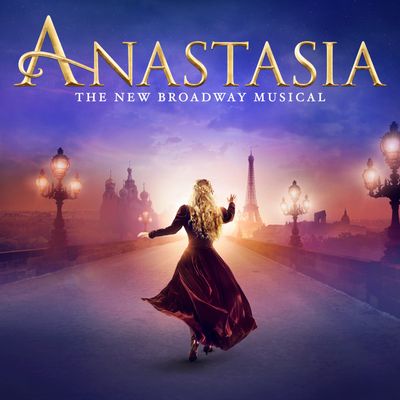
[1:33] Ken Davenport: And Upcoming, about to open in a few months out of town, Anastasia, based on the movie which featured his songs, including the Oscar-nominated Journey to the Past and on and on and on.
[1:44] Ken Davenport: I could go on for days with that good research.
[1:47] Stephen Flaherty: Very good, Ken.
[1:48] Ken Davenport: But um, enough bio stuff.
[1:50] Ken Davenport: Let's get to the juicy questions and answers.
[1:52] Ken Davenport: Tell us, when did you know you wanted to write for the theater?
[1:56] Stephen Flaherty: Oh, yeah, you you know it's funny, I never thought of it as writing.
[1:59] Stephen Flaherty: I thought of it as making stuff up.
[2:01] Stephen Flaherty: And I think I've been making stuff up ever since I was a kid.
[2:04] Stephen Flaherty: I started uh playing piano at age seven.
[2:07] Stephen Flaherty: I started making stuff up whenever I was twelve, and I wrote my first uh um first musical whenever I was 14, and and we did it in my high school, and it was hilarious.
[2:18] Ken Davenport: What was it called?
[2:19] Stephen Flaherty: It was called Pitts, because I grew up in Pittsburgh, and it and each scene took place in a different locale, different neighborhood of my hometown, and each number was written in a completely different musical vocabulary, and each number was written in a different color ink.
[2:33] Stephen Flaherty: So uh, of course, the big gospel spectacular was you know the final scene, and and we had a country western song, a rock and roll song, and it was the most fun I've ever had in my life.
[2:43] Stephen Flaherty: And oddly, uh, there was a subplot that involved Siamese twins, and this was way before Sideshow.
[2:49] Ken Davenport: So will we see a revival of Pitts?
[2:52] Stephen Flaherty: No, you will not.
[2:53] Stephen Flaherty: You would not.
[2:54] Stephen Flaherty: And it it's but but it was the kind of thing that uh it was two friends of mine uh who were in the drama department who had gotten what they said were roles that weren't large enough for their talents that year.
[3:04] Stephen Flaherty: They decided to write their own show, and they said, Do you want to write music?
[3:08] Stephen Flaherty: And I had never really thought of writing music, you know, but it's uh clearly I was a theater kid, and uh it was it was we were a bit of a hit, you know, at my little school, and uh I had a a wonderful music teacher and a wonderful drama teacher, and they both said you should do more of that, and uh and so I did.
[3:28] Stephen Flaherty: And uh it's this is all I've ever wanted to do.
[3:32] Stephen Flaherty: Like since I was a kid, and I just was obsessed with theater, and I had to be part of it, and also, you know, because you're a producer uh the recent revival of Godspell, that is the first professional show that I ever saw.
[3:44] Stephen Flaherty: It came through my town.
[3:46] Stephen Flaherty: We were taken to it, uh, because you know, it starred Jesus.
[3:49] Stephen Flaherty: And so the nuns from my parochial school took us to see the Jesus musical, uh Godspell, and it hit me like a ton of bricks, and I just I just thought I have to somehow be a part, be a part of that.
[4:03] Ken Davenport: So you said um clearly I was a theater kid, and I hear this a lot from people that do the nerd.
[4:08] Ken Davenport: We're nerds, let's face it, yeah.
[4:10] Ken Davenport: So what is it that so clearly said you were a theater kid?
[4:14] Ken Davenport: What about the theater?
[4:15] Ken Davenport: Like you're you're obviously an incredibly talented composer, and even back then, obviously you had a flair for music.
[4:21] Ken Davenport: Why the theater not say, I want to write like the Beatles, I want to write...
[4:21] Stephen Flaherty: I honestly think because because theater and music theater in particular uh combines so many art forms, and it's a this um American mongrel art form.
[4:36] Stephen Flaherty: And at the at the time as a kid, I was drawing, I was painting, I was trying to write stories, I was learning music, I was trying to write music, uh, I was putting on odd little shows in my basement.
[4:49] Stephen Flaherty: And I think all of that stuff, I I thought I can use all of this in in in creating musical theater.
[4:56] Stephen Flaherty: And and also for me personally, uh I was not kind of like a team sport kind of kid.
[5:03] Stephen Flaherty: You know, I was a personal best kind of a kid.
[5:05] Stephen Flaherty: I was really good at figure skating, and uh, but in terms of the team, I liked being part of a community, I liked being part of a team, and uh I I loved creating something with my friends, and I loved creating something as part of a community, and uh I s I started and I never stopped, and like I'm I'm lucky it worked out because I can't do anything else.
[5:26] Stephen Flaherty: This is all I can do, you know.
[5:28] Ken Davenport: So you're a career in figure skating or career in the theater.
[5:34] Stephen Flaherty: That's right.
[5:35] Ken Davenport: You leave high school, you're the hit of the high school.
[5:37] Ken Davenport: What happened after high school?
[5:39] Stephen Flaherty: Well, well, it's an interesting thing.
[5:40] Stephen Flaherty: It dawned on me slowly that the musical star of each high school then goes to college, and then if you're lucky, you become the musical star of the college, and then you come to New York, and it's a series of being thrown to the bottom of the barrel, and it's very humbling, and uh I was pretty much self-taught, and I and I needed to get some technique.
[6:01] Stephen Flaherty: And so I went to CCM, uh Cincinnati College Conservatory of Music, and at that time, uh in uh the 80s, they didn't have uh a program for writers of music theater.
[6:13] Stephen Flaherty: So I basically went there and studied uh classical composition, orchestration, conducting, uh, took some theater classes and basically started making my little shows there.
[6:25] Stephen Flaherty: And I had no collaborator because you know, this is Ohio, you know, there's nobody to play with.
[6:31] Stephen Flaherty: So I became uh a book writer and a lyricist and a music director and a composer, and uh, it was a wonderful time at that school because uh there were so many talented people there.
[6:43] Stephen Flaherty: Uh I was a freshman and Faith Prince was a senior, and Jason Gras was there, and it was an amazing group of repertory players, and we would do uh student based shows, and then whenever I came to New York, I had my little group of repertory players from Cincinnati, and so they became the cast of Lynn's and my first musical, which was Bedazzled, which is was based on the Peter Cook Dudley Moore.
[7:16] Ken Davenport: Any chance of us seeing a revival of Bedazzled?
[7:19] Stephen Flaherty: Well, you know, it's an interesting thing.
[7:20] Stephen Flaherty: Lynn and I, I guess it was two years ago we did uh a series of concerts at 54 Below because it had dawned on us slowly that um we had been collaborating for 30 years, which is kind of impossible for me to believe, but that's true.
[7:35] Stephen Flaherty: And um uh we thought it would be really fun just to celebrate it because it was such a big round number.
[7:42] Stephen Flaherty: And so we thought we'll do it at 54 below, and we wanted it to be equidistant between my birthday and her birthday, and we thought it would make it like a like a celebration month and and invite people that we worked with, people that we wanted to work with, and uh we wanted to do some early songs.
[7:58] Stephen Flaherty: So we had uh actually two bedazzled songs that we did as part of the evening, and then we did uh two songs that we had written that year, and we thought it would be kind of really cool to have songs that were written, you know, and in the first year of our writing, and songs in the in the la and you know, to that point the the last.
[8:16] Stephen Flaherty: And uh God, what a fun time that was.
[8:19] Stephen Flaherty: And it's uh I should point out it's a it's a live CD.
[8:22] Stephen Flaherty: You can get this.
[8:23] Stephen Flaherty: It's called uh uh Erns and Flarity Nice Fighting You, which is a lyric from Lucky Stiff.
[8:29] Stephen Flaherty: We'll put a link to that uh when we put up this podcast.
[8:32] Ken Davenport: So let's talk about Lynn.
[8:34] Ken Davenport: Obviously, Lynn did a podcast with me a few weeks ago.
[8:37] Ken Davenport: She loved it too.
[8:38] Stephen Flaherty: Oh, good.
[8:39] Ken Davenport: Did you listen?
[8:39] Stephen Flaherty: I I haven't heard it.
[8:40] Ken Davenport: No.
[8:40] Ken Davenport: Oh good.
[8:41] Ken Davenport: Oh so I feel like I'm about to do one of those like dating shows where I've talked to one partner on this side, and now I'm gonna ask you.
[8:49] Stephen Flaherty: Well, you know, our answers are gonna be totally different.
[8:51] Stephen Flaherty: We we thought if we would ever write a book, it would have to be like a he said she said, and you could read Lynn's from you know, from this cover, and then you'd flip the cover over, and then in my version, and I and my guess is it would be like the an amazing Roshiman story, like somewhere between these two tellings is what went down.
[9:10] Ken Davenport: You're gonna get an interest from a publisher after they hear this for sure.
[9:13] Ken Davenport: That book sounds fun.
[9:15] Ken Davenport: So you meet her at the BMI workshop, right?
[9:18] Stephen Flaherty: Yeah.
[9:18] Ken Davenport: And what did you think when you met her?
[9:21] Ken Davenport: Did were you like, oh, this is the one?
[9:23] Stephen Flaherty: I shouldn't say this, but the I found this to be true in a lot of workshops and a lot of music theater programs.
[9:30] Stephen Flaherty: There's always a lot of terrific or you know, good composers, and there's always one good lyricist and any class that and that that's usually been my experience.
[9:42] Stephen Flaherty: And she was she was so fresh in her approach to what she did.
[9:49] Stephen Flaherty: Uh it was like it was really different from what I would do.
[9:52] Stephen Flaherty: And I and my idea of what writing was about, I had a beard that year.
[9:56] Stephen Flaherty: You know, I was like, or would wear black, I had a beard.
[9:58] Stephen Flaherty: I would like lock myself in the monastic kind of room and and cr and somehow summon the muse, and I would write music.
[10:06] Stephen Flaherty: And she came from a totally different background.
[10:08] Stephen Flaherty: She came from like the commercial and pop music world, and she would write on her feet.
[10:13] Stephen Flaherty: She would literally throw ideas around, and uh it was much more of an improvisatory kind of background, which was totally different, you know, where I would score it all to paper, and and uh at that time, um, well, you know, I had never really collaborated, you know, and I have to backpedal too.
[10:32] Stephen Flaherty: But the first week I was here, I I got to go and meet Steven Santine, believe it or not.
[10:38] Stephen Flaherty: Yeah, at his home.
[10:39] Stephen Flaherty: And I had a little cassette because that's what we had back then.
[10:42] Stephen Flaherty: We had things that were called cassettes.
[10:44] Stephen Flaherty: And I gave him a couple of my tunes.
[10:46] Stephen Flaherty: And the short of it, or at least what I got from the critique, was that he felt that I had a r uh a gift for music and musical counterpoint.
[10:54] Stephen Flaherty: And he didn't like my lyrics.
[10:57] Stephen Flaherty: You know, he didn't care for them.
[10:59] Stephen Flaherty: So I thought, okay, maybe I should try, you know, this working with another lyricist.
[11:03] Stephen Flaherty: It could be shake things up, it could, you know, lead to a new or an exciting thing.
[11:08] Stephen Flaherty: And so um in BMI you do these class assignments, and there's uh one em one a week.
[11:14] Stephen Flaherty: And uh it was literally the last class assignment, and I had not collaborated yet.
[11:19] Stephen Flaherty: And uh Lynn was walking down the street, and I was maybe almost a block away, and I projected very far.
[11:25] Stephen Flaherty: And I said, Lynn, do you want to write a song together?
[11:28] Stephen Flaherty: Let's do let's do this last song together.
[11:31] Stephen Flaherty: And she goes, really?
[11:32] Stephen Flaherty: Yeah, oh oh okay.
[11:33] Stephen Flaherty: And and we had never it was a it was an interesting first meeting because like she denies this, but but she she said, All right, so make uh let's hear something, make something up.
[11:45] Stephen Flaherty: And I was not used to creating in front of another person, you know.
[11:49] Stephen Flaherty: It was like, ooh, I don't, you know, I I felt kind of naked, honestly.
[11:53] Stephen Flaherty: And uh it was a it was such a different way to to find to find a song to find a piece of music, and I realized, oh, I get it.
[12:00] Stephen Flaherty: Like we both have a hand on on the driving wheel, and we're trying to find uh a way that we can connect to to find the song.
[12:09] Stephen Flaherty: And I I must say our first song was not good, but it but the process of creating it was great.
[12:17] Stephen Flaherty: And uh after after that, we said, Oh, we should try to find a project, and that's when we were we began writing Bedazzled, and uh we just had so much fun, and it was a totally different way of working for me.
[12:30] Stephen Flaherty: And uh and I think the whole thing about collaboration is you know, why even collaborate?
[12:35] Stephen Flaherty: And it's because you can find up find something that you wouldn't have been able to create on your own.
[12:41] Stephen Flaherty: That's what I think, you know.
[12:43] Stephen Flaherty: And uh so we we just started and we didn't stop, and that was my first year in New York.
[12:49] Ken Davenport: I love that statement because it's a very selfless statement coming from an artist, especially someone who's been doing it all before that.
[12:57] Stephen Flaherty: Yeah, you know, you know, and it's it's a tricky thing because to do, you know, to face a blank piece of paper or a blank screen each day, you know, you have to have either balls of brass or a huge ego or an incredible immense faith, you know, that some somehow an idea will come and manifest itself, or all three, you know, and I I really think that writing is a an enormous leap of faith.
[13:21] Ken Davenport: And um, after all of these years, I can't honestly tell you how it works. Because there is this there is an element of mystery uh that I think is wonderful, and I don't want to overanalyze or analyze that at all because it it is alchemy and it is mysterious, and uh ideas fly in the side door at weird times and odd places, and um I think it's I think it's really exciting.
[13:46] Ken Davenport: And I think working, you know, with Lynn and I have worked with young writers a lot recently, actually for for like a decade and a half now, and um you can teach them technique and you can teach them how to analyze the work of others, you can teach them how to have an idea or where ideas come from, and I honestly don't know where they come from, and that's been part of the fun. And like and no day is the same as the day that precedes it either. So each each one of our writing days is you're starting from scratch. And I I love that.
[14:16] Ken Davenport: So it's you said it's part of the fun, but there have gotta be those days when you stare at the blank page and nothing comes out. How do you deal with the famous writer's block if it ever pops up?
[14:28] Stephen Byrd: You know what? I've never really had writer's block. I shouldn't say that because now that I have said that, you know, please don't. It's like you're seeing sclerous. It's like you're tempting fate, but I I always believe that it that it is a leap of faith, and I that there's more where that came from. And as a young writer, I used to freeze up sometimes because I would get to say measure 16. And you know, at measure 16 there's a fork in the road, and if you go make choice A, the piece becomes that, and or choice B, it becomes a different kind of thing. And rather than just making a choice or blindly going forward, I I would not know which choice was the right choice, as if there were anything, you know, that was right or wrong.
And and Lynn's very she loves to rewrite, and and I think the the craft of writing reveals you know, reveals the song. So we might we might try many different approaches until we find the the the approach that actually works for any given song moment. So I I think believing that there are many different ways to get to where you need to go, I think that that's a valuable thing to know.
[15:37] Ken Davenport: Is your process for writing with Lynn the same as it was back then? How do you approach something now versus how do you approach something?
[15:46] Stephen Byrd: Well, you know, it's an interesting thing because we tried we had starts, actually false starts at a couple early shows. Like we we uh we wrote a song score for for Bedazzled that became sort of spoken about a lot around town. Everyone wanted to hear the hear that show. Uh we had a producers that wanted to produce that show. We could never get the rights to that show. So that never happened, and then we worked on our follow-up was an original idea that we were actually writing with George C. Wolf. And this is like George C. Wolf pre the colored museum pre the public theater. And that was like an interesting notion in certain in search of a plot that we never found. And so all of these things, and and you know, Lynn is like she she comes from um the commercial world, which moves much faster than my you know, my monastic upbringing of music.
So uh then we began working on a third show, and we hadn't been produced at that point. And I actually think that was an asset because I think it allowed us the time to get to know one another, to get to know one another's processes, which which at the beginning were very different. And um, you know, we got to date longer before we, you know, were at that altar, and I think that was a great idea, you know, and we got to know one another, and uh, I think it deepened our relationship and it deepened our uh our writing craft. And I think if I had just come into New York, met Lynn in the first month, and I did, within six months I'm writing with her, and the very first thing I try to write uh got produced, which all of these things are happening, I think it would have given me like an incredibly distorted view of how things happen, you know. And I think having something not get produced, it makes it it gives you a little more resilience, you know.
[17:36] Stephen Byrd: And so um it was it was maybe five years until we had our first show produced, which was Lucky Stiff. It's so funny you say that about uh Pesik and Paul were on just a couple of weeks ago. They were great. They are fantastic, but they they talked about getting a show up, it happened very quickly for them, and how they felt like they made some mistakes early on, and it was very difficult to get through that and on to their next show because it happened so fast.
[18:02] Ken Davenport: Well, you know, uh Lynn and I co-founded a program at the Dramatist Skill, which is an amazing program. It's called The Dramatist Guild Fellows, and it's one of the few programs here in New York City uh for composers, librettists, lyricists, and playwrights. Because usually in a lot of the writing programs in New York, they tend to ghettoize the play, the the word people, the playwrights, and then the music people are in in like their own little clubhouse, and uh never the twain meet, and this program it's it's astounding, it's very it's very intimate. Uh there's uh mentorship, uh there's um uh opportunities to basically uh ghost writers and ghost um performers as guests. It's all about the process.
And uh Pasik and Paul were our youngest dramatist guild fellows. They were right out of college, and they were like so amazingly talented, and uh it was great to see them as kids, and now I'm I I was just talking about their new show at Second Stage. I can't wait to see it. I'm gonna try to see it next week.
[19:09] Ken Davenport: Talking about Dear Evan Hansen, but we're getting back to you now. You're such a generous R as you're uh talking about other people and how great they are. Um, what I love about your scores is the diversity of them from the Caribbean rhythms of Once in the Silence to Ragtime. And you actually just talked about pits, how pits had different gospel country.
[19:28] Stephen Byrd: Yeah. How do you access those different stuff? Do you do research before? What's the process of getting into the scores?
[19:35] Ken Davenport: Um, I'm just really open to all kinds of music, and my playlist is crazy all over the map. And even as a young kid growing up, um, I wasn't really a rock and roller, but I was an RB kid. And we had one of the great RB stations in Pittsburgh called WAMO. And my father couldn't stand this, couldn't stand that kind of music. So he would give me the keys to the car, and I'd be like seven. And I'd be like a seven-year-old starting up the engine and listening to the radio in that car. And it was it was amazing. So I I really uh responded to rhythm and responded to those kinds of rhythms. And then at the then a little later I began studying classically, so I had a classical piano background. I spent a summer working in Nashville, Tennessee, so I picked up a lot of uh stuff down there.
Uh I began studying you know music theater scores, and um I think honestly, I I never like to repeat myself, and and I know that Lynn and I, in uh looking at material, we try to find something that we've not done before, you know, and I I think that that keeps it fresh. Uh the process of writing the shows is always different, and it's always is dictated by uh the subject matter and the musical materials like like uh Once in the Island was a show that didn't want to be written at the piano, you know, where ragtime was a show that had to be written at the piano, you know, for for uh a lot of that that music. And um I I'm just fascinated by it.
[21:07] Stephen Byrd: I I actually did a uh somewhat experimental, really cool piece this past summer at uh The Old Globe in San Diego called In Your Arms, and uh it was Chris Christopher Gately, uh the wonderful choreographer choreographer, who came up with the the notion of let's do a theme and variation show all about dance, uh, and and it was his really cool idea to come up with one topic, which is romantic destiny, and then he went to ten different playwrights and said, You can write on this theme, it can be uh any gender, any culture, any time period, any story, uh any style, comedy, tragedy, um, and uh the only the only thing is you can't use words. So they would they were writing basically scenarios that then would be all danced, and so we had ten of them, and e the stories were so wildly different, and then I would have to find some way to translate uh each playwright's uh individual story and their point of view and their approach uh into music, and so each of them was it was really like writing a complete musical, and it took us seven years to get the to get the show together because we would only do maybe two at a time, three at a time, uh because they were all over the map.
[22:35] Stephen Byrd: Uh like Douglas Carter Bean wrote a piece, uh New York City in the Roaring Twenties at a drag ball at Webster Hall, and I thought, okay, know how to do that. And then uh then uh uh there would be uh a piece by Alfred Urey, and it was uh about young love in 1950 in Atlanta, Georgia, in a Cadillac, and uh up on Lover's Lane, I thought, oh, I can't I I know how to do that, and uh then David Henry Wang early on threw me a huge uh curveball. Uh it was a piece set in modern-day Shanghai in a techno club, and then what then the lead actor uh uh somebody puts a uh drug in his drink, he's transported back in time to the Ming Dynasty. He had written it for a friend of his who was a star of the Peking opera, and he said it's really important to have martial arts in this piece, and I just thought I just thought that is the wildest thing I've ever heard.
And I was that I was so scared for the longest time about that particular piece, and then finding a new way to approach it, uh, it actually became great, great fun. And and it became a favorite, you know, and and the thing that scared me most was the thing that that probably gave me the most joy in the in the long run.
[23:51] Ken Davenport: Do you think any subject can be made a musical? You think any story or does a musical require a certain something? And if so, what's that something that you look for?
[24:03] Stephen Byrd: Well, I I almost feel that it needs to have some sort of heightened quality, you know, whether it's in the language or uh I I think the hardest thing to translate into musical terms is something that's very kitchen sink. And for me personally, um uh after writing Ragtime, uh, which was a wonderful experience for all of us, and we love working with Terrence McNally, and he said, you know, we should absolutely do another show, but we figured ragtime is so that you couldn't do a show larger than ragtime. So we thought, why don't we do the exact opposite thing? We'll do a miniature show. And he said, Is there a kind of music that you're interested in? And you know, as you know, the the Irish people in ragtime are the villains, and so we were just cutting all of their music, you know, those evil Irish people.
And of course, I'm an Irish American. My parents were not happy that like that the language of and the poetry and the music of my people had been cut, you know, from this quintessentially American show. So I thought, you know, I I would like to try my hand at doing something Irish. And uh I said to Terrence, I said, we should look at different things. Uh and I said, I'm not interested in doing the potato famine musical. I said, but I would like to do something uh that has an Irish color or Irish flair. And uh Terrence found a uh a small independent film called A Man of No Importance uh that starred um Albert Finney, uh Brenda Fricker, Rufus Sewell, and uh it was all about the creation of theater and was all about the love of friendship, and it was a man's uh coming out story, and it was very naturalistic, and I couldn't for the life of me get music out of that because it because it was so naturalistic, and I I said, I I can't find the heightened quality, I don't know how to get them get them singing, and also the the lead character who in our show was uh played by Roger Reese uh was so secretive, and he didn't really have a scene partner to talk about what he was feeling, you know, in his heart.
So it was a virtually impossible getting this guy guy to sing. And then Terrence gave us a great gift. He made uh a surround for the show, so the entire show uh took place in one instant in the main character's mind, and it was him remembering what had happened uh in in in the past couple of weeks to to bring him to what was a low point uh for him.
[26:40] Stephen Byrd: And also, uh, the character of Oscar Wilde is mentioned in the film; he's not in the film, and Terence put him right in the show. So all of a sudden there was a fantasy character, uh, Oscar Wilde, and he was Alfie Byrne, our hero, uh, his scene partner. And the minute Oscar Wilde was allowed to be in the room with him, the music just poured out, and it was the most amazing thing. I couldn't understand, I couldn't get this character to sing at all before, and now I couldn't get him to shut up, you know, because he had Oscar Wilde there, and, uh, Terence is a funny guy because, you know, he'll write a scene which will inspire a song, and, um, usually whenever we're presenting the song, you know, it's a lot of information to analyze, so he tends to be very analytical.
And every single song I've ever played for him, he's never said, "Wow, can I hear that again?" Never once. This is the entire score of Ragtime, never once. And, uh, I had written with Lynn a song called "Man in the Mirror," which was, uh, our character of Alfie Byrne singing to his reflection, but in fact, he's singing to Oscar Wilde, and, uh, he drops a huge plot bomb at the end of the song, and Terence just lit up. He goes, "Oh my god, that's our show, that's the sound of our show. Will you please play it again?" The only time, you know, and, uh, come on, "Wheels of a Dream," Daddy's. No, no, no. No, that is not not above, and he blushes whenever I bring this up, but I think he was so taken because I, I don't, because I, because it had been such a struggle to find the musical core or the sound or a way to get music to come out and that that was cracking the nut.
And then the show wrote itself quite quickly after that. And for those of you out here who don't know it, go get that recording. It's a terrific score in one of my favorite streets of Dublin. Uh, having Stephen Pasquale sing that. I will never forget that moment.
[28:35] Stephen Byrd: Uh, so I'm gonna ask you one of my James Lipton questions, speaking of some of your most memorable songs. I want you to imagine that the Smithsonian calls you. Okay, and says, "Stephen, we have room for one of your songs in the institute, just one." Which one of all the songs that you've written would you want preserved? You know, that's a hard question because I always think of songwriting and creating theater as like parenting, and hopefully it's good parenting. And it's like you never want to pick a favorite, you know, like you never want to pick son number two over son number three or, you know, whatever. Um, I would think, I would think it would have to be something from Ragtime, though, because, um, that show came to us as a gift, and I, some, some of your listeners may know, um, some might not, but you know, that was a show that we had to audition to get.
And it was a, it was a majorly crazy story to get to get the show. And I was so happy that that was part of it because I remember reading in the New York Times that, uh, the theatrical rights for the novel Ragtime had been acquired, and I'm like, "Shit." Like, Candor and Abrahams kind of like, "Oh, with that show, oh, those lucky guys," and whenever they just opened it up to basically a songwriting derby, I think there were maybe twelve teams. And, um, we got a beautifully written, uh, treatment by Terrence McNally that was 65 pages, and you could write, uh, well, basically you had this, the assignment was you had to write four songs based on Terrence's treatment. And we knew in order to get the, to get this job, which I was obsessed with.
I was, I was so passionate about it, uh, because I had been a ragtime piano player since I was 12. Remember the sting? Remember that? Yeah, and like all the little kids were like playing "The Entertainer," and I loved it. I just thought to try to take that kind of music and yet make it sound fresh again and reinvent it, and it was about America and about, uh, all of these different ingredients in one, you know, in one stew. I, I just, I just thought I'd really want to do this. And we had, we had 11 days to write, arrange, produce, record, mix, stick it on a cassette back in the day of a cassette, and hand it in. And, and the day we had to hand it in was the opening night of Showboat. I mean, it was all this crazy theatrical Garth Drabinsky timeline, and we started counting the days that we had to do all of that.
We had 11 working, 11 working days. So being practical, you know, we just decided, you know, I, I will write two songs music first, and Lynn would write two songs lyric first. We would swap, and, uh, three of the four songs are in the show. And so I, I think for me personally, I think I would probably pick the title song, which, which is also opens the show, and it's, uh, it's Ragtime. And, um, and, um, I would pick it because I remember the process of writing that song, and it was there with such velocity with such passion, it wound up being 10 minutes long; it was like incredibly long this song, and also, uh, just trying to see with only so many musical ingredients how you could tell that much story, uh, that much about the theme, that much about the musical character of the evening, and somehow make it a cohesive, exciting opening. And that was a music first one, you know.
[32:11] Stephen Byrd: So, uh, that was, I, I just remember that as being an exciting, thrilling time, you know, writing that. What were the other two songs everyone's dying to know?
[32:24] Stephen Byrd: Oh, oh, the other two? Well, uh, it's a song that we close, uh, act one with, uh, called "Till We Reach That Day," and, uh, that was an interesting one because that, that also was music first, and it was gonna be this, the, uh, funeral of Audra McDonald's character Sarah, and so I wrote like a gospel-tinged, uh, song that would be sung by the ensemble, and Lynn said, "Well, you know, it sounds so hopeful." And I said, "Well, I said they're feeling rage, but yeah, this is something that would be sung, you know, something like in this flavor." And she said, "Well, I think that the subtext of rage has to start bubbling forward." So I go, "Great idea." So I, I wrote, uh, this really angry ragtime figure that was what Colehouse was thinking, and then eventually other people, and eventually it became a song like we can't allow this to happen anymore in this country, and having those two kinds of music at odds with one another was really what made the song.
And I listened to this demo to this day, and I'm like, "Why is that demo better than what we had on either recording?" And I had forgotten we had a secret ingredient. And here it is. Um, on the alto line, singing, like right at the edge of it, was Billy Porter. So he was singing the women's parts, and I'm like, "That was the secret ingredient." That's why it never had that, because Billy Porter was never singing that line ever again in any version of the show. And that, but that demo was hot. Oh, that then the, then the last, then the other song is a song called, uh, "Gliding," which is, uh, Tata and his daughter, the immigrant character. I, I tell a lot of people that one of my greatest memories in the theater was I was the associate company manager on that show, and, um, our office was in the basement of the Ford Center.
I remember it well. And whereas some people would take a coffee break or a smoke break, I would take a break and just watch the show because it was such a magical production. It was, it was an incredible time for all of us. I think all of us that were able to get near that show, it changed our lives, I think really for the better.
[34:34] Stephen Byrd: What did you think when Garth went bankrupt, went to jail, all this nonsense?
[34:40] Stephen Byrd: Well, you know, every single day that I worked with Garth was an exciting day. And if you would say, "What is his talent?" I would say his talent was making other people excited. And, and it was, it was first of all, he had amazing taste. Secondly, I always felt I was so protected, you know, by him, that he, he would not let the show off the tracks. You know, it was a very extravagant time, and we couldn't fully understand how we were able to get these enormous orchestras, and, uh, he commissioned, uh, a suite of music from, from the piece, which was really cool because I was able to just look at the music for music's sake without, you know, having to serve story or the book. And, uh, I created a big symphonic piece with William David Brown, our inspired orchestrator, and we recorded it with an orchestra like 65, and that's like, "How's that happening?" And none of it quite made sense, but it, but we, we were just loving every moment while it lasted.
[35:46] Stephen Byrd: So, you know, he's a complicated guy.
[35:48] Ken Davenport: Is that what you like to get out of producers? What, when you, you've worked with a lot of them from Garth to Barry Weissler, very different styles and types.
[35:56] Stephen Byrd: Yeah, and Andre Bishop, we've done many, many shows, uh, with Andre both at Playwrights Horizons and, uh, Lincoln Center. So, what do you look for from that relationship? Like what would make you want to work with a producer today?
[36:10] Stephen Byrd: Or I always, I always think I, I bring it back to good parenting. I think each show is individual; it has its own personality. I think you need to deliver exactly the uniqueness of that show, and I don't think it's possible nor advisable to make a musical or any piece of theater, all shows to all people, because once you start doing that, its individuality flies out the window. I mean, once in the signal is so special because it followed no rules. And it was very much its own kind of show, kind of score, kind of storytelling. And, uh, and the creation of the show was absolutely, absolutely pure. We never designed that show to be, "Now, this will be a Broadway show." If we were just creating something with people that we loved.
And it was about creating, um, magic out of nothing. And that's what the show was. And, uh, the fastest writing I've ever done. We wrote the whole show in six months, you know, and then, and then changed one song on its way to production. And, uh, I think that was good producing. That was Andre Bishop at Playwrights Horizons. He never, he, he created, uh, a safe space in which we could try new things. And, uh, early on, uh, we had a mentor, and it was Alfred Urey, who, uh, you know, wrote, uh, The Robber Bridegroom, which is having a wonderful revival right now. And he said, "Remember your show is so unique, throw out every single rule that you ever learned at BMI." He said, "It has its own rules, it has its own logic.
You don't need the comic song for the parents in slot number two, you know." And, uh, I think he was just saying let the show be its own unique self, and that's great advice. And if you are lucky to find a producer who can encourage that, then that's gold.
[38:04] Ken Davenport: I think you get in trouble whenever you know the marketing is leading the show, you know.
[38:10] Stephen Byrd: And, and of course, I'm not saying marketing is not important; it is, but, you know, I think the most important thing is the uniqueness of the show and allowing for that.
[38:20] Ken Davenport: Of all your shows, which is the one that's changed the most during previews?
[38:24] Stephen Byrd: Oh wow. I would say I know the one with the changed the most from the beginning of the writing till we got on a stage. That was The Glorious Ones, which is a show that took us 13 years to bring to an audience, and, uh, it was really hard, and I couldn't figure out why it was so difficult, and it was very Candide-like. So we started it out, it was, and there's so many incidents, so many characters, and, and we started out as a quite a large scaled show. And we did a first reading, uh, at Lincoln Center, I believe in 1993. And people say, "How long did it take that show to be written?" And I said, "Let me just put it this way. The ingenue was played by Donna Murphy in the first reading." That's all you need to know about that show.
And it's also about changing of, uh, theatrical tastes and trends, and it's about these young Turks who come in in this world of theater, and they basically steal the theater or morph it or change it, uh, from, uh, the more, uh, established artists.
[39:47] Stephen Byrd: So there's an older artist and his lady friend, and a younger, uh a younger young Turk in his muse. And we started out writing that show, and I thought I totally get this young Turk character, I understand it, and then it took us 13 years. So by the end of it, I go, I'm totally relating with the middle-aged character. I really get his story, and I think it was actually a blessing. It took that long because I was able to understand every aspect, but that changed the most. It started out as a large, large scale show, and by the time we reached Lincoln Center, it was seven characters playing all of these different parts in their style. And we had actually we were at the point where we were going to give it up because we couldn't crack the nut of the show.
We had some amazingly exciting and beautiful songs, but we didn't have a show that we could make work. And oddly, to her great credit, Francine Prose, the novelist, she said, I know you've been working all these years and you keep renewing the rights for this novel, and you know, I've never heard any of the songs. So before you give it up and let it go, I'd like to hear some of the songs. And we thought that's a fair request. So she and her husband came to Lynn's apartment, and we just started playing through a couple of the songs from The Glorious Ones, and she after the first song was in tears. Let me hear more, let me hear more. And she was like so effusive, so unbelievably supportive. And she said it ha she said these songs are like one act plays.
This has to be in a theater. And we said, Well, I said, no offense, but we can't find a way to lasso your plot. I said, the plot is driving us mad. And so she basically said, like, throw out what you want, use what you will. And she was amazingly generous, and that helped us crack the nut of The Glorious Ones. Incredible.
[41:45] Ken Davenport: And now you're just a couple months away from your newest piece.
[41:51] Stephen Byrd: I am starting rehearsal in two weeks from today. So when you wrote the song for Anastasia for the movie, did you have any idea that you'd be a few weeks away from the original trailer?
[42:03] Ken Davenport: No, no, no. It came out of the blue.
[42:04] Stephen Byrd: We had been developing an animated film musical for Disney, and this would tell you something about timing, you know. Because as you, well, I don't want to go there, but anyhow. I'll go there. Okay. So we were working on an idea that I thought was a really cool idea. It was about the migration of whales, and it was about community. And as we all know, the whales communicate through song, so they literally do sing, they literally communicate that way, larger than life. And I had been for my own fun, believe it or not, listening to these amazing Roger Payne recordings of the whale singing. Elaborate, elaborate tunes, like really amazing melodies. And I thought, oh, it could be about fathers and sons.
It's literally about a journey, it's literally about a migration. And we started working on the piece, and it starts out with the whales singing, and then it becomes the sound of the human voice, and then bit by bit they're singing lyrics. And we loved working on it. And of course, you can see this coming like a train. They were working on another animal musical at the same time Disney was. And so it was something that I don't think anyone's ever heard of. It was called The Lion King. And so there was the whale show, The Lion King, and I shouldn't say this, but I'm gonna say it. There is a wonderful scene in The Lion King that was from our whale project. You may remember it. It's like whenever he looks up and sees his father in the sky as a constellation. I found it even more moving when it was whales. But I just put it out there. I just put it out there with no judgment.
[43:45] Ken Davenport: I try not to laugh at these podcasts, but I can't recall.
[43:47] Stephen Byrd: I know, and then you think like The Lion King, and then you think he would have bypassed that, and then Ragtime comes out, and we open this amazing show with the best cast ever, and we were across the street from The Lion King the stage musical and it's like that crazy show is just like biting, you know, it's Pac-Man at my rear. So anyhow, we let go, but because of the people we met at Disney we got a chance to work on a piece for 20th Century Fox which would become Anastasia and I loved the world. I love the fact that there was a mysterious element to it. I found that amazing and it was a really great experience for us and these films take a long time. This took four years and so we were actually writing Ragtime simultaneously to Anastasia.
So in the time it took us to write 35 songs that reached the stage of Ragtime, we wrote six songs I believe and made it into the movie, which tells you that's like a little window into the difference of process. But the experience, the world, all that was fantastic and then all these years later, we were approached, is this something that you'd like to do for the stage? And I think we both love the material so much but I think if we were to go with it we wanted to reconceive, you know, for the stage. We didn't want it to be here is an animated film that we're going to put like frame by frame into a theatrical telling and also as some of you may know, the film did play rather fast and loose with Russian history.
You know, Rasputin did not rise from the grave. He was not accompanied by an albino bat and these colorful green minions that would break into song. That did not happen as far as I know. So we thought it would be interesting to go a little more back to what the story was. So I actually think the stage musical, even though we have five songs from the motion picture, it's really a new show, and it's inspired by the legend of Anastasia. And this is our third show with Terrence McNally, so that's been great. And I think Terrence was interested only if we could treat the show as if it were an original musical. So even though we have a song like Journey to the Past is in the show, it's used in an entirely different context than the film, and I actually think it's stronger. So, you know, we're excited. We're two weeks and we roll up our sleeves and you know hear it sing. So it's wonderful.
[46:37] Ken Davenport: Incredible. So it opens in Hartford in just weeks, and then hopefully Broadway later on this next season, perhaps.
[46:46] Stephen Byrd: Yeah, yeah. Maybe, yeah, yeah. So if you're in the Hartford area, we begin performances May 12th, we open officially the 27th, and then we're running into June. And we're excited. This is the first time we've worked with Darko Trezniak, who did Gentleman's Guide, and he's a wonderful director, and he's kind of the perfect director for this piece, and it's wonderful going back to that, you know. And I thought it could be difficult, you know, because that was a world that we were quite involved in 20 years ago, you know, musically. But I had done so much research that it was and must have been like in me, and it was actually very fluid writing, and we were right back, you know, into that world, and you know, I've been able to go deeper musically, which is exciting.
[47:44] Ken Davenport: Oh, I'll definitely be there for that. Okay, last question. I call this my genie question.
[47:46] Stephen Byrd: Uh-oh.
[47:49] Ken Davenport: I want you to imagine genies are good, don't be scared. I want you to imagine. Is this about Aladdin?
[47:54] Stephen Byrd: Well, sort of.
[47:55] Ken Davenport: Okay. But it's not about The Lion King. So it's Disney. I feel like I'm in a safe space then. Mustafa knocks on your door.
[48:02] Stephen Byrd: Yeah, that's right.
[48:03] Ken Davenport: The genie comes to you and says, Stephen, your contributions to the American musical theater have just been so incredible. I want to thank you for that.
[48:11] Stephen Byrd: Thank you, Gene.
[48:12] Ken Davenport: I want to grant you one wish.
[48:14] Stephen Byrd: Ah.
[48:15] Ken Davenport: Now, Stephen, you're such a positive person. You look at everything's fun, even when you're faced with challenges. Well, what makes you angry? What is the one thing about Broadway that keeps you up at night that frustrates you so much that makes you mad that you would ask this genie to change with the rub of his lamp?
[48:35] Stephen Byrd: Yeah, yeah, I don't understand why there can only be one hit. And I use that, I'm putting quotes around that word per season. You know, I don't understand that. There, I think the theater landscape used to be there was a whole variety of different exciting work, you know, in any given season, and now it seems like either you're a hit or you tank, you know, and there's like, well, whatever happened to any sense of middle ground, whatever happened to the numbers of two through nine, you know, and I don't understand that, you know, and I find a healthier atmosphere in the regional theater, and I find a healthier atmosphere in terms of not only for the working condition and for the creative aspect but for the audiences too in off-Broadway.
You know, I remember the season that it was like I saw two shows. I saw a show on Friday and a show on Saturday. I saw Rent on Friday at New York Theater Workshop and I saw Floyd Collins at Playwright's Horizons on Saturday. Amazing shows totally having their own sense of self totally the voice of their individual creators and as different as anything and I like I'd like to think that the adventuresome work will continue, you know, and this season it's actually been there's been some really cool stuff but I find that most of my exciting nights in the theater are not on Broadway, you know, and I wish I don't know what it is maybe it's just because the cost of making musicals is so great now. I mean what's your theory? I don't know.
[49:31] Ken Davenport: Yeah, it's we're become because it's so expensive it's getting harder and harder to take risks but luckily something burst through like Hamilton and hopefully convinces all of us out there to go like well maybe we should take or Fun Home. We've seen some, I mean look at the look at the public theater that these past two years. I mean it's like prime a prime example of creating a safe creative space for artists to do their work and frankly it's you know musicals are slow cookers, you know some some happen very very rapidly a lot most you know have to be developed and nurtured over time, you know and that Oscar and that institution, they've created that, and it's such exciting work, such a variety of work.
And I remember seeing Hamilton Downtown, and I thought this is the kind of show that Joe Papp loved because it respects the history of the art form and makes it new and the cross-cultural aspect of it, and just the boldness and the freshness, and within those first five seconds, it has such a strong identity and sense of self, you know, and it's I and that's none of that is by chance, you know, and a lot of it is by producer. I mean, not to discredit Lynn Manuel and his talented collaborators, but for Oscar to create that environment for that to happen. It's special.
[51:36] Ken Davenport: Well, thank you so much for being here and for being such an incredible positive spirit in the American Musical Theater. If you listeners are not excited about being involved in the theater after listening to Stephen talk today, I don't know what will get you there. Thank you so much for spending your time with us. We look forward to Anastasia.
[51:52] Stephen Byrd: Oh, and you know, I like to play one degree of separation between my current guest and my next guest.
[51:57] Ken Davenport: Oh, your next guest is Meredith Blair of the Booking Group, which I believe booked the tours of Ragtime and Susan Gold.
[52:06] Stephen Byrd: So there's always a connection there.
[52:08] Ken Davenport: There always is. It's like two degrees of Ken Davenport.
[52:12] Stephen Byrd: I like that game.
[52:14] Ken Davenport: We'll play that next week. Thanks so much for listening, everybody. Don't forget to subscribe. We'll see you next time.
[52:19] Stephen Byrd: Okay, everybody. This podcast is over, so now you know what to do. Go on to iTunes, give us a great rating. Thanks so much. We'll see you next time.
[52:32] Ken Davenport: Broadway here I come.
© Broadway Podcast Network, All Rights Reserved