

Welcome to the miniseries, The Producer's Perspective LIVE! From The Pandemic. Inspired by my podcast and check-ins with friends, I started The Producer’s Perspective LIVE!.. Read More
From the show: The Producer's Perspective Podcast with Ken Davenport
Guests
Featured Shows

About
Welcome to the miniseries, The Producer's Perspective LIVE! From The Pandemic.
Inspired by my podcast and check-ins with friends, I started The Producer’s Perspective LIVE! I started going live every night at 8pm with a superstar TheaterMaker to check in with them and see how they were doing and how this pandemic has affected them.
Many shared how they’ve been keeping those creative juices flowing, sharing many fun memories, raising money and awareness for The Actors Fund and other charitable organizations needing our support. We even started sharing ‘something to make you smile’ by featuring a new music video one of you in the community produced, directed, wrote, performed in!
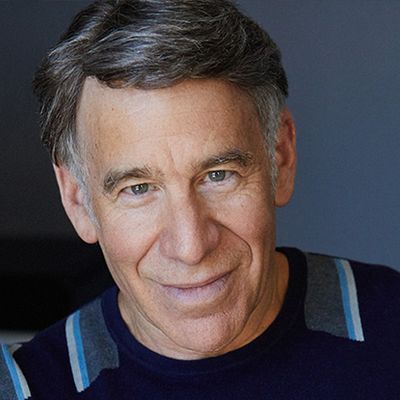
In this episode, Award-winning Composer/Lyricist Stephen Schwartz joins the livestream! We talked about his collaborative process with Alan Mencken and how the pandemic hasn't changed their working partnership. Stephen also leaked that there would be a cast recording of The Prince of Egypt in the coming weeks (you can stream that here).
Watch the replay of this episode: https://youtu.be/2qnN9ZTolcM
Follow me on Instagram: www.instagram.com/kendavenportbway
Catch the next livestream LIVE: www.theproducersperspective.com/live
About Stephen Schwartz:
Stephen is probably best known in the UK for his scores for Wicked and Godspell. Other shows for which he wrote music and lyrics and which have been seen in the UK include: Pippin; The Baker’s Wife; Children of Eden and Working. He co-wrote the English texts with Leonard Bernstein for Bernstein’s Mass. For films, he collaborated with Alan Menken on the songs for Disney’s Enchanted, as well as the animated features Pocahontas and The Hunchback of Notre Dame and wrote the songs for the DreamWorks animated feature The Prince of Egypt. Awards include: three Academy Awards, four Grammy Awards and the Isabelle Stevenson Tony Award. Mr. Schwartz has been given a star on the Hollywood Walk of Fame and inducted into the Theater Hall of Fame and the Songwriters Hall of Fame. Stephen is Artistic Director of the ASCAP Musical Theatre Workshops and serves on the Council of the Dramatists Guild. A book about his career, ‘Defying Gravity’, is published by Applause Books.
The Producer's Perspective LIVE! and this podcast episode was produced by Mary Elizabeth Dina.
Transcript
This transcript was automatically generated and might contain errors.
[0:00] Ken Davenport: Hey everybody, it's Ken Davenport, and I wanted to say thank you for listening to the Producers Perspective podcast.
[0:05] Ken Davenport: You're now listening to a special mini-series, the Producer's Perspective Podcast Live from the Pandemic.
[0:13] Ken Davenport: These are recordings directly from the Facebook Live series I started during the coronavirus pandemic, where every single night I interviewed a Broadway Luminary and chatted about what they were going through, how they were dealing with it, and what they expected Broadway and theater to look like when it was all over.
[0:33] Ken Davenport: So join us for this very special episode of the Producers Perspective podcast live from the pandemic.
[0:40] Ken Davenport: We're getting the band back together.
[0:43] Ken Davenport: Get a boy to rock to rock again.
[0:47] Ken Davenport: Get the band back together.
[1:00] Ken Davenport: Get the band back together.
[1:02] Ken Davenport: What do you say? Let's bring in the man of the hour, the first guy to respond to my email to say, yes, I will do this.
[1:10] Ken Davenport: Please welcome Mr. Stephen Schwartz.
[1:12] Stephen Schwartz: Hello, Ken. How are you?
[1:15] Stephen Schwartz: I'm okay. It's really scary, you know, that for all the shows in America to be down. I have a lot of companies of shows with actors and crew and musicians that I care very much about. And all of them are just sitting around right now out of work. So we just hope that, I mean, we obviously don't want to go back before it's safe, but we look forward to when we can go back. And I just hope all the shows can come back.
[1:44] Ken Davenport: And you just opened a show. Tell us about how Prince of Egypt was going over in London.
[1:49] Stephen Schwartz: Yeah, I mean, we were going great guns for three weeks. You know, selling really well and getting standing ovations every night. I mean, I know that sounds, you know, as I'm hearing myself say this, it feels like, you know, self-promotion, and I don't mean to be doing that, but the truth was it was going very well. I think the show is absolutely beautiful to look at. You know, my son Scott directed it, and Ken, you've worked with Scott and was in absolutely top form. The good news about that is while we are on hiatus, waiting for the West End to open again, the cast album is gonna come out any moment.
[2:30] Ken Davenport: So great. Was it accelerated because of this?
[2:34] Stephen Schwartz: No, actually, it was delayed. We very fortunately and providently recorded the cast album during dry tech, while the actors were free and the musicians were free while they were, you know, figuring out how to make the set move up and down, etc. We recorded the album then and then over the next couple of weeks mixed it and mastered it, and you know, we're sort of ready to go with it. And of course, then the show closed down and we thought, well, what should we do? But then we've been holding it for a bit, but then Kurt Deutsch, whose record company Ghost Light is gonna bring out the record, pointed out that Passover is coming up, and you know Prince of Egypt is the Passover story. So we thought, like for Passover and Easter, which follows hard upon its heels, we would as a little, you know, sort of gift and hopefully a pick-me-up for people, we would at least digitally release the album. So I think it's safe for me to announce that. And if not, Kurt Deutsch will be mad at me.
[3:45] Stephen Schwartz: No, he not now. No one gets mad for anything now for this kind of stuff, at least as we go. That one of the stars of a television show just announced when his show was going to be coming back and literally Netflix tweeted at him like, "What are you doing?" It's just all, you could say just about anything.
[4:04] Ken Davenport: It's so funny you talk about Passover. For those of you who don't know, the first show I lead produced was of course Stephen's Godspell, and we made a fantastic album of that. I listened to it, yeah, and someone from the record company at one point, like the second year of it, emailed me in about a March-April period and they literally said, "Ken, Godspell's album sales just shot up like crazy. Did you do anything?" I was like, "It's Easter, it's Godspell," because the productions I'm sure surge at that point too.
[4:40] Stephen Schwartz: I guess, yeah. I hadn't thought about that for a year, a little peak, a little peak.
[4:47] Ken Davenport: All right, so you mentioned keeping yourself busy. Are you working on anything new right now?
[4:47] Stephen Schwartz: Yeah, I'm collaborating with my frequent collaborator and very good friend Alan Menken. We're writing some songs for a potential movie, and I'm being mysterious because the movie is just not greenlit. We don't know that's gonna happen. But part of sort of trying to see if the studio is going to go ahead and actually, you know, give a green light to this movie is that we have to write a couple of songs. So we are, you know, doing that every day, and but basically, even though Alan lives 10 minutes from me, we're basically doing it over FaceTime and, you know, sending things back and forth, posting things to Dropbox, and you know, not having direct physical contact, but making progress.
[5:47] Ken Davenport: So normally your process would be in a room with Alan. Would you be sitting in a room?
[5:50] Stephen Schwartz: Yeah, that's how you normally work. Can you talk about your normal process and then talk about what it's like in this different one? If it's difficult, easy, how you're getting through it.
[6:01] Stephen Schwartz: Yeah, well, I mean, my normal process when I'm is mostly writing by myself, and so that hasn't changed at all. But for collaborating, you know, with Alan, because he lives 10 minutes from me, I would basically jump in the car and, you know, drive over the hill to his studio and be there as we were working out, you know, music and, you know, I would be suggesting lyrics and he'd be trying things and we'd like to do a lot of stuff in the room together, but that's not happening. And that kind of thing is, you know, at least for us, it seems awkward to just hang there on FaceTime or Zoom or whatever. So we haven't been doing that. We've mostly been posting things to each other on Dropbox and then talking about it on the phone. And if it really gets dire, I'll go over there and stand six feet away from the studio.
[7:00] Stephen Schwartz: Okay, sing to him through the window. So far that hasn't been necessary. And we've been FaceTiming with the screenwriter and the director. You know, it's all, but it's what everybody does these days.
[7:11] Ken Davenport: So do you think this will affect how people collaborate in the future? Do you think, I mean, when I think back on it, I realized that, you know, on Wicked, Winnie lived in Los Angeles, Winnie Holzman, the book writer. And so a lot of our collaboration was via emails and long phone calls, et cetera, because we didn't have fancy things like FaceTime or Skype then. Maybe we had Skype, but we didn't, but anyway. And then on Prince of Egypt, Philip Lezebnik, who's the book writer for that, actually lives in Denmark. So again, there was, you know, a lot of Skyping going on. So I think it's just the way of the world now. And consequently, when this virus has come along and we're still working away and collaborating, it isn't all that much different than it has been for the last few years.
[8:08] Ken Davenport: I'm gonna turn to some of our, you're welcome to throw in questions into the comments, and I'll ask a few. I got one right now from Jack Ferreira. Jack, do let us know where you are, by the way, in the comments, let us know where you're coming in from. But Jack asks, and this is a great question to ask for this moment in time. It's that famous writer's block question. How do you overcome writer's block? And what do you do if you feel your work is similar to another, I guess, of your own or someone else's. But more specific, tell me about writer's block and when you're facing new challenges right now.
[8:43] Stephen Schwartz: I have a glib and ready answer to talk about writer's block because one time many years ago, I was experiencing that. It was actually when I was working on the movie of Hunchback from Notre Dame. And I was almost like that cliché that you see in the movies of like the writer, except I wasn't on a typewriter and then balling up paper and throwing it on the floor. But it was like that. It felt like that. And after a couple of days of this, I got, I was feeling extremely whiny. And I was talking to a good friend of mine, a writer named John Pequino. And I was telling him about this and how I, you know, I was experiencing, experiencing, easy for me to say, this block. And what John said was, "Oh, well, you're being the editor too soon."
Which is such a brilliant comment. Because if you think about it, when as writers, we're actually constantly switching hats. So sometimes we're the writer and we're just, you know, gushing things out there. Hopefully we're putting something out there. And then we're the editor who's judging that and saying, well, this is good, that's terrible, and here's a little nugget I can use, but I have to get rid of all this. You're judging it and making choices. If the editor shows up too soon, if your internal editor shows up too soon, then you can't do anything. So the way to get around writer's block is to allow yourself to just do terrible work. I have another good friend, screenwriter Dean Pitchford and lyricist of Footloose, who when he writes a screenplay, he labels his first draft of the screenplay "shitty first draft" to give himself permission to just write bad stuff, just something down.
[10:39] Stephen Schwartz: In terms of if you look at something and you feel, oh, this sounds too much like something else, it's too similar to something someone else has written or something I've written, the point is you have something there and therefore you can make changes in it. But I have been known to call someone up, you know, call friends up and say, "Okay, I'm just gonna play you this tune. You have to tell me if I stole it." You know, this is "Bye Bye Blackbird" because I feel like I've heard this before but I don't know where. And almost always they say, "No, no, I think it's just you. I love it." I love that writer's block answer too. One of the best answers I heard, the blogger Seth Godin once wrote, you have to imagine yourself like anyone else, like a plumber.
A plumber doesn't get plumber's block; they just plumb. They just keep going. You just have to keep going through it and forget about it. You have to be willing to just put stuff down there that you know is not good because that will then lead you, if you're lucky and you keep at it, that'll lead you to stuff that feels better. But you can't just stop yourself if the first stuff, you know, if the first water coming out of that, you know, spigot that you're, you know, pumping up and down, if that first water is sludgy and brackish, you know, you can't worry about it. You just have to keep going.
[12:06] Ken Davenport: Do you have an example of something that you cut from a show that was not good?
[12:13] Stephen Schwartz: Do you do you have an example of something you're like, God, yes, so many examples. Examples. Um, well, we were talking about Alan Menken.
[12:21] Ken Davenport: Okay.
[12:24] Stephen Schwartz: So the very first song that Alan and I wrote together was um "Colors of the Wind" for Pocahontas. And um, you know, we sent the song in lyrics and music to Disney, and they were very enthusiastic about it. And we were going to get set to record it, and you know, all the big orchestra was coming in, and Judy Kuhn was coming in to sing, and you know, it was gonna be a very expensive session, and um, and then people are gonna start drawing things, which was very even more expensive. And like three days before we're supposed to go into the studio, Alan calls me, and he was you know, shyer uh with me at that time because this was our very first song together, and he said, Look, I I just have to tell you, I know everyone likes this song, I just don't like the last three lines of the song.
And I know we're yeah, I know it's late, but I I I finally have worked up the courage to tell you that. So here's what the original last I'm it's embarrassing because they're not very good, but here is the the last three lines of the original three lines of "Colors of the Wind," which is Pocahontas singing to John Smith, uh, and they were um for your life's an empty hull till you get it through your skull, you can paint with all the colors of the wind. And Alan said, uh, first of all, I don't think the word skull belongs in this song. Secondly, Hull feels really, really forced. And I, you know, of course, I whined for a while and complained and said, Well, it's such a difficult triple rhyme, and colors is such a hard word to rhyme, and blah blah blah.
And uh, but then because I believe in collaboration, look, your collaborator has to be happy, and it's like marriage, and you know, you both want to be happy with everything if it's possible. So um, so I went back and and right right before we recorded the song, I abandoned the triple rhyme trying to find a rhyme for colors, and did um you can own the earth and still all you'll own is earth until you can paint with all the colors of the wind. So much better.
[14:42] Ken Davenport: Beautiful.
[14:42] Stephen Schwartz: Yeah, but there's an example of just like a terrible piece of writing that yeah that got cut. But I have whole songs of which like you know, but yeah, yes. That is an inspiration for all of you out there. If Stephen Schwartz can admit to that and do that, uh, so can you. Um, you know, uh Evan Diamond asked a question here that I think is uh is a really good one. You're obviously very successful at this point, multiple musicals produced all over the world, but it's not always easy. I mean, we tend to look at folks like you and say, wow, it just there he is, he's just this big musical theater superstar, but it's still hard, and it's been hard along the way. What's one of the Evan asks, can you talk about overcoming adversity and perhaps share a personal story when you were uh down hard and how you found the motivation to keep going in this very business?
[15:35] Stephen Schwartz: Um, it's a really difficult business, and it's a really mean business. Whoops, I forgot that I'm in a room with the phone. Um hopefully somebody will pick that up. It's great. I watched a CNN interview with someone whose FaceTime was going, it's all fine. No one gives a shit. Okay. I'm assuming that that someone's gonna pick this up. It's late for people to call, but um it's actually my son calling, but I'm gonna say Alan Menken saying, how dare you tell that story about the. Come on, pick up the phone. There. Okay. Yes, adversity. So um, yeah, well, with uh I mean yes, I I feel like we all have lots and lots of adversity, and um because it's a very difficult business and it's a mean business.
Um and we all have our failures. I certainly have many of mine. You know, I'm I'm not a critic's darling. Um my shows and me, both of us tend to get slammed most of the time by the critics. And um even when the shows are successful, ultimately, you know, even even when audiences like them, you know, that still hurts. Um, and then when you can both get slammed by the critics and the show is not successful, that can that can really um you know, really be devastating because you've spent so much energy and worked so hard on it. Um yeah, and there have been a couple of times where I just thought, like, you know what, I I can't do this anymore, and I've stopped a while. Um but uh yeah, yeah. Um after the um the original production of Working um in 1978, um I know everybody thinks of Working as you know, this hit now because it's had this wonderful life, but the original production um didn't succeed, and um yeah, and that was after a lot of kind of tough blows for me.
So I basically stopped for for quite a while and just thought, like, well, you know, I'm gonna do something else. And and again in the early 90s, um, when Children of Eden, again a show that's gone on to a very happy life now, but um originally failed in London. Um, you know, again, I thought, like, well, I I went back to school actually for a while to become um a psychologist. And uh no, yes, in in the early 90s, I was um I was at NYU um studying psychology, and then I got this call from Disney saying that they were looking for um a lyricist to work with Alan Menken, and that sort of ended my career as a therapist as a psychotherapist. But I still hope in some alternate universe that I'm I'm having that career because I I would have liked to have been a psychologist too, if you could somehow do both.
[18:24] Ken Davenport: Well, listen, you've said some amazing things to me over the course of our friendship and working together, and I know you inspire a lot of writers with all the work that you do. Um let's take another question. Troy DeFor from Toronto, what are your thoughts on working on multiple musical projects at one time? And what are your thoughts on working a book, lyrics, and music all by yourself? Do you juggle multiples or are you a one show at a time guy?
[18:50] Stephen Schwartz: No, no, no. I I usually working on a couple of projects at one time. First of all, you you know, uh in our business, you you have to throw a lot of spaghetti at the wall because you really don't know what's going to stick. Um, and so I think first of all, out of self-defense, I've learned to work on several projects at the same time. Well, not several, but two or three. Um, I also find that it sort of is refreshing to leave one and go to another for a while. Um, and they sort of cross-pollinated in odd ways. Um, yeah, so um I wouldn't, I in terms of doing more than one particular role on a given show, I would never write the book to um to one of my shows, other than I I did it adapt Working, um, but that was that was mostly editing, not writing. But I'm I'm just a terrible book writer. Um so uh I would never presume to do that. And uh and it's and but but yeah, doing just music and lyrics is enough for me.
[20:01] Ken Davenport: What do you have? Uh any tips for for folks who are trapped at home right now that want to create, that want to write, that want to do something on how to do it in the midst of all this and not getting down as every story over CNN seems to pummel us to the ground?
[20:16] Stephen Schwartz: Yeah, well, actually, as I said, everybody I'm talking to is all of a sudden very busy. It's like the I think the first week or maybe two weeks, we were just freaked out, and everybody was just like, what am I gonna do? And how do I rearrange my life? And I'm just trapped here, and then suddenly it sort of started at the end of last, but I really thought happened today. Suddenly everybody is, you know, I always meant to try and write this, or I have an idea for something that I'm gonna sketch out, or um, you know, even to like uh I've always meant to clean out that cupboard or I everybody has projects now. Um, and I and I think you know, we can look at this in two ways. We can look at it as being trapped at a fearful time in our homes, and to some extent that's true, but we can also look at it as an opportunity that we've been given a gift of time we might not ordinarily have, you know, and and so much of uh you know, we spend so much of our time, I think, complaining about oh, where did the day go?
And uh, the day got away from me, and I I wasn't able to do this and I wasn't able to do that. Well, now you have some time where you could do some of that stuff. And if you've always meant to write something, or you have an idea or a song you've been thinking about, or you want to, you know, develop your voice by doing you know, practicing, etc. Um, or practice the violin or whatever you want to do, there's a lot of you now have time to do some creative stuff. So we should what will happen is when this is over, obviously we'll be really glad about it, assuming that we still have a an economy, et cetera. But as soon as we kind of take it back, um, we'll be glad about that. But I'll bet part of us suddenly misses. Oh, I I kind of missed having all that time on thing.
[22:20] Ken Davenport: It's incredible advice. And I want to thank you so much for sharing uh this time, uh, your time, your cabin time with us. Thanks for listening, guys. Thanks again for listening to this very special episode of the Producer's Perspective Podcast live from the pandemic. If you enjoyed tonight's episode, do us a favor and subscribe on Apple Podcasts. And hey, while you're at it, leave us a big standing ovation review, will you? And check out my Facebook page at facebook.com backslash Ken Davenport for more live stream interviews just like this one, except on the Facebook page, you can actually see our faces. So check it out at facebook.com backslash Ken Davenport. We'll see you there.
[23:09] Ken Davenport: Bye bye.
© Broadway Podcast Network, All Rights Reserved