

Welcome to the miniseries, The Producer's Perspective LIVE! From The Pandemic. Inspired by my podcast and check-ins with friends, I started The Producer’s Perspective LIVE!.. Read More
From the show: The Producer's Perspective Podcast with Ken Davenport
Guests

Featured Shows
About
Welcome to the miniseries, The Producer's Perspective LIVE! From The Pandemic.
Inspired by my podcast and check-ins with friends, I started The Producer’s Perspective LIVE! I started going live every night at 8pm with a superstar TheaterMaker to check in with them and see how they were doing and how this pandemic has affected them.
Many shared how they’ve been keeping those creative juices flowing, sharing many fun memories, raising money and awareness for The Actors Fund and other charitable organizations needing our support. We even started sharing ‘something to make you smile’ by featuring a new music video one of you in the community produced, directed, wrote, performed in!
In this episode, I catch up with 'Seinfeld' star JASON ALEXANDER who I haven't seen since we recorded our original podcast episode together in March 2019.
Watch the replay of this episode: https://youtu.be/RQDgFr_MI1Y
Follow me on Instagram: www.instagram.com/kendavenportbway
Catch the next livestream LIVE: www.theproducersperspective.com/live
About Jason Alexander:
Jason Alexander is an American actor, comedian, singer, and director. He is best known for his role as George Costanza in the television series "Seinfeld", for which he was nominated for seven consecutive Primetime Emmy Awards and four Golden Globe Awards. Other well-known roles include Phillip Stuckey in the film "Pretty Woman", comic relief gargoyle Hugo in the Disney animated feature "The Hunchback of Notre Dame", and the title character in the animated series "Duckman". He has also made guest appearances on shows such as "Curb Your Enthusiasm" and "The Marvelous Mrs. Maisel".
Jason has had an active career on stage, appearing in several Broadway musicals, including Jerome Robbins' Broadway in 1989, for which he won the Tony Award as Best Leading Actor in a Musical and a Grammy Award for Best Musical Theater Album. He appeared in the Los Angeles production of The Producers. He was the artistic director of "Reprise! Broadway's Best in Los Angeles", where he has directed several musicals.
The Producer's Perspective LIVE! and this podcast episode was produced by Mary Elizabeth Dina.
Transcript
This transcript was automatically generated and might contain errors.
[0:00] Ken Davenport: Hey everybody, it's Ken Davenport, and I wanted to say thank you for listening to the Producer's Perspective podcast.
[0:05] Ken Davenport: You're now listening to a special mini-series, the Producer's Perspective Podcast Live from the Pandemic.
[0:13] Ken Davenport: These are recordings directly from the Facebook Live series.
[0:17] Ken Davenport: I started during the coronavirus pandemic, where every single night I interviewed a Broadway luminary and chatted about what they were going through, how they were dealing with it, and what they expected Broadway and theater to look like when it was all over.
[0:33] Ken Davenport: So join us for this very special episode of the Producer's Perspective podcast live from the pandemic.
[0:40] ♪ Musical number: "Get the Band Back Together" — performed by Jason Alexander ♪
[1:09] Ken Davenport: Hello, sir.
[1:11] Jason Alexander: Hello.
[1:12] Ken Davenport: So you are in Los Angeles. What have you been, what have you been up to? What have you been doing?
[1:18] Jason Alexander: You mean prior to the end of the world? Where were you?
[1:21] Ken Davenport: It really seems that way. Where were you when the virus hit the fan, as I like to say? Like, where was the moment?
[1:28] Jason Alexander: I had just so I had done a seven city speaking/slash comedy tour in Australia when the word was just coming over about this thing in Wuhan, China.
[1:42] Ken Davenport: Now, what I have to ask, in Australia, you were just, were you doing your concert tour, or were you doing it?
[1:49] Jason Alexander: No, I have this really interesting tour that I was, I was supposed to be touring the East Coast right now. I had a seven city tour, part of a speaker series in Baltimore and Jersey and Philly and Pittsburgh and Boston, and that all went down because of COVID, but we just rescheduled for November.
[2:07] Jason Alexander: It's um, it's a kind of an interesting show, or at least it's interesting for me. It began its life as a Q&A show, a straight Q&A show, and then it became a Q&A with comedy, and then it became a Q&A with comedy and music, and it has evolved into a thing where we put topics up either in the program or we project them on a screen behind me.
[2:31] Jason Alexander: And the audience gets to pick and choose depending on what they pick. We get through six, seven, eight, nine of these things in a session. And um, we only talk about the things that are intriguing to them, the things they want to talk about. Some of them are funny, some of them are not, some of them are musical, some of them are not. And it's uh, it's always different for me. I never know what they're gonna pick, and it's been a lot of fun.
[2:53] Jason Alexander: So in Australia, we did that, and um, there is Seinfeld is certainly one of the categories up on the uh screen, and it invariably it comes up. So uh, we do a nice little chunk of Seinfeld questions, and everyone gets to broom that out. It's just been great fun. It's an easy show to do, and seems to be a crowd pleaser.
[3:14] Ken Davenport: What I love is in your post-Seinfeld life, you just seem to be doing, but you've come back to the theater doing more live entertainment stuff than ever before.
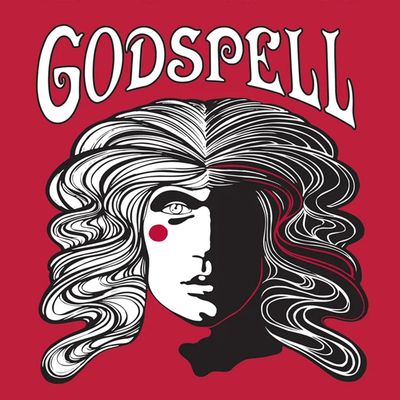
[3:24] Jason Alexander: Well, I never wanted to leave it, Ken. I know I've got like half this sunshine on me, it's gonna shift as we go. So um, I'm a living Godspell poster. Um yeah, I my fantasies when I was a kid growing up in New Jersey, and I realized I would like to be an actor, it was all about the theater. It was all about doing stuff in New York and dreaming about getting to Broadway. I had no fantasies about film or television.
[3:47] Jason Alexander: And when all that lovely stuff started to happen, I never had any faith in it. Uh, you know, so I thought, all right, I'll go to LA and I'll do this pilot, and I'm sure nothing will happen, and I'll come back and do, I'll get back to the theater. Uh so the glorious thing about the success of Seinfeld was it kind of was theater. Yeah, there were cameras there, but it was a live audience, and we did it like a play, and it wasn't glaringly different from anything I'd done in New York.
[4:15] Jason Alexander: Um, but yeah, I find if I don't use my live performance muscles for a while, I start to doubt them, and I never want to doubt them. So I keep I keep a foot somehow in the in the pool and come back to it as often as I can.
[4:31] Ken Davenport: You said that when you went to you never expected anything to happen of all this film and TV stuff. Do you think that actually helped with your success there? You're like, ah, whatever, I'm just gonna go out there and try this, or I'm gonna do this stuff. I'm not pinning my hopes and dreams on it.
[4:44] Jason Alexander: So it helped. Helped with my success as a human being because I never and I still don't really kind of buy into this whole allure of show business. Most of my friends, a lot of my friends are in the business, but they're not star names, and a lot of them are crew members or writers or um, so the glitz and glamour of Hollywood never struck me. I wasn't, even as a kid, I wasn't focused on film and focused in that way to go. I'm gonna be a movie star, you know.
[5:23] Jason Alexander: Uh, and I knew well by the time I was a teenager, yes, there's a glamour to being in the New York theater, but it ends at the stage door life as a stage actor doing eight a week in New York. Uh, you know, you're still taking out the trash and riding the subways and you know, getting yelled at and spit at, and you know, as we pass the bombs on the street. And so, you know, it's just not a glamorous lifestyle.
[5:51] Jason Alexander: So um, so it kept me rooted and it kept me healthy as all this other great stuff happened. And uh and hopefully it helped my wife and I keep our kids on track as they were growing up. And um, but yeah, it it's it's great. It's great to enjoy every project for the values that it has and for the people that you get to work with, but you know, we're just telling stories at the end of the day, we're just stories. There's nothing to get excited about here. We're just you know.
[6:23] Ken Davenport: I love that idea of it ends at the stage door because I has worked on so many shows, and I actually love to watch these folks come out and they're mobbed at the stage door. People are mobbed, and then they walk away and they're not mobbed. They literally go down the subway, they're like no one talks to them.
[6:40] Ken Davenport: I ride the subway in New York. When I'm in New York, I actually ride the subway. Nobody, if I walk down the street, I sometimes get stopped, you know. If I ride the subway, nobody says boo to me. I think it's because they must be going, nah. But I know all my friends that work, you know, in the theater. They're either commuting in on buses or they're taking the path train, or they're getting around on you know on the subways.
[7:05] Jason Alexander: So I what one of the things that I loved about meeting you for the first time is that you were nothing like George. There's nothing like it. I was like, this guy's actually one of the smartest guys I've ever thought. It's true. I mean, your insight not only into theater but into the world.
[7:22] Ken Davenport: So I want to ask you your perspective on what do you think? How does this change entertainment in the future? Do you think audiences are going to rush back?
[7:32] Jason Alexander: My instinct tells me people will want to rush back, but it will be mitigated by reality, especially in the world that you and I play in. What will the economics of live entertainment look like on the other side of this? Because our economy has been so devastated. People's individual incomes and their just their economic outlooks are so uncertain right now that the notion of disposable dollars for entertainment right now seems outlandish.
[8:07] Jason Alexander: How quickly that may change is anybody's guess. So I think the world of Broadway is going to be not what you and I experienced for quite some time, both in how the audience returns, how quickly they return, what the diversity and demographics of that audience are, and how much financial resources we have to work with and they have to work with.
[8:45] Jason Alexander: Other, we're all gonna want to flock back together, and live performance is one of the best ways to do that. Do you think we're they're gonna be craving a different type of entertainment? Is it sitcoms? Do they become the thing to see in a way, or big musical comedies or big slapstick, forget about your troubles?
[9:05] Jason Alexander: Yeah, it's a great question. I would if I knew the answer. Um, so I have a couple of projects for New York for the theater that I'm directing, and uh one of them is pretty far off. It's a it's a musical I'm developing, but the other two are actually right now looking to attach casts and get a theater because they're both really viable for when New York opens up again.
[9:09] Jason Alexander: One of them is a really dark comedy, and one of them is a very silly light comedy. And the dark comedy, I think was way ahead of the game coming into this pandemic. My guess, although we're pursuing them both equally, is I have a sneaking suspicion the silly frothy comedy may jump ahead at the end of this because I think if people are going to risk going back out and spending dollars for the theater, they're gonna want to have a fun time rather than a profound time or a um, you know, even being stirred by by a play is probably not initially what they're going to want to experience.
[10:14] Jason Alexander: So I think musicals have a great shot, I think comedies have a great shot, but unless you're unless you have noticed something different from me, comedies have been few and far between in New York these days. Nobody's really writing them for the theater. Certainly, no one seems to be producing them for the theater. Tell me a little bit about this transition to you mentioned directing. Uh why you wanted to pursue this another big challenge at this point in your life and your career? Uh when you could sit back and choose products, you went up and did. I I know I love you. You emailed me like, Ken, I'm doing the last five years up in Syracuse. And I was like, wait, what? So I love that you're doing all these different and unique things. So but but why? Like what about directing made you want to go down this path now?
[11:03] Jason Alexander: So even when I was a student in college, uh, an acting student in college, I had professors that said, Have you thought about directing? Uh because I I tended to see stories and material from a macro perspective. So if I was going to be in a play, I would read the play, I would see what the play was about, I would see what my character was to that, you know, macro storytelling, and then I'd kind of give you that very efficiently and very quickly. I was a director's dream because you know, I knew what they needed, and I would show up and do that. But my acting teachers would say, you know, the greatest actors see the entire piece through their characters' eyes and nothing else. They're always looking for the thing that isn't there, the thing the writer doesn't know, the thing the director doesn't know.
And I was uh I I was I was less good at that than I was at the other. So I began directing right out of college. I began directing in college. I loved it. Uh I loved the collaborativeness of it. Um and then when when the theater was taken away during the Seinfeld years when my kids were young, even in the breaks from filmed stuff, you know, eight a week is is the antithesis of a good parent schedule. Because every time your kids are coming in, you're going out. We could afford, thank goodness to Mr. Seinfeld and company, uh, to not have to make a living doing that. And I kept theater more or less at arm's length while my kids were little. But during that time, what did make sense was direct the thing, that's much less of a time commitment, and then you can step back and the piece goes on. So I began stepping it up there.
[12:59] Jason Alexander: When Seinfeld ended, and then my follow-up series were not successful. There are more images of me as George out there than anything else I've done, even though I've been doing this for 40 years. And as a result of that, the the kinds of roles I was being offered started to get really kind of not interesting. And the choice was there were two other things other than acting that I got really excited about. One was teaching and one was directing. There were things I wanted to do, there were pieces that kind of sang to me or called to me. And uh I decided to start pushing that as hard as I could. And I I started it actually in Seinfeld. I I got into the director's guild doing an episode of Seinfeld, and then I did some more television.
Took me a while to get back to theater where I actually know what I'm doing. I don't know, jack squat about what to do with a camera, but I have a pretty good idea of what to do in the theater. So uh it just took a while. And uh the the projects that came my way as a director for now, and not always, and not and hopefully not forever, but right now and in the recent past, the director the directing projects were much more interesting and engaging than any of the acting offers, and so you go with that. But you know, for me, a career is you just keep moving, you don't get stuck.
[14:21] Jason Alexander: If you were producing Jason Alexander the Musical, who would write it, direct it, and sing in it, then would it be a comedy? I would like to believe that it would be a musical because I've been singing longer than I've been talking. So I would like to believe my life had the sophistication to attract a Stephen Sondheim. I would like to believe that. Uh, I would like to believe that it has anthems in it that Passick and Paul could dig into. I would like to believe that it's quirky enough that Jason Robert Brown could make a couple of contributions, and I got into theater and acting because of Pippin. So Steven Schwartz is not involved, something has gone very terribly, terribly wrong. So if I can create a collaboration between those four, you know, individuals and teams, that would be fantastic. I would love to see, you know who'd be a great me? Alexander Gemini. Oh great me. Or Danny Burston. Uh Danny would would play me uh exquisitely, he'd be a better me than me, as is my fear.
[15:25] Jason Alexander: Do you have any tips for an aspiring writer or actor on how to eject interject the right amount of funny in a scene? How do you be funny, Jason? Tell us at all, teach us. Um, so here's here's the truth about me and funny. When I when I went to college, I didn't think of myself as funny at all, and I didn't think that my life or career would be centered around comedy. I I was inspired by great dramatic musical and non-musical actors, and I I I was thinking more of a classical or classical dramatic career. In my sophomore year of college, a a professor of mine by the name of James Spruell, who was no longer with us, pulled me into his office. He's a very large basso African American man, and he said, I know that your heart and soul is Hamlet, and you would be a profound Hamlet, but you will never play Hamlet.
So you best get good at false staff. And that was, and I so what Jim Spruell did for me that I was not able to do is go, you're five feet five inches tall, you're 30 pounds overweight, and you're already going bald, think comedy. And he was right, and I I bless him every day.
[16:47] Jason Alexander: In drama, there's great conflict, people really working against each other and enormous odds. I when I was doing Seinfeld, nothing that happened to George and nothing George did was funny to him. To him, it was all life and death serious. And every now and then someone could hold the mirror up to him, and George was savvy enough to go, I look like an idiot. And he could he had a small ability, as Larry David does, who I was using as my role model, to laugh at himself. But if you allow your characters, either them or the people around them, to see the silliness in how much we we lose our minds for what we think is desperately important. If you if everything is desperately important and you don't have somebody go, but is it, or aren't you coming, aren't you a little over the top right now?
Then nothing is desperately important. Because to everyone, everything they need in that moment is desperately important. You know? Um so what you may want to do if you're a writer is to look for what is tragically funny about your character. What what, you know, what what is part of the when we talk about um what makes for great storytelling is the character can't just get what they want. There's an obstacle. And if the obstacle they have to overcome reflects some deep inability or character flaw in them, you have great chemistry for a comedy right there.
[18:28] Jason Alexander: So it, you know, if you're a hit man who gets who has flashbacks of things, horrible things he's done, and he can't sleep at night because he's haunted, it sounds incredibly dark. But that's what Barry is all about. That's why Barry is such a great comedy. These horrific flashbacks of what he has done and how it haunts him, and how it, you know, he goes to the theater to stop being Barry. He wants to be an actor so he doesn't have to be Barry anymore. Incredibly funny. Comedy is sitting all around the darkness, and all you have to do is just go, why can't my character get there? What can I give them that is fun that keeps them from getting what they want? And how much are they self-aware, or how many people around them are self-aware? And that's all it is. If they if they work and speak and act from their honest point of view, you should be able to get a a a perfectly balanced sense of humor into your dramatic writing said the non-writer.
[19:18] Ken Davenport: Yeah thank you so much for being here and for inspiring and educating us all it's been a pleasure my friend thanks again for listening to this very special episode of the Producer's Perspective podcast live from the pandemic if you enjoyed tonight's episode do us a favor and subscribe on Apple Podcasts and hey while you're at it leave us a big standing ovation review will ya and check out my Facebook page at facebook.com backslash Ken Davenport for more live stream interviews just like this one except on the Facebook page you can actually see our faces so check it out at facebook.com backslash Ken Davenport we'll see you there getting the fan back to get in the boy to crack the back again bye bye
© Broadway Podcast Network, All Rights Reserved