

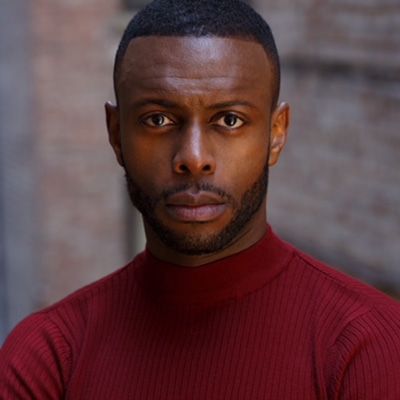
Josh Breckenridge (Come From Away, Book of Mormon, The Scottsboro Boys) is one of the most employed actors on Broadway. He has a particularly complex relationship to code-switching that likely makes him a wonderful actor... Read More
From the show: The Quiet Part Out Loud
Guests
Featured Shows


About
Josh Breckenridge (Come From Away, Book of Mormon, The Scottsboro Boys) is one of the most employed actors on Broadway. He has a particularly complex relationship to code-switching that likely makes him a wonderful actor. It is also a pattern in his life that emerged from a confluence of identities that consistently made him feel othered. He is black and gay, but grew up in largely white communities, where it was a constant and multi-dimensional challenge to find belonging - not only in the groups that he was different from, but in groups that he was connected to. It is through a continued search for personal identity that is not centered on making others comfortable that brings Josh closer to himself, and less dependent on the survival of code switching.
Transcript
This transcript was automatically generated and might contain errors.
[0:00] Bobby Steggert: I'm Bobby Steggert, and this is The Quiet Part Out Loud.
[0:15] Bobby Steggert: Code switching is a very specific form of people pleasing that is based in identity and dominance. That is to say, it is often the added burden on someone with a minority identity to edit and alter their behavior in order to fit in, be accepted by, or stay safe in an environment where a dominant and more powerful identity prevails. I imagine this may be a universal experience with a whole spectrum of contexts. My own is that of going home to Maryland even now and realizing that I'm automatically lowering my voice and saying things like, hey man, to a straight guy at the checkout counter. The goal is understandable. While it's something I would never say in my normal life, it's an attempt to fly under the radar, avoid exposure and possible rejection, but in so doing it prioritizes another's comfort over your own authenticity. The kicker is that it doesn't even matter if the person you're code switching for would be welcoming of your true identity or not. This is often an automatic and immediate safety response.
[1:18] Bobby Steggert: This week's guest is Josh Breckenridge, one of Broadway's most employed actors who has appeared in Come From Away, The Book of Mormon, and Scottsboro Boys, and in this season alone, Swept Away and You're in Town. He has a particularly complex relationship to code switching that likely makes him a wonderful actor. After all, it is observing the environment and deciding what it needs from us that is often the seed of a successful performance career. It is also a pattern in his life that emerged from a confluence of identities that consistently made him feel othered. He is Black and gay, but grew up in largely white and straight communities where it was a constant and multidimensional challenge to find belonging, not only in the groups that he was different from, but in groups that he was connected to.
When with white people, how not to be, as he says, too Black, and with Black people, how not to be too white, add to that the elements of gender and sexuality, and it was overwhelming. This is the burden of holding any minority identity, let alone an intersection between more than one, and this is where the concept of privilege comes in. The conversation around privilege, which was central to the cultural moment a decade ago, seems to have been flattened out by the exhausting cultural shifts since, but it's an important idea to carry forward in that privilege is not only about what we have, but what we are free from. To have to actively use one's social awareness as a tool to stay safe and find acceptance is simply more pervasive and demanding for someone whose identities have been reduced to stereotypes by the dominant culture.
What you will hear Josh and I explore is the myriad of ways in which, as a young person, and even in some ways today, he would consider certain expectations and generalities about who Black people or gay people are supposed to be, and find ways to either lean into or away from those expectations in a constant tightrope walk. I'll also share that since recording this episode, Josh and I had a conversation in which there was concern that certain things he shares might offend others, and I couldn't help but think about how even that concern is a legacy of code-switching, and that it's based in an anxiety that others won't accept us and our experience unless it is packaged for their comfort. What Josh shares is the often painful experience of being alienated and outside of the norm, and still, there is always the risk that being honest will result in rejection.
Because of this, I'm especially glad that Josh is willing to communicate his experience so frankly, and my hope is that hearing his story will help anyone who is listening really consider when they are behaving as a way to make others comfortable, and when they are simply being true to themselves. It is necessary to consider belonging in this world, but first, we have to belong to ourselves.
[4:12] Bobby Steggert: Josh, I saw you in You're in Town, in which you were amazing in a role that I had never even thought about before, but it was so funny and disturbing, and then funny again. So congratulations on your performance.
[4:31] Josh Breckenridge: Thank you. Thank you, man. It was a fun show to do.
[4:36] Bobby Steggert: Yeah, it looks so fun. We ran into each other afterwards, and you reminded me that we had a very close call in terms of working together as therapists and client.
[4:47] Josh Breckenridge: Yeah, we did. I think I was given the choice between my current therapist and you, and I was like, oh, that goes a little too close to home. I know him. I just didn't want to risk it being weird.
[4:58] Bobby Steggert: You have a great therapist who is also my supervisor. But when we talked about it, I thought Josh would be such a wonderful guest for the show because you were so open about being in the therapeutic process. It seems very important to you, something very central to you.
[5:11] Josh Breckenridge: Yeah, you know what's funny is that I was curious as to what made you come to the conclusion of inviting me on, and because you had just seen the show, I was like, was it something in the performance?
[5:21] Bobby Steggert: Because you played such a pervert on stage?
[5:25] Josh Breckenridge: Yes, such a creeper. I was like, he must be going through some things that were so authentic.
[5:30] Bobby Steggert: Not at all. It was separate that I was just really struck by how bold and funny your performance was. And you bringing therapy up so immediately backstage, just so openly made me think you'd probably be a really wonderful contributor to this platform, which is all about being an open book.
[5:47] Josh Breckenridge: Awesome. First of all, I have to say that I love your podcast. There's something that I get from every episode. And I think your purpose of getting people to open up in a way that's conversational to a listener at home could affect them in a way unknown to the guest is so effective and wonderful. No matter how crazy or out there or non-universal the stories are, it does seem that they have the universal vibe of something very human that we can all relate to.
[6:21] Bobby Steggert: That means a lot. And I'm so glad you're here. And what we're going to talk about based on some private conversations we had was about this concept of code switching. And it seems to me is probably a universal experience where anyone will walk into an environment where they feel other and they will have a thermometer internally deciding what this group of people needs for me in order for me to survive socially, for me to be safe in the environment. Yes, I understand it so deeply as a gay man, of course. But you described it in a way that was so multifaceted. And I'm so excited and honored that you're going to talk about it. But before you do, how would you even define the concept of code switching?
[7:02] Josh Breckenridge: I guess one could define it as adjusting for your environment could be the language and physicality, the style, whatever you think will help to get you approval and to feel one of the tribe that you're amongst in that moment.
[7:20] Bobby Steggert: That's perfect. Will you share this sort of shape of your early years? Just explain the foundation of how you grew up understanding identity.
[7:29] Josh Breckenridge: Yeah, hey, part of the reason I'm here and part of the reason I'm in therapy is still in search of identity. It never feels fully complete. And I think the bulk of that is thanks to my geographics where I grew up, my makeup and how those things societally have clashed in a way. I'm from San Diego, California. I did grow up a little north of there in Lompoc, California, for the bulk of my adolescent years, which is just north of Santa Barbara area. So born in North Carolina, lived there until I was five and then moved out to California. But most of my childhood, I have been surrounded by more white people than people of color, both in the Goleta Santa Barbara area that I lived in for a second before moving to Lompoc and then Fallbrook, California, which is the northern part of San Diego County.
[8:21] Josh Breckenridge: What was very interesting about each of these areas I lived in is that both Lompoc and Fallbrook had military bases. And although my dad was in the military for six, seven years before our move to California, we were not military brats. We were not living in these towns due to my father's affiliation. It just happened to be. And so the kids of color, specifically the black kids, were mostly military kids and went to school at these predominantly white schools, but went home on base. So I think that was part of the separation. I remember being one of the few black families. And I think growing up, knowing that I was other, I felt like I often had to beat people to the punch when it came to anything revolving around race.
And I think the impetus of the beginnings of my joking personality, a lot of my friends will say I joke too much, but I think I made light of a lot of situations when it had to do with race with my white friends growing up just to avoid awkwardness, to show them that I was OK and that they didn't have to, you know, be weird around me.
[9:33] Bobby Steggert: So you would take on a more white centered perspective on race and joke about it in order to make people more comfortable?
[9:41] Josh Breckenridge: I think more if the subject was brought up about, I don't know, slavery or something, I would break the ice by being like, don't look at me, you know, or play around to make it funny. And I guess that invited folks to be a little more lax and chill with me. But there's always the thought of, oh, Josh, you're black, but you're relatable.
[10:02] Bobby Steggert: What did that mean to you when you were young, that you were relatable?
[10:05] Josh Breckenridge: I know there are plenty of African-American people in the business that can attest to this phrase, but I was often called an Oreo, black on the outside, white on the inside. And so I think that because of that, people found that I was safe to talk to, still didn't like it when people touched my hair and said it felt like a sheep. But moments like that, the white kids, a lot of them didn't know better or were just curious or ignorant. I was like one of their first black friend experiences. And a lot of kids in very segregated areas, their example of black culture is what they see on TV or cinema, whatever, in the media. And so to have a friend or an acquaintance, a classmate at school that is black, I'm sure it's intriguing to some folks. But yeah, that was something I was very aware of.
[11:00] Josh Breckenridge: Now, I wanted to bring up one instance that I thought was very interesting. When I was a freshman in high school. I remember when we got to high school, it felt a little more mean girls like segregated into groups. These are the nerds, these are the jocks, these are the blacks or the Asian group or this separation of identities. And I remember there was a moment where I was invited into the black.
[11:29] Josh Breckenridge: And I was like, oh, this is my chance. I could mess this up by being myself and not being black enough. And I think that was maybe one of my earliest examples of code switching. And I remember it wasn't necessarily the next day, but like sometime early on in my freshman year experience, I went to a Foot Locker and I bought some Timberlands. I bought this powder blue FUBU. This is very 90s. Yes. Very 90s. Yeah. I think Michael Jordan or someone was on the front, you know, slamming dunk sports ball. I don't know much about it. And some loose-fitting pants. And I came to school and my white friends immediately were like, what are you doing? That's not you. Who are like what? And I don't think it was necessarily coming from like a concerned place of what are you going through? It was more laughing at me like, well, that's not you're not that black. It looked like Josh was in a costume to them.
[12:28] Josh Breckenridge: Exactly. And immediately, what does my self think? That's the end of the world. I don't want to be pinned as a poser. I don't want to. That was like crushing to me. And so I like basically I think I might have even thrown the clothes away after that.
[12:42] Bobby Steggert: Did you try to somehow make friends with the black kids in school after that point?
[12:47] Josh Breckenridge: Yeah. Yeah. I wasn't completely segregated. And there were some black kids, most friends. I had one best friend. We're in drama and choir. And I think we all had that in common. That was a little bit of a crossover. There are some black performers in those classes that I think, in my mind, were more authentically what society deemed was black, what should be black. And so there's a little crossover there. But yeah, for the most part, I felt—and it always sounds crazy to say—but I felt more comfortable amongst the white friends just because it's what I knew more of. And I think my parents always wanted my brother and I to have great opportunities in life. And my family is amazing, both my dad's side and my mom's. My dad's from the south side of Chicago.
My mom is from a rural area in St. Louis. And it's the Midwest. It's country. I want to say that I don't know if I'd be the same person I am today. There's a whole nature versus nurture thing. But I think I'd still be a gay man. I might have been closeted for longer because I feel like in my mind, at least at that time growing up, 90s kid, it just wouldn't fly. And I also don't know if the resources of theater classes and choir and this and that were as plentiful as where I ended up growing up. So it all happened as it was supposed to, but it was definitely a struggle for me for three separate groups in finding out who I was as a person.
[14:18] Josh Breckenridge: And I think I still struggle with that today. And just the black group or subset is only one of the pieces to the puzzle.
[20:52] Bobby Steggert: As you discovered theater and probably concurrently were discovering your sexuality, did you find refuge and a sense of belonging as compared to feeling outside of all these other groups?
[21:06] Josh Breckenridge: Yes. Still a hesitancy to fall into my own true existence, but yes.
[21:13] Josh Breckenridge: I was a very bad student, like detentions every single day.
[21:20] Bobby Steggert: For what? What were you being sent to detention for?
[21:23] Josh Breckenridge: I think a lot of us that get into the arts, of course, are lacking the feeling of love, whether it's parents or friends or someone in our immediate surroundings, and we unconsciously go towards theater for the applause, for the camaraderie and teamwork of a cast and a company. I think I was lacking that. I didn't know where to place all my energy. I was also this ADD kid that was just so distracted. I'll never forget, we went to a dairy farm and we were learning how milk was made like in fourth grade. I leaned over and I said to Vanessa Ortega, I say, you want to suck those udders? Just right. I would say shit. And I still to this day, for shock value, will say stupid crap.
[22:08] Bobby Steggert: Wait, Josh, is that a form of code switching or was it a form of trying on straight man energy too?
[22:14] Josh Breckenridge: Oh, no. I think at that point it was, I do not like this girl and I'm going to say something that is going to be yucky for her and also too much, too much. And she told the teacher and the teacher told the principal and I got, did you have a card system growing up?
[22:33] Bobby Steggert: No.
[22:34] Josh Breckenridge: The card system was you would start with the green card and then every time that you do something bad, the teacher would say, go pull a card. And so it's yellow, which was a warning. Orange was the second warning. Red was a 10-minute detention. Blue was a 15-minute detention. Purple was a 30-minute detention with a call home to your parents. So I had at least a red card every single day, every single day.
[22:58] Josh Breckenridge: Did it feel like rebellion to you?
[23:00] Bobby Steggert: Yeah, a little bit.
[23:01] Josh Breckenridge: I was not particularly kind to my brother in our adolescence, too. There's family video evidence of me pushing him or being rude or this or that, and I guess I was acting out to... I don't know. I don't know. Psychologically, I'm sure I was doing what any kid would do at that stage, feeling the things that I was feeling and not knowing how to express. I also wonder if that part of you was frustrated by all of the navigating you were having to do in order to try to fit in.
[23:26] Possibly. And I just knew from, you know, I know everyone has different experiences, but I knew since as early as I can remember, four or five, that I was different with my G.I. Joes and loving the muscles and all of that, which also who could play with the toys of the 80s and 90s and not turn out gay? It was a pretty gay time. Pretty gay time. Sorry, long tangent. I brought up all of that to say that I did very poorly in school. I was a smart kid, but I just was so distracted. And then seventh grade in middle school, we took a field trip to go see a production of Annie at PCPA, Pacific Conservatory of the Performing Arts, and my pupils dilated and I just was in awe. That was the first show.
I didn't know what a musical was until seventh grade. And I was like, that's what I want to do. And I immediately joined the drama club. And I'm telling you, Bobby, like night and day, I started to get straight A's, was super hyper-focused. All of this is probably related to being an ADD child, but I found a focus. I found a passion. Freshman year, I was riffing West Side Story and people said, you're really good. Oh my gosh, you can sing. I felt good. I felt like, for once, part of a club. I'm part of a group and accepted. And it's funny because even with riff, I had to make a joke and be like, oh, I'm the leader of the white gang. Look at me. This is weird, but I'm catching it first before you can comment on it. And so that code switching.
[25:14] As connected, how did you start finding your way into the gay community?
[25:23] Josh Breckenridge: I think it was a soft reveal being in the drama club. There were a couple out kids. I myself was definitely not out. It wasn't until my sophomore year of high school when we moved down to Fallbrook that I started to let myself explore that more. I had crushes on classmates and this and that, but there was a boy that I was doing a show with at a local regional theater, one of my first youth theater experiences. We have little showmans and that was one of my first proper experiences. I was five years old and exploring my little boyfriends. I guess that's what a lot of kids do at that age, but even that young, I definitely knew what was up. But I also had crushes on girls at that time as well. One story that I told myself I had to bring up for this was when I was probably about seven or so.
I remember being in love with this girl named Maria, who was my same age. And I picked like a little ratchet clump of flowers to give to her to ask her if she would be my girlfriend. And this boy, Ryan Snyder, was this like bully and he had his own issues. He was adopted and apparently came from an abusive family, so I'm sure he was working through his own shit. He stepped in front of my path in the middle of my proposal and gave her a bouquet that was bigger than mine. So automatically it was like, size contest, I beat you. Got her to giggle and give him a little kiss on the cheek. And then she walked away and then he leaned in to me and he said, you're black, you're ugly, and no one will ever love you. And so, again, another pupil dilation moment where I think I just was like, the air just fell out of me and that was a forever stamp on my existence.
[27:15] Bobby Steggert: Yeah, little Josh believed that, didn't he?
[27:18] Josh Breckenridge: Fully. And there's a lot of content out there, and especially at that time, to support that. In the media even, the Ryan Gosling's, I guess at the time, Leonardo DiCaprio's and all these teen beat idols that I probably had crushes on at the time was beautiful. And that was something that was not a reality for me. And also growing up amongst these other white people, you end up feeling different. How could you not? You end up feeling not as desired as well because into my teenage years, because I'm other and everything else around me is what beauty is. And it took me a while to shake that shit off. And once I went to college and got out into New York and actually felt appreciated for my melanin and everything else, I think that changed. But there's a part of me that will always have to combat against that.
[28:16] Bobby Steggert: That's such a harrowing moment for a little boy to have to encounter.
[28:22] Josh Breckenridge: Yeah, it was. And I think that with my parents knowing just from jump that I was gay, you look at some home videos and this good God, that boy was jumping around, twirling on the bed and singing his ABCs. And it's adorable, but it was evident. And I think that my dad would catch me with towels on my head. And maybe that was also like a part of me desiring the popularity of the whiteness of having long hair and being able to tuck it behind my ears. And I would sing whistle tone Mariah Carey songs. I remember my dad busted in one day and he's like, take that towel off your head. You're not just a singer. That's how girls sing. Or me hugging him and him pushing me back and returning me with a firm handshake.
[29:09] Bobby Steggert: Oh, affection was considered something too intimate.
[29:12] Josh Breckenridge: Yeah, it was weak. And for black men, the idea was always like, you're going to take something else away from us. It's already hard enough. You're going to add gay to the roster of reasons why people don't like us or are bigots towards us or have hatred towards us.
[29:31] Bobby Steggert: So the perspective is not another strike against us.
[29:34] Josh Breckenridge: Not another strike against us. Exactly. And for me, I think my whole life, it's always been how can I avoid one more strike against me? I'm already gay. I'm already black, which I know now and I've known forever is beautiful. And I love myself. And black is beautiful. And I don't want anybody, this young person listening to this who's feeling the same way as me. I want them to know that they are just the most gorgeous children and beings and the worthiness is there just as much as any other person. But I think that with all of that going for me at the time, it was like, what can I do to gain the love and acceptance that will override this other ugliness, this badness? And I know that listening to your podcast and talking to friends, talking to my therapists, I know that we all have varying degrees of a desire for self-work, of course.
But for me, it was like, what can I do? And I think that's also why I joined theater, because the second that people said I was good in it and the applause happened and everything else, it was like, oh, I'm going to race towards that finish line. I'm going to be the best freaking singer, dancer and actor that there ever was so that I can finally feel what it feels like to be in a group that loves me fully as I am. Hybrid, little white, little black, little gay.
[31:10] Bobby Steggert: We'll be right back.
[31:12] Bobby Steggert: In terms of current life, and this might be a little sensitive because you're highly employed a lot, what do you find is explicitly or implicitly expected of you sometimes based on racial identity as an actor?
[31:27] Josh Breckenridge: Yeah, sure. Which I think is yet another form of code switching. Walking into the room, if I'm going in for, especially in film and television, something about that where we've gotten better about it, but there's this category. There's the thug, more urban black that is the farthest out of my wheelhouse, but I've done that before as well. And then the scholar, lawyer, doctor, which is right where my money's at, or police officer or something. And yeah, you have to know how to turn that off and turn that on in the room and give them what they expect. When I went to school, I went to CCM, College of Conservatory of Music, University of Cincinnati, and I was the token. I was one black guy in my class of white people and love every single one of my classmates.
They're friends for life. Such nostalgia for that time, but they didn't know what to do with me. That was 2003 to seven. And we did the show called Listen to My Heart, this David Friedman song cycle. And I was cast in it and they chose it because it was one song called Two Different Worlds that myself and actress Laura Hall sang. And it could have been about anything, but of course we need to make it about race. And of course, Laura's a white actress that I sing it with. And so I always feel like there is in the arts, this code switching and flipping as a black man, and especially like what is thought of as a, what they would call back in the day, uppity, but which is thought of as like a, I don't know, anything I say sounds horrific, but a well-spoken, educated, articulate black man.
What does that even mean? Because plenty of people that wouldn't fit the criteria of having, of being well-spoken that are black and were always smarter than me. But in terms, again, with the media and what the world shows us, it's theatricalized. There's certain characters and ideas and styles that you need to fall into to get the job. What I have found very great, wonderful about this business started from youth theater when I was cast as Little Abner in Little Abner. I was 16 and that gave me the confidence to be like, I can play any role. I can do non-traditional roles. Yeah, why not? And you know what, since then it's been, you know, Tales of the City, John Fielding's very famous literary novels for Armistead Maupin.
And I think people can argue like one of the first gay male figures in literature. And to play that character that when you read the book, he's described by Mouse as having blonde hair and blue eyes, this gorgeous Barbie doll. And to cast me, that was a huge deal. And I remember our first week of rehearsal, I pulled Jason Moore, our director, aside and I was like, what made you think that John should be black for this? And all he did was point at me.
[34:21] Josh Breckenridge: That was the right answer.
[34:56] Josh Breckenridge: To be able to code switch ethnically and figure out how to come across as whatever the script details. This all twists on itself when we consider what it is to be a gay man in the world. I remember starting to enter into gay spaces in my young adulthood and I was like, wait a second, what do these people want? Because I had this whole experience as a young man trying to be more masculine and then I would enter into these spaces that were so free in their gayness that then all of a sudden I felt like I had to code switch into another form of being and I felt distant from that too. And then so for you, you add race and it's an entirely complicated tapestry of identity when it comes to being gay. Could you just describe what it was or what it is for you to walk into gay spaces and wonder what is expected of you?
[35:48] Josh Breckenridge: Absolutely. And there's a whole nother layer when you just isolate that you gay men of color or gay black men. That's a whole nother subset that we could talk about too. But with walking into a gay space, there's a little bit of fierceness that you want to bring depending on what the vibe is. I want to belong in a gay space so I'm going to converse about gay culture or Beyoncé.
[36:14] Bobby Steggert: Does that stuff feel natural to you? Is that stuff you love?
[36:17] Josh Breckenridge: Yes. Yes. As a black gay man, we can talk all day about this, but what is expected of me is very specific and often I like to call it, this is going to sound horrible and this is not every white gay, but I think it's like a little bit of a modern day slavery. Come here black man and do for me what you do best. Either bring the BBC or bring the bubble booty and be my first experience or be my fetishization. And honestly, I'm worried about diving into this side of things a little bit because I don't want to offend anybody. I have so many friends that are gay, so many white gay friends. Not everybody is like this, but I think there's a stigma or a thought that this person of color is black because they provide a certain fulfillment.
[37:13] Bobby Steggert: It's also an immediate assumption of sexualization.
[37:16] Josh Breckenridge: Absolutely. And I can't tell you how many people are, we're very specific in our community in terms of like labels, right? We love to label, we love to categorize top, bottom, bear, twink, whatever. And I had a crazy epiphany moment when I was on the apps. This was years ago, but I was looking at categories to define myself and I was like making my profile and there's like jock and bear and otter and all this. And then there's just black.
[37:47] Bobby Steggert: That's it?
[37:48] Josh Breckenridge: Yes. And I was like, wait a minute, can't I be a black otter? Can't I be a jock? Can't I be? And yes, it was set up so you can label yourself as multiple things. But the fact that black was even amongst those other labels in that category was super offensive to me. I was like, what? Oh, I'm not. Oh, no. What are you, jock? No, I'm black. What? What do you mean?
[38:13] Bobby Steggert: So that's the specific stuff that is just like embedded in our society that might not be anyone's fault currently, but it exists. And I find myself getting frustrated in gay circles sometimes because to be one thing and I might be the other or whatever. I had a hard time trusting sometimes, even when I go on dates with some white men that like, what do you do? You only date black men because then that feels like that's a problem.
[38:43] Josh Breckenridge: Are you experimenting with me?
[38:45] Bobby Steggert: Right. Am I an experiment? Yeah. Like, what are you hoping to get out of this? So my guard is always up a little bit. Having sussed that out, how do you feel people out in terms of this dynamic?
[38:58] Josh Breckenridge: I think it's all it's case by case. It depends on the individual. Like, hopefully, I tend to go with my gut and my gut is 95% right in my experience in the past. And if I just feel like, oh, I know where this is coming from. I don't like to assume or put a label on somebody without actually giving them a chance to let me get to know them. But at the same time, like you can tell. Yeah. And then there are people who are beautiful souls and are attracted to everything under the sun. And I just happen to be a black guy this time and that's fine. But I do think race plays such a huge part in all of that. Yeah. That code switching with the gays is let's pump up the gay vernacular. Let's be the queen that I feel like would be accepted in this group.
[39:48] Bobby Steggert: And then what were you going to say about black gay men and that community?
[39:52] Josh Breckenridge: Yeah, I think there is like a because that is like a even smaller isolated group, right? There's like a brotherhood that exists even just with a glance on the train or whatever. We know that we are a small entity and there is this universal I don't want to speak for everybody, but it does feel like there's this universal like renaissance outness that being out and gay and out of the oppressive shadow of African-American ideology when it comes to gayness and it being okay. I think most black people that have grown up is maybe save for some teeny weeny young people coming up that maybe have more progressive parents have dealt with some pushback. It's not drastic pushback or disowning from some black parents that are just like that is not the way and I can't love that. I remember my dad said I love you. I don't have to like you. I know it's not like a big like my quote victim over here. I'm not trying to be a victim by the way, but I just...
[41:04] Bobby Steggert: It's still it's so damaging.
[41:06] Josh Breckenridge: Yeah, and there's a lot of stuff and he didn't we had some wonderful time. He's now passed. He passed in 2019. I will forever love him and he tried especially towards the end. He was very much trying. I'll never forget when I brought my first boyfriend home. He realized to have a gay son is that's different. That is your that's your son. That's so that was your son first, but you can still look at the rest of the gay community as other and any negative label that you want to throw in that but the second that he met got to know a gay person outside of his own family and found that he was also a Trekkie nerd and they got along on so many levels and he became a friend and so it felt awesome to have that layer pulled back and to have him realize that we are actually human beings as well.
[42:00] Bobby Steggert: I'm glad you got that.
[42:01] Josh Breckenridge: I am too. I think it was some good closure for us. I want to end with a question about the legacy of code switching because clearly it leads to a great awareness of other people. You're always reading the room understanding group energies and in terms of anticipating people's expectations of what they're thinking that can cut both ways. It can be very positive and also very harmful to you. How do you find that exists today and how would you like to evolve into a different place with it?
[42:32] Josh Breckenridge: I think it is probably maybe less present today than it has been in the past because we're a growing society. It feels like we're going backwards right now, but there's a lot more acceptance and along the lines of the gay tribe. We are glorified in some ways like gay is like cooler than it's ever been and so there's that, but I do think that it exists. I think that it is a necessary tool for survival, especially for youth. I don't think that's necessarily a negative thing. I think we probably all have forms of code switching, whether it's race or sexuality or just like existing in the workplace. So I'm not the only one here by far, but I do wish the lines were blurred a little more. I wish that it wasn't turned on or initiated out of fear.
[43:29] Bobby Steggert: How do you find that you are more often than not standing on your own two feet as opposed to giving people what they expect?
[43:37] Josh Breckenridge: If I were to put that into percentage, I'd say, I don't know, 60-40, 70-30. The side of standing on my own two feet is the lesser number, but I do find that as I get older, there's less fucks to give and I'm not huge on New Year's resolutions, but that was one of my thoughts this year was like more family and friends, less fucks. Less fucks about what people think and I find that when I do that, I'm more successful. It's a win-win situation because I'm giving on stage more authentic work, performances. In my romantic life, I think I maybe am coming off as sexier or I don't know what's in the air right now. Spring is happening and I've gotten a bunch of numbers the last couple of weeks.
[44:26] Bobby Steggert: Oh, that's good news.
[44:27] Josh Breckenridge: I don't know what. It is good news and it doesn't normally happen that way and maybe that's because I'm growing more day by day, minute by minute into my own comfort and into my own no fuckery and I hope that I can continue to take that with myself as I grow and I hope that anybody listening, especially youngins out there that might feel that hopefully this episode and other talks from other elders helps to shorten the gap and have you guys maybe skip over some steps that we've had to go through.
[45:01] Bobby Steggert: That's exactly what I'm trying to do with this. Help people trying to find their way to understand that the struggles that they're going through are normal and also to be kinder to themselves as they go through them.
[45:14] Josh Breckenridge: It is not a you problem. It's a them problem and the amount of times I beat myself up because of failure, whether it's on stage, in audition, in a relationship, getting approved by a certain group and I still do that. It's just, it's not worth it. We have one life. We have one skin. We gotta love the skin that we're in and you're right. Be kinder to ourselves. We're only human.
© Broadway Podcast Network, All Rights Reserved