

Michele Pawk is a Broadway star who is disarmingly down-to-earth and as generous as she is talented. She opens up about a long a varied career on Broadway, and how her inner critic has evolved from paralyzing during particularly difficult transitions to a trusted ally in her quest to remain open and authentic in her work and life... Read More
From the show: The Quiet Part Out Loud
Featured Shows
About
Michele Pawk is a Broadway star who is disarmingly down-to-earth and as generous as she is talented. She opens up about a long a varied career on Broadway, and how her inner critic has evolved from paralyzing during particularly difficult transitions to a trusted ally in her quest to remain open and authentic in her work and life.
Transcript
This transcript was automatically generated and might contain errors.
[0:00] Bobby Steggert: I'm Bobby Steggert, and this is The Quiet Part Out Loud.
[0:15] Bobby Steggert: Welcome back to what, inconceivably to me, is the beginning of a third year of episodes with so many talented and fascinating people I admire and that I get to learn from. This project started out as a personal project to stay connected to the community that I love and I often miss so much. And it's been such a beautiful thing to discover how it's reaching many of you. When an artist I admire tells me that they listen, or when a young person just starting out says it helps them to understand what they're actually in for, I feel a sense of satisfaction as real as anything I ever felt on stage. And it's because of this podcast that I'm now getting to bring this work into drama schools, where theater students are directly benefiting and growing from the honest and transparent conversations that so many artists have shared here.
And so I'm grateful to all of them, and to all of you who have listened and shared and allowed this idea of mine to actually live and breathe in the world. So as I was gearing up to start working on this season, a single word kept repeating in my head. Wisdom. Everyone has unique wisdom, of course, but this year, I especially want to bring to you the wisdom of some of the people that I have long looked up to. People who some younger listeners, if they know their stuff, will recognize immediately. And for others, are members of our shared theatrical lineage that you'll definitely want to do some research on. I'm really honored for the first episode of this year to be with the extraordinary Michele Pawk.
I met Michele doing Giant, Michael John LaChiusa's epic musical at the Public Theater, which she and her amazing husband, John Dossett, appeared in together alongside me and Brian d'Arcy James and Kate Baldwin, and just an amazing ensemble cast. If you haven't heard the album to Giant, I would get on that immediately. But I've always been especially in awe of Michele for her brilliant combination of talent and laid-back humility and quiet leadership. She's one of those actors who, over the course of many decades, has played wildly different characters, from the seductive Irene in the original Crazy for You, to Amazing Maisie in Seussical, to a definitive Fraulein Kost in Cabaret. She casually picked up a Tony for a play, Hollywood Arms by Carol Burnett.
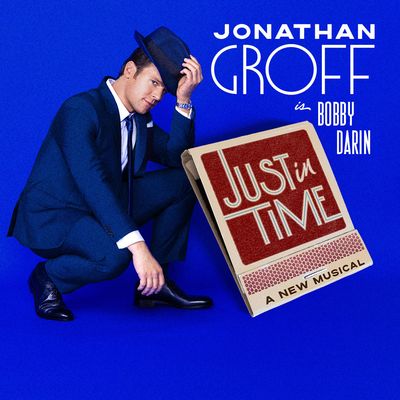
Lately, she's been playing opposite Jonathan Groff in Just in Time. She considers herself a journeyman actor, and to the degree that she blends into the story that she's serving, she has a point. Beyond that, she's one of the beloved actors in the community whose gratitude to be there, to be doing meaningful work, whose admiration for other artists is so palpable, whose dedication to teaching—she spent 15 years as a drama teacher at Wagner—that makes her most special. As you'll hear, she expresses herself with an ease that perhaps belies some of the very human doubt and struggle that comes with any life as an artist. What Michele shares is the painful and scary experience of losing access to her voice at one point, a central part of her identity as a performer, and spending many years struggling to understand it and to find ways to regain what for years had brought her joy and that later brought insecurity and self-denial.
It's that inner critic part that was telling her that she was no longer good enough, that she's had to grapple with, and very publicly at that in the context of an already established and successful career. I think there may be a story we have about success, that the bigger it gets, the more confident and solid we become in ourselves, but the truth is far more complex. Sometimes it's the heightened expectation and visibility and exposure of success that actually makes our relationship to our talents and contributions far more fraught. In Michele's case, her critic part actually wasn't quite as active in the beginning, when youth and innocence allowed her to just go for it without much fear. It was much later when it stopped her in her tracks and made her feel small, and it's been through years of persistence and real effort towards self-acceptance that has allowed her to evolve to today, where she continues to bring such singularity to what she does. And with that, welcome back to The Quiet Part Out Loud, Season 3. I am so glad we're here. I really can't wait to hear all about this.
[4:44] Michele Pawk: John and I used to talk about it a lot. He was studying for this while we were doing that musical at the Public.
[4:51] Bobby Steggert: Yeah, but I sat for an hour before entering. I had the things to read for an hour. But it still was inspiring.
[4:56] Michele Pawk: Yeah, you saw the beginning of that flourishing journey.
[5:04] Bobby Steggert: Wow. In my future life, I won't go back to school to career change. I think I've done what I will go back to school or just study. To learn something.
[5:11] Michele Pawk: Yeah, yeah.
[5:18] Bobby Steggert: I think the reason I was so wanting to talk to you, I wanted to talk about the evolution of identity.
[5:23] Michele Pawk: Oh, cool.
[5:29] Bobby Steggert: Just because you've been doing such great work for so long. And even now in my 40s, when a kid comes up to me, they're like, I love you in this show. Part of me thinks, I don't even remember who that was. That Bobby.
[5:35] Michele Pawk: You did that show.
[5:40] Bobby Steggert: Yes. And so I'm just so curious about, first of all, your beginnings, and what your relationship to a performer was then, before we get to the now parts. Back in the day, this would have been the 80s, 70s, right?
[5:54] Michele Pawk: Yeah. The business was so different. And everybody says it and talks about it. And I'm sure people that were my age back when I started said the same thing. The business has changed.
[6:04] Bobby Steggert: Yes.
[6:04] Michele Pawk: But it really feels like it has. And in some ways, I felt like I had a little easier time, because I was just an idiot. I just threw crap up against the wall and hoped it stuck. I didn't take things that personally, especially when I started out, which helped me just get back up and get back up and get back up and just try to be seen by a lot of people. But when I do think about identity, because now I'm thinking about this as I said for the last couple of days, like being carefree. I was very focused on, I didn't really know what a career was. I just, I was very free to let it take me wherever. The stupid shit that I did, I ended up going to a small liberal arts college because I grew up in very rural Pennsylvania.
So no BFA in musical theater. Well, at the end of my second year, I was studying anthropology, right? And you have to declare a major. And so I called my dad, who was a dentist. And my dad was like, what do you love to do more than anything in the world? And I thought I learned a bit of spades. That's dumb. Were you learning a lot at that point?
[7:21] Michele Pawk: I was just like doing all the stuff you do, the free stuff. He was like, that's what you should do. You should. I know it was a gift. And this would have been 1982, maybe. And so then I auditioned. And at that time, there were like two or three schools that did this thing. And I auditioned and ended up finishing in Cincinnati.
[7:40] Bobby Steggert: That was a major program back then. That was one of the first big ones.
[7:43] Michele Pawk: Yeah, but there weren't any. Carnegie Mellon, I guess. Maybe NYU. So I ended, I finished there. And I think about the trajectory that I was supposed to follow the path. But I didn't. I didn't. And I didn't go to California for a long time. I think I just took work.
[8:02] Bobby Steggert: Was it also that there wasn't such a kind of industry around training kids, such a system?
[8:07] Michele Pawk: There wasn't the self-consciousness of social media. You got to just go for it and not be as self-conscious about it. I think that played a large part in it. In the advent, I think about this a lot because in addition to all other things, I did teach. I still teach in the city a little bit, but I was on faculty at Wagner College for 14 years. And I was privy to what I think was a change with the advent of social media, also with the advent of the television shows, the competition television shows, and people would watch them on TV and think, I can do that. That's easy. And so there was then an influx of programs across the country because to be really honest, I think it was a money grab. And it's the same thing I tell young adults now when they're looking for college.
Don't go to the fancy school that you think is going to do something for you. The researchers teaching in those programs at this time, go there because of them. It doesn't matter the rest of it. You know what I mean? Going to Cincinnati is not going to guarantee you anything, only Juilliard and all the rest. So we've seen a lot of those changes. You must have found the same way.
[9:21] Bobby Steggert: I graduated college in 2003, and we didn't have social media. We weren't told to brand ourselves on top of having to figure out how to be a real actor. We were just trying to figure out how to be a real actor.
[9:26] Michele Pawk: And did you go to a fancy program?
[9:32] Bobby Steggert: NYU.
[9:33] Michele Pawk: See.
[9:33] Bobby Steggert: Yeah. But my gift was learning how to be a New Yorker early. It was more of a practical gift. Also, by the time I graduated, I knew this city. And so it wasn't intended.
[9:39] Michele Pawk: You knew, I have to have a day job that's now going to give me flexibility to do the thing that I love.
[9:49] Bobby Steggert: Or even it'll take me 15 minutes to get from here to here.
[9:50] Michele Pawk: Yes. And or, yeah, yeah, the audition is at whatever.
[9:59] Bobby Steggert: Wherever. Yeah, yeah. And so I have to stand outside for X amount of time. There's like a whole thing now.
[10:05] Michele Pawk: Oh, yeah.
[10:06] Bobby Steggert: The non-union, all of it.
[10:08] Michele Pawk: So when you were going for it, throw spaghetti against the wall, you have the gift of maybe youthful innocence about it. What worked for you because of that?
[10:18] Michele Pawk: I didn't have a preconceived notion as to what my career was supposed to be, or even what I wanted it to be. And quite frankly, that might not be a great thing. It was a great thing for me.
[10:30] Bobby Steggert: For you.
[10:31] Michele Pawk: Maybe if I many things were more driven, were more focused, were more direct in the things that I wanted, because I lived in L.A. for a long time, then X, Y, Z might have happened. But it wasn't my path. And I have no regret about it because it led me to B, led me to C, led me to this beautiful life. And I feel so grateful and so lucky. I was reading a piece by Dave Fidaris today in the New Yorker, and he talked about when you live here in New York City and wanting to be an artist. Of course, he's a writer. And there's a certain amount of luck that just has to happen.
[11:01] Bobby Steggert: Yeah.
[11:12] Michele Pawk: Otherwise, it doesn't happen. It doesn't matter how talented, how gifted, how driven, how all the rest of it. There also has to be a bit of luck. And I feel super grateful.
[11:23] Bobby Steggert: Do you remember the show that felt like, once you're back in New York, felt like the luck? The, oh, this change thing?
[11:27] Michele Pawk: Crazy thing.
[11:29] Bobby Steggert: You can't reignite.
[11:31] Michele Pawk: Yeah, 1992 or whatever. And the way that whole show came to be for me, I thought the universe was like lining the whole thing.
[11:40] Bobby Steggert: What's the story?
[11:42] Michele Pawk: I was living in California. I'd done a show here in the late 80s, which it felt steady.
[11:48] Bobby Steggert: Right.
[11:48] Michele Pawk: What was it called?
[11:49] Bobby Steggert: It was called Male. Jerry Cooper Musical. And we started in California, where I lived at the Pathanina Playhouse. And then they were like, this is great. And it moved into the city. And it was so fun that people didn't quite get it. So I went back to California. Crazy For You was auditioning. I think I auditioned out there first. They saw people out there. And then they said, we want to call you back. And I flew myself to New York, because that's what you had to do. And I'm scrapping it together out there. I didn't have any money. And I ended up getting cast as one of the pink girls, one of the dancers.
[12:22] Michele Pawk: The ones who pop out of the car.
[12:24] Bobby Steggert: That's correct. Because I'm not a dancer dancer. But I was a tapper.
[12:29] Michele Pawk: I see.
[12:30] Bobby Steggert: So I thought, oh, this is unbelievable. And I was living in California. My life was there. And at that time, so maybe I'm a liar. Because at that time, I was like, I don't want to move myself across country for this. I want a bigger, I want a bigger part. I want a bigger part in that musical.
[12:50] Michele Pawk: I just want a bigger part wherever. And so I turned it down. I know it is what it is, the choices that we make and that we don't make lead to all these other things. And then the incredible actors that they offered, I'd read into originally, she was on the road with something, I will say City of Angels. And they wouldn't let her out of her contract. And so literally five days before they're about to start rehearsal, I get a call in LA saying, hey, will you come back to New York? We're seeing people for this, for Irene.
[13:24] Bobby Steggert: A last minute audition.
[13:26] Michele Pawk: Last minute. It was literally like a Thursday. But they called on Wednesday, seeing people tomorrow. I had no money. So I'm like, will you fly me out there? They were like, no, we won't. And I thought I've had to take a chance. I threw myself back out by audition. And in those days, you got to audition on stage.
[13:46] Bobby Steggert: That sounds so romantic to me.
[13:47] Michele Pawk: Holy gosh. Romantic is such a great way to put it. And in some ways, I think they're doing people and themselves, producers, a disservice by not doing that now, because there's an energy that has to transfer. So there I was on the Shubert stage. And I found out later that day, we wanted you to play this part.
[14:07] Bobby Steggert: Was there anything about your not having specific expectations that frayed you?
[14:12] Michele Pawk: Probably. And to be really honest, and I used to say this to my students all the time, I already knew they liked me. This was a group of people who had already wanted to work with me. And so I thought, I don't know that I'll lose here, except for the hundreds of dollars that it cost me. And I crashed on a friend's couch. And then I flew myself back, and then got my life together and flew back and started rehearsal that following Tuesday. And then that was part of the luck. And then was the other part of the luck, just that show was so huge.
[14:45] Michele Pawk: You couldn't have known, I don't have known at all, yeah. And in those days, now I'm in a show now where there's 25 producers listed about the type, this had two. I remember the first day of rehearsal, I threw myself across to Roger Gorshaw speaking to, and he had a catalog, do you remember that? The whole child collection.
[14:56] Bobby Steggert: No.
[14:57] Michele Pawk: It was high endings of beautiful stuff. And he was speaking, he was like, I remember I was growing up, he was a tech there. I remember I was growing up in Cincinnati, and I remember the day my mother invited Hoagie, no, our Gershwin, I made it as George, don't remember.
[15:24] Bobby Steggert: Why the Gershwins?
[15:25] Michele Pawk: One of the Gershwins, over to sit at our piano, and he was playing music, and I always knew I wanted to produce a Gershwin musical. And that was his story. And I can never think even that moment. Oh my God, this is it. This is an Easter burger, yo. And he, it is a great lesson. Like, he did this because he loved it. He did it because it wasn't about making money. It wasn't about commerciality. And so all the decisions, he kept following through that. A million dollar prop that got cut out of town, because it didn't serve the story.
[15:59] There's a lot of producers that we've said, oh no, I paid for that. I paid for it. We're gonna do like this pre-King press that went crazy.
[16:08] Bobby Steggert: Oh my God.
[16:09] Michele Pawk: I know. Crazy. Crazy for you.
[16:14] Bobby Steggert: I'd like to tell you that the first high school musical I did was Crazy for You.
[16:20] Michele Pawk: You're kidding.
[16:21] Bobby Steggert: I sang Bella's Angler. And we had no orchestra, so we had to do it to your recording.
[16:27] Michele Pawk: Keep going. Where did you grow up?
[16:30] Bobby Steggert: Maryland, close with Western Maryland.
[16:32] Michele Pawk: Oh.
[16:33] Bobby Steggert: Fredrin.
[16:34] Michele Pawk: And did you sing over top of our vocals?
[16:35] Bobby Steggert: Yes.
[16:36] Michele Pawk: Irene sang with you.
[16:38] Bobby Steggert: What a friend.
[16:39] Michele Pawk: What a music. That's so wrong. That's the only thing that's a little wrong. We had some many levels, but in some ways, and I talk about that show a lot because I learned so much from those older actors in that show. And I don't mean older in age, mostly it was just more experienced than I was. And they were so generous.
[16:59] Janie Cannell and Harry Droner standing off stage in your life. Are you trying to get a laugh there?
[17:07] Bobby Steggert: What?
[17:08] Michele Pawk: You can do this instead? Suffered three head bits. And I'm saying, I am. I can't quite figure it out.
[17:14] Bobby Steggert: Let me help you.
[17:15] Michele Pawk: Oh, interesting. It was so what it gets. I learned a lot about timing and truth in those. They were both Harry and Bruce Adler who played your part. They were so grounded in truth doing that. Larger than life, like drunk number.
[17:34] Bobby Steggert: Right.
[17:36] Michele Pawk: Yeah. So it was a gift. I think about that a lot. So I'm getting this picture of someone who didn't quite know where she was going. And that was helping her.
[17:46] Bobby Steggert: Yeah, maybe in hindsight, as I look back.
[17:50] Michele Pawk: Which is, well, there's something I'm reading. There's something freeing about not needing to be somewhere. So then you're just where you are.
[17:57] Bobby Steggert: Wow.
[17:59] Michele Pawk: It wasn't until many years later, maybe in my 40s, really, that I started to think about that in a conscious way about really being present.
[18:07] Bobby Steggert: That's interesting you say that because maybe it was dumb luck or by accident that I let it fly that way earlier, but later.
[18:15] Michele Pawk: What changed about identity once you became known? I'm always really curious about that. When actors go from spry and just throwing things at the wall to all of a sudden being a name, a phenomenon that people know because of the work I'm doing. What changed for you?
[18:31] Michele Pawk: It's funny because I have always thought of myself as the journeyman in this. I've been very lucky to make a living doing the thing that I loved doing. And I was really blessed to be in a real room, I should say, with really gifted artists that I was with.
[18:50] Bobby Steggert: Right.
[18:51] Michele Pawk: And that became, it was after I had my child.
[18:55] Bobby Steggert: Interesting.
[18:56] Michele Pawk: Yes, and all priorities shifted. And I was, a job had to be worth leaving my home for. It wasn't about ego. It wasn't about career status. It really was about family.
[19:12] Bobby Steggert: Yeah, for me, that's always been number one. It's funny, I think about now my identity, that's been the things that I want to take with me into this next chapter that I'm so lucky to get. And the things that I want to let go of.
[19:27] Michele Pawk: Yes.
[19:28] Bobby Steggert: And always first, mother, wife, lover, leader. And then there's some other stuff that I've carried that I think, yeah, I can't let this go now. I should let this go now. I need to let this go now. And that's been an interesting...
[19:46] Michele Pawk: You know, for me, really after my son.
[19:49] Bobby Steggert: How old is your son now?
[19:50] Michele Pawk: My son's 26.
[19:51] Bobby Steggert: Oh, he's so young and rude.
[19:53] Michele Pawk: Yeah, I know, right? He's sleeping in the outskirts. I just wanted to be in the room. That was the driving factor. I want to be in the room with somebody who's better than me, who's going to challenge me. And that could have been many people. And or even the show that I'm doing now. I always wanted to work with Timbers. I had worked with Jonathan years ago.
[20:12] Bobby Steggert: And being in a space with him is just a delicious gift.
[20:17] Michele Pawk: And Sharon Lewis and our incredible writers. But I've also had a little bit of...
[20:23] Bobby Steggert: It's like a whole other tangent.
[20:26] Michele Pawk: Keep going. Go for it.
[20:28] Michele Pawk: I'd been... I stopped singing years ago.
[20:31] Bobby Steggert: Why? Why did you stop singing?
[20:32] Michele Pawk: Okay. Singing for me had always been an extension of joy, right? And I was doing a show out of town. And something started to happen physiologically. I was undiagnosed. There was nothing wrong. I'd gone to all these pathologists, yada, yada, yada. And I took a show in town, mama mia.
[20:53] Bobby Steggert: I should have never taken it at that time.
[20:55] Michele Pawk: That's a big sin, right? Big sin.
[20:56] Bobby Steggert: Okay.
[20:57] Michele Pawk: And in the time when I was singing, would have been like a perfect sort of fit for me. But in the midst of what I was dealing with, I just shouldn't have taken it. But I did. And in the midst of it, all sorts of stuff happened. And I ended up getting fired.
[21:13] Bobby Steggert: The getting fired.
[21:15] Michele Pawk: And I don't blame them at all. And in hindsight, I got paid to finish the...
[21:20] Bobby Steggert: Oh, that's juicy.
[21:21] Michele Pawk: Yeah. I had good representation. But it did a number on my... It did a number on me.
[21:27] Bobby Steggert: It did a number on my soul.
[21:28] Michele Pawk: And so I just stopped singing. I... Except in my house, I didn't... I just didn't want to do it. And that's when, and in so many ways, that kind of terrible thing happening gave me so many gifts.
[21:45] Bobby Steggert: So you felt like you lost access to the joy of singing?
[21:48] Michele Pawk: Yes, but there was also physiology, which I actually... There was a diagnosis that I didn't find out about until 15... Almost 20 years later.
[21:59] Bobby Steggert: It was a mystery for two decades?
[22:00] Michele Pawk: Yeah.
[22:01] Bobby Steggert: Wow.
[22:02] Michele Pawk: Nobody had seen anything way back then. And then I was doing Wicked, which is not really like singing. Just a few years ago. And I get this...
[22:11] Bobby Steggert: Terrible infection.
[22:12] Michele Pawk: And I'm overseeing Dr. Suliga, who I highly recommend. BNT, I loved him. And he said to me, oh yeah, you have an upper respiratory infection. He said, well, you hide your tremor really well in your speaking voice.
[22:25] Bobby Steggert: Which is a kind of a paralysis of your vocal cords?
[22:29] Michele Pawk: Yes. And I was like, what? Qu'est-ce que c'est? What? Tremor? He said, oh yeah, you have a vocal tremor. And then I was like, tell me about it. Would this have... Would... Does this make sense? He was like, oh yeah, that's like part of it. Your inability to stretch. The fact that the muscle was paralyzed. And then, of course, I'm sobbing.
[22:49] Bobby Steggert: So I...
[22:51] Michele Pawk: And then I'm worried that I'm going to end up being like... And he said, no, you've been learned a thing with it. So he sent me to someone who I worked with for a good six months, just on the kind of trying to sing a rap around it. And she said, it's like riding a wave. It will be the same. It'll be different every day.
[23:14] Bobby Steggert: And so I am then studying with my old voice teacher who knew my voice, which was very incredible. But mostly I needed to go do the head bass work because attached to it was the critic, the negative, the person that stops all flow.
[23:28] Bobby Steggert: Did you feel like you had lost a part of your identity when you stopped singing?
[23:38] Michele Pawk: 100%. And I didn't need to do it. It was mostly connected to the joy and the freedom. And I think that's why doing this show for me right now is such a gift. And when I started it, I went to the musical director and I was really honest with a few people that I just said, look, I don't know if I'm going to be able to do this. I don't know if I'm going to want to do this. But we're going to spend a four week lab and we're going to figure it out.
[24:05] Bobby Steggert: And Andrew Resnick could not. He's like, on it. Got it. OK, let's work. When he figured out keys where we thought, and I working through the having grace and giving it space and finding like I didn't want to leave this earth, hating my voice because it's not just about how pretty it sounds. It's my voice. And to feel like I still had something to say, even though it sounds different.
[24:42] Bobby Steggert: Yeah. Where were you with this when we did Giant?
[24:46] Michele Pawk: Oh, in the middle of it.
[24:47] Bobby Steggert: In the middle of it?
[24:48] Michele Pawk: Oh, yeah. And I didn't know any of it. All I knew was I was struggling.
[24:51] Bobby Steggert: I can't know.
[24:52] Michele Pawk: Which is again, I'm gifted. The couple of times that I've done musicals in those years on that Michael John could not have been. He was like, yeah, it sounds like this now. Yeah, let's do it. You know, and he wrote that song like that.
[25:06] Bobby Steggert: So that character was also a hard characters. You got to sing however you needed to.
[25:11] Michele Pawk: Exactly.
[25:11] Bobby Steggert: Yeah, yeah. Wow.
[25:13] Michele Pawk: So what was the gift? What was the gift of having to struggle through the loss and the many years of navigation around the problem?
[25:21] Michele Pawk: Doing a bunch of work on the voice and where the voice comes from and how far back in my life and how much of a part that has or has not played in various times in my life. Being in dialogue with it. I was working with my friend Patrick Hefferman, who was like super helpful trying to clear some of the space. And he said, you should meet this internal family systems book, right? And so trying to be in dialogue with it and seeing how far back it goes.
[26:00] Michele Pawk: And oh my God, of course, crying for this. So I'm pretty much crying for this. But I'm so grateful now. Even I think about last night, like I'm in the middle of the shelf and it was not easy. It just, sometimes it's just not easy. There's not a flow. And I'm sure that's true for everybody. Like a really great thing.
[26:20] Bobby Steggert: I remember, I really remember, but I was saying to my husband, I was like, yeah, you know what? I was able to access different things because it wasn't there. And I'm so happy. I was still able to tell the story. Do you know what I mean? And there would have been a time in this whole journey where that the voice could have just defeated.
[26:43] Bobby Steggert: And so where's the critic now?
[26:45] Michele Pawk: It's just not making noise anymore.
[26:47] Bobby Steggert: Oh no, it makes noise.
[26:48] Michele Pawk: Yeah, it makes noise. But I am still in dialogue and trying to figure out that, and I do believe this, that the critic really wants the best for me. The critic really is saying, hey, I know you can do this. So go ahead. Instead of, you can't do this. You sound terrible. Why are you singing? All of that stuff, which is just paralyzing.
[27:14] Bobby Steggert: And then my central nervous system goes, you must know all this stuff. I'm gonna preach it to the choir over there.
[27:20] Michele Pawk: No, but it's so special to hear it from you because I think you have a really beautiful humility around what you've done. But to people who really know the theater, you have a hero to a lot of people.
[27:31] Bobby Steggert: Oh, that's so sweet. Thanks for saying, that makes me really emotional. Thanks.
[27:37] Michele Pawk: Does that surprise you to him?
[27:40] Bobby Steggert: Wow.
[27:41] Michele Pawk: Yeah, I guess.
[27:44] Bobby Steggert: With like gratitude and humility, like that word is very powerful.
[27:50] Michele Pawk: Thank you.
[27:51] Bobby Steggert: Sure. My best friend, Jacob, he's like a musical theater savant. He knows everything. He'd written every song I'm lyric. This is maybe the 50th one I've done. He's more excited that you're doing this than anyone is telling him.
[28:04] Michele Pawk: So sad to see.
[28:05] Bobby Steggert: But he can literally sing me the entire scene of Hello Again. He can sing your whole part. He could sing every word of your whole song. And he has before, Papu.
[28:14] Michele Pawk: Good song.
[28:18] Bobby Steggert: But he knows the deep cuts and a lot of people do. I'll tell you from my point of view, I never told you this, but I remember being a kid and watching you win the Tony. And your genuine shock about it. Because you said something along the lines of, we've been closed for so long, I can't believe how special it is that this is remembered.
[28:37] Michele Pawk: Right.
[28:37] Bobby Steggert: There was a gratitude in the way that you spoke. And that was special and humble.
[28:42] Michele Pawk: And maybe that's, thank you, that's, yeah. Yes, I do remember the feeling that, and I'm sitting next to my husband, who was also nominated that year for Dixie.
[28:55] Bobby Steggert: Yes.
[28:55] Michele Pawk: And we're like looking around the room and, oh my God, there's Chino. Oh my God. There's, you name it. And Vanessa Redbury.
[29:07] Bobby Steggert: You're humbled to be in that space included with those people.
[29:12] Michele Pawk: That is very genuine for me. Like it's an honor.
[29:14] Bobby Steggert: You've been nominated, right?
[29:18] Michele Pawk: Yeah.
[29:18] Bobby Steggert: It's an honor. Everybody says it. But it actually really is.
[29:21] Michele Pawk: Yeah.
[29:21] Bobby Steggert: And if you can remind yourself that it doesn't get much better than being part of the community, then you're okay.
[29:27] Michele Pawk: Yeah. Did the Gold Coast ever change for you?
[29:30] Michele Pawk: In terms of, well, I need more, I need better. Not in that way for me, not in that way. Somewhere along the line, it really became, and maybe it always was, but in a very conscious way, it was about the work. It was about, oh my god, this will make my life heinous because I was really lucky that while I was teaching at Wagner, they were very flexible. I was teaching while we were doing Johnny. You said take time off for tech, take time off if you need to. They did. And I was like, hey, listen, Michael Griff, can I bring my students in? And I brought them into the rehearsal room one day and they got to watch. And I was very lucky throughout that whole 14 year tenure that I was able to work on projects that I really wanted to work on.
In terms of identity, I'm not over-identifying. Has your relationship with John helped that because you had a similar philosophy about it? Yeah, 100%. Looking at that every day just puts your feet on the ground. And in the scheme of a life, and I'm of an age where I've buried a lot of friends, some my age, some older, and some younger. And I lost my mother when I was young, my dad 10 years ago. And so for whatever reason, and that's the gift of like death, right? It's the reminder that life is short. It's really short. So I don't have to waste time doing things that aren't going to fill me in some way. And sometimes the filling is I need a job. I need to have health insurance. I need a job. And my husband was really clear on that.
He stayed in shows, I think, longer than he would have, because he provided for us. And so I can make the assumption that you just do a show now when people call you? Is it not that simple? No, of course not. It was for this one. Yeah, but only because I got attached to it early on while they were, we're gonna do a reading, will you be in the room? And I tried to say no then. I know, see, and that's the thing. That's the thing about the critic. It's fun, I think. Again, my husband said no. If I hadn't put myself out there in that way. Now, of course, I will never know. And I'm so grateful that I did because all the stuff that's come to me because of it. Wow, I would have stayed in whatever place that was.
And I would have let this define me. You said before we start recording that you think you might want to move on to a new phase. Yeah, maybe. So what does that mean to me? We want to peace out to greener pastures. And when I say retirement, right away, you're not gonna retire. And I'm like, first of all, yes. And second of all, it doesn't mean that I will never like want to work on something again. I tell you, it is unlikely for me or my husband that we will commute to each other's a week in perpetuity that I pretty sure I don't want to do.
[32:43] Bobby Steggert: Is it just the strain on day to day life and your body?
[32:48] Michele Pawk: Yes. And the commute, I live in New Jersey, which I love and New Jersey transit sucks. I've got that loud and clear. So the commute adding all the time, and you can't rely on it anymore. And so they don't want to spend so much of my day doing that the actual like, two hours I get to do that is sure joy for me. That part I love. But I can do that. You know, small theater wherever we peace out.
[33:21] Bobby Steggert: That really viable? Like just a small?
[33:24] Michele Pawk: Yeah.
[33:24] Bobby Steggert: Oh, good.
[33:26] Michele Pawk: It's not really about where you do it. It's about, you know, what it is. And wouldn't it be great, my husband and I can do all the old people place. We can be the old people in Pittsburgh or wherever we end up going.
[33:40] Bobby Steggert: Do you have ideas of where you go?
[33:41] Michele Pawk: We're looking heavily at Western Pennsylvania where I'm from. And Jonathan was like, Park, I think you might want to look at Lancaster. And so we're also looking at Lancaster PA, which is very different, but also rural and beautiful. We want a couple of I'm gonna put this out there. So anybody when you have this piece of property, a couple of acres, hopefully it has a house on it. That'll be great. Where it's private, where I didn't have a vegetable garden. I had all my light had wanted to have a vegetable garden like a massive best bigger than a yard in New Jersey can handle.
[34:21] Bobby Steggert: Yes. Okay. And because of where our house is, how it's situated, where I would want to have the gardening is mostly shady in the back because of our gorgeous 150 year old tree. I didn't want to put a garden in the left right yard.
[34:35] Michele Pawk: It sounds like you have a lot of an idea of who you'd be in the next era. It's wife, it's mom, it's gardener.
[34:42] Michele Pawk: Yeah, I think so. It's been interesting because my husband retires, but they over a year ago now he finished harder rocking role in the city and he was like, I'm done. Then this is good. I'm done. And it's been really interesting to watch the transition that he's having in so many ways. I'm like, okay, I'm learning. Yeah.
[35:05] Bobby Steggert: What are you learning?
[35:07] Michele Pawk: I'm learning. And it's the thing I would tell my seniors all the time in college, you're going from a structure to nothing. And there's been certain ways in which I fill my days here in the city. And some of it's about the gym, like a classroom. So I thought, okay, I'm going to need to have a bit of a structure so that I don't spiral into the abyss.
[35:31] Bobby Steggert: We need a sense of purpose no matter what.
[35:34] Michele Pawk: Yes. That's interesting. I didn't think about that, but yes, that may enable me to volunteer someplace or I could see myself having a part time job selling donuts just for the social part of it. Yeah, whatever.
[35:52] Bobby Steggert: I believe you. It's funny because some people, it's so interesting that you've had such an amazing career and it doesn't seem like it will be difficult for you to say goodbye.
[36:05] Michele Pawk: No. No. And maybe because it really did give me so much. And I'm grateful for it. Yeah. Maybe I can let that go. Because if I stay with it, especially here, it is not going to afford me this time that I really want. My old guys are sitting on a porch looking at beautiful trees.
[36:32] Bobby Steggert: And do you think if you are home, he'll have less of a hard time being retired?
[36:37] Michele Pawk: 100%. 100%. There's some days you have to go to work. And I remember saying the same thing to him when he was doing it at Ira's home. You just want your playmates.
[36:52] Bobby Steggert: Totally.
[36:52] Michele Pawk: You know what I mean? Like he's just better with him every day.
[36:56] Bobby Steggert: It seems like that from the outside. It's lovely to hear it from you.
[36:59] Michele Pawk: Oh, thanks. Yeah. No, that's just true. That's just true.
[37:03] Bobby Steggert: Yeah. When you said earlier, there are certain things that I would like to let go of in terms of identity. What are they?
[37:09] Michele Pawk: I've spent a chunky time hanging on to some sort of, I have to be a certain size or shape in order to do the thing that I do in this business.
[37:22] Bobby Steggert: Do you mean literal shape?
[37:23] Michele Pawk: Yes. Physically. And over the course of, and that's not to say that I want to gain 100 pounds. I've spent too much time in my career, let's say, beating myself up about five pounds.
[37:39] Bobby Steggert: Wow. Actors are on display for constant scrutiny.
[37:44] Michele Pawk: Yeah. Yeah. And I'm looking forward to releasing my, and again, it's not like I want to be unhealthy, but I want to change the perspective of what healthy looks like. And I'm 64. So my body, the shape of my body is changing. And it's so weird to put weight on in places that don't get any effort out of the way to eat. So I really have to practice like not feeling badly about myself because this is this. And I'm looking forward to releasing that part of my identity.
[38:25] Bobby Steggert: Oh, I love that. We're in different parts of our lives. And I quote, retired much earlier. But what I noticed after a couple years is that I stopped looking at myself in the mirror as much. And that was so freeing.
[38:38] Michele Pawk: I can't handle weight.
[38:40] Bobby Steggert: Yeah.
[38:41] Michele Pawk: Some of it is, I'm doing eight shows a week. I'm surrounded by mirrors. And I'm putting the same clothes on day after day, eight times. And so True Pals shows up. And then I feel badly that I sat and ate that box of Mike and Ike's. But they were so good.
[38:59] Bobby Steggert: They were delicious.
[39:02] Michele Pawk: That's going to be good advice. When you are an actor, and you're aging in the career, if you go from playing young women who have a certain kind of role in the story to now, was that hard to accept too, the evolution of the characters and their function in the story?
[39:18] Michele Pawk: Yes. Yes. It is difficult to be an aging woman in this business.
[39:25] Bobby Steggert: I think in the world, probably.
[39:26] Michele Pawk: A hundred percent. A hundred percent. Yes. And walking down the street in New York City, getting body blocked. And at my age, I take it personally. I'm like, really? Really? And I've asked other friends of mine my age, I feel invisible in that way. And that and a hundred percent of my friends are like, ah, yes.
[39:53] Bobby Steggert: That's universal.
[39:54] Michele Pawk: That is universal. People don't see us anymore. And it's funny, my dad said it to me. So this must have been like 50 years ago. It was the advent of all the accessibility to information on our phones. And he said, your watch, there will be less appreciation for the elders and the knowledge that we have to impart, because young people, it's going to be accessible to them and they're not going to feel like we have any value. And I'm like, dad, this is never going to happen. And sure enough, it has. And it's easy. It's easy, right? I can find it on my phone. I don't need to ask.
[40:33] Bobby Steggert: Or now I have this device that is a tool for me to speak my mind. And so other people's perspectives might not be as interesting to people.
[40:42] Michele Pawk: But the truth is of like this career, right? It's more of a craft and less of a... You can, of course, gain skill and knowledge and all of that. But it is a bit of a craft. That's why in my old years, I'm so grateful that my elders took me aside and said, okay, let's do this. Don't do this. Or, hey, walking into... It's stupid stuff like this. Walking into a reading and having someone say, who's wearing cologne or smelly cream? It was me. I just put hand cream on, right? You could never do that. You can never walk into a room. Don't walk into an audition like you... And I thought, of course she's right. People sitting behind a table all day long getting smell after smell. They're going to be like... Seriously, I would never dream about saying that to people that I work with.
[41:36] Bobby Steggert: Well, how do you feel that you've led? Because I bet you lead differently than castigating people.
[41:42] Michele Pawk: Yes. I try to lead by example.
[41:45] Bobby Steggert: That feels holistic for me.
[41:45] Michele Pawk: I do love it when people ask for advice. I can't wait to share. I was in my dressing room, and this was between shows one day, and I heard one of our younger castmates doing something from Chicago. And I could tell, and they kept doing one of the monologues. You pop that gum one more time. And I'm listening, and I'm listening. I found out I couldn't even entertain myself anymore. I popped on her door. And I said, can I help you? Can I help you? And of course, she was like, oh my gosh, oh my gosh. But it never dawned on her to come and ask for help. And that's not a bad thing. I think that's maybe feeling like she didn't want to impose. And meanwhile, us old people, we can't wait. We can't wait. You know what I mean?
[42:40] Bobby Steggert: Yeah. This is a good time for the last question. And it's about the full circle nature. When I emailed you, you were so enthusiastic about coming, which meant so much to me. Because I sometimes feel like I'm asking a big favor of people to come and talk about themselves in this way. And you were so open to doing it. And you said that for you would be a full circle moment. What did you mean about that?
[43:04] Michele Pawk: The critic, the finally acknowledging that voice, speaking to it, making space for it, not allowing it to dominate. And so for me, getting to talk about it and share it. I know I'm not alone. I know that voice is debilitating. And that voice can stop us from accessing our true whatever it may be. So in some ways, that also felt like a gift to me. The serendipity of the for you to reach out to me, I haven't seen or spoken to you, although I hold you in such regard, I didn't do. I thought what a beautiful, like full circle gift. I love that.
© Broadway Podcast Network, All Rights Reserved