

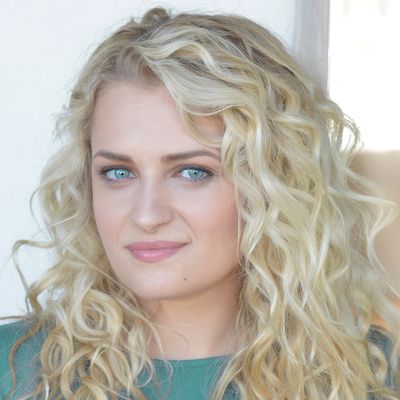
Ali Stroker (Oklahoma!) is a Tony winning actress and singer, a writer and advocate, a wife and a mother. She also lives with a disability that is the result of a spinal cord injury she sustained when she was two years old... Read More
From the show: The Quiet Part Out Loud
Guests
Featured Shows

About
Ali Stroker (Oklahoma!) is a Tony winning actress and singer, a writer and advocate, a wife and a mother. She also lives with a disability that is the result of a spinal cord injury she sustained when she was two years old. Ali shares her anxious part - one that is universal to the human experience, but that has been informed by a loss of control that few can relate to. Ali shares that her particular experience of isolation and the anxiety that resulted is best overcome through connection - to her work, her voice, her community, and her friends and family.
Transcript
This transcript was automatically generated and might contain errors.
[0:05] Bobby Steggert: I'm Bobby Steggert, and this is The Quiet Part Out Loud.
[0:15] Bobby Steggert: Anxiety is as universal to the human experience as eating and breathing. It keeps us safe by anticipating different versions of a possible future, a mental process that is more advanced in us than any animal on earth. It's what helps us to avoid the mistakes of yesterday and the dangers of tomorrow. Anxiety is often, probably always attached to the circumstances in life that we cannot control. And unfortunately, there's very little control in the grand scheme of things. Existential psychologists have offered that there are four universal anxieties that we all share. The first is death. That seems pretty obvious. And if you think about it, many of our behaviors boil down to an avoidance of even a reminder of our mortality.
And then there's meaninglessness. What does it all mean? What if this means nothing at all? Third is freedom. I know at first it sounds counterintuitive, but consider choice paralysis and how overwhelming it can be to have too many options. And lastly, and most obviously, there's isolation. We are all afraid on some level of being alone. In the following episode, Ali Stroker shares her anxious part, the part that has kept her safe in countless ways as she has navigated what is the universal experience of being alive and worrying about it. Ali is a Tony winning actress and singer, a writer. She's a wife and a mother, and she also lives with a disability that is the result of a spinal cord injury she sustained when she was two years old.
What makes the following conversation so compelling is that the anxiety Ali experiences is universal. And yet her specific circumstances, the loss of control she has experienced is to a degree that few of us can truly understand. There are ways that her anxious part has been forced to navigate a physical isolation that is extreme and unrelenting, and an emotional isolation that was often the result of an effort to remain strong and independent in response to physical limits. Her anxiety has also been an extremely effective tool in driving her forward and fueling her success, contributing towards the energy it takes to succeed in a world that was not designed for her use. And as she describes, wearing so many hats, being an artist, a mom, and being a public advocate and spokesperson for a very diverse community of people comes with its own set of anxieties.
What Ali shares about her particular experience of isolation can be applied really to any experience of isolation in that she has best overcome her anxiety through connection, through her voice, her writing, her friends and family, and sharing herself so openly with me. I hope the connection she fosters here will allow you to do the same.
[3:20] Bobby Steggert: Yeah, I was at Tisch 2005 to 2009.
[3:25] Ali Stroker: I left 2003, so we just missed each other.
[3:27] Bobby Steggert: Yes, yes, yes, yes. It turned out to be okay, but the beginning was really challenging because they were pretty nervous about working with me. They just didn't have any experience. And I didn't realize that when I got to school, like I was gonna have to do a lot of teaching and I would have to be really patient with everybody. I thought being accepted into the program meant like we are like excited and we're gonna make this happen. And so like the first week I was there, I sat down with everyone at CAP and Arthur Bartow, remember him?
[3:59] Ali Stroker: I do.
[4:00] Bobby Steggert: And they were like, we're not sure if this is gonna work out. And I was just so like bummed. And I have to say, like now that would never happen.
[4:08] Ali Stroker: You're right.
[4:09] Bobby Steggert: It's like a discrimination issue.
[4:10] Ali Stroker: Right.
[4:11] Bobby Steggert: But it was a different time, even though it wasn't that long ago. And CCM wouldn't even let me audition. They were like, she can't do the dance call, she can't audition. So, you know, there's been a lot of growth, which is really, really exciting. But when I began my journey professionally, it was not exactly like the most inclusive experience and environment.
[4:35] Bobby Steggert: I know that what we're gonna focus on today is anxiety, the anxious part. And you just bring up something that may or may not be connected. I'm sure it is, but in general, what is it like for you to have to educate people all the time? That must be such a burden.
[4:53] Ali Stroker: It's interesting that you said that because it's always been such an important part of my life, because the way that I look at things is and how I was raised was that like people only know what they know. And so if somebody is not educated or doesn't understand me, which why would they? Because I'm not like every single disabled person. Every single person with a disability has a different story, a different mindset, a different experience. So if I can get good at articulating my experience and advocating for myself, for me, that's been a tool for success. And so, you know, there are boundaries as far as like if a grown-up comes up to me and asks me a question that feels too personal, I will say, that's not something that I feel like sharing.
You know, I know that you're curious, but it's not my job to always educate everybody. However, like yesterday we were at the town pool and I was with my son, who's 19 months, and there was a little girl there who was so curious. And we became friends. And I talked to her about my wheelchair and why I use a wheelchair. And it was this really beautiful moment also for my son to see me articulating who I am and how I move through the world. Because for him, it's totally normal. But for her, it was something brand new. So I like to stay open and also flexible. That like educating people can be a power source for me. And it makes me feel like I have an important role in the room.
[6:48] Bobby Steggert: Right. I'm sure it empowers you in certain ways.
[6:51] Ali Stroker: Definitely. And also for people to understand my point of view and how I like to do things. When I begin talking about myself and using vocabulary and language that resonates with me, that immediately lets everybody in the room know that that's how I want to talk about myself, my chair, and how I like to work or move through the world or be treated. So finding my voice and learning how to advocate and articulate myself, it has been essential. And now in my career, my managers do a lot of advocating and speaking on my behalf. But it's been years that we've been working together for them to understand how I like to advocate. Because if they're gonna represent me, they're not just representing me as an actor.
They're representing me as a human. And having a disability in this industry means having conversations, having dialogues. So to go back to what we were talking about at Tisch, that lesson in the beginning of having to articulate and advocate for myself was actually the best thing I learned at NYU. It was sort of like a warm-up for the real world, you know, because I had come from a town that my whole family was really known and everybody knew me and they knew my disability. And so I didn't have to advocate for myself in that way.
[8:26] Bobby Steggert: Right. You had a whole built-in community.
[8:28] Ali Stroker: A hundred percent.
[8:30] Bobby Steggert: I have a big general question, and it's that obviously physically you're so visible to everyone that you come across. So the choice to enter into a profession that is just as visible, was that sort of like a natural match for you, or did it come with any sort of interesting layers in terms of that double visibility?
[8:52] Ali Stroker: This is one of my favorite things to talk about. So I remember like my first memory of being stared at out in public was at the mall in New Jersey. Like my mom and I would go, and it's a super accessible place for me to like get around. And I remember people just staring at me. And one day I got the courage to ask my mom, like, mommy, why are people staring at me? And she was like, Oh, they're staring at you, Allie, because they've never seen anybody so beautiful in a wheelchair. And like I liked that at first. And then as I got older, I was like, hold on. This is not happening to anybody else. And why do I feel like some rooms that I enter into? Like I'm being stung by a million bees. I feel so uncomfortable.
Everyone's eyes are on me. And so when I was introduced to musical theater and I started performing, I was able to flip that on its head, being on stage and asking people to look at me. And asking people to be in my world was a source of empowerment for me. And so it felt like I was in control. So this industry in so many ways feels like it was made for me because I've always been looked at. But then, you know, sort of entering into a more professional world, that attention and those eyes come with a responsibility, in my opinion. So I really had to think about what kind of roles do I want to be doing? How do I want to perform? How do I want to use my wheelchair in my performances? How do I want to use my body in performances?
And that was really exciting because it took it to the next level of having people's attention. And I have to say, like after the Tony Awards, it was the most overwhelming experience because I was used to having attention, but now I had New York's attention in a different way. And when I'm out on the street, there's no like hiding. Like I can't put on a baseball hat. Like people see my wheelchair, my blonde hair, and they know it's me, especially if they've just seen the Tonies and New York is really into theater. And so it was everywhere I went. And that was the first time that it became really overwhelming because I couldn't go anywhere without being stopped. And that was such a beautiful gift, but also a new kind of responsibility that when I was out, I was actually working all the time. You're not just then an individual, you are a representative of something much larger.
[11:37] Ali Stroker: And it sounds like a responsibility that that could be overwhelming.
[11:42] Bobby Steggert: Exactly.
[11:43] Ali Stroker: And representing the disabled community has always felt really scary and overwhelming to me because everyone has such a different perspective and experience of disability. I have friends that were injured when they were 18 years old. I have friends who want to walk. I have friends who are blind. I have friends who have all different invisible disabilities. So to speak on behalf of the community is just like I couldn't begin to do that. So I always like to say, this is, of course, my experience. However, in learning over the past five years about the history of the disabled community, there are some things that are an experience that I feel like most people in the community have, like frustration around access, like frustration about inclusion, about wanting to be seen as a human being who has rights and needs. And so, yeah, this experience of becoming in some ways an advocate and a spokesperson has been double-sided. It's been really exciting and also intimidating.
[13:03] Bobby Steggert: Let's talk about anxiety because there's so many ways that you've already described it coming up in different roles that you've played in life. What is your most fundamental experience of anxiety when you think about yourself as a young person starting to realize there was something different?
[13:20] Ali Stroker: Yeah, I think it's such a good question because I've never been asked it. I think that my origin experience of that came with stomach aches. And nor did I share it much, because part of my experience of being a little kid in a wheelchair was there was so much, whether it was equipment or, you know, having nurses or going to physical therapy or working on my independence or eating special desks and accommodations in school. It was just like so overloaded compared to everyone else around me, that if there was anything else going on, I just a lot of times would repress. You'd swallow it.
[14:19] Bobby Steggert: Definitely.
[14:19] Ali Stroker: And I did that for years and years and years. And it wasn't until I really got into romantic relationships that I realized that I couldn't keep doing that, which I'm so grateful that I finally discovered that. Because I felt such a responsibility to be okay for everyone in my life. Because the accident, I was injured in a car accident when I was two. It didn't just happen in me. My brother was injured, and then my mom was driving, and my dad obviously was just devastated, and this was the scariest moment of his life that both of his kids and my for my mom, even more, were injured and really badly injured. So it was so clear to me, like that anytime the accident or my disability would come up, I would see on their faces, even though I know they were trying to put on, you know, a brave face, I would see on their faces that they were so scared too.
And so I felt like I had to be okay. And it's sort of when my acting career began. And it became kind of like a motto in our house: like, act as if, act as if you are okay, act as if you are happy. And in so many ways, that has helped me because my resilience is, I think, one of my superpowers. However, when it came to like feeling my actual feelings, that was a lot harder to access.
[15:49] Bobby Steggert: So the anxiety said to you, do not make this any worse in any way.
[15:56] Ali Stroker: Exactly. So it was super repressed. And it wasn't until I got into these relationships that I began to like actually find space and time and someone who was ready to hold this kind of thing with me. And then I also started therapy when I went to NYU. And that was a huge experience for me because I remember the first session, my therapist was just sort of blown away that I had never been in therapy. And I was like, well, I've been in physical therapy twice a week for my whole life, but no, I've never been in this kind of therapy.
[16:37] Bobby Steggert: And what about the anxiety in terms of needing to make it okay kept you from any sort of therapy in terms of mental health?
[16:47] Ali Stroker: Well, it wasn't really brought up in my house. Well, my mom was in therapy. However, I think that for me, it was like physically, I have so many things that like mentally I have to be able to handle this. It's like I can't add another thing to the pile. And also there is this great vulnerability in having a disability and being paralyzed for me in my experience of not having control over a lot of my body, not having sensation in a lot of my body, that it was like I have to be the strongest I can possibly be mentally. And I think I am as far as my toughness and my grit and my resiliency, but it I'm also probably hyper and super sensitive as well because of my experience. You know, we were sort of joking the other day, like, oh, the terrible twos.
Well, I was injured when I was two. And my dad and I sort of were giggling, like, I really took that to the next level, you know, like terrible twos of being in a hospital and an intensive care unit and rehabilitation center for months on end next to my brother who was in a coma. Like these experiences were so intense for a child.
[18:10] Bobby Steggert: Do you have a conscious memory of them, a physical memory of them?
[18:14] Ali Stroker: I don't have a conscious memory of anything except for the revolving food carousels in the hospital cafeteria and the swimming pool. I remember that. And physical, yes. Like if I'm in a car and I feel like I don't have control or I feel scared, like I can hardly function. My anxiety as far as trying to keep everyone okay around me, I can't even think. Like I have trouble even like speaking or being able to articulate anything, like if there is a problem. And as far as if my son is hurt or upset, like I have a really hard time kind of regulating, like, oh, he'll be okay. Like I have to immediately rush to him, which I think is also a maternal thing. But for me, it's like I was raised that like my parents didn't want to see us in any more pain or discomfort. So, like pain or discomfort was not an emotion that was welcome or that we wanted any more of in the house growing up.
[19:32] Bobby Steggert: So now as a mom, the reality is that like pain and discomfort is part of being human.
[19:38] Ali Stroker: And I've tried to really work on that with my son that like if he trips and falls, it's okay and he's gonna be okay. And this is part of his experience of the world and his journey and learning to move and walk. But that was being processed so differently in my world growing up. And so when there was pain and discomfort, it sounds like you kept it extremely private.
[20:05] Bobby Steggert: Definitely kept it private.
[20:06] Ali Stroker: But when like I couldn't keep it private, it was immediately like, let's fix it, let's do anything to fix it. Like, and especially when I reached my teens, I remember being so hormonal and so grumpy and just feeling awful. And I think now as an adult, I realized that like I felt really trapped in my body and I felt like I had so much to express and I was so angry, but I had no idea how to express that other than singing. Like when I would go to voice lessons and I'd be in a show and I was singing, I felt better after. Like that was a release. But I think that what I really at the time, if I could go back and give myself some advice, it would be like move your body, go out on a push, do some stretching, turn on some music and just like dance, move because that always helps me now.
And also sometimes it really feels good to go out for a drive. I think that for me getting out of my wheelchair and driving has always felt like I'm on equal playing fields with everybody else. I drive with hand gears, but nobody can see those hand gears on the road. So I'm just like everybody else. And there's this release of like, I'm just like everybody else. And my car is like a crossover. So like I'm a little bit higher off the ground and living your life sitting, sometimes you just want to feel higher up in the plane of the world. And that's something that I like to feel, and it makes me feel better.
[21:47] Bobby Steggert: That makes so much sense to me, just intuitively. I also have to wonder if the literal drive-in of a car is a reclaiming of something in terms of your injury.
[21:57] Ali Stroker: Oh, right. Yes, of course. Of course. And I love to drive. Like most of my family has anxiety driving. I have none if I'm at the wheel. I feel great. Like it'll be raining, and my mom will be like, careful driving home. And I'm like, I totally have this. This is, I am totally comfortable. And I don't have anxiety when I'm driving, but as a passenger, I definitely do. And that's like another place that you were asking, like, probably where I have some kind of emotional memory.
[22:35] Bobby Steggert: We'll be right back.
[22:38] Bobby Steggert: Hey y'all, it's Bobby. In one month's time, the quiet part out loud has become even more than I hoped. And now it's time to ask you. Who do you want to hear from? Who are you curious about? Or what part of you do you reflect it in these conversations? Head to the episode notes and follow the link to a quick survey or reach out on Instagram at QuietPart Out Loud Pod. And thanks for listening.
[23:02] Bobby Steggert: And so as you grew into a social being as a child and as a teenager, how did the anxiety manifest in terms of how you were related with other people outside of your family?
[23:15] Ali Stroker: I just think I realized very early on that I wanted to be light and happy. And I was just always positive. And my mom said I was like this before the accident. So I want to just say that I was super easygoing and like very sweet. And there's only two, so it's hard to tell like exactly what I was like. I mean, you can feel personality. I was speaking in full sentences by the time I was two. But after I got hurt, I stopped talking. And I do this thing where I would hold my hands over my ears and my elbows up by my face and close off. It was like a physical response of sort of hiding. And this was just like I believe trauma responses from the experience. And my injury is pretty high. So I have a spinal cord injury.
And for anybody listening who knows anything about the spinal cord, it's C7T2, incomplete injury. So it's pretty high. It's like chest down. And the doctors told my mom we're concerned that she won't be able to be heard, that she will have trouble breathing and speaking loudly enough, which I love to share because people sort of giggle because I sing and I'm a pretty loud singer. And I again, I really believe singing helped me release my voice into the world. And I always say this sometimes talking and saying how I feel is scary, but singing and singing someone else's words, I don't have any limits with my voice. My voice is not paralyzed. My voice is free and I can run with my voice, I can jump with my voice, I can scream, I can cry.
Singing is just like a safe place for me. And I also love being good at it. That feels like such a relief because I've had to do mental gymnastics in my mind to accept that I can't run around on the grass, that I can't walk on the sand, that I can't even push on the sand. There are limits in my life. I don't look at those things anymore, but I've had to accept them. And acceptance is really funny because it's your reality. I don't have really any memory of running in the sand, but I watch everyone around me at the beach, and they seem so free and there's such fluidity. And I think that the acceptance is that's not my life. That's not what I get. And so that is really valid. And I get these other incredible things like singing and performing at the highest level in our industry, being celebrated and honored by the community that I have always dreamt of being a part of.
I always say this about disability. The lows are so damn low, but the highs are just so gorgeous and beautiful. And that is my life. Things are amazing and really hard. And I get both. And that's what I came here to do is to move through those things. And yes, I have anxiety because that is my life. You know what I'm saying?
[27:08] Bobby Steggert: Of course. And from where I stand as a therapist, I'm always thinking about how much freedom someone has in terms of how they are able to express themselves and how they're able to experience the whole range of the human experience. And I can tell so clearly how much freedom you have in those realms as well.
[27:28] Ali Stroker: Yeah, and that's why I have to do it. People are like, is there anything else you would ever want to do? And like, no, because it's not just a skill set. It's how I survive when I get to speak and sing in front of people, even if it's not in a scripted show. I do a lot of speaking gigs and I sing at events. And being able to do that allows me to process my life, allows me to express myself. And I just am so grateful that I found my thing because I know that there are so many people living with disabilities who don't have that outlet. And one thing that I can say about our community is the power in spirit is so intense and so huge. But if you don't have anywhere to channel that, sometimes you can channel that back into your disability, and that can help you or hurt you.
Because I can sometimes see that somebody with a disability is only living the disability. They're living the therapy, they're living the challenges. I don't mean right after you're injured or when you have the disability in the beginning. That is a full life change. You've got to give yourself that opportunity to transition and process. But I mean then when you have somehow moved into this new realm and this new world and this new life, what are you gonna do? And I also see that some people they want to help our community, which I think is gorgeous and amazing. But it's when somebody is so obsessed, I think, in their mind, they just aren't able to see anything beyond it. And then that's their experience of the world, too, that their surroundings and their community can't see anything beyond it either.
And that can get really frustrating because so much of disability is about releasing control. So, in terms of all the freedom you found and the flexibility in a world that you're finding your way in, how does anxiety still come to play in it for you?
[29:47] Ali Stroker: Yeah, I feel anxious in situations where I feel like I've done something wrong. That's a big trigger for me. And also my anxiety really kicked into another gear after I had my son, Jesse, which was like a year and a half ago. And I had always heard about postpartum depression, but I had never heard of postpartum anxiety. And after I had Jesse, I just would spin. And especially when he would be in another room sleeping, or if I were to give him, you know, for other people to hold. And it was just super challenging for me to process this, like, we are separate things. And then at night, I couldn't sleep. Like my mind would spin over all the ways that he might die. And I finally realized, like, okay, I need some help.
I don't want to live this way. I don't want to experience this part of my life as a mother like this. So I ended up going on Lexapro, which was really confusing. Was that um the psychopharmacologist I was working with was like, oh, we'll put you on an antidepressant. And I was like, no, no, no, I'm not depressed. And she was like, well, actually, the way that these drugs and chemicals work, this particular drug is an antidepressant, but it's gonna help you with your anxiety. And my sister had gone on the same medication a few years prior, and it had really changed her life for the better. She had such a positive experience. And I was like, okay, well, I want to try this. And I did, and like, Bobby, I started sleeping through the night.
Like I could handle situations that I didn't feel like I could handle without starting to cry. And this spinning about Jesse dying totally went away. And I just am so grateful that I did finally reach out for that kind of help. Because in the past I would always be like, I'm tough enough to manage this myself. I'm tough enough to manage my mind and my brain. And so that has been such a game changer for me. And I've also felt like it's helped me in high pressure situations with work. There was a week last year that I was obviously now I'm I'm mom all the time. And then I was releasing a sequel to my book and performing at Carnegie Hall all in one week. And it felt like, how am I going to get through this week?
And then I did. And I remember moments when I would be wanting to throw up and stomach and feeling physically ill that I was like able to see that I have prepared as much as I can. And now it will happen. And I will do it and I will get through it. And it was sort of wild to be able to get out on the stage at Carnegie Hall and feel okay. And not just be so nauseous and so terrified.
[33:06] Bobby Steggert: You mentioned this other kind of anxiety, which it sounds to me if I could translate it into this anxiety about needing to do all the things all at once. How does that come up for you in terms of all the different hats you've had to wear?
[33:21] Ali Stroker: It's so interesting because I like to wear a lot of different hats because it keeps me busy all the time, which is something that makes me feel productive. I like to have a lot going on. And work-wise, I've found it to be helpful. Like if I'm not getting acting jobs, well, I have books. Okay. If I'm not doing books, I have voiceover. Okay. If I'm not doing voiceover, I can do speaking gigs. I like having a lot of pots on the stove and I'm aware of this and trying to work on it. I end up putting my self-care last.
[34:00] Bobby Steggert: In what ways?
[34:00] Ali Stroker: Not taking any time for myself or not eating or not drinking any water or not doing the things that I know I need as a mom and as a human being. And it's so hard to admit it. But my body has been through a lot. And so certain parts of me are fragile, even though I went years of like pushing that aside. Like I'm not that way. I'm tough and I'm resilient, but I also am fragile. So like I need to check my skin to make sure I don't get pressure sores. And I need to make sure that I am, you know, going to the bathroom. These are things that I have to do with my injury and my disability that I avoid and I don't like to do.
[34:50] Ali Stroker: But if I don't do it, I can't do everything else I want to do.
[34:54] Ali Stroker: And yet if you are so busy thinking about all the different responsibilities, some of those things will be literally out of your consciousness.
[35:02] Ali Stroker: Oh, definitely. Definitely. And I just push them aside because they're not the thing that makes me feel like I'm doing something in the world.
[35:13] Ali Stroker: It's the thing that is for self and taking care of myself. And I have such a loaded experience and perspective on care for myself because I was dependent for so long and I worked so extra hard to become independent.
[35:31] Ali Stroker: But that independence came with all of this responsibility that can sometimes just feel so overwhelming.
[35:44] Bobby Steggert: We'll be right back.
[35:46] Bobby Steggert: In terms of the anxiety about needing to be independent, um, you mentioned this earlier, intimate relationships being a real learning opportunity for you. How do you allow your husband the chance to fill in some of those blanks?
[36:01] Ali Stroker: Yeah, it's a great question. And something that we talked about for years.
[36:08] Ali Stroker: I think that when there's a disability in the relationship, it's like learning a dance. And it's a very, very intricate dance because there are two people involved here.
[36:20] Ali Stroker: It's not just the person with the disability. And me meeting him in certain ways is so beautiful. And he's so emotionally intelligent and was able to really articulate to me all the ways that he loves helping me and how that brings him so much purpose and so much joy and connection.
[36:42] Ali Stroker: But also, what are the ways in which we don't want to rely on each other so that we can feel like individuals?
[36:51] Ali Stroker: And we have had to find that in parenting. We've had to find that in taking care of a house together.
[36:58] Ali Stroker: Our team, we also work together. He's a director now. So he will direct a lot of my shows.
[37:05] Ali Stroker: We love to collaborate. But unfortunately, we've had things happen, which had been the best learning experience where one of us has gotten hurt.
[37:17] Ali Stroker: And so we've had to learn from those things and then adjust. And I think that this is something that couples who have disability in their relationship have to do all the time.
[37:30] Ali Stroker: And I'm so glad that David and I had the time to talk about it. We were together for six years before we had Jesse.
[37:38] Ali Stroker: And that was so helpful and so important. And then emotionally, I think that he knows when I'm shutting down.
[37:47] Ali Stroker: And he knows there's another layer there. And I will try to flee before we get there.
[37:54] Ali Stroker: And he's super patient. And he's super like, let's talk about this more. Or like, this doesn't quite feel like we've had an understanding or like, I don't really know what you're feeling.
[38:06] Ali Stroker: I want to know more. And that is so scary to be seen in that way. And so important for the growth of the relationship and me and him to know that we can communicate about how we feel.
[38:23] Ali Stroker: And, you know, I will say to him, I can feel what I feel like my brain can say it. But when you drop into your feelings that like are happening in your gut, in your body, that's when I completely dissociate.
[38:37] Ali Stroker: And I think that came from survival of getting through the first part of my accident and my injury. And then through being a kid with a disability and in a wheelchair.
[38:50] Ali Stroker: Like being a kid and having a disability in school. There was one other boy in a wheelchair in my grade, which was actually such a gift.
[39:00] Ali Stroker: But to be kind of the only one most of the time felt so scary to be in gym class.
[39:08] Ali Stroker: And it's like, okay, everybody, we're gonna like climb ropes today. And you're just like, oh God, what does that mean?
[39:17] Ali Stroker: Like, what I can't climb ropes. Like, how are what am I gonna do? Am I gonna watch? Am I gonna cheer everybody else on? Am I gonna go like do something separately?
[39:27] Ali Stroker: It's just like all these little moments of being different and knowing that you're just gonna, you know what it is? It's a feeling of loneliness.
[39:39] Ali Stroker: And I've never really articulated that until this moment, you're very good at what you do, Bobby.
[39:45] Ali Stroker: Um, but but it is. It's like as a kid, there's this deep loneliness in having a disability.
[39:53] Bobby Steggert: Yeah, I can't even imagine. I I can only imagine the parallel of being gay and feeling different in that way and feeling so lonely amongst all the other boys.
[40:02] Bobby Steggert: Um but again, it wasn't visible in the same way. Right. And so when you were in that gym environment, what would happen?
[40:09] Bobby Steggert: Where would you turn? Would would you go inward? Would there be people that could help you to feel included in any way?
[40:16] Ali Stroker: I'm trying to remember. I think that there was like an aide in the gym class.
[40:22] Ali Stroker: So there was someone there who was like helping me, but it was before I really understood this concept.
[40:31] Ali Stroker: And actually, this was a big thing that I did with my mom and dad. My dad was a gym teacher. This is sort of hilarious.
[40:38] Ali Stroker: But there was this element of translation that I was gonna have to do. I didn't call it that at the time.
[40:44] Ali Stroker: But when kids were learning to skip, I'll never forget it. They were like, you're gonna push and clap, push and clap.
[40:52] Ali Stroker: And that was my version of skipping. And I'll never forget it because it felt special.
[40:58] Ali Stroker: It felt like, oh, like I have my version of it. I don't just have to be excluded.
[41:04] Ali Stroker: And this actually has been such a theme in my career. So like when I'm in a room and they're talking about choreography or staging for everybody in the show, and they're all able-bodied.
[41:17] Ali Stroker: I know how to translate for me, and I just make it up, and then I'll like have a conversation with the choreographer, the director to be like, hey, how does this look?
[41:25] Ali Stroker: What do you think? And we collaborate together on it. So I guess in some way, and I know this sounds like, oh, here's Allie again, making it into something positive.
[41:35] Ali Stroker: But I do have to say, like those lonely and painful moments, my determination to make something of it and to process it turned into really adapting and translating my life.
[41:51] Ali Stroker: And that has brought me a lot of excitement and curiosity and success because I think my brain works well that way because I've always had to do it.
[42:04] Bobby Steggert: Well, the translation also gave you control. And it sounds like your anxiety from the very start was afraid of the lack of control.
[42:12] Ali Stroker: Definitely. Definitely. And still to this day, like that is where I am when I realize I have no control in a situation that feels scary to me, that's when my anxiety is just I'm just so, so and I also become super, super like everything's okay.
[42:32] Ali Stroker: Like moving really fast and trying to manage something in this situation.
[42:39] Bobby Steggert: So let's end on the present moment. Where might anxiety be attaching now that's the Lexapro is really helpful and you have a lot of sense of control and in different aspects of your personal and your professional life.
[42:55] Ali Stroker: What still feels a little bit like a challenge. I think this like work mom balance, I'm really afraid of being away from either.
[43:04] Ali Stroker: I'm afraid of being away from Jesse and David and my family to be able to work. And when I'm with my family I feel so present and so happy but there is this piece of me that's like I also really do want to work and I want to be expressing myself and creating and sharing that with the world because I know that's my purpose.
[43:33] Ali Stroker: So I don't really know how to balance that I don't really know if there is a balance but uh it makes me feel nervous to try to figure that out.
[43:44] Ali Stroker: And you know I haven't had the contract where it was longer than like a few days or a week since I had the baby.
[43:53] Ali Stroker: So getting into those bigger projects are so exciting to me. I want to do it, but also feel really scary because I'm really afraid to be away.
[44:02] Bobby Steggert: And the fear is that something would be sacrificed.
[44:04] Ali Stroker: Yeah. Absolutely. That being away from home means I'm missing something.
[44:12] Ali Stroker: And missing out is definitely a trigger for me. We moved out of the city and being up here and momming.
[44:20] Ali Stroker: I watched the Tonies the other day, and I was like, can't believe that was five years ago. That was my life, and now I'm here and I love this life.
[44:29] Ali Stroker: But I miss that. I do. I miss that piece of my world and my life right now.
[44:35] Bobby Steggert: Are there discussions about how you will make it work?
[44:39] Ali Stroker: Yeah, definitely. And we were moving into like Jesse does daycare in the mornings, and David is super involved in Jesse's world and Jesse's care.
[44:51] Ali Stroker: And we have grandparents that are super involved. So I think what's the hardest thing about our career or your past career was is that it's so involved.
[45:03] Ali Stroker: You have to be like in another country shooting something 12 hours a day, you know, it's it's so full out.
[45:11] Ali Stroker: And so it feels like, how do you balance that? How how are you a part of your kid's life during that time?
[45:17] Ali Stroker: And is it okay to like not be around for a certain amount of time? And then when you bring them, people are like, oh, he's so young, bring him.
[45:25] Ali Stroker: I'm like, yeah, but then I'm taking him out of his environment and I can't take care of him.
[45:31] Ali Stroker: So then I'm bringing somebody to take care of him in my location. Like, is that better for him?
[45:39] Ali Stroker: It might be better for me so that I can see him, but that might not be better for Jesse.
[45:44] Ali Stroker: And that as a parent is most important in my book. His needs and his growth and his development is more important than what I might need right now, which again might not be the most balanced way of looking at it, but that is how I choose to parent.
© Broadway Podcast Network, All Rights Reserved