

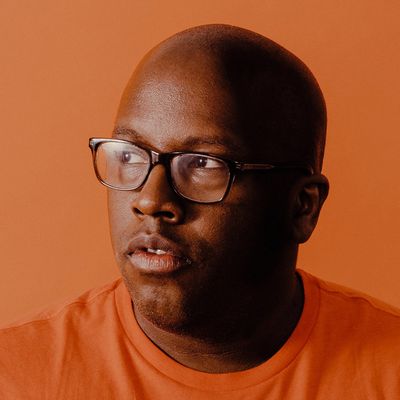
Michael R Jackson (A Strange Loop, Teeth) is a writer and composer whose prodigious talent combines with a depth of observation that results in powerful, personal storytelling... Read More
From the show: The Quiet Part Out Loud
Guests
Featured Shows
About
Michael R Jackson (A Strange Loop, Teeth) is a writer and composer whose prodigious talent combines with a depth of observation that results in powerful, personal storytelling. He shares how his history of inner criticism has been a response to feeling excluded and on the outside, and how his journey towards self-acceptance has been a complicated one.
Transcript
This transcript was automatically generated and might contain errors.
[0:05] Bobby Steggert: I'm Bobby Steggert, and this is The Quiet Part Out Loud.
[0:15] Bobby Steggert: Intersectionality is a fancy word that you learn in social work school, but the idea is pretty straightforward. It's a term that describes how different aspects of a person's identity can lead to overlapping forms of discrimination or marginalization. So I myself, as a white gay man, do not experience intersectionality because my marginalization as a gay man is not further complicated by other forms of common discrimination.
[0:44] Bobby Steggert: On today's episode, I am so honored to welcome Michael R. Jackson, the brilliant writer and composer who speaks so eloquently and with brutal honesty about the intersectionality of being, as he says in his musical, a strange loop, big, black, and queer. Michael shares the legacy of inner criticism that was born out of the combination of ways that he has felt excluded from gay culture, and especially in terms of the racist and body obsess elements of white gay culture.
[1:21] Bobby Steggert: And that is the social pattern that always happens when a marginalized community copies its oppressors by creating its own hierarchy within that community that separates people into an all new power structure. The gay community is no exception to this, and there is an epidemic of loneliness for so many gay men who don't feel that they fit into the dominant view, i.e. the white view of what is attractive.
[1:48] Bobby Steggert: What Michael illustrates, and this is true of any implicit message from society about your worth, the inner criticism that he has had to wrestle with is the direct internalization of the many ways he has felt devalued. What I also really appreciate about what he highlights is that self-hatred, very understandably can result in an equally powerful rage and resentment at the people who have rejected us, and that ultimately the hard work of self-acceptance is the only path out of that rage.
[2:20] Bobby Steggert: He also speaks to the specific challenges that many queer kids of all races have to navigate. And that is of developing and learning about who they are in total secrecy. There's not the opportunity for so many to have meaningful relationships, healthy sexual discovery, and the guidance of mentors and elders in the way that so many other minorities are able to access when their minority status is shared by the majority of their community.
[2:48] Bobby Steggert: When I met Michael, we were both working together on his musical Teeth, which will open for a commercial run off Broadway this fall. It was before he won the Pulitzer Prize and the Tony for A Strange Loop. And more than anything, I was excited to get to know him because every day he wore a different colored shirt with the name Belle Hooks on it. She is one of the most influential writers and social critics of our time, and her book, All About Love, is one that changed my entire understanding of what love really is.
[3:19] Bobby Steggert: And who knew that Michael would change all of our understanding of what musical theater could be. His voice.
[3:38] Bobby Steggert: I'm very excited you're here, not just because you're you, but because when I introduce the idea of parts to clients, I've told you this. I talk about a strange loop because you so brilliantly use that device in the show. I think one of the first characters that you introduce is daily self-loathing. That's one of the first parts, right?
[3:58] Michael R Jackson: That's right.
[3:59] Bobby Steggert: And so my curiosity is first of all, internally, do you experience your parts as differentiated and autonomous and in conflict as they're portrayed in the show?
[4:12] Michael R Jackson: One thing I always have to sort of like put out there just so that we're clear is that so in a strange loop, there's Usher, and then in real life, there's Michael. Michael did throw off some personal experience in order to tell the story of Usher, but should not ever be construed as a sort of one-to-one ratio of event in our life. That said, in my life, I definitely would say, especially when I was younger, though certainly I guess there's parts of it as I'm older, but when I was younger, I definitely had different thoughts competing for attention in my mind at any given moment in any different area of my life. And there was certainly was overlap. And so that was a real that was a real thing.
[5:03] Michael R Jackson: Sure. And I know that the part that you and I talked about wanting to investigate is the inner critic, the self-critic, maybe like a cousin to the daily self-loathing. They're friends in there. No inner criticism is separate from an external source. And so for you, what were the most significant external sources of criticism that you faced when you were young?
[5:26] Michael R Jackson: I feel I think when I was young, a big external critic had to do with like weight. Like I was like a very overweight kid. I have carried that with me through life, though I did have one brief period when I lost a lot of weight. But even in that period, the critic was still there. But like that was a big part of my identity as a little kid, is like being like a fat kid, and hey big guy, like this is a common refrain. And then me feeling ashamed of that or feeling and you know, like something was wrong with me because of that, but then also not really knowing what to do about it, but then also my thing has always been like having a feeling and then feeling bad for having the feeling, and then feeling bad for having the feeling about having the feeling.
That's the loop. Like it's always ugh, like you're just the worst because you feel what you feel, and so the weight thing was like a big issue for me as a little kid externally. People would make comments about it, sometimes not in a to be mean way, and sometimes they were trying to be mean, and I just internalized all of it, and then I took those voices and amplified them in my own mind.
[6:43] Bobby Steggert: Yeah, first of all, that kind of Russian nesting doll that you just described, or the strange loop, I think is the curse of someone who's as introspective as you are. You can analyze an analyzation and it can turn in on itself in such a complex way. In terms of the weight, were you different than family members? Were other family members not struggling with the same thing?
[7:06] Michael R Jackson: It varied. It was like my brother was like for most of our childhood, was like the skinny one, and I wasn't. Although the funny thing about all of this is it's and this I think also goes to the critical place is looking back, like when I look back at old pictures, I'm like, you were fine. I could have lost weight or whatever, but I had this image of what it in the moment when I was growing up, I just thought I was just like an albatross. Like that's what I felt like. I amplified everything. But when I look back on it, I'm like, oh, actually, you had a very distorted view of yourself. But that being said, in my family, like my brother was a good one. My mom, I think, and I have a similar weight fluctuation sort of situation. My dad, I think was fairly average. There were some people who were bigger in my family, and there were some who were smaller, but I don't think it was ever like super above average or anything like that.
[8:08] Bobby Steggert: And did you receive any explicit pressure from anyone?
[8:12] Michael R Jackson: No. I mean, the funny thing is I not really, except like sometimes like a comment would be made, but like it then would immediately be contradicted by eat this food. So it was always like, and that was almost this joke. I'd always want to make like a joke if I like a wrote a sick comment. I would come home from college, and someone would make a comment about how much weight I'd gained, and then immediately they would offer me the most fattening meal ever. And that sort of spoke to the power that food had in my family forever, anyway, and the in our whole history with it.
[8:45] Bobby Steggert: Well, food is love for a lot of families, and especially for yours.
[8:50] Michael R Jackson: Oh, yeah. My mom to this day, like when I come home to visit, because I he only sees me a couple times a year, like something that she can give to me to show how much she misses me and she wants to make sure that I'm happy and that I eat everything that's on my plate or whatever, and why aren't you eating that or how and how was it? She wants to know how does it taste? Is it good? Do you like it? I definitely think that she feels like that's her sort of gift to me.
[9:20] Bobby Steggert: Yeah, it's a labor of love too, right? There's love and effort that goes into it.
[9:25] Michael R Jackson: Yeah, of course. My mom's a good cook, so I like her food. There was this awareness of weight. How did that intersect with the oncoming awareness of sexuality for you?
[9:38] Michael R Jackson: So that intersected in that as I was coming of age, realizing that I was gay, that also meant that I was aware of other boys and what they looked like and what just quote unquote supposed to look like, and like trying to figure out how to make myself attractive to other boys. Because I have a somewhat unique story in that I came of age in the sort of mid to late 90s and was coming out at a time when people like Ellen were starting to come out. But Ellen was like a white famous woman, lesbian, but there were a lot of other black gay boys around me. It was a whole I always call it the black gay teenage storyline. There was all over the place.
[10:34] Bobby Steggert: In your community, you mean?
[10:37] Michael R Jackson: Yes. So I was a part of an all-city choir. And that all city choir was comprised primarily of students from the three main magnet schools and some others. And in the tenor and base section, there was probably 90% homosexuals. And on top of that, they were all dating each other and having sex with each other and like these on again, off again relationships. And I wasn't aware of it initially, but I gradually became aware of it. And then that became my outlet and networked to a larger network of other black gay boys who were in all my high school, other high schools in the greater Detroit area where I'm from. But I even in that community was very much on the outside of it because I was not out yet.
And then even when I was out, I was closeted to like my parents couldn't find out. And so everything that most of us were doing was like in secret. So it was like this weird little secret society in Detroit, Michigan, at these high schools, and everybody's secretly on the phone with each other at night when grandma's gone to bed or mom and dad are going to bed.
[11:59] Michael R Jackson: And so I was learning a lot about what it took to be gay. And a lot of that had to do with what do you look like and what clothes do you wear, and what lingo do you use, and what's the sort of social scene, which is something that I really took for granted at the time and didn't recognize what an issue it would actually become for me later. And I didn't have the language to realize that so much of being a gay boy that it's coming into being a gay man was about the social aspects of it.
[12:36] Bobby Steggert: What I find really fascinating about your experience is that I've heard from other black male gay friends that they were maybe a minority in their social group. And so they were really socialized to be attracted to that white standard of beauty, right? Was that different because you were a part of a much more black-centric community?
[12:57] Michael R Jackson: So that was the beginning of it. That I was in high school and I was in Detroit, which is predominantly a black city. I came from a black family, went to black churches. So I lived in that bubble of that until I graduated from high school. And when I graduated from high school, I moved to New York City. And when I moved to New York City for college, everything changed. But initially, all I was attracted to and was involved with were other black men.
[13:24] Bobby Steggert: And what made you feel in that circle on the outside of it?
[13:30] Michael R Jackson: Because even in that sort of group, like I was still just like a nerd. I was fat. And I had, and also because I was closeted, it wasn't like I had a lot of experience. So the stakes were high. It would have just been too dangerous. It was like too dangerous, but it was also very exciting because then you could secretly do stuff, but that's not necessarily a great environment to actually learn how to have a meaningful relationship.
[14:26] Bobby Steggert: Were you doing what I was doing? We were born in the same year, I think, in '81. Were you doing what I was doing, which was finding people on AOL chat rooms, that kind of stuff?
[14:36] Michael R Jackson: So I wasn't doing that because my dad, he really was monitoring anything I was doing on the internet. Because I had internet from like an early age. I had an internet account on Prodigy when I was like 11. My dad is like the typical sort of parent who like would hear about something on Dateline NBC. And when he heard about it on Dateline NBC, it became a thing. And when they report about children on chat rooms, like AOL chat rooms, he immediately was like, "Michael, I better not ever catch you in one of those chat rooms."
[15:12] Michael R Jackson: And so I didn't discover any of that sort of stuff until I went to college. Because in college I had, we had um, uh fast, what they used to call it? Ethernet, high speed, high speed, yeah, Ethernet, high speed. So I didn't do any of it, I didn't look at any porn until my freshman year of college.
[15:34] Bobby Steggert: Wow. Okay, so you come to NYU, which is where I also went. What changed when the diversity of the student body changed and you realized you're in a different world?
[15:47] Michael R Jackson: So I went to Tisch School of the Arts to study dramatic writing. And I lived in 3rd Avenue North Dorm, which was on 3rd Avenue and 11th Street. And my initial sort of friend group that I just gravitated toward naturally was a bunch of black kids because that was what I was most comfortable with. And also most of us were in the program anyway. And so that was my initial friend group.
[16:14] Michael R Jackson: One of whom was this guy who I wasn't sure. I felt like he might be gay. And then I slowly realized that he was, and he realized that I was, but he was like still closeted. He was from New Rochelle. But we began sneaking away from the friends and making out and that sort of thing for a short, a very brief period. But then he got spooked or whatever and ghosted me.
[16:44] Michael R Jackson: And then from that point on, I still had my main little friend group, but I like went and joined the NYU coming out discussion group, which was primarily a white group on campus at NYU. And from there, that was when the idea of living in New York and being a gay man changed for me because the social scene of it just suddenly seemed had gone from being completely a hundred percent black to suddenly I was a minority, and I didn't have anybody to really talk to about that.
[17:27] Michael R Jackson: And it didn't even dawn on me in that time to think, oh, I'm in this like white group, and I need to find a black group, or an affinity group, or there was none of that language. I wasn't thinking along those terms, and nobody was singing along on those terms, and so I just accepted that this is now the new normal.
[17:48] Michael R Jackson: And also to be clear, it wasn't like I had not ever been around white people or anything. I'd been in part of so many in high school, I was one of three exchange programs by the time I was 17. I was very like worldly in a sense that I knew how to operate in lots of different environments. But as far as being gay specifically, because I had to be positive for so much of it, there was no room to really figure things out, including when I went to move to New York because I had no foundation, and I didn't have a central gay vet friend group.
[18:27] Michael R Jackson: Even when I went to the coming out discussion group, these are guys who I saw like maybe once a week or every two weeks from where we met, and they all had a different sense of what, even as many of them were still struggling with being out or whatever, they had a very different sense of what being a young gay person in New York City was than I did. And so I just was a little bit along for the ride and feeling like I was on the outside.
[18:54] Michael R Jackson: In some ways, I felt the same as I felt with the black gays, because I just was a little bit behind. I felt like I didn't quite belong, I didn't have the right neck or body type or clothing or social cachet. Those are all the feelings I had, and of which there was no one to really express them to, and so a word that is very consistent with my experience is loner, because I was just like often alone, and just I had to sort it out by myself.
[19:27] Michael R Jackson: There's no one I can talk to about the specific nuances of how I felt in any given situation. So whether it was with the black gays or with the white gays or mostly white gays, I was just treading water at any given moment.
[19:51] Bobby Steggert: In that place of self-criticism, you were comparing yourself physically, racially. Did you know how smart you were? And did you know how talented you were?
[20:03] Michael R Jackson: So I think that was the thing I relied upon. Is that I was like, I'm not like a magazine cover, I'm nobody's sexual idol, but I'm very smart. That was if nothing else, that was what I had, where I felt like I was a writer, like I had been writing, even in high school. I had, you know, things published in literary magazines, I was thought of by my family, by teachers. Michael's so talented, he reads so much, he's like a deep thinker. That was like what I relied upon in order to not deal with the more immediate feelings of not being a matinee idol.
[20:49] Bobby Steggert: So that part never came at you for not being smart enough or not being talented enough.
[20:55] Michael R Jackson: I definitely sometimes would think I was stupid for feeling certain ways, or like getting caught up in, and that's where this critic piece comes in. If I was attracted to someone, I would immediately punish myself for feeling that way because I felt like it was stupid to feel that way because there's no way that they would be attracted to me. It was like this preemptive ain't gonna happen message.
[21:22] Michael R Jackson: Yeah, it was sometimes preemptive, and then sometimes it would come true. Because then there were the other times when I would say, you've gotta make an effort, you've gotta go after the guy or make the overture or whatever it was, because I didn't know how to read signals at all. Again, because I had no foundation or no experience, and so everything about being like a gay man for me, particularly in my early 20s, basically my entire 20s, was like this constant fear and terror of making a mistake, of barking up the wrong tree, of being rejected, of like punching above my weight class, of auditioning.
[22:09] Michael R Jackson: Like I often say that for me being a gay man felt like I was like on auditions and not booking and not knowing what do they want in the room? What do they want? And feeling like I must be what they want. I must, you know, and it was and then being like, no, you must have to be yourself. They always say you have to be yourself, just be yourself, but yourself is so stupid and bad.
[22:31] Michael R Jackson: And then I would be like, okay, I just have to stop. And then I would have, and I'll be like, you know what? I don't care. I'm just gonna be alone. And then I would be alone. Then I'll be like, I'm lonely, I need to try. I have to go put yourself out there. You gotta put yourself out there. Get put yourself out there. And then the cycle will begin anew.
[22:49] Bobby Steggert: So how and when did you start experimenting sexually?
[22:55] Michael R Jackson: So there was some of that in high school.
[23:00] Bobby Steggert: With the guys in the choir?
[23:01] Michael R Jackson: Yeah. What had happened was there was this one guy in the choir who I made out with on one of our choir trips, which I was very excited about. And then the big thing, but again, this is not, I don't say it's bad, but it's like indicative of like where my mindset would come from. So I went to Israel when I was 17 for an exchange program. And on the way to Israel, we did an orientation in New York City. And in New York City, I met this guy in our group because there were kids from all over the country who were going on this trip.
[23:42] Michael R Jackson: And one of them was this black gay guy who I had an inkling might be gay. And so at that, and I had just come out in my own city. And so I was like, I'm in New York City. I think this guy might be gay. I have to take a chance. And that was like my first sort of making it overture. And so I decided to be brave. And so ask him if he was gay, and he said that he was. And then we ended up making out and touching each other's dicks in a closet at the hotel Pennsylvania. May she rest in peace. A classy establishment. And I thought I had won the jackpot. I was like, I kissed a boy, I touched a dick. That means I have cleared level one of Super Mario Brothers, and it's only up from here. But then on that same trip, he totally dissed me and was like not interested.
And I was like heartbroken. But then I got back to Detroit and I went on one of these choir trips, and I ended up making out with this other boy in the choir who I wasn't that interested in. But I was like, I'm making out with someone, so I get points. And this is what I thought about being gay. It was like it's about getting points so that you can talk to your friends about it later. The bragging rights. You will belong to the group the more points you get. That was the purpose of it. It had nothing to do really with do you like this person? Do you feel an actual affinity to them in any way, attraction, desire, whatever it is? And there was some of that in high school. I like had a little high school boyfriend for a hot quick second.
But again, this was all their secret until my parents found out I was gay. And then in college, I had the experimentation with the guy who I met during like my sort of week of orientation there. And then after that, I did not have any sort of sexual contact with another boy until the last semester of college.
[26:19] Michael R Jackson: I seem to remember. And then I there was another place that was on like First Avenue called Culture Club? No. Pyramid. And so when I would go to those spaces, and then even after I turned 21 and you could go into like bars, the rare times I would go to a gay bar, I was like, I don't know what to do here. I don't have any experience. And also most of those places were predominantly white. And so I was also learning how to talk to white gay men because I felt like that's what I'd have to do because that's where I am. I can't stress enough the extent to which because I had no elders to talk to about these things, or like other black gay friends to guide me or to whatever, or any older friends, like I was just stabbing in the dark and using whatever available media or magazine or whatever to guide me, which were not necessarily the best teachers of how to do it, you know.
[27:25] Bobby Steggert: What did you feel you had to do in terms of connecting with white gay men? What was like the code switching or the shift?
[27:32] Michael R Jackson: I don't know that it's I don't necessarily know that I felt I had to do anything differently explicitly, except for the fact that it felt like white gay men had a different kind of gay culture than black gay men, and in order to fit in their world, if I was gonna do that, then I had to like somehow walk the walk and talk the talk. But I also knew that I didn't really authentically do that very well, and I wasn't comfortable with it, and I also was afraid of sex in general, so the whole thing was at odds with itself, and so I think all of that awkwardness was going with me everywhere I went because there was a lot of confusion that I was ultimately carrying.
[28:23] Bobby Steggert: And so as you got a little bit older, what was the evolution? How would you find connection? And how would the self-criticism prevent it?
[28:34] Michael R Jackson: I wouldn't say as I got older that it got much better. Even as the I remember the era of it gets better. I used to often laugh at that phrase just because I had a whole different. I know it was pointing to what I was pointing to was not about suicide, but I just remember that phrase. I used to have a sort of dark relationship to it because I was like, yeah, everybody told me go to New York, move to LA, it'll be a gay paradise. And it was like the total opposite for me. Um but anyway, as I got older, it didn't necessarily get better because the other thing that happened is like the world is also changing. I get to New York in 99, it's still in the years that precede it. It's like a Craigslist M for M world.
But then in my early 30s is when it transitioned to Grinder and Landhunt and all of that, and so there was also that shift, and also into prep and stuff. There were a lot of shifts happening in the world, and also like socially, it was becoming more acceptable to be gay politically in certain ways, but all of that was happening while I still am like, what's happening next? What's happening now? That's how I felt. And so I wasn't keeping up with the changes because I still was like very behind and felt like an outsider. And so I just threw myself into my work. Every once in a while, there would be some usually terrible hookup that would happen, facilitated through Craigslist into the grander world.
And I would come away from those experiences, feeling like, why did I do that? I just totally did not enjoy that experience. But also I would punish myself for having gotten myself into that experience. I would think that I wasn't a particularly great sexual partner. And then I'd be like, you just need to stop forever. And again, there was no one to talk to about any of this. And so it just would fester and fester. And so I went into therapy at a certain point to talk about some of it, but also at that point I would had this really horrible job that I was working. But the more I worked with this particular therapist, we started doing this thing called tapping. And that weirdly ended up being really helpful for me at the time, in terms of getting in touch with the idea that I had been carrying around a lot of daily self-loathing. And that actually I was like a good person and not like a piece of shit that I implicitly believed for decades.
[31:26] Bobby Steggert: What about you? Did you start to realize was good? Was inherently good?
[31:30] Michael R Jackson: I think it was that like it was that there was nothing wrong with me that inherently that this I was telling myself a story who I was, in especially in terms of other people, especially in terms of gay white men and gay black men, I mean and gay men in general and the gay paradigm, and that I had to get into it in a certain way, and that if I didn't, something was wrong with me. And during the tapping and talking to my therapist, we got in touch with like a physical sensation of what I would feel like whenever those thoughts would emerge. And I remember one day we just had this weird breakthrough where I was tapping and saying I'm a good guy, and I completely and totally accept myself. And I just started to cry because I had never realized that in an overt way.
And to hear myself say that and to match it with the feelings in my body just caused a great big recognition that I had been carrying around quite a lot of self-hatred for a long time, and that it was weighing me down in ways that were like truly not helping me. And then I felt a sorrow for my younger self for carrying that around for so long when I knew that I did have a lot to offer, that actually I did have a lot of intelligence, and I did have insights, and I was talented, and all this stuff about feeling like sexually inadequate or not a good partner, all these things were really more from without than within. That I had internalized certain things about the kind of capitalist worldview, because that's essentially what I felt and feel sometimes about being a gay man, that's so much about being a gay man is about consumption, about appearances, and about and for all the reasons that are in every book that you can imagine.
I read The Velvet Rage, I get it, but I had internalized so much of that stuff for such a long time, and having this one moment with my therapist, I was able to release it for a minute and kind of look at it and feel just a sorrow for my younger self.
[33:50] Bobby Steggert: That's beautiful. And also in social works, we talked about internalized capitalism, which is exactly what you're talking about. One of the first things I experienced of you was your kindness. And I'm wondering if you've always means if you've understood that in yourself. Have you known that you lead with kindness?
[34:09] Michael R Jackson: Yeah, I think that I do. Well, I'm gonna put it this way. I think that my instinct is usually to connect with people. Like I want to know who everybody is. I want to get along, I want to see who's in front of me. And I do think that I'm a kind person. I don't think I ever thought that I was an unkind person. I just think I thought I was like inept in every other respect. I don't think I realized until I was a little bit older what the value of being a kind person was, and especially how meaningful that could be to other people in ways that you maybe don't recognize. But that's also I think another realization I had in this moment of being able to step a little bit away from the like constant self-flagellating, was to realize that I had other qualities.
[35:08] Bobby Steggert: What I remember about meeting you, we worked on Teeth together at the O'Neill before it was produced. I was in social work school, and you showed such genuine and detailed interest in my studies, and that meant so much to me because in a very different way and a less extreme way, actors are objectified, right?
[35:29] Michael R Jackson: And you treated me like a real three-dimensional person with a life outside of the show that we were doing. And not everyone treats actors like that. So that felt really meaningful to me. Thank you. I will also say that something that I've been realizing recently as I reflect on the past and moments like that, and also thinking about my history with gay men, gay boys as a teenager, and just absorbing the experience of walking through a gay male life. So this is like the unglamorous part is that I am a kind person, but I also can be like the biggest fucking bitch in the entire world. Like in those, especially in those moments when I'm like hating myself, I can judge everybody and there was like a period in my early 30s where I think it was even like my Jesus year, like when I was like 33, when I had felt so mistreated by like gay men and white gay men in particular, that I went from seeking their validation to wanting to like smash all their pretty little faces on the pavement, watch them bleed, and while I like laugh at their misfortune.
And that was like a dark period. And as I've gotten older, I reflect back on that moment and then the moments before it. And I look at a lot of the people that I've met who I may have judged or felt like they were some sort of obstacle to me in my sort of quest to belong. And I laugh because I see so many people who I used to judge. I'm not saying that you're one of them, who I now like I used to judge and just hate them even as I was like jealous or whatever. And now I just I see them as a lot more human than I ever could have 10 years ago. I think that resentment and that externalization of shame is so understandable. But then I'm hearing that you may have judged yourself for the judgment that you expected.
[37:54] Michael R Jackson: Yeah, so this is something like I'm gonna come out of the closet on something a little bit. So just because I'm now he doesn't know this, I think it doesn't matter if he finds out. So I'm like friendly with Jonathan Groff, but when he was on that show Looking, that show made me, I used to every week would trash it on social media because he and it represented that white gay thing that I just was like wanted to kill. I just hated it. And then I later got to know Jonathan just as a person, and he's one of the kindest people I like ever known. And I just think again, I think back on that and how I was in that moment trashing it, but jealous of it, and then hating myself for feeling jealous of it and trying to like change into something else that was like more transcendent and elevated above it.
It's like a pretty just such a miserable time. And I sometimes get bummed that I wasted so much time doing that. Though I also noted at that time, again, I had to have a little bit of grace for where I was in those moments because I didn't have the experience, I didn't have the friend group, I didn't have any elders, I was doing the very best that I could, and ultimately that was what all fed into my art. And A Strange Loop was such an anchor and such a life raft for all of those complex feelings coming together, trying to figure out how to just stay afloat in like a sea of anger, jealousy, shame, every other emotion you can imagine.
[39:36] Bobby Steggert: Your work wouldn't be what it is without the rage, though. And that rage was necessary.
[39:52] Michael R Jackson: Not perfect. I have my days, I am still Michael R. Jackson, it was complicated, but I'm not consumed by the fire of that rage. This is a big question, and I'm sure it's a complex answer. In the past few years, you've experienced a kind of success that very few writers could even dream of. How has it affected your sense of self? What has changed, what has not, and how are you still in a place of self-criticism, even with such great success?
[40:38] Michael R Jackson: Yeah. So it's really funny because I have had a lot of success, but I think in part because it started when I was older, A Strange Loop happened at Clarence Horizons when I was 38 years old. And so by that point, I had matured a bit, and wasn't going to be fame or whatever you want to call it. Was it gonna affect me in the same way that it would have if that had happened when I was 25? And in a lot of ways, I haven't changed at all, which is to say that I see things as they are, and I take things as they come, and I don't have a lot of preconceived notions, I don't have any sense of entitlement, but I don't know what's changed. I think I accept the good things as good things without necessarily becoming critical.
I think I'm more open. I think that's one thing that's changed. I think I'm a little bit more open than I was before. I still have a lot of the same questions as it pertains to the gay male of it all. I in some ways weirdly feel like I've gone full circle from where I was when I was like 23, except it's like a mirror opposite. It's I still feel alone, but I feel kind of more confident in it. I do sometimes worry about that because there is a part of me that wants to be with someone and to have like a long-term relationship or whatever. But the thing that's different now than then is that I'm not willing to seek that or to be inside of that for the place of neediness and sort of desperation. For me, if we can't really communicate with each other, if there's not equality in the relationship, and there's not mutual desire, it has to be a real exchange of energy.
That's a mutual exchange of energy. And I'm just and I'm not willing to settle for anything less. And I feel okay enough with my own company that if I can't have that, then I will be okay. And I did not feel that way necessarily when I was younger. When I was younger, I felt like you are a disaster, you are a failure, you have not secured the bag or the man or whatever, and therefore you fail. So the solitude is not as mired in the hatred, the self-criticism. For sure. I still have moments of loneliness for sure. Sometimes I struggle with like body image stuff, but now it's a little bit more tied to health and like wanting in general just better health, especially given history of like diabetes and stuff in my family.
But like and like looking at the explore page on Instagram sometimes is too much, but I had a little bit more control over filtering that stuff out of my life. The pornography doesn't have quite the same impact on my own self-image as it used to. So I guess I've changed in a lot of good ways in that regard. I still definitely would love to meet someone, but he's gotta be right.
[44:07] Bobby Steggert: What's it like to be a gay man who's also like a New York notable? Does that come up for you in terms of being recognized?
[44:19] Michael R Jackson: It's a little confusing to be honest, especially because I'm basically the same person I was when I was younger. So when people view me in that regard, I don't become someone else. I'm like, I'm just Michael. Sometimes it's a little annoying because I'm not really that much of a grinder scruff person, but when I am on there, it's happened so many times. People will just like message me to tell me what a fan they are of A Strange Loop, which I always appreciate, but I'm like, but also I also want to have sex. But then I like don't really like the grinder scruff. This is something I'm actually still working on is that I'm actually not really built for casual sex, not really, unless I have had some sort of pre-existing conversation with you.
If I can feel your energy, the best scenario for me is for us to meet in a bar or go out for dinner or something, and then it'll be like hookup after that's is like the best scenario for me because I need to share air with you. I'm not good at just showing up at somebody's door or someone's running at my door. It brings up every anxiety from the past that I have, and I hate it, and it's never enjoyable. I don't like it. And so I've actually learned that if I'm using something like Grindr or Scruff, I have to use it in a very particular and intentional way, or else it's just not gonna work.
[46:06] Michael R Jackson: Yeah, it cannot be like pizza. Because the pizza will never taste good to me, no matter what. It doesn't matter who shows up, the pizza will be bad. And I will be a bad pizza. And I had that experience. I was in LA recently, and I had a good experience where like I met this guy, we like met for drinks, and we got to know each other a little bit, and then we hooked up after that. And it was great. That was like the most ideal situation.
[46:33] Bobby Steggert: That's evolution.
[46:35] Michael R Jackson: Yep. And I only wish that someone, some fairy godmother had been around and told me any of these things in 1999. But you live, you learn, as Alanis Morissette once famously said.
© Broadway Podcast Network, All Rights Reserved