

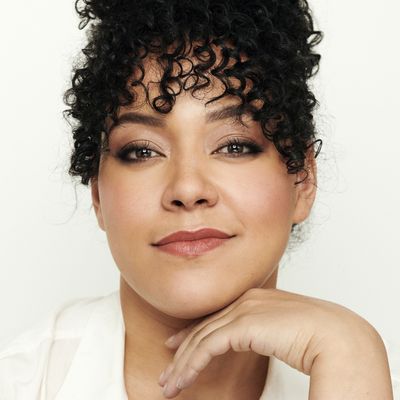
Lilli Cooper (POTUS, Tootsie, Spring Awakening) has always relied on defiance as a source of personal power - essential to her life as an artist, as someone who has often been the only black woman in the room, and now, as a mother, whose very presence as an actor who is visibly navigating motherhood at the same time is an act of defiance in itself... Read More
From the show: The Quiet Part Out Loud
Guests
Featured Shows
About
Lilli Cooper (POTUS, Tootsie, Spring Awakening) has always relied on defiance as a source of personal power - essential to her life as an artist, as someone who has often been the only black woman in the room, and now, as a mother, whose very presence as an actor who is visibly navigating motherhood at the same time is an act of defiance in itself.
Transcript
This transcript was automatically generated and might contain errors.
[0:00] Bobby Steggert: I'm Bobby Steggerts, and this is The Quiet Part Out Loud.
[0:15] Bobby Steggert: Defiance is a double-edged sword. To defy the law, to resist the truth, to avoid accountability, these are all obviously problems. But to defy expectations, resist peer pressure, avoid misunderstanding, these are obvious strengths of self in the face of external threat. The Diagnostic and Statistic Manual, the DSM, lists a disorder that illustrates my point here. It's called Oppositional Defiant Disorder. This is a label often given to a misbehaving child who, marked with defiance, anger, and irritability, is considered the problem. The additional problem is that this can prevent a larger and much more important question. For example, what is the child angry about? What are they defying? And is an irritability, even to extreme degrees, typical of the experience of childhood?
My point being that outside of the context of diagnosis, defiance can be an important message, a quite typical response, and even a superpower. I often ask myself, if I didn't defy the cultural expectations of my childhood and choose to sing and act as opposed to play a sport, who and where would I be now? Enter this week's guest, Lilli Cooper, whose defiance has always led her exactly where she needs to go. In her instance, the reverse was true, growing up in a showbiz family, smack in the middle of New York City, and at first defying the family culture by carving out an identity free of acting and singing. And of course, we know where she's ended up, and ever since she made her Broadway debut in Spring Awakening at the age of 16, Lilli has really valued her defiance, reminding her of who she is and what she needs.
It's been essential to her as an artist, as someone who's often been the only Black woman in the room, and now as a mother, whose very presence as an actor who has made the choice to visibly navigate motherhood at the same time is an act of defiance in itself. She also speaks so candidly about other parts of her that hold awareness of how her strength and defiance might be perceived in a world where these very same qualities are celebrated in a white man, but often seen as a cliché and a problem in someone of her identity. And so it takes another layer of defiance in order to see that whole picture and still refuse to recede in order to make others comfortable. You're the only person I've interviewed who comes from a showbiz family. And I always talk about family first. How does family fundamentally affect this part of you that you call the defiant part?
[3:07] Lilli Cooper: Oh, I was thinking a lot about it this morning in preparation for our chat today, and I thought a lot about my family and my childhood and my upbringing and how much that informed my defiance as a person and as a little girl, especially. I grew up with two older brothers, so I'm the youngest and I'm the only girl in the family.
[3:40] Lilli Cooper: Are you a Manhattan girl?
[3:41] Lilli Cooper: Manhattan, born and bred. I was raised in Manhattan Plaza, which is like an artist commune in Hell's Kitchen, right on 43rd Street. So just blocks away from Times Square. And my dad's an actor. And so I was raised backstage at his Broadway shows. So all of that truly informed my personality and identity and what we're referring to as defiance, which I think is a really kind of wonderful way to describe myself. I'm happy that I discovered that. But going back to my childhood and upbringing and family and how that defined my defiance, I was always told that as a little girl, I was always very hated being teased. I was really, I would get very angry when I got teased. And I had two older brothers who were, who loved to tease the little girl who was the smallest and the youngest and the only girl in the family.
I think I just developed this like really defiant, strong kind of pushback and strength as a little kid. And my family would always describe how I would want to get involved kind of in the rough housing and playing with my big brothers, but I couldn't because I was so small. And they declared this power that I had, and they would call it Lily Power. And whenever they would play, they would always reach, they would always reach for Lily Power. They would need to touch me for my Lily Power.
[5:09] Bobby Steggert: They would try to get it from you.
[5:10] Lilli Cooper: Yes, exactly. Charge up from Lily Power. And that is something that I grew up with. My family instilled that in me.
[5:23] Bobby Steggert: Do I feel literal to you?
[5:25] Lilli Cooper: Yes, quite literal. And I think about that and I think, wow, you don't think about your day-to-day childhood upbringing all the time. But when I really dig deep and think about it, I'm like, wow, that really is part of who I am, I think, this Lily Power. And I'm really proud of it. And it's definitely part of my identity. And that was something from really little, probably two or three.
[5:54] Bobby Steggert: What's so interesting, it's not just about the opposition to older siblings who were warring you. They also instilled in you this idea that you were actually powerful in yourself.
[6:05] Lilli Cooper: Exactly. Powerful in myself, and that my power could help them, could strengthen them.
[6:12] Bobby Steggert: How did performance come into your life? And did that also add to this idea that there was this inherent power that was of you?
[6:19] Lilli Cooper: Yeah. So my dad's an actor, and has been in something like 16 Broadway shows. And he won a Tony when I was seven years old. And both of my brothers were performers. And well, one of them was, and one of them continues to be in as a Broadway actor. And they both went to LaGuardia, which is the famed performing arts high school in New York. And so I had this legacy, right? That it was this kind of self-fulfilling prophecy that I knew that I would end up in the theater. But I was incredibly shy when I was a kid, really shy. And I didn't like to perform. And I didn't like to put myself out there in front of people. And so what I fell in love with was dance. And I think I realized that in a lot of ways, I can hide while dancing in the back row or whatever.
And it wasn't until I was in seventh grade, when I was very badly cyber bullied at my middle school. And I decided to transfer schools from seventh to eighth grade to a performing arts school. Because I was like, you know what, I need to find my tribe. I need to find my people, because these are not it.
[7:36] Bobby Steggert: Were you defiant in rejecting performance as a kid?
[7:39] Lilli Cooper: Oh, yeah. Oh, yeah. This is what my dad does. This is what my brothers do.
[7:42] Lilli Cooper: Exactly. I think there was a lot of, I'm going to be different. I'm going to dance. I'm not going to sing and act. I'm going to do this. And I loved it. I definitely loved it. I think I had a secret pining for acting and singing that I really, truly never shared with my family. Like, my parents didn't know. My parents didn't know that I could sing.
[7:56] Bobby Steggert: What did your mom do?
[7:58] Lilli Cooper: So my mom was an actress before me and my brothers were born. That's how my parents met in college. They were both theater majors. And then when she had kids, she stepped away from performance and raised all three of her children, and then went into the Board of Education. And she was a parent coordinator and ran an after school program for about 25 years. So she was in education, but was raised in the theater and was a singer as well. So it truly is in my blood, as I like to say. I think it's, I always find it really interesting when people find theater or the arts when their family isn't because for me, it's just so ingrained in me. I'm like, oh, it's always so interesting when people don't have it.
[8:40] Bobby Steggert: I have always admired you since I saw you and Nick in Tick Tick Boom. And it just occurred to me that's on the block where you grew up.
[8:49] Lilli Cooper: It was the very block. You could see my apartment from that theater, from Theater Row. You see my apartment from Theater Row, which is where my mom still lives to this day, the apartment that I grew up in. Yeah, so very, very a part of the theater community, quite literally where I lived.
[9:06] Bobby Steggert: Did then the acting profession feel like a normal profession to you because it's what you knew?
[9:13] Lilli Cooper: Very much. Yeah, very much. And I knew both. It's not a binary, but this whole spectrum of the business. I knew times when my dad was unemployed for months at a time and all we could afford was eating beans and rice. And I knew times when my dad was driving a limo home from a theater every night. That is a vast difference. And I witnessed that as a child.
[9:41] Bobby Steggert: What did he teach you about that?
[9:43] Lilli Cooper: That there's no guarantee, that there's no guarantee. And there's truly as talented as you may be and as hard as you may work. This industry is so volatile. And I think that is what weirdly in a way gave me a confidence in going into it because I knew that side of it. There were no rose colored glasses stepping into this business. I really witnessed what it could be. And because I was aware of that, I wasn't afraid of it. And I could tackle it.
[10:18] Bobby Steggert: Did you find that you had an insight into showbiz that a lot of your classmates at Performing Arts High School didn't yet have?
[10:25] Lilli Cooper: Yeah, yeah, I would say that for sure. I knew the inner workings of Broadway shows. I remember when I was six or seven and I was backstage at The Life, which is the show my dad did at the Barrymore, I would walk around with the dressers and the stagehands and hand off props and literally be involved in the creation of the show every night. Because that's what the theater people did with me as a child. So yeah, it's almost like if you do a movie for them, you've never been on a set before, it's terrifying. You have no idea what you're stepping into. So as a theater major, as a drama major in high school, it felt like I knew the inner workings. Obviously, there was skill and learning involved in developing your craft, but it did feel like I almost had a leg up in a way.
[11:12] Bobby Steggert: And then once you started studying performance, what was your way in?
[11:17] Lilli Cooper: My way in, again, was this element of defiance. In seventh grade, I decided, fuck this, excuse my language. I was in a school I hated with people I hated, who hated me. I didn't feel loved. I didn't feel a part of a community and a group. And I thought, I know what I need. I need theater people. And so I transferred to a performing arts school. And it wasn't until then that I started performing and singing and acting. And it was in this element of defiance. You know what I remember pretty distinctly is I experienced bullies in seventh grade. And I thought, ooh, they're going to regret their behavior. I was like, ooh, they're going to look at me up in lights one day.
[11:59] Bobby Steggert: Was there fear and pain underneath that? Or was that the primary experience of being bullied?
[12:04] Lilli Cooper: There was definitely fear and pain in the moment of it. But I honestly couldn't be happier that it happened to me because of who I am today. I think it was a huge part of who I have become as a person, as a performer, as a mother raising children. It's really been a part of developing who I am. And I'm grateful for that in a weird way.
[12:38] Bobby Steggert: We don't have to go too deep into it, but what was happening?
[12:40] Lilli Cooper: Yeah. So it was a very specific time. I was in the time of, we were pre-teens in the time of social media just bursting out into existence.
[12:51] Bobby Steggert: Terrifying, right?
[12:52] Lilli Cooper: I know. I think back of it and I'm like, oh my God. Because there was no regulation. People didn't know what the impact of this was. And so there was this thing called Zenga, which was pre-Facebook. It was very similar to MySpace and Facebook. But you could make as many pages as you wanted and you could theme them. Meanwhile, mine was like, what was I, 12 or something? Mine was SpongeBob themed. This is how innocent and childlike we were. And these girls, these mean girls made a Zenga specifically about me and just about bad-mouthing me and hating me. And it was racist and homophobic in a way. They accused me of being gay and called me ghetto and all this stuff. And the fact that those were offensive things, it's just appalling that these 12-year-old girls would.
And I remember when Mean Girls came out, I was like, oh my God, this is so spot on. It feels so real. But it happened to me in seventh grade, not in high school. And so the defiant part of you understood how ridiculous it was?
[13:53] Lilli Cooper: That's something that my mom really helped me.
[13:56] Lilli Cooper: I identify how these girls, at the end of the day, bullies are hurting, are struggling with their identities and who they are. And they have to find a way to release that. And the way that they did was terrible. And I was on the other end of the stick. But you have to have empathy, or at least I learned to have empathy for these young girls who are struggling as well. And so I defied that by saying, I'm not going to put up with this anymore. I'm going to transfer schools, not tell a soul. I didn't tell anybody that I was in school with in seventh grade that I was going to be transferring. So I just decided I wasn't going to show up on day one of eighth grade. And I went to a performing arts school. And I was like, this is what I want to do. These are my people. And I felt like I had a future in it. And I felt like I would find success in it. And I thought, what a great way to get back at my bullies.
[15:00] Bobby Steggert: Have you ever encountered them as an adult?
[15:02] Lilli Cooper: You know, I did come across one of them around when we were in college. And I think we looked back at it and oh, how silly that is how silly we were as young girls. I never really approached them in any way. But there are a few still out there that I've never seen ever again. But I do wonder if they know who I am. I hope they're listening to you right now on this podcast. So you get to PPAS. So I was at LAB, which is downtown, and then I transferred to PPAS, Professional Performing Arts School, just for eighth grade. And then did you already have a voice that was just in you? Did you have to discover it? Did you already have a presence on stage?
[15:37] Lilli Cooper: Yeah, I think a little bit of both. I remember my first ever show that I did my first ever musical that I did was Godspell. And I sang, I really wanted to sing Turn Back Oh Man, but I didn't get that song I got. Oh, Bless the Lord, My Soul was really excited to share what I had been hiding. And my parents legitimately had never heard me sing before.
[16:06] Bobby Steggert: And where had you been?
[16:08] Lilli Cooper: Just like by myself in my room, in the shower, Discman. And my parents talk about this, in this very vivid way of going to see me in Godspell and thinking, Oh, I don't know what this is gonna be like. And then I opened my mouth and they're like, Oh, wow. Okay, she's got it. We didn't know. And here it is. And I loved hearing that from them. I think that really pumped me up with a lot of confidence to know that my parents were like, Wow, she's got it. So did you know it?
[16:49] Lilli Cooper: I, oh, it's funny. I knew it. I knew I had it.
[17:03] Bobby Steggert: Yeah. People talk about studying performance and how challenging that can be in terms of other students and teachers. And did defiance ever come up in terms of your training?
[17:11] Lilli Cooper: Totally. I had a drama teacher, I had a few teachers that I butted heads with. And I realized afterward that they were challenging me because they saw potential in me. And I would fight back very like Lily Power kind of way. And I had one in eighth grade, and I had a really tough time with a teacher in high school when I was doing Spring Awakening. I was making my Broadway debut when I was in high school at the same time. And so I was doing this double duty, like leading this double life and going to high school and having to take these drama classes. And I think there was a teacher who wanted to like be like, Oh, don't think you're so good because you're on Broadway. Don't think you're so great. Little miss thing. I definitely had moments of like, really pushing up against the man.
[18:06] Bobby Steggert: When we talked earlier, you said, one of the ways defiance comes up is being in primarily white spaces. How did that come up for you as you started performing?
[18:12] Lilli Cooper: My racial identity has always been really confusing to me. I'm biracial, I'm half black, half Irish. And I never knew what box to check, especially when there was literally forms to ask you to check one box, and I would have to choose. And you're like, but wait, I don't understand that because I'm not one thing. So I think I would code switch a lot. I would metamorphosize depending on what group I was around. And I was raised primarily by my mother, my white mother, because my parents were divorced when I was five. So I lived with my mom. And so I never had a black mom teach me how to braid my hair, or do these kind of like culturally black things that in my adulthood, I have become more connected to.
So I connected more with my white side, but realized that I would never walk down the street and be seen as white. I would never present as white, right? So I would almost overcompensate in my personality and my voice so that I would blend in. Because again, there was still that element of my childhood shyness of I want to be a part of whatever group I'm in.
[19:29] Bobby Steggert: How would you overcompensate?
[19:30] Lilli Cooper: I think a lot of it manifested itself in like fashion senses and hairstyles and my voice. I was told a lot growing up that I sounded like a white girl and those kinds of things to feel like I could blend in a bit. And so Spring Awakening came along and I was the only person of color on stage. And I was 16, I was a kid. And I didn't think of myself in the moment as the quote unquote token. But I did realize that I was providing something to the show that had I not been there, wouldn't be there, which was an element of diversity. Of course, I remember what the original cast looked like. And yet to my 2024 brain, that seems so crazy, right?
[20:24] Bobby Steggert: Yeah, yeah, I know. It totally does. And I remember it being joked around at the time that I was like, the splash of color that they needed.
[20:32] Lilli Cooper: This was said out loud into your face.
[20:34] Bobby Steggert: This was said out loud in a joking way in a 20, what was it? 2006 kind of way.
[20:44] Lilli Cooper: That sticks. And then it's this kind of like affirmative action conversation of do I deserve to be here? Or am I here because I'm checking a box?
[20:55] Bobby Steggert: The whole ridiculous notion of Kamala Harris being a diversity hire.
[20:59] Lilli Cooper: Exactly. Exactly. When she, we are overqualified to be where we are. And I had to develop that confidence in myself and that knowing I'm not here just because of that. I am deserving and I possess the skill and talent that I need to be on this stage right now. But that was a big learning curve as a 16 year old. There was this one moment when I loved all of my creative team. So I don't want this to come across as like a negative bad mouthing in any way. But my original design for my costume was an apron and like cornrow braids. And I realized looking at it, I was like, okay, so being the only black girl on this stage next to all these little white girls and their cute little flouncy dresses, and then me in an apron and like one, two knots, I was like, this feels a little racially informed.
And we're technically supposed to be in what, 19th century Germany. And so I remember bringing the design home to my mom and being like, I feel weird about this. And I don't know what to do about it. I'm a 16 year old. What do I say? Like, how am I making my Broadway debut? Do I like talk to people about it? Do I make my opinion known? And she was like, yes, absolutely. Yes, you do. If you feel uncomfortable wearing an apron, the only girl on stage wearing an apron, then tell them that. So I did. I went up to the director and I went up to our costume designer and I said, I think maybe as the only person of color on stage that an apron might not be the best choice for me. And they heard me and they totally understood and they changed the design.
And so that was, I'll never forget it. That was a huge moment of defiance as a teenager, this teenager making their Broadway debut who had never been in that professional setting before. And I was really proud of myself for that.
[23:00] Bobby Steggert: Yeah, that must have been intimidating. I mean, in the theater, especially in that time, the director, the designers were all powerful.
[23:09] Lilli Cooper: Yeah. And there was almost this strength in my naivete, my ignorance, right? Of not knowing that, oh, maybe I could piss someone off by saying this. I didn't really know that. And I wasn't scared of that. So I said, OK, I'm going to speak my mind. I'm going to tell them how I feel. And I think it was really telling how it was reacted to. It was absolutely heard and taken into account. And I really appreciated that.
[23:37] Bobby Steggert: So what about as you evolved into an adult? How did this quality in you evolve with you?
[23:42] Lilli Cooper: Yeah, I think it just got stronger. The roles that I play or have played over the years, people often describe them as like, oh, you're always like you always put a strong female lead. You always play such strong characters. And I don't seek those out particularly. But I truly believe that I think that the strength in them is because I'm playing them, partly. A lot of the roles that I've played were written to be strong characters. But what I bring to my performance is the innate strength in me. And that can't go away. That'll always be a part of any character that I play. So I think it's really played a part in my performance. And there's a fine line, right? As a black woman, I'm proud of my strength and my defiance.
But there is a stereotype about black women of being loud and angry, right? And so there is towing the line and not wanting to cross that line because you don't want to be brushed over and looked at as the angry black woman. And anger and defiance are not the same thing, but they can be interpreted as the same thing. And so in my adulthood, something that I've really tackled, not struggled with, but tackled and tried to figure out in myself is how to be defiant and strong and have opinions and declare those without the stereotype being emitted from me.
[25:33] Bobby Steggert: That still feels like an injustice to me. Why shouldn't you be angry at times?
[25:40] Lilli Cooper: Absolutely. And I am a lot like we're not allowed or else we're kind of pigeonholed into the stereotype.
[25:45] Bobby Steggert: Yeah, it is. It's yeah. And nonetheless, you feel you do have to sort of make sure that when being defiant, it's in a middle ground where you're less likely to be interpreted as angry.
[25:52] Lilli Cooper: Exactly. I think there are a lot of moments, especially in my career and professional settings, where I probably could have gone further in my defiance, but have maybe stifled it a little bit. And I think it's so deeply ingrained in us as black women that it'll kind of always be there. That's something that I'm tackling to like, like we were saying, I hope that there's one day that I don't ever have to think about it. I don't ever have to think about, oh, maybe I should reel this in and be softer, approach something softer than I need to because of how I may be interpreted.
[26:41] Bobby Steggert: When we were on the phone, you mentioned Tootsie as another sort of prime example of how you felt it was important to approach identity through the show. And how did that happen for you?
[26:46] Lilli Cooper: Yeah. Okay. So I played Julie in Tootsie, which was played by Jessica Lange in the movie. I mean, iconic, gorgeous, blonde woman. And I remember going into that audition being like, oh, I don't know if I don't know if I'm right for this. I don't know if I'm going to book this. I don't feel like I didn't feel like a leading lady quite yet. I was 27 maybe. And I read through the sides and the script and the music. And she's an actress just trying to make it this character. And my mom was like, this is you. As you can tell, probably throughout this podcast, my mom is going to be a huge influence in almost everything that I ever do because she is she that's who she is. So I think that's very insightful into who I am. But my mom was like, don't go in there and try to be anybody else like this is you. So I went in, I did the audition, and I booked it. And as we were developing the show, because it was a new...
[27:51] Lilli Cooper: So we did an out of town. We did a few readings. We're working really one-on-one with the writer and the director. And I remember a moment where Robert Horn, our writer, we were questioning whether or not we should include her race and ethnicity in the book of the show and talk about that. And to me, and other women, other black women might disagree with this, but for me, the profound thing about seeing, when I was a child, seeing black women on stage was simply their existence. And it wasn't about making the story about their blackness. And I very passionately didn't want this story or this character to be about her blackness. I think her blackness is inherent and it exists. And it's always going to be there because it's visible.
And there's no reason to force it into the script and put it out there in that way. And I shared that with my all-white creative team. And there was a lot of back and forth and discussion about it, of whether or not that's something we wanted to do. And we'd had different iterations where I did talk about my being a black woman in the scenes, and they just didn't work. I made it very clear that that was my opinion. And again, luckily I was in this very collaborative, very open listening space, which is very lucky. Not all creative team rooms are like that. I was listened to and that's what it was. And interestingly enough, almost every Julie that's played that role since has been a woman of color because I originated the role.
And again, my blackness existed and it informed the character, but it didn't have to be in the script. And I'm proud of that. It also occurs to me that those two shows, a couple of decades apart, the worlds were very different, right? This creative team for Tootsie probably thought that they were honoring your experience by having this conversation about it.
[30:07] Bobby Steggert: Absolutely. Yeah, absolutely. I think that's a perfect way to put it. They thought that they were honoring and respecting my experience as a black woman, as an actor in New York City, struggling to get work. And I was saying, casting me is honoring me. I want to go back to your mom real quick. How is she defiant?
[30:28] Lilli Cooper: She is, you know, and in a lot of ways she's not defiant, but in a lot of ways she is. So she was a single mom raising three kids with two jobs. She got her master's degree after all three of her kids were born. I think back to my childhood and I'm like, how the hell did this woman do this? So in that alone, that was utter defiance, utter defiance. But she also sacrificed a lot to have children. She gave up her performing career. She gave up her acting career for us. And I don't think she would be upset with me sharing that she struggled with depression, as have everybody in my family, including myself. And when you're struggling with depression, it's incredibly hard to be defiant. Oh, it takes the wings out of your sails.
Totally. Oh, absolutely. So that's what I mean by there were moments in her life when defiance just couldn't be there. It just couldn't exist. But I think, especially having three biracial children, that in itself is a huge act of defiance, especially with her upbringing. She was basically disowned by her family for marrying a black man. Talk about defiance. And it was incredible that she was, you know, not okay with it. You don't ever want to lose your family. But it's this is the person I love. And these are my children. So how dare you? I was raised with a woman like that. Like, how incredible is that? So yeah, I just saw I said, I saw defiance everywhere in her.
[32:12] Bobby Steggert: And what about your dad?
[32:19] Lilli Cooper: My dad is defiant in a very stubborn way, which I didn't understand as a kid. And I take it. And I am so grateful for that element of him that I have in myself now. And I didn't realize it until I really was in the industry. And in as my dad likes to refer it, the business of show, show business. When I was a kid, this is what's so crazy about our career. You could win a Tony for Best Supporting Actor in a musical and then not be in a Broadway show for another 10 years. And that's literally what happened to my dad. And there were options that came up in those 10 years. But my dad is very good at putting his foot down and having a bottom line, right, of what he deserves. And I think as a kid, I thought, why would you turn down this job?
Or why wouldn't you go and do this? What's wrong with you? Why are you saying no? Or what is this kind of like, ego that you have in my mind and my childish mind? And I realized, no, of course, we all have ego, especially being actors. But no, my dad had this element of defiance that was like, no, I deserve XYZ. I'm providing XYZ. And I'm not going to say yes to a job unless it's the right thing, checks all the boxes, the right money, the right role, the right team, the right material. And so his defiance was protecting his artistry.
[34:03] Bobby Steggert: Absolutely. Absolutely. And yet, then he does something like Carolina Change, and there was no guarantee that it would go to Broadway. So he chose something for its pure quality as well.
[34:14] Lilli Cooper: Absolutely. And Hello!, it's one of my favorite shows ever written. It's brilliant. And he waited for that. And I don't blame him for a second, because it's what a brilliant next show to do. Tell me about your being a parent. I'm sure that this quality that we're talking about intergenerationally, then has taught you something different in the role of parent.
[34:38] Lilli Cooper: Yeah, it definitely has. I think especially as a performer, as an actress, and a mom, you know, growing up, I saw a lot of mothers, but I didn't see a lot of children around. How are there all these moms? Where are their kids? Where are they? Not in a judgmental way in any way. But what I realized was, we are kind of encouraged to hide the fact that we are mothers, to hide our motherhood, to be parents at home, and then come to work and be actresses. And it's like, why do those have to be mutually exclusive? And so from the day I had my first son, Bodhi, I actually booked a Broadway show four months later.
[35:32] Bobby Steggert: What was the show?
[35:33] Lilli Cooper: POTUS. And it was my first play on Broadway. And luckily, I was amongst these legends. And because of that, we were just treated really well. And we were really respected. And I brought my motherhood to the table with me, in terms of like, I'm going to need my son to show up to rehearsal so that I can breastfeed him. Or I'm going to need my husband to have access backstage so he can bring me my son, you know, all of these things. And I would put these out in an act of defiantly being a working mom, and not pretending like I'm not.
[36:10] Bobby Steggert: Did you ever get any pushback, either management or creative team from that?
[36:14] Lilli Cooper: Not at all. It was also an entirely female creative teams that really helped. But it was celebrated. And in fact, there's this like beautiful irony to it, because the character I was playing was a nursing breastfeeding mother. And so was I at the same time. In fact, my audition, my scene that I auditioned with, the character is pumping. So I quite literally was pumping in my audition tape. And that, I think is part of what got me the job.
[36:44] Bobby Steggert: Just using the reality.
[36:45] Lilli Cooper: Exactly. I often think about what professional spaces and of course, the entertainment industry does to women in terms of aging too. And so that's connected to motherhood. How do you see defiance going forward as you age into another part of your life?
[37:02] Lilli Cooper: I'm so excited to age into this part of my life as a performer. I think my dream has always been to be a character actress anyway. So age helps with that. But I've never really felt like the young sexy ingenue. And I was never really going to be that. And I do kind of feel like I'm in this kind of awkward middle ground right now, which I'm okay with, because for the first time in my career, since I'm 16 years old, I'm kind of taking a break from work. I'm auditioning, but I'm not stressing about getting the next job, because I'm happy to be home with my children. And I realize that I may come out of my motherhood cocoon in a few years and be okay with being almost 40 and seeing what that means for the roles that are out there.
And I'm so lucky to be able to say that because I don't think that women in Hollywood could say that, or could have said that over the last 20 years, to be excited to be 40 and play roles in your middle age. But I am, because I think that representation is always shifting and growing and morphing. And I think that young mothers are such a fun role to play. And I'm excited for my 40s, because I think as we grow, as we age, there are so few fucks to give. And I love that. That just fills me with joy. I always look at women who fight aging and think, oh, it's so sad to think that we're fighting that. I love seeing beautifully wrinkled, gray-haired women. It's so gorgeous to me. And I don't want that to happen to me tomorrow, but I can't wait for it to happen, because it means I've had experience and life and understanding. And every wrinkle and gray hair is a moment in life. And I'm excited for it.
[39:12] Bobby Steggert: What's really cool is that you talk about these people who fight aging, and that is a certain kind of defiance, one that will not end well. And there's a different kind of defiance in just accepting what is.
[39:24] Lilli Cooper: Absolutely. A defiance to the way the industry has forced us to think of aging. The industry has said, oh, well, if you're past this age, or if you were this size, or if you have this color hair or skin, then you're fucked. And I say to that, nope.
[39:50] Bobby Steggert: So when we take this idea of Lily Power as a small child, does that little child live in you today in a way that you feel like you have immediate access to her?
[40:01] Lilli Cooper: I think I see her through my children, which is really a beautiful thing. I read this Instagram, just like totally markets everything that you need to see or want to see, or don't even know that you want to see. I see so many memes about parenthood. One of them that really stuck with me, loud children are the safest children. Because when you feel safe to be loud, that just means you're comfortable in your skin and your voice. And let me tell you, I have the loudest toddler in the world. Truly, anybody who knows him will be nodding their head to this right now. Truly the loudest. And there are moments where I have to rein him in, but then there are moments where I look at him and I'm like, he's so loud because he's proud of who he is.
And he's excited to share his excitement. And that is Lily Power. And that is me. That's part of me. He is me. I am him. He is me. It's so crazy. And it's just so really special to watch as they grow. Because he's turning into a little person. He's three now. And he has opinions and ideas and questions. And it's really beautiful.
[41:20] Bobby Steggert: Do you call it Bodie Power?
[41:22] Lilli Cooper: No, but I should. I love that. Pay it forward.
© Broadway Podcast Network, All Rights Reserved