

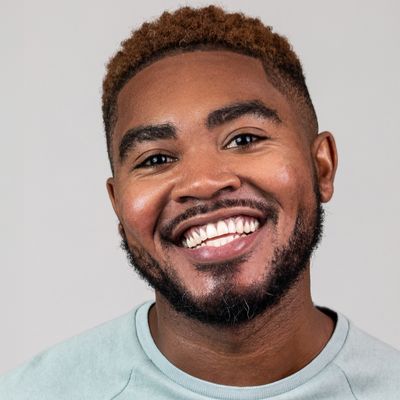
Cody Renard Richard is a highly respected and singularly visible Production Stage Manager on Broadway who has carved out a multi-faceted career in the theater that includes producing, teaching, and advocacy... Read More
From the show: The Quiet Part Out Loud
Guests
Featured Shows
About
Cody Renard Richard is a highly respected and singularly visible Production Stage Manager on Broadway who has carved out a multi-faceted career in the theater that includes producing, teaching, and advocacy. He shares how his faith, both religious and personal, has fueled his purpose and given larger and wider meaning to his contributions.
Transcript
This transcript was automatically generated and might contain errors.
[0:05] Bobby Steggert: I'm Bobby Steggert, and this is The Quiet Part Out Loud.
[0:15] Bobby Steggert: How do you define faith? A belief that is inherently without definition. In general, it is characterized by a complete trust or confidence in someone or something. In terms of spirituality, it is a system of religious belief based on conviction rather than proof. And since I love a metaphor, here are a few to round things out. It is the wind beneath a bird's wings, unseen but essential to flight. Faith is planting a seed and trusting it will grow. It is a compass guiding you through the fog or the sunrise you don't need to question. I've had mixed feelings about a guest bringing faith to the podcast, and that's all based in my own rejection of the spiritual form of faith as a response to being raised in the Catholic Church.
I don't think I need to explain that any further. Today's guest is Cody Renard Richard, and I am so happy to share our conversation with you, which turns out to be a wholly affirming and generous exploration of faith that is both religious and symbolic, big picture and personal, and one that for Cody is free of many of the trappings and hypocrisies of organized religion, the thing that turned me away from faith. Cody is a highly respected and singularly visible Broadway stage manager, a role usually inhabited by less extroverted people and until fairly recently monopolized by white men. He is also a Broadway producer, a professor at Columbia, and the creator of a scholarship program which is dedicated to encouraging more students of color who are pursuing degrees in stage management, technical theater, design, playwriting, directing.
What Cody affirms for me is that faith, whether about a literal God or an unknown energy in the universe, is a space from which you can act without hesitation. Pour yourself into a commitment to hard work and determination that is fueled by a belief in and love for ourselves in our worth and purpose as we move through the world. There's something about removing the heavy weight and pressure of the solely individual effort by embracing the perspective that you are a smaller part of something much larger than yourself, so much more expansive than one experience. And in turn, it gives even more meaning to your individual purpose. In listening to Cody share his story, I feel convinced that his faith is inherently connected to love.
It is a self-perpetuating force, fueling his spirit as he shares it with the world, and then providing more evidence that his faith is something to trust. And if God is love, which is my preferred way to imagine it all, well, then that's something to believe in. Cody, you are helping me to accomplish my goal with this podcast, which is to talk to people who are not just actors. That's a major thanks to you. I really appreciate him doing this.
[3:30] Cody Renard Richard: Of course.
[3:31] Bobby Steggert: I know you were involved with the memorial honoring Gavin, and one of the best parts, as you remember, was Sarah Browlis's speech. And she said she was raised Catholic and she is no longer a religious person and it got this huge laugh of recognition. And that's totally my experience too. I was raised Catholic, and so I am someone who has no formal faith at all. And when you brought up faith as a topic, I was excited, and I'm actually a little bit nervous because as I've been thinking about it, I really question where I have faith. And I just wanna name that. And I guess the first question I have for you is what was your original definition of faith early in life, and how was that introduced to you?
[4:16] Cody Renard Richard: Yeah, it's so interesting when people bring up faith and the reaction that it gets, regardless if it's a positive, negative, or just a humorous one. There's always some sort of reaction to it. There was reaction backstage as well when Sarah brought that up. So I think that it's a universal thing. I think maybe because we're asked to bring a lot of ourselves to things and we question things in a different way. I don't know. But originally I was raised in the Baptist church. We would go, I'm not gonna say every Sunday, my grandmother would go every Sunday, but I was essentially raised in the Baptist church.
[4:54] Bobby Steggert: Where in the country were you raised?
[4:56] Cody Renard Richard: Houston, Texas.
[4:58] Bobby Steggert: I would assume most Texans are of the Christian faith.
[5:02] Cody Renard Richard: I would argue to say 90% of Texans are of the Christian faith.
[5:08] Bobby Steggert: And then what did it mean for you as a kid growing up to be Baptist?
[5:13] Cody Renard Richard: It's interesting because my grandmother died when I was young. And I think with her passing, me and my mom took a step away from the church, and not because of our beliefs, just because it was a thing that we used to do with her. And so my upbringing with the church and God and faith is very different from a lot of people in Texas. I never questioned if I believed in God or a different whatever. I just was just something that I was taught. So my upbringing is very different than a lot of Southern folks because I didn't go to church every Sunday after my grandmother died. I didn't read the Bible verses all the time. I'm familiar with it, but I wasn't necessarily forced into organized religion.
It was there, it was something that I knew about, and it was something that kind of gave us something to believe in, I think. So, like for me, it was not a traumatizing or like a forced upon thing, which I think probably helped me in the long run in terms of how I view faith now.
[6:19] Bobby Steggert: I think there was no authority telling you who you needed to be in the context of faith.
[6:25] Cody Renard Richard: Correct.
[6:26] Bobby Steggert: What about your mom?
[6:27] Cody Renard Richard: Similar, I think she now lives with my aunt, and they go to church every Sunday, and they are religious and they do practice Christianity. And I say that in the way that I say that because it doesn't, I don't know. Because I meet people here in New York who are from the South, and the way that they practice Christianity was very different than the way that I did and the way that my family does, which goes to say that's not one way to do it. So my mom is definitely a woman of faith and a woman who goes to church, but she doesn't impose any of those views on the way I live my life. In fact, I don't think she imposes that on the way she lives her life either. I think for her, faith in God is something that gives her purpose to move about the world. I think yes, they're religious, but it's not we don't talk about it, if that makes sense.
[7:34] Bobby Steggert: What did it give you in terms of what you believed and not only what you believed of the world, but what you believed for yourself?
[7:41] Cody Renard Richard: Yeah, I think about this a lot, especially when I talk to my friends and we talk about being blessed or being a blessing or being what people call the chosen one or having your steps ordered, or like any of those things that relate back to God in the church. For me, I think that it just gave me a sense of knowing that there's something greater out there always looking out for me, whether that's my ancestors who have passed on, or whether that's God looking out for me or the universe, or just whatever the thing is, it taught me at a young age to know that there's always something bigger that has my back. And I think that's the way I look at it when I talk about faith for myself, not to discredit, you know, the forces that are working for my greater good, but I think it's a lot of things.
Religion and faith is weird for me, and I don't talk about it a lot because I do believe in God, but I don't practice Christianity. And then when I say I believe in God, I'm like, do I believe that it's the universe? So I always tell people that I'm spiritual, even though spirituality and religion in a way goes hand in hand. So it's a tricky.
[8:49] Bobby Steggert: Well, no, I think what's interesting about it is the ambiguity that you're expressing. And I'm experiencing an ambiguity in hearing you talk about it between this question of whether the faith that you're describing for you is symbolic or literal. So when you say something's got my back, what does that mean to you ultimately?
[9:11] Cody Renard Richard: Ultimately, it means that I'm always gonna be okay. That no matter how hard the circumstances are, that I'm always gonna come out on the other side of it okay. And I think that is because I always believe that it's gonna be okay. And I think that the reason why a lot of black people are so deep in the church or in religion is because it gives them that sense of comfort. It gives them that sense of if I walk this right path, my life will be okay. Or if I do these right things, if I pray to this right person or whatever it is, I'm gonna reap the benefits of the things that I'm deserved of. I think we live in a world that we're constantly reminded that we're not gonna get certain things that we want. So I think for me, having faith and believing that it's always gonna work out in my greater good actually does work out for me in that way.
[10:05] Bobby Steggert: The power of belief, it sounds like translates directly into the belief of self.
[10:11] Cody Renard Richard: Yeah.
[10:12] Bobby Steggert: Does that resonate? Like your faith allows you to believe in yourself.
[10:16] Cody Renard Richard: Yeah, my faith comes from me. It comes from a lot of other powers, but ultimately I have to have faith that I'm enough, that I'm actually where I'm supposed to be, that I'm doing the right things, or when I'm doing the wrong things, I have faith that that does not define all of who I am. So, yes, I agree with you. I do think faith is a lot of self-drive or self-motivation. So, yes, I think it's all of the above, but a lot of it is remembering that I have all that I need to continue.
[10:51] Bobby Steggert: What an important distinction between what you're describing and, for example, the experience of growing up in the Catholic Church, which is so driven by shame. Shame as a means of controlling people. And I feel such freedom and relief in the way that you're describing how it was introduced and integrated into your life.
[11:10] Cody Renard Richard: Yeah, I think it's interesting because I was never like I talked to a lot of my friends who have varying realities when it comes to religion and how it was placed upon them. And I think I was very fortunate because I was introduced to it and I was introduced to the belief in what it is. And I think that's what I took away from it. I was never, you know, I did I went to Sunday school and stuff when I was much, much younger, but who remembers that? I don't. I think what I took from it was the things that I knew that I could apply to my life and not really knowing it at the time, being older now and looking back, I'm like, oh, those were the things that I chose to let influence me. And so those were the things that I took from it. And I think I'm a positive person anyway. I always lean towards something light and joyous. So I think for me, even when I think about religion or faith, it never a negative connotation never comes to mind for me.
[12:04] Bobby Steggert: So I have to wonder if that's also the legacy of your grandmother, your mother.
[12:11] Cody Renard Richard: Yeah.
[12:11] Cody Renard Richard: I would say yes. Also, I was raised by women. I was raised by my grandmother, my mother, and my aunts. And they were nothing but positive beacons of light my entire life, even when they were working X amount of jobs just so I could have what I wanted. I think seeing that determination and dedication and seeing that, oh, they can make it through all of the things that they are placed against, of course I can. So I think the short answer is yes, because all of those things influence who I am, you know.
[12:45] Bobby Steggert: In terms of being gay, was that ever an obstacle for your relationships to your family?
[12:52] Cody Renard Richard: Yes, for sure. I came out to my mom when she I flew her to New York to see Motown the Musical. And this was I was 24, 25.
[13:05] Bobby Steggert: Were you involved in it, or did you just see it with her?
[13:08] Cody Renard Richard: I was one of the stage managers for it. So her and my aunt came to New York, and I'll never forget this. We were sitting in the Edison Hotel lobby after the show, and I was like, I want to talk to y'all. And they were like, okay. And then I told them, I was like, oh, by the way, I like men. I didn't say it like that, but essentially that's what it was. And my aunt was like, okay, and my mom was devastated. It was wild. And I just didn't anticipate that reaction from her. And then we had brunch the next day and we talked, and over time everything was fine. But to your answer your question, yes, there was a little friction in the beginning. But the only person, if I'm gonna be completely honest, that I cared to accept me fully was my mother.
[13:53] Cody Renard Richard: Anyone else, if you didn't accept me, it's gonna be fine. I think also I was not 18, I wasn't living at home. I had moved, I was already in New York, I had friends here. I was already starting this life that felt very thriving and vibrant for myself. So I was like, I don't need that acceptance from anyone else. And I don't know if I even needed it from her, but I wanted it. So once she started calling me and asking me certain things, I was like, oh, this is your way of trying to bridge the gap. I would wear certain things and she would call and be like, oh, I love what you were wearing. So it was like small things. I'm like, okay, so now we can start to talk about who I am, like who I fully am.
So once we got to that place, it didn't really matter. I would come home and I wouldn't change who I was. There was a time in my life to where when I would fly home to Texas, I would wear baggy jeans, or I wouldn't paint my nails, or I would do something to make me feel like the person that they knew before I left. Even though I don't think I changed that much. I just evolved into who I was supposed to be. So once we had that conversation, for me, it was kind of I didn't do a big I'm gay to my whole family because that wasn't important to me. What was important that they loved me for who I was, and that's how I showed up every time. So if there was ever friction between people, we moved on, or I didn't care.
You know what I mean? So there wasn't a huge thing. I'm also very fortunate because I have other family members who are queer and who are gay and they live in Texas and they do their thing and it is what it is. So I was fortunate in that way, tricky as it is for a lot of people, but it wasn't devastating or drastic. And for your mom, it seems like her faith wasn't the main issue that kept her from accepting you at first.
[15:37] Cody Renard Richard: Not at all. The reference that I said to her, which what I was feeling, and I was like, I think the reason why you aren't accepting this right now is because the dream that you had for me is changed. And I'm like, I know it's gonna take time for you to realize that I'm not gonna have a white picket fence with a wife and kids, but maybe I'll have this and this, and you are welcome to come. So that was the roadblock for her. It was just like this thing that she had dreamt for her son was not the reality, but it wasn't related to faith or religion or it was never brought up. And to be fair, our moms have to let go of that dream in order to move forward.
[16:15] Cody Renard Richard: Yeah, and she did, and we talked, and I was like, girl, I don't even know if I want to have kids. So you don't have to think of a new dream anyway. We'll be right back. Will you share how stage management first became a dream or a goal for you, and then how you started to pursue it?
[16:39] Cody Renard Richard: Yeah, I actually was just talking about this the other day because I was reconnected with my high school theater teacher who I was very close with, and she's the reason why I'm stage managing, full stop. Like without her, I would not have found the theater, I wouldn't have known what a stage manager was, I would be doing a very different thing. I like to say I was a troubled kid. I used to talk back to teachers and be the class clown. I liked the attention. So I was always in detention or like in school suspension, and my guidance counselor and my mom was like, this has got to stop. What are we gonna do? So they made me join the drama club. They were like, you have all this energy, go over there with them.
I was like, I don't want to do that. And then I did. And essentially, Carrie Wood, who was my high school theater teacher, she just nurtured me. She was like, okay, what's going on here? And she gave me a sense, I don't want to say a sense of purpose, but she gave me a responsibility in a way that I wasn't getting from anywhere else in school. She told me one of my first days of being in there. She's like, I want you to be our stage manager because you have this way of making people listen to you without yelling. And I was like, 14. I'm like, oh, I get to be in charge. Great. But I remember what she said, and it has resonated with me. It stuck with me for so long. And I ended up stage managing nearly every show that we did in high school.
So from that moment on, I loved being her right-hand person. I loved being the person that everybody came to. I really found that being a leader was something that was natural to me. I loved bringing people together. And at the time, when you're younger, you don't, or I didn't at least, I didn't recognize all these things that I enjoyed. I was just doing them because they all came naturally to me. And then she was like, you should go to school for this. And I said, okay, I guess I'll go to college for this. And then they helped me. I got the Bill Gates grant or something, which sent me to school on a full ride because we could not afford it, but they helped me find this thing. So they were really instrumental in me taking each step. So I went to Webster Conservatory for stage management.
[18:47] Cody Renard Richard: In St. Louis?
[18:48] Cody Renard Richard: In St. Louis, yeah. I did stuff at the rep. I did a couple of plays there.
[18:52] Bobby Steggert: Oh, really?
[18:53] Cody Renard Richard: Oh yeah, I was there. I graduated in 2010. So I was there 2006, 2010. But yeah, I loved my time at Webster and being there and meeting people who worked at the rep. I was like, oh, you can do this professionally. I don't know what I thought going into school. I was just like, I'm just gonna do this thing. It's fun, I'm good at it. People said I should do it, I'm gonna do it.
[19:12] Bobby Steggert: Were you always organized? Did you keep notes well and did you keep things straight in your head well?
[19:18] Cody Renard Richard: Yes and no. I can organize other people's lives. My life is a shamble. My apartment looks crazy. So I'm gonna say yes and no. I hate cleaning. I like organizing, I hate cleaning, I hate doing that type of thing. But for someone else, I can get your life together. You know what I mean? I can manage somebody else's time. I can do all of that. And I enjoy that. I also feel that there's a performer in you. And you might share that you have found other ways for self-expression. But what prevented you from wanting to be in charge through performing versus being in charge through stage management?
[19:52] Cody Renard Richard: That is a great question that no one's ever actually asked me. In high school, I did prose and poetry interpretation, which was speech and debate basically. And I loved that. I loved reading a text and conveying different things through that, but I hated acting. I acted in two plays, and every time I was on stage, I felt self-conscious the entire time. Everybody was staring at me. So in the beginning, I was like, this is not for me. But I liked, it's interesting because I like attention, but I didn't like the attention that being on stage acting in a role gave me. So I think I don't disagree with you. I do think that there is a performer or entertainer or whatever inside of me, which is why I enjoy public speaking.
I enjoy leading in that way, which goes back to the speech and debate thing that I did. So like now I find that through speaking at seminars or speaking to students or giving pre-show things to when I'm doing certain shows. Like I find joy in it in a different way. So I'm also curious about identity, because for example, I grew up knowing for sure, being a white gay man, that there was tons of space for me in the theater world of New York. And I don't think I ever worked with a stage manager like you. And so I'm wondering, you're growing up, you're studying stage management. Did you have to have faith that there was a place for you as a Broadway stage manager when so many stage managers are old white dudes?
[21:21] Cody Renard Richard: 1000%. The thing that I am so grateful for is that no one along my journey ever told me that I couldn't do it. I never came across, I do now, but when I was younger, no one ever told me, you can't be a Broadway stage manager, or you can't be a Broadway producer, or you can't teach at Columbia, or you can't do all these things that I've been able to do. No one ever told me I couldn't do it. So for me, the world was my oyster. I moved to New York and I was like, I'm gonna work on Broadway. And that was my goal. And that was the only goal that I'm like, I'm going to make happen right now.
[21:57] Bobby Steggert: Was it your knowledge as well? Did you know that it would happen?
[22:02] Cody Renard Richard: Yes.
[22:03] Bobby Steggert: That's faith. And I'm wondering where that felt sourced for you.
[22:08] Cody Renard Richard: Yeah. One of the things now that I'm aware of is that almost everything in my life has happened because I spoke it into existence and because I believed that it would happen. And a lot of times I would say things and I'm like, okay, it's gonna happen. And now I realize the power of that. I think the belief comes from it comes from my upbringing, I would think. It comes from seeing people, primarily my mom and my grandmother, work so hard and not get the reward of what they were working for. And maybe the reward was to see me thrive. I don't know. So I always believed that there was something more for myself. So anytime I would say I can do something, I'm like, yeah, I'm gonna do it. And I would. And I realized that young when I used to rodeo, I used to be a cowboy, and I was like, I'm gonna win this rodeo one day.
[23:00] Bobby Steggert: Wait, hold on. What do you mean you were a cowboy?
[23:02] Cody Renard Richard: My entire family are cowboys and cowgirls. We grew up. Like you've like bucked a bronco?
[23:07] Cody Renard Richard: Yes, essentially, yeah. Like we did all those things. My mom would barrel race, I would calf rope, my cousins would ride bulls, we would break horses, which means we would tame them from what being wild to being like a pet. Yeah, that was my life, and I left that to be in the theater.
[23:25] Bobby Steggert: Oh, this is such a good metaphor. Did the rodeo teach you faith in any way?
[23:30] Cody Renard Richard: Yeah, it had to have. Because it's so like some of the events that we do are so dangerous. And I think that you see a lot of cowboys when they before I don't know if you watch any of the rodeos, but like before they compete in the event, a lot of them say a quick prayer, or a lot of them like, thank God, or whatever that is. I think it's like a thank you for keeping me safe. So there was always this sense of I'm riding this thing with you. So I do think that was instilled in me at a young age to believe that okay, you're gonna go out here and you're gonna be okay.
[24:03] Bobby Steggert: And then does that lead to a different relationship to the animal? Is there something about the knowledge of safety that helps them to feel safer in any way?
[24:14] Cody Renard Richard: With horses, I would say yes. I think for me, horses are one of the most smart and majestic animals. I love horses, and I think when they feel that sense of calm with you, they in turn give that back when you're scared, and when you come in with a different they feed off of that. So I think when you are like giving yourself over or saying that everything's gonna be okay, they feel that you can have a different type of relationship. So yeah, I do think so.
[24:44] Bobby Steggert: That's fascinating.
[24:46] Cody Renard Richard: Yeah. So back to stage management. How did you have such a meteoric rise into being a major Broadway stage manager?
[24:59] Cody Renard Richard: Honestly, I will say it's two parts. The first is just tenacity and not giving up. I moved here, I didn't know many people, but I knew that I needed to make my goal happen. And when I did, I was like, okay, now I need to figure out how to continue to be here. So that is like the beginning. I think also going back to my upbringing being a cowboy, like we hustled. It was like freelance, like you hustled, you did the thing. So I would already had that mentality of moving here was to grind and hustle and figure it out and take the opportunities, talk to the people. So that's part one. And then part two was the pandemic. The pandemic allowed for people to stop and listen. And for whatever reason, my voice was one of the ones that people gravitated towards.
And that made a lot of people see me in a different way. And it's interesting because nothing had changed about me. I've been saying this stuff for years, but it was just a time to where one thing that I had said caught on, and then people started to ask me to do more. And I think that is what has helped my career, not so much as a stage manager, because the work I think would have come regardless, because I'm very good at what I do. I'm confident in that. But I think as a human and as a leader, a lot of people were able to see my humanity. So I think that is the second part of why I'm so visible to a lot of people, and I do credit that to the pandemic. I think if we had not stopped, not to say that certain things wouldn't have happened for me. I just think it would have happened in a different way.
[26:37] Bobby Steggert: Were you part of the Broadway Advocacy Coalition?
[26:41] Cody Renard Richard: Yes, I had stage managed their first thing back in 2016 when they first formed. They did a big forum Broadway for Black Lives Matter. And then I hadn't really been a part of the organization since. And then in the pandemic, they were some one of the leaders and bringing people together and holding forums. So I did a couple forums for them. And then I ended up creating my scholarship program through them. So I've done a lot of collaboration with them over the years.
[27:05] Bobby Steggert: What kind of scholarships do you raise money for and offer?
[27:09] Cody Renard Richard: So we give a $10,000 grant to 10 students of color who are pursuing any off-stage related degrees. One of the biggest things that I talk about too is that you mentioned this earlier is that I didn't see many people who looked like me doing this when I first started. And as hard as it was for me to acknowledge it at the time, it was isolating. I'm like, if I was able to thrive through that, imagine how people could feel being supported as they're stepping into this industry, seeing other people look like them. So really just bringing them together to build a community amongst themselves. We do online seminars throughout the semester, and then we fly them here in May to meet with folks and see shows.
[27:47] Cody Renard Richard: That's like the very SparkNote version of it. We're going into our fifth year. We had 45 students, and then we're bringing in 10 more. The hope is to bridge the gap and kind of create a pipeline for these students to have access to people who work on Broadway and people who work in New York. So yeah, that's what the program does.
[28:03] Bobby Steggert: That's amazing. Is this also for designers?
[28:06] Cody Renard Richard: Mm-hmm. It's for stage managers, designers, playwrights, directors, choreographers, literally anybody who's not an actor. And I hate that I say it that way, but I think there are so many opportunities for actors, mainly because they're visible, and a lot of people don't know who these other young individuals are, and people don't nurture them in the same way. And the conversation is almost always about what we see on stage. So I really wanted to create a space that was for folks who aren't pursuing time on stage.
[28:37] Bobby Steggert: Where can listeners look this up if they want to read more?
[28:41] Cody Renard Richard: Yeah, the website is CRR Scholarship.com.
[28:50] Bobby Steggert: We'll be right back. So what was your first big break as a PSM? How did that happen?
[28:55] Cody Renard Richard: Again, it goes back to just putting it out there. I did Freestyle Love Supreme, in short, was the show that gave me my first PSM credit on Broadway. I was doing Limpika, which came to Broadway later. I was doing that at Williamstown. And the general managers who were attached to Limpika were out there at our opening night, and I was talking to them after the show, and they're like, What are you up to? And I said, Oh, I'm in this weird place to where I want to PSM more, but the only things that have been offered to me are assistant gigs. So I'm turning all of that down so people can reframe how they see me. I need them to see PSM next to my name to know that is what I want to do. So and they were like, Oh, we think that's amazing, yada yada yada.
And I was like, Yeah, this is so anyway. I go back to New York and I'm doing this off-Broadway play, and I get a call about Freestyle Love Supreme, and they're like, We're doing this off-Broadway, it pays two cents, but we know this is something that you're interested in. We love working with you, and this would be you'll get to work with Lynn again and all these people. And I knew Chris Jackson and James Egglehart from previous things, and Tommy Kell a little bit from Hamilton. And they're like, we just think this would be a great fit. Are you interested? And I was like, absolutely. So I ended up PSMing Freestyle Love Supreme off Broadway. And that show was a lot. A lot of personalities, and they had never done a long run of the show.
They've only ever done like one-offs or like concerts or events. So trying to put it in a format of a musical that could sustain an eight-week, eight show a week run was a lot because that's that had not been what they were used to. So it was a big learning curve for me and for them. But ultimately, it just was like it fit like a glove from the new people who I'd met. Uh it felt like I knew them for years. For the people who I'd known for years, just felt like I was working with my uncles. So it was, it would it really just fit. And then that show ended up moving to Broadway twice, and that was what started it for me. And even then, I just want to say this and I shouldn't say this, but I don't really care.
Even getting Freestyle Love Supreme, PSMing it. I was walking down the street, and one of the PSM of another show, I'm not gonna say their name because it doesn't really matter, stopped me, and I've known them for years. And instead of being like, congratulations on your show, they were like, How's your little thing going? And it was so interesting that they wanted to diminish the thing that I was working on after knowing that I've been working so hard to get there. And I was like, Oh, this is what it's like. Now they think that I'm coming for their jobs, and that's not the case. I just want to do this thing that I know that I'm good at. And then I really had to do some soul searching after that.
Because I'm such a community-based human, and I want us all to get what we want out of life. And I know that's not reality for everyone, but I want us to be able to at least try or get there, and when you get there, I want to celebrate you. And I don't know if this, I'm not gonna, this person's comment was meant to make me feel some type of way. I know this human. So it was an interesting thing. So that's when I go back to God and the universe. I was like, that was said to me for a reason. That was said to me to remind me that oh, you're right, we're supposed to be. You are gonna do way more than this, and you're gonna encounter way more than this one human.
[32:08] Bobby Steggert: So, Cody, this brings up questions for me about the community as we call it. There are so many negative aspects to the industry. And then yet at the memorial the other day, I was so struck by the great deal of love and support, mutual support in it. Do you have faith in the community that is the Broadway community?
[32:29] Cody Renard Richard: On Monday, I did. When they asked me to help with that, it was a no-brainer, of course, that I was gonna show up for Gavin and for Sarah and Celia. I love them. But it was, I didn't know what Monday was gonna feel like until I was sitting in the house as people were walking in, and I felt this huge sense of calm that rushed over me. And I was like, oh, this is what community feels like. This is what it feels like to be safe in an environment with people who love. And obviously, we were brought together for something sad, but there was still joy and there was still light in the space. And I'm like, this is why we build community, so people can be able to come together and feel. So in that moment, I definitely had faith in the Broadway community.
And also think for me, when I think about the Broadway community, I don't put as much power into what that means. I think for me, I find community in the people who are around me. And when I say the Broadway community, folks that I've worked with for a while, or people who when it's like walking down the street and you're seeing a friend. Like it's those types of things. I think that sometimes we put too much power in what we say that is, because in reality, everybody wants something different. And most of the time it's driven by what they want for themselves, which I'm not gonna shame you for that or at all. You know what I'm saying? So I think that we can't put all this power into say the Broadway community doesn't show up for me.
Because what even is that? Each Broadway show with its own entity. It's not like all the shows are under the same umbrella. So for me, I just don't put power into it, but I do feel like I'm a part of something when I walk down Eighth Avenue and I run into that.
[34:19] Bobby Steggert: I don't know if that's making sense at all.
[34:20] Cody Renard Richard: Oh, it is. I think you're taking it from the symbol that is the Broadway community to the actual community that you concretely are connected to in time and space.
[34:31] Cody Renard Richard: Totally. I've always wondered this too, in terms of this theme of faith. I've been in a million shows, and the role of actor, you have to have faith in the cast, you have to have faith in the story you're telling, you have to have faith in yourself to deliver. Is there a different kind of faith that the stage manager has to hold because you're holding every aspect of the production?
[34:56] Cody Renard Richard: Yeah, I think that everyone leads differently, and I think everyone puts a different part of themselves into the work. I think only speaking for myself, I know that the way I stage manage is that I bring my entire being to the room. One of the first things that I say to the cast in the beginning is that I want you to be able to step into this space and do the best work that you can. So if there's anything that is standing in your way of doing that, let me know, and I will do what I can to help you. And if I can't, then we will try to find the resources for you. So I have to have faith that they trust me. And that is one of the things that I try to instill in the beginning. Trust is something that is earned.
It's not just something that people will give you. So I try to be very transparent in the beginning. I try to let people know that I have their backs and that I am here to serve the show. Stage management is a service position. Yes, we are the people who make things happen. We are here to serve the production. And what the production needs, we will find the tools to make that happen. So I think we have to have faith that people trust us to do that. And that is a two-way street, right? So we have to give a lot in order for us to get to what we need to do what we do.
[36:15] Bobby Steggert: You're making me want to come back to a rehearsal room.
[36:18] Cody Renard Richard: I'm serious. I would love to experience what it's like to be in a room that you leave. I really mean that.
[36:24] Bobby Steggert: Thank you. It's hard though. I'm not gonna lie. I just did Ragtime and I've done it before. I did it in Houston in 2019 with Marcia, who you know, and I just did it again. And I think I maybe I'm in a different place in my life. It just hit me in a very different way than it did when I did it before. First of all, doing that show at City Center with two weeks of rehearsal is a lot. You can do your best to make space for everyone. You can do your best to make sure that people feel heard and that we're tackling the material as sensitively as possible. But the reality is we got two weeks to put this thing up and people are paying money and it's the gala and it's this and so you can only do what you can.
And doing that show is really hard. And doing it during an election cycle was even harder. I always knew that it would come together. And I think we just assembled a group of humans who really wanted to create art and tell us stories. Just came together in a way that was beautiful. But I say all that to say is that holding space for people when you ask them to bring their humanity to the room is not something that everybody wants to take on. So that's why I try to do light shows most of the time.
[37:41] Bobby Steggert: I see.
[37:42] Cody Renard Richard: So the management of people is harder if the show is a more complex subject matter.
[37:50] Cody Renard Richard: I would say that management of people is harder, period. The job itself of stage managing, I've been doing this long enough. I can do that. I know the formula. I cannot read a script and step into rehearsal the next day and still deliver. I that's I know the job that that well. I know the things that needs to happen for the first rehearsal. I know the right things to say to make a director feel good. I know A, B, C and D. Like that's never gonna change. But the people change. And I think managing the people is the hardest part of the job. I enjoy it. I'm a people person. I like figuring people out. So it's not always hard for me. But when you do a show like Parade, which I did at City Center, or when you do Ragtime, or when you even do Sweeney Todd, when people have very different backgrounds and they're stepping into it, and themes mirror what happened in their lives.
It's harder because you have to hold space for that if you're expecting them to show up and bring them themselves to the work. And sometimes directors do that, oftentimes they don't because they're juggling so much. For me, I'm the person who is checking in with these folks to make sure. And now they're a lot more, they're a lot more positioned. Like there's an intimacy coordinator and there are some DEI people. There are different resources available, but I'm still gonna be the first line of defense because I'm in the room.
[39:08] Bobby Steggert: Well, you're sort of the de facto therapist.
[39:11] Cody Renard Richard: Yeah, which is exhausting and fulfilling, and it's fulfilling. I don't want to paint in a negative light because I do love it. I love my job. It's hard, it's rewarding, it's beautiful. And I've been able to really carve out what I want out of it. And I know that's not everybody's reality. Like I've been able to carve out the shows that I want to do, and I've been able to carve out the people who I want to work with, sometimes more successfully than others, but that allows me to really step into the space with a different perspective when you're working with people that you trust. So that makes it a little bit easier when dealing with the people management of it.
[39:50] Bobby Steggert: So, last question, and it's about faith. How are you using faith today to look forward? And that can be about anything.
[39:57] Cody Renard Richard: Yeah, I that's a great question. Thank you. I use it as a guiding light, I think. Faith for me, taking religion out of it, or even keeping it in it. I don't know. But faith for me is the thing that gets me out of bed, knowing that me showing up to this thing is only going to move something forward. Me doing this podcast hopefully is gonna inspire one person out in Illinois. It's the motivation, it's the inspiration, it's the guiding light for myself. It's that inside light of positivity. There's this quote by Jordana Bearnut, and I hope I don't get it wrong. But she has three principles. And it was, I expect joy and fun. I trust my flow, and I know that things will always work out for me. And I feel like that's the way that I live my life. And I think faith is really connected to that. Is that knowing that things will always work out for me because I trust the flow that I'm in. And while I'm in that flow, I'm gonna have fun and I'm gonna bring joy.
© Broadway Podcast Network, All Rights Reserved