

Composer and lyricist Adam Gwon and Broadway powerhouse Elizabeth Stanley join The Roundtable with Robert Bannon to celebrate the moving new musical All The World’s A Stage... Read More
From the show: The Roundtable with Robert Bannon
Guests
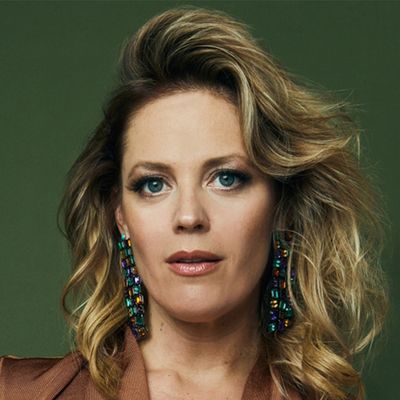
About
Composer and lyricist Adam Gwon and Broadway powerhouse Elizabeth Stanley join The Roundtable with Robert Bannon to celebrate the moving new musical All The World’s A Stage. From the inspiration behind the show to the emotional themes of identity, connection, and courage, this conversation explores how theatre reflects our world and helps audiences see themselves on stage. The musical follows a small-town teacher and a determined student navigating art, truth, and community in 1990s America — a story about being authentic in a complicated world.
We talk about the creative journey behind the score, the heart of the characters, and why this deeply personal story resonates now more than ever. With insight, humor, and passion for the craft, Adam and Elizabeth share what makes this musical so powerful — and why theatre continues to transform lives. A heartfelt and inspiring conversation about artistry, bravery, and why all the world truly is a stage.
Watch The Roundtable with Robert Bannon on BroadwayWorld, YouTube, Spotify, Apple, and all major platforms.
🌐 RobertBannon.com
📲 Follow on Instagram: @RobertMBannon
The best is yet to come.
#AdamGwon #ElizabethStanley #AllTheWorldsAStage #Broadway #MusicalTheatre #TheatrePodcast #TheRoundtableWithRobertBannon #BroadwayWorld #LGBTQTheatre #NewMusical
Transcript
This transcript was automatically generated and might contain errors.
[0:06] Robert Bannon: Welcome to the round table, everybody. Thank you so much for being here. My name is Robert Bannon. You're listening to Sub Broy World over here on the Broadway Podcast Network, iHeart at Spotify. I love original works. I love to see writers and actors and how their relationship works. And I love that no matter where you are in the entire world, you can be able to listen to this incredible project that is out and about and recorded, All The World’s A Stage. The original cast recording by Joy Machine Records is available. It came out in January. So where have you been? Where have you been, people? Why are you not streaming it? The writer, one of the Adam is one of the 50 writers to write and watch and read and listen in the whole world. Adam is here, and then Tony, now I'm a TV star, Broadway superstar. That's true, Elizabeth. Elizabeth Stanley: It is true.
[0:57] Robert Bannon: Welcome to the show.
[0:58] Elizabeth Stanley: Thank you.
[0:59] Elizabeth Stanley: Thanks for having us.
[1:00] Robert Bannon: Yeah. I'm so excited for you to be here. You know, Adam, I saw Skyle and PA.
[1:05] Adam Gwon: Oh, nice.
[1:06] Robert Bannon: And you're a nutty wack-a-doodle of a guy. You it comes out every now and then. You know. When did you start writing?
[1:18] Adam Gwon: I really started writing in earnest in college because I started in this crazy world of theater as an actor myself for a very brief moment. Well, I guess my childhood, if you count that as a brief moment, but I studied performance in college, and one of my teachers in college heard me play the piano and said, Oh, that's where your voice is. You should go forget this acting thing. Like go see what that's about. Um, and once I picked up the pieces of my shattered hopes and dreams as a 17-year-old aspiring actor, I realized that he was 100% correct. And so fell in love with songwriting. And by the time I finished school knew that that was the dream I wanted to chase.
[2:07] Robert Bannon: I love that besides All The World’s A Stage and Scotland PA, you know, Ordinary Days and a lot of the work that you have done has been performed and a lot of awards have been won. Um, joke all joking aside, prolific musical theater writer and composer and all of those things is Adam and then Elizabeth. Elizabeth, you know, I'm a little, I'm not trying to be an East Coast snob, but I'm from New Jersey. And sometimes we don't even remember that there are other states in the middle of this country because we're snotty. And Elizabeth, everybody, is from Iowa. And I don't, what introduction to theater? What made you get the bug being out there in Iowa? What were you doing? Because there's more to Iowa than what we think there is. Tell me, please.
[2:53] Elizabeth Stanley: Oh yeah, the Midwest is amazing. Um, there's actually a lot going on there, but there's also, um, I think like there is everywhere, honestly, like upstate New York, I feel like it's not that different than like, you know, rural America. Um, but I was like taking piano lessons and doing community theater and um taking voice lessons and dreaming about being in choir and um and listening to cassettes that I would check out from the library, like a double cassette of Aspects of Love, for example. Loved it. Um, and then, you know, and then I went to college in the Midwest too. I went to college in Indiana.
[3:42] Elizabeth Stanley: And, uh same, it was like going to the Borders Books and Music and looking for like obscure musicals that we could, you know, be the first to discover. Um, yeah, so you know, this is obviously like pre, the internet really being like a huge part of our lives. So it feels like it was more isolated in a way than it I think is now for people who live in the Midwest. Um, but I love it. I love the Midwest. I mean, I I've also come, you know, I really love the East Coast now, but you know, I talk all that garbage, but I'd moved to Detroit from my husband. So I get technically I'm now in the Midwest. And it's kind of cute and sweet, and I love it. And they're nice. People are nice. I just said that a little more nice here. He tells me to keep my Jersey inside.
[4:37] Robert Bannon: Keep it inside. So for you, Elizabeth, I went to I did community theater and took piano and voice lessons, and I never got a Broadway show, Elizabeth. What was you know that you made it like it was you just do some community theater and take a piano lesson and you could be in Crybaby, right? What was the moment that made you come to New York?
[4:57] Elizabeth Stanley: Well, originally I thought I was going to do classical music. Uh, because one thing that I will say I didn't have access to growing up, I didn't know hardly any professional artists. Um, but as we know, there are plenty of incredible artists who just don't make their living doing that. But so the only person I knew that was a professional artist was my high school voice teacher who had been an opera singer. And so I thought, okay, I can kind of copy the model that I saw that she did. And I loved classical music also. So that was like an easy um thing. So that's why I ended up at Indiana. But then when I was there, I was like, oh, these people are fun, like the theater people, the musical theater people, especially were like wild, and I love them. And I was like, I want to be with these people.
[5:50] Elizabeth Stanley: Um and then they were like, come to the dark side. And I also think I always loved musicals, but I felt like, well, I hadn't really studied dance, so like I just couldn't probably do them because I wouldn't be good enough. Um but then it was like the 90s and shows where you could just stand and sing were popular, so I felt empowered.
[6:17] Robert Bannon: See, that's such a good answer. I love that answer. Adam, for you, I think you're also an East Coast snob because I think you're from Boston.
[6:25] Adam Gwon: I was born in Boston and grew up most of my life in Baltimore. So anyway you look at it, I'm an East Coast, East Coast kid.
[6:33] Robert Bannon: So what for you was the moment when you realized then that you had the gift to write and that you wanted to? I know we talked a little bit about the beginning, but like was there a show, was there an inspiration, was there a moment where it clicked for you?
[6:45] Adam Gwon: You know, I similarly to Elizabeth, I started in classical music, like I was just playing piano, and unlike Elizabeth, my neighbor growing up in Baltimore was the organist for the Baltimore Symphony Orchestra. So I knew this like professional musician. He was my neighbor, and he was the one who gave me piano lessons. Um, so I was very much immersed in that world. And when I got to high school, I actually remember the moment where I realized that people wrote musicals, that that was a thing.
[7:29] Adam Gwon: And one of the shows we went to see was this musical called Das Barbecue, which wound up coming to New York. It was like the out of town tryout. Speaking of wack-a-doo musicals, Robert, it's a country western retelling of the Ring Cycle, the opera. Um, so it's like, and it's not a spoof. It's like a comedy, but it's like a straight up country western score. Like, here is the Ring Cycle with like giants and mermaids and like this crazy thing. Um, and like Carolie Carmelo was in like all these people who I had no idea who they were, because I was a preteen, like 13, 14.
[8:17] Adam Gwon: Um, anyway, the show played at Baltimore Center Stage, and we became obsessed with it. Like, we had never seen anything like it. We thought it was so cool. Um, the real, there are all these like incredible now like very famous Broadway actors in it. But the one actor who we sort of fawned over was the woman who did the voice for Barney the Dinosaur was in it, and we were like, oh my god, Barney the Dinosaur is in this musical. This is amazing. Um, but so we became obsessed with this musical, and because we were going to see it as part of the like education program, the student matinees, they would send us the scripts to look at in class.
[9:02] Adam Gwon: And I remember so clearly looking at the script, and the composer's name and contact information was on a cover page of the script. And I was like, wait a second. Someone wrote this musical. This thing that we're all obsessed with, someone wrote it. And I had this guy, his name is Scott Warinder. And I wrote him a letter because I had his address from the cover page of the script. And the letter was basically like, hang on a sec. You wrote a musical? Like, tell me everything about that? How did you, how do you write a musical? Um, and the letter got returned to me because I guess he had moved. Um, so I never got to connect with him actually. But it I think it planted the seed of like, wait a second, people write musicals. And then like Elizabeth, I kind of became a little bit obsessed and would go to the library and check out all the musical albums that I could find. But it was that musical Das Barbecue that was like the light bulb moment for me.
[9:58] Robert Bannon: Bring it back. We need to set the revival of Das Barbecue. And so what I think, Adam, and for sake of time, what I picture what happened to your career is in my head, you went to NYU, you were encouraged to be a writer, you got mentored by Lynn and Steven Aaron's and Flat. You were the inspiration for Ragtime, and then you're so little boy, that's me.
[10:24] Adam Gwon: I knew it.
[10:25] Robert Bannon: No, no, I'll uh and and I'll and Elizabeth, while we're while we're talking about you, you. You may have seen her do a lot of television, but Jagged Little Pill with the nomination. We talked a little bit about Crybaby, I loved Xanadu. I saw the tour, I saw Million Dollar Quartet, etc. All of the shows that you all have done and television work that you have done has been incredible. I'm a gay teacher, Adam, in right now in my classroom. Very a la, very a la, All The World’s A Stage. What's the idea? Tell us what the show is about. The album is streaming right now, it has an incredible cast. Tell us for people who've never heard it, what's the story?
[10:58] Adam Gwon: Yeah, so the story is inspired by some of my own teachers in high school. It's about a gay teacher at a small-town high school in the 90s, who is not out at school because it's like a kind of conservative kind of religious community that he's in.
[11:15] Elizabeth Stanley: Um, and he is approached by a kind of loner misfit student who wants him to coach her for the state desperate competition. And he agrees, but things in his carefully compartmentalized life start to fall to pieces, and uh, and he's gotta figure out how to put them all back together. So cute, it's so beautiful. The score is gorgeous, the story is important and more important than ever. So, Elizabeth, how did you get approached to be a part of the project? What'd you play? And tell us about what you sing.
[11:47] Elizabeth Stanley: Oh well, it feels sort of isn't it? Um, Adam and I had been both been invited to uh listen to a table reading of uh a script that a mutual friend of ours had written. Um, and we got seated next to each other, and it was the first time we ever met. Is that right, Adam?
[12:05] Adam Gwon: I think that's true.
[12:06] Elizabeth Stanley: Yeah, you're gonna be like, No, I met you 10 times before. Thanks for remembering. Um my worst fear. Um, but so I was able to see me like, oh my god, I'm quite, I'm such a fan. Um, and, you know, and then it happened that a little bit after that, I think they were assembling the cast, and um Adam reached out and said, Is this something that you'd be interested in? And I was like, Yes. Um, and I, you know, it just came at a really wonderful time um in my life. Like I I like don't even know if I really knew that I needed to be to be doing it as much as I did. Um, but it really reminded me of how much I love theater and how much I just love the kind of people that make theater. Um it it was like a rehearsal room really full of heart and love and kookiness and all the things.
Um but so I play the high school secretary who is very religious and like loves this new teacher who is awesome and amazing. Um, and then is very conflicted when she comes to learn that he's gay because it really challenges what she thinks that is and means and what it could mean for her, and um, you know, pushes her, I think to say what's possible for my heart.
[13:48] Robert Bannon: You know, I listened to the album, and um, and I'm not trying to take time from your interview, but what moved me about it, Adam and Elizabeth, you know, I have a husband who's a pastor's kid, uh who grew up and conflicted between the church and him who he was. I have students who have come out to me because they know or assume or Google schmoogle me or whatever, and find out about my husband or my sexuality. And I live in a weird area where you don't want to think there's anything wrong with it. And I don't want to not talk about my family and who I love, but I also know that it can be very controversial and get me into trouble, and people have all sorts of terrible stereotypes and thoughts about it.
But I want to show support to my students. It's a very awkward spot to live in because many people would say, that's my husband, these are my kids, that's my dog. And then I it's an elephant in the room. So for Adam, for you, how did you get in touch with that? Because it's funny and it's sweet and it's heartfelt and it's sad and it's it's emotional. So how did you how did you live in that space to be able to write this and and come up with this story?
[14:52] Adam Gwon: Yeah, I mean, it's it's all the things exactly what you just said. I'm so I'm so heartened to to hear that that it connected to you in that way. I was really, I was really thinking back to my own teachers in high school. And I was writing this around the time when this conversation about gay teachers is really in the news because those laws were being passed about, you know, what kinds of things exactly like like you're saying, teacher, gay teachers are allowed to bring into the classroom. And I just started thinking, first of all, oh my gosh, I bet some of my teachers in high school were gay, and I just didn't know it because no one talked about it and it wasn't really on anyone's radar at the time.
And then I started wondering, as as someone who who came out once I got to college, if I had known, like you said, that one of my teachers was gay, would it have how would that have changed my experience? Would it have made things easier? Would it have made things a little bit more complicated, maybe? Um, and so all of those thoughts were swirling around in my head as I was writing the story, and and I think what I discovered was even though I was imagining w how the story would have played out back when I was in high school in the late 90s, all of these questions and these concerns are reverberating today. Um, and and so it felt it felt like a worthy story to explore. It's as timely and as important as ever, especially with everything going on in the world.
We need to make sure that we know that all sorts of people teach kids and all sorts of people are teachers, and it's and and um and it's a really heartfelt touching story. I I can never forget the first kid who came out to me and told me about the story about his parents taking his pride flag out of his room and and all of the things that and and having to open up and share and how scared I was to be able to be open and sheer to him because I didn't want me to end up getting in trouble. It's it is a whole thing that we really don't talk enough about and I think understand what that's all about.
[16:53] Elizabeth Stanley: So Elizabeth, when you did this, who do you hope listens to this album? Who is you don't have to be gay and you don't have to be a school teacher, you don't have to be a crazy uh school secretary religious zealot either. I don't think that's Adam's uh audience, anyway. So what is religious zealot school teacher uh secretaries? Who do you hope listens to this? Who's it for?
[17:14] Elizabeth Stanley: I mean, it's for anyone who loves musicals, uh for sure. Um and I I for me, I hope that it there are two like sort of groups of people that I think, oh wow, it like people like yourself, I think who have like a personal connection to it. Um, because I love when I can see myself in things, it makes me feel less alone and um and also people that are like my character, people who um love someone and it's confusing how to love someone sometimes. Yeah, but it you can still love. And so I think like that, and then I guess I will also say um young people who are trying to figure out who they are, um that I hope it can give them some sort of you know peace and courage.
[18:17] Robert Bannon: Absolutely. I think anybody out here, if you love somebody, you can't hate them, and that that's the confliction of of what's going on and we gotta stop judging people both ways because they're trying to understand and we all need to take a moment. So Adam, for you, it's out, it's it's pressed, it's set, it's streaming wherever music is heard. What's it feel like when you meet people or people who haven't seen the production but hear it, they send you a DM, they email you, they go to your website, all the information by the way to follow them all in and to get information and where the record is is gonna be below us if you're listening to us or watching us right now. What what's it been like the feedback since the run? And you know, Matt's busy, so if you need me to step in and do another, you know, I used to.
[18:55] Adam Gwon: Oh, sure.
[18:55] Robert Bannon: You have the ex the lived experience, you know how to play the role. I'd love to be your new best friend. Let's go. Come on, Elizabeth. So Adam, what's it been like the reception you've heard from people now that it's been out available anywhere and everywhere? It's not just on a stage, but uh anyone could be listening to it.
[19:14] Adam Gwon: Yeah, no, it's been it's been amazing. And I think the thing that has really struck me with this show in a different way than than maybe other shows I've put out there is something sort of similar to you. It's something about the show in all kinds of ways seems to unlock something in people. And and people I've never met reach out and share their stories, whether it's about them growing up queer in a small town, whether it's a teacher that they had, whether they have family members who are religious or they themselves are religious. There's been something really amazing to get that kind of response because I I feel like I had to write the show in order to put myself out into the world and ask these questions in that way.
I needed that like intermediary of a musical to do that. And in return, people have just opened themselves up and and been so vulnerable with me about their own lives, and I just find that to be so moving, and I'm so grateful that people people feel that they're allowed to do that because that's that's why we put these things out in the world to connect with people like that.
[20:32] Robert Bannon: Well, it's gonna come right through piercing through your heart, and it's gonna uh definitely move you when you when you take a listen. So make sure you listen to it. The album was out, it's out right now, it's streaming wherever. Uh, you can hear Elizabeth, you can hear Matt, you can hear Eliza, you can hear John Mike. It's an incredible cast of people, incredible Adam's music. Joy Machine Records puts out all the world's a stage. The original cast recording is out. You've got a hundred minutes. Look, you gotta hunt when you're cleaning your house, you're eating dinner, you're taking a ride, you're at the gym on the treadmill, you've got a hundred minutes. This is something you could follow the story and listen to this beautiful music and story for those hundred minutes.
And I can't recommend it enough. I'm so excited to have been able to spend some time with you, Adam. And I'm such a fan of both of your work. It's such an honor and a pleasure to be with you. Thank you for spending time with us.
[21:12] Adam Gwon: Oh, thank you. That's really great. Thank you.
[21:14] Elizabeth Stanley: And I'm gonna send you my reel, Adam.
[21:17] Adam Gwon: I can't wait.
[21:20] Robert Bannon: Sing a little something amount of retirement.
[21:22] Adam Gwon: Absolutely.
[21:24] Robert Bannon: Thank you both. Have a great entire time. What do you teach?
[21:26] Elizabeth Stanley: What do you teach?
[21:27] Robert Bannon: I run the English department here at Detroit Lions Academy. And I do this after school. This is why it's 4:30 right now. And we're after school. And this is what I do. And we do 400 interviews a year after school.
[21:39] Elizabeth Stanley: Oh my gosh.
[21:40] Robert Bannon: After I change my babies. Because it keeps me entertained and fun, and I can't sit still. And it's cheaper than ADD medicine.
[21:46] Elizabeth Stanley: Yeah.
[21:48] Robert Bannon: So that's what we do. I love that. I'll be following and sharing, and we'll be staying up to all the things that are uh coming up next for you both. So thank you both so much for being here. Amazing.
[21:56] Adam Gwon: Thank you.
[22:00] Elizabeth Stanley: Thank you.
© Broadway Podcast Network, All Rights Reserved