

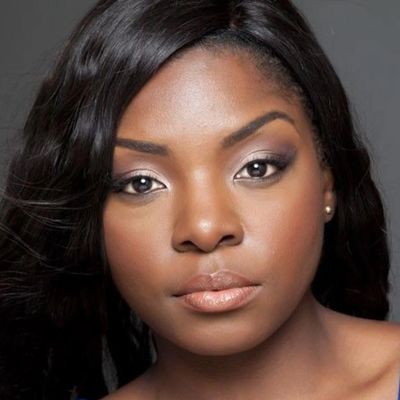
Look at us! We are a podcast! Welcome to Episode One of "The Roundtable" for the first time in podcast form! We have a special one for you today! Tony Winner Joaquina Kalukango is here!.. Read More
From the show: The Roundtable with Robert Bannon
Guests
Featured Shows
About
Look at us! We are a podcast! Welcome to Episode One of "The Roundtable" for the first time in podcast form!
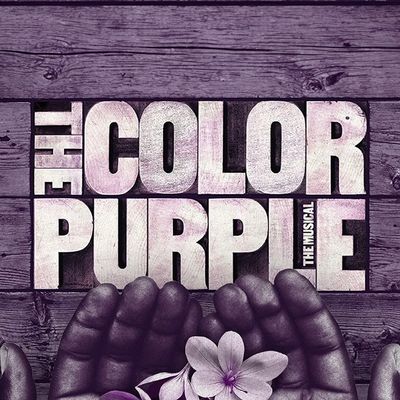
We have a special one for you today! Tony Winner Joaquina Kalukango is here! She blew us away with her performance of "Let It Burn" from Paradise Square, she made us feel with her "Virus" monologue in "Slave Play," she gave heart as Nettie in "The Color Purple," and so much more!
We catch up on all of that plus we talk her cabaret debut with a run at the prestigious Cafe Carlyle this September joined by friend to the show Michael Orland! PLUS: we talk her contribution to the upcoming cast album "Wild About You" coming soon from Broadway Records!
This is a special chat with a special voice! Do not miss it!
Grab tickets to Cafe Carlyle here:
https://www.exploretock.com/cafecarlyle
Follow Her on IG Today!
Stay up to date with Broadway Records- @BroadwayRecords
Tune in to find out only on “The Roundtable with Robert Bannon!”
Transcript
This transcript was automatically generated and might contain errors.
[0:10] Robert Bannon: Are you ready? It's the Round Table with me, Robert Bannon. I am so excited to be with you. I want to let you know what is the Round Table. Well, the Round Table is a show about art by artists. It is a place where we can sit and chat and have in-depth conversation about process, about our work, but about fun. We are about community and we are about sharing our point of view. A little bit about me. I'm an actor, I'm a singer, I'm an entertainer, I get to host the show with amazing people, but I'm also a fifth grade school teacher in New Jersey, and I try to bring what I would like the world, what I would like my students, and what I would like us all to gather around and give attention and give a place and give visibility and representation to all creatives out there.
I've been lucky enough to be doing this show since the pandemic. I've been doing it with some of the most famous people in the world, some people that are just doing great work, some people who are just trying to get the word out, award winners, to the regular guy down the street who's just trying to make ends meet. So I hope you join me every week when we put shows from our vault, brand new experiences. We are on red carpets, we do Broadway, we do television, we do movies, we do music, we do a little bit of everything. If you want more information about me, you can follow me on Instagram at Robert Bannon, B-A-N-N-O-N, or you can go to RobertBannon.com. Make sure you like and subscribe to our podcast, to our YouTube channel, and find us on all social media.
I was thinking about how we're gonna start off our first episode on the Broadway Podcast Network, which shout out to Alan Seales and the amazing team that is here. I love the Broadway Podcast Network. You guys do some of the greatest work, and I've been so envious of the guests and the material that you put out when I see you all on the red carpets, and now I get to be collaborators and co-creators with the amazing group here at the Broadway Podcast Network. I was thinking about it, and we had the opportunity to sit down with Tony winning superstar, Joaquina Kalukango. I was floored by her conversation. I'm so happy to be bringing it to you now. Yes, you know her as the star and Tony winner of Paradise Square, of The Color Purple, of Slave Play, of her debut in Godspell.
She was here to talk about all of that and her cabaret debut at Cafe Carlyle with Michael Orland, friend to our show on piano. I remember the first time I got to see our next guest, I was doing the worst production of The Music Man in Sharon, Connecticut with Annie McNamara, and she said that she was going to be in a new show off Broadway called Slave Play. I trickled myself down to New York Theater Workshop and was blown, blown away. And to see the rise of our next artist, I'm so proud and honored to be here with you.
[3:09] Joaquina Kalukango: Thank you. Thank you for having me. I have all the questions for you and your journey and process because it is such a beautiful, amazing journey from the outside. You're born in Georgia. Your parents are not from the United States. They came here, they were refugees, and you go to Juilliard and become a Tony winning actress. What a ride! What was the moment you realized that you had the bug, that you had the artist in you?
[3:36] Joaquina Kalukango: Um, I'd say it was getting into my performing arts high school, Tri-Cities High School. I had no idea that you could make a career out of this because I think I initially wanted to be a singer, but I didn't know the path necessarily towards that. And so a counselor in middle school told me I should audition for this performing arts high school. I was like, well, okay. I didn't know anything, so I found like a monologue off of online, not even from a play, and like sang the Star Spangled Banner to audition was like awful. But I got into this program and we did shows like Serafina and Raisin and Pearly, and like my mind was just completely blown. I was like, this is what I want to do. And that was at 14. And I read, I was reading some interviews that you have done in the past to be ready to chat with you. You didn't always consider yourself strong enough to be a singer. You were nervous to sing.
[4:32] Joaquina Kalukango: Absolutely, still to this day. But yes.
[4:44] Robert Bannon: And you come to New York and you did not feel ready to be a soloist singer. Do you know your voice is gorgeous, the most gorgeous voice?
[4:52] Joaquina Kalukango: Oh, that's so kind, but I'm telling you, there are people when you go to like school with singers and you see, you know what I mean, who've been singing flat footed since they were nine months. You're like, I don't know what this is. But it truly was, I think, a journey, I think, and in just trusting what I had to bring. I think I had to let go of this idea that I had to one sound a certain way or be a certain way. And it was really just shedding all of those concepts and trying to be my most authentic self, I think. And I found that that worked, you know.
[5:31] Robert Bannon: Well, can you remember what it was like to audition for Juilliard and what it was like when you found out you got in?
[5:36] Joaquina Kalukango: I do. I mean, it was a crazy process. I auditioned at what they called unified auditions in Chicago. So there were like a bunch of schools in this hotel. And my brother took me to Chicago and I went upstairs. It was negative 12 degrees. I will never forget it. And as a Georgia girl, an African girl, I was like, what is this? No. And I was downstairs for competition. And I was like 12 at the time. And then from there, they eliminated call your neighborhood to either come back at night for the audition for the second part of the audition and then make it past. So when I was up there, I went in that night, did my other, I think two monologues and that room song and just kind of talked to them. And then I heard that they wanted to invite me for their first annual callback audition, which was like a week long where they invited 40 kids from all of the kids that auditioned, 40 students to come in to have like a week long audition process.
But there was a huge blizzard, so like a lot of people got in late. I don't know what it is with the snow, but it's like it's been a part of my journey. And we auditioned that week, and there was just such a beautiful vibe. I think the thing that I felt the most was that Juilliard was looking for like an ensemble, essentially, a group of people who you work with for four years to get to create and try new things and be fearless with, and I was so honored that I got to be a part of group 40. That's my group, and I met some of my best friends to this day, so yeah, it was beautiful.
[7:23] Robert Bannon: I went to Juilliard for preparatory for high school classes and then I chickened out at 18. I was so scared because it is a commitment, and it is the place to be. And I was just telling you before that I teach high school students acting the song, and we spent our summer and they came in and when they had to show a moment that moved them that showed acting in song in musical theater. Multiple students brought in your Tony performance, and we watched it as a class to talk about connecting the two art forms, the love of acting and the love of music and putting them together is not as easy as people make it look. You have not shied away from heavy, serious material, and you're such a light, your personality is such a light, and then you get on stage and you show us the realest of real, the deepest of deeps, and the truth of truths.
How do you keep your health and sanity when you're doing eight shows a week like Slave Play or Paradise Square or The Color Purple or things that are very heavy, and then walk off stage and be able to shake it?
[8:30] Joaquina Kalukango: Oh, I mean, I think because I have a son, initially I think that helped me a lot. That child cares nothing about if you bled out your whole soul on the stage. It's like, are you gonna feed me? Are you gonna love me? Give me a hug. And those things I think keep everything in perspective. My family. I made sure, especially during Slave Play, like I got a group of girlfriends to do like a brunch on Sunday, and I was just like, I need to connect. Let's just eat and chat. And I think it's so important for us all to remember that like it's a play, you know what I mean? Like the whole point is to have fun, and sometimes we put a lot of pressure on ourselves to like, oh I have to connect, and then you get stuck in this rut, and it's so hard to then get out of it.
And so I would just advise everyone if you gotta get therapy, get therapy. If you need to do yoga before, do yoga before. You need to listen to gospel music, do gospel music, you need a shot after, take a shot after a king size Kit Kat, whatever you need to make it through. I think it's so important. Balance is always hard, but just trying to find it as much as you can. And we would literally dance to like Rihanna and Beyonce in between shows at Slave Play on stage as we were all warming up just to keep it light because it can be such a heavy space. So, as much as you can joke around, do it.
[10:01] Robert Bannon: Well, listen, if you ever need a partner to have a shot in a Kit Kat bar with, I'm ready. I'm in. You brought up Pearly. I found this deep diving in your career. This is your bio from Godspell, and it says the song you sang at your Godspell audition was "I Got Love" from Pearlie, and I found and your pop culture guilty pleasure was basketball. Why all of this from back in this time, do you remember what it was like when you made your Broadway debut in this production of the survival of Godspell?
[10:31] Joaquina Kalukango: Oh my god, can we talk about my horrible wig that like come on head shots on the hairline? No, Godspell, oh my god, it was such a for me. I'm terrified of like improv, truly. And that audition process was nothing but that. We had to like create fables, just randomly, like pick a fable and then create an improv with it. And as somebody who's like completely terrified, I do not know how I was able to understand why they put me in. I'm just gonna bank it off of "I Got Love" because I knew that and knew how to sing that. So that was good. But it was such a beautiful process. I mean, watching like the greats, watching Uzo, watching Morgan, watching Lindsay, watching everybody just be so free in their exploration, they were so light and loving.
I mean, watching play all these instruments and singing on trampolines, like it was insane what we got to do, and it was my first time having to understudy multiple people, which was also kind of terrifying to being like, oh wait, this is an outover, this is a run over. What is this? And I hats off to anyone and everyone who does it. I think you need to have that experience sometimes as an artist to just appreciate the work that it takes for everyone involved to put on these productions, but it was such a beautiful beginning. I mean, it was full of so much light and joy, and the music was gorgeous, the people were wonderful. I couldn't have asked for like a better debut, and then I met like Angela Bassett at the opening, and she just gave me like such a huge hug and inspiration and words of wisdom, knowing that I was an understudy, and I was just like, this can't get any better.
[12:24] Joaquina Kalukango: Guess what? It got it grew and grew and grew. We go back, we go to moments like this and The Color Purple. Woo! I have never been to a show where people just jump out of their seat in the middle of a show until I see shows with you in the, I mean like a moment, an electric moment on stage. To be able to be Nettie and then have that. That was an emotional roller coaster every single night as well with a powerhouse cast that you guys stormed to Broadway. What was it like to do this revival and be around this cast and to put this show up on its feet?
[13:04] Joaquina Kalukango: Oh, it was I don't know if I have the words. It literally was one of the most beautiful experiences ever because I think it taught a lot of us that we could just be. There were no bells and whistles, it was chairs essentially on a stage and wood, and we would have to act these parts and create these journeys, and there was something so freeing and beautiful about just being in the space and whatever time and moment and creating these characters together. And you watch someone like Cynthia Erivo, who we literally go like she's an alien, she's not real. I don't quite understand it, like her mastery of her craft, her discipline, her focus. Watching her, she taught me so much about how to lead, you know, how to be a leading lady, how to own your instrument and your craft and take care of yourself.
It was such a huge lesson, and I would just watch in the wings everything that she had to go through in that process from singing morning shows at you know 6 a.m. and then still doing this show and getting standing ovations at night and running a marathon and doing like all of these random things.
[14:20] Joaquina Kalukango: You know, it's like you can conquer. It was literally like you can put you can do anything you put your mind to. And that's the huge lesson that I learned, I think, from watching her. And I got to do this show with my best friend Danielle. We never could do shows at Juilliard together. So when we finally did, we were like, we're making her debut together on Broadway in the show, and it's The Color Purple. Like we would sing these songs in room 304 and 303 at Juilliard. And so to see it come full circle, I think was quite amazing. And then I was also pregnant with my son, so he was on stage with me. Broadway debut eight months, Broadway debut. I would always say that to him. He was like, Me and my mommy were on that stage.
Yes, we were. Well, I got the chance to go to a screening of The Color Purple movie. Speaking of Danielle Brooks, she—I'm not supposed to talk about it, but she better clear her schedule for every award show. The entire world is really about to know. I mean, something special. Talking about being able to lead before we talk about, you know, Wild About You and all of the music and all, etc. This moment, we were talking about this moment winning the Tony Award, Paradise Square, the song, but like the whole moment of that show. When we were talking about acting and music and putting it together. How when you watch everyone, if you haven't watched it, go find the video of the Tony Award performance.
The tears, the connection, the groundedness. You are, like I said, the definition. You are the picture next to a grounded, connected performance in that moment. How, without going into your personal process, how do you attack these songs? Do you look at them like monologues? Do you stay connected to a storyline? What is the magic? What is the trick besides what is naturally just you?
[16:26] Joaquina Kalukango: Oh goodness. This process was particularly interesting because we were all coming, of course, out of COVID. So for me, I hadn't been on the stage in I don't know how long, and I was so depressed at the time, like just super not connected to my body. So initially, the first thing I did was I called up my high school dance teacher, and I asked her, could I just take classes at your studio to just kind of get my body in shape? And she said, Of course, let's go in. So I'm taking ballet classes. I mean, and I'm out of shape, out of it, but I'm like, we're gonna prep and do this before we do this out-of-town tryout. Then I got my vocal coach, Joan Later, who is extraordinary, and I would not be here, would not be on that stage, would not have a Tony without her.
And this was the first time that I've literally had a personal vocal coach, and she changed my life. Made things a lot easier for me figuring out that I don't have to push as much, or just figuring out how much I can push, figuring out that not only is it about a warm-up, but a cool down after shows every time, and that was so important. And something I'd never done before. And in terms of the story, I mean, it was crystal clear what that moment was. And I think the hardest part for all of us, even in creating it, was like, how do we build to it? Because we know it has to come there, and everything we know what the draft did, we know what that riot happens at that end, we know that moment, so it's building all of the love, showing the community, connecting, having fun.
All of those moments were, I think, a part of the journey, so that by the time you get to there, you can really just fly because you love your community so much. You dance with these people, you have fun with these people. These are the people that you care for so much, and to have these same people come and try to destroy it is something in and of itself that's crazy. And I also felt like it was also one of those times where I've had a lot of out-of-body experiences, I'll say, with this show, and specifically singing that part. There were moments where I felt like there was more than just it in the show when you see it, like the entire cast is behind me, but it also felt like multiple, you know what I mean?
Like thousands of people are standing on that stage with you, the energy that you feel coming at you. It's something I don't know if it's in the chords or when it comes on, but it's like something locks where it's just like let's go. And you're on this ride, and then I'll speak to two, because I think it's also important when we talk about keeping yourself sane. A lot of people don't know when you especially during like Tony week, and you're in your—it almost feels like a campaign. You're doing galas, you're doing performances, meeting with people at dinners while also doing eight shows a week, and during specifically Tony Week, you're rehearsing for the Tony. So you're sick. I think I sang "Let It Burn" one week, maybe like 16, 17 times before that night.
And I'd sung it at 12 o'clock on a full recording and beat before we did the show that night. So for me, it was like when people see that clip, it was because I had nothing left. I think we were all like spent. We realized also too that at that time there was so much surrounding it. We had no publicity anywhere. So it was fully like meeting this moment with okay, if this is it, it's us, and let's just ride this. This is our community on this stage, and if nobody else loves this show, well, we're gonna give it to them, and we're gonna make it happen. And so I think for us, you felt all of that because it was all of that in it for all of us on that stage.
[20:33] Robert Bannon: Well, if I may say, it just seems from the outside perspective, you choose roles that are very timely, and there's a political message, there's a through line through that message. Paradise Square, opening after COVID, opening through the Black Lives Matter movement, and what was going on with Broadway and art in general, and now we're in a time we're back to artists fighting for rights if it's through SAG strike, if it's through the writers' guild strike, fighting for art, fighting for equality, and all of that. How important is it to be an activist and an artist and using your art to try to heal the world or make the world be seen through art? You've chosen some heavy, heavy important pieces of—I will never forget the monologue, the virus monologue at the end of Slave Play will stay with us forever. I mean, those are moments of art that will stay with us and help change the culture and climate. So, how do you marry the two?
[21:25] Joaquina Kalukango: I mean, I don't know if it's a conscious choice. I think I had no choice because my parents are political refugees. So for us, like our Super Bowl is politics. It is the time around the table to talk. And so much of my art is infused with it. I'm not necessarily one to put it out there, but in the ways that I can use it in my art. I think that's my way of expressing my activism for sure. And I have been blessed to really just come across these amazing pieces and artists that I don't know, it almost feels—I can't even say that I actively choose these things out because even Paradise Square was a gift that Moisés just recommended and said, I just want to offer you this role. And so for me, there's a beautiful synergy around my life that just keeps bringing these moments to me in such a beautiful way.
And I don't know if I necessarily have control over it, but it is amazing, I think, for me to pick when these shows come into my life and what they teach me as an artist and as a human being at that time because I learn so much from doing them too, which is beautiful.
[22:42] Robert Bannon: Well, the energy you put out, I hope it comes back to you a thousand percent because it has been such a journey and so beautiful to watch, and I'm so excited for all of the work that's to come. We could spend hours just looking at pictures and spending moments into the woods, and what a gorgeous production, and all of the work that you did. And then in your spare time, you decide to get into the recording booth and add a song to Wild About You. What this firstly, this lineup of artists that are on this sing. Okay, if you want to follow and get more information about when the album comes out at Wild About You Musical on Instagram, and it will be out on Broadway Records. What is the song? What made you be a part of this project?
[23:17] Joaquina Kalukango: Well, the song is called "What I'm Here to Find." And I just want to say this—the beautiful thing is that me and Shalina got to share a dressing room during Paradise Square. And so literally she had the piano set up in her room, and in between shows, before shows, she was creating this musical. I'm not joking. She would be warming up, writing these notes down, singing, going on stage, coming back. And so I got to literally watch this incredible woman create this show in her room. She's amazing, first of all. So when she hit me up to say can you sing a song on here, I was like yes, absolutely, are you kidding? I think she's an incredible voice that needs to be heard in this world. Her beauty as an artist, as a person, I think she has such a great message for the future of theater, and I hope that people really enjoy this album.
For me, this song, me and Shalina are both mothers and mothers of sons. And the character in this show kind of goes through this journey of revisiting past loves after she loses her memory, and then she comes to this realization that the greatest love of her life was her son. And so the fact that she chose me to sing this song, I was like, oh Shalina, are you kidding? It's such a beautiful, beautiful song and journey. And I can't wait for the world to hear it. If you want to find more information, like we said, go there. And Shalina, I mean, from Beautiful and Carol, all of the singing and playing, I mean, someone that could sit down and write a song like that and real—unreal.
[25:13] Robert Bannon: We are all excited. I already was saying that you were coming. I have people who watch every week who have been asking for us to talk to you to get to know you because your work inspires so many people. And I know that comes as a cost. You're a mom, you have a life outside of the stage, and you dedicate your life to being a voice to people who don't have a voice and a song to people who can't sing and a story to people who can’t tell it. And that comes with such a sacrifice, and you give so much of yourself. So I want to personally, and on behalf of all of the fans that live for what you do, thank you. Thank you for what you do. It makes such a difference, and we are living for what's next.
[25:54] Joaquina Kalukango: Thank you.
[25:55] Robert Bannon: We are so excited. If you want to follow, follow the follow, follow on Instagram, follow the what's next, the career and all of the fun things that are coming up because we know that you have tricks up your sleeve for sure.
[26:07] Joaquina Kalukango: I do. And if anyone is in New York, September 26th through the 30th, I will be doing my first debut concert at Cafe Carlyle from September 26th to the 30th. So please go get their tickets.
[26:22] Robert Bannon: Well, let me tell you about Cafe Carlyle, everybody. You want to get dressed up and have a—she's gonna be like three feet away from you, and you have a little poached salmon and a glass of champagne.
[26:35] Joaquina Kalukango: Oh, it is nice. I will see you there.
[26:39] Robert Bannon: Yes please! Oh, that is the most beautiful elegant room. It is a get a significant other and you want to impress them. Let's go get tickets. We will share all the links and everything will be right beneath this so you can grab your tickets and see you from the 26th to the 30th. Congratulations! How for 30 seconds—I stole you for enough time—how are you putting together a show? Have you enjoyed putting together an evening of cabaret, an evening of concert?
[26:39] Joaquina Kalukango: Oh, I've so enjoyed it. It's gonna be amazing. I get to fuse my love of country musical theater. I'll get to do some international songs that I'm excited about. It's just gonna be a mix of really good music, so I'm very excited.
[26:39] Robert Bannon: I'll see you there. You are such a pleasure, you're such a joy. Thank you again, and we look forward to everything, and we'll get our tickets, we'll stream the songs, and we'll be inspired. Thank you.
[26:39] Joaquina Kalukango: Thank you.
[26:39] Robert Bannon: Well, there you have it, episode one. This is what we're all about. This is The Roundtable. We have a lot of great guests coming up. We have opening night at Pay the Writer, which is playing at the Signature. We have David Archuleta, we have Jay Harrison G, we have the best of Broadway, music, film, TV, and everything you can imagine. If you'd like us to have a guest on and you want to recommend somebody, send it our way. We have plenty of shows coming up all of the time with two new shows a week, plus one from the vault, and we are excited to be a part of it all. We hope you join us. Make sure you like, comment, and share, and subscribe. Tell somebody about the Broadway Podcast Network. Tell somebody about The Roundtable and say hello to us on social media. Till next time, everybody, the best is yet to come. This is Robert Bannon saying good night. See you next time only at The Roundtable.
© Broadway Podcast Network, All Rights Reserved