

Playwright Max Wolf Friedlich’s critically-acclaimed psychological thriller JOB (New York Times Critics’ Pick) is back by popular demand, playing January 19–March 3, 2024 at the Connelly Theatre, following a sold-out, twice-extended and buzzed about run last fall at SoHo Playhouse... Read More
From the show: The Roundtable with Robert Bannon
Guests

Featured Shows
About
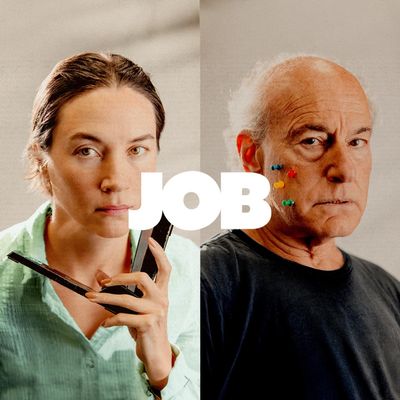
Playwright Max Wolf Friedlich’s critically-acclaimed psychological thriller JOB (New York Times Critics’ Pick) is back by popular demand, playing January 19–March 3, 2024 at the Connelly Theatre, following a sold-out, twice-extended and buzzed about run last fall at SoHo Playhouse. He is here with Director Michael Herwitz to talk about the ride and journey!
Imbued with Friedlich’s multifaceted intellect, JOB is “a slick, cleverly crafted drop-tower ride” (New York Magazine); and “filled with so many ideas that it seems to expand beyond the walls of the tiny SoHo Playhouse” (NYT).
In JOB, Jane (Sydney Lemmon) has come to crisis therapist Loyd’s (Peter Friedman) office in an attempt to be reinstated at her (unnamable, but you know the one) big tech job after a freakout that went viral and landed her on medical leave.
Friedlich’s searing portrayal of internet culture and generational divide are informed by his past life as a social media ghost writer. He voiced celebrities and influencers alike (see his fictional influencer, Lil Miquela, one of TIME’s 25 Most Influential People on the Internet, 2018), and shouldered the backlash of their actions.
Embraced by everyone from Gen Z-ers, to seasoned, devout theatre-goers, to tech bros, Friedlich’s work is cracking open audience demographics; “to find out exactly what hellish depths it plummets to, you have to see it” (New York Magazine). Listen and grab your tickets at www.JOBTHEPLAY.com!
_______________________________________________
LIKE. COMMENT. SUBSCRIBE!
Check out “The Roundtable with Robert Bannon” every Thursday 7pm EST/4pm PST PLUS: The Talk Series where artists share their art and their heart.
www.RobertBannon.com
Follow on IG @RobertMBannon or @theroundtablewithrobertbannon
Transcript
This transcript was automatically generated and might contain errors.
[0:10] Robert Bannon: Are you ready? It's the round table with me, Robert Bannon.
[0:15] Robert Bannon: Hey everyone, Robert Bannon here. Welcome to the round table. You're listening to us on the Broadway Podcast Network or you're watching us here on YouTube. It's an honor to be with you.
[0:23] Robert Bannon: We are calling this week Broadway Week Month. It's always Broadway time here on the roundtable. Well, off Broadway is where all the cool kids come to hang out. And let me tell you, my friends at Pressroom NYC, they say to me, Oh, you have to see this show.
[0:38] Robert Bannon: And what hooked me to see the show? Succession. Succession. Because you know, I love the guys from Succession. So when I saw that some of the cast from Succession was in the show, I was already there. Then you tell me it's about social media. You tell me it's about therapy. You tell me it's about losing your job. You tell me it's about living in this world and age and how everything you do can become viral.
[0:58] Robert Bannon: 80 minutes. Job the play is back for its third run. We have the writer, Max Wolf Friedlich, here. We have the director here. We're gonna do a deep dive into what was like to write this. He says he's not a playwright, but he has a show that's got a New York Times critics pick. So I think he's a playwright. I think I call him out on it.
[1:24] Robert Bannon: Take a look. So last year I headed on down to the Soho and I saw a show called Job. Because I'm like everybody else in the universe. I'm kind of obsessed with succession. So when I saw, I was like, yes, of course we have to go see the show. Then I sit down for this 80-minute roller coaster.
[1:42] Robert Bannon: I y'all, if you like a thriller, if you have issues with your job, if you have a therapist that you have on speed dial like me, if you have a love-hate relationship with social media, twice extended, New York Times critics pick back. You have until March 3rd to go to Connolly and go see this show. Max wrote this baby. Michael directed this. They are the team of Job and they are here.
[2:14] Robert Bannon: You are Robert. I am so excited to talk to you all because you are both fascinating. Your show is fascinating. And you your lives are fascinating.
[2:26] Max Wolf Friedlich: Wow.
[2:27] Robert Bannon: You say so.
[2:27] Max Wolf Friedlich: Very kind.
[2:29] Robert Bannon: Well, uh, the rumor on the street is that Michael, you know Max for a moment, that you guys know each other beyond this. How do you guys how did you guys know each other? And what made you all click that you were like, we can artistically work together?
[2:44] Michael Herwitz: You sure, yeah, I'll take it. Um I have known Max for a moment. I um, the first time I really heard Max's name is I went to LaGuardia High School, and um Max was a couple years above me, but sort of the way that sometimes New York City high school kids sort of know each other. That's sort of how we started to hear of each other.
[3:05] Michael Herwitz: But um, Max came to LaGuardia High School's acting showcase to cast his first play in New York, and he cast this guy named Jared Kemp off of his LaGuardia Showcase. So there were all these rumblings the next day, like Jared got cast in this new play, this new hot play off Broadway that Jared's gonna be in. The playwright came in, like picked him out of the crowd.
[3:24] Michael Herwitz: So that was sort of when it I was like, who is this guy who came to cast his play here? And then a couple years later, um, it was Max. Yeah, spoiler alert, it was Max Wolf Friedlich who cast Jared Kemp in a play called Sleepover. And um, and then a couple years later, uh, I had a theater company that had sort of been formed from sort of people from my LaGuardia High School class, and we started programming a new play reading series that happened every summer, and we programmed Max's play one year, and then we programmed Max's play the second year, and that second year he requested that I directed it.
[4:00] Michael Herwitz: And so uh we worked together for that first time that summer, um, alongside our dramaturg and producer Hannah Getz and the three of us. It was our first time, the three of us really meeting each other and and really going at it. And I remember very distinctly our first coffee date, which was at a Cafe Grumpy in Chelsea.
[4:15] Michael Herwitz: And uh, and ever since we've we've um we've just gotten to do a lot of we've gotten to build plays together, and what's been amazing about Job is that now other people get to see it too, which is awesome.
[4:27] Max Wolf Friedlich: Yeah, I know clearly identified as like a professional relationship because Michael has subsequently become one of my best friends and trusted confidants and just someone I love with my whole heart.
[4:40] Max Wolf Friedlich: But I'm like, oh right, we did actually kind of meet in a very straightforward, like professional but amateur, like DIY theater context.
[4:50] Robert Bannon: Well, that's what I love about the story. I I was gonna say, I mean, LaGuardia is nothing just you know, LaGuardia is a legendary school. You know, I still get students who want to talk about going to LaGuardia, etc. But you all do DIY theater kind of way, from what I understood reading about the play, you you had a little bit of an untraditional way to get this made.
[5:12] Robert Bannon: You don't consider yourself a playwright.
[5:14] Max Wolf Friedlich: Yes, that's true.
[5:16] Robert Bannon: You literally like crowdfunded, I'm gonna make this show myself. I don't need the four or five big giant muckety muck companies in New York City to tell me that I'm good enough to put a show on a stage. You really took a hands-on approach, you made your own.
[5:26] Max Wolf Friedlich: Yes. I think in yeah, in a sense, I mean, the trajectory of this play was um I developed it as part of uh the I am a theater company in LA's uh under 30 writers group of which I was an inaugural member. Um, and then it was just something I was you know kind of casually working on, and then um I got wind of this contest at SoHo Playhouse called the Lighthouse series, um, where 20 plays would compete um in quotes, but also literally for a shot at being a part of their international fringe Encore series.
[6:09] Max Wolf Friedlich: Um, and not even particularly looking forward to doing an immense amount of work for a shot at like one night of performance. I was like, well, you know, beggars can't be choosers, it's uh COVID. By COVID, I mean the uh coronavirus uh pandemic, which was a big thing a couple years ago in the theater community. I don't know if um and uh so we we put on this we put on this wonky like 15 minute excerpt of the play.
[6:40] Max Wolf Friedlich: We won both rounds of the competition, the powers that be at Soho read it in full and were like, hey, that we like this. Um if you can you know put a real team together and quote get real actors, um we'll give you five weeks. Um, so that was our task.
[7:00] Max Wolf Friedlich: And then yeah, from there, I want to be, I want to be clear just because I I think that um you know this sort of narrative stuff is important in theater. I wouldn't, I wouldn't necessarily term it crowdfunding. Um, no, I mean no, no friction, just in that, you know, we were um, you know, we tapped into we we ran it as a nonprofit production.
[7:24] Max Wolf Friedlich: So, you know, at time I got donations from friends of mine for $50 for like a you know, so we never really put out like a wide crowdfunding. We got uh, you know, a grant from a foundation, um, you know, there were family and friends. Um, I actually think the majority of the money kind of came from like friends of family. It was like, oh, like I'm not gonna do that, but like this person I know like might be interested.
[7:47] Max Wolf Friedlich: And then like a couple, you know, real theater investor people, Alex Levy, who ended up uh becoming a lead producer on our second round. He was our first donor, and he's you know a professional theater producer. So it was a weird, it was a weird mishmash.
[8:02] Max Wolf Friedlich: Um and yeah, sorry for that like little annoying connection, but um I don't know, like we I this was like a very weird uh mix of very DIY and also like just candidly like having access to fundraising networks.
[8:19] Michael Herwitz: Yes.
[8:30] Max Wolf Friedlich: Well go ahead, Michael, yes, please.
[8:34] Michael Herwitz: No, and and also just to say to much credit. SoHo Playhouse, like they did give us a slot, you know, in their calendar, and that allowed us to say, okay, we have there's a bar that's set. Now we're gonna rise to exceed it with everything that we possibly can.
[8:46] Max Wolf Friedlich: Yeah, and then put as much energy behind it.
[8:48] Michael Herwitz: Yeah. They they gave us a, we had a ticket split with them, so we didn't have to rent the space. They gave us, we got free rehearsal space on the on the on the thing. So it was, we sometimes narrativized the show as like we didn't have institutional support because it wasn't, you know, with a traditional nonprofit.
[9:05] Michael Herwitz: But the reality is like space is your hot, you know, biggest premium when you're doing theater in New York. So to not have to pay for rehearsals or to rent the theater was pretty was pretty huge for us.
[9:15] Robert Bannon: Substantial. Well, you're not there's no DIY or not. You are you guys are, you know, critics pick, New York Times, third, this is the third run of the show as a full production. You know, you're real actors, real actors in the real actors in the show.
[9:28] Robert Bannon: Um, you know, uh Sydney Lemmon and Peter Friedman are they are good.
[9:34] Robert Bannon: Oh my god, they yak their teeth out. Um and when you do the show, I so I I read the press release, I saw the show. You you're talking about without giving the story away, a crisis therapist with someone who was a tech worker who puts out a video goes viral and how it affects their life.
[9:53] Robert Bannon: Max, you have such a unique take on social media, your jobs in the past. If it's I didn't even know I know there's rapper ghostwriters, I know there are book ghostwriters. There's social media like viral go and why don't I have one? What what is what you you worked in this space?
[10:14] Max Wolf Friedlich: I did work in this space extensively. I will say I am uh several weeks out from being pretty profoundly unemployed. So if you are looking for a social media ghostwriter, uh I am I am available.
[10:26] Max Wolf Friedlich: Um Yeah, I mean it's a it's a weird I I sort of came to it through this startup that I accidentally started working for. And I say accidentally in that um I uh I was hired by a company and it was not disclosed to me as crazy as it sounds that it was a startup, particularly that it was a Sequoia Capital backed startup, Sequoia Capital.
[10:50] Max Wolf Friedlich: Uh for any of the theater listeners who aren't big venture capital fans, um uh was wrote like the first check at Amazon and like Nintendo. I only learned this after the fact. But I got hired by something called BRUD that I took to be like an art project because we were building like fictional influencers, and it was like a way to like make like a fake pop star.
[11:10] Max Wolf Friedlich: And I thought it was like kind of like the people were working there were very cool, and you know, it was founded by um like a musician and a D who was also like a DJ and a tech tech adjacent person, but um it ended up being building this thing called Lil Michaela.
[11:26] Max Wolf Friedlich: Um and so that was sort of my foray into like writing social media for people who weren't me. And uh I looked back at the NDAs recently to see how much I'm allowed to talk about uh and I can't really talk about any of the people, but I was doing like you know, Arizona Ice T's TikTok for a long time.
[11:46] Max Wolf Friedlich: So I I have some like weird firsthand uh experience of being on the internet in in very far-reaching ways.
[11:55] Robert Bannon: I it's it's fascinating. Just that framework is beyond fascinating. And and then you you have a and Michael, we're gonna get to your take on this world in a moment, but you you you wrote a show that very poignantly and pointedly talks about tech companies, social media, or you know, things being viral.
[12:18] Robert Bannon: I I wrote to the publicist of the show, and I was like, after you see the show, you're gonna make sure you watch your phone, watch where you post your videos. Well, you you you say that it's somewhere in the press release it was talks about the millennials versus the boomer generation.
[12:32] Robert Bannon: It's it's a different generation. It's like my mom trying to figure out TikTok, or and versus my students in my classroom who are like, This is my favorite TikTok or my favorite YouTuber. What is the what what do you hope the message of the show is? Is it is it a political statement? Is it open-ended that you make your own decision? What what do you think it is?
[12:51] Max Wolf Friedlich: Yeah, I never really care to moralize or or you know, I'm not really invested in anyone. There's like a Rick Rubin uh video circulating on Instagram and TikTok right now where he talks about how the audience comes last, um, which is um I think out of context sounds kind of callous, but but that is certainly like I think my approach um to playwriting is just like things that I want to say and want to express.
[13:20] Max Wolf Friedlich: And um, I think there's things in the play that like come from me that are like unexamined that um maybe when heard by another person or performed by an actor, like are examined for them. So I don't purport to have any answers or to have any um sort of moral uh righteous code.
[13:41] Max Wolf Friedlich: I have deeply held beliefs as a person, but um I don't really um I'm less interested creatively in like imposing those um on an audience, if that makes sense. And then I think the process of working with Hannah and Michael um is really one of being like, okay, like, well, can I get the three of us on board to understand something? And there's a lot of choices, I think, in the in the play. Um, I won't speak for Michael, but like directorially, where it feels like, hey, like if people don't get what like we're quote, like going for, like, that's cool. Like, we know what this is, like we feel like we can stand behind it. Um so I think that is sort of a unique I don't know how unique it is actually, but like it it is something central to our approach as as a trio, I would say, and in how we conceptualize things.
[14:28] Michael Herwitz: Now now uh Michael, you getting to sit with these actors and and and have a set and this one the set stays on the stage and these two actors are on stage and it's an 80 minute fast paced what what is your approach with them in terms of blocking and putting this baby on its feet. It it did is there very strict blocking are they working on impulses like what was it like in a nerdy actor way to get them to build this rhythm that they have on stage with each other.
[14:56] Michael Herwitz: Yeah yeah yeah yeah yeah um we started I mean we we spent the first week of rehearsal at at the table and and the play was changing a lot that first week it really felt like sort of another week of tablework slash like you know real new play development where we're sort of pulling its threads and trying to make sure that no knot is too loose to come fully undone. And um and then that second week I am sort of saying okay like get the set up and our music stage managers Rachel and Chris put sort of taped everything out and we had all this furniture in and we started and we all were like oh my god too soon too soon for this this is horrible like everyone was so confused. It was horrible. So then the second week we ripped everything apart and just put two chairs on stage with no no other furniture and sort of put the chairs really close together and it we felt like we were sort of just sort of did it kind of boxing ring style and it was sort of like follow every single impulse you have and and let's just try to figure out where what we called the footholds of the play were.
Where are the actual events happening? What's going on between the two of them? I think obviously, like we talk about the social media and sort of what the play is doing thematically in the world, but I think my job first and foremost is what's happening between the two people, you know, regardless of whatever intellectual idea is being discussed. How do I just make that their connection um never severs, you know, in those 80 minutes and that that always feels really taut and precise? Um, and that everything they're talking about is personal, not political. Um and so I think we sort of spent that second week just kind of like in a weird, furniture, uh weird taped room of an office, and then that third week slowly and surely sort of the yeah, the side table showed up, and then the lamps showed up and the plan started up, and sort of we start adding the real qualities of the room more and more and more.
And then I think by preview number four or five down at SoHo Playhouse, sort of the blocking kind of took official hold. But um, but still there are things that happen every night that that I've never seen before. Um, now in our second engagement and in a new set, and and um, you know, part of me always panics, and then part of me is always just fully, fully delighted. I think Peter and Sydney um they know this play better than anybody at this moment in time. They've done it for six weeks, now going on, you know, eight more than that, eight weeks and now going into their ninth and tenth uh over a five-month period. So I think my job is to really follow them and follow their impulse and help make sure that the play that we're building is supporting that what the two of them are doing.
[17:10] Robert Bannon: And while we're talking about it, get your tickets, go to jobtheplay.com so you can grab your tickets and see it because you only have till March and you need to get them, and you gotta get down there and see it because people are gonna talk. They're talking already. They're trying what's next. Now, when I um where's it going next? When I look at this, I think what you said, Michael, as an actor, I thought I was so fascinated by it because I think when I put my interview hat on, sometimes I'm looking at look at the big picture, look at this the view on social media, mental health, corporations. But in reality, Max, you wrote a story about two people and their their relationship. There, there are there are two people with a very specific story and a very specific relationship. Did you take these ideas from various people, various ideas? Did this all come to you in just a daydreaming kind of thought process? Where did where did these characters come from?
[18:01] Max Wolf Friedlich: I'll expound upon it a little bit. I feel like the short answer is like I would say I don't I don't know. I like try not to think about that too much because I I like started doing I started writing plays like when I was in like middle school and high school just as like a thing to like take my mind off of like homework and um it just always felt like really I feel like the biggest you know struggle I have as uh the play or as my you know as this becomes my career in in a full-time way is just how to sit down and do this thing that has always been like playful um you know in this really concentrated way um but I think you know I I think it really the characters as I see them I mean it's really hard to say it's not just Peter and Sydney.
They're nothing like those people but um you know alluding to what Michael said like they're they're so good that like when they have an instinct or an impulse are like why would I say that you're like totally you know like um and then it's sort of um I don't know it sort of sands the characters down until they're sort of a a a sharper a sharper point. I think like I there was definitely a seed of like you know my own experience with my my job and working in tech and um an interest in sort of a millennial Gen Z relationship with labor and how we conceptualize and moralize on on modern work. Um there's definitely like my unease with therapy is the in there in like a very tangible way. Um but I mean it's things like like when Sydney auditioned, she was like very different than how I pictured the character.
And I think we cast her both because she's a phenomenal actress, but also I was just like, yeah, I want to see that. I think like she's like more correct than I am. Like I I just like I think her opinion, her take on it is better than mine. And I think that is also the process of theater making is you know, it's having getting things very specific and then a process of relinquishing and just giving away as much as possible. So um, I feel in in the most beautiful, profound way, I feel like I don't have much authority on the characters anymore. I really think for now, like until the next people play them. I think like Peter and Sydney are are the experts. Um, and I'm just I feel like I'm like a weird circuitous backwards vessel.
[20:29] Robert Bannon: No, you gave them the words. You gave them the words and they and then and they put their own humanity into it. But you you gave them the words and this the setup, Michael. It's so it's so you it must be so unique as a director to be able to work with two people. They're you know, they're they're two people having a conversation and a relationship on stage. You really get to spend a lot of time, I'm sure, with with character and relationship. Sometimes when there's so many characters and so much going on, you do a lot of the internal work yourself, but you got to really sit with two people and really flesh this out.
[20:59] Michael Herwitz: Yeah, yeah. It was it was miraculous. I mean, they're they're extraordinary. I think I think that the daily challenge was just to sort of get on their level. They're two of the best actors in the world. I think, you know, Peter's an off-Broadway legend. Max and I grew up seeing all his work, and and Sydney, I think is is is, you know, anyone who doesn't know her, better watch out because they're gonna know her soon enough. Um, but no, I mean, I mean it was funny. It was it was uh I feel like usually in in um when you're directing like a big musical with 10 people or 20 people or 30 people, you you realize not everything you say is gonna resonate with everybody and you kind of make peace with that.
You're like, yeah, you're gonna sort of try to speak to the middle of the room. Some people will be on board, some people won't, but if you can get the middle, you're gonna be okay. Sort of like teaching. Um with only two of them, it's like if they don't like what I say, you really feel it. It's like I okay, I made no sense there. I'm gonna try that one again. Um and also learning the how to speak in their language, and like Sydney and Peter work very differently from each other, and so there are certain notes I give to both of them, and there's a lot of times where I pull them aside separately because they they um I need to sort of I they just come in through very they they have made this thing together, but they find their way in in a very different way.
And what's been a such so much fun about the second time putting it up is I really um know that about them now, and they also know how I work now. So the the vocabulary in the shorthand is just sort of unparalleled. Um and it's been really rewarding to get to return to that.
[22:18] Robert Bannon: I'm telling you, go check out the show. Max, I I think you're a playwright. Uh if you want to be or not, I I mean you're you are. Uh your show is up in New York City and it's been up and out. And um when people leave the show, it is is there something what do you what do people say to you when they see you both, or or they've come and see the show through the year? What what strikes them? What seems to resonate with them the most?
[22:48] Max Wolf Friedlich: I think the most common one is there's a big without getting into any spoilers, there's a big question of like whose side are you on, sort of at the end. Um I've parroted this before in front of him, but I'm gonna steal something that Michael said that I thought was really profound that has changed my thinking of the play. Um, which is that in the end, it doesn't really matter who's right or wrong. It's a play about two people who, like, despite all the external circumstances, the big question at the end is like, will these people choose to need each other? Um, which feels like a very exciting modern question. That if if um what does it mean and look like to really put down all of the extenuating circumstances and just choose choose to care for one another and and um in in this not pie in the sky way, but in this way that actually involves the work of being like, you know, I either accept or I'm willing to ignore this thing about you because you know, I need you.
And um uh yeah, the sort of terror. I think the through line with both of those things is sort of the terror of being connected to other people, which is something I I think about a lot. Like how scary and beautiful and amazing it is to be connected to other human beings and to need other people. Um so if people aren't like chattering about, you know, the sort of question, I mean, not to give us, I don't know. I was gonna say not to toot our own horns, but people people generally are like there is a first wave of people being like, I'm freaked out, and then I think more nuanced questions hopefully emerge.
[24:36] Robert Bannon: Oh, I I I it's gonna stay with you. The show's gonna stick with or stick around. It is as timely and as relevant as ever. Look, Michael is not going anywhere because he's he's watch watch his career. He's gonna be directing all over. And Max, after this, I know aside from all of your ghostwriting for social media stars, your you your work and what what happens to this show and the other shows and the other things you work on. Um, we're we're here and we're rooting for it because this wasn't a breath of fresh air. This is this is a beautiful theater you all are making out here. Thank you. That's really kind of you. That's really wonderful.
[25:13] Robert Bannon: We need you to go get your tickets. You have till you'll have till March 3rd. Jobtheplay.com. I should have memorized that because it's my father's birthday. Maybe I have to take him to see the show. We'd love to have dad, jobtheplay.com. You gotta get your tickets. You grab your tickets now. Make sure you follow them on social media. If you love social media, however, you feel about social media. We'll find out who writes Max's social media, and we will we will be uh we'll be following and looking forward to all the art and the uh and the work to come. Thank you so much for being here.
[25:44] Max Wolf Friedlich: Thank you.
[25:44] Michael Herwitz: Thank you for having us.
[25:45] Robert Bannon: Thanks a lot, Robert. There you go. Watch those viral videos, y'all. They stay on the internet forever. Forever, and then they come for you, and then they cancel you. Look at all the people that have been canceled. Maybe they deserve to be canceled, maybe not. That's not why I don't hear to debate. I'm here just to give you the facts and the information and just highlight the artist. We loved having them here. That was a great chat, and it gave me a lot to think about. You have 80 minutes, you want to pay a price that's not a Broadway ticket, you want a fun evening, you want an evening that's deep, y'all. People, people. Head on down, see job. Let's play right now, jobtheplay.com. If you want to see more about me, go to Robert Bannon.com, follow me at Robert M. Bannon on Instagram or The Roundtable at Robert M. Bannon.
I think it's the round table with Robert Bannon. Yeah, you know. And uh you could always listen to us on the Broadway Podcast Network wherever you listen to your podcast, from Spotify, Apple to Google to wherever. And then find us on YouTube. Follow, click, subscribe, share, whatever the young kids say. It's good to see you. Thank you for being here. Or good to hear you, or good for you to hear me. Until next time, the best is yet to come. Bye, everybody!
© Broadway Podcast Network, All Rights Reserved