

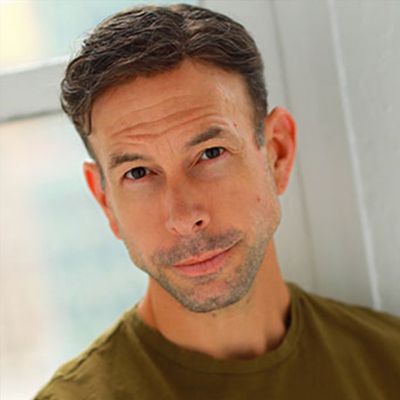
Wade McCollum is red lighting on Broadway playing "Wade" in "Water For Elephants" now at the Imperial! Did you know Wade, who made his Broadway Debut in "Wicked" also studies neuroscience? Insane right!? He tells us why art and being an artist goes along with science... Read More
From the show: The Roundtable with Robert Bannon
Guests
Featured Shows
About
Wade McCollum is red lighting on Broadway playing "Wade" in "Water For Elephants" now at the Imperial! Did you know Wade, who made his Broadway Debut in "Wicked" also studies neuroscience? Insane right!? He tells us why art and being an artist goes along with science. Plus he talks what it has been like to put this Big Top Circus Act Musical on Broadway! Step Right UP!
______________________________________________________________________________
Check out “The Roundtable with Robert Bannon” everyday right here on The Broadway Podcast Network!
www.RobertBannon.com
Follow on IG @RobertMBannon or @theroundtablewithrobertbannon
Transcript
This transcript was automatically generated and might contain errors.
[0:12] Robert Bannon: Are you ready? It's the round table with me, Robert Bannon.
[0:17] Robert Bannon: Well, hey everybody, my name is Robert Bannon. You're here for another edition of the round table. You know, I was trying to take a week off. I was trying to take spring break off, but you know, when it's Broadway spring season and all the big hot shows are coming out, and we've been lucky enough to do hundreds of episodes of the show and speaking to hundreds of people with over one million views on YouTube and now a part of Broadway World and the Broadway Podcast Network, which is what you're listening to or watching right now. I can't take a week off because I'm so excited. I'm just excited to talk to amazing artists and workers and people who sing and create and make things and do things. So thank you for being here.
[0:54] Robert Bannon: Um, Water for Elephants is playing right now. We have Rick Ellis on the Broadway World exclusive. You hear my dog in the background, he's excited as well. He's in trouble because he's eating yogurt. Yes, welcome to this messy show. Well, yogurt and all, Rick Ellis is on Broadway World. Wade McCollum stopped by to talk about all things Water for Elephants. Take a peek.
[1:22] Robert Bannon: Well, you may have seen our guest right now up with Water for Elephants playing right now at the Imperial. We just chatted with him on the red carpet. You may have seen him in Wicked. You might have seen him in California, across this country in national tours. He's the guy. Did you know that Wade goes to school to be, I think he's like a neuroscientist, which makes him way too smart to be on this messy trashy show. Wade, welcome to the show.
[1:48] Wade McCollum: Thank you, Robert.
[1:50] Wade McCollum: I love messy trashy.
[1:51] Robert Bannon: Yes, we love messy trash. Well, then you're in the right place for us. You really are in school for neuroscience.
[2:03] Wade McCollum: Yes, I'm having the time of my life. I'm studying how stories, how we've co-evolved with stories neurobiologically and how we metabolize stories from a brain perspective. I also opened a medical music company that works with music and the brain to help alleviate anxiety and other use cases.
[2:20] Robert Bannon: Oh, I need all of that. I need all the help I can get. Wait, what made you seriously, what made you get involved in this? What was the moment that you said this is what I need to also study and learn?
[2:36] Wade McCollum: You know, over the pandemic, um, was the only break I've ever had from the hustle of acting. Um, and as we all know, the acting business, you know, you're always sort of looking for the next job. While you're in the show, you're sort of looking for the next thing, perhaps. And it was the first time where that had been paused and indefinitely. And I'd always had a desire to go back to school. I didn't actually graduate high school. I just went to a performing arts conservatory as a teenager and just kind of hustled as an actor for 30 years. And I had this dream of sort of like, what if I was an academic? And it was my opportunity to pursue that. So I started and opened these companies through Cornell Tech, and it's been a real amazing adventure.
[3:21] Robert Bannon: Well, you have a fascinating story because reading some research about you and looking about you, and you could of course, while we're here, we're gonna talk about Water for Elephants, but follow Wade on IG. If you're listening to us, it's his name. Go follow him on Instagram. And you can also go to his website, WadeSong.com, which has some information. You have been in this game, you've been touring, you've been across this country doing shows, national tours. The pictures of you and Priscilla are, I love it. Come on, Priscilla. And then yeah, let's go. I'm here for it. And then you get to be on Broadway in the biggest monster of all, which is Wicked, and be the wizard and get to live your life in that.
And when you add to it what you've, what I've read articles about that you've done like on Huffington Post and different platforms that people have talked to you about your view of the world and what, because this is such a unique, you have such a unique, this is amazing. The science and the art and how it all fits together.
[4:22] Wade McCollum: Because art, uh in my little humble trashy opinion, as we said, um, is what makes it gives us so much peace and it gives us so much joy and music and art, it's universal. No matter where you sit in a political aisle, no matter what religion you are, no matter where you grew up in, you hear music, you hear storytelling, you watch television, and it transcends all of that to make us feel a certain way. What do you think the definition of an artist is?
[4:48] Wade McCollum: Oh wow, that's that's a big question. I honestly think everybody is an artist. I think we are all by human nature. I think perhaps one of the defining features of the human organism is creativity and art and collaboration. I think it is our superpower as a species. And really out of the box creativity. So I think inherently we're all sort of born with that artistic impulse. And then how that gets sort of, you know, channeled and shaped, either encouraged or not throughout one's lifetime is sort of, you know, every individual has their own experience. But I think we're all artists. I don't know if the definition is just being human, is that we're just, you know, we make meaning out of the universe of chaos. And I think really an artist is a meaning maker.
[5:44] Wade McCollum: Um, so I think that humans by nature tend to superimpose or interpret meaning out of what essentially is just a bunch of spinning subatomic particles.
[5:55] Robert Bannon: That's and here we are, and that's it, exactly right, which is terrifying, which is why I need the music therapy because I'm needing to take more my options. So when you got Water for Elephants, which is I just sat down and we I talked for a long time with Rick Ellison and it's coming out a chat with him about how this story, what this story means. And he talked about him and his partner, his husband, Roger Reese, and how at the end of the show there's lines in the show that relate to him personally that he put into this about relationships and Water for Elephants amongst the spectacle and the circus and the music and the fun. It's really a story about looking back on life and love. What is it like to tell this story and this arc every single night, eight shows a week?
[6:44] Wade McCollum: Oh, it's such a gift. It's such a gift. You know, Arya, one um on opening, he came up on stage with everybody at the curtain call. So they were sort of much closer than normal in the wings, waiting near the end of the show. And quite a few of us, I know I personally, I just weep at the end of the show every single night because of what Rick has infused the show with, which is that such a deeply human feeling of grief and gratitude, and the sort of how we can hold both at the same time. And to love fiercely, knowing that it has an expiration date, that you know, that there is an inevitable end to all things good and bad, and that impermanence is such a hard thing to articulate in the human experience. Theater is so good at it, and Rick as a writer is so specifically good at it. Arya came on stage and said, You guys get to cry like that every night. Oh my god, how cathartic.
[7:50] Wade McCollum: Truly. I and so is the audience. The audience gets to see the spectacle and gets to see you all as a huge cast, a huge company with so many Broadway debuts, so many people that are brand new to this world doing amazing things, and then get hit with that heartwarming part of the show as well. Look at this beautiful group of some of the people that are part of the show. And this cast is quite um, the talents run from television to film to Broadway to Broadway debuts to circus performers and acrobatics. How do you describe the camaraderie between the you have to be close as a company because there's a lot going on every single night on that stage?
[8:36] Wade McCollum: You know, when you're quite literally catching each other, um it elicits a sort of um a palpable crackling trust. It's a different kind of trust than just sort of the emotional trust that actors go through, um, taking emotional risks or you know, singing high notes. This is uh quite literally each other's lives in their hands, and so yes, us as a company, we have to hold this really safe container. And acrobatics is necessarily wily, it's got this wild, feral um, who knows what's gonna happen. Of course, it is rigorously rehearsed and extremely ordered, and at the same time, because you're flying through the air and gravity does what it does. Um, there is a little further over this way or a little further over that way. So we all have to have sort of uncanny spidey senses out and really be both flexible and you know, hold to the pattern at the same time, and that allows for us to feel a sense of trust. And I think the audience feels that too.
[9:39] Robert Bannon: I think they do too. And if you're coming to see the show, but you can get your tickets, everybody needs to go get your tickets Water for Elephants to the musical.com. You can grab your tickets, get a go sit in the orchestra, like house right, stage left in the front. They'll be flying right over your head. I mean, you'll be a part of the show. So that's my tip. That's my audience member tip. Um, did you have a relationship with this before? Did you read the book? Did you watch the movie? How did you prepare for Wade? Or did you just show up and find your own way into him?
[10:10] Wade McCollum: Yeah, I think I had just gone back from the My Fair Lady tour. I had not read the book, I had not seen the movie. I'd heard about the book because it was so wildly popular. Um, and yeah, it I had a it strangely, I had an odd TV audition that like a few days prior, and the TV character's name was Wade.
[10:32] Wade McCollum: And I thought, Well, that's weird. I've never auditioned for a character named Wade before, and it's sort of a rare name. And then not three days later, this Wade came over the you know, the submission, the desk, and I thought, wow, that's weird. And so my first interface with the material was that audition, and I fell in love. It's it and now you get to now Wade joked with you. I've joked about it on social media, I joke with you on the red carpet. I said, You don't want to see Wade coming to you in the middle of the night, you want to get red-lighted on the train. You're you told me you're not a bad Wade is not a bad person, he's not a he's a hurt person, he's he's a he's a wounded person, and as an actor, is that fun to play? Is it is it exhausting to play? Is it invigorate? How do you feel about living in that space every night?
[11:28] Wade McCollum: Hmm. It sort of feels like that the complexity of PTSD of a broken human who is working to do the best they can with the tools they have. Um, a lot of times I I say I blame poverty for a lot of the tragic events of the play. If these these people, especially Wade had had the privilege of or just a good meal more than once a week, um, and some nurturing, it's perhaps possible that some of the more tragic events of the play wouldn't unfold. However, I also hold that because of Wade's choices, um, some more of the destructive choices that he makes throughout the play, those choices do allow Marlena and Jacob to live the rest of their lives together. So there is sort of this destruction before creation element that's being held, and so when I'm going through the sort of more shadowy, dark, tar-like emotions that feel sticky and horrible, I try to remember that there is the beauty, the light is that they spend 50% that Wade provides through sort of these radical acts of destruction.
So it's sort of that human experience again of both and a sort of complex things simultaneously existing. That's why they have a neuroscience this play the part. That's why there was a method to this madness. I know there was.
[13:06] Wade McCollum: If you're looking at Wade and you have seen him before, if you besides Broadway and My Fair Lady and Priscilla and all of those things, and like acting, acting, Wade, like Shakespeare. Like, not that I'm saying musical theater is not acting, acting. I'm saying like Shakespeare, though, Shakespeare. Is you've also done a lot of television work. If it's Madame Secretary or Law and Order or you know, Project Prodigal Son and all of these shows that you have done. What do you um enjoy? Like, how did how do they both compare to one another? Ask a lot of actors like it's such a different medium.
[13:41] Wade McCollum: So I love camera acting. I find it terrifying, which is very exciting. Um, because there's no hiding. And I I find that really um really invigorating as an actor. There's nowhere to turn. The camera will find you and it will, you know, read your mind in a way. So I find that really exciting in terms of you know, the work you can do is so much uh deeper and subtler at the same time, and and there's less concern with sort of reaching the back row with choices, you know. Wade in Water for Elephants is rather a subtle character in terms of the characters on stage who he's not really a performer in the circus, he's not at all. He's behind the scenes. Curate choices that I think can translate to the back row so that people back there can still understand what he's going through and it's not just happening in my eyes.
Um, whereas on camera, you don't have to have that concern. Your choices can be much more psychological, which is really fun. And there's a spontaneity to camera work where I think you know, a good director in TV and film is looking for happy accidents. You're really looking for the actor to be making discoveries and perhaps accidents and keeping those, you know, curated accidents in a good way.
[15:09] Wade McCollum: Well, when you get those credits like Law and Order, when you get those quintessential procedural New York City shows as a musical theater act, that's the problem with musical theater actors. You you get sides, you go home to self-teacher, your team sends you a sides for law and order. And if you bring that musical theater, it's such a different technique. It's just such a so for people to be able to do both, I find it always so fascinating to put the hat on as the television, you know, camera actor versus the musical theater Broadway. It's such a different medium. Truth. Is it something you learned? Is it something you did with training? Like how important was training? You said you went to an acting conservatory in high school. How important was the training even to this day in your career?
[15:54] Wade McCollum: I mean, vital. That that uh PCPA was Pacific Conservatory of the Performing Arts, and that program really is sort of a trade, like a work trade program. They teach you how to be a professional actor in all the way, you know, how to show up on time, how to get the job, how to keep the job, how to do the job well. It's sort of blue collar in a way, and I I really loved that about it, that it was really about and not getting caught in sort of the more esoteric or you know political aspects of the business. And so I found my favorite thing was like mopping, like mopping the stage and taking care of the space. I just found that to be such a sacred thing that I don't really get to do very much anymore because of unions and um other people who are hired to do those jobs.
But um, it was a great thing, and they didn't do any camera acting. There was uh it was the 90s, and uh so very few people had little cameras to even practice. So, you know, if you got an on-camera course, it was you know, there was a lot of technical setup involved. Um I've just learned by doing, and I find that, you know, even with neuroscience, a lot of it is about mentorship and it's about doing it. And through the course of sort of investigating and following curiosities, you sort of gather tools that are necessary for your process to understand how to deliver good work in whatever sort of channel or vertical you're working in.
[17:29] Robert Bannon: Oh, that's a that was that's a beautiful answer. I I I like that I like that answer a lot. When you are when people come to Water for Elephants and you're at the stage door, or people see you after the show, wherever, or you get messages on social media, etc. What what of what what do you hope that the people that you meet with or see or are in those thousand plus seats every single night walk away with at 10 30 at night when the show's over or on a on a s on a Wednesday afternoon?
[17:57] Wade McCollum: I think inspiration is is you know sort of the umbrella to feel inspired, maybe to take more risks and to trust one another to to find a community of trust. Um, and then I think also being alive is so hard so much of the time, I really do hope that people take away that some of the more suffering aspects of what we go through can lead to really beautiful things too, and that it's not that you know we should seek out suffering or pain, but in those moments of suffering and pain, know that there is treasure to behold, and that you know we're all going through it together. It's a it's a burden to be in a body, and that um and that if we can hold each other with compassion and love, that perhaps on the other side of those, you know, hard times, maybe there's a soulmate, maybe there's you know the fruition of a lifelong dream.
[18:59] Robert Bannon: Wade, if I would have known you 15 years ago, I could have saved all this money on my therapy, and you horizon blue cross blue shield would have been so happy because that's beautiful. You are an artist, you are a songwriter too.
[19:15] Wade McCollum: Yeah.
[19:16] Robert Bannon: And and look, he's got albums. Look at his music. Oh, and he said baby. Maybe, but it's available to stream. You could stream your music and hear some more of your heart that makes art and and you could listen to it. Is that another outlet for you? Is that is it something that you still work on?
[19:33] Wade McCollum: Yeah. You know, I grew up on the road in a rock and roll band. So my dad's a drummer. So sort of picking up instruments and making shit up is just sort of like par for the course. And so yeah, I wrote, I just kind of always write music. And so I've written a few musicals and I I love the medium of musical theater, you know, sort of the putting together of all the pieces. And oh, so we need to everyone stay up to date, follow Wade, say see what's going on. And look, you've now you've met go to his website, Wade Song.com, then you can find the music. Get your tickets, water for elephants the musical.com. And when you're walking through Times Square and you happen to see Wade at night after the show, don't he's not gonna throw you off a train. He's not gonna not scary. Look how nice he is. But he's all scary for two and a half hours every night in the Imperial.
[20:19] Robert Bannon: You're whoo! Um I'm uh I'm I'm very uh touched by your your answers, your story and the fact that you know we can have it all. You can be a scientist, you can be a musical theater performer, you could write music, you can be on TV. You we can have a little we don't have to always be in a box, and that's what I'm so moved by. Your story.
[20:37] Wade McCollum: Thank you.
[20:40] Robert Bannon: Thank you. Go check out Wade, go see this amazing cast. This cast is bananas talented up on stage every single night and uh have an amazing run. Congratulations on everything.
[20:50] Wade McCollum: Thank you, Robert. This has been so much fun.
© Broadway Podcast Network, All Rights Reserved