

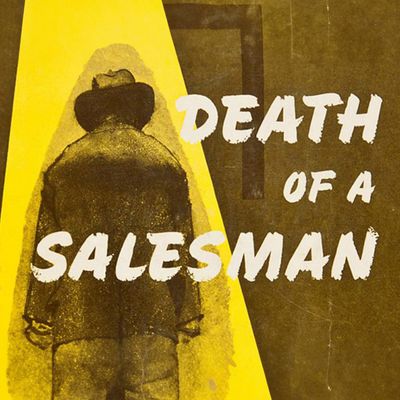
A TOUR DE FORCE FOR SURE! McKinley Belcher III was here last year! He was in the midst of killing it on the boards over at "Death of A Salesman" as Happy! Did you see it? Well if you saw it, you knew he was going to be a big star and guess what? He is!.. Read More
From the show: The Roundtable with Robert Bannon
Featured Shows
About
A TOUR DE FORCE FOR SURE! McKinley Belcher III was here last year! He was in the midst of killing it on the boards over at "Death of A Salesman" as Happy! Did you see it? Well if you saw it, you knew he was going to be a big star and guess what? He is! He received raves for "Eric" on Netflix. I told him, we would say we knew him when!
Plus he talks about his other TV, Film career including Ozark, The Passage, Mercy Street, and more! This is a must listen chat!
All this and more only on "The Roundtable with Robert Bannon!"
________________________________________________________
Check out “The Roundtable with Robert Bannon” everyday right here on The Broadway Podcast Network!
www.RobertBannon.com or Follow on IG @RobertMBannon or @theroundtablewithrobertbannon
Transcript
This transcript was automatically generated and might contain errors.
[0:10] Robert Bannon: Are you ready? It's the Roundtable with me, Robert Bannon. All right. So if you've been watching us every single week, you know that I've been raving, raving about Death of a Salesman. We had Wendell, we had Delaney, and I'm so excited to have McKinley here. McKinley Belcher the Third has been on stage and on television screens. He broke my heart in this show. McKinley, you broke my heart. It's so good. You need to you need to get down to see Death of a Salesman at the Hudson Theater. McKinley Belcher the Third is here. Welcome.
[0:38] McKinley Belcher III: Thank you.
[0:40] Robert Bannon: You do, you can't. I'll take that instruction any day. Um I went, I saw, and I loved it. I remember reading it in acting school. And I talk, we talked to Delaney and we talked to Wendell here on this show. And I went and saw two weeks ago, and it just you're the performances you all give are mind-blowing.
[1:02] McKinley Belcher III: Thank you.
[1:03] Robert Bannon: I'm exhausted for you. Especially on two show days. Can't even imagine. Well, before we get into it all, if you want to get your tickets to see it, make sure you go to salesman on broadway.com. It's playing right now at the Hudson Theater. So you're you're from Atlanta.
[1:20] McKinley Belcher III: I am.
[1:21] Robert Bannon: You're from Atlanta, and this is what I found most fascinating reading about you and your career. What I found most fascinating about you and your career is that you're like I always call my stuff unfinished business because I came back to this nonsense later. You didn't go to originally go to college for acting.
[1:38] McKinley Belcher III: I didn't. I uh for the longest time I had always said I was gonna be an attorney. So um I studied political science and communication studies. So when I told my parents that I was gonna be an actor, they were like, huh? Where'd that come from? I I used to always say I was a political science major, and if you if you want to be an actor, besides going to acting school, being a politician is the second best. Um, and then at 33 with two master's degrees and teaching fifth grade, I went back to acting school. My parents were like, what is wrong with you? But and then from there, look at this journey. Look at the credits and the work on television and stage, and now this um, what a ride.
[2:21] McKinley Belcher III: Yeah, I felt very blessed.
[2:23] Robert Bannon: Well, I want to go back. If we go back, a lot of the people that you're on stage with in this show, you have worked with before.
[2:31] McKinley Belcher III: I have, yeah.
[2:32] Robert Bannon: So I the first thing that I remember um hearing Rachel Chafkin, who has been here with us too as well as brilliant. Um, the Royale, which played in Lincoln Center. This the what and how was this connected somehow to the cast of Death of a Salesman, if you don't mind?
[2:47] McKinley Belcher III: Yes. Uh Chris Davis, who plays Biff in our production of Death of a Salesman, um, was the lead in the Royale. And I was sort of playing his protege, uh, a young boxer rivaling him. Uh so it's really cool to think that we have like nearly, if not more than a six-year journey of a lead up uh to doing this play. So, like jumping into this play, we had a whole rapport and like uh a dynamic before we even started. So it was like starting from a basis of trust and uh familiarity.
[3:17] Robert Bannon: Well, what's so I mean, obviously, will the this cast is off the chart. I mean, from what the cast of your show is insane, but the relationship insane, insane. The relationship, yeah, there's Willie and there's Linda and all of the family, but the brothers is that the subtext of their relationship and the way that it's played out and how you both literally age and go back in time in the flash. I feel like I'm spoiling it, but I mean, have we all you better have read it? You read Death of a Salesman, right? Everyone, but the the rivalry is so nuanced. There's such um I I don't know, maybe I'm crazy, but there's so many layers to that relationship of love and trust. But the but the um the jealousy and the anger, it's played out so beautifully on stage.
[4:08] McKinley Belcher III: Thank you. I I think that's I think that was very important to me and Chris, but also very important to our director, Miranda. Is that like at the heart of all this is love? But even in families, we all know that like giving and receiving love can be sometimes difficult, ironically enough. Uh so especially for me playing happy, starting from this place where uh he's constantly vying for attention in a way, and many ways not getting uh the kind of love and attention that he needs to be validated. Uh and when you feel constantly passed over in that way, it's interesting to think. What does that do to you? Uh uh, how does that sort of color how you see the world and how you approach other people and even your family?
[4:48] McKinley Belcher III: Yeah, so that's that's all really juicy and exciting to me.
[4:51] Robert Bannon: And it's really exciting for us in the audience to see it because you literally see the uh I could talk to you and be a nerdy actor about what you're doing all day long, but you make choices as a as a cast, and you in particular, you really see and it really expresses on the stage the longing that you want for your father and the love you have for your obviously your mother, but your brother as well. But there's this you're just oh, you just when I say you breaks my heart, it's not the end, it's not what you think is the heartbreaking part that first gets me. It's your character to be that forgotten kind of and the way he then goes about his life to try to find his attention, yeah, as a result of what he grew up.
[5:33] McKinley Belcher III: Yeah, but to me, that's a very much a real life thing because like there are so many of us that walk through the world that like how we approach our careers, how we approach our lives, how we interact with other people, our color by our kind of like childhood traumas and the things that we did without. And some of us are aware of those things and some of us are not. But uh, I think it's beautiful when you can see kind of the colors of that in how people act with each other.
[5:56] Robert Bannon: So, like absolutely said that.
[5:59] McKinley Belcher III: No, it's true. I I saw it and it it really and I I know the work that goes into building that kind of relationship. When you got this script and you've been working with this show for a moment, can you tell us a little bit behind the scenes? What is your approach to something that has been done that is a piece of American, it's an American treasure of a script. Do you do you mark it up? Do you memorize first? Do you think do you daydream a past and a history? What how do you approach something like this and bring your own artistry to it?
[6:31] McKinley Belcher III: Sure. I I I feel like I should start from the place that like you said, I I read this in high school too. And um, I think it's really profound and interesting that like as a person who looks like me, I read this story, and I never thought of it as a family that looks like me. So I remember when I when I finally went to grad school, uh, which was for acting um at USC, uh, I remember doing a monologue as Biff, just just for the sake of like getting a chance to do a piece of this play, thinking that I would never get to do it professionally. So it is incredibly like a full circle moment for me to even be in this production. Like I never thought that would happen, and uh I'm very grateful for it.
Um, but in terms of how I I approach it, approach it, I think, especially if you're gonna do this story with a black family, then like it means that that there are various places in the play that like I think you there's a depth at it, and um, some things, even if they're the same words, you hear them and they ping off of your heart and your soul in a different way.
[7:30] McKinley Belcher III: And uh, so my my first sort of like passes through the script were like really just trying to mine and and think about like how I bring my experience, my culture, and um my specific role in this family to all of the things that Happy has to go through over the course of the play, and to make sure that I'm giving him as full of an art as I can. And then once we got in rehearsal, it was really just about like a learning the words, but also like giving myself fully to the experience and to these amazing actors who are around me, many of which who I've I've dreamed of working with, and um uh and responding honestly to what's happening in the room. And when you when you're around people who are really like bringing their whole heart and soul every single day, and Wendell is a perfect example of that.
Sometimes I marvel how much he gives. And and he was doing this even when we're in the rehearsal room. I was like, man, he's like giving his whole heart, sweat and all, uh uh uh every single time, and that that inspires me. But like it makes it the playing in the room that much easier because it means you you must be present and you must be willing to give and risk something every single day.
[8:40] Robert Bannon: Well, that's when I left when I left the theater after this tour de force, and I saw, you know, I walked out the theater, and Wendell walks out the theater and he's shaking hands and saying, I'm like, you just left your whole mind, body, and spirit on that stage. The show ends, and I just sat there, and it was a very cat. There's a lot of beautiful shows on Broadway right now. There's a lot of great stories being told. This story, and you bring up the important part, it's the first time that it's a cast, uh artists of color that are performing this on Broadway. And it does take a different there are lines and moments that are seen in such a different lens that are so powerful. If it's about pride, if it's about money, if it's about class, if it's about the way you're being seen in a community, that I hope that this story and um it's showing uh family dynamic in a way that's never been seen with these words that were written so long ago.
[9:33] McKinley Belcher III: Absolutely. I mean how how often do you get a chance to do? I mean, a it's an honor to be on Broadway in any shape or form doing like a uh a beautiful play, but the idea that we get to do that and then also make history in a way feels really like special. And uh when when I think of Wendell and Sharon, uh the first words that come to mind for Wendell are generous, is that his generosity both both like in how he approaches the world outside of acting, but also as an actor, there's a kind of generosity of spirit is that he's willing to give as much as he has that day. Uh and then when I think of Sharon, it's like love uh both love for like the the craft, um, but also like a love for humanity and a love for uh I think it's how she what what she leads with when she approaches people in in life, and it's really beautiful.
[10:21] Robert Bannon: Well, she's so beautiful. And listen, if you love her voice, if you're somebody who has seen goes through the there's a little there's there's a little little surprises there for you. If you're looking at uh and we've been watching you some of the other credits that you've had. If you're if you're TV fans and you're not in New York, you you may have seen him in things like this, you may have seen Mr. Street or you the Ozarks, um, and then you know, we own the city. Speaking of casts of the show, I mean Delaney is is in it, and he's playing. I saw him after the show, and I said, You're not a bad guy. You're not you're not a criminal or a cop in this show. I was ready for you to, you know, handcuff somebody. Um, it's a real different role for him as well. Do you, as a collective cast, how do you take care of yourself, McKinley three night three hours plus every night of this emotional sh roller coaster.
[11:15] McKinley Belcher III: Um, that's a good question. I always find that like it helps me process things and um let go of things just to move. Uh uh so like running and working out is actually a helpful way for me to sort of uh let go of a lot of things. And there are even some days, like my I live in Jersey City and uh uh I live a little ways from that path train, and um I could take what they call the light road to get home, but I often just walk it just because it just helps me like process and let go of of the journey over the course of the show. Um and then doing a play that at its center is about love. Um, I think embracing the love in your life uh just is a healthy way of uh purging some of that stuff. Absolutely that's the reality is like some of it does stay with you, and um and in some ways I'm grateful for that because like I have a complicated relationship with my dad, and this play has made me think about that relationship in a more nuanced way.
And um, the idea that you can do a piece of art and do a play or tell a story and it illuminate things about your own life in ways that you never thought of it is really beautiful, and I'm grateful for that.
[12:26] Robert Bannon: Well, I left and thought, and I was I went with my best friend, and um sons and fathers are a complicated relationship. I'm sure like mothers and daughters can be. And I left and it I thought about my dad as well, who is I love him, he's a pain, and I love him. And um, and I was like, what you really see in the show is the complicated full dynamic that is that is Willie Lohman and his family, and it's like you know doing wrong, but you he's your dad. It's like a heart, it's like that really it was real bittersweet. It's a it's a real and done so well. I think one of the things that I didn't think about, like reading it in high school, or maybe I wasn't ready to receive that, is like just thinking about how important having a healthy relationship to the truth is um in a family and is in any dynamic where you're trying to give and receive love. Like if if if you can't be honest with yourself and honest with that other person, um loving becomes incredibly complicated.
[13:29] McKinley Belcher III: Well, that's a whole ass word right there. That was a whole that that it's so true. All the pink elephants in the room between any relationship, um, really doesn't do the other person any good and it really hurts yourself and you really see it. Uh for a great example. You're in Jersey City, I'm like down the road. Uh I'm gonna if I see you running down the road, I'm in Jersey too. I'm gonna have to pick you up. I'm gonna be like, no, you can't let you it's gonna be cold, McKinley. No, um this the show has a run, it's running, it's a limited run as of now. You better clear your schedule for June because y'all are gonna be at every drama desk, Tony Award, Critics Choice. You all are gonna be this show is is is a masterclass in performance and acting.
If you're in New York or you're planning to come to New York, you have to make sure that you get your tickets to come see Death of a Salesman. It's a way that you've never seen it done before, and such a beautiful you Andre de Shields is dripping in diamonds. You need to just go to fabulous, he is living. You have to see it, it's worth it.
[14:34] McKinley Belcher III: Um for sure. Uh when you before I let you run and go, before um you you have all this television credit now, a movie credit, and you're working uh on screen as well as on stage. Is act I've asked this question to many people. Is acting acting or is the stage a certain type of craft that you have you approach it to play then when you do your television and film work.
[14:54] McKinley Belcher III: I always like to say that the theater is my first love. Uh it is the reason why I started acting. Um and there is there's a uh an electricity and um an aliveness that I feel on stage um that I don't get anywhere else. And it and it's almost like a spiritual experience too, because it's like you're communing with a group of people and this thing is only happening in this moment where we're telling this story, meditating on these ideas and unpacking these hearts. And tomorrow it may be the same story, but it will feel different. So like it's like a magic thing that's happening in the moment with us. And I also think it's a really empowering thing for actors to do, because in any other medium, it is someone else's responsibility to give the story to the to the people. And on the stage is the only place where the actor gives the story directly to an audience. Um, and that is a very specific experience.
[15:48] McKinley Belcher III: Um I do love and enjoy doing the on-camera stuff for TV and film and all the other things that are available to us using our voices. You just have to have a truthful, honest experience. But I don't think I'll ever not do the stage work because there's a kind of muscularity that is required to do long form storytelling. There is no cut. Once you get on stage and start, the story's being told, and you must go. You must respond and figure it out. And that's like uh uh scary sometimes. It's a lot enlivening sometimes. Um it's thrilling. Um, but it it's something that I I love because I think it helps me grow as an actor as I journey through a career, and um it's it's like stepping into the continuum.
People have been telling stories for as long as we have been on on this planet. Um I feel like I've become a part of the greater part of humanity, not to be too foo-foo about it. Um, by doing this though, it's like I'm I'm I'm in touch with the ancestors and um connected to people. And then that's something that I I crave and that I'm excited about is how we connect with each other.
[17:07] Robert Bannon: And I I think you've said it, but you're that's what I love about art and artistry is that you get to show humanity and you show humanity to those thousands of people every night and millions of people when you do it on on screen. But I get it, there's something magic about walking on that sacred at that stage and those your fellow actors, it's a sacred um moment for sure. And it feels that way for the audience. I'm so excited that this approach of the show is the way that it is. I saw Top Dog uh yesterday, and um, and I was sitting there and I was like, these are the shows that make I'm I get in trouble. I'm not shading, but I don't need to see the movie remake. I don't need to see the same thing for everyone.
But to see people, and that's not that they're not working, but to see this kind of work that you are doing, and some of these shows you're doing on Broadway this year is so wonderful to see the art and artistry and bringing it to an audience. So congratulations and thank you for sharing the sacrifice that you take takes is is duly noted.
[18:06] McKinley Belcher III: Thank you. I have a fun fact, just because you said Top Dog Underdog, and obviously it's directed by Kenny Leon. And uh my Broadway debut was with a soldiers play directed by Kenny Leon. And oh, there you go. See, he's ready. I like it. Ironically enough, I'm from Atlanta. So uh Kenny has a theater company called True Colors Theater Company in Atlanta. And before I went to USC for grad school, the only the second play, or it's a musical I did uh is uh The Whiz uh with his theater company. So it uh it was a full circle moment for me to have my Broadway debut with him. And um I I love seeing him uh just like shine bright like directed all the beautiful things on on Broadway.
[18:47] McKinley Belcher III: And it's also really beautiful to see like in the last couple of years, we've had a lot of conversations about like um access and representation and making sure that both on Broadway, off-Broadway, and at theaters at large, that like it looks like the world that we all live in. And I'm I'm really excited that like if you look at the slate of Broadway and off-Broadway shows uh this season, um I see so many different kinds of people. I see uh uh colors, uh different expressions of gender, um uh uh classic plays, new plays, and musicals. So that that to me that means that the tide is moving in the right direction, and um that's really encouraging.
[19:27] Robert Bannon: Same, same. That's how I that's exact you said it way way more eloquently than what I was trying to say. That's exactly what what I feel and hope as as well that there's a place for everyone to be seen and heard on stages around the the world truly um if people want to get tickets like I said go to salesman on bro if you want to follow more you can follow him he's McKinley B Cubed on it on Instagram find him and say hey and make sure you see the show and um look you go just go come through and see us y'all go go go go see them the Hudson and um it's an honor and pleasure to talk to you. Thank you so much for today thank you thank you for your generosity and good questions.
[20:07] McKinley Belcher III: For sure thank you all right.
© Broadway Podcast Network, All Rights Reserved