

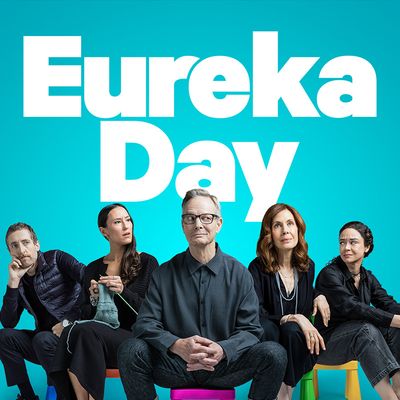
We love MTC and the amazing work they do! Up next for them is Eureka Day! Wildly relevant and bitingly funny, Jonathan Spector’s play comes to MTC in an all-new production following an acclaimed London run... Read More
From the show: The Roundtable with Robert Bannon
Guests


Featured Shows
About
We love MTC and the amazing work they do! Up next for them is Eureka Day!
Wildly relevant and bitingly funny, Jonathan Spector’s play comes to MTC in an all-new production following an acclaimed London run. Eureka Day is a private California elementary school with a Board of Directors that values inclusion above all else—that is, until an outbreak of the mumps forces everyone in the community to reconsider the school’s liberal vaccine policy. As cases rise, the board realizes with horror that they’ve got to do what they swore they never would: make a choice that won’t please absolutely everybody. It is as timely as ever!
This all star cast is here! Bill Irwin, Jessica Hecht, Amber Gray, Thomas Middleditch, Chelsea Yakura-Kurtz, writer Jonathan Spector, and Director Anna D. Shapiro are all here to talk about it!
For Tickets and Info: www.manhattantheatreclub.com/shows/24-25-season/eureka-day/
__________________________________________________________________
Check out "The Roundtable with Robert Bannon" here on BPN on the daily, on YouTube, and on social media!
For more info on Robert- www.RobertBannon.com
Follow Him on IG- @RobertMBannon
TikTok-@RobertMBannon
Transcript
This transcript was automatically generated and might contain errors.
[0:15] Robert Bannon: Good morning, everyone. Here I am, Adrian Correspondent for The Round Table at Press Day for our brand new play, Eureka Day. I can't wait to bring you all the great stars that will be in this fantastic play. Have a wonderful day. I am here with Bill Irwin.
[0:31] Bill Irwin: The incomparable. I was very excited when I saw your name. I was like, because the first time I saw you, I was in my grandmother's living room, and we were watching, because it was her favorite song, the Bobby McFerrin video. Don't worry, be happy with Robin Williams. That was the greatest gig. I don't think we got paid for that, but it was just the greatest day of work of that whole stretch of my life for me.
[0:56] Robert Bannon: Oh my gosh, what's it?
[0:57] Bill Irwin: It was just such a fun song, and I do listen to it often.
[1:01] Robert Bannon: Do you?
[1:02] Bill Irwin: I do, I do, because it's, you know, times are tough right now. It's a little bit more than a little bit. It's a demanding time.
[1:07] Robert Bannon: Yes.
[1:08] Bill Irwin: Robin is no longer with us.
[1:10] Robert Bannon: I know.
[1:10] Bill Irwin: Bobby is bravely continuing his work despite some challenges. And yeah, I watch that occasionally too. It brings back good memories.
[1:21] Robert Bannon: That's right. I mean, your resume, your repertoire is so iconic. I mean, SVU, we're big SVU fans in our house big time.
[1:32] Bill Irwin: Have him call me.
[1:33] Robert Bannon: Yeah. Tell him.
[1:34] Bill Irwin: Yes, bring it back.
[1:35] Robert Bannon: Bring it back.
[1:36] Bill Irwin: Yeah. And of course, How the Grinch Stole Christmas. I mean, so many. And what is it like now being back here on Broadway? And what about this play spoke to you?
[1:48] Bill Irwin: It's a very incisive play. It's very funny, but it's not just comedy, it's not a satire. It's beyond a comedy of manners, though it is a brilliant comedy of manners, but it is a story of human loss. As you get older, you realize, oh, that's my job is to tell the story of human loss. Not that everything is sad, but that's what as life goes on, that's what we're dealing with. That's our biggest job. How do I take in this loss and stay joyful in the face of loss? Big time in American history right now is we're so divided, so divided, but with a lot of hope going forward. This play is, I was gonna say this play is hopeful, and it is, but that sounds kind of glossy, kind of boilerplatey. This play is a story of five people who really care for each other, really care for the institution they're trying to keep alive, and can't necessarily agree.
[2:55] Robert Bannon: Yeah.
[2:56] Bill Irwin: That's this human story, yeah. And now what part do you play?
[3:01] Bill Irwin: I play Don, the gentleman, the only paid employee of the school on stage. The other four people are volunteer board members, they're passionate, their children are at the school. Here's something Don has no children. His life is all about education, serving children, the children's development. He has no children himself. And I, yeah, you can see me. I'm just giving the story is really a particular and an easily not an easily told story. It is an important feeling story.
[3:38] Robert Bannon: Right, right. I think in this day and age, aside from everything going on, education is so important, and again, it's the choice you make for your children because your children are who you're trying to protect. Soldiers, law enforcement people, teachers. The most important jobs in a culture, not necessarily the best paid, or almost never the best paid. And we parents, because I have a son who's 34, but it's like I was at these meetings yesterday.
[4:07] Bill Irwin: Right, right.
[4:07] Robert Bannon: It brings you back.
[4:08] Bill Irwin: It takes you right, it's triggering this play. But we're passionate about how our kids are served. We're just not necessarily skilled enough to get in that classroom ourselves.
[4:22] Bill Irwin: We homeschooled for about a year.
[4:25] Robert Bannon: Whoa.
[4:26] Bill Irwin: Yeah.
[4:27] Robert Bannon: Yeah.
[4:28] Bill Irwin: Yeah. Many of my family members are teachers and administrators, and it's hard. My sister, she's down in Florida, she's in a Catholic school, and it's not easy.
[4:32] Robert Bannon: Not easy.
[4:37] Bill Irwin: No, but she loves it. She doesn't have children yet of her own, but she loves the kids. She always has. You see them go, you know, as I've worked, I've been blessed to work with Sesame Street. So I meet kids, and I meet them when they're in law school, and then I meet them when they've got their own kids, and then recently, you know, my grandson just loves you. So you watch and my wife was a home birth midwife for 25 years. So she would literally catch a baby, and then we'd see the baby. Now the baby's playing Little League, now the baby's going to college.
[5:11] Bill Irwin: Yeah.
[5:11] Robert Bannon: Yeah.
[5:12] Bill Irwin: And there's a sense within this play of that. I don't know how he gets it, because it takes place over the span of a week and a half and then one year later. But somehow Jonathan Spector gets a sense of ongoing time.
[5:28] Robert Bannon: Right.
[5:28] Bill Irwin: Yeah.
[5:28] Robert Bannon: Oh my gosh, so fantastic. We can't wait to see this. I'm so excited.
[5:31] Bill Irwin: We're ready when you come.
[5:33] Robert Bannon: Thank you so much, though.
[5:35] Bill Irwin: Thank you so much, Robert. Such a pleasure to meet you. Congratulations.
[5:37] Robert Bannon: Thank you. I am here with Jessica Hecht.
[5:40] Jessica Hecht: How are you, my friend?
[5:42] Robert Bannon: How are you? It's such a pleasure to meet you. I was so excited when I saw that you were going to be doing this. I've been a fan forever. The Sinner, The Gilded Age, The Boy.
[5:50] Jessica Hecht: Oh, yes, and I'm a fan. I'm a fan.
[5:53] Robert Bannon: What drew you to this particular play? What was so important that you're like, this is something I want to do?
[5:59] Jessica Hecht: I think this play has an awesome level of naturalism in the writing. He really understands how people communicate in a way that was, to me, that part of the art form is fundamental. I think Arthur Miller was one writer who talked about when you look at text and you recognize that the writer is trying to approximate human speech in a meticulous way that it somehow working on Miller's plays and then later in my life, any other new play that I engage with, it's always some relation to the way the text is actually written. And Jonathan is just such a marvelous writer. So it drew me, and then also I loved when my kids were young. I just loved school. I just loved being in elementary schools, and I love the teachers that didn't have children and what they gave to kids was also such a fundamental sense of what, you know, without having your own emotional life be so electric because they're your kids, what the teachers are trying to give, you know, many of the children that I and many of the teachers that my kids had didn't have kids and were so alight with what they could give to their kids. So that whole world, these kids, so that whole world to me has always been magnetic and alive.
[7:31] Robert Bannon: It's funny that you say that. I am still friends today with my fourth-grade teacher.
[7:35] Jessica Hecht: Oh, she was Miss Samuelson, Miss Sam.
[7:37] Robert Bannon: Oh, and I recently just had lunch with her, and she did not have any children, and she said the students were what I, and she was amazing. I mean, she was spectacular. And teachers don't get enough credit for what they do, especially nowadays.
[7:49] Jessica Hecht: Yes, I always think the more I can talk about the fact that this play actually makes me recognize public school teachers with such awe. I mean, my own kids went to public school and I went to public school, and not to impugn the dignity of private school, but this is really like public school teachers.
[8:12] Robert Bannon: Yes.
[8:12] Jessica Hecht: Oh my god. Yes. It's true, and there is a difference, and it's a choice, it's a choice that you make. And again, it's for your children.
[8:20] Robert Bannon: It's for your children, and you know, this play brings up the issue is it like if you really had these values, wouldn't you be in public school? And I think that's a vein that runs through this that's very impressive.
[8:34] Jessica Hecht: Yeah, yeah.
[8:35] Robert Bannon: Jessica, thank you so much. Congratulations. Can't wait to see it.
[8:39] Jessica Hecht: I'm glad you got to see your teaching.
[8:40] Robert Bannon: Yes, thank you. Thank you. We are here with Tony Award nominee, Amber Gray.
[8:45] Amber Gray: Thank you. I didn't win the Tony, just nominated.
[8:48] Robert Bannon: You were just nominated.
[8:48] Amber Gray: But I take it. They were wrong.
[8:50] Robert Bannon: Google was walking.
[8:52] Amber Gray: That's right, yes. Put it out there. We want those affirmations out there. How excited are you to take part in this very interesting and very timely play? And who is the character that you play?
[9:05] Amber Gray: Her name is Karina. She's new to Berkeley, she's new to the school. She's only been on the West Coast for about a year, and her kid had been in a public school. And then with a little tension, she sends her kid to the private school. You know, sometimes it's like going against your activism morals when you put your child in a private school. But she does it, it's what's best for her kid. And I think that is in general what the whole play is about. It's people, once the arguments really get underway, it's everybody doing what they think is best for their kid, which is a very charged subject.
[9:36] Robert Bannon: Oh, yes.
[9:36] Amber Gray: What I find so beautiful about the play, I mean, in many ways, what we're arguing about, it's like a period piece. It's antiquated, it's a different conversation now, right?
[9:43] Robert Bannon: Right, right.
[9:44] Amber Gray: But the beauty of it in this particular moment, politically, historically, is watching people argue with love and respect, trying to be kind, like enraged inside, right? But trying so deeply to be kind about it, to convince the other person, and really listening to one another. I don't think we argue in that way in this particular moment.
[10:03] Robert Bannon: So in real life, no, not at all.
[10:05] Amber Gray: No, no, no. That's what I think when Jonathan Spector was speaking about that. I was like, that's what I think we need everyone needs to see. It's okay to differ. It's okay, and it's understandable because again, this is about protecting your children, but my child is as important as your child, and that's the conversation that I think is part of love.
[10:26] Robert Bannon: Yeah, yeah.
[10:27] Amber Gray: Exactly.
[10:27] Robert Bannon: Yeah, yeah. That's so exciting. So now you've been in New York forever.
[10:32] Amber Gray: Yeah.
[10:33] Robert Bannon: It's my 20th year.
[10:34] Amber Gray: 20th year?
[10:35] Robert Bannon: I'm a journey in 2004.
[10:36] Amber Gray: Isn't it just something about this city? I mean, I've traveled all over the US and whatnot, but I know you guys like started in Berkeley, but now to be here, what does that mean?
[10:45] Amber Gray: I didn't do the show in Berkeley. Nobody in this cast was in that production. I am excited to share it here. It's very sweet that Jonathan's like, it's a Berkeley play. I'm like, this is a Brooklyn play. As a Brooklyn parent with a six and a nine-year-old, I'm like, you could change every time you say Berkeley to like Fort Greene. And it's the same play.
[11:02] Robert Bannon: Right.
[11:02] Amber Gray: My husband's from Brooklyn, so he...
[11:04] Robert Bannon: Thank you so much. Congratulations.
[11:09] Amber Gray: Thank you. I can't wait to see it.
[11:11] Robert Bannon: Thank you. Thank you so much. I am here with Emmy nominee, Thomas Middleditch.
[11:18] Thomas Middleditch: Now listen, we loved you on Silicon Valley.
[11:21] Robert Bannon: Thank you. And we loved you on Be Positive. We watched it all. It was such a fun little show.
[11:27] Thomas Middleditch: It was too short-lived, unfortunately.
[11:28] Robert Bannon: Too short-lived. Come on, Mr. Hollywood.
[11:30] Thomas Middleditch: Come on.
[11:31] Robert Bannon: Come on. So what drew you to this play?
[11:35] Thomas Middleditch: I mean, first and foremost, the script. It's like so well written. And it's so empathetic to its characters, even the ones that I'm sure Jonathan disagrees of. Every character is fully realized. Three dimensions, no one's a caricature of a thing. It's, and the dialogue is so sort of naturally written. I think when you see when you read so many scripts and you see something that's like, oh my god, it's actually good. Yeah, you kind of jump at the chance.
[12:10] Robert Bannon: Now who do you play?
[12:12] Thomas Middleditch: I play Eli, who's kind of, I mean, it's a tech guy who got, I know, shocker. A tech guy who's got his payday and now is a full-time father and a committee member at this progressive school. And has had like maybe a crash course in like progressivism and wokeness and he's doing his damndest to embrace all the philosophies of it. And I think it's in today with our climate of everything going on in the world. I think it's really important to be out there. And I think it's important that we can all kind of learn to have a discussion where you can have different views and be nice to each other, kind of.
[12:57] Robert Bannon: Yeah.
[12:58] Thomas Middleditch: Being nice and treating people with respect is always nice, is always a good thing.
[13:03] Thomas Middleditch: Um I think it's interesting what the play you know tackles is like the intellectual arguments of me versus you is so it really all push comes to shove when the subject of whatever the hot button thing is, that feels like immovable, that feels like, oh, we live in two different realities. That feels like facts are different, that feels just like ingrained into your like soul identity as opposed to something that like, oh yeah, I can I can vote yes on adding one line one extra line on the crosswalk to the school. You know, it's like something small like that is nothing compared to I don't know, to vaccinate or not, or you know, tr choose from a a uh an ever increasing list of divisive issues. Yeah, that's kind of the crux of the play of is like what happens when all those good intentions meet something like that.
[14:00] Thomas Middleditch: Right, right. When there's a blockade, it's like now what's next, what do we do now? What do we do now? And and civility, let's say, at the very best gets strained.
[14:11] Robert Bannon: Yes, yes. So true. Thomas, thank you so much. Congratulations. I hope you have a great, great time. And we can't wait to see it.
[14:18] Thomas Middleditch: Yes, thank you so much.
[14:19] Chelsea Yakura-Kurtz: I'm Chelsea Yakura-Kurtz. And this is her Broadway debut.
[14:24] Robert Bannon: Isn't it exciting?
[14:25] Chelsea Yakura-Kurtz: Oh my god, it's I'm pinching myself every single day.
[14:29] Robert Bannon: Is this something where you're like, how did this like fall into my lap? How did you come to find this amazing book?
[14:34] Chelsea Yakura-Kurtz: It really was just this like perfect storm, right place, right time. Um I stepped in when Zoe Chow, who was originally uh cast in this, um they were looking for a biracial Japanese actor. Uh I auditioned, I ended up stepping in just yeah, just perfect, right place, right time. A lot of luck. Chef's kiss, right?
[15:00] Chelsea Yakura-Kurtz: Chef's can't complain. How has the process been? Because you're used to doing TV, Scandal, The Flash, all those fun things, station 19, and now Broadway. Like that's all excited.
[15:11] Chelsea Yakura-Kurtz: Yeah. Um honestly, it's great. I do have a like I do a lot of theater in Los Angeles, and this room is everything I love about doing theater. It's it's creative, it's playful, like we have the luxury of really digging into the text and finding the arguments, and it's it is my favorite way to work. I'm having such a blast.
[15:34] Robert Bannon: That's wonderful. And how is it working with this amazing cast?
[15:37] Chelsea Yakura-Kurtz: Unreal. Unreal. There's it's just like stacked with luminaries of every kind, um helmed by Anna, which is just like over the moon. Like I could not have engineered a more rewarding experience. Um but yeah, it's I'm learning something every second of every rehearsal, and yeah, just in awe.
[15:59] Robert Bannon: Oh my gosh. That's amazing. And anything that you've enjoyed so far being in New York City?
[16:04] Chelsea Yakura-Kurtz: Oh, um gosh. Being in the place where you can't like throw a stone without somebody making some kind of art. Somebody, somebody's they're performing on the streets, they're performing in the museums, there's theater everywhere. It's it's dreamy.
[16:21] Robert Bannon: It is. It's it's an amazing city. It truly, truly is. Well, congratulations.
[16:24] Chelsea Yakura-Kurtz: Thank you.
[16:25] Robert Bannon: Come get your tickets, Eureka Day. It will be fantastic. So exciting. Thank you so much. So nice to meet you.
[16:31] Anna D. Shapiro: Hi there. I am here with director Anna Di Shapiro.
[16:36] Robert Bannon: I'm Adrian.
[16:37] Anna D. Shapiro: Hi, Adrian. It's such a pleasure to meet you.
[16:39] Robert Bannon: It's wonderful to meet you. How did this fall into your lap?
[16:42] Anna D. Shapiro: Well, I was really lucky because uh I'm sure I was not the only one who wanted it. Uh uh Lynn Meadows sent me the script. She said, I wanted you to take a look at something, see if you're interested. Um I don't come to New York that often anymore right now because of the age my kids are. I really like to be with them. And she said, I know you don't really, you know, I know you really want to be home, but I have a feeling, and she was totally right. And I read it, fell in love with it, and um just said, this is something I really have to do.
[17:09] Robert Bannon: Yeah. I think this is, and I know it was kind of pre-pandemic that it was kind of taking shape, yeah, but now that we're here, yeah, you know, in the thick of it, I think it's very timely.
[17:20] Anna D. Shapiro: I agree. I mean, one of the really interesting exercises, and Bill uh Irwin has talked about this a lot, to try to get our brains back to pre-COVID modality. It's like our brains changed as we moved through COVID.
[17:33] Robert Bannon: I agree.
[17:34] Anna D. Shapiro: Right? And so we've had to move ourselves back into that. And the thing that was true before that is good to remember, is that we were trying hard then to do the right thing.
[17:44] Robert Bannon: Right, right.
[17:45] Anna D. Shapiro: You know, and that is something that I think people do. I I think you know, right now everything's so divisive, we're all so on pins and needles. If either side thinks if the other person wins, you know, it's gonna be, I don't know, the end of the world, basically. And what are we we know there will be an outcome? It may take a minute for us to know what it is. What are we gonna do once we're in that outcome? How are we going to bridge certain gaps? How are we going to to survive and thrive?
[18:15] Robert Bannon: Right.
[18:16] Anna D. Shapiro: And um this play, I think, reminds us that most of us are trying.
[18:22] Robert Bannon: Yes.
[18:23] Anna D. Shapiro: You might disagree. I mean, you might disagree with the way one person is going out going at it, but I do have to believe that we're all really trying, and I think the play embraces that.
[18:33] Robert Bannon: That's what I loved when I heard you know him speaking about how you know you do that, and and this play is about, you know, making sure your children are okay.
[18:43] Anna D. Shapiro: Yes, and no, I want to tell you, nobody is more ridiculous than a parent trying to make sure their kid is okay. I mean, we become complete morons. And just like, and so that for me, I feel I always turn to Jonathan and I periodically say, I feel attacked. Because it's a little bit too close to home at times.
[19:03] Robert Bannon: Right, right. No, I understand that. And like I said, I my my sister is a teacher down in Florida, she works at a Catholic school, you know, was grew up in public schools, you know.
[19:12] Anna D. Shapiro: So it's I I do appreciate the teacher aspect too because teachers are so underappreciated.
[19:19] Robert Bannon: And absolutely, absolutely. It's the challenge. It's all of us trying to do our best, and it's a challenge.
[19:25] Anna D. Shapiro: Yes, yeah.
[19:26] Robert Bannon: Um, is there anything what would you like the audience to when they step out the theater, what would you like for them to take away from seeing this?
[19:34] Anna D. Shapiro: I for me, you know, I always want an audience to feel more part of something when they leave a play versus separate from something. So I always want them to feel either that they are seen, they that they recognize themselves, or that they've gotten or that they've gotten access to an experience that they didn't know about and they have more understanding of it. In this case, I really think it is a compassionate act. I want them to be, first of all, I hope they'll be smiling, because I think they will be.
[20:30] Robert Bannon: Thank you so much.
[20:31] Anna D. Shapiro: Thank you, I am here with Playwright, Jonathan Spector.
[20:37] Robert Bannon: When I heard you describing this and your process, I was like, this sounds so great. It's it sounds fun and a little intimidating at the same time. What are what are what would you like people to take away from when they see this play?
[20:54] Jonathan Spector: Uh I hope people take away from it. Um this is the question I can never answer because it's so not how I come into it. Um but I I'll try again. You know, I I hope people come away, you know, thinking about uh, you know, in maybe if not a new way, a deeper way, you know, how it is we can move forward together as a, you know, with within a whatever community we're in, or or more broadly our society, you know, when we can't agree on so much of what's true and what's real. Um and at the same time that they uh enjoy themselves because it is, I mean, I think that no one would want to watch a you know, grim two-hour play of people arguing about vaccinations, and that is not what this play is. Um, you know, there's a lot of humor, and and I I think um, you know, any time you have a group of um people sort of earnestly and truthfully sort of trying to navigate their way through something difficult, um, there's just naturally a lot of comedy in it.
[22:01] Robert Bannon: Right.
[22:01] Jonathan Spector: Uh and and so I I think uh people will enjoy that, I hope. I don't know. So this is like you said, this was this was started pre-pandemic. Where did it really like come from? How did the idea just kind of like one day you're there and like, hmm, maybe I should do this? How did that come to to you?
[22:18] Jonathan Spector: Yeah, I mean it was a sort of combination of two things. I had around that, I had a commission for um this theater Aurora in in Berkeley. Um and I knew I wanted to write uh a Berkeley play for them. Um and I didn't know exactly what that meant. But I and at the same time I had a few moments of having a conversation with friends who were, you know, at least as smart and well educated as me and with whom I really had the same shared the same politics and and values and then discovering they didn't vaccinate their children. Um and was so thrown by that and so curious about how it was that we could kind of agree on everything except in this one very specific area seemed to live in a different reality.
Um and so that sort of sent me down the rabbit hole of trying to learn as much as I could about it in interviews and and research. And then at the same time, as I was sort of writing it in earnest, it was the lead up to the 2016 election. And so was really confronting in a way that I at least had not before the how much it seemed like half the country just fundamentally lived seemed to live in a different reality than I did.
[23:23] Robert Bannon: So true, yes.
[23:26] Jonathan Spector: And now here we are, 2024. Almost kind of there again.
[23:30] Robert Bannon: Yes.
[23:30] Jonathan Spector: Where we're like, how is this possible? How are we still here?
[23:32] Robert Bannon: I know it's terrifying and depressing.
[23:36] Jonathan Spector: Um hopeful though. I I I'm trying to be hopeful. Um and I I think in a way, in terms of the how that's affected the play, and in a certain way made it more present, even is that that I think I mean, we certainly any of us I think on on the left who have been involved in any organization of any kind, I think have experienced in the past few years this way in which I think our realities have continued to fracture, and it's no longer just you know uh the real reality that we live in and the fake reality that they live in. It's now each of us seems to live in our own reality and that that we don't fully share with anybody else.
[24:13] Robert Bannon: Right.
[24:14] Jonathan Spector: And um so navigating our way through that, I think is is much harder.
[24:20] Robert Bannon: Well, that's what I love what you said, like these people sit down and try to have a civil conversation, even though they may disagree.
[24:27] Jonathan Spector: Right.
[24:27] Robert Bannon: And I hope we can get back to that at some point in real life.
[24:31] Jonathan Spector: Yeah, I hope so. I mean, I think in a way that the the for me, I mean, as it's evolved over time, I mean that I have not done a lot of rewriting of the play because of the like what's happened in the world since I've done, you know, there's sort of a new ending and I've I'm bringing new pages. Um but really it's about what the play needs, not about things changing outside. But um I think the thing I've been thinking about more with the um you know how how things have evolved over time is this idea of I don't know, I think about like the debates around like do we expand the Supreme Court. Right. And it's like on the one hand, the you know, there are people who are like if you do that you break it, you know, and and then the other argument which I am more sympathetic to is like yes, but if you don't do that, then then it's then it's become totally corrupted. So like yes, maybe you do have to break it because the alternative is worse, but it's not to say that breaking it also isn't bad.
[25:27] Robert Bannon: Right.
[25:28] Jonathan Spector: And so that um and then it's like you're stuck in the middle. It's like what do you do? What how do you go? And and I think that's great. And I love that you're talking about teachers. My sister's a teacher, I have many friends that are teachers, so I will make sure they buy tickets and come see this amazing play. Jonathan, thank you so much. I can't wait to see this.
[25:42] Jonathan Spector: Oh, thank you. Congratulations.
[25:45] Robert Bannon: Thanks a lot. Thank you. Have a great day.
[25:47] Jonathan Spector: Thanks so much.
© Broadway Podcast Network, All Rights Reserved