

South African jazz vocalist (now based in Harlem) Vuyo Sotashe was the first male singer ever to place in the prestigious Thelonious Monk Institute International Jazz Vocal competition—and that’s just one of the many honors he has collected in the early days of a promising career... Read More
From the show: The Roundtable with Robert Bannon
Featured Shows
About
South African jazz vocalist (now based in Harlem) Vuyo Sotashe was the first male singer ever to place in the prestigious Thelonious Monk Institute International Jazz Vocal competition—and that’s just one of the many honors he has collected in the early days of a promising career. His path from South Africa to the Biggest Jazz Stages in the world has been amazing to watch! He is here to tell us about how it happened, why he chose William Paterson University, when can we get that debut album, and so much more!
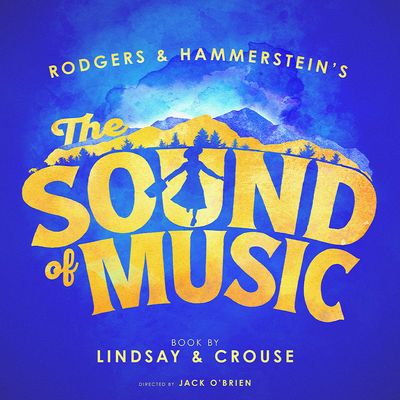
He is the Vocal Director & Singer in "The Sound of (Black) Music" coming to NJPAC in Newark, NJ this November. The hills are alive with the sound of Black music! This groundbreaking concert reimagines Rodgers & Hammerstein’s The Sound of Music through an Afrofuturistic lens, combining familiar lyrics and melodies with jazz, soul, funk and hip hop. ]With unexpected arrangements and a message of unity and resilience, The Sound of (Black) Music is a must-see celebration of the power, beauty and rich cultural heritage of Black music in all its forms.
Grab tickets at www.NJPAC.org! Follow Vuyo on IG- @vuyosotashe to stay up to date on all his work!
_________________________________________________________________________________________________________
LIKE. COMMENT. SUBSCRIBE!
Listen to us on THE BROADWAY PODCAST NETWORK:
https://broadwaypodcastnetwork.com/po…
Check out “The Roundtable with Robert Bannon” every Thursday 7pm EST/4pm PST PLUS: The Talk Series where artists share their art and their heart.
www.RobertBannon.com
Follow Him on IG- @RobertMBannon
Twitter- @RobertBannon
TikTok-@RobertMBannon
Transcript
This transcript was automatically generated and might contain errors.
[0:10] Robert Bannon: Are you ready? It's the round table with me, Robert Bannon. Welcome to the round table. My name is Robert Bannon, and I hope you're watching us on YouTube or listening to us at the Broadway Podcast Network. I love jazz. I'm, you know, sometimes I can get a little jazzy. I can give a little jazz number. I've been known to give a little jazzy number, and I've been known to do a little musical theater, you know, in my day. And I heard about this great program and this great production that is coming to New Jersey Performing Arts Center. It's coming to Lincoln Center, it's coming to Connecticut. And I'm excited to tell you about the sounds of black music. A lot of times, we don't realize that different cultures do not get to see themselves represented in some of the great American pieces that we have seen on stages and on screens and on television.
And we need to be very cognizant of the fact that that privilege is not afforded to everybody in community. Where I teach in elementary school and where I teach musical theater in Newark and Hudson County and places in New Jersey, we can see the sound of music, and my students don't see themselves represented at all. So the power of the sound of black music is really powerful so that they can hear the sound of music done in a style by people who look and sing and come from the places that they come from. There's nothing more beautiful and touching than that. So when I had the chance to have Vuyo Sotashe on the show and his amazing story coming from South Africa to William Paterson, I'm gonna call the president of William Paterson, Dr. Hell Dobler, who I know I'm doing work with him.
We're doing the Cheetah Rivera Distinguished Lecture Series at the Shea. He came from there. He got a scholarship to get his master's in jazz from there. So all roads lead to Jersey. From Willie P to NJPAC. We have had a chat about artistry, art, activism, and the sound of black music. Thank you for watching and listening. Take a peek. Well, you know, my home away from home when I'm not teaching, when I'm not here in Virtual Park, New Jersey, is that I am a teaching artist at the New Jersey Performing Arts Center in Newark, New Jersey. It's the premier space to see pieces of work and art, especially as students for musical theater, for jazz, and for acting and for dance. And they have a performance coming up. It's gonna be in Lincoln Center. Lincoln Center and all of these amazing places. We are going, and I'm a William Paterson alumni too. So my guests, we are here for it all. Welcome to the show.
[2:47] Vuyo Sotoshe: Hey, hey Robert. Yeah, a pioneer right there. A William Paterson pioneer. What a ride and a journey you have had. Your story is amazing.
[2:56] Robert Bannon: Oh, thank you. Thank you. It has definitely been a ride, indeed.
[3:01] Vuyo Sotoshe: Yeah. So you're from South Africa.
[3:05] Robert Bannon: And yes, correct. And at what age did you decide I want to sing?
[3:10] Vuyo Sotoshe: Oh my gosh. Well, I grew up in, um, I don't know if, uh, culturally immersed family of sorts, like an and our arts traditions at home in South Africa are very much integrated with everything we do. So singing is very much a part of, you know, of our traditions and, um, and I'd always wanted to sing. I mean, I, or rather I've always sung at home. Um, and I was encouraged, you know, by my parents, you know, to sing at church, you know, whenever my mom would have her friends over for tea, like bring me in to do a performance and so, and so would, you know, my brothers. I'm one of five siblings. My brothers and my sister, all of them are, you know, are beautiful singers as well. But I think I decided that I wanted to sing, um, I think it was just after like a year, about a few months after, um, high school.
I taken a gap year, um, just to figure out what it is I wanted to do. I mean, and all of my siblings had, you know, these engineer academic, you know, degrees. So in deciding what I wanted to do, I consulted them and they encouraged me to take it on, and it's been an odyssey since then, you know, so it has been an odd.
[3:41] Robert Bannon: And at what point in your career, in your life, did you decide that coming here to the United States? You have won and been featured in jazz fests and festivals and competitions around the world from Africa to Europe to the United States, etc., literally placing and winning and being awarded the first male like jazz festivals that are legendary with legendary performers. At what point did you know that you had to make the trip to the United States to continue this career?
[5:06] Vuyo Sotoshe: I think it was in my second year of studies, um, at the University of Cape Town. Well, they have a conservatory at the University of Cape Town called the South African College of Music. And I would, uh, I would attend quite a lot of the master classes that they would have from like, uh, held by invited artists. They would have a lot of American artists come through. Um, and one of which I don't remember who they were, but they spoke about studying in the United States, and I was feeling a lot of anxiety about, you know, what does it mean now to start a career at home? Um, and was really inspired by their lecture and started thinking and dreaming about what I was going to do after graduation. And it was my singing teacher, Amanda Tiffin, who, um, suggested I apply for the scholarship that I got to come to the United States, um, the Fulbright Scholarship, and that also kind of opened a path for me.
[6:08] Robert Bannon: Yeah. It is quite the journey from South Africa to Wayne, New Jersey to go to Wayne, New Jersey to go to William Paterson.
[6:19] Vuyo Sotoshe: I went to William Paterson and I come on, Willie P. Come on, Willie P. Come on, Golfle Road Grill. And all you when you are I'm doing an event at William Paterson on October 30th, I and I have fond memories of what I've learned there. The jazz program at William Paterson is very lauded. The music program in general at William is very lauded. What can you say about what you learned there that has propelled and prepared you for the professional world as a performer?
[6:46] Vuyo Sotoshe: Well, you know what's so great about a lot of jazz programs specifically, even just across the country and even internationally, is the very tight-knit community that's built. You know, a lot of your colleagues, and I'm sure it's the same in other disciplines as well, um, but a lot of your colleagues as you leave the college will be your, you know, your classmates, you know, and that was something that was so pivotal for me as it was in South Africa, you know, that, um, as an international student, I could, you know, easily plug into a community of artists, you know, as jazz is as well, you know, jazz is social music, um, and then it requires people, it requires, you know, a certain kind of, I call it a liberatory, you know, mindset, uh, a love ethic in many ways.
So, yeah, a lot of what I learned there was really learning how to plug in, you know, learning how to show up. Um, didn't matter what level of proficiency I had in my studies, um, or in my performance level, but connecting with folk was most important. And I ended up like, you know, moving my connections and kind of journeying it towards New York City. Um, but yeah, that was one of like the most valuable things I'd learned.
[8:08] Robert Bannon: Well, I just have, I just talking to you makes me think of like I'm sure you've spent many days in the Shea basement playing.
[8:16] Vuyo Sotoshe: Oh my gosh, yeah.
[8:18] Robert Bannon: You know, that's that's Willie P life right there. And all roads lead to Jersey, I guess, because you now vocal direct, perform in and get to be a part of this project that is all around the tri-state area coming up. Uh, and people need to definitely go and check it out. The show is called the and has been the best of theater 2021 and all. Like, I mean, you guys highly in 2020, highly regarded and must must see the sound of black music. What is the idea? Tell us what this concept is.
[8:53] Vuyo Sotoshe: Well, it started off as a residency at Bard College, um, that was run by Electric Root. And that residency comprised of, again, the community of musicians that, you know, we were a part of. Um, it was an opportunity for us to come together for two weeks and create three shows, three different shows. Um, and it was all kind of crazy because it was an experiment. So we decided to create three different shows and perform them. One of which was, um, a concert led by Marco Muenzo and the Sheikhs. Uh, another one was led by, um, Chris Pattershall, an incredible piano player and a Willie P alumni. Um, and it was an honoring of the great, um, Mary Lou Williams, um, uh, an incredible composer and piano player, um, a jazz piano player, and an influence of so many of the legends we know in jazz, you know.
And, um, and then this one, The Sound of Black Music, which was another yet another experiment where we took this song, this music, the song, sorry, this music that is that holds so much nostalgia for so many folk, um, yeah.
[10:22] Robert Bannon: Now we're back, we're back. Okay, we're back. Sorry. I cut off. Where did I cut off with you?
[10:29] Vuyo Sotoshe: Um, she, uh, you took this music, it was an experiment.
[10:33] Robert Bannon: Yes, yes, yes.
[10:34] Vuyo Sotoshe: So it was an experiment, and I was mentioning that, you know, this music from, you know, the great musical that everyone knows holds so much nostalgia for so many people. Um, but we wanted to really, you know, try and present it in a way that was authentic to the group, you know, which was a group of black artists, and how we would insert that nostalgia into these songs. Um, so we sat and, and this was amazing because our chief arranger was, is a piano player, um, called Matisse Picard, who is really traveling the world right now, a great educator, a great piano player, and he's releasing a lot of music right now, so please check him out. Matisse Picard. Um, he's from Malagasy French, um, composer and piano player.
Um, and we worked towards, you know, inserting what we think is the sound of black music, you know, in these nostalgic songs. And all of them are an experiment, and all of them kind of came together in this narrative, um, also with the help of our directors, um, Sharifa Ali and Camila Long, who are incredible theater, like specifically theater directors, but they also work in film, they work in music videos, but they are also part of our family, this community I speak of. Um, but yeah, that really was like the springboard, and what you heard or what you were about to hear is the product of that. Tapping into black nostalgia, but using something that we all connect to. So November 16th, if you're in Jersey or if you're in the Newark area, you have to go to njpac.org. You can grab your tickets at njpac.org, Prudential Hall, and the Victoria Theater at NJPAC, where wherever you see a show there is gorgeous, gorgeous, gorgeous theater, gorgeous sound, and production.
[12:30] Robert Bannon: So make sure you get your tickets. You're not only at NJPAC, you are in New York. You are everywhere.
[12:37] Vuyo Sotoshe: Yeah, everywhere. Yeah, it's quite exciting to get to do this tour as well and get to do it with mostly the cast of people who helped create it, you know. Obviously, there are so many different faces and changes. You'll see a lot of shifts of faces as we move from concert to concert, but they all are a part of our community and what's part of it. All the songs that when you think of The Sound of Music and you think of Joe Raimi and you think of "Edelweiss," and you think of all of the music that is iconically a part of it, you're gonna hear those songs in a brand new way.
[13:14] Robert Bannon: Yeah, and a lot of times, if I may say so, as Casper the Ghost White, the culture has stolen Black music and the ideas through, if it's through rock and roll and jazz and hip hop and pop music, and it's fun to take a show that is so historically The Sound of Music and give it some life and edge and spirit. What has the reaction been from the audience every time you've gotten to do this?
[13:42] Vuyo Sotoshe: I mean, it's always been surprising, and I think the overarching reaction is, I would say, I would call it like a flood of emotions. A lot of people would come up to us after the show and talk about how it touched them. You know, it touched them to hear this music in a certain way. And yeah, and I mean, throughout history, and even if you think about jazz, like a lot of the American songbook was written by folks like Oscar Hammerstein and all of these other composers, you know, but the culture of jazz or performed jazz by the artists that we venerate was them taking those songs and using, you know, tools in the Black tradition like improvisation, like reharmonization, like, you know, all of these other assets and creating something that was real, you know, that was connected to a people, to a life, you know, and I think that's the same work we were trying to do with this music, you know, as it represented all of the faces that were performing it.
[14:44] Robert Bannon: Absolutely. And you have the Shakes as a band, you have an amazing group of singers, you have a big old party with songs you know and love. So everyone needs to get there too. It's perfect for November; kids are back in school.
[14:56] Vuyo Sotoshe: Yeah, yes, take your family and come out to a night and experience live theater and live music. When I think about your voice, master's degrees and competitions, your voice is smooth and smart, and you know, intervals and harmonies and textures and all that you're able to do with your voice. I'm gonna ask you this question.
[15:15] Vuyo Sotoshe: I'm ready for the full-length big giant album. I need it, come on, yeah.
[15:22] Vuyo Sotoshe: Soon, actually, we recently, I recently on the 10th, um, if you go to the social medias, um, on the 10th, um, I released, um, yes, on the 10th, I released, well, Chris Pattershall, who was the music director for the Mary Lou concert. Um, he and I have been doing a collaboration, Willie P alumni. Um, we've been collaborating in duo form. Um, I mean, he's a brother to me, and we've gone on so many journeys musically together, and we're very excited to be releasing like an EP. Well, it will be an EP, but we released our first single on the 10th. Um, which is, I mean, it's available on all platforms. But if you go to Chris Pattershall's, you know, website or on my socials, you'll find it everywhere.
[16:17] Robert Bannon: Yes, and if you look it up wherever you listen to your music and put, if you're listening to us on the Broadway Podcast Network and you're not watching our faces as we speak, it's at V-U-Y-O-S-O-T-A-S-H-E. And it will be underneath this in the description. Just click the link and you can go right away and listen and stream it. And many people have streamed it already because I think we're all waiting for your projects.
[16:41] Vuyo Sotoshe: Yeah, soon. Um, it's taken a while for me. I've been on so many journeys as in these states. Um, but this has been one of my exciting projects I've been a part of with Chris Pattershall.
[16:56] Robert Bannon: When you put together a list of music, if you're at a festival, if you're at a jazz club, if you're performing somewhere in a theater, you have a trio that goes on the road and or a group that plays. What is a concert with The Sounds of Black Music? When we go see just you or a set by you, what is it made up of? Is it originals, is it standards, is it covers, is it reinterpretations of other music? What is your style?
[17:23] Vuyo Sotoshe: Wow, you know, I think it is a lot of things, you know, and I'm grateful that jazz music kind of helps you with melding your world, you know, all of the worlds that you are a part of. So a thing that inspires me a lot is music from home, um, music from South African composers, um, that tradition of singing and composition. I love choral music, I love jazz standards, and I also have originals, and some of the work that, you know, that I guess in this collaboration that I'm doing with Chris is very many different genres are presented. But I think the chief thing about our concerts is that it is an experience. Um, there's always a narrative curve. There is a message that we try to bring. So above us, you know, being very, I don't know, branded with the type of songs that people can expect to hear, or all of that stuff, I think it is more about what kind of connection we try and have with the audiences, you know.
[18:38] Vuyo Sotoshe: So you will hear originals, you will hear songs from other countries in different languages, um, and you'll also hear standards that have been reimagined, songs that you might recognize that are reimagined, mashups as the kids in the streets call them these days. Um, so yeah, I think I would say that's what it is. But I feel like, you know, at least what I hope to do is that people get to know me as a person, you know, art has always been that tool that, you know, lets connect, let's connect through story, let's connect through the authenticity, quote unquote, whatever, however you would consider that, the authenticity of the moment of connection. So sometimes we always change the set while we're there, depending on what the energy is. Um, but yeah, I would say that the music is led by the experience.
[19:37] Robert Bannon: Jazz, right there in the moment, right there. You enough leads me to what I was gonna say to you. There is a part of doing some research about you and your backstory, which is so fascinating. Your journey is amazing. There is a personal part of you that you have shared, your personal life, your advocacy through art. You have spoken out about you as a person, you have spoken out about your personal life. Has that been a conscious choice that they live together?
[20:02] Vuyo Sotoshe: Oh yeah. I think that's always, I think for any artist that we study, you know, there's always gonna be a moment where, you know, your person comes to the floor. You know, what is it? What are the things that I am passionate about? What are the things that made me, you know, and sometimes, you know, we call it advocacy, right? Sometimes we call it like, you know, activism, all of these things, but when we are true to the things that have made us and the things that protect us and the things that keep us, you know, in, uh, keep us whole, you know, those things in a world, you know, of white supremacy, in a world of so much oppression, are seen as radical, you know, will be considered as radical, they will be considered as, you know, kind of out of the norm.
And I have been very, very fortunate, you know, to on my journey to be connected to folk who are, you know, see themselves as activists, see themselves as people who, you know, push the envelope for community, push the envelope for coexistence, push the envelope for all of the things that make us who we are and all of the things that kind of sustain, you know, humanity and love and all of those things that have kept me true along with the literature, the lineage that we have, you know, and the artists that I also look up to. So yeah, I've been very grateful in that way that I've had a journey that has had those stops and had those connections that have challenged, you know, what it is I'm putting out there and its connection to who I am.
[20:57] Robert Bannon: You know, I feel so smart talking to you because I put on shows where I sing TV theme song medleys and you are a true artist.
[21:57] Vuyo Sotoshe: Oh no, the TV theme song medleys are exactly like those are the things we're passionate about. Those things are all joy, you know, there's something ethical.
[21:57] Robert Bannon: Yeah, okay, I'm gonna take that and I'm gonna put that in my back pocket. That's right. I am looking forward to, I appreciate so much the work that you do. I am in awe of your voice and your music and artists. I am grateful for places like the New Jersey Performing Arts Center because they put tickets that are affordable thanks to the underwriting of organizations to allow people who do not have the money and the means to come see live jazz, live music, live theater. That's so important for communities and then for the people in the seats to see themselves represented on stage is one of the most powerful tools that we can have as a society. So thank you for making this programming and making it so great.
[22:53] Vuyo Sotoshe: Oh gosh, I'm grateful to be a part of it, you know. And I had only a little role, you know, in the same action of just showing up. Um, so I'm grateful to have been a part of it as well.
[23:05] Robert Bannon: Well, when you're ready to sing a TV theme song medley with all your crunchy harmony, give me a call.
[23:10] Vuyo Sotoshe: I definitely will, Rob.
[23:13] Robert Bannon: Everyone follow, get your tickets, go to njpac.org and follow on the links below all the social media so we can see all the music that's coming out and make sure you catch when they're in your neck of the woods. Thank you for being here.
[23:23] Vuyo Sotoshe: Awesome. Thank you for having me. Pleasure.
[23:26] Robert Bannon: We're doing. How about that? I can't wait for his solo debut to come out. I can't wait to catch him at a jazz club. I can't wait to see you November 16th at NJPAC. Go to njpac.org. Gosh, Willie P and NJPAC. Come on now. If you're a jazz performer, if you're a singer, if you do musical theater, if you are into dance, you need to look up njpac.org for the arts education program. If you want to go to a great school in New Jersey, you gotta look up William Paterson. I just so happen to have projects with both of them. So come on and go to robertbannon.com. Come stay out and see me at a show or an event that I'm hosting or teaching or doing or singing. If you want more information about this show, follow us on social media at Robert M. Bannon or at The Roundtable with Robert Bannon.
You can listen to us on the Broadway Podcast Network, watch us on YouTube. I have new albums. I have a Christmas concert. I keep myself busy. So if you want more information about me, make sure you check out robertbannon.com. I'm so grateful that you're here. I'm so grateful to spend time with you. Scoopy do doop do too. I'm gonna go listen to some jazz and I'm gonna go switch my floor. Sound good? Everybody, thanks for being here. The best is yet to come, and I'll see you again next time on The Roundtable. Bye everybody.
© Broadway Podcast Network, All Rights Reserved