

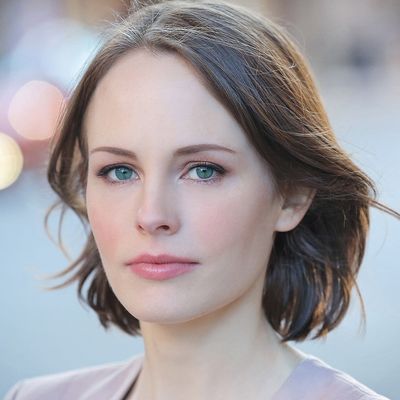
Ellen Adair is here! You have seen her on TV & Movie Screens. You have also seen her on the MLB Network talking Baseball and her beloved Phillies! She is here to tell us of a new way to see her- in this Horror/Thriller "Herd" coming out in time for Halloween!.. Read More
From the show: The Roundtable with Robert Bannon
Guests
About
Ellen Adair is here! You have seen her on TV & Movie Screens. You have also seen her on the MLB Network talking Baseball and her beloved Phillies! She is here to tell us of a new way to see her- in this Horror/Thriller "Herd" coming out in time for Halloween!
Because the zombies are not "undead," but people with a virus, it hits closer to home in a number of different ways.In HERD, they're certainly terrifying because they're infectious, but how human are they, still? There's not an obvious moment when a switch is flipped. What's left of their consciousness? And if you're scratched, what's the moment when you're really lost? How long do you have to consciously reckon with your fate? There are parallels with a lot of real, if slower-moving, diseases.
She is telling us all about making the film, the decision to announce being non-binary, how that affects her place in Hollywood, and what is next for this Up & Coming Movie Star! Take a listen!
__________________________________________________________________________________
LIKE. COMMENT. SUBSCRIBE!
Listen to us on THE BROADWAY PODCAST NETWORK:
https://broadwaypodcastnetwork.com/po…
Check out “The Roundtable with Robert Bannon” every Thursday 7pm EST/4pm PST PLUS: The Talk Series where artists share their art and their heart.
www.RobertBannon.com
Follow Him on IG- @RobertMBannon
Twitter- @RobertBannon
TikTok-@RobertMBannon
Transcript
This transcript was automatically generated and might contain errors.
[0:10] Robert Bannon: Are you ready? It's the Roundtable with me, Robert Bannon.
[0:15] Robert Bannon: Well, everyone, welcome to the Roundtable. My name is Robert Bannon, and it's another edition of the Roundtable with me. I'm so excited to be here with you today. We have an actor's actor here. They are television. They are film. They are poetry. They are podcasts. You know, are you a multi-hyphenate? That's become such a buzzword lately, right? A multi-hyphenate. I'm a multi-hyphenate. I can eat. I can watch TV, and I can lay down at the same time. Um, I think we all are multi-hyphenates. We're all multi-faceted. And some of us are even able to be into horror movies. Will they convince me to like a horror movie? Herd is the movie. They have a special SAG agreement that allows them to promote the movie because they follow the SAG protocol.
So thank you for that. And we, of course, support all of the SAG performers out here still on strike. I'm excited to talk about Herd. It is available streaming on October 23rd, perfect in time for the Halloween season, so you can be scared. Corbin Bernsen, an all-star cast, and Ellen Adair. And we are with Ellen, gonna talk about it all next on the Roundtable with me, Robert Bannon.
[1:34] Robert Bannon: Alright, so acting, poetry, hosting. A Phillies fan, but we'll let that go. We'll let that go just for today. Just for I'm born in North Jersey, so you know, I'm the Yankee side of Jersey, while the Philly side is more of South Jersey. I'm the Taylor Ham versus the Pork Roll. You know, Ellen Adair's here, and they are going to tell us all about the horror, the horror and the Halloween and the scary, spooky stuff, and some Philly stuff too. Ellen, welcome to the show.
[2:01] Ellen Adair: Oh my goodness, thank you so much. Yes, it's true that New Jersey is basically divided between the part of Jersey that is New York and the part of Jersey that is Philadelphia. So I mean, I live in New York now, so I really sympathize with both halves of New Jersey. I completely understand reading about you and your journey and your life, you have had a little bit of a lot of things. You have the acting and the writing and the poetry and the hosting and the podcasts. And how do you define what you do? Are you just an artist? Period. What do you like to describe yourself as?
[2:38] Ellen Adair: Wow. Um, yeah, I guess multi-hyphenate. I have never actually been asked this exact question. I feel like usually people just focus on whatever is the reason that they have me on the thing, right? They're like, this person does this. I mean, I think the thing that maybe sounds a little obnoxious, but that would cohere everything together would just be storyteller. I feel like we are all storytellers, even if we're not necessarily aware that we are telling ourselves a story about who we are, about what the world is, about how the day is going, all of these things. I feel like narrative is kind of the byproduct of human life. And so I think it's incredibly important. And I think that those are the things that are the most interesting to me.
You know, whether that is I am conceiving of the stories as a writer, or whether that is I am getting to embody the story as an actor, or you know, as a baseball analyst, whether I'm like, what narratives am I gonna spin out of this, you know, collection of possibly random events? I think it's fascinating and amazing.
[3:49] Robert Bannon: I can relate. I think we all are, and I think that's what's so wonderful. And that was such an eloquent answer, which is why you have a book of poetry out and you can grab it right now. Curtain Speech and you're right, you write. I know that you're working on a novel. Like you, you have stories to tell, and we are waiting to hear them.
[4:10] Ellen Adair: Oh, thank you so much. Yeah, yeah. I really love writing, and it's something that I've been trying to focus on a lot more, and sort of with the pandemic, obviously the shutdown was heartbreaking and was terrible for everybody, but I was kind of like, oh, well, what I'd really been wanting was to like focus more on working on my novels, and so I guess I get to do that. So, in some ways, the you know the silver lining that I can personally take from the global tragedy, it's just that it's made it enabled me to become a little bit more rigorous about my writing practice, so that it's really something I do every day.
[4:54] Robert Bannon: Well, people can follow you on Instagram and go to your website if they want to keep up with what's going on so that when you have these projects come out, books, novels, movies, television, etc., we can stay up to speed and up to date. Now, Herd has we in solidarity with SAG and every we just m always like to precursor that while the strike is going on, Herd has a waiver that is able to be spoken about because you followed the rules that SAG had put in place. I'm a little bit of a scaredy cat, Ellen. I am I gonna be petrified? Tell me what do I have to prepare myself for?
[5:31] Ellen Adair: Well, you know, you're talking to the right person because I am also a scaredy cat. So for years I was like, you know, I should really do more horror movies because I am really terrified by them, right? Like, like the things that are scary are very potent to me. It's very easy for me to go to those places and inhabit them. Um and of course, hilariously, now I've done four horror movies, but in most of them, rather I mean, I'm actually like incredibly grateful to have not be a scream queen in any one of the four. Um not that scream queens aren't great. It's just like, you know, it's I feel like I've been characters that I more strongly identify with in at least in some of the horror movies. Um, and I can't talk about all of them.
I can only talk about this one. But yeah, like a number of times I was the one who was like, nah, dude, I don't know. I don't know about that, like sort of like the skeptical friend. Um, but in this movie, I'm playing the queer action hero, which is what I would just love to do every single day for the rest of my life if I could. So in answer to your question, I genuinely as a very scared, like person liable to be scared by movies. There are some scary parts in Herd, but I don't think that it is like level 10 of a scary movie. Um so it is it's a zombie movie, but it's a virus-based zombie movie. So rather than the undead, it is people who are sort of transformatively sick. So if anybody out there has seen the HBO series The Last of Us, I think that that's a really good comp for like about how scary it is, right?
Like there are there are moments in The Last of Us where like, oh no, there's a bunch of mushroom zombies and we're very afraid. But then there are episodes where you don't really see any of them at all. Um, and just as there are sections of Herd that are really more about the human dynamics and the human response to the you know, the outbreak, essentially.
[7:38] Robert Bannon: Well, it's streaming at you could start streaming it on October 23rd. And actually the 13th, I believe. I believe it's coming out, yeah, spooky Friday the 13th.
[7:49] Ellen Adair: Oh, that's even better. It's even earlier than the original release. I okay, the twin and and here is the banner and the information, and it looks super fun and super in time for this season and for the Halloween season of it all. You mentioned um we are a show very based on queer culture and the queer landscape. And I if you don't mind me asking, I find your story incredibly fascinating because there's so many stereotypes about gender, about relationships, about what it means to be a part of the queer community. A, how important was it that this character is a story, a story of the LGBTQ+ community? And B, you made it personal to share a lot of your personal life and how you feel in this community, and how much of that was a conscious choice to try to let people be seen, and what was the reason behind sharing your journey?
[8:38] Ellen Adair: Oh my goodness, there's so many things to unpack there. I'm sorry, I never know I could talk about it for like literally an hour straight. So I think it's so important that this is a queer story, this film, because I think that everything in the film, it's, I mean, I just think it's a beautifully constructed story. Everything in the film is really about an us versus them mentality. Um, so it is any way that people use or take to say, like, those are those people over there, and they're not like us, and over here we're like this, and we're like in opposition to each other. So obviously the movie takes place in a sort of a rural southern community, and Jamie, my character, is from that community.
Um, but she was thrown out by her dad when she was a teenager when he found out that she was queer. And so though she is has justified in feeling like she cannot be herself and that she is judged and that she is othered by the people of the community. I think what the film does also really deftly is it those people in the community are not caricatures and they are complex, and we find out that like she has also been judging them and saying, like, you're bad people, you're over there, I'm like this, I'm over here. So I mean, there are other ways that I think the film does this, um, but I don't want to be too spoilery, and so I'm not gonna say more about that. But I think like it being a queer story, a queer love story really is like absolutely integral to the themes and like what is actually at the heart of the movie.
And for me, yeah, it's it's I mean, I think my journey is complicated. And I want to acknowledge first of all that like I have a ton of like cis passing, straight passing privilege. And it partly that's from a a kind of a choice that I made I mean I don't even know if I can call it a choice when I was a teenager and I was like I don't feel like a woman I don't want to be a woman but it's so interesting I feel like gender specifically and I think one of the reasons that it's such a flash point for people is because I think it's very hard to imagine having a different relationship to your gender than you do, right?
[11:09] Ellen Adair: So I think people who have never had a thought like that in their life have a very hard time imagining somebody having a different relationship to their body or a different relationship to their gender, and you know, I feel this in part because I talk to plenty of actor friends, you know, about gender identity, and plenty of them are like, well, I feel fine identifying as a woman or as a man, but like everybody's both, right? And I'm kind of like, no, I feel like that's where you are in the gender identity spectrum, and you have this notion that that is everybody because that's been your own experience. I'm sorry if I'm I said I could talk about this for like 45 minutes. So sorry if I'm if I'm monologuing.
So certainly when I was a teenager, I was like, well, everybody has to know that like you don't want to be a woman, and that that completely sucks, but like look at all of these other people who are just sucking it up and doing it anyway, and I, you know, I guess they just they have like more fortitude than me, and so I guess I just gotta like suck it up and do it anyway. And like a lot of it was in relation to I always say betraying some lack of personal development, I've wanted to be an actor for my entire life. So some part of it was I was like, gosh, if I want to be an actor, like I have to like learn how to do that. So because that was a while ago now, like I have kind of learned how to do that.
And for me, it was like something that I could put on. And for some people, that is not something that they are comfortable putting on, because that is like the different place that they are on the gender identity spectrum. And for me, I sort of feel like I could easily comfortably put on femininity or masculinity, like neither, that's kind of like where I am in the nexus of like a gender and bigender. Is like I kind of feel like a neutral space that like can kind of put either on, but like neither is totally exactly me. Anyway, so I felt for a long time like it was not something that I wanted to be outspoken about because I felt a lot of, you know, just being like completely frank, a lot of like guilt and shame about my own capitulation of myself and my own identity.
And like I was not worthy to be in the queer community with so many people that like I really admire, and I admire like the bold and brave way that they were like, no, this is me, nothing is ever gonna make me change. But you know, in some ways, it's almost like my identity is something that feels sort of plastic, which I think has given me a lot of privilege, as I said before. So, you know, I do really want to like uplift people who are non-binary but are more obviously gender non-conforming than myself. But like that's still what my soul is, and that's still how I feel. And I think particularly, you know, with the rise of anti-trans just vitriol and rhetoric and violence and everything, I really felt like no, I want to be more outspoken and I want to be more visible about where I identify just in order to be an ally to the people who are more marginalized. So I'm not sure if that was all of the questions that you asked, because obviously I could talk about this for another hour and a half, but yeah, I hope I hit most of the points there.
[14:33] Robert Bannon: Well, I think you did, and I think you did it so eloquently. I try to explain to friends. We all, I think if I may speak for myself.
[14:40] Ellen Adair: Please explain.
[14:43] Robert Bannon: We all have our own journey. You know, I was married to a woman, I was with my ex for 16 years. I am now have a male partner. I can I label myself as gay and part of the queer community. It's a journey and a roller coaster. I think a lot of people get confused about sexuality versus gender. I mean, you're non-binary, you use they/them pronouns, you're married to a man, and people get they like even with me, my own brother was like, what do you mean you're gay? You were married, you were with a woman. Like it is such a more complex, not as black and white of an issue for people. If they have always been lucky enough to be not lucky enough, that's not even the right word. If they've always identified as the gender they are seen as, and it's typical, they don't understand necessarily the journey.
What was it like when you had to share this with the world and the pronouns and all of the things? Did you get some pushback from people in your life and from the theater community or acting community or managers and agents who are saying, is this not great for your business?
[15:51] Ellen Adair: You know, honestly, I didn't, I haven't gotten a lot of pushback. I've gotten a lot of people who, you know, I have told them about the pronouns that I prefer and they continue to just not use those. And you know, that's tough, especially when it's people who you're very close to and you understand that, or at least I'll just speak from my own experience. Like I understand that like you have seen me as this one thing for so long and or you know in some ways they just might not even see the necessity of that. So you know that's something that I still kind of struggle with because it's also not something where and everybody like has their own battles to pick it's not something where I want that to suddenly become the center of every relationship that I have.
And so yeah it's yeah but it's it's essentially something that I'm that I'm still navigating. But I wouldn't say that I had any conversations with anybody where I've really felt like they're completely unsupportive which is which is wonderful. And I mean I guess you know a way a way that I try to take it again it's very different for different non-binary people but a way that I try to take it is like if somebody chooses to hear this information about me that it that are my pronouns that are my identity despite like the way that I might look and sound that I just feel really seen and loved by them that it is like a piece of information about me that they are that they are remembering, right? Just in the way that like anybody might not remember whatever facts about me, like where I'm born or like the number of siblings that I have, or whatever it is that you know, if people forget that I that I just try to sort of give them grace about like, yeah, like I'm not their number one priority all the time.
[17:57] Robert Bannon: You know, in terms of the industry, my specifically my new agents have been very supportive about it, and I've even gotten a few auditions for non-binary roles, which has been really wonderful. I have not gotten those roles, and in some ways I understand that that is part of that I that so much about casting is just about like what do you look like you are, and that I don't look like I'm that thing. So, you know, that's one of the reasons why it means a lot to me to get to play any kind of a queer role. I do identify as bi or pansexual as well. But I understand for some people they're like, well, you but you're married to a man, and so you're not really, and I'm like, well, but I am attracted to women, so yeah, actually I am.
But yeah, it's you know, I understand that that's the kind of thing that is a thorny issue. Anyway, just you know, sort of to the casting thing, like that's why it means so much to me to get to play any kind of queer character, and I feel like I can actually bring the full part of who I am to that character, even if that character does not identify as non-binary. That is not something that is in the script for Jamie. And so that is why I use she/her pronouns for her, even though I sort of felt like I got to play her like myself, like a non-binary character. So yeah, it's just kind of like I was having a conversation with Jeremy Holm, who is a wonderful actor who is in Herd, and he is maybe the nicest person I've ever met in my life.
And I've met a lot of really nice people. But like he's always playing bad guys because he just has this face where he looks like he's a bad guy. And so, in some ways, I just try to be a little pragmatic about it. Like I know I for whatever reason I have a face where I just look like a Republican lawyer. And so I'm like happy to get to be anybody else, right? Like that's really for me, I think my identity is very much about like the multiplicity and I think I enjoy acting because I'm homesick for the parts of myself that I don't necessarily get to be in everyday life, whatever that is, you know what I mean? Whether that's like I don't get to be like a psychopath, I don't get to be a person with bipolar disorder or like a Republican lawyer, or like you know, one of the 8,000 moms I've played whose children are in some states of duress.
Like I'm happy to inhabit those things, even though for me personally being like being a mom would be a huge gender dysphoria issue. I could not do that. Can I imagine being a mom? Yeah, for sure. Like happy to do that.
[20:46] Robert Bannon: That is a really beautifully deep, nuanced answer. Thank you for that, because it is a very complex. I have many students in performing arts and in regular elementary school or middle school, etc. at the years that I've taught in New Jersey that come to me and have questions nowadays about gender and a lot of a lot of teachers and a lot of administrators and a lot of people who are around children or people that have a growing age, they don't understand it, they give not great advice. And you speaking out about it and being showing that the many different facets is something that's so important and valuable to people because for many people it's still new, many people still do not understand. And there are many people who do not feel a part of what society has deemed them to be a part of it, and you talking about it makes them feel seen and represented. It's so powerful.
[21:33] Ellen Adair: Well, you know, I also I want to validate, and I know like I have non-binary friends who are actors who they are not comfortable playing of like a female role. And so my experience is different, and that's just because of like my own sort of relationship to it, and that I can imagine just feeling like a cis woman, and I actually kind of like the freedom of just being like, yeah, like you know, I don't know, like I played a burlesque dancer once, and like I could never do that in my real life.
[22:01] Ellen Adair: But if I'm just like, yeah, I'm playing this person who has this totally different relationship to being a woman and being there, you know, being in their body, and like that's actually very freeing for me to get to imagine that.
[22:13] Ellen Adair: So for some people that wouldn't be freeing for them, and like I completely listening to this, if you're like, oh, that is not for me, that's fine. Like for me, I just feel actually like the most expressed when I get to be something um that I am not, I guess.
[22:32] Robert Bannon: Yes, and that's what makes you such a great actor. Um, and that's why we have to all be watching her when it comes out uh this month, and it's got an amazing cast and what a great story, and it's perfect for the Halloween season for sure.
[22:44] Robert Bannon: Okay, I cannot let you be here, as I mentioned in the opening, without this little confrontational moment, Ellen. When did you love baseball? When did this become, as it says on your bio, an obsession, an unhealthy obsession?
[22:58] Ellen Adair: Unhealthy love of baseball.
[23:00] Robert Bannon: Yes. What about it? And how did it transition into being a part of your business and who you are? I mean, speaking about it, podcasts about it, hosting the shows about it. When did you become an analyst?
[23:11] Ellen Adair: Yeah, um, excellent question. I mean, the first one I don't have a set I well, actually, I don't have a super satisfactory answer to either of these questions because I've loved baseball for as long as I can remember. I don't remember not loving baseball.
[23:23] Ellen Adair: Um, like I don't remember not loving my parents when people are like, when did you decide to love your parents? I'm like, they've always been great, like I love them. Like um, so uh so yeah, um I I just like loved it from when I was a tiny, tiny child.
[23:40] Ellen Adair: I my first memory of going to a baseball game is like being excited because I had already been to a bunch of other baseball games and I knew exactly what I was expecting. So, in terms of sort of the transition to being an analyst, I have really um just slipped into it kind of by accident, and I'm just very grateful for it.
[24:01] Ellen Adair: It was a situation where um I don't know how public I should be about this, but I was posting a lot about uh baseball on social media because social media is something that I continue to struggle with. I think that's that's fair to say.
[24:18] Ellen Adair: Um, but I had a talk with my wonderful and supportive manager, Sid Levin, whom I love like life itself, and she was like, Yeah, but you don't get to not be on social media, like you you have to be. Um, and like it was actually super helpful because I was like, Oh, right, it's just my job. Like, like it's just my job.
[24:34] Ellen Adair: I have to do it, I just have to treat it like anything else in my job, and that was helpful. But I was like, Well, something that doesn't make me feel gross to talk about on social media is baseball, right? Because it's just like something that I love.
[24:45] Ellen Adair: And it's just, you know, it's just simple. And like you're not gonna get the people writing back at you if you're like trying to post about a cause, just being like, ah, you're just virtue signaling. And I'm like, no, I really care about this thing.
[24:58] Ellen Adair: Like just the kind of crazy feedback that you get for just like existing on social media. So I was like, all right, well, baseball. I love baseball. I'll connect with other people who like baseball. And so it was essentially out of that, right?
[25:11] Ellen Adair: Out of being an actor that like you probably haven't seen on television, but you could have um uh people were like, oh, it'll be fun to have them on our podcast. And so I did a bunch of baseball podcasts, and from there, um, folks at MLB Network heard me on on baseball podcasts just talking about baseball and were like, hey, come on MLB Network and talk about baseball.
[25:32] Ellen Adair: So I do that sometimes, and I just have a blast. What a dream. What a what a dream. Even if it's a even if it's the Phillies, it's fine, it's fine, it's fine, it's fine.
[25:42] Robert Bannon: Um, no getting look, I mean, I'd rather be a Phillies fan than a Yankees fan this postseason, just oh, the shade of it all.
[25:50] Ellen Adair: That's true. That's fair. And you do have the best mascot. I mean, it is a really fun mascot.
[25:55] Ellen Adair: Thank you. I mean, I agree that the Philadelphia fanatic is like objectively the best mascot in sports. And when people try to tell me that it's something else, I'm like, you're just wrong. Like everybody's entitled to their opinion, but yours just happens to be wrong in this one instance.
[26:08] Robert Bannon: I I I completely understand. I have a love for baseball. I was very sick as a high school student. I had meningitis for years. I was struggling with chronic live disease and meningitis. I and the meningitis, I couldn't watch TV, I couldn't listen to music, I couldn't be around light, but I could listen to 770 W B A B C from 7 till 10 30 or whatever date time the games were of the Yankees because it was just the conversation and it kept me entertained and I fell in love with being a Yankees fan.
[26:32] Robert Bannon: Not because I'm born in 83 and they 96 and 98 and two thousand all the years that they won, not because of that, but because I they were my friends when I was not in school, and baseball is a place for people to gather and and to watch and root and cheer and joke with one another. Um so I was so excited to talk to you about it because I'm I'm quite the little baseball fan myself.
[26:53] Ellen Adair: I totally feel that. I so uh weird biographical fact about me, I grew up without a television. I did not have a television until 2010. So like baseball on the radio was also how I mostly received it.
[27:04] Ellen Adair: I mean, I I remember as a very small child for the nineteen ninety-three uh Phillies bid uh for a championship, obviously. Um they did not they did not win that year. Thanks, Joe Carter. Uh they we we like went to a neighbor's house and watched them on television, and I was like, that's what they look like up close.
[27:27] Ellen Adair: Wow. So I'd seen them like teeny tiny, you know, on the field. But like I yeah, anyway, it was it was it was a crazy, it was a crazy experience. So yeah, I also I feel like the sound of a baseball game on the radio is just like the sound of my mother's heartbeat. Like it's just so comforting.
[27:44] Robert Bannon: Yes. Well, I can make you this promise. I can go to a Phillies Mets game and cheer for the Phillies with you.
[27:50] Ellen Adair: Great. I mean, I could do that. I could go to City Field and wear a Phillies uniform. So I I'll make that compromise.
[27:58] Robert Bannon: See? I I strongly believe in just having a flow chart of baseball allegiances, you know, so like I could just chart all 30 teams so that then any random matchup, I can be like, who am I rooting for then this one? Hmm, uh, it's this.
[28:11] Ellen Adair: So, like at the start of this year, I was like, and I do evaluate. I sort of, I mean, I don't literally create a flowchart. Many of people like to believe that I do, but I do evaluate, like, okay, so I like these two teams, but if this team is playing this team, who am I really rooting for?
[28:26] Ellen Adair: And at the start of this year, I I sort of realized that the Diamondbacks are my second favorite National League team. So, like, I'm glad that the Diamondbacks are in it too. It's just uh it's an embarrassment of riches.
[28:40] Ellen Adair: I I went to one World Series game. It was the Arizona versus the Yankees, it was the series that the Yankees lost. So I'm not the biggest Arizona Diamondbacks fan.
[28:50] Robert Bannon: That's fair. That's fair. But it's okay. I I like them. They their logo is nice, their colors are nice. I just like their players. I really love Zach Gallon and like Tel Marte and Corbin Carroll. Like, I just love those guys so much.
[29:06] Ellen Adair: Yeah. Yeah. That's what man, that's why my allegiances will shift. Do you know what I mean? I'm like, well, what team has like the most players that I'm like, oh my God, I love this guy so much.
[29:14] Robert Bannon: You are so multifaceted and fascinating. And you are a no, truly, you are a changing example of what our uh so many stereotypes and nor and social norms are in our head. And I I'm like so obsessed with all of that you do from the writing to the acting to the speaking out to the baseball.
[29:32] Robert Bannon: I you are, I get it. I I just get it, and I'm so excited to see what's next.
[29:38] Ellen Adair: You were so kind. I feel like perhaps that fascinates me you because you are clearly also a person who like has a million different ways that your talent and your light shines in the world.
[29:49] Ellen Adair: Uh well, I try. I'm I mean, I teach fifth grade, I I do this, I sing, I act, I I go to a Yankee game, I I could do it. And I I feel like it's a blessing and a curse for us, right? Because I can't sit still too much. I love to just share and be and and and and talk to people like yourself.
[30:07] Robert Bannon: So the honor is all mine.
[30:09] Ellen Adair: Oh my goodness. I mean, I'm I'm not gonna allow that because I want at least half of the honor.
[30:15] Robert Bannon: Certainly, the honor is half mine at the very least.
[30:18] Ellen Adair: Deal.
[30:19] Robert Bannon: Okay, we'll share it. We'll share and we'll be streaming. My my partner is out in Detroit, and we we sometimes have you know movie nights where we stream the same thing and we comment and share. He's way more brave than I am.
[30:32] Ellen Adair: So get ready because I'm gonna need a I'm gonna need all the all the help to get to sleep after herd comes out. We're gonna be streaming and watching and downloading, and you can order it and watch it in however you watch your movies.
[30:43] Robert Bannon: And Ellen, it's a pleasure to be with you.
[30:46] Ellen Adair: Oh my goodness, such a pleasure to be with you. Thank you so much for having me.
[30:49] Robert Bannon: Well, how about that? Philadelphia, phonetics, cheesesteak, no television, non-binary, loves baseball, married to a man. You know, that's what's so amazing. The world, you make your own norm. You make your own rules, and do not let society and lawmakers and people that pretend to be in charge who have all these messy secrets in their closet tell you what to do.
[31:14] Robert Bannon: Make sure you stream herd. We support the actors, we stand in solidarity with the actors. We thank the producers of herd and the people behind her for following the rules so that we can talk about this movie and all the studios can follow the rules.
[31:26] Robert Bannon: We're not asking for that much as actors. We're just asking for our fair share of the pie. There's plenty for the CEOs, etc. Please. Money from streaming does not go to our pockets as consumers. It goes in for the actors. It goes into the CEOs of these corporations. So let's keep it real.
[31:43] Robert Bannon: Um, I'm looking forward to more shows. We have shows all month long, and we're live back on Thursdays with Anne Margaret. And Margaret's are kicking off our first Thursdays. So make sure you just watch us follow, download, stream, tell a friend, all the fun things that you do here at the round table with me, Robert Bannon.
[31:59] Robert Bannon: If you want more information about me, go to RobertBannon.com, go to at Robert M. Bannon on Instagram or at the roundtable with Robert Bannon on Instagram. I have a new album coming out. I'm turning 40. We're gonna be celebrating all of those things.
[32:11] Robert Bannon: I look forward to seeing you and talking to you more uh in the coming weeks and days. We have huge guests, you shows. We're the round table where artists come to talk about art. Everybody, the best is yet to come, and I'll see you again real soon. Good night.
© Broadway Podcast Network, All Rights Reserved