

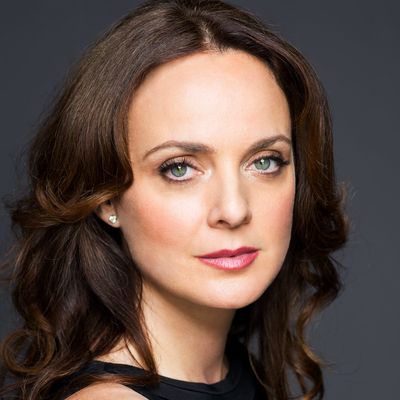
Tony Award®-nominated Broadway actress, singer and author Melissa Errico (My Fair Lady, Dracula, Les Misérables) will take the stage at the Rachel M... Read More
From the show: The Roundtable with Robert Bannon
Guests
About
Tony Award®-nominated Broadway actress, singer and author Melissa Errico (My Fair Lady, Dracula, Les Misérables) will take the stage at the Rachel M. Schlesinger Concert Hall and Arts Center (located on NOVA's Alexandria Campus) on May 7, with her mesmerizing new musical presentation, The Story of a Rose: A Musical Reverie on The Great War - tickets on sale here.
In a unique mix of beautiful song and brilliant speech, Melissa relates the story of the too-often-overlooked epoch of World War One, in all its many-sided American complexity, in an original musical presentation produced by The Doughboy Foundation to benefit its work in support of America’s National World War I Memorial in Washington, D.C. The show is also presented by the Gary Sinise Foundation, which was established by Actor and Humanitarian Gary Sinise to honor our nation’s defenders, veterans, first responders, and their families by creating and supporting unique programs designed to entertain, educate, inspire and support these heroes.
A sparkling, orchestral one-woman concert with evocative visuals, ravishing period costumes, and an all-star jazz ensemble, “The Story of a Rose” is both stylish entertainment and a deep reflection on a war we must not forget. As ever, Melissa’s touch will be intelligent and sensual, as she narrates her subject with the deep resonance of a mother of three teenagers, the same age today as the soldiers whose lives she sings.
From the arrival of Italian and Jewish immigrants before the war to the birth of distinctly American song during it, from the flight from Europe in the “oughts” of the twentieth century to the return of American soldiers to Europe in the teens -- from the nascent glories of Irving Berlin and Jerome Kern to the great Harlem Hellfighters and their introduction of American jazz to France right on the battlefields of the Western Front – every face of the Great War, the people who lived through it, and, above all, the music that they sang, will come alive. Using her own great Aunt Rose as her avatar and the Ziegfeld Follies that Rose starred in as a frame, Melissa recreates the songs and hopes and loves of the people of the time.
Under the musical direction of the great jazz pianist Tedd Firth (Marilyn Maye, Bernadette Peters, Michael Feinstein) and his big-band period ensemble, Melissa will share wartime tunes of patriotism and protest, loss and longing, from “Oh, How I Hate To Get Up In The Morning!” to “I Didn’t Raise My Boy to Be a Soldier,” “Alexander’s Ragtime Band” to a soaring “They Didn’t Believe Me,” all ending in a rousing chorus of “God Bless America” – a song Berlin wrote for the First World War. Acclaimed Broadway actor/musician George Abud (Lempicka, The Untitled Unauthorized Hunter S. Thompson Musical, The Band’s Visit) assists in a variety of onstage roles.
Throughout, Melissa tells us the story of her Rose, her aunt — a story of a family legend, by turns mischievous and melancholy, which becomes the story of a lost time. “Music,” she declares affirmatively, “is the one force that can connect our private memories to our common history. Every time we sing their songs; the people of a lost time live again.” “The Story of a Rose” will make the stage ring with history, and with hope.
_______________________________________________________________
Check out "The Roundtable with Robert Bannon" here on BPN on the daily, on YouTube, Broadway World, and on social media! Like, comment, share, & subscribe!
For more info on Robert- www.RobertBannon.com
Follow Him on IG- @RobertMBannon
TikTok-@RobertMBannon
Transcript
This transcript was automatically generated and might contain errors.
[0:14] Robert Bannon: Well, welcome to the round table, everybody. You know, we have our next guest. I have seen the Melissa Errico show. I have gone to 54 Below. I have a signed copy of one of her albums. You are Melissa Errico, a Tony nominee. She puts out albums. She is a muse and a star and a word muse. You are on camera yet.
[0:36] Melissa Errico: Hi, everybody.
[0:39] Robert Bannon: Wait, I'm obsessed with you, firstly. Hello to Patrick. Hello to your family. Hello to—he's so—nobody's home. Everybody in this family is so busy. It's like school's out. I sort of see a teenager. It's like woof. And then either I meet them in the city, they're ballerinas. Do you want to know what Diana's day was yesterday?
[1:02] Melissa Errico: Yes.
[1:02] Robert Bannon: Just listen to this. So she gets up at seven. My husband's out of town, so I'm boiling eggs, but six and a half minute eggs are not working for the family, right? Because they're a little soft in the middle, which is what the French like. My children think that's too wet. So I'm sitting there with my iPhone, you know, like it's cracking, you know, it's early for me. So I'm up there. Get up at—I every day I get up at 7-Eleven. I think that's funny. So I get up at 7-Eleven because I think that's funny. So, um, it's my generation funny. I get it. Whatever. It's 7-Eleven. So I get up, I go downstairs, I boil water. I put the dog out. There's a dog to deal with, right? This is my glamorous life. I start the boiling. Well, I do the boiling, then I open the door. The little Yorkie goes outside. I come back. Is this boring?
[1:48] Melissa Errico: No, this is fascinating.
[1:50] Robert Bannon: Okay. So then I boil the egg at seven and a half minutes or whatever it is, but I then will take one out at a time and cut the head off and look at the thing and see like, is that okay for Juliet? You know, I try so I try to give them a little variation within that minute of like hardness. So I put about four eggs in a cup in their little cups. Sometimes five if one breaks. So I do all of this and I put fruit out and I get hot water and I squeeze lemons. And so they have their lemon water. I've tried to make shakes. When Patrick is away, I make shakes. And he makes shakes better than me, apparently, and they don't like them. So today I wanted to make it fun. You know, I want things to be fun.
So I said, mommy's trying to redeem herself. So the shake went well, you know. I just—anything to make them laugh. They're so tired. So it's really early. They have a full day of school. Then I have rehearsal 12 to 4. I get to the ballet school, 4:30 is observation day. Diana's a major ballerina dancer, so she's dancing all the way until 6 or 7. Yesterday was six. We jumped in a kind of stinky Uber, and then we went home. And the minute we got home, she had to eat really quickly. We had dinner already made. She had to eat really quickly. Then she had guitar lesson, which was like electric guitar. And she's playing a song by some cool person that I can look up actually because I wrote it down because I was gonna ask my brother about it. Your kids are very—no, it goes on, it's not even to be believed. So, so wait, you're gonna know this. Phoebe Bridgers.
[3:29] Melissa Errico: Phoebe Bridgers. Very folky and contemporary and young and cool. I'm too old for that. That's Diana, so she's doing that. Then she has a little while to do homework. Then at 10:15 at night, every other day, they open their two laptops, they're twins, and they sit at the dining room table and they teach English to children in Cambodia. And like you hear all these little voices, and they're going long A, or they're going time, time, and you hear these little kids going, time, you know. They do that at 10:15 at night because you just raised good people every day. Long E. And you can hear, let's see. Let's see if you can hear the little voices. It's so cute. So there's the children. You see that? Nice long E sound. Yes, long E. We like long E. We like long E. So that's I'm teaching.
[4:32] Robert Bannon: Name.
[4:33] Melissa Errico: Melissa.
[4:36] Robert Bannon: Yeah, closer, but again, I'm hearing a little of the E sound. They said Mama, and they're saying name. Name. Those are—that's their class. Your kids are so fantastic and sweet. So that's the arco immaculate. How much fun? But I mean, they're literally teaching kids in Cambodia, like after a full day, and starting with eggs and shakes and dogs, and this is what I love about you and your family is that you are a Broadway star. You are a recording artist. You are on tour. Melissa Errico is on the road, people. Like Melissa is on the road, and you see her singing, and we're gonna talk about her show. And then your husband is like a superstar tennis player, and you all raise it.
[5:22] Melissa Errico: Well, he was. He was now he's a superstar, um, like you in the media. You know, he's—yeah, that is the sweetest thing anyone has ever said about me. So I'll shout out to the Mr. Macabo himself. So for you, what is fascinating to me is you never take the easy road. You like to work, and you—you—if you're gonna sing Sondheim, if you're gonna sing your noir album, you could take the easy road and sing, you know, twinkle twinkle little star and make it sound gorgeous, Melissa Errico.
[5:51] Melissa Errico: But I'm not sure that's true, actually. It's hard to twinkle twinkle little star. It's hard to, you know, engage an audience. You have to work hard these days to—to your shows. You don't have one show on the road, like you have multiple.
[6:06] Robert Bannon: That's a problem.
[6:07] Melissa Errico: That's because that's—that's called—that's called quirky. Uh, uh, the qu—that's quirky. I—I shouldn't really let that happen. But what happens is, as you know, doing cabaret yourself, is that you know, you have one show that will appeal to—well, anyway. What happens is you just create all these things, and then people will ask, and then a year pops up, and you're like, Oh my god, did I say I would learn film noir once for Long Beach, California? And then you're like, gosh, that's 24 songs. Um, like how am I gonna learn that again? So your head's exploding sometimes. I try to pace it so that for the most part, I'm singing Sondheim in a year. I put out a Sondheim record. I put out a second Sondheim album. Um, there might be people watching this who are like, Who is this lady?
[6:54] Robert Bannon: No, they're not.
[6:55] Melissa Errico: Okay, so if there's got—she's got two Sondheim albums that are absolutely gorgeous. She has Sondheim shows that are absolutely stunning, and you need to see them, and you need to see all of the things Melissa Errico does. If you're in Jersey, she's coming to the New Jersey Performing Arts Center. If you're in—we're gonna get to the DC area in a moment because that's her personality.
[7:15] Robert Bannon: That's a new thing.
[7:15] Melissa Errico: Yeah, that's a new thing. But the Sondheim stuff, I have what I call countdown to Sondheim right now, which is kind of the end of a full year and a half of doing the releasing the record, the Sondheim in the City album. Which, do you know what? It's a gift that keeps on giving. Because I—I put out my first album of Sondheim that was more lyrical and philosophical and almost, um, like a quiet spiritual album, like a—like a letter you would write privately to your children, to loved ones, to, uh, your eternal life, you know, just like all the wisdoms that will last and that have a kindness in them. I was positing at the time that Sondheim is a deeply empathic, loving, warm man. That's—I think I was ahead of the curve on the—I think.
[8:02] Robert Bannon: I'm gonna just go out and say that.
[8:03] Melissa Errico: I think I was ahead of the curve. A lot of people said you can swear by Sondheim or whatever, but I think I found him to be, um, like an—like a, uh, like a, um, a deity almost, uh, of kindness, like a druid, if you will. And I—I do think that there was a little edgier, uh, reputation that he's virtuosic, intelligent, intellectual, neurotic, maybe even not very nice, um, you know, in—to some the older folks, we're the old folks now, at least I am, but the older folks, you know, there's some people he really broke, actually. You know, he was a little intense, and his work is edgy, and people thought of it as, you know, intellectual or hard to sing, you know, or hard to remember. He said the reason you can't remember his songs is because you didn't play them enough, you know.
Like if you guess what, in his book, he says, you know, like you would hear when you repeat something, people learn it. That it wasn't just played, just wasn't played enough. But so you have Sondheim's former reputation. My first album was about empathy, really, and, uh, what I would consider human and one-on-one empathy, as well as global empathy, like the idea that in Sunday in the Park with George, there's an island of the grand jote, and all these different people of different walks of life and the end are in balance and harmony. It's a democratic ideal, it's tolerance, it's pluralism, it's so many things.
[9:38] Robert Bannon: So I was looking at it as like world peace, if you will. I know that sounds crazy, but that's just one idea that I saw in empathy. Never mind his human empathy and the loving songs, things like loving you, and just the sense of purpose that love gives us, even if Fosco was crazy. But—but it gave her purpose, and love can give you purpose. And so I was looking at things like that. The second album was a celebration of the energy of New York that defines Sondheim. He lived his whole life in a 20 block radius in New York City, and he loved the city, and he loved neurotic people who are so often urban, people who had what he called rumblings under the surface. And, um, uh, company and Saturday night and other things that are based in Manhattan.
Um, and those are the tools of the Sondheim in the City. And the album is really fun to sing. It's so fun. I have James Taylor's pianist right now, Clifford Carter, who's known as a groove pianist, and he's playing it on Saturday night at the Stoller Center. And this may be over by the time you air this.
[10:50] Robert Bannon: James Taylor's piano player.
[10:52] Melissa Errico: Oh yeah, he's great. He's Adina Menzel's. She—she—she smartly brought him into her, you know, rock and pop, um, beautiful touring career. So he—he's her musical director.
[11:06] Melissa Errico: Well, I'm so good. He's so soulful actually. He's really so he'll play like Van Morrison, and he's just so cool. And so while he's playing sauna, he goes, I hear a little Donald Fagan in this, and you know, he's got and he hears a little of this. You should go online and listen to his idea. I was leaving yesterday in a snow coat, and I walked up to the piano and I said, Thank you, Clifford, what a sweet man he is. And he's like, I said something about we always forget to rehearse send in the clowns. And I said something about well, we didn't do clowns, and he goes, Yeah, yeah. I was thinking about you know that. I had a couple ideas. Well, when we have time, you know, someday. And I got my snow coat on or my speed jacket, and I said, Well, what do you mean?
What ideas? And he starts taking some music out of his bag. He's so cash, he's got the long hair and he's stuff. It's like a little hippie, you know. He's so cool. He puts the music up on the thing, and I said, you know what? You never know. I take my iPhone and I just put it on the piano. And I put it on Instagram last night. He played the sending the send in the clowns in a way you've never heard before. It's so weird and interesting. Do you want to hear a second of it?
[12:12] Robert Bannon: Yes, sure. And we're gonna follow you. We can follow Melissa. The links will be below us while we're talking, and you can follow Melissa and you can stay up to date, and you can go to her website, which is also linked below, so that you can get all the dates for all of the shows and see all of her albums that are all out. You can stream them and buy them.
[12:48] Melissa Errico: Send it up. Can you hear that?
[12:52] Robert Bannon: Yes.
[12:54] Melissa Errico: Yes. That's it's like a it's like a groove song, death. It's got a meditative it's got like a meditative, but it's not wrong, actually. It's all like it's all like a bad regret dream, you know. Well, you are the person to um to sing these songs and and you sing them around the country, and you can see her uh in New York, Jersey, like I said, and yes, uh shameless plug myself with you that on June 20th. We're gonna have to rock it. What is that? June 20th?
[13:25] Melissa Errico: June 20th. It's my third annual Pride Party at 54 Below where I do only Diva song. I may have to sing a more diva song.
[13:31] Robert Bannon: Yeah, or maybe maybe I should I don't know, come and kiss you on the please come and kiss Robbie Roselle directs the show, and Robbie directs it, and you know, we so Robbie was at your Christmas show when you were in pajamas, and and you need to go see Melissa, and I have people coming from that come to my shows, so they love Billy Stritch, who's playing your show.
[13:53] Melissa Errico: Yeah, yeah, and my show like back to back, like we should have some people go back to back.
[13:58] Robert Bannon: That's what's Christine Clifton, who's from North Carolina, is taking the train and seeing the seven o'clock Melissa Errico show, the celebrity hour, the seven o'clock fancy hour, and then slumming it with me at 9:30.
[14:09] Melissa Errico: Exactly.
[14:10] Robert Bannon: The London, they say she's the classiest. So I'm leading up to, I don't know why I talk in circles, but I'm but I'm doing all these Sondheim in the City things. They're all leading up to July 12th, where I'm making my solo concert hall debut in London at the best best spot. So for me, this is all kind of leading up, and London is billing me uh there as the classiest concert of the season.
[14:36] Melissa Errico: So it doesn't get classier than that.
[14:39] Robert Bannon: That is fair. I have to agree. Uh you know, you be I'll let me do one thing and you do the other, and we'll have a blast.
[14:45] Melissa Errico: We're gonna have a I love that. Can you tell us while we're speaking of new shows and all of the work that you do? Because you I guess don't like to sit still, you know. She writes for the New York Times and she does her, she does it on television and all the things that she does.
[14:57] Robert Bannon: And I used to do television. I'd love to do television. I don't know, you know, I look okay, you know, they should call me.
[15:04] Melissa Errico: Look at me, you don't age, and I will have so many questions about your gorgeous hair.
[15:07] Robert Bannon: But I was gonna save that for another.
[15:10] Melissa Errico: I'm guilty. I knew I had you today, so I gotta hear a lot of things. It's so gorgeous.
[15:14] Robert Bannon: A blow dry.
[15:16] Melissa Errico: It's so when I'm sharing when you're in the next dressing room on the 20th over there, and the and I'm over here in the broom closet, and I I'll bring you the room closet doesn't exist anymore.
[15:25] Robert Bannon: Oh, the smaller dressing room does exist.
[15:28] Melissa Errico: But they the there was a broom closet at one point.
[15:30] Robert Bannon: There was, it's now a broom closet. I was in there once. I've come a long way now.
[15:35] Melissa Errico: So when you have when I'll bring you some cheese doodles, or I don't know what Melissa Errico will eat, but hard-boiled eggs, or maybe what before I sing, I like melon.
[15:44] Robert Bannon: I'm gonna bring you some melon. I think Pavarotti liked melon, and I heard from someone that he had a little dish on the stage of melon.
[15:52] Melissa Errico: Oh, well, then that's what I'm gonna bring you, Melissa.
[15:54] Robert Bannon: We just shove a little apparently.
[15:58] Melissa Errico: I'm very moved by your new show. Uh, and I have to tell you uh about Aunt Rose and Okay. So this is this is a special. I have this on time thing, which is kind of my bread and butter, is my life. I'm an actress forever. I love Sondheim, he's the druid. That's a constant.
[16:14] Robert Bannon: There's a special thing happening, and that's what we're here to talk about.
[16:17] Melissa Errico: So everything we just talked about is you get no, but this but this is special. Now, when I do Sondheim, and I do a lot of uh other uh theme concerts, I often mention my family history. Stephen Sondheim, as everybody out there knows. Um, if they know anything about Stephen Sondheim, they know he wrote musical Follies.
[16:40] Robert Bannon: And Follies was about uh the new Amsterdam Theater in New York City, which was a vaudeville theater from a time before there was radio, microphones, film, never mind Spotify.
[16:53] Melissa Errico: There was nothing except you'd go to a variety show or a vaudeville to hear music. The only other alternative you had in American history was to buy sheet music and go home and play it. That was it. So the new Amsterdam Theater, this is for all the young people out there, was on 42nd Street, and it was a vaudeville stage, and those shows were a little bit like 54 Below.
[17:17] Robert Bannon: They were little show, little show, like you and me are gonna be the king and queen of June 20th, 2025.
[17:24] Melissa Errico: That would happen all the time at a vaudeville stage. You'd have five minutes, five minutes. This woman would do a thing where she uh takes a chair and she spins it around with her teeth, and then another three girls would have a heart a handkerchief and they would do a modern dance, and uh a juggler and a beautiful girl would sing, and uh a comedian, and well, it's crazy stuff.
[17:43] Robert Bannon: Ziegfeld, Florence Ziegfeld created Vaudeville Pinnacle, like the good, like the best, beautiful singing Fanny Bryce, who became funny girl, the musical, great Jewish, brilliant performer, an actual person, in case anyone didn't know that.
[18:03] Melissa Errico: Uh, and then these beautiful girls called Ziegfeld girls, and they used to have feathers, and they were just the prettiest things.
[18:10] Robert Bannon: And he said that out of the vast garden of girls, you know, these were the perfect blossoms.
[18:17] Melissa Errico: So the most beautiful women in America.
[18:19] Robert Bannon: Now, that whole business went out of business when movies started.
[18:24] Melissa Errico: We have Judy Garland and all these you know old films and so on. All of that put all this out, everyone was out of work.
[18:29] Robert Bannon: Stud Stirkle, every famous person in vaudeville, and they demolished the theater.
[18:35] Melissa Errico: And as they were crashing it down, Stephen Sondheim went, oh my god, there goes American history.
[18:41] Robert Bannon: And he wrote a musical called Follies about all the elderly people coming back to look at the theater one more time and have a reunion.
[18:50] Melissa Errico: And their young selves that we all know, the musical now, all the young Sally and things, they come out and they beautiful, and the old people remember how beautiful they were and what they used to want and who they were and and and their dreams, and it's uh it's a Sondheim musical called Follies.
[19:08] Robert Bannon: So I I mentioned that, and I sing from Follies in my Sondheim shows.
[19:12] Melissa Errico: Somebody from Washington, DC heard this stories, and what know that my family came over from Italy, and one of and my grandmother was a singer, and her beautiful sister was discovered by Ziegfeld, and she became one of his favorites.
[19:27] Robert Bannon: She is a great Follies girl.
[19:32] Melissa Errico: That's Rose. That's her. You can feel the 20s starting. You can see the hairstyle. But she was she was working in the teens, and she was working into her later years uh when it the Follies was really finishing late 20s, early 30s.
[19:47] Robert Bannon: So you can feel the 20s and the hairstyle there.
[19:49] Melissa Errico: That was later in her career. Um, so I have a Follies girl in my life, so that ties me to Sondheim, it ties me to American history, ties me to my Italian um immigrant history. Very important stuff right now about immigrants in our country, and this may be misunderstanding that um we are nothing without immigrants, but because we are all, she's an immigrant, she's not ashamed to us, is she?
[20:14] Robert Bannon: No.
[20:16] Melissa Errico: So um, so someone saw somebody saw me performing and hearing the story that before she was a great Follies girl, she was a seamstress sewing uniforms for the first world war.
[20:28] Robert Bannon: And a man saw me who works in the government, as well as a private company called the Doughboy Foundation, and their job is to remember the first world war.
[20:28] Melissa Errico: The first world war was not much on my mind, but my Aunt Rose and my grandmother were seamstresses sewing uniforms. That's a that is that ties me to the war. My her sister, my grandmother, married Babbo.
[20:55] Robert Bannon: He fought in the first world war.
[20:57] Melissa Errico: I mentioned this to my mother that I'm in talking about maybe doing a concert about the first world war. I was approached by someone, and she says, You know, we have Babbo's sword, and she brings out this huge weapon in the closet, and it's a it's a soldier's sword.
[21:17] Robert Bannon: So I started doing this, studying the First World War.
[21:17] Melissa Errico: The First World War is the beginnings of immigration in our country. The beginning, you know, the late night the 1890s to 1910, you have millions and millions of people coming from everywhere, Ireland, everywhere, Italy, you know, everywhere, the Eastern Europe, Jewish people, everything.
[21:43] Robert Bannon: And then they quickly, the Europe went into war in 1914.
[21:50] Melissa Errico: So we're over here hearing about a war over there, and we're like, uh oh. And we tried not to get into the war, but because we just got our independence and we just became a democracy, the United States felt like we have to go because too many people are dying.
[22:08] Robert Bannon: And it was called fighting for democracy, which we have basically done ever since then until about last week.
[22:22] Melissa Errico: So that's actually been our foreign policy forever. The First World War is an interesting time from a historical standpoint, from an immigration standpoint, and then number one from a musical standpoint, jazz was being invented at that time, and because of the Follies, that's where music was being transmitted. Because I have this Follies girl in my life, I've created a concert that tells you about Rose and that creates the world of the Follies, and I will sing all the music of the First World War. In that feel, in that the way people would have heard it. And I've learned all the music. A lot of these songs came from London musicals to the United States. We had our own music, and we had political arguments about whether we should join the war or not. We had songs called "I Didn't Raise My Boy to Be a Soldier."
[23:11] Melissa Errico: I didn't raise my boy to be a soldier. I brought him up to be my pride and joy. Who dares to put a musket on his shoulder to shoot some other mother's darling boy? Let nations arbitrate their future troubles. It's time to throw the sword and gun away. There'd be no war today if mothers all would say, I didn't raise my boy to be a soldier. And that's 1917, 1918, 1917, 1916. It's right in the war. It's an anti-war song.
[24:06] Melissa Errico: So sorry, my dog is obviously... I love your dog, and I have my own dog. May 7 is... he doesn't like mail, and the mailman is... I have... I understand. May 7th, "The Story of a Rose," a musical revelry on the Great War, comes to the Rachel M. Schlesinger Concert Hall in Alexandria, Virginia. I have a question, you know. I was very moved when I got the press release, and shout out to your people for thinking of us. And you, my old friend, I remember talking to you about Vegas and Ben Senior Show and all the things we've had a lot of fun. My mother's name is Rose, my grandmother, my great grandmother's name is Rose, and my grandfather, my grandmother, my grandfather's an Italian immigrant who came here from Italy at 18 years old.
My dad's last name is Bannon, but my grandmother is Vincenza Di Meglio, and I was always very proud of the fact that my grandfather came here from Italy at 18 and didn't speak any English, and my grandmother was a seamstress in Fortley, New Jersey. And they met each other and their journey as illegal immigrants to becoming Americans, and I wouldn't be who I am without their guts and without their hard work and becoming a part of the fabric of this country.
[25:15] Robert Bannon: And I know your family is a bunch of brilliant people. Your father is... you all have a bunch of very smart educated people.
[25:22] Melissa Errico: Yeah, a doctor, but he fought in Vietnam. Well, he didn't fight. He actually... he was a doctor in the worst of Saigon in the Vietnam War. So I have an affinity to war things, but this is a war thing with the environment of the Follies, and I have called it a reverie because first of all, she wasn't in the Ziegfeld Follies concert of 1917. She was underage. She wasn't in that concert, but I'm making it like sort of as if we're in the Follies of 1917. It's the general idea of what the Follies felt like and a chance to hear the music, but then I come in and out of it and I teach like I was just doing now. I narrate so people learn what the war was about, and it was so sad. Like it's such a difficult show because it's so sad at the sort of the end, as it were.
The realities of the First World War are not as charming as the music that supported it, you know, because we wanted to lift spirits and we wanted people to feel hope and "Over There, Over There, send the word, send the word over there."
[26:32] Melissa Errico: It's the beginnings of Irving Berlin, Jerome Kern, and everything that formed Stephen Sondheim. It's the generation that formed him. So it's so interesting to me. And it's interesting because we're living in such a political time, and I hope to put like a stylish, almost sexy... I always call this my sexy Smithsonian show.
[26:51] Robert Bannon: I love that.
[26:52] Melissa Errico: Yeah, the sexy Smithsonian, because it's kind of like teachy, but it's also gonna be super sexy. I'll be wearing Follies clothes and feathers, and but sometimes I'll have like a, you know, a uniform at one point, and then at the end I'll end up in a beautiful black kind of jumper, and I might be a little bit like Joan Baez or something, you know, just philosophizing on losses and a little more like the folk singers, the James Taylors and the Peter, Paul and Marys of the world, you know, who reflected on these ideas of war and loss and the value of the soldier, you know, in American soldier, these sweet children. They're all the age of my own children with whom I make eggs in the morning. The same age, they don't know how to boil an egg.
[27:37] Melissa Errico: That's why the great song was so... it's so adolescent. The great song of the World War One that we could kind of wrap this up with is the idea is "Oh, How I Hate to Get Up in the Morning."
[27:52] Melissa Errico: Oh, how I'd love to remain in bed. That's a great Irving Berlin song. Yes, hate to get up in the morning. They don't want to get up. Neither do I, neither do I. Well, listen, when you get tickets, everybody, this great organization, the Doughboy Foundation. If you're a first responder, you've served in the military, you get a gigantic discount. Oh, you must come. And because these are the same people that gave the honor to the First World War this year with the first ever World War One national statue.
[28:24] Robert Bannon: There's a memorial.
[28:24] Melissa Errico: It's a pleasure, yes. It's across the street from the Willard Hotel right there by the White House. It's amazing. And I sang to celebrate it with Billy Stretch, actually, with a military orchestra. We went and celebrated. It's a great organization. It's a history organization. And they remember the Harlem Hellfighters. We have that in our show. And the, you know, the Department of Defense took some of the history off their website yesterday, and the Trump administration has erased a little bit of it. These are the greatest African American soldiers in our history, and they brought jazz to Europe as well. They were not only fighters, but they were jazz musicians. So there's a lot of important history to remember. And they were wonderful musicians. The music is fun. The ideas are important, but the music is fun. We're gonna make this fun. Somehow I'm gonna make World War One fun.
[29:15] Robert Bannon: Well, you have... right. You have the amazing George Abud.
[29:18] Melissa Errico: He's amazing.
[29:19] Robert Bannon: Yes, amazing, amazing in "Limpica," amazing in everything he has done. Amazing.
[29:25] Melissa Errico: And then you have the incomparable Tedd Firth, who is, I mean, he's Tedd Firth.
[29:31] Robert Bannon: Yeah, George is gonna play, you know, like the kind of the MC. He's sort of the Alan Cumming of the Kit Kat Club. It's sort of like the Kit Kat Club does for World War One what the Follies will do for World War Two. We're gonna put ourselves in a nightclub to experience the tensions of war, but in a theatrical sense. So he'll play that, but then when I need a soldier, you know, he'll play the soldier. We need a young man in the show. You can't talk about the war without having a young man in the show.
[29:59] Melissa Errico: Well, he's amazing, and then you take the heart... I can't tell you what... I love him so, so much. And then you take this music and you take Ted and you take the whole thing that you're gonna put that... it'll be a very special evening. I hope so. I hope people learn a lot, and I hope they'll find it kind of alluring and historical, and I just love it. It's taken a long time for me. This is my first interview. It has taken me so long to be able to talk about it because it's been known forever as the forgotten war. And so when someone said it to me, I was like, what war? The First World War? Like it doesn't register. I always worry about the Second World War.
[29:59] Robert Bannon: Yes, well this is gonna get history, but in a fun way with great looks. She's gonna have great looks.
[29:59] Melissa Errico: Oh, I'm gonna have three great looks, I have that for sure. Derek McLane is making the clothes, and he makes the clothes for "The Gilded Age" and, you know, "Death Becomes Her" and other... that's why this is why London says she's the classiest show of the year, people. So thank you for this interview and thank you for giving it time. I really think this is going to be great.
[31:14] Melissa Errico: I call it "The Story of a Rose" because my Aunt Rose is my avatar, is my, you know, inspiration, sort of the icon of the time that lets me enter the Kit Kat Club, but I have a sword to remind me that it's a serious matter, but I have George to make it fun.
[31:32] Robert Bannon: And I have Jerome Kern and Irving Berlin as my musical guides and amazing support, amazing publicists. This is the big leagues, by the way. I don't know if you can tell, but this is the big leagues.
[31:45] Melissa Errico: Like this is a big leagues.
[31:46] Robert Bannon: And you can't forget you have Melissa Errico. You have her voice, you have her knowledge, and you have her storytelling, which is top notch.
[31:52] Melissa Errico: And talk about big leagues. Melissa Errico up on stage with her knowledge, using all of the skills. You have so many talents and skills, and you put them to such great use.
[32:03] Melissa Errico: And I think it's important, you know, to share what I know and to try to make something old sort of fresh again, you know, so that we know.
[32:03] Robert Bannon: Yeah.
[32:13] Robert Bannon: So well, she's so smart and she sings. Have you heard her sing? My goodness gracious, it's unfair, Melissa Errico.
[32:21] Melissa Errico: No, no, thank you. I'm not Barbara Streisand, but I feel great.
[32:22] Melissa Errico: I feel great. I, you know, I don't know if you've been reading, there's a new trend that the Gen X women are supposed to be kind of sexy.
[32:35] Robert Bannon: And you as you should be.
[32:36] Robert Bannon: I look forward to hearing all about this show. I look forward to being in New York City with you in June. We're gonna tear the place apart.
[32:44] Melissa Errico: And I look forward to no matter where you are around this country when Melissa Errico is here, follow the link below. The tickets to buy for the show in the DC or Virginia area is gonna be below. And then all of the dates and everything is on her website. And listen to her music, listen to her music this week or this weekend when you're watching and around the house driving in your car. The albums are gorgeous, especially for anyone who loves Sondheim or loves the film noir album, so sexy and gorgeous. You gotta listen to Melissa Errico.
[33:09] Melissa Errico: Thank you. So good to see you.
[33:10] Robert Bannon: So good to see you. And let's get together soon and get ready for June.
[33:14] Melissa Errico: Get ready for June.
[33:16] Robert Bannon: See you soon.
[33:16] Melissa Errico: See you soon.
© Broadway Podcast Network, All Rights Reserved