

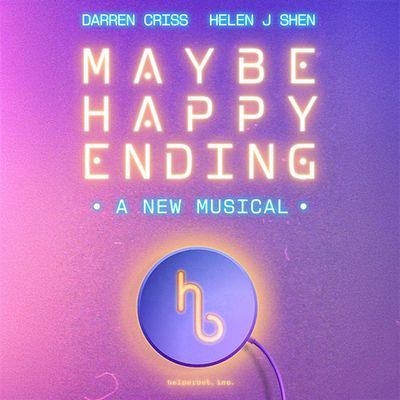
Ben Stanton, the Lighting Designer for Maybe Happy Ending stops by! Ben is a lighting designer for theater, concerts, dance, installations, and events. He is a four-time Tony Award nominee as well as an Obie, Lortel, IRNE, and Ovation Award winner... Read More
From the show: The Roundtable with Robert Bannon
Featured Shows
About
Ben Stanton, the Lighting Designer for Maybe Happy Ending stops by!
Ben is a lighting designer for theater, concerts, dance, installations, and events. He is a four-time Tony Award nominee as well as an Obie, Lortel, IRNE, and Ovation Award winner. Ben is currently represented on Broadway by Maybe Happy Ending at the Belasco Theater. Recent Broadway credits include The Notebook (the Schoenfeld Theater) Mary Jane (starring Rachel McAdams), Days of Wine and Roses(Starring Kelli O'Hara & Brian Darcy James), Goodnight, Oscar (starring Sean Hayes); The Collaboration (Starring Paul Bettany & Jeremy Pope); Charles Dickens’ A Christmas Carol (Featuring Jefferson Mays); The Rose Tattoo (starring Marisa Tomei); Derren Brown: Secret (James Earl Jones Theater); Regina Spektor: Live On Broadway (Lunt-Fontanne Theater); Ayad Akhtar’s Junk (Lincoln Center); Six Degrees of Separation (starring Allison Janney, Corey Hawkins, and John Benjamin Hickey); Deaf West Theater’s Spring Awakening (Lena Horne Theater); Fully Committed(starring Jesse Tyler Ferguson); and Fun Home (Broadway, Off-Broadway, 1st National Tour, London).
Ben has designed concerts and tours for recording artists including Beirut, Ben Platt, Iron and Wine, The National, Regina Spektor, Sufjan Stevens, and St. Vincent, and has collaborated on several large-scale concert/theater hybrid performances including Road Trip featuring Bang On A Can All-Stars (BAM Opera House / Ford Theater, LA), Reconfiguration – An Evening with Other Lives (BAM Opera House), Planetarium featuring Bryce Dessner, Nico Mulhy, & Sufjan Stevens (BAM Opera House / Disney Concert Hall, LA / Sydney Opera House), and Black Mountain Songs featuring Bryce Dessner, Richard Reed Parry, & the Brooklyn Youth Chorus (BAM Harvey Theater / Barbican, London).
Ben serves as an Assistant Professor at Brooklyn College where he teaches lighting design and programming, and he’s the founder and principal designer at Stanton Collaborative, a full-service design firm specializing in concerts, events, and art installations. Ben graduated from the University of Massachusetts at Amherst with degrees in theater and jazz performance.
Hear all about how his journey led him to Broadway, how a show is mounted, and what a day in the life is like!
_______________________________________________________________
Check out "The Roundtable with Robert Bannon" here on BPN on the daily, on YouTube, Broadway World, and on social media! Like, comment, share, & subscribe!
For more info on Robert- www.RobertBannon.com
Follow Him on IG- @RobertMBannon
TikTok-@RobertMBannon
Transcript
This transcript was automatically generated and might contain errors.
[0:14] Robert Bannon: Well, welcome to the round table, everybody. My name is Robert Bannon. You're listening to us on Broadway World or over here on the Broadway Podcast Network. And I'm so excited about this season. I've been so excited about Broadway this year. And one of the shows that has moved me. It is gorgeous. It is relevant. It is important. And they are acting and singing their faces off as Maybe Happy Ending. Like singing. And uh with direction and with choreography and with music comes all of the design team. And uh one of my favorite things is to talk to people about the design team because how do they enhance the story? And our next guest, if it's Regina Spektor on tour, or if it's four Tony nominations, or if it's a whole bunch of other things nominated for every award that you can in theater, we have the best of the best.
How does he make things like this happen? Look at this picture. I don't even know how to set up automatic lights in my house. You know where people say, like, hey Alexa, turn off the living room light. I can't do that. So how does he do this? Benjamin Stanton is here. Ben, welcome to the show.
[1:13] Benjamin Stanton: Hey Robert, how are you?
[1:15] Robert Bannon: How do you do that? Can you do electrical work in my house?
[1:17] Benjamin Stanton: Yeah, I can.
[1:18] Robert Bannon: It is a cheap.
[1:21] Benjamin Stanton: Yeah, I've been known to show up at a friend's house and put in a ceiling fan or something like that in my time.
[1:27] Robert Bannon: Oh my, uh that's it. You're hired. Well, congratulations. Your career has been pretty amazing.
[1:33] Benjamin Stanton: Thank you so much.
[1:34] Robert Bannon: How does someone become a lighting designer? Is is did you ever want to be on the stage? Did you ever have the performer bug? And did it transition?
[1:41] Benjamin Stanton: I I thought I was gonna become a jazz drummer. I was a musician, so I did have a performing bug, but it was not uh as an actor. Um, I uh was drawn to music and performing music at an early age. And um, you know, uh, I I sort of thought that was going to be my life path. I I found theater in high school. I got very excited when I saw people climbing around and plugging things in and wiring things and running follow spots and running light boards, and and I guess I had an inclination towards technical theater initially, but it was just a hobby. I really thought that my path was I was a serious music student. Um I got a scholarship to go to UMass Amherst uh to be a jazz drummer, and I went there and started uh my studies in music.
And it was only after a couple years when I sort of was um, you know how that thing happens where you study something and you start to not love it anymore. Uh so I, you know, for me that happened a little bit with music. It got really serious, it got really formal, it wasn't fun anymore. And after a couple years of studying, um I and I also was having trouble finding a mentor, which I think is such an important part of becoming any kind of artist is finding mentors and teachers that believe in you, finding people that believe in you. And as a musician, uh I was struggling to find that person, and I sort of wandered over to the theater department at UMass and I met who would become my first lighting mentor, a professor who just retired uh this year, this past year.
Her name is Penny Remsen, she's an incredible, incredible teacher and lighting designer. And she uh, you know, took me under her wing and I switched majors and the rest is history. I've literally been doing nothing else the entire time uh that I've been alive since I met Penny.
[3:34] Robert Bannon: Wow, that isn't that is amazing because the journey to being an artist, what makes moves me is so many people uh in art want to think of it only as the people on the stage, but there's an incredible team that's behind the stage, and so many people who don't sing and dance and act but want to be a part of the theater. There's so many opportunities and jobs for them. And you bring up a big part about mentorship. So you didn't start, you weren't like in high school working on The Music Man in your high school. You came to this in college.
[4:01] Benjamin Stanton: Well, I did run like a follow spot for South Pacific, and I did run a light board for uh Guys and Dolls. I mean, I did do that, and I and I did like in the summertime. I went to a theater camp to be like technical theater intern. So it was something I started to love in high school, but it was not the thing I thought I was going to do for the rest of my life. Um, and and the other interesting thing, I think that I didn't know I was preparing for a career in lighting design as a drummer, but the parallels between being a drummer and being a lighting designer are incredibly um significant. Uh, we we both tell stories without words. We're both sort of part of a larger creative team creating uh and and specifically the lighting designers are are it's like a reactionary art form, which is the same as drumming, right?
So as a jazz drummer, uh we, you know, I would listen to the horn, I would listen to the bass, and I would be responding. And as a lighting designer, I look at the set design, I look at the blocking, I listen to the the score, and I'm responding. And it's I was I was stunned at how similar my that like I that I had been building these muscles, these nonverbal storytelling muscles my entire life since I was a little kid in a different art form, and that I literally could just translate the whole idea. The whole idea of telling a story, creating an arc, creating a beginning, a middle, and an ending without words, was uh almost identical. And I I I so I I really was very, very lucky that I found lighting design specifically because as a as a as someone who has studied music and studied percussion and studied drumming and had explored all that storytelling for so long. Uh I, you know, I was sort of really, really well set up and suited to to be a lighting designer.
[5:45] Robert Bannon: That's amazing analogy between it because it it's all cues and bass and rhythm and the way things move and the feeling and and the dynamics. I think lighting designers really often control the dynamics on stage. We can be very, very, very dim, very small, very isolated, and we can be very big and very bright and very loud, and that's what drummers do too. So one of my big questions I've had, and we've had you know, we've had uh scenic designers on and costume designers on, et cetera, is how I think we don't realize how important it is the design team working with the creative team in terms of the director and choreo and and music, and all really goes together. So take Michael Arden, for example, director of this piece. How do you, Ben and Michael, work together? Do you have a vision? Does he have a vision? It like how does it collaborate so you all come to an agreement of what we see on stage?
[6:30] Benjamin Stanton: Michael has very strong visions. And one of the things that he's so good at is sort of creating theater that we've like that we've never seen before. And and and and bringing back, I think to Broadway a feel like that feeling of when you first see your first Broadway show. Uh, he loves theater magic, he loves stage magic, he loves lighting. So he has very, very strong visions. And I think um, and and of course the scenic designers, any scenic designer when they create their set, they're imagining light on it. And sometimes they'll even show you pictures of a rendering or or a model that's lit in certain ways. And I find that stuff incredibly useful. Like I said, I think lighting designers, we're responsive artists.
So all of that feedback is really, really um useful. It uh you know I I want to support directors, especially directors with strong visions. If a director isn't as sure what they want, I'm happy to step in and create a world for them. But I I feel very comfortable taking taking sort of source source material and source ideas and making them my own. So you know uh so you know Michael always has strong ideas and I think we talk a lot about it in pre-production. Dane and Michael, you know, Dane Laffrey and Michael Arden work together on almost every project. So they're sort of a team, a creative visual team. And so you know to work with them is is to sort of get on board with the concept that they've usually created on their own.
And in this case I think it was you know these sort of moving modular pieces of scenery this incredibly graphic sort of geometric always moving always changing world and it was um, you know, and it was uh up to me to figure out how to tell the story within that construct.
[8:21] Robert Bannon: So when you take a move when you take Maybe Happy Ending and you take this this show in particular how many does how many cues are there in this show and how many times have you played with the lighting from the first day you had it till today?
[8:21] Benjamin Stanton: Well uh I mean there's hundreds of cues in the show um this show never stays in one place for very long and every time the piece of I mean there's a ton of automation in the show there's a ton of video design in the show. It's very immersive. You know, the the set design for Maybe Happy Ending moves constantly. So with regard to how many light cues there are, there's there's hundreds. Every time the iris, the sort of iris portals that have light sort of on the edges of them move, where we're tracking all these openings and closings, all of these irises, all of the set sort of moving off and on stage. Every time the set moves, there's definitely several cues involved in tracking all of that and making it feel fluid.
And then, you know, we're also following the mood of the songs and the piece and the sort of overall arc of this love story, these two robots who fall in love and try to find their humanity. We are finding, you know, I'm lighting the music, I'm lighting the tone. I'm also trying to tell a story of, you know, uh sort of what Seoul, South Korea might look like many, many years in the future, which I think it was, you know, I'm the scenery does a decent job of telling that story that we're not in the present. You know, the especially that these are, you know, the place starts out in Oliver's apartment, which is essentially a little cube, a little white cube, almost like um, you know, like a shadow box.
It's it's very contained, it's very small, it has all of these things in it. And um, you know, I needed to try to infuse that space with color and light in a way that told the story of time of day, but also told the story of the future. And so, you know, it was um, you know, it was a it was a challenging set to light, honestly, because all of these little cubes, there's very few places to sort of send light into them and to infuse them with color, but also it was really exciting because these little white boxes took color so beautifully, and there are these big windows on the side that I could just pour light and color into. And it was kind of up to me to decide what you know. Michael and I had a lot of conversations about sort of what's coming through the windows, why, you know, different, you know, do these different times of day need to be realistic or can they be more expressionistic?
And I think we chose more expressionistic because it helped us tell tell the emotional story of the play. Um, but because the video design, which is incredible, is so immersive, and the set design, which is incredible, is so complicated and geometric, it actually was quite a challenge to figure out where to put lights and how to get light into all these spaces in an organic way.
[11:10] Robert Bannon: Well, when you see pictures of this, everybody before you buy your tickets, and we're talking about Maybe Happy Ending while we're talking about it, and everybody can go get their tickets while we're here, maybehappyending.com. You can get your tickets or and we can follow then at Ben Stan underscore official so you can stay up to date on all of his projects and everything that's coming down the pike and all the things that you've done.
[11:28] Benjamin Stanton: Um, is that it's such a modern story. Yeah, it has a modern look and it's such technical elements that you've never seen on stage before. It is mind-bending, you know, it will change the way theater is done in the future. And the lighting is its character, is a character in the show.
[11:45] Robert Bannon: I think that's right. That's a good way to put it.
[11:46] Benjamin Stanton: I I think I'm always trying to sort of, you know, in that vein of like that. I'm sort of still always in my head a little bit of a musician. I'm kind of trying to play the piece like an instrument. I'm trying to play the lighting design like an instrument. I'm I feel, you know, not only musically but emotionally, I'm always trying to sort of grow and and contract, expand, iris, you know, just anything to help the audience feel a little bit deeper, sort of the the emotional moments, the beats, you know, the sort of acting beats, and the of course the music.
[12:15] Benjamin Stanton: And as a former jazz musician, this this sort of jazz-infused score. What I love about this piece really is that it's this, it's this collision of old and new. And and the new, obviously, is this extremely, you know, these are robots, and and we're in the future, and visually it's it's it's very very new, right? And it's very like you say, it's something we've never seen before. And I think that was the brief, honestly. It was how do we create a world we've never seen before, not only on Broadway, but you know, just sort of dramaturgically, and then but we have this classic jazz music, and we have this character Gil Brentley from the 30s and 40s, you know, who was a sort of a fictional jazz star, and and we have a classic love story, right?
Uh uh the most human of stories, sort of why do we love, who do we love, how do we sort of find our own humanity, and why do we choose love when we know it's gonna end? The the most the most sort of iconic and classic, uh, you know, sort of theatrical idea. And I I love the collision of those two things, and I think that's what we were playing with the whole time with this piece, and I think that's why it resonates. It's gonna move you, it's it's moving, it's gonna leave you thinking, and it's gonna make you think about love, life, a whole, a whole bunch of things, and and the performances out there. Darren and Helen, who's just here, everybody who's up on that stage, this ensemble is is doing such amazing, beautiful work.
[13:40] Robert Bannon: Your career then is so fast. Firstly, kudos to you because I've never seen a thunder, lightning storm, rainstorm like I saw in The Notebook. That was such an amazing because everyone goes into that show, but went into that show thinking, how are they gonna do it? And you did it epically. I heard from Joy, and I heard from uh, you know, from Tys everyone that was a part of it was like that was a a moment in tech that was a moment to get it right.
[14:04] Benjamin Stanton: Yes, yeah, yeah. We we worked on that. I mean, both in Chicago and in New York. I mean, that was an of an an evolution for a really long time. Those moments don't come easy, you know, those moments really don't come easy uh yes that was that was really real rewarding that whole show was really beautiful um the idea of water as a as a as a sort of metaphor for memory I thought was just so lovely in that show and and your other shows if it's Mary Jane which was beautiful and Days of Wine and Roses and Goodnight Oscar and the collaboration and all of the you you have a and the collaboration you know had shout out to that that cast and MTC and everybody that had the light the lighting of that show every show that I'm looking at seen all the shows you've done practically over the past few years they you have a style it's moody it it is it creeps up on you it it changes you does the shows find you or do you find the shows how does it work to get the job?
[14:11] Benjamin Stanton: The shows usually find me I I I don't I I the style whatever style I have I I it feels good to hear that because I it's not um a calculated thing I I think you know like I say I'm sort of a a jazz drummer who started lighting dance and then eventually kind of moved into mainstream theater I also like concerts so I you know I I think that but but this style I think the shows find me uh the the the the celebr the the collaborators find me and I and I I guess it's because of that style or a certain thing that I do I've had some set designers tell me that when they design sets they know that I'm lighting they design them a certain way but it's not something that was calculated or or even particularly conscious.
[15:42] Benjamin Stanton: I think I think like I I think like I said before, I sort of play the lighting design like an instrument. I use a lot of side light and beautiful angles of light, sort of really evocative, beautiful kind of dynamic angles in my work. I try to use color in, I don't try to over, I try not to overuse color, but you know, in a piece like Maybe Happy Ending, for instance, um, you know, uh I felt like color was our tool for telling this love story, especially because there were so few angles available to me and so few directions of light available to me because of the way the set design worked and the video design. So it became a story about color, uh, which I think was really effective and beautiful.
And Dane's set lent itself to that. And the video design lent itself to that so so beautifully. But you know, Days of Wine and Roses was a very stark piece. It was not colorful at all. Um, but it still has those really strong angles, and some of that's directors, you know, what different directors want. But I always looking for um new and interesting ways of sort of revealing shapes on stage.
[16:48] Benjamin Stanton: So one of the things that I always do in every process is look, I sort of treat, I sort of step back for a minute and look at the set design as sort of like a sculpture sitting in the space. And I think about all of the different ways I can illuminate it and change it and reveal it to the audience anew. And then I I sort of catalog all those and I set myself up to use all those as it's uh as sort of different means of telling the story. And sometimes I'll save one of those for the end so that it's a big surprise, or you know, I'm always, and it's and it's similar to again, like the drum drumming analogy. It's similar to sort of which symbols you choose to put on your drum set, which which sounds you put together, you know, which what are the tools you assemble to be able to tell the story?
And and and i i i tried to do that pretty religiously, and I think I think that that's part of what people are responding to. But but mostly I I would, I guess I have to assume it has to do with timing and it has to do with a certain musicality to the work that that i think again i'm just so lucky that i ended up starting as in in music because i i i can't imagine honestly being doing lighting without that musical sensibility but i know there are some very successful lighters lighting designers who do it so it it doesn't have to be that way but that's how I do it that's how I think of it.
[17:41] Robert Bannon: Well from concerts to to theater to uh you know all the things and all the uh all of the material that you have and he's married to a designer too like your partner is a designer she's an incredible I want to see I want to see your house what does it look like in there I want to see lights and furniture and scenery I want to it's gotta come over for dinner.
[17:41] Benjamin Stanton: Yeah no Lucy McKinnon is my is my wife she's an incredibly talented brilliant way smarter than me uh a video and projection designer and we did The Notebook together uh we did uh Rose Tattoo together we did Spring the Deaf West Theater’s Spring Awakening together she's incredible um yeah she's brilliant I love working with her um yeah we're it's um it's so wonderful to be able to bounce ideas off off your partner uh you know over the breakfast table the challenge of course is we have children and so it's actually really hard to make theater when you have children but but we believe in it and our kids my son Henry he just turned nine he loves Maybe Happy Ending he loves it he thinks it's so funny he thinks he doesn't know why you know when when Oliver uh says that his name is Nat King Cole my son my eight-year old thought that was the funniest thing he'd ever heard in his life, and he doesn't even know who Nat King Cole is.
But uh, but he loves it. So they're actually starting to be old enough to come into the theater with us, and that really helps because you know when they were younger, we were just gone. You know, we are gone. Why is dad gone six nights a week for a month or something like that? Or why is he in Chicago for three weeks, right? And now they're starting to get it, and and they love it. I think they're really proud of us. And um, so that that's really rewarding.
[19:45] Robert Bannon: Well, Ben, I don't know you, and I'm proud of you all because you are making beautiful theater, you have your your beautiful family, and you're doing it all and making it work and inspiring us. The the work we you can't put on a show without great lights, you can't put on a show without great effects and scenery and sound and etc. And there's people out there that um you you don't you don't get on the stage and get that curtain call every night, but when but people stand up eight shows a week, they're standing up uh for the work that you do, and the work that you do will live on, and then tour and then be out and about and be at the Lincoln Center Library for many to watch for all eternity.
[20:16] Benjamin Stanton: Yeah, yeah. I had to give a blanket. I used to get emails from them like every once a month, like can we film this? Can we and then finally I just was like, Can I just give you a blanket? Yes, just film this. I don't stop writing me emails. Yes, is the answer. Yes, it was so funny. That happened so many years ago. I've actually forgotten that. I've actually forgotten that they do that. They just show up now.
[20:37] Robert Bannon: Well, everybody, we're gonna follow you. We're gonna follow you in March all the way to award season because I'm sure this show is gonna do book who stuff for the rest of the season, and we're excited about it. Well, thanks for still deserves it. Go to Ben Stan underscore official. And if you're coming to New York or you're in New York and you haven't seen the show yet, you need to see maybehappyending.com, go to maybehappyending.com to get your tickets to see the show. You love Darren Chris. Helen is gonna be a superstar. This is the show that you need to see. They plucked her and put her made her a star because she can sing and act her face off. They're incredible. The whole cast is phenomenal. The whole cast is just phenomenal.
[21:11] Benjamin Stanton: Well, thank you so much. The Notebook is coming on tour. You're gonna be in Detroit, and I can't wait to see how it's all gonna get in a truck and drive away.
[21:19] Benjamin Stanton: Me too. We're starting Cleveland, Ohio in September, August, September. And um, yeah, first national tour. I know the first year plus is already booked and selling really well. It's really exciting. So I'm excited to see it again, and I'm excited to come back and see Maybe Happy Ending again. Congratulations. Thank you for spending some time with us today.
[21:36] Benjamin Stanton: Thanks, Robert. It was a pleasure.
© Broadway Podcast Network, All Rights Reserved