

We have trainer, business man, actor, and podcast host Joe Rosko with us today! He is going to kick us all into shape! Established in 2014, BFTS believes actors are athletes… and need to train like them, too... Read More
From the show: The Roundtable with Robert Bannon
Guests
About
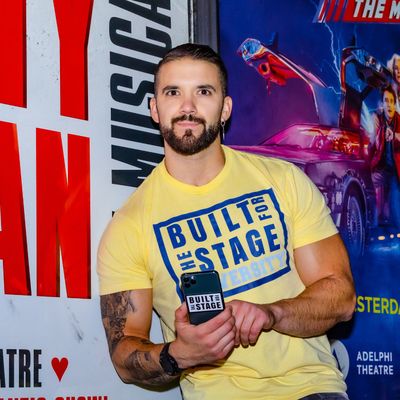
We have trainer, business man, actor, and podcast host Joe Rosko with us today! He is going to kick us all into shape!
Established in 2014, BFTS believes actors are athletes… and need to train like them, too. Offering custom personal training, nutrition planning, and providing the coaching, community, and tools needed to get results, I do need to warn you: side effects include improved confidence and mental health!
With clients all over social media, and seen in 50+ Broadway shows, BFTS is the place to be for fitness!
We wanted to have this chat with Joe about how we can take care of ourselves and others: physical fitness and personal training, mental health, digital wellness, entrepreneurship, and more.
We had a great time chatting all things on this BPN Crossover Event!
__________________________________________________________________
Check out "The Roundtable with Robert Bannon" here on BPN on the daily, on YouTube, Broadway World, and on social media! Like, comment, share, & subscribe!
For more info on Robert- www.RobertBannon.com
Follow Him on IG- @RobertMBannon
TikTok-@RobertMBannon
Transcript
This transcript was automatically generated and might contain errors.
[0:14] Robert Bannon: Well, welcome to the round table, everybody. My name is Robert Bannon, and you're listening to us on Broadway World, or maybe you're watching us on Broadway Podcast Network, or did I mix that up? I did. You can listen to us. You can watch. You know, I was just talking to Joe because Joe, our guest, Joe Rosko, is here and he has a podcast. And we have a podcast. And we were talking about our pot. We were just two old podcasters talking about the ways we podcast, the mistakes we've made. But here's the thing that you need to know about Joe. Joe has a company. Joe is a company that is out here doing the fitness for all your favorite Broadway stars. He's then talking to them on his podcast. He's gonna tell us that we can eat carbs.
He's gonna give us a full nutritional plan for free. He's gonna show up at your house tomorrow and do a free workout in your garage. That's what Joe has promised everyone watching. Joe's showing up no matter where you are. No, I'm really excited. He's an entrepreneur. He is somebody out here who's trying to get us healthy, and he's out here sharing about the tricks of the trade, all of that on his podcast called Built For The Stage as well. I'm really excited that Joe is here. Welcome to the round table, Joe Rosko.
[1:14] Joe Rosko: Thank you. Hello, hello. Look at you promising the world for me. Come on. I don't even worry about you about it, but thank you for the world. Where are these garages located? I can only be so many places.
[1:26] Robert Bannon: Joe, what do you call your—are you a trainer? Are you a businessman? Are you an actor? Like what is Joe? Who is Joe?
[1:34] Joe Rosko: Uh, I guess I'm a self-proclaimed renaissance man. It's been like that since I was a kid. I feel like I was just always bouncing from one thing to the next, whether it was being in a school play or doing a sport or buying a plastic pink briefcase from Walmart and having a pretend business meeting at my friend's house down the street at like eight, seven years old, you know. That's been my life. So I don't really know who I am. Who knows?
[2:05] Robert Bannon: Where did you grow up?
[2:07] Joe Rosko: I grew up in Youngstown, Ohio.
[2:10] Robert Bannon: Mm-hmm. Yes. In the Midwest. How did you end up in New York City?
[2:16] Joe Rosko: Yeah. Um, well, that could be a very long story, but I guess the short end of it is that I eventually decided to go to school for musical theater to be a professional actor. So of course, if you're trying to be a professional stage actor, you will eventually move to New York City. So yeah, I did that. And that was a part of the journey.
[2:39] Robert Bannon: Is fitness because you have a company and when I read about the company, and he has swag, and you can buy clothes, and they have a really fun, fancy website, and there's lots of famous people that work out with your company. Was I—I know some people who are trainers who are actors, and they do this as a side gig while they can audition and make their own hours. Did it start as the idea of like I gotta pay my bills, so let's do this? And then did it become a passion? It became your baby.
[3:09] Joe Rosko: Yeah, I love that question. Um, I actually—I was so heavily involved with sports that I had to choose between sports and theater as far as scholarships go to go to college. And I chose theater, thinking I could do theater for the rest of my life, but if I go to school for football, it'll end after four years, and that'll be that. So I'm gonna do theater. So I go to school for theater, but every Saturday in my dorm room, I would hear the announcer on the PA system, and I would cry in my dorm room because I would miss football so much. So I walked on to the college football team as a division one school, so like very hard to do, and I got on the team, so I'm probably the only musical theater major playing division one college football, and I loved training, I always have.
And my strength and conditioning coach on the team was like, 'You should get your certification.' So at 18, I got my certification, and obviously none of my football friends needed training because we were already, you know, getting trained from the team. So my other half of my friends were all actors. So, right from the beginning, the only people I was training were actors. Every summer stock I went on, of course, a new batch of actors I would get to be friends with, and I was training them. Then I moved to New York City, and the short or the long answer, I guess, now is yes. At a time I was doing it as like my side hustle. Um, but I did a gig in 2012, and it was for two years, and I came back to the city afterwards, like very burnt out, and I was just saying to myself, I'm just gonna do training and focus on that for just a bit.
I'm just gonna take a break. And during that break, I built up a clientele of just Broadway performers, and I was really enjoying it, and it got to the point of like, well, I want to keep doing this. And I'm looking around and I see that the theater community grows up as kids that are heavily involved with theater, but obviously not a lot of the times in sport or how to train. And I'm like, wow, everyone's doing this eight times a week, highly physically demanding. And it seems like most of them don't know how to train, and they're taking these random classes, and they're not really training like the way that they should be. But I only have enough time for the clientele that I have. So luckily for me, because of where I was at in life and my pursuit of fitness, I got a head start on apps.
So I jumped on an app in 2017 before it was cool, and I started training actors on an app, and that's how I really expanded my mission of training actors like the athletes that they are. Um yeah. So actually, my break to answer your question, an hour later, it started as the side hustle, but very quickly when I took this quote unquote break. The break has now been 13 years long.
[6:17] Robert Bannon: So for 13 years, you've had and owned this company. I read that there's over 20 Broadway shows, there's performers literally all over the world, it's not just in New York City, and then regular nine to five people, everybody can be and gain something from your company Built For The Stage.
[6:36] Joe Rosko: Yeah, so in 2012, I was training the clients in person only. Um, and then 2017 is when I went virtually and officially named it Built For The Stage, and at some point the London thing happened in 20—was like 2021, where COVID had happened, we were still in shutdown, and Australia and London were kind of edging us out and getting back to it before us here in New York on Broadway. So I was like, Well, the Australians and the Brits both speak English. Uh, this is an app that can be used anywhere. So I'm just gonna expand this company overseas. And I had this mission of doing so. I took two long trips to London, a third trip that I actually lived there for a year and a half. Um, yeah, so we are definitely global. Uh, Tokyo Disney, we're in South America, everywhere.
[7:39] Robert Bannon: And it's your—like this is your baby, like this is your company.
[7:42] Joe Rosko: Yeah, it's been a long journey, it's been a grind. It definitely wasn't just handed to me and the team. It was just, yeah, one actor at a time, and just really putting their goals and needs first and trying to deliver the best service we can. And that's really I'd say the main brunt of the growth is just people luckily and nice enough just sharing. I think the best testament to Built For The Stage is when someone actually cancels and they say whatever it's funding or whatever the reason is. And typically when that happens, it's like you're never seeing that person again. But this happens so many times, and people come back, and that's when I really know that we're doing a good job because to have someone leave and come back says something.
[8:46] Robert Bannon: So I love this. I'm so obsessed with fitness and people's journey and what you do because it's not something that has come naturally to me. Like I'm not like a natural athlete, I'm not a naturally skinny person. If I am skinny, depends on the day. You know, so when you—what exactly do we get on the app? Like, is it for if I'm sitting at home and I live and I'm watching the show in LA, like some of my people that watch every week, like what am I getting? Videos? Am I talking to you? Am I getting a workout plan? Like what exactly is it?
[9:17] Joe Rosko: Yeah, yeah. To rewind what you're kind of, you know, joking about or having jest about, like we definitely will serve aesthetic goals, but like first we're our mission is to train actors like athletes, and our main goal is that an actor is capable and durable. Are they capable to do the show eight times a week? Are they capable to do what a director or choreographer is asking of them? And then are they durable? Can they repeat that task eight times a week for months or years or however long they're in the show? We have people that are in college, we have people that are in their 40s, 50s, we have people that are large humans. One of them, he is like an NFL defensive end, like the most athletic 285-pound beast of a man that you'll ever meet.
So, anyways, like I just wanted to emphasize that on top of what we do at Built For The Stage, which I'll get into, we definitely are performance-based. But yeah, if your goal aesthetically is like lose some pounds, cool. We'll do that too. You're gonna get video demos, you're gonna get a personalized program. So let's say Robert, you joined, you're gonna fill out a questionnaire. Uh, what injuries have you had? What's your fitness background? What are your goals? Uh, where do you work out so that I can know what equipment you have? You're going to let us know your shipping address because we're going to send you a free Built For The Stage shirt for joining. And then once you get going, I'm going to write up five days for you as like a test run.
And then you're going to give me feedback. And in those workouts, I'm going to be checking the feedback you give me, which is either written by you, or you could even film yourself for technique feedback, and I'll check that. And then after those five sessions, I'll start to refine and really polish like exactly our plan of action together. And then the nutrition is optional. Nutrition's a very individualized experience for everyone. So I like to meet our clients where they're at. Um, so if they want to just do their own thing, that's fine. We'll just help you with the fitness. If they want to do intuitive lifestyle approach, I can help you with that. If they want to get into the nitty-gritty of macros and calories and like mentally, that's okay for them. We I can definitely help you with that as well. Um, so yeah, Built For The Stage is oftentimes viewed as a program, but really it's me on the other side of the screen as your coach.
[11:58] Robert Bannon: Um, so it's not just like a typical app you might buy in the app store and you're just floating out there by yourself. I love this so much, Joe. This is so smart and so much fun. So you really can be anywhere, everybody. You don't have to be in New York and you can have it tailored to you. So all my artist friends out here, and anyone that's a musician, singer, actor, or anyone that's just looking to physically get themselves together, emotionally, mentally, all the parts together. Joe's got you hooked up right here, built for the stage uh.com, I believe, and at built for the stage on Instagram. So, what is before I talk about your podcast, which is super fun, and I wonder if you have clients that go on your show as guests.
I have so many questions. But what is the misconception that people make about their fitness journey? Like, is it I was joking with you? Joe interviewed me, and I asked him at the very end, can we eat carbs? I know people think they need to starve themselves. We need we think we need to be at the gym for you know six hours a day, otherwise it's not worthy of us going. Um, you know, I will never eat an M&M again or ice cream again. Um, what are the misconceptions that make us fail?
[13:05] Joe Rosko: Yeah. Well, yeah, like that comment of like, I'll never eat an M&M again. Typically, people try to go so extreme that they'll do it for a day or two days or a week or maybe even a month. And then eventually the wheels are gonna fall off and you're gonna go off the deep end and end up worse off than when you started. Uh, so in fitness, in anything in life, really, um, moderation's gonna win. I rather you uh train for three times a week and 70% of the time eat and drink the way that you should, rather than train seven days a week, eat and drink the way you should 100% of the time, but then quit a week later. Um, us doing that for the long haul is always gonna benefit us. You talking about carbs, when you're speaking about macros and calories, typically, uh, for everyone listening, a little like uh tidbit of info, typically when dealing with nutrition, you want to split up your fat, carb, and protein intake to a 40, 30, 30 split.
So you're 40%. The biggest split is gonna be carbs. Oh my gosh. The biggest split is gonna be carbs. Uh, the 30% is fat, and the other 30% is uh protein. What a lot of people don't know about the fat intake is that fat has uh nine calories uh per one gram, where carbs and protein only have four calories per gram. So actually, your fat is double of a carb. And carbs are great, they're good for energy, they're good for facilitating uh protein synthesis and recovery. Uh so we definitely don't want to avoid carbs. It's really just the types of carbs, you know. You can have uh I don't know, uh a bunch of strawberries and uh some sweet potatoes and some rice, and like that's all fine. And you can whatever maybe a handful portion or a portion that'll make you full is let's say it's I don't know, 500 calories, or you can have a cannoli and a piece of cake that's 1500 calories that's not gonna be as nutritious for you, and also is gonna spike your sugar and make you even more hungry 30 minutes later. So it's not carbs, it's the types of carbs.
[15:29] Robert Bannon: I love that, and I've learned um my own journey and having to figure it out for myself. I've learned uh a lot about stuff like this, and what I find fascinating about it is that Joe's got it for you no matter where you are. And some people, Joe, what I like about your app is that people are afraid of the gym, uh, they're afraid of going into a place and talking to a trainer, or they're ashamed of their journey, or the fact that they don't have the knowledge, but you make it so that they're able to have a conversation with you without some of the fear and judgment and stigma that people are necessarily gonna have. And that is really beautiful.
[16:02] Joe Rosko: Yeah, we try to make it as welcoming as possible. And the cool thing about the app too is that you it's kind of like your own little tour guide. Like it's gonna show you how to use the machine or how to do the movement pattern of, I don't know, when you're using a dumbbell or a cable or something, so that you're not going by memory or you're not feeling like you're just floating out there by yourself. Another great thing is like what my clients usually say is that they like the mindlessness behind it, where you just walk in and you just pull up the app and it's like, okay, section A, here we go. What's next? Section B, here we go. You know, there's no figuring out what I'm gonna do today, or what YouTube video am I gonna try to cherry pick off of that has no linear progression and uh seamless route towards my goal? You know, it's it's hey, this coach heard what I want, he listens to my feedback, and he's giving me the program that is going to meet my needs.
[17:05] Robert Bannon: This is so good. I'm so excited to hear about it. And kudos and congrats to you, entrepreneur, businessman, personal trainer, actor, podcast host. I don't know what you do, Joe. See, that's why he couldn't define himself, everybody. He's doing everything. Um, so that leads me to your next question. So you have a performer spirit because you now host a podcast that is on the Broadway Podcast Network. Are you someone who is a fan of podcasts? Did you know do you know what you're doing? Were you like how did how did it start? And then how did you end up a BPN?
[17:34] Joe Rosko: Yeah, I love this question. Um much like the putting my business on an app in 2017 and kind of being ahead of the curve before every other fitness trainer and program jumped on during the pandemic. I felt like I also was a bit ahead of the curve with the podcasting too. I fell in love with podcasts, um, maybe 2014 or 15. I know that they came out even sooner than that, but like no one listening right now could say in 2014 or 15 that podcasting was like mainstream. No way. Um, I particularly loved a podcast called How I Built This by Guy Roz, um who's a journalist for NPR. And how I built this had has like the top of the top entrepreneurs that have created anything that all of us know about. And that hour or so discussion was just really running through their journey of how they developed that amazing uh service, whether it's the iPhone, Spanx, uh geez, I don't I'm blanking now who else they had Airbnb, well, whatever.
The the biggest of companies out there that you could think of, they've been on how I built this. So fast forward, I'm training all these Broadway clients, and unless you were Audra McDonald or you know, I don't know, uh Raul Esparza, whoever, the the top of the top that get interviewed, a lot typically you're not you we don't know about these people, we just know oh, so and so's been in 11 Broadway shows, but they've never been interviewed because they've been a supporting lead or ensemble or whatever. So as I'm training them and they're telling I'm getting to know them and hearing all these amazing stories, I'm like, I need to start a podcast. I have to do it. So I started a podcast. Um I started it on this app.
Uh it was called Anchor. I'm pretty sure it's still Anchor FM, but I think Spotify bought them out. Um, but they were like the a great platform for beginners. It was like a very hey, just press record and we'll take care of the rest type of thing. Had no microphone that was really you know what it was supposed to be. What I what I ended up doing was they had like an app version of Anchor. Um, and I bought a uh splitter lapel mic.
[20:09] Joe Rosko: So there's two lapel mics, and you could plug the wire, the cord, into your cell phone. So all of my interviews at the time, uh, this was before the boom of virtual um interviews, were in person, and I would sit like awkwardly close to my guest so that the lapel mic could fit both, you know, both of us and chat. Um, and then eventually, sometime sometimes if I felt too uncomfortable, like I didn't really know the guest that well. This is the best, Robert. This is the best. Uh, I once got an empty Starbucks cup, plastic cup that you would have like an iced Americano in or whatever, and I set that on the desk and had the lid on. Then I stuck a pen where the straw would go, and then I connected the lapel to like the clip part of the pen. And that was the microphone uh that I was using.
[21:11] Joe Rosko: Um, one time, I've actually never told her this to this day. I've never told her. I was training uh Patty Murin. And Patty was at the time in uh Frozen as Anna. And I met her uh in front of the old blockheads. Uh, if you're a New Yorker, you know where that's at. And she was lovely enough to take the time to interview with me. And I had there I was with my lapel mics, and we sat there in the courtyard. Um another tangent, so many random ass places I was interviewing people, like no studio, like by the street, taxis honking, homeless screaming things, like craziness. Um, but Patty, we did this. Uh, I don't know if this ever happened to you, Robert. This is the only time it's happened to me. [22:00] We did the whole interview, and at the time it was pretty early in my podcasting.
So she was one of the bigger names I had interviewed. And wouldn't you know it? We were done. I get on the train to commute back home, and I was like, Oh, let me just listen, see the very beginning part. It didn't record. So I never had the courage to be like, Patty, um, I'm so sorry, but the 30 minutes you carved out of your uh extremely busy two show day to be a lead on Broadway. Um, yeah, the recording didn't work. So the the episode was never released. She never asked why. Um, I never told her why because I was too big of a coward. I'm I'm I'm back to actually she had stepped away working with me for a little bit. She was starting a family. Um, and uh we're working together again. So I I should tell her. I I think she'll get a laugh out of it. But yeah, that's a little story for you.
[23:02] Robert Bannon: I well, I have had the experience where we have had microphones that you've done full press days for Broadway shows and gone back and there's no audio, and people came. I get frustrated. It's not a great look. But I but I've learned so much, Joe, and like just like you've learned, but I'm still getting over the lapel in a straw cup. That is see, that's creative, Joe. That's why you're an entrepreneur.
[23:26] Joe Rosko: I guess. I guess. And shout out to Patty Murin and her husband Colin and all of the I love I I love them and I love that story. And I think she's gonna do your show again. I think she's coming on because you're gonna ask her, and she's gonna say yes.
[23:39] Joe Rosko: You know what? I'm getting the chills just hearing you say it. So yeah, it's it's I think I think this is a serendipitous moment for sure.
[24:00] Robert Bannon: Wow, how many podcasts are in BPN now?
[24:02] Joe Rosko: We have a huge family, but before the pandemic hit, I was one of the few. Um I remember there was like it was called Behind the Curtain. I had listened to that a few times uh before the pandemic. Um I don't know if uh Seth if he had a podcast version of his show yet. I think I listened to him a bit, anyways. There was like a very small amount of theater people uh doing podcasts, so he must have just I don't know, did a podcast Google search of what Broadway people are uh doing podcasts, and he reached out and the thing it hadn't even started yet, no website, no nothing. He was like, This is what we're doing. Are you interested? And I was like, Yeah, I'm flying by the seat of my pants over here. I don't know what the hell I'm doing. So any help would be amazing. So that's how that went down. And now hundreds of episodes later, your show is out.
[25:01] Robert Bannon: So is there a certain time they come out? Are they randomly out? Do you have a certain release day? And then what is your show about? Who are the guests? Like, what is your process?
[25:12] Joe Rosko: Yeah, typically if I'm staying on top of my game, uh every Monday we'll release an episode at 9 a.m. Eastern Standard Time. Uh, depending on my travels as of late or other uh dishes I'm balancing with uh long sticks. Sometimes I might drop the ball on every Monday. But Built for the Stage, since the beginning, like I said, it was about wanting to tell actors' stories um that oftentimes weren't being told. It's not, even though we're a fitness company, it's not really a fitness podcast. You're not gonna be tuning in and listening to us talking about working out and nutrition, it's more of a parallel of a journey in fitness compared to a journey in the theater world. Ums trying to pursue a level of fitness is pretty much like a level of theater where it's ups and downs, it's never concrete and forever.
Like you don't book a show and you have it forever, and you don't achieve a level of fitness and have that forever either. So, what I like to do is not only talk about the highs of a performer's uh story, but the lows and the things that they went through that were really tough, and then how they got through those things because ultimately we're trying to give um encouragement and uh motivation and just like a togetherness, a feeling of like, oh, I'm not the only one that's going through these hard times. So that's that's what it's about. And it's a mix of my clients on Broadway and a mix of other performers that I just know through my clients or networks or people that I've performed with in the past.
[27:08] Robert Bannon: It's really fascinating. The list of people is really awesome, and there's so many episodes that you can check out so you can binge watch it or just catch up with the new ones.
[27:16] Joe Rosko: Yeah, I thought I was gonna be on Joe's show, and he was gonna ask me about like how much weight I have on my leg press or what I bench or something like that. It's way deeper. It's really um is really asks great questions that I don't think people normally ask because you really are somebody who's into the journey. It's not just what are you doing, what are you promoting, and thanks for being here. Like, you want to get deep, you want to you want to get in the trenches of it all.
[27:39] Joe Rosko: Yeah, I feel like especially with our culture and society being in such an uh influenced state of social media, let's just call a spade a spade, like that's that's how the world goes round nowadays, pretty much. You'll you've seen this shift where we are seeking authenticity more now than ever. Like if it seems like it's uh an advertisement, or if it seems inauthentic, it's like on to the next. So, yeah, on my episodes, I'm I'm trying to just really have a coffee shop chat with someone and allow our audience to feel as though they're sitting at the table with us. Maybe perhaps it's a round table. I don't know.
[28:29] Robert Bannon: And maybe maybe it is around. Maybe it is. I don't even own a round table.
[28:35] Joe Rosko: No, that's a lie. My dining room is round, Joe. You come to Detroit, I will cook you a very healthy meal with only whole grain carbs, like brown rice and sweet potatoes, and lots of water, hard boiled eggs, kale. These are the things I think Joe eats.
[28:51] Joe Rosko: No, I was just in Italy, and the amount of cannoli and bread and pizza I had was yeah, absurd.
[28:57] Robert Bannon: I was gonna say you're an Italian. I think you're Italian by the last name.
[29:02] Joe Rosko: The last name's actually uh Slovak, Slovakian, um, but my uh mom is Sicilian, so my both my grandparents from my mom's side uh is from Sicily, yeah. So my mom is a hundred percent Italian, and my dad, my dad is half Irish and half Slovakian.
[29:21] Robert Bannon: Okay, so okay, mine my dad is half Slovakian, half Bulgarian. So we have uh similar kind of uh chemical makeup going on there.
[29:32] Joe Rosko: We we could be cousins. How many people are from Slovakia? Eight eight people?
[29:37] Robert Bannon: I don't know many. I actually went to uh Bratislava last year because I really wanted to just see the home country and some of the nicest people. Um some really good food, like tavern food. Like, if you want to go and get, you know, bar food in the States, you can get like bar food in the States, you can say, oh, that was good, but it's not necessarily like high quality food or like homemade feeling or whatever. But if you go to a tavern in Bratislava and get their food at the bar, it's like, I don't know, some grandma back there made it. It's the best.
[30:15] Joe Rosko: I people say it's a beautiful country, so I really have to go check it. I've not been to Italy, I've not been to Slovakia, Czechoslovakia. My grandmother lived in Prague for a long time.
[30:24] Robert Bannon: Joe, we're related. That's what we found out. Joe, maybe Ohio, he's related somehow. If we did a 23 in May, you might be my eighth cousin.
[30:32] Joe Rosko: Well, let's not do that because apparently they're selling everyone's data or something crazy like that.
[30:36] Robert Bannon: For real.
[30:37] Joe Rosko: For real. So do you are you are you is there a chance that Joe gets back on stage, or is there a chance that Joe just does the fitness journey? Like, what is the next chapter for you?
[30:46] Joe Rosko: I was thinking about that during our inter or my interview with you when you were talking about how brave you were to get back to performing at 32 or 33. I can't remember the exact age.
[30:57] Robert Bannon: Um 32, 33?
[30:58] Joe Rosko: 30, 32.
[31:00] Robert Bannon: 32.
[31:01] Joe Rosko: So first off, again, amazing, because the courage that it takes to get back in the ring after that and knowing what this industry is all about is crazy. So, but no, I do joke about that. I always joke, like when I go to see my clients and their shows, when they invite me to their shows, I am it's like a it's a double-edged sword. I am so happy for them. I love it. I love being at the theater, but on the other side, there is that kind of void of like, oh, I missed this. Like, like this is still in me. So I do joke that I'm I I say, I'm gonna let everyone get burnt out, get over this industry, and say, yeah, I'm done with it. And then when I'm like, you know, 45 or 50, I'm gonna come back, come make my come back and clean house because all of the all of the talent has you know moved on with their lives, and and I'll be the only one left at that age.
[31:56] Robert Bannon: Well, someone said if you stick around long enough, you know, you're gonna get that part, you're gonna break through. So this is I'm here for you, Joe. I I feel you. I I gave up that part of I don't want to do musicals anymore. I don't want to, I just want to do I want to do this. I want to do what I want. I'm I'm too old to take directions from someone, Joe.
[32:13] Joe Rosko: I don't want no.
[32:16] Robert Bannon: So I'm ready for you to go out there and do whatever you want to do. What can we do to stay up with you? What can we do to get part of the fitness journey or your journey as you evolve and your your company evolves and you evolve and the journey can and the podcast evolves? What's the best place for us to check it out?
[32:33] Joe Rosko: Yeah, you can go to BuiltForTheStage.com. It has everything there. So there's a free trial form. You can try working with me on the app for two weeks for free. You don't have to enter a credit card or anything like that. You literally just give me your email. I send you an invite, and bing bang, boom, there we go. Uh our swag shop's on there for our gear. Uh the podcast is on there. You can check us out at Built for the Stage on Instagram. Um, we do have an in-person challenge coming up on May 21st, our first one ever. Super excited for that. It's uh twice a week on Monday and Wednesday. Um, a lot of the Broadway community will be there. But if you're not on Broadway or not even a performer, and you just like the idea of training like a performer and you're in the New York City area, we'd love to have you. Um, that's uh on our link tree on uh Instagram. You can check that out.
[33:24] Robert Bannon: Well, we'll be following, and we're excited, and we're really excited uh to chat with you. We're excited for you to be here. Come back again. Tell us, you know, come back with everyone. Please keep us posted. We're here for all of the things that Built for the Stage and Joe, the human being, aside from the company are are gonna be here for it. We're we're throwing a big Tony party. So if you're gonna be in New York during uh the Tony's, we have a private secret rooftop party that I won't disclose here, but you're invited, Robert, and you're plus one. You can bring your partner.
[33:53] Joe Rosko: That'd be you.
[33:55] Robert Bannon: I'm I'm sure you're working the red carpet, but like, hey, I'm not no, I'm not. I do you know what I won't tell this. Oh, maybe maybe your cousin maybe your cousins were. I turned it down last year, Joe.
[34:05] Joe Rosko: Oh, look at I'm sorry.
[34:07] Robert Bannon: I I just can't fit you. I can't fit the Tonys on my schedule this year. I'm sorry. And Broadway were this. I've never told the story, and this is your interview. And Sam a bad host. I'm no, it's no, let's let's Broadway Girl called me and said, we could get one person on, you bring your own camera, and we do it. And it was Father's Day, and we have made reservations for the steakhouse that my dad has been trying to go to. And I just couldn't, I couldn't cancel with him to do. And I just think what I learned about fitness and listening to you and you know, people that want to perform, and maybe it didn't turn out the way we had always hoped when we were kids, and we have pivoted and made different avenues and different businesses and different jobs, is that there's gotta be more to your life than just this business.
And um, and that's been another thing that's really kept me sane, and that's what I love about your company is because you can be an actor and you could sing and you can dance and you can, but you also there's Joe the human who has a personal life, and there's Joe the businessman, and and uh that's that's what makes us I hope more so than not eating carbs healthy. I think that's what makes us healthy.
[35:07] Joe Rosko: Yeah. I think the best equation uh for success is or the best identity to have for success in theater is to say that you're not a theater person, but you're a person that does theater.
[35:21] Robert Bannon: And that's uh what I always try to communicate um to my clients for sure.
[35:26] Joe Rosko: Well, your pleasure. I'm excited to chat with you. Thank you for everybody who's watching us and uh listening to us. And I look forward to talking to you or seeing you in person real soon.
[35:35] Robert Bannon: Yes. Thanks for being here.
[35:36] Joe Rosko: Thanks, Robert.
© Broadway Podcast Network, All Rights Reserved