

Maury Yeston is a Broadway Institution! From "Titanic" to "Nine," his pair of Tony Awards and his countless help to up & coming writers, it was an honor to chat with this legend! He tells us all about his time learning the tricks of the trade, coming up the ranks with Alan Menken, Howard Ashman, and more!.. Read More
From the show: The Roundtable with Robert Bannon
Guests

Featured Shows
About
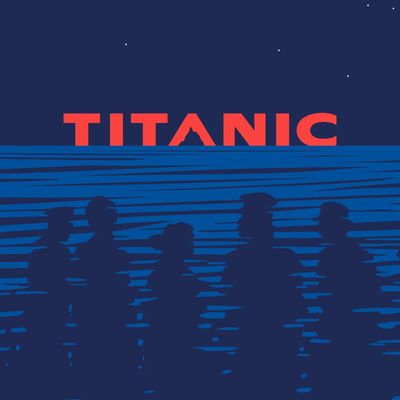
Maury Yeston is a Broadway Institution! From "Titanic" to "Nine," his pair of Tony Awards and his countless help to up & coming writers, it was an honor to chat with this legend!
He tells us all about his time learning the tricks of the trade, coming up the ranks with Alan Menken, Howard Ashman, and more! How did he get the rights to "Nine" and what inspired him? How did he defy the odds and make "Titanic" a musical that would sweep the Tonys? How do you just believe you have something to share and find the courage to make it happen?
An inspiring chat indeed! "Titanic The Musical" comes to the big screen for two nights only this November! Check out where and when below!
https://www.fathomevents.com/events/titanic-the-musical/
__________________________________________________________________________________
LIKE. COMMENT. SUBSCRIBE!
Listen to us on THE BROADWAY PODCAST NETWORK:
https://broadwaypodcastnetwork.com/po…
Check out “The Roundtable with Robert Bannon” every Thursday 7pm EST/4pm PST PLUS: The Talk Series where artists share their art and their heart.
www.RobertBannon.com
Follow Him on IG- @RobertMBannon
Twitter- @RobertBannon
TikTok-@RobertMBannon
Transcript
This transcript was automatically generated and might contain errors.
[0:10] Robert Bannon: Are you ready? It's the Roundtable with me, Robert Bannon. Welcome to the Roundtable, everybody. My name is Robert Bannon. I'm so excited if you're listening to us on the Broadway Podcast Network or you're watching us on YouTube. It's great to be here. You know, I was born in the 80s and I was a child of Broadway and theater growing up in the 90s, especially mid to late 90s. So in '97, before the movie Titanic came out, the musical came out. It made a lot of buzz because it was very expensive. People thought no one would be interested in the Titanic. It was before Leonardo DiCaprio did not make it and survive, and Kate Winslet kicked him off that door floating in the Arctic. And the show got a lot of buzz because Rosie O'Donnell's show was on at the time.
She had the cast on the show. It was a big to-do. And Maury Yeston wrote this, wrote Nine, wrote Grand Hotel, wrote a ton of theater of the 90s and been revived and been doing it forever. And before Encores puts Titanic out next year in 2024, it's coming out as a screening event at a Fathom event in 700 movie theaters. So how cool is that? You can see Titanic on November 4th and 8th in cinemas, the UK production. He ran the BMI workshop forever. Anyone who's a writer or knows anything about writing knows Maury and Broadway, and he's here joining us now. You know, it's always trouble when a couple of Jersey boys, you know, then you know you're really in trouble. Jersey City's own Tony Awards.
I remember the year. I remember seeing Titanic. I remember my parents taking me. I remember the lookout coming down from the ceiling of the Broadway Theater. And now, Maury, you're no stranger to big screens and his stories being told in theaters. Titanic comes to theaters for two nights. Maury, welcome to the show.
[2:12] Maury Yeston: Well, thank you very much. And a great reunion for us, our Jersey cities. You know, Jerry Herman, the great Jerry Herman, not only came from Jersey City, his mother, Ruth Herman, was an extraordinary singer, and she was the queen of the Jewish community center in Jersey City. And parents owned a summer camp called Camp Stissing Lake, and I went to that summer camp. In fact, Jerry was a senior counselor there, and he's very, very really a formative influence on my life. I was very young. I went there, I think I was about seven the first year I was there, and as it was a magician. And Jerry, of course, had been a teenager, and he had already started writing his music, written his first few shows.
And he was the senior counselor and the music counselor, and a magician came and did his job, but in the middle of the show, I had to go to the bathroom. And so one of the counselors, I was so young, it was young women who took care of us, not even guys. This young woman took me to the bunk and brought me back. And by the time she brought back from the bunk, the show was finished, and there was nothing but bare bunks, benches, and I sat on the bench and I refused to leave because I wanted to see what I missed. And Jerry Herman came and sat next to me. He was probably 19 or 20 at the time, and he put his arm around me and he explained to me very carefully something I've never forgotten, which is basically, Maury, when the show is over, the show is over. And he and I talked about it so often, years and years and years later, like great Jerry Herman.
[4:09] Maury Yeston: I was so close. You have been close to some of the greatest and yourself writers. You know, you grow up, and we're gonna get to Titanic and the big screen and all of that, but you grow up in Jersey City, you have a family who loves music. You end up going to Yale and studying in Cambridge and all this fancy dancy stuff, and then you start coming up the ranks with Alan Menken and Howard Ashman and Ed Cleveland and Tommy Chun does your work like what I'll give you this, I'll give you the sequence, which is interesting. So, of course, there we were in Jersey City, and I just started writing music, right? I mean when I started taking piano lessons, I started making up music. Of course, with Jersey City is just a train ride away from New York.
My mother loved musical theater, and so she would take me to musicals. It's just a magical miracle moment that the very first show I saw when I was a little boy was something called My Fair Lady. And I sat there next to my mother watching Julie Andrews and Rex Harrison, and I looked at that and I listened, and I said to my mother, I want to do that. I knew that. I want to make stuff. That's what I want to do. It just it to have that in my blood. And I started making up songs, and I started writing lyrics while I was studying classical music. And so all of that blended into the sort of what I guess is my style, which is a classical structural sense, but that kind of hilarious sort of humor that you had in My Fair Lady, and of course that melodiousness.
And you know, it's funny how all these things came connected later on. I mean, later on, my dad was very friendly with a man named Herman Levin, who had produced My Fair Lady. And he used to go to the racetrack, and he and Mr. Levin and Julie Stein and all of those pals, they would sit and bet on horses and things like that, along with Alan J. Lerner. And Herman was like an uncle to me. And when it came time to do Nine the Musical, of course, I had just I had no rights to that. It was just a project, you know, and because I loved it, and I write things to keep my pencil sharp, and because I write what I want to do and what I believe in. And so I had written this, and suddenly there were a lot of interest in doing that show.
The producers were interested in it, and somebody said, well, you know, what it in order for you to do that show, you're gonna have to have the rights to Fellini's Eight and a Half. You know, I had seen Eight and a Half when I was a 17-year-old because it was the time in the 60s when foreign films had really hit the world. It was Fellini, Antonioni, Satyajit Ray, Kurosawa and Korea, and I went to see this film Eight and a Half, and it was Fellini doing a movie about Fellini doing his movie, but you know, the character, oh, he was having a midlife crisis, right? He had his wife, he had his mistress, he had his, right? And Fellini was having a midlife crisis because Fellini was doing a movie about Fellini having a midlife crisis.
I looked at that screen at the age of 17. I don't know why, well, I do now, and I said, I'm that guy. Why would a boy from Jersey City who had just gotten his driver's license and went out to Irvington, New Jersey to an art house center to see? Why would I say I identify with that man? I knew it was my story, I don't know why. And when I grew up, that's what I wanted to write. Only much later did I understand that a man's midlife crisis is a second adolescence, right? Your first adolescence is what's my sexuality, what's my relationship to the opposite sex, what do I want to, what's my goal of life, etc. Well, what's my identity? How do I separate myself from all of those things? You go through that, that's your adolescence.
Well, Fellini was doing a movie about a man in his second adolescence, which I saw exactly at the time when I was in my first adolescence. And that's how I, oh, that's now I come to understand. That's why I knew somehow I connected with that story. I understood what he was going through, and that's how Nine happened.
[8:50] Maury Yeston: Now, as you mentioned, Alan and Ed Cleveland and things like that. How that happened simply was that I had written this song called New Words, and Herman Levin had said to me, you know, you really ought to Alan J. Lerner really should hear this. And so Alan J. Lerner came up to his office and I played the song for Alan J. Lerner. And he said to me, you know, Oscar Hammerstein used to have me come by his office and give me pointers. You come by my office, I'll give you pointers. That's how that worked. But how we got the rights to Eight and a Half is a magical story. I got the telephone number of Fellini's lawyer, and I called him up in the middle of my the morning, and he said, you know, pronto, as they answer it.
And I said, Hello, Mr. Sallas, that was his name. This is my name, Maury Yeston. I'd written a musical based on Fellini's great masterpiece movie Eight and a Half. I would like to come to Italy to discuss acquiring the rights, the dramatic rights. And he said, excuse me, Signor Yeston, I don't speak English. So I had traveled in Italy and I had taken a course at the university. So I was able to say, Non faniente, Michore Mariestin, Sono Composer. I said the whole thing to him in Italian, and he said to me, Bravo, Signor Yeston. But we will only work with a well-known Broadway producer. And then I don't know where I got the courage or the guts or the whatever. And I said to him, well, would you not agree that Herman Levin is a well-known Broadway producer?
Herman Levin produced My Fair Lady, Herman Levin discovered Carol Channing, Herman Levin produced Gentlemen Prefer Blondes. I said, well, I can come to Italy in a week or two and talk to you about acquiring the rights to Eight and a Half, representing myself and my partner Herman Levin. So he said, okay, I'll see you. And I called Herman, who was like an uncle to me. And I said, Herman, can I go to Italy and say that I want to get the rights to Eight and a Half for myself and for you as my partner? He said, he said to me, sure, kid, but swing around the office before you go and sign a release because he was a lawyer. So I went to Italy with a lawyer, and we had a conversation, and one thing led to another, and there we were with the rights to Eight and a Half.
[11:20] Maury Yeston: More than that's like astonishing. Fairy tales. All these things are astonishing. You know, how BMI happened was that Lehman Engel had decided that he was going to create this workshop. And I think it was Lerner who said, you know, there's this workshop you really ought to go to. And I went there, and here was wonderful Herman Levin. And sitting there, well, these other people who had just never done it before. One of them was me, one of them was Edward Cleven, one of them was Alan Menken and the gang. And we did our songs and we did our projects, and Herman would give us pointers and criticism, and then we would come back with rewrites, and that's how we all honed our craft. So the first one to really break through was Ed.
Ed got A Chorus Line, and my God almighty, how fantastic. And I think then, you know, then I kind of broke through with Nine. And then, of course, Alan did everything else. No, but interestingly about that, and you should actually, for all of your listeners and those of you who want to do musical theater or just do things in the world, that this is how these things happen. You must dare. And you must, if you want to do something, you just go for it, you know. So I had had Nine, and it had gotten to the point where the O'Neill Foundation had created this summer program. The first one that they did when they started it was Desire Under the Elms. The second one was Nine the Musical League. I sent them my score, and they said, oh, we will mount this.
And they found a young director whose name was Howard Ashman. And how it came, how it was so helpful there. He was creative and he was a really tough critic too, and a wonderful guy. And the reading went very well. And we were sitting, we were having a cup of coffee towards the end of it, and he said, look, he confided in me. He said, you know, I write lyrics, and I'm looking for a composer. And I said, Howard, you have to meet my friend Alan Menken. You guys are made for each other. And that's how these things happen, you know. And then they did their wonderful work, and then of course came Disney, and that's how they wrote everything else that had to be done for Disney, except Lehman Engel died.
[13:57] Maury Yeston: And I took his chair for about eight or nine years, and sitting in front of me were all these new people. Uh oh, I don't know, um, Robert Lopez and Kristen Anderson, and then she became Kristen Anderson Lopez, but then you know Bobby Lopez wrote Avenue Q, and then of course they wrote everything else. And so more and more and more, and so you see that that workshop then became this extraordinary uh for decades siphon of young, talented people, not necessarily young either, all moving their way on in their careers, starting from what Lehman Engel did, and then as you see, we now have organizations and we now have places all over New York and all over the country where you could get your start. But it was we're the generation, thanks to Lehman, thanks to people like Alan J. Lerner who took me under his wing, and that's how that started. And that's why I make sure I help out the next generation coming up.
[15:08] Robert Bannon: And do you ever, I mean, do you ever if it's the songwriting hall of fame, if it's BMI, if it's I have friends who have gotten the BMI award, it's such a big deal in musicians to present your works and get this away. It gets you in front of producers, it gets you funding, it gets you some credit. And your story, I think what you said, the nugget of information there is either we're brave or we're crazy or we're both. But when we want to do something in this artistic world, it takes some Hutzpah and it takes some.
[15:40] Maury Yeston: It does, it does. But you know, and but the very but the basis of it all is and you know, the best advice I can give to all of the young writers who are thinking about there is no matter what it's not you, it's not money, it's not who you know. I truly believe in my heart of hearts, unless you're living in a missile silo somewhere in the back, good work exerts its own pressure to be heard. Good work finds itself into the light of the I honestly, it's a mystery, it's a puzzle. Honestly, I don't know how it happens, but when somebody writes a great song, somehow that song forces its way into the world. So just do the work because any opportunity, any interview might have anything doesn't mean anything if you don't have on the table before it a wonderful song.
[16:41] Robert Bannon: You know? Well, you know, my friend, he I think they won a BMI award not too long ago. My friend Matt Gould and of course, yeah. Matt says to me, it's a calling, it's like a cloak.
[16:52] Maury Yeston: It's like it is, yes, it's exactly right. I wanted to ask once we know what makes you write, and he said to me, Well, I guess I just must mean neurotic in that direction.
[17:05] Robert Bannon: Yes, okay.
[17:07] Maury Yeston: Yeah, yeah. Well, we were talking about it's great writing. You were talking about Nine. I was lucky enough to see the revival, the revival of Nine with this all-star. I'm doing an event with Chita Rivera on Monday.
[17:19] Robert Bannon: Oh, how wonderful, give her my love.
[17:20] Maury Yeston: We're gonna definitely be talking about her time in Nine, show stopping that cast and that show. And that show came out, you put that show out, you did things like Grand Hotel, and you have shows running on Broadway. Titanic, Titanic as a property, Titanic as a story. How did the idea come about that this would make it as a Broadway musical? And did you start writing it for what, how did this happen?
[17:45] Maury Yeston: I'm happy to tell you. So, first of all, of course, until it happened, right? What would be the worst idea for work in the world for a musical? Oh, well, naturally, the worst maritime disaster in history with a thousand and two thousand people died in a few hours, right? The greatest failure in the history of the Industrial Revolution. Oh, what a great idea for a show. So, but you know, and I'll talk about two people, me and Andrew Lloyd Webber, and both of us must have been nuts to do a horror movie. What was that? What was that? You know? But you see, or how crazy was I to do an indecipherable Fellini movie that doesn't even have a storyline, right? So, but in each case, you have to trust your own instincts.
You have to, well, if I'm passionate about this, if this interests me, maybe it'll be interesting to other people too. You have to, you know, and you have to be brave about that. You cannot think like a producer. You cannot think, hmm, what should I write that I know will sell, that I know will succeed. You can't do that. You have to say, what am I so passionate about? What can I not stop thinking about? What gets me to a piano or to a guitar and gets the best work out of me? That's what you must do.
[19:15] Maury Yeston: In the case of Titanic, um, well, I guess it was we're getting around the great turn of the great millennium, right? The year 2000 was coming up. And so when you live through a period like that, you start thinking about history and start thinking about well, we know what are the really great events of you know the last thousand years, you know. And if you go from you know 1900 more or less, and the year 2000, because that's where you know that's where we are, um Titanic and right, that created a boundary line, because really a boundary line between that world and sort of the modern world that we're in, not only in terms of our striving for accomplishment, but also our failures. And I thought to myself, Titanic, what a that's a really interesting thing.
And I really couldn't stop thinking about it. And I started getting musical ideas about it, and I started thinking of it as what an incredible dream, you know, to do that. And then I thought, well, yes, of course, it was a complete disaster. It was a complete failure. I understand that. But what was the motivation for it? Well, here's this industrial revolution, the British Empire, it was the apex of what you could do with in engineering. They could do anything. And what was the most important thing? Well, they were the maritime, they were the maritime capital of the world. They owned the seven seas. Everything that they had to do in terms of shipbuilding and Sheffield and all of it, right? They were the peak.
So they had the absolute most cutting-edge industrial technology in the world at the service of the most one of the most important things that ran the world, which is simply just shipping, which made the world go round. And the worst thing that could happen, the worst thing that could happen was that a ship could founder or sink and people would die. And so, just as Jonas Salk devoted his life to finding a vaccine that would keep you from getting polio, they thought we must devote our time and our life to the ultimate dream to build a ship that would not sink. Because that way, what more could you do for mankind in preserving human life and avoiding victim after victim after victim ending up at the ocean bottom because of the failure of a ship?
If we could build a ship that would not sink, and God knows, with English engineering, if we can't do it, no one can. And so off they went to accomplish that dream. And yes, they failed, but they failed in the service of wanting to improve the human race and to preserve life. It was as noble a fail, as noble a project, despite the fact that because we're human, we failed.
[22:30] Maury Yeston: And as I was thinking about this project sitting at my desk, the Challenger Space Shuttle blew up right over my head. And it was a tragedy. But it was a tragedy in the service of a great dream to explore space to make new things that would improve our knowledge and improve our health and improve our science. And so I thought, aha, that's my story. And that's the story I'm telling in Titanic. And I saw all of the positive aspects of it as a dream. Titanic is about dreams. And even though sometimes our fondest dreams failed, we still dream. They still went up there in that space shuttle, in spite of the fact they all knew its story, they all knew what happened to the Titanic. They all knew how not to be overconfident, and yet we're human and it happens.
And I thought that's the story I have to tell. Ooh, and in 1997 at the Lunt-Fontanne Theater, where like the sense premiered, you know, we it's folklore now. It's you know, I teach, I teach fifth grade during the day in North Bergen, speaking of great. And if you went into my classroom and you spoke to my 120 10-year-olds, every one of them will tell you they know Titanic. Every one of them will tell you they know the folklore about it. And it's one of those stories because it's about greed, it's about class, it's about money, it's also bravery and about adventure, and about yes, but you know, so and so and it's funny because uh it's it was uh I did research, it's one, it's one of the three or four most common words known all over the in every language all over the world.
Everybody knows that word, and so everybody thought it was crazy, you know, and and everybody, you know, I'll never forget Michael Riedel, who I love, and when he heard about it, you know what he wrote in his weekly column? Oh, Maury Yeston is coming up with this idea of doing a musical based on the Titanic. Wow, watch him sing, watch him dance, watch him drown. He ate his AW. He's he never ceases to apologize. No, but that's it because you see, then and again, for everybody who's watching, and certainly those of you who want to write shows or do anything else in your life, yes, people will doubt, but if you have a conviction, just damn the torpedoes and go straight ahead. Because that is my most right now, that is my most performed show all over the world.
There have been thousands of productions of it. I have either heard it or seen it in English, French, Japanese, Polish, German, in Czechoslovakia, in Korea, in China, everywhere, and it never ceases. It just completed its second all-UK tour of obviously United Kingdom, and right now it's in Taiwan. Insane. It's been 26 years since it premiered on Broadway. It's been 10 years since the premiere of the London premiere. Yeah, this show went on to win five Tonys. It was swept. It was nominated for five, it won five. What including best musical, including best score, including best book.
[26:07] Robert Bannon: What was the show that it beat? What was that that it was nominated against? I can look it up for us. Do you know?
[26:14] Maury Yeston: I'm sure we were there. I'm trying to remember. Let's look. I'm trying, no, it wasn't no, because I remember what happened with Nine. With Nine, of course, we were nominated against Dreamgirls.
[26:27] Robert Bannon: Got it, yes.
[26:28] Maury Yeston: And Michael Bennett said to Tommy Tune look here, um, uh why don't you just open your show after January and then we'll come telling and then you do it next year. It didn't happen that way.
[26:46] Robert Bannon: No well in 97 it Titanic beats Steel Pier, the life and um, and Juan Darien. Yeah and the rest is history. I know I was I was born in 83 so I was a a youngster loving obsessed with musical theater obsessed with the Rosie O'Donnell show obsessed with making my parents Rosie when Rosie had the whole cast on her show I'll never forget it.
[27:13] Maury Yeston: Yeah and we once it was on we needed to go see it and it was a big giant Broadway production and the story and the music and and and what you wrote for this show like like the songs when I when I was listening to it today and I think of listening to Still and The Blame and these I was a kid listening to these because you took the you humanized the Titanic people on it and it didn't become a history book it became no it's just all about people and and people's stories and yes the you know there's this old Jewish couple he was a millionaire Mr. Strauss and you know and so you said you and you know and they both he had these two old two wonderful old Jewish sweet people and they have all the money in the world and they're just they're just on a romantic voyage at the end of their lives and the ship's gonna go down and so they they pour so they they pour a final drink they and they drink a toast to each other and when he drinks the toast I and he says to you she says who else the most romantic he says you know you know what I I love you now as much as I loved you the first day I met you and the day that we got married and I said that's gotta be the song Still the way I love you still you know I and and again just because we know we're we're talking now to so many of you out there who are wanting to be a critic or wanting to write shows what when you're in that situation in that dramatic situation and you know in in a show everything that's gonna happen emotionally everything important has to happen in music because we sing in musicals when we're in a situation where we're so filled with emotion we can no longer speak he knows they're at the end of their lives they're having their last glass of champagne together and so and he's gonna say you know I love you now as much as I love you on the day that you married and of course in my head I thought well of course so they're actually marrying each other again and because they're Jewish and they're holding champagne glasses why wouldn't he I love you then and I love you still if the music keeps going he'll he'll put his napkin on the glass put it on the ground and stamp on it like the end of a Jewish wedding they literally consummate that marriage again and I thought all right, well, yeah, there won't be a dry seat in the house.
[29:49] Maury Yeston: And there was and yeah, uh, and and and so that's how that's how that's how these things happen, you know. And so I I think sometimes what may be the worst idea of the world or seemed like the worst idea in the world, might might not be. Uh yeah. It might end up being a great idea, and it may end up winning a Tony, and it may end up being done for 26 years, and now for two nights only, you can see it on the big screen. That's right. That's right. As a matter of fact, it's this week. Yes, and uh there you are. November 14th. So now I should say this is Tom Sutherland's uh English production. Tom's Tom's a master. Uh I you uh I hope you'll be able to uh interview him. Tom Sutherland is just a wonderful British director.
He's a fantastic guy. Um and um comes from working class background. And uh, and of course, nobody does Brits like the Brits. Yeah, it's an English ship, they're all Brits. And and when they did it, it was it was just like, you know, it it was just like doing fiddler in Israel. You know what I mean? Uh and and and so everybody in that production that you'll see in this film is just pitch perfect English, whether it's aristocrat, working class, whatever, British yiddish, which is a whole thing all by itself. It it's exquisite. And and it's because nobody does it like they do. Yes. Uh you know, and it's and you know, it's it's every part of it that I wrote that has a kind of a tinted of guilt Gilbert and Sullivan in it, they just they just take it to the nth degree.
So and and it's it's it's it's videoed brilliantly. It's really it's kind of like it's really it's like a big movie. And uh, and I think you'll enjoy it very much. Well, you're listening to us or watching us, you go to www.fathom f a t-h o m events.com. It's two days. So you gotta head to the theater on November 4th and November 8th. It's over 700 screens. So you it's somewhere in the middle of the week. Yeah, it's huge. And and I should say, you know, if you if you can't remember it, I mean it's sort of a perhaps an in-apposite name of the production to be calling it a fathom, because satanic is fathoms below. See, you know, maybe it's just an accident. When you see your body of work and you see it done around the world, and then you see the crop of new artists, is there I'm not trying to be controversial, but is there a thought about the way Broadway and theater is in the year 2023?
[32:14] Maury Yeston: I think it's I think it's I think it's greater than ever. Don't forget, I have having taught to be in my music theater workshop for over 25 years, I have children and grandchildren and great-grandchildren. So those sitting before me and writing their masterpieces. If it's Bobby Lopez, if it's if it's uh of course my contemporaries, Alan Macken, if it's Lynn Aaron's, if it's Steve Flarity, it's all I watched them all of them, brilliant geniuses. I I mean my participation in it was being able to sit there and uh and and say, okay, you go next. And so you know, every once in a while, maybe I was able to say something smart. But of course, what how you learn in in in that workshop is the audience tells you, right?
If you try something funny and then they're not laughing, nobody has to say anything. You well, you know, I gotta write a better joke. And so, and so that really is and it's it's a great, great, great uh uh uh part of what Lehmannegle gave to the world. And I'm so happy to have been a part of it. And I as a matter of fact, three weeks ago I I guessed at a session. I I called, I I called Pat Cook and said, Can I come and be a visitor? I just want to see what what the young people are doing nowadays. And I heard wonderful things that they were writing, and and this will just go on and on and on. No, and I think today, uh I I think today that the the steady progression and and evolution of of musical theater has to morph and has to become uh has to reflect the world the world that we're in.
Uh you know, when you're when you're in a world of of telecast and you're in the world of of live theater and semi-life theater and and and all kinds of different things, the the musical theater is gonna change. Uh and but you know, tomorrow somebody's gonna come in and put something on a stage that you've never thought of before, and it's going to be innovative. And and as long as we have that, you know, the musical theater is going to be the growing tip of a plant. That the new leaves that are just coming out of something that that has roots that go back hundreds upon hundreds of years to Shakespeare.
[34:42] Maury Yeston: You know, I you know, I I was I was thinking about it because um somebody was talking to me about phantom. And I was thinking about that moment when Christine says to the phantom, I want to see your face. I love you, I love you so much, I can see your face. And he says, No, no, no, no, no, no, no, no, no. And uh, and she convinces she she sings a song called Um My True Love, right? Open and change to me. And as the music goes, he's he takes the chance and he removes the mask and she looks and try as she may, she's a human being, and we have to believe that, and of course, his back has got to be the audience, right? And so that it can be nothing that we could show you could be as bad as what you might imagine.
And so and so she can't help it, and she screams and she runs off. And I had to write something there, and and he, you know, and I had this poem by Blake called The Little Black Boy. And I had always loved this poem, like the great, great, great William Blake. And and it's it's a poem about, and it says, My mother bore me in the southern wild. Right. So he's English, he must have been thinking about uh black people who they would have confronted in the industrial revolution when they went all over the world when they were in in in the Caribbean, right? And he sings, uh, my mother bore me in the southern world, uh, I live in darkness, uh, my soul is black, but right, I uh my face is black, but my soul is white.
White, the complexion of the English child, but I am black and yet bereaved of light. That and uh and he ends the poem by saying, but you know, one day the Lord will relieve you of this, right? And if I if I could speak to him, I would I I would I would look upon his face, and I would, I would, I would shield him from the sun as I would be a dark shield so his face was not burned and i and i would be like him and he would love me and i always loved that song and i thought and phantom would have the humanity to understand literature and greatness and beauty he lived for beauty and i thought i'm gonna set that song and so and and he screams and of course she runs away and she's and he sings he starts to say my mother bore me in the southern wild I live in darkness but I'm breathed of light right and and when he ends and I will you know and I will shield her from the sun and and he and she will then love and it just made sense so you never know you you you when you start a journey in the in the dark into the woods you know uh which is you know not only a great show and a great song but that's what we do when we write we just go into the woods and we find a way through it and make a path and we you know and and so that that's that's the writing process and and so everything I'm writing now is it is just like that what we're looking for next year what we're looking towards I think Encores is doing Titanic in June and I'm thrilled about that we're hoping uh there's a lot of talk about a third nine revival.
[38:32] Maury Yeston: And um, some people are talking about that, and I'm I'm I I encourage them to continue doing that. Somebody even spoke to me the other day about wanting to do something that's never happened, which is you know, we've never had a production of Phantom in New York, and so somebody wants to talk about doing that, and well, you know, it never made sense to me because you know there is fantastic. You know, Andrews has a magnificent show on Broadway, but that's not there anymore. So it that might be fun, you know, to just you know, even for one night, that that might be good. So so there's a lot of talk about that, and there's a lot of talk about bringing Grand Hotel back as well, and then of course a nine revival. So I I I feel very fortunate, you know.
[39:18] Robert Bannon: Well, Titanic, the cast, a little bit of the cast is announced for City Center. You got everyone, the tickets are gonna go in a hot second.
[39:24] Maury Yeston: Yeah, and uh who knows what'll happen to it after it's there, like many shows there. And we are always I want to say thank you for this musical theater jersey kid. I love it. Thank you for for writing and giving your life to making great art and theater for all of us to enjoy.
[39:42] Maury Yeston: Well, I thank well, thank you very much. I've had great uncles and grandparents from Jerry Herman to Ruth Herman to Herman Levin to to Julie Stein and to Alan J. Lerner, and all the people who helped me out, layman angle, and I'm so grateful to them.
[39:57] Robert Bannon: Well, and we're grateful for you and everyone watching, no matter where you are in the world, Titanic, the musical and cinemas, November 4th and 8th. Only get your tickets at Phantomevents.com. Thank you so much. It's an honor. So great to talk to you, Robert. I can't wait. I owe you a cup of coffee, and I want to I want all we'll have it.
[40:16] Maury Yeston: Okay, take care. Bye-bye.
[40:17] Robert Bannon: Well, there you go. How cute is he? How much history does he have? It's amazing. That is like musical theater history 101, right there, then and there. So fascinating. Can you imagine coming up with all those people? If you're a musical theater head, I'm so happy you enjoyed this interview. I hope you can go check out Titanic. I hope you check out us every single day here on the Broadway Podcast Network. Visit along with my other friends, listen to the other hosts and other people and other shows that are shared here.
[40:41] Robert Bannon: And you never know who's popping up on my show. You never know. We are for everything from RB and hip hop to musical theater to TV chefs to reality stars. We just have them all. It's where artists come and talk about art. If you want more information about me, go to RobertBannon.com. Follow me at Robert M. Bannon on the Instagram or at the Roundtable with Robert Bannon. My new album called Rewind is out. Talking about music, my story of growing up in New Jersey. Just like Maury. If you want to hear it, go make sure you follow me on Spotify and check it out and uh give it a stream and a listen and a like. Hope to see you again real soon. Thanks for being here. As always, the best is always yet to come. See you next time here at the round table.
© Broadway Podcast Network, All Rights Reserved