

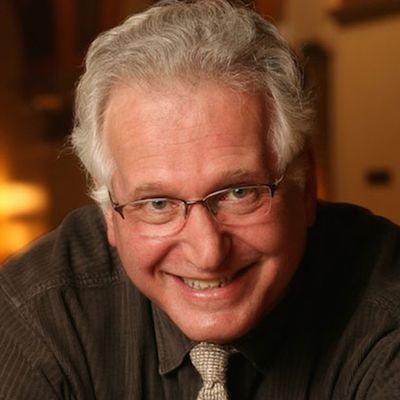
Today we welcome Jack Viertel, one of Broadway’s most influential voices and now a novelist. For decades, Jack shaped the landscape of American theatre as the longtime creative force behind Jujamcyn Theaters, the Artistic Director of New York City Center’s Encores!.. Read More
From the show: The Roundtable with Robert Bannon
Guests
Featured Shows
About
Today we welcome Jack Viertel, one of Broadway’s most influential voices and now a novelist. For decades, Jack shaped the landscape of American theatre as the longtime creative force behind Jujamcyn Theaters, the Artistic Director of New York City Center’s Encores! series, and the mind behind shows like Smokey Joe’s Café, After Midnight, and The Prom. He also penned the best-selling book The Secret Life of the American Musical, offering a behind-the-scenes look at the craft of Broadway storytelling. Now, Jack is stepping into a new chapter with his son Josh, writing their debut thriller The Glass Eel, a gripping environmental crime novel that takes readers into the high-stakes world of black-market eel poaching off the coast of Maine.
We also dive into Jack’s latest theatrical work, the brand-new jukebox musical Let the Good Times Roll: A New Orleans Gumbo, which just premiered at the Phoenix Theatre Company in Arizona. With music spanning from Bessie Smith to Harry Connick Jr. and Rebirth Brass Band, this show brings the soul of New Orleans to the stage in a way only Jack could imagine. From Broadway blockbusters to literary crime drama to brand-new musical frontiers, this chat with Jack Viertel is a journey through the past, present, and future of storytelling.
📺 Watch on Broadway World and the Broadway Podcast Network
🎧 Stream on Spotify, Apple Podcasts, iHeart, or YouTube
🌐 RobertBannon.com | Instagram: @RobertMBannon
Transcript
This transcript was automatically generated and might contain errors.
[0:14] Robert Bannon: Welcome to the round table, everybody. My name is Robert Bannon. You're listening to us on Broadway World over here on the Broadway Podcast Network, iHeartSpotify. And you know, we talked to some of the most fascinating people. And when I had the chance to talk to our next guest, growing up in New Jersey and loving theater, he created some of the theater that I absolutely love, some of the longest-running theater that happened when I was growing up and to this day continues. I don't know how to describe Jack. What does Jack, is he an author? Is he a producer? What Jack, what do you do? How do you describe yourself? He has books, he has new shows, and we're gonna talk about it all. Jack, welcome to the show.
[0:51] Jack Viertel: Thank you very much. I'm very glad to be here.
[0:53] Robert Bannon: What do you do, Jack? How do you describe your job?
[0:56] Jack Viertel: I don't know. I just start in the morning and then have a cocktail at 5:30. Um, it's been a long journey, and I've done a lot of different things. I've conceived shows that were then written by other people. I've conceived one or two that were more or less in my own hands. I've worked on other people's shows a lot as a dramaturg or creative consultant, most recently, The Outsiders. Um, and now I've written a show that's in its final weeks at the Phoenix Theatre Company in Phoenix, Arizona, which will have a further life, I think. And I have a thriller that's being published this month, and I'll be very happy to see how that does. I wrote it with my son, which was something that, among the things I've done, is the unique thing, writing a book with my son.
[1:44] Robert Bannon: You know what's fun about all the things that you just mentioned is that in your spare time, I guess, you either produce and are a dramaturg and write musicals, or in your spare time you write novels. But either way, I feel lazy compared to what you do in your school.
[2:00] Jack Viertel: You know, when I retired from Jujamcyn Theaters, where I worked for 30 years doing all the things that you suggest, and from Encores! at about the same time, but basically both because of the pandemic. And um, it was just time to go. And for a while, I thought, well, I guess I'm just sitting in this rocking chair for the rest of my life. But you know, you wake up in the morning, you want to do something.
[2:21] Robert Bannon: Yeah. So let's talk about, let's start here. What is The Glass Eel, um, coming out? And you and your son and the work and tell us what is it about and what was it like to write it?
[2:33] Jack Viertel: Well, okay, what's it about? My son had this idea initially, and I can explain how I ended up being one of the co-writers. But the idea that it wasn't an idea, it was something he knew about, which was that there is a very big black market in baby eels in Maine. And I live in Maine half the time, almost half the time. So I knew all the characters and the people, but I didn't know anything at all about this. I didn't know what a glass eel was. So there are these baby eels, which you can literally see through them. That's why they're called glass eels; they're about that long. Um, and they're worth about two thousand dollars a pound live, and they are shipped to Asia where they're grown into full-size great big eels, and then they're turned into unagi sushi, which you can order anywhere in the world, and they start their life here in Maine.
Um, and because they're so valuable, not only is there a legal market, which is very heavily controlled to protect the fishery, but there's also an illegal market, which is not controlled at all, and a bunch of not very nice people running it. So we thought it'll be fun to write a thriller about the not very nice people and the people who bring them down. Um, and he thought this was a great idea for a Netflix series, and I said I agree with you, but I don't know anybody at Netflix. You don't know anybody at Netflix, but I have written a couple of books, so let me give it a try. But after I wrote a first chapter, it became clear that I couldn't do it without him; he had all the information. I had the sort of the characters and the dialogue and the atmosphere; he had all the information and a lot of the plot development.
So we just started meeting basically once a week in a Sichuan restaurant on 35th Street and creating characters and the story, and eventually we stopped meeting in the Sichuan restaurant. I don't know why exactly; well, he was very far upstate by then, and we started meeting on Google Meet and then we started meeting every now and then on a sofa and going over each other's work and editing it and debating it. It was there were one or two scratchy conversations, but basically over the course of a few years, there was never a—I mean, it was a wonderful kind of love affair between father and son, I think.
[4:43] Robert Bannon: I think that's a the most beautiful story about something I had no idea about at all, and it’s fascinating. I'm sure you wrote a fascinating book. Was it like, oh my God, could I write a book with my dad? Maybe I—I what was it like? It must be a different sense of joy and satisfaction that you got this to do this together, and now that it's out, it's coming out.
[5:06] Jack Viertel: Yes, it was very joyous and very wonderful fun. And it is really fun to have something that you love doing with your—in my case, my son, or in your case, your father, um, that you like, you know, some people get together with their same-sex parent and go bowling or, you know, go to football games. Um, we wrote a book because we have so many of the same interests. And also it was, well, part of what was interesting about it, what I learned about myself and about him, is he's a planner. I mean, he's a real—he really lays things out, and he's like a chess player; you know, he's thinking four moves ahead. I'm an impulse buyer. I just go in and do whatever, you know. So I would write a chapter, and he would say, "But where is this going if that happens? How can this happen?" I'll go, "I don't know. I don't have any idea. Just seemed like fun to me." So we really needed each other to get this book done.
[5:56] Jack Viertel: It's this observer at The Glass Eel. So where—who should read it? Like what genre of book do you think is—you know, it's a thriller. I mean, at base, it's a thriller. We wrote it as a thriller, hoping that a publisher would see it as a thriller, but it's very, very environmentally driven. That is to say, the eel, the black market eels are also part of a larger environmental issue about what we do to animals and what animals do to us, and how the world changes as a result of shortages and, you know, scarcity of one kind or another, and bad treatment of—or uncaring treatment of fisheries and areas where people hunt and things like that. So all of that sort of bleeds into it in a very, you know, quite a big way.
And we also wanted it to be an atmospheric story about Maine that's fun and funny. Not every line is funny, but you know, that has its funny moments with these very eccentric characters, all of whom are not based on specific real people, but based on, you know, things that people have said to me, things that I've learned about people just from working with people who live up here and work up here. And it's also a sort of an economic picture of the state where most people have more than one job, not the lobstermen so much, but their wives and or significant others. And many of them have three jobs. It's really hard to make a living up here.
[7:29] Jack Viertel: And um, I fell in love with the state of Maine. It's absolutely stunning. The people are so unique; the cities are—the little towns are so unique, and I'm sure there it's a novel just waiting to be written. Um, what a fascinating place and story. And it will be available wherever books are sold come September.
[7:46] Jack Viertel: Yes, it'll be available wherever books are sold, and you know, you can get it from Amazon, but I urge you to get it from your local bookseller because one of the things that is happening that actually parallels the book is independent bookstores are being slowly snuffed out in many places. And I wholeheartedly support the idea of your buying this at an independent bookstore.
[8:06] Robert Bannon: You know, it made me think when I was in college, I was a political science major, and we had to do an—our thesis was on environmental politics, and I was so naive and dumb from New Jersey. No shades in New Jersey, but I was so naive and dumb that's not New Jersey's fault.
[8:19] Jack Viertel: No, no, it's not.
[8:20] Robert Bannon: I swear. It's back to my father. No, I'm kidding. So I um, I was like, I'm gonna do it about recycling. What is there about the environment? That's all I know. And my professor said to me, "You're gonna—I'm gonna give you the topic, and it's gonna be on the environmental impact of shark fin soup and the hunting of sharks." And I said, "What? I don't know how many sharks are there in the world. Not that many. How—what do you mean?" And he said, "A hundred million sharks a year are killed for their fins for a delicacy, and it changes the ecosystem of the ocean. And there's an underground black market for hunting sharks." And I was never in my life in the year 1999 thought or heard of anything like this. And then we hear something like this with the eel and about people, and we don't even know as a society that there's this whole infrastructure of and business and commerce for this product.
[9:12] Jack Viertel: Right.
[9:12] Robert Bannon: And the product is a living thing that has an influence on many other living things and is itself influenced by many other living things. It's all interconnected. Fascinating. The Glass Eel, you gotta get your copy. It's the perfect fall read. As the leaves change, and as we go into the fall, nothing better than to curl up with the book and go to your local bookstore and get a copy.
[9:34] Robert Bannon: So in your spare time when you're out here making musicals, you have a show that's running—ending its run out right now. The show is called Let the Good Times Roll: A New Orleans Gumbo. Tell us how the idea—you are, Jack, if I may say so, the kind of jukebox—like the idea of the jukebox musical or songbook, or I don't know what you call them. This is your baby. I mean, I think you get credit.
[10:00] Jack Viertel: Well, or blame. I think Smokey Joe's Café was the—I think Smokey Joe's Café was almost the first of its kind. Actually, Smokey Joe's Café, which I conceived, I guess in 1992 or something, um, was in every way that I could manage it stolen note for note from Ain't Misbehavin', which is really the first of these, I think, that had an impact on people in the modern era.
[10:24] Jack Viertel: Um and Ain't Misbehaven, I think remains the you know, the gold standard for this kind of a show, and you could call them jukebox musicals. I I I suspect, and I have no information about this, but I suspect they started to be called jukebox musicals because Smokey Joe's Cafe was full of the kinds of songs you heard on a jukebox. So I don't necessarily think it's a great term for Crazy For You, which is a bunch of Gershwin songs that are thrown at a pretty much new story. But you can call them that if you want.
[11:15] Jack Viertel: And you know, it's hard to it's hard to make enough money to stay alive when you do that. Um so I thought, well, let's let's go back to Ain't Misbehaving. Let's do one with five people. Well, it turned out to be six people, sorry. There's a sixth salary in there. Um and I have only been going to New Orleans, spending time in New Orleans for 50 years. I love that music. It's unique music. People refer to it as jazz, some of it's jazz, but it's also RB and blues and rock and roll and funk and brass band music. And it all the interesting thing about an interesting thing about New Orleans is you hear all of it at once. You hear music that's a hundred years old coming out of one club, and music that was written yesterday coming out of another club, and the two clubs are right next door to each other.
[11:18] Jack Viertel: Um, so I thought let's let's find a way to tell that story where New Orleans sort of is a character, but there also are characters, six of them, as I said, not five. Um, and and use as much of this wonderful music as possible, get it get uh orchestrated for a New Orleans street band of nine people. You gotta have a tuba, you've got to have a guitar player who can play the banjo. Um, and let's see what happens. So we I created this very slim, slim and none story about a our young, heartbroken girl who comes to New Orleans after her relationship is dead, and she feels like maybe she should be dead and there's no hope and all of that, who gets rescued by the city. But then the city undergoes, of course, gigantic challenges of its own, like Katrina, and there was a gigantic flood in 1927, which Randy Newman wrote a great song about that we use.
Um, and it has been a really great experience and hugely uh pardon me for saying so, critically successful and popular out there. So now we're trying to figure out what the next step for it is. But it it's it's a joy machine. I mean, despite the moments that are spent in crisis, overall it's a joy machine.
[13:06] Jack Viertel: And um, you know, I'm I'm we're we're looking to see what happens next. I think what is fun about what you've done, if you look at Smokey Joe's After Midnight, and we'll talk about all the other things in a minute, and and uh and and the show that's running right now at the Good Times Roll is that it's joyful. Like I sometimes we need to go see a Broadway show or a piece of theater wherever around the country you are, listening to us, your local theater, your your your touring house, your community theater, whatever theater is being done, is to sit down and have joy. And I remember seeing Smoky Joe's at 12. I remember being lord at After Midnight, uh, and the cast that was in that show, um, and how gorgeous that show was. And I can't wait to see the life that this show has.
[13:47] Jack Viertel: How do you get an idea and and get it to the place? It's a lot of work to get a musical up and out before it comes to New York, before it gets. Well, there's the there's the work about you know finding a theater that wants to do it and raising money and that kind of thing, which I frankly have spent as little time as possible doing because I don't like doing it. Um, but I've had to do some of it, obviously. Um the ideas come when they come, but part of it I think is that, and again, I I don't want to sound like I'm boasting and it's not even necessarily a positive quality, but I am interested in a lot of different kinds of music. I mean, beginning with conventional show tunes and but also including pre-war blues from the Mississippi Delta and jazz and um uh uh some classical music and I I just have a big repertoire of things that are in my ears.
[14:42] Jack Viertel: Um and so it makes it and early rock and roll, Libra and Stoller and Smoky Joe's Cafe, um, was where I kind of where I started along with the show tunes. I mean, I I was listening to Guys and Dolls and Yakity Yak at the same time when I was, you know, eight years old, nine years old. So um I I I just have a lot of music in there. And the idea of finding a way to celebrate that music in a theatrical event that has some kind of structure and carries an audience through a journey of some sort. I hate that word journey, um, is exciting to me. And then trying to figure out how to do it is exciting to me and frustrating sometimes. But I do think what you say about joy is important. I don't think all theater should be joyful, and God knows I've been involved in a bunch of plays that are hardly joyful, but are good anyway. Um, but I do think that joy is one of the things that we look for, at least some of the time in the theater, and I and I get great pleasure out of providing.
[15:40] Jack Viertel: So I don't think I could write, I don't think I could write or or or create uh a a down a completely downbeat play, which doesn't mean that they don't have exactly as much value. It just means I wouldn't be any good at it. So, you know, I'm basically uh, you know, uh a relatively happy person who had a relatively happy childhood. And, you know, I I I'm I'm now I'm just not Edward Albee. I just I'm just not.
[16:05] Robert Bannon: Listen, I get it. And I and that's what is so great. In these times, uh sometimes, especially in the crazy world we live in, we want to spend a couple hours, you know, tapping our foot and clapping our hands and having a good time. What is some of the music that is in this show?
[16:20] Jack Viertel: Well, there it it there's early um music that's still performed there that's almost like a couple of pieces actually were originally recorded by jug bands, but they're you know, music from the 20s and 30s. I think the oldest piece is from 1916, it's called the New Orleans Hopscot Blues, which Bessie Smith recorded in the early 30s, I think, or maybe late 20s. Uh, I didn't know it was as old as it is. Um, and then there's some pieces that people will know, like do you know what it means to miss New Orleans, which is actually not written by New Orleans people, it's a movie song written by two Hollywood songwriters, but nonetheless, it has its uses. Uh uh little snippets of things like uh Basin Street Blues and uh a wonderful um uh Lyle Lovett song called Church that is sort of the almost finale of the show.
Um and you know, I think a lot of it will be uh unlike uh Smokey Joe's Cafe, I think a lot of it will be music that people don't know, but that they latch onto immediately because it's just so melodic and it makes you want to jump up and dance.
[17:29] Jack Viertel: And um, it's kind of irresistible, even if you've never heard it before. Um, and that's how it found its way into my ears, I guess.
[17:38] Robert Bannon: Well, if you stay on the lookout for it, I'm sure the show's gonna have a life uh after this and and and after this run and be on the lookout for more things to come. I mean, we'll find out.
[17:46] Jack Viertel: Yeah, I guess.
[17:49] Jack Viertel: We sure will. The future lies ahead, as they say. You know, some of the things you're known for, or some of the most famous pieces of theater ever, some we know you are connected to, and sometimes we don't know. So, how do you become a dramaturg?
[18:02] Jack Viertel: Oh, how how does it? I mean, you hear the word, people say I'm a dramaturg, and we need a dramaturg. We need to fix our show. What's the dramaturg say? How do you become one? It's in my case, it's the stupidest story you ever heard. Um I was a theater critic for a paper called the LA Herald Examiner in in Los Angeles, which was the failing newspaper that the LA Times was crushing daily. We used to say this is this is the art section in the Herald Examiner is not read by anybody. The sports section is read by cab drivers, but in LA there are no cab drivers. So uh after a while they made me the arts editor. And within about six weeks, I realized that I was in the wrong business. I was in the I was in the journalism business. I didn't want to be in the journalism business. I was a theater critic because of the theater, not because of the journalism.
[18:47] Jack Viertel: And I but I got the good thing about the journalism side of it is that we got a press release saying that the dramaturg at the Mark Taper Forum, which is LA's big uh not-for-profit theater, was leaving to become the artistic director of the repertory theater of St. Louis. And I thought, aha, there's a job open at the Mark Taper Forum, and I don't want to stay here at the Herald Examiner. So I called Gordon Davidson, who uh was the artistic director and who I knew because I've been panning a lot of shows at the Mark Taper Forum, um, and asked him to have lunch. And somehow I talked him into making me the dramaturg at the Mark Taper Forum without having the slightest idea what a dramaturg did.
[19:24] Jack Viertel: Uh and so when I got there, I sort of did what I was told and kind of reinvented the job. But the best part of the job was working on new plays with playwrights and directors and trying to just make things clearer, make things better, without trying to make the play my play. This is the this is the playwright's play. And um a couple of years after that, Rocco Landisman, who had just taken over Jujamcyn Theaters, called me on the phone and said, I want you to come to work in New York. I've just taken over Jujamcyn, we're gonna have to produce a lot of plays here, and I need you to help me. And I said, Why are you calling me? And he said, Well, back when you were a critic, you wrote a terrible review of Big River, which was trying out at the La Jolla Playhouse, but it was a smart, terrible review.
And uh I used it to beat up the people who were writing Big River, and we made the show better. So that's why I want you to come to New York. So I came to New York and I worked with a lot of playwrights and I worked with a lot of directors, and we initiated some projects and we joined very early on in some projects like Jelly's Last Jam, which was just sort of a gleam in the eye of Margot Lyon, who was the lead producer.
[20:30] Jack Viertel: Um, you know, one thing led to another. One thing led that's the crazy your life could have made so many different turns if that didn't happen the way that it happened. You might have not been here, right? Uh it's I I I always say I I feel like I fell off a roof through one awning after another and somehow landed on my feet. I had no idea how it happened. How do you describe the work? I mean, you you were uh you helped out with shows like Dear Evan Hansen or Christmas Story or I mean a lot has been made. You you're dramaturg for Hairspray. How what is it like when you see a show like that? That's not your it's not Smoky Joe's, it's not Let the Good Times Roll. It's not your show that you wrote, but you are a big part of getting it up there.
[21:13] Jack Viertel: Yeah, I mean, you do I think in the role that I or was defined for me as a dramaturg or a creative consultant, which is what I call myself now, um, you're at the service of what the show wants to be. You're not trying to make, as I said, you're not trying to make it your show, and you're not trying to make the writers or the director or the producer or anybody do what you want them to do. You're trying to find out what they want to do and say, Well, I okay, so I'm confused about this because I know you want to do this because you just told me you want to do it, and I'm not hearing or getting or understanding something. Um, and sometimes they go away and they come back with something, and you think, Oh, I think I had an influence on that happening.
Um, I mean, I can give you one example from Hairspray, which is uh, you know, the the voice of Hairspray came completely from the original writer, Mark O'Donnell. He he's the late Mark O'Donnell, I'm sorry to say, but he had a lot of trouble um telling a long form story. He was basically a sketchwriter for Saturday Night Live. And the score, which was written by Shaman and Whitman, their first Broadway score, the three of them, but particularly Shaman and Whitman, I think, uh, were fascinated by the politics of the piece, by by the, you know, the the fact that there actually was something called Negro Day on on the in the Philadelphia version of the Dick Clark show and all that. And they wrote this piece, and when we did a reading of it, I I said as gently as I could, this is fantastic.
And it was, it was one of the only pieces I ever worked on that was a hit from the first reading. I mean, we just knew it was a hit. Um, but I said that the the thing that's not clear is you have a romantic relationship uh between this uh remarkable woman, Tracy Turnblad, and this rather gorgeous but not very remarkable guy who's the lead dancer on the Corney Collins show. But that part of the story you haven't actually told. You've been so busy making sure that the politics of the piece are saying what you want them to say, but I don't know why Tracy Turnblad loves this guy or how she probably whatever. I mean, I just don't understand it. Um not saying you do anything wrong, I just don't get it yet.
So the next time we did a reading, there was a new song called I Can Hear the Bells, which basically solved that problem. Um, I would never have come up with that solution, so it's an incredibly imaginative solution. But I knew there was an issue that hadn't been dealt with yet.
[23:46] Jack Viertel: Wow. Wow. That that's why you gotta hire Jack, everybody. Please do. It was available, and you did the same with The Outsiders.
[23:55] Jack Viertel: Yeah, I mean, The Outsiders was interesting. I went to see it in La Jolla at the request of the producers. And this incredibly talented people, right down the line: writers, director, choreographer, designers, all great. None of them had ever done a musical. And so they just didn't understand, like the nut like I said again as gently as I could, you have to have an opening number. And at the end of the opening number, I gotta know who's in the family and who's the best friend. And you know, I have to know certain things, otherwise, the audience is just bewildered, even though all of the music is wonderful and the talent is everywhere. You have to make clear to people who everyone is and what the story's about.
You don't have to do the plot, you just have to set us up for it for the plot. So they wrote an opening number. And it's pretty brilliant. It's gorgeous. Well, the last And there were a lot of there were a lot of things like that along the way. And there were many disagreements. And you know, I should say, in my long career, I've lost at least as many arguments as I've won, usually to the benefit of the show.
[25:01] Jack Viertel: Well, if you want to win a I guess best musical Tony Award, then you call Jack because that's what we're talking about. These some of these shows have gone on to great acclaim as this is. So you're uh you have other books that are available as well. And and you're you have written, like I I know that this came out not too long ago, um, Broadway Melody. What can we say about this? So maybe we can make a whole book club, get all of Jack's books.
[25:21] Jack Viertel: Oh, there you go. I'll start a I'll start a me book club. Uh I'll be the only one in it also. Broadway Melody was a story I really wanted to write because uh after my first book came out, which is called The Secret Life of the American Musical, which was a nonfiction book, about basically the kind of thing that happened in Hairspray, how you structure a show. Uh my agent said to me, Well, what do you want to do next? You want to do a celebrity biography or a history? Or I said, I don't want to do any of those things. I really want to tell a story about Broadway through uh uh uh through a romance that goes on for many, many, many years so that we can tell a long story about Broadway, what happened in the world of the theater, the New York theater between 1940 and 2016.
Um, and so I I I I had a great character. The the character was based on Bred Press, who was the music contractor and lead uh saxophone player in the Encore's Orchestra. And he was probably 70 when I met him, 70, maybe a little older, and he stopped playing in his 80s because his his uh eyesight wasn't was failing, and he couldn't read he couldn't sight read the music the way he once could. And I thought, well, this is a great character who's been involved in this industry forever. But I didn't have a I didn't have a plot yet. I just had one character. And then a soprano in the Encore ensemble said to me, This is going to be my last Encores. And I said, Why? And she said, It's not because I'm unhappy with Encores, but I was playing uh the lead in uh a production of Phantom of the Opera in Germany, and the spotlight operator who was following me around with a light every night, came to my dressing room and said he had fallen in love with me and he wanted to marry me.
And I said, Well, maybe we should get to know each other first. Um he said, but we did get to know each other, and I fell in love with him, and we're getting married in Germany, so goodbye. And uh that was that, and that's when I it was when I was thinking about the novel. I thought, okay, so you have a music contractor and a player who's down in a pit, and a spotlight operator who's 40 feet above the stage or 60 feet above the stage, and a young actress who's in the middle. And why wouldn't they both fall in love with her? And that's where the story came from.
[27:39] Jack Viertel: And it it covers a lot of ground. I mean, it covers the the knocking down of the Morasco and the Helen Hayes and the actor's equity strike of 1960, and um, there's a big component of it that because this character who was entirely fictional character uh grows up in the Midwest uh and is um um sort of molded by her music teacher when she was young, who turns out to be a gay man living with his partner. This is long before gay marriage. Um, and there are so many other gay characters in our gay people in our world. Men and women and everything in between. A kind of very generous percentage of people who are who are not straight men. Because I've been working in this business for a long time. I haven't met that many straight men.
[28:47] Jack Viertel: You haven't met once a day. Well, I know I mean I know.
[28:53] Robert Bannon: So this book sounds fascinating. What a wonderful uh love letter to Broadway and to uh to relationships and love and and the impossibilities and the journey. Uh what a unique way to tell the story of Broadway through a non uh through a fictional story. And and then we can also learn so much. What a what what a you take this and then you take this, and you have quite the gamut here. They are on opposite ends of the spectrum of your life.
[29:18] Jack Viertel: Um you get interested in a lot of things as you go along, I think, you know.
[29:22] Robert Bannon: Absolutely. Well, I'm fascinated. You're fascinating. Your career is amazing. You've made some of the theater and helped help some of the theater that has really changed the landscape of musical theater and Broadway uh history. Your your your work will live forever. People will be singing these shows forever. I believe it. There'll be Smoky Joe's in some theater somewhere.
[29:43] Jack Viertel: Well, that's what they say about King Lear. I don't know about Smoky Joe's.
[29:46] Robert Bannon: I'm I'm telling you, I'm telling you, and uh the book, everybody, make sure go to your local bookstore, head on downtown to wherever you live and go get The Glass Eel. It's out uh this September. And we look forward to the next project, the next theater piece, and we'll be looking for the future of Let the Good Times Roll. Uh after it's it's run here in Arizona. It's gonna be, who knows? We'll be we'll be there though, wherever it's gonna be. And we're excited. My my show's your show. When it's announced, what's next? Come on back.
[30:11] Jack Viertel: Okay, I'll be happy to. Thank you so much for spending some time with us today.
[30:15] Jack Viertel: I'm so happy that you asked.
© Broadway Podcast Network, All Rights Reserved