

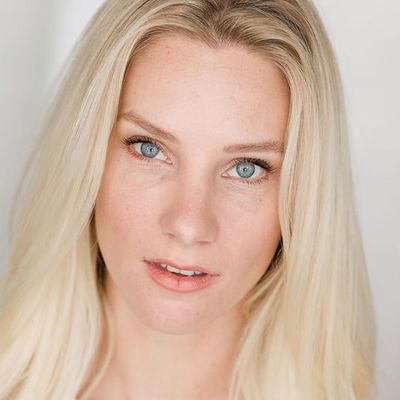
From Glee to Dancing with the Stars and now the stage, Heather Morris joins Michael Mendez to talk about her exciting role in Eleven to Midnight. She opens up about stepping back into live performance, the challenges and thrill of theater, and how this new chapter pushes her creatively in ways fans haven’t seen before... Read More
From the show: The Roundtable with Robert Bannon
Guests
About
From Glee to Dancing with the Stars and now the stage, Heather Morris joins Michael Mendez to talk about her exciting role in Eleven to Midnight. She opens up about stepping back into live performance, the challenges and thrill of theater, and how this new chapter pushes her creatively in ways fans haven’t seen before. It’s a candid, fun, and inspiring look at an artist continuing to evolve and take bold swings.
Then, rising voice Bailey Swilley brings the heat with A BABY FOR ME? NO THANK YOU, PLEASE! heading to the NYC Fringe Festival. Bailey shares the inspiration behind this bold, funny, and deeply personal piece, exploring autonomy, identity, and modern expectations with humor and heart. Two dynamic conversations, one powerful theme—women owning their stories and rocking the stage like never before.
The Roundtable with Robert Bannon is available on BroadwayWorld, YouTube, Spotify, Apple Podcasts, iHeart, and more. Follow along at RobertBannon.com and on Instagram @RobertBannon.
#HeatherMorris #BaileySwilley #NYCFringe #WomenWhoRock #TheatreLife #BroadwayWorld #FringeFestival #WomenInTheatre #TheRoundtable #RobertBannon
Transcript
This transcript was automatically generated and might contain errors.
[0:10] Robert Bannon: Welcome to the round table, everybody. My name is Robert Bannon. Hi. Welcome. Thank you all so much for being here. If you're watching it the day this is up, it is Monday. It is Monday, and I'm here to introduce this episode because we have two guests. We don't normally have two guests on the daily podcast, but today we have two ladies who are rocking and rolling out here on the stage, and I wanted to introduce them. I also wanted to say that this weekend, our interview with Jesse L. Martin of Rent, if you have not seen it, was featured in People Magazine. Little Robert Bannon's name that started this show in the basement of his apartment. Yes, I had a basement. Well, I kind of lived in the base.
That's a whole other story. Was in People Magazine. So I want to say thank you to everybody at the Broadway Podcast Network at all of my platforms. And everyone that listens and watched the show and shared it was viral. We did like over 50,000 views on TikTok. And then it was in People Magazine. So thank you all. Let's get these interviews up in People Magazine. Let's start talking. Let's have good juicy chats today. No, not really. It's all about love and it's about women who are creating great art. My friend Michael Mendez, who is over has a radio show on William Patterson University about theater, went into New York City for me to talk to the incredible Glee star in the dancing with the star star. Is that what you say? Heather Morris, who is now in the cast of Eleven to Midnight. And you have to check out this incredible dancing. He got a few minutes with her. Take a listen to this.
[1:37] Michael Mendez: So I'm here with the legendary Heather Morris. How are we feeling after today?
[1:41] Heather Morris: We are feeling great. A few hiccups here and there, but hopefully nothing that you guys noticed. Um, but we felt really confident. Everybody walked off stage and we were like, that felt good.
[1:52] Michael Mendez: Yeah. Now that last number that we saw was absolutely beautiful. And that that whole flashback scene, it was very, it was very, it was one of a god. It was very nice.
[2:01] Heather Morris: Yeah.
[2:01] Michael Mendez: So the people know you're very accomplished dancer seeing Glee and your work with Beyoncé. How's it feel taking the talents to the Orpheum Theater?
[2:09] Heather Morris: Oh gosh, it feels like such a blessing. Um, but it also feels like I'm a thousand years old. Um my bones when I like wake up in the morning, I'm like I have my heating pad set up, I have my Theragun, like I definitely have to mentally get there when I'm out here. And then I look around at all the babies and I'm like, mm-hmm.
[2:33] Michael Mendez: So what what drew you to uh 11 and midnight? You know, what are you looking at, you know, what are you looking forward to with the show?
[2:39] Heather Morris: What drew me to this show? Well, first and foremost, just what iconic dancers Austin and Meredith are. We know them as Cost and Mayer, but like as dancers themselves, like I know about Austin from convention days, like they are dancers first and foremost, and just the fact that they did get such a large following from TikTok and Instagram is just the cherry on top. But the fact that they created this along with Hideaway Circus, um, strictly dance-based. Um the last time we saw like just a dance show here in New York was Say No More. That's what it was. Was say no more. That was what, like 20 years ago, 15 years ago? About I was I was on the younger side for that, but yeah, and that was like an immersive experience. So now, 15 years later, we have this, and it's just so wonderful for like people to just watch Strictly Dance with like a little bit of acting in it. And these dancers are all like they all sing, dance. Incredible.
[3:32] Michael Mendez: Yeah. Absolutely incredible.
[3:33] Heather Morris: Yeah, this was honestly the first time I saw this, it was I've never seen anything like it before. I've never been to a dance show like this before, so it was really incredible seeing this.
[3:41] Michael Mendez: Yeah. So I hope they bring it to the actual screen.
[3:45] Heather Morris: Oh, I can see it. I could totally on the universe now for them. I love that. I love that. Maybe maybe we get you in the film.
[3:51] Michael Mendez: Maybe.
[3:52] Heather Morris: Okay, okay. What surprised you most during the rehearsal process?
[3:56] Michael Mendez: What surprised me most during the rehearsal process?
[4:00] Heather Morris: Um, I don't know. I honestly was like, oh wow, I'm picking up choreography faster than I thought I would. Like, I thought I was gonna get to today and be a wreck. Like I thought I would have to like check out and be like, oh, sorry, the swing has to come in for me. Like, I'm not mentally here, and I was I surprised myself. So that was cool.
[4:20] Michael Mendez: Okay, I like that.
[4:21] Heather Morris: Yeah. And now I have to mention, you know, we're seeing a lot more Glee alumni heading the stage. How's it how do you feel about finally joining them? I mean, I know that you said it it's been a dream of yours to uh actually be on a stage like this here in New York City.
[4:35] Michael Mendez: Yeah. So how's it feel finally joining them?
[4:36] Heather Morris: I just have to say, this is a competition, and um unfortunately Brittany S. Pierce is here, bitch. So Kevin, I'm coming for you.
[4:45] Michael Mendez: Iconic, iconic. Thank you so much for your time. I really appreciate it. She reminds me of being a I watched Glee. I loved Glee. She was so her Brittany Spears, iconic. Loved it. Loved it, loved it, loved it.
[4:59] Robert Bannon: So, speaking of another lady, we got a chance to sit down. Bailey Swilley is someone who is incredible to make a one-woman show about something so personal. And she was very honest and up front to talk about it with me. It's coming to New York for a couple of days. She's done a bunch of these shows. It's something you're not gonna want to miss. She's here. Take a listen to this.
[5:30] Bailey Swilley: I can't even speak because I'm gonna talk about the pressure people put on us to live the lives that they want to live. That's what Bailey wrote about. I'm on the Broadway Podcast Network iHeartSpotify wherever you listen to your podcasts. And our next guest, I believe, wrote a one-person show. This may be true. She's maybe lying. It is a 60-minute tour de force, funny, honest, vulnerable talk that so many of the women in my life have talked about about pressure, about motherhood, about people butting in their business into your life. And she's here to write about it. She's done this show. She has a great run coming to New York of a couple of dates that you can catch the show. And Bailey is here to tell us all about it. Welcome to the show.
[6:12] Bailey Swilley: Yes, thank you so much. Thanks for having me.
[6:16] Robert Bannon: Bailey, what do you are you an actor, writer, performer?
[6:20] Bailey Swilley: I guess I would say at this point, writer, performer, storyteller.
[6:26] Robert Bannon: Yeah. What makes someone think I love when people shows? I I love cabaret when it's got music. I love when it has no music. I love 60 minutes, get up here. And but it's not stand up. It's such a hard thing to explain. How do you explain what storytelling or what your show is like?
[6:43] Bailey Swilley: I mean, uh a lot of people are like, oh, are you? Do you do stand-up? And I'm like, sure, like there's jokes, but there's definitely a narrative beginning, middle, and end. Like the show will take you on a journey. By the end of the show, you'll be like, oh, I understand where we went and why she told me that. Whereas sometimes stand-up can be like, joke, joke, joke, joke, joke, joke, joke. Um, which is also great. I love that too.
[7:08] Robert Bannon: Me too. I love it too.
[7:10] Bailey Swilley: But the difference being you could be funny, but you're gonna tell a cohesive story, you're gonna tell a 60 minute long story with jokes, with humor, with entertainment. Um, but it's not gonna be like I flew in from the West Coast and my arms are tired, but um bump bump. It's gonna be all the feels and all the emotions is what I'm gathering.
[7:28] Robert Bannon: Yes, yes. And I will say the show runs a little bit under 60 minutes, um, which is good because uh the show is gonna be at 9 50 for the next two for the last two performances. So you can be home before 11. See And I have AD bad. I can't sit for and three hours anymore. I need I need 50 minutes and then I need to get up and go home. My legs hurt. My knee I'm I'm 42 years old. My knees hurt Bailey.
[7:54] Bailey Swilley: My knees hurt too.
[7:55] Robert Bannon: So you can get tickets tickets are 25 dollars and they even have pay what you can and there's different promos and ways that people can get their tickets so that you can make sure that you get a ticket. So they're not pricing you am I telling the truth am I lying?
[8:07] Bailey Swilley: You're telling the truth. Um you can also get if you're a member of TDF you can get tickets there. Um also I'll go ahead and just shout out the promo code. So the promo code is gunk G-U-N-K. Uh if you see the show then you will know why that is the promo code and you can get $10 tickets with gunk. Ten bucks you can't even get a Starbucks for $10.
[8:28] Robert Bannon: Exact I know exactly you can't really beat that.
[8:32] Bailey Swilley: You can so Bailey tell us the name of the show and tell us uh what how what's your elevator pitch about what the show's about.
[8:37] Bailey Swilley: So the show is called a baby for me. No thank you please and it is a solo journey about the pressure to have children. Um, and we kind of take a little pit stop uh at a gynecological uh event that I had, and I call it an event because it was a series of events that took course or that took place, and um there's a bit of body horror in there, uh, but it's funny um and exciting and surprising, and you'll learn something. Um, so yeah, it the show kind of combines societal pressure and gender roles and and kind of like what that's like with a big body horror event.
[9:20] Robert Bannon: Okay, well, and now I'm fascinated. I have so many questions, but I'm not trying to spoil it, and I want people to go get the tickets and see you tell this story. You know what's funny? I I thought about it. Um I'm married, I have a husband. So, but even I can't even imagine what it's like to be a woman because I know even the word marriage or the word relationship starts, even gay marriage. People start to say, You're gonna have kids, you're gonna have kids, you're gonna have kids, how many kids? If you have a kid, then you're gonna have two kids, you gotta have five kids, you gotta have ten. You know, it never endingly stops. So, when as a woman do you first feel the conversation or pressure? What kind of stigma is put on women to have children?
[9:55] Bailey Swilley: It's like literally like at birth. Yeah, so you know, I talk about this in the show. I've noticed at a pretty young age that people kind of placed that idea on me at a like even elementary school, middle school. I'll also say, you know, people start giving you presents when you're a kid, like baby dolls and like little, you know, you may have noticed like little girls, you know, I'm of a certain age, so you know, little girls back then would get like in the 90s, like a vacuum cleaner. Do you ever see like those kid vacuum cleaners?
[10:31] Robert Bannon: Yes, yeah.
[10:33] Bailey Swilley: Yeah, so like I think like from a real or like even and I see this all the time still, like little kitchens, which I think is great. Like, like you know, you're gonna have to cook when you grow up, but I will say, like, you notice what little girls, they they get like toys that kind of represent household chores and child rearing, and boys often get, you know, trucks and you know, water guns and dinosaurs.
[10:58] Robert Bannon: Yeah, so um, so yeah, I would say like all of that is ingrained so young, but I kind of felt like maybe I was in the clear by the time I hit a certain age because um I went to school, I came to New York, did an internship, started like working, and kind of like really put my head down and was like, Yeah, I want to be a writer, I want to do comedy, like this is what I want to do. So I I kind of thought everybody was like, cool, like that's what she wants to do. We're not gonna ask her about having kids because clearly she doesn't want them. And then when I got married, it was just like obviously there's no reason to get married besides having kids. And I didn't know that people, I didn't know how many people really believed that until I got married. And maybe you experienced that too.
[11:50] Bailey Swilley: I had a straight wedding and I had a gay wedding. My straight wedding and gay wedding both the second you are engaged, you don't even get to be married. People have already started to question you about it, and it doesn't matter how much money you have, what job you have, what career. People don't seem to care about how you personally feel, your health, your lifestyle. They don't care about any of your feelings, they just feel like you're supposed to have one, and people, they could be your grandmother to a stranger, like it doesn't seem to—there's no real proper boundary societally about people giving their two cents. Did you feel that way?
[12:26] Heather Morris: Yes, like at the wedding, like on the dance floor, like at the dinner, like it was constant. It was just like crazy. It's like can we just like have some fun and party like my wedding? Yeah, so are you—I'm not trying to because I'm still married to my husband, but not my—are you—you have a husband?
[12:46] Bailey Swilley: Yeah, I'm still married. We're on the same page. And did you let me ask you for this dating advice for the young people out here, is this something that you have always—like was there an evolution together? Did you have a conflict about it? Did he feel however you felt about this subject? Like what was your history together that led you to this decision?
[12:46] Heather Morris: You know, like I've always been pretty transparent about it. I will say like sometimes—and I don't know if you've ever experienced this—but like sometimes you will maybe question it. Like, um, you know, I had a parent pass away, and so when my dad passed away, I was sort of like, oh, this makes me feel like maybe I'm doing everything wrong and I need to change my life immediately and move home and have kids. Like I did have feelings like that. Or like even during COVID, I feel like during COVID when everything is kind of like shut down, I'm not able to do my shows and do all these other things that I care about, during that time I was sort of like, oh, is the most important thing having kids? Like do you know what I mean? Like things like—so it's not like it doesn't come up. And even, you know, sometimes like during the holidays, I'm like, oh, this is such a nice time, maybe it would be better if kids were here.
[14:02] Bailey Swilley: So we have those kind of conversations all the time, and luckily we're on the same page. But you know, we do talk about it a lot because you do hear about couples breaking up. Like you think two people are on the same page for so long, and then they break up and then one of them goes and has a family. So it does have to be discussed.
[14:21] Heather Morris: Well, Bailey, what's great is that you can decide never to have kids or to have 22 kids, but you—it's your life and your decision, and you and your husband, and that's what makes it so beautiful. So, why and how did it become a show?
[14:33] Bailey Swilley: Because you—it's private, it's your feelings. I'm sure you've dealt with it. I'm sure you've joked about it with friends or family, or talked to your husband, like, oh my god, I'm gonna see this person and they're so annoying when they ask about it. But then there was a moment where you said, like, I'm gonna sit down and actively write this. So when did that happen?
[14:49] Bailey Swilley: I would say so. After I got married, which was about almost four years ago, that's kind of when it just became this constant discussion everywhere I went. Like, especially with my grandmother, my dad's mother, it was like it's nonstop. It's even still when I see her, it will come up. Um, and she's very disappointed, and she puts a lot of—like places a lot of guilt on me about this.
[15:12] Heather Morris: Okay, but it's not just her, it's like friends of mine are constantly like, Are you sure? Because I think you would be really good at it. Which is—you could be good at a lot of things, it doesn't mean you have to do them, you know. I might be a good astronaut, but I'm not going to space. I don't want to.
[15:31] Bailey Swilley: Right, right. So I noticed it just became a constant thing, and I noticed that I had such a visceral reaction to it. Like it wasn't really difficult for me to brush it off. I just was sort of like, I need to write down how this makes me feel. Because—and also all of—I sometimes, you know, I'm not that strong emotionally. Like sometimes all of that noise can make you think, well, maybe all of these people are saying this to me because maybe I am wrong. Maybe I'm not—maybe I'm missing something. So there was a lot of like, I think I need to do some self-reflection.
[16:11] Bailey Swilley: And so I started like reading all these books about like how to make this kind of decision and reading all these articles and like doing deep dives on child-free TikTok and parent TikTok, trying to be like, okay, like maybe other people understand these things better and they just—and I just have to listen. So there was a lot of that over these last four years, but then this gynecological event really set my mind—really confirmed how I felt in the end. And I can say what I—a piece of my IUD got stuck, and it was kind of this like harrowing experience to get this piece extracted, and that kind of set me on this another emotional journey about that in particular, about birth control and why do we go on birth control and why do we put ourselves through all these things and like is it really worth it? So um, all of these events kind of culminated into this show.
[17:11] Heather Morris: I don't mean to laugh, I just can only imagine your telling of it. That's gotta be so entertaining and um, and insightful. And I hope men go—firstly, if you have a son, can you buy them a vacuum? Because I'm just gonna let you know that no matter who they marry, they're probably gonna need to know how to use a vacuum.
[17:27] Bailey Swilley: So if you want to make—exactly, if you're gonna buy a vacuum for your daughter, you better damn buy a vacuum for your son. Cause uh uh.
[17:33] Heather Morris: Secondly, or don't buy them a vacuum. Figure—let them figure it out on their own, or do whatever. Just we all have to clean, men and women, everybody. Secondly, I love the idea that you're sharing this. I'm sure you've done the show. I'm sure you've heard from people who have come to see the show, or they come because they may feel similar to you, or you may enlighten them to feel okay to share their thoughts and feelings. What's it like when you meet people who—maybe they're gonna be seen, you're gonna see an audience who may feel seen or may need this, or may need you to kind of give them permission to feel the way that you have felt, or to even explore the journey to see how they feel?
[18:08] Bailey Swilley: It's been really rewarding. You know, I had a group of child-free women come to the show on the first night, and I was really like touched and surprised to have them there, and they were like, I could relate to the IUD story, and I could relate to, you know, I—there's a part of the show where I talk about like my mom had pointed out to me that I never played with baby dolls as a kid, and I always wanted Barbie, which you know, Barbie is cosmopolitan and chic. She is. She's a career woman, you know. So um, so that—you know, they had been like, oh, I really relate to that toy part. But I also had a friend who came who has two kids and was very much like on the same page with me and understood like that the point I was trying to get across was not that the show is not about convincing people not to have kids, you know.
The show is really about how we just kind of need to respect each other's choices and have some balance and realize that we can help each other and come together, and it doesn't have to be like an us versus them, like child-free versus parents, which I do see a lot on the internet. So um, it's been really rewarding to kind of have different perspectives come to the show for sure.
[19:22] Heather Morris: I love it. I don't understand why people feel it's anyone's business to judge the way other people live their lives, and I feel like whatever decisions work for you is fabulous. And whatever works for me is also fabulous. So why can't we just all be okay with who we are and learn to love and accept and give support no matter where people are on their journey and what they decide? And I hope that that's how you come to terms in some catharsis writing this show. What have you learned after writing the show and now performing it about this whole topic?
[19:53] Bailey Swilley: You know, I am learning a lot about like how to speak about this topic. Like every time I do the show, I'm realizing like certain things that I've processed and made it through may take other people a minute to process, like especially the gynecology stuff. I'm realizing that a lot of people don't know a lot about women's health. So I don't—it's been interesting to like get more and more comfortable talking about it. Um, but I am like I'm also learning like I really don't want anyone in the story to come across as a villain, you know. Um, and so I am learning that it may be important to make sure it's clear that like it's really a story about two groups coming to the table together and respecting each other.
And like just as much as I want the parents in my life to respect my decisions, I need to learn how to support the parents in my life better as well. Like the friends of mine who are having children, like, I wanna learn how to better show up for them. And you know, something that I've been thinking about adding to the show is like I read a lot about—I've read like all these different child-free books, books about making the motherhood decision and what does life look like without kids. But I do think we need more books or more resources out there about how we can support each other. Like, how can I better support my friends with kids and, you know, make their life a little bit easier and show up for them so that when I maybe need them later, they may feel inclined to show up for me as well.
[21:39] Heather Morris: I think that's beautiful. I hope people go—you gotta go check this show out. No matter if you've got, you know, the Parchus family living in your house and a whole bunch of kids to you, you're on your own journey, or you just want a fun night to just take an hour and just laugh and think and have a conversation, go to dinner, have a drink, go to the show at 9:50, feel like you're out in New York City, out and about in the streets. That's what it's all about. Tell us the last—you have how many more shows left?
[22:01] Bailey Swilley: Two more shows. Uh, Tuesday, April 14th, and Thursday, April 16th at the Rat, uh, in Brooklyn in Dumbo. And it's the first stop into Brooklyn. Uh, the York Street stop on the F. See, it's not bad. Look, you can eat good pizza down there in Dumbo, and then you can go see the show and have them make a whole event of it. It's not far. It does not sound as far.
[22:23] Heather Morris: It's not as far as you sound. See? Did you ever watch The Real Housewives?
[22:29] Bailey Swilley: Yes.
[22:29] Heather Morris: You sound like Ramona, and she's like, It's not that bad.
[22:29] Bailey Swilley: Not that bad.
[22:29] Heather Morris: It's not that bad. Bailey, congratulations, break legs, enjoy every single second, and kudos for you telling the story and being vulnerable so that other people can be, you know, feel them and see themselves in this story. It's important.
[22:45] Bailey Swilley: Thank you so much.
[22:46] Heather Morris: Thanks so much for taking the time to chat about it.
[22:48] Bailey Swilley: It's my pleasure. Anytime, come on back.
[22:50] Heather Morris: All right, we'll do. Well, there you have it. All week long, every day. We're here, wherever you're listening to us. If it's Apple, if it's Spotify, if it's iHeart, if it's YouTube, if it's Broadway Podcast Network, please follow us at Robert Bannon on Instagram. Go to RobertBannon.com and join us every single day. Go to our YouTube channel and click like and subscribe there as well. I'm putting myself to sleep. Oh, this is such a long—this is a lot of a plug. This is a big old plug, everybody. Listen, go enjoy your day. The best is yet to come, and I'll see you next time right here on The Roundtable.
© Broadway Podcast Network, All Rights Reserved