

Ned Van Zandt and Amir Arison are here, and this is one of those stories that feels almost too wild to be true—but it is. Lost in Del Valle is the gripping, genre-bending solo play written and performed by Van Zandt and directed by Arison, now making its New York run at SoHo Playhouse after a celebrated run at the Edinburgh Fringe... Read More
From the show: The Roundtable with Robert Bannon
Guests
About
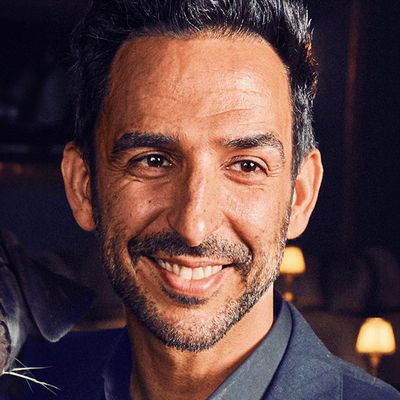
Ned Van Zandt and Amir Arison are here, and this is one of those stories that feels almost too wild to be true—but it is. Lost in Del Valle is the gripping, genre-bending solo play written and performed by Van Zandt and directed by Arison, now making its New York run at SoHo Playhouse after a celebrated run at the Edinburgh Fringe. But what makes this conversation even better? These two go way back—they first met working together on The Blacklist, and now reunite to bring this deeply personal, unforgettable story to the stage.
We talk about that full-circle moment—collaborators then and now—as Amir steps in as director, bringing his experience as a TV star (The Blacklist) and Broadway standout (The Kite Runner) to shape this powerful piece. Ned shares how his real-life journey—from the chaos of the Chelsea Hotel to addiction, fame, and ultimately redemption—became this intense theatrical experience. It’s raw, it’s honest, and it’s exactly the kind of storytelling that reminds you why live theatre still hits differently.
The Roundtable with Robert Bannon is available on BroadwayWorld, YouTube, Spotify, Apple Podcasts, iHeartRadio, and more. For more, visit RobertBannon.com and follow along on Instagram @RobertBannon.
#NedVanZandt #AmirArison #LostInDelValle #TheBlacklist #OffBroadway #Theatre #TheRoundtableWithRobertBannon #BroadwayWorld #BPN
Transcript
This transcript was automatically generated and might contain errors.
[0:05] Robert Bannon: Are you ready?
[0:06] Robert Bannon: It's the round table with me, Robert Bannon.
[0:09] Robert Bannon: Welcome to the round table, everybody.
[0:11] Robert Bannon: My name is Robert Bannon. You're listening to us on Broadway World over here on the Broadway Podcast Network, iHeart and Spotify.
[0:16] Robert Bannon: One of my favorite places to see a show is over at the SoHo Playhouse. I think they do the most incredible shows, usually with one person, which may be the bravest thing an actor can do.
[0:24] Robert Bannon: Our next two guests have been on your television screens for, I mean, Amir is probably in 195 episodes of The Blacklist. It's probably on an airplane, in your doctor's office, somewhere in the world, he is on television right now.
[0:39] Robert Bannon: And one of his co-stars who had a very famous arc on the show, as much as I don't know, many other shows as well, is Ned Van Zandt.
[0:48] Robert Bannon: But what we don't know is Amir is gonna direct his face off. And Ned has lived a life that's full. He's traveled each and every highway, as the song says, and he's telling you all about it in a brand new show.
[1:01] Robert Bannon: Please welcome Ned and Amir over to the round table.
[1:04] Robert Bannon: Welcome to the show.
[1:05] Ned Van Zandt: Thank you.
[1:06] Amir Arison: Thank you so much, Robert.
[1:08] Amir Arison: What an intro.
[1:09] Robert Bannon: Oh, I mean every single second of it. Amir, we were just talking. Amir has been a red carpet guest for us throughout the Broadway seasons.
[1:17] Robert Bannon: You have been very prolific in supporting live theater and Broadway and art. And I know that that's a change from television. So how did you come back to stage and now to direct Ned?
[1:30] Amir Arison: Um, great question. Thank you. Um, well I'll start with, uh, I come from stage, uh, did a play in the third grade, um, second grade, had just a couple lines, and my mom came up to me, uh, after the play and looks at me and goes, "You have talent."
[1:50] Amir Arison: And then I joined the drama club. And it naturally progressed. And in the sixth grade, I got a drama award, and then when I was a senior in high school, I got the high school drama award.
[2:00] Amir Arison: So I just said, I'm gonna become an actor. And I still remember in sixth grade, the first time I got this big rolling laugh. It was for a lower school play, and it was, um, but it was in a thousand theater.
[2:12] Amir Arison: So it's like a big Broadway house. And I remember thinking, if I go up with my inflection, it'll get a laugh. And I got this laugh, and then of course, it's like a drug, no pun intended.
[2:21] Amir Arison: It is a drug, uh, the laughter on the stage. And I was hooked, stuck with it, stayed in New York, went to Columbia University.
[2:28] Amir Arison: You know, I'll jump ahead to be near the theater. Graduated, got backstage newspaper, got my equity card doing Theaterworks USA, one by one, did the off-off Broadway.
[2:38] Amir Arison: Then I started doing off-Broadway. Um, sort of made my rounds around a lot of our, you know, nonprofit theaters, the Signature, the Public, um, New York Theater Workshop, got to work with incredible directors.
[2:50] Amir Arison: Um, and, uh, so theater really was first. Then I was doing TV and commercials piecemeal. There was a moment in time where I said, it's hard to make a living, and I kind of leaned into TV a little bit more, went to LA, ended up coming back.
[3:03] Amir Arison: I'm jumping ahead because I came back to do a small arc on Girls. Then I happened to be in town when I got The Blacklist that grew.
[3:10] Amir Arison: Um, and then I was in TV land for, you know, I'll call about 12, 13 years. Came back to did a, actually I did a play in the summer or two plays. I did a Hamlet with Arian Moyat at Waterwell, and I did Stephen Belber's Muscles at Our Toes at Labyrinth.
[3:26] Amir Arison: So my hand has always been in the theater, but I thought I would go to LA after The Blacklist ended, but I ended up going to Broadway with The Kite Runner, which is a big reconnection for Ned and I.
[3:38] Amir Arison: And as soon as I did that, I was like, I'm a New Yorker to stay. I've got one hand in the theater, one hand in television. I just love, uh, telling stories.
[3:46] Amir Arison: I can come back another time. I don't want to steal the time about sort of about directing. This is it, everybody. This is what it's all about.
[3:52] Robert Bannon: And now, and then Amir's and he does theater now and his residual checks keep coming in the mail.
[3:57] Amir Arison: And that's what's so maybe.
[4:01] Amir Arison: Netflix was, uh, they were, they were, they were better.
[4:08] Amir Arison: I wanna add, um, because it was the when Netflix was a, uh, new media, we had the strike, but then everything fell apart, as many of us know.
[4:15] Amir Arison: But I always knew, even when I was in high school, I had directed sort of airbands. I had directed in high school a little bit when they had that.
[4:24] Amir Arison: So it was always something, and I always carefully observed because I worked with so many directors as an actor, what I thought worked, what I thought set people back, and why.
[4:24] Amir Arison: And I always observed, oh, if they had just said that one word, that could have maybe opened it up. And so I've been through all types of directors.
[4:43] Amir Arison: So I accrued what I thought made sense to me. Um, and what, um, and also seeing how many different actors need different things, including me.
[4:52] Amir Arison: I learned a lot about acting by being on the other side of directing, realizing what sort of, uh, what's useful or what we would worry about that is not so worried about on the outside and vice versa.
[5:04] Amir Arison: And I looked for more projects to direct while I was on The Blacklist in my hiatus. I directed some short films, and there I meet Ned and I hear his story, and I always was looking for small cast.
[5:16] Amir Arison: I care about acting, story, and characters. I'm not trying to reinvent the wheel with a Romeo and Juliet set in an AI future. I just want to tell good stories on stage.
[5:27] Amir Arison: So that's my roundup of your wonderful question, then I pass it back.
[5:31] Robert Bannon: Well, Ned, you have, you talk about a small cast. I mean, if Ned wasn't in the show, it would just be an empty stage.
[5:38] Robert Bannon: And you talk about a story. Ned, this isn't a made-up story. You are telling your life story.
[5:46] Ned Van Zandt: The good, the juicy, the sex, drugs, and rock and roll of it all.
[5:51] Ned Van Zandt: Right, the good, bad, and ugly. Uh, yeah.
[5:53] Ned Van Zandt: So like I was telling you before we started recording, um, I moved back to New York in 2012 from Los Angeles. I'd been there for a few years.
[6:03] Ned Van Zandt: Um, moved back just with the intention of writing. And, uh, you know, I knew I had a story to tell.
[6:10] Ned Van Zandt: And so I developed the play at Naked Angels, and, uh, and then I was on, uh, they were interested, uh, had a, uh, had it did a workshop at the Atlantic.
[6:22] Ned Van Zandt: It was, you know, the people were interested, but I did The Blacklist. I did, I was a recurring character on The Blacklist called Leonard Cole.
[6:29] Ned Van Zandt: I was one of the blacklisters in 2015, 2016, seasons two and three, and I met Amir, and Amir's just, you know, a wonderful person.
[6:38] Ned Van Zandt: We only had one scene together in the episodes I did, but we got to talking, and, uh, I just finished the play and I told him about it, and he said, I gotta hear this play.
[6:49] Ned Van Zandt: So he came over to my apartment and I read it for him. And he said, I want to direct this play.
[6:54] Ned Van Zandt: And it took a while. Um, but, uh, uh, COVID happened. Uh, you know, there was something we almost had a production in 2020 with another director who then was not available.
[7:07] Ned Van Zandt: Anyway, so it just kind of, it just was fortuitous that that, uh, it happened. I went to see him in The Kite Runner.
[7:14] Ned Van Zandt: I also had seen him in the two off-Broadway shows he talks about. Um, you know, I went to see Muscles, the Belber play, and Hamlet.
[7:23] Ned Van Zandt: Um, yeah, and so, um, anyway, so I went to see him in The Kite Runner, uh, after the show.
[7:31] Ned Van Zandt: He said, What's happening with the play? And I said, Well, let's talk.
[7:36] Ned Van Zandt: And then we went and did a development workshop at the Orchard Project.
[7:42] Ned Van Zandt: And then we went to Edinburgh, and here we are.
[7:48] Ned Van Zandt: We are at Edinburgh. Edinburgh, by the way, we're gonna get into the thick of it, but Edinburgh, five stars across the board.
[7:54] Ned Van Zandt: Literally, you know, producers, people see these shows in Edinburgh and the French festivals, and then a lot of the time SoHo Playhouse goes and finds one-person shows and puts them up for runs, which tickets are available.
[8:05] Ned Van Zandt: You can get them until May 3rd. And the show is called Lost in Del Valle.
[8:10] Ned Van Zandt: And I want people to get a ticket and support SoHo Playhouse because they make it affordable, they make them new original art, then you need to be seen, and then you get to see up close and personal, there's not a bad seat in the house.
[8:20] Ned Van Zandt: Ned's gonna tell you a story literally like you're having a cup of coffee right here.
[8:24] Robert Bannon: So, Ned, you grew up in LA, you moved to LA, you ended up with Sid Vicious. How, what in the world kind of story is this?
[8:36] Ned Van Zandt: Well, you know, I've been an actor. Uh, I came to New York when I was 18 in the early 70s and went to NYU.
[8:43] Ned Van Zandt: And Olympia Dukakis was in my, was my acting teacher.
[8:47] Ned Van Zandt: She's not in the play, but she'll be in the movie.
[8:50] Ned Van Zandt: Real quick, real quick, Olympia Dukakis, I took a master workshop with her at the Actors' Center, and in one class, and one time I went up there, she changed and flipped the script for me and had was a pivot point in my work.
[9:06] Ned Van Zandt: And I just want to add that.
[9:08] Ned Van Zandt: There's always things that we never really.
[9:11] Amir Arison: Yeah.
[9:12] Ned Van Zandt: Yeah.
[9:13] Ned Van Zandt: Sorry, go ahead.
[9:14] Ned Van Zandt: So anyway, so this was New York. So I was, you know, a working actor in my early 20s, and, uh, had some wonderful times.
[9:23] Ned Van Zandt: Um, and, uh, so I end up in Los Angeles.
[9:26] Ned Van Zandt: I met this girl at Studio 54 who became my girlfriend.
[9:31] Ned Van Zandt: She was a Bulgarian fashion model.
[9:34] Ned Van Zandt: And, um, she was, yeah, that was, she's this character.
[9:38] Ned Van Zandt: And, uh, so I end up in Los Angeles, and I have a roommate who's a musician and who is dating Chaka Khan at the time, who is also in the play.
[9:49] Ned Van Zandt: And, uh, I mean, she's been a muse for me.
[9:52] Ned Van Zandt: Um, and, uh, I go to San Francisco, I go to San Francisco.
[9:57] Ned Van Zandt: I'm living in LA, and my agent, I started getting work in TV and film, and my agent wants me to go to San Francisco for the summer to do Commedia dell'arte with Harry Hamlin at the Renaissance Fair.
[10:08] Ned Van Zandt: Now, Harry Hamlin's star was just rising. He was at American Conservatory Theater, he had just started dating Ursula Andress.
[10:15] Ned Van Zandt: Anyway, he was hot. He was in a movie with George C. Scott, and anyway, so this is very exciting.
[10:21] Ned Van Zandt: While I'm in San Francisco, I meet a bunch of punk rockers one night at a movie, uh, in a line for a movie, and I know one of them, and, uh, musician Alejandro Escovedo, uh, who's still a great friend.
[10:34] Ned Van Zandt: Anyway, they tell me that they're all moving to the Chelsea Hotel at the end of the summer, which was like next the following week.
[10:42] Ned Van Zandt: And, uh, and so I go follow them because I can't go back to my LA apartment because there's been a double murder in my living room, um, which was a drug deal gone bad.
[10:53] Ned Van Zandt: And, uh, anyway, so I don't go back to LA, so I go to New York and I move into Chelsea the same week as Sid Vicious and Nancy Spungen.
[11:01] Ned Van Zandt: So that's part of that. But the heart of the play is when I end up in a, uh, medium security Texas State prison in 2006, to Texas State jail, the distinction between jail and prison.
[11:13] Ned Van Zandt: Um, because, uh, I had a drug problem, and, uh, you know, I'm, uh, over 19 years sober, but I ended up in jail.
[11:22] Ned Van Zandt: Best thing that ever happened to me, worst thing that ever happened to me, it was horrible.
[11:25] Ned Van Zandt: But I meet a, uh, guy who's head of the Texas Aryan Brotherhood, uh, Skinhead, uh, you know.
[11:34] Amir Arison: Tell him how you meet him, tell him why you meet him.
[11:38] Ned Van Zandt: I meet him because he recognizes me from One Life to Live, which is his favorite soap opera, and, uh, which I used to recur on One Life to Live in the 90s, and, uh, and he also knew me from, you know, I'm from Fort Worth, the man's aunt name is quite, you know, prominent in Fort Worth.
[11:57] Ned Van Zandt: And anyway, but he was a soap opera fan, and, and that's what you find in jails or prisons is people like college campuses, you know, people were really into soaps, and soaps were still happening, and so he thought I, you know, he recognized me from that and all my children, and he wants to be an actor, and so I trade acting lessons for protection, and he's a good actor.
[12:21] Ned Van Zandt: And, um, anyway, so that's the, that's the heart of the skin.
[12:27] Ned Van Zandt: What in jail, he can get them drugs, he can get them protection, and he can also have them killed.
[12:33] Amir Arison: Yeah.
[12:34] Ned Van Zandt: And he went on to be George Clooney.
[12:36] Ned Van Zandt: No, I'm kidding.
[12:36] Ned Van Zandt: I, it's, he is a good one who would you cast, yes.
[12:42] Ned Van Zandt: Wait, anyway, so that's, that's, that's the, and so I tell my story, and, uh, and so, you know, the redemption comes later.
[12:51] Ned Van Zandt: Um, but anyway, it's a lot of fun, and, uh, you know, it seems people seem to like it.
[12:59] Robert Bannon: I don't even know what to, Amir, I don't even know where to start. I mean, that is one hell of a life.
[13:04] Robert Bannon: Um, you just drop the little like I'm in, you know, I'm in Chaka Khan's, there's dead people, I'm moving into the Chelsea Hotel, Sid Vicious.
[13:12] Robert Bannon: Then we do got a little trouble, go to jail. He wants to be an Aryan skinhead actor, and then I'm make it out, and all's the end.
[13:18] Robert Bannon: Holy, and I was on Broadway with Kevin Spacey in The Iceman Cometh.
[13:23] Ned Van Zandt: Yes, I played the cop that arrests him at the end of the play, and I also understudied Paul Giamatti, and so that's in there, and that whole, um, and relationships and heartbreak characters, 19 characters.
[13:37] Robert Bannon: So Amir, for you, he shows you up with a script, it's very personal, it's his life, it is his whole life, and then he hands it to you and then trusts you to say, okay, direct me.
[13:49] Robert Bannon: But this is not I made up a story about the tooth fairy, I made up a story about a heartbreak that I thought of when I was on vacation. This is his life.
[13:55] Amir Arison: So, how do you handle giving notes and direction to something so personal to him?
[14:02] Amir Arison: I have to start with credit to Ned for allowing me in in that way and trusting me.
[14:10] Amir Arison: And one of my favorite things, uh, in rehearsal is, um, there is the, there is, uh, the play, the arc of the play, then there's the performer in the play playing the sparks, and then there's, well, everything in the play is pretty much true, but there's much more fleshed out things that happened and around it and so forth.
[14:40] Amir Arison: Now for us to talk about this is what I'm seeing when I watch the play, you know, dramaturgically, this is the piece I'm getting for the story. So, and then we turn those knobs together, and it's really very wonderfully collaborative. Um what really helped me was actually watching him do a one-man show in his apartment. And I had the script, and I was turning page to page, and I was marking throughout the whole thing. And what became abundantly clear to me at the time was all right, you have the play was already in great shape, like great shape. It was ready to be performed at and then maybe tweaked and workshopped. The beauty of the time we've had both in two workshops at the Orchard Project and at Edinburgh, and now here is that you know, with theater, you can, you know, Tony Kushner, Brendan Jacob Jenkins, they're always tweaking, they're always tweaking, but yeah, we also are aware of if it ain't broke, don't fix it.
But almost every performance, Ned's like, I think I want to add this, or maybe we lose this. I say, for my money that's useful, we don't need it, but try it. Let's see how we feel. That that that is a constant conversation. But when I first saw it, I said, okay, first of all, all these characters are delicious, well drawn out, and clear. The character that I think needs the most work and addressing is the character of Ned. Well, but that's the hardest one, Ned. That's the hardest one. It's the hardest one. And when I first started performing this, I would say, you know, I would do readings, and people say, you what's what's happening with your voice? You know, so I was like adopting like some young, you know, I don't know what I want, you know, some something I wanted to be.
And so Mir has been just wonderful. Mir will get out on me. No reverie, Ned, because I will be describing stuff as a narrator as Ned, but you know, just make it simple, keep it simple. And so it's finding Ned has been a challenge. And uh I mean, as any I mean, as an actor as well, you know, acting class, Olympicakas did this to me more than everything. Kind of peeling back the layers, you know, it's almost all these delicious characters you get to hide behind because they're all so clear, but then the yourself, you have to you really gotta that's a next level of exposing. It's one thing telling the story as a play, but it's a whole nother thing of leaving leaving it all out there. I want to add one thing um though.
Uh it is a survival story and a remarkable one, and all these close calls and everything, and one could call it, you know, um, you know, a the story of um sobriety, you know, a journey of sobriety and a journey of redemption. It's a lot more than that. But for me, my way in is like, well, why am I, you know, I haven't, you know, I I have uh gone through depression and big struggles, and but I haven't gone through addiction. But what has helped me is storytelling and acting and directing, and so it was uh the power of so here I is directing a play about about acting in many ways, you know, that's kind of a recurrent thing. So literally acting saves his life because I mean, on the literal level, he has to give protection.
He gets protection because of his skill. This one skill he has um sets him apart from everybody else. And then there's a you know, a great monologue in the play. I don't want to, I kind of don't want to give it away, but it's it's almost as or as good as the high of drugs, and that it is the one thing that can keep him going. I don't want to give too much uh away of where the play is uh today, but it this action of doing the performance, this action of doing the play every night, in and of itself is its own um catharsis and I experienced that watching it, and I experienced that in the room directing it. Takes me out of whatever's going on in my head, and I'm just fully engrossed in this story and celebrating it, reminds me of how much I love acting and storytelling and plays and directing.
So I just want to do that. And it's funny, you know, forget that it's funny. Um it's not not grim. And you know, I I kind of fought fought back, uh, you know, you know, I'm in recovery and all that, but I you know, I it's not a treacly recovery play, it's not sentimental, it's it's down and dirty, and um it's it's scary um to reveal all myself, but yeah. I mean, people spend years in acting classes and and and go to conservatory schools to to just go, you know, do Meisner and repeat all year to find out who you are inside of your body and all these different techniques that they have to get stripped through to be able to be who you are, and and you're doing it through you know, through life experiences and doing it in front of a public.
So, Ned, when people come see it is funny, you don't have to spend three hours to watch the show because I have bad ADHD, I can't sit through three hour shows anymore. So you don't have to worry about that. You get to go down to Soho, you get to have dinner, you get to have a drink, you buy a ticket, you're not gonna have to mortgage your house because they take care of that over there at the SoHo Playhouse. Then Ned gets on stage, he's gonna break your heart, make it art, tell you laugh and make you feel good and leave. What do you want us to leave? What's the intention you have when you do the show every single night for the audience?
[19:51] Ned Van Zandt: Uh I want them to feel the same way I do, I guess. I want them to, you know, have had that experience. Um, you know, when I I mean, I don't like the word catharsis, but I you know, I want them to laugh and and uh be uplifted. Um I want them to laugh.
[20:08] Amir Arison: Yeah, and you're gonna laugh.
[20:10] Ned Van Zandt: Yeah, you really and you might cry. I don't know. Um, you know, I get it. I people, you know, some very smart people have well, I don't want to toot, you know, please toot your horn. We're here to toot your horn. People I really admire say I have called me and said, like, can't stop thinking about it, which which for me.
[20:30] Amir Arison: Huh? Sorry, I just wanted to, I'm echoing what he said. I I I get a lot of people like, you know, I can't get that story out of my head. What's going on with it? I'm interested in making that a series, or can I document that? Or did that really happen? I'll get texts or calls days later.
[20:46] Ned Van Zandt: And I haven't experienced that that it really that the show it I almost like you take in the story, it's so much, then the story sometimes hits you uh even even uh days later. I interrupted you, Ned, but I want to I want to add something as well. There is a you can you can reach in and grab the play because there's also so many figures, public figures that people are aware of. People have a relationship with Shaka Khan, the police.
[21:18] Amir Arison: And spoke and spoke to Sting, Sid Vicious, Shaka Khan, Kevin Spacey, Paul Giamatti, uh references to Christopher Walken, Lee Strasberg, uh hung out with um uh what's it called? Steely Dan. I I could go on and on and on. So there is a relationship that every audience member already has with people in the play, and it changes the reference on them. You're hearing things about Sid Vicious or Shaka Khan that you haven't heard maybe before. It's a personal lived-in experience, and also when they're just on the scene, Ned getting to audition for Happy Days for Star Wars. We all remember happy days. We all are like Luke Skywalker, he got to audition with Luke Sky. Suddenly we're watching this character journey actor being like that got it.
That could have been Luke Skywalker. There is a hundred different experiences that each individual has. I remember when I saw Luke Skywalker, what age that was. So uh that is also just part of the pulp fun, like a pulp fun of the play. And then the characters that the public don't know are almost as larger than life and as exciting and dynamic. We don't get to hang out with neo-Nazis in in prisons and have them being centralized. Or Sid Nancy on the last night of her life. I'm one of the last people that saw Nancy alive. And so I have my own, you know, version of what happened there. And um, this is it's it it's just a delicious storytelling, whether they laugh, cry, think about it or not. Everyone's jaw is on the floor. There's like uh 15 lives in this one hour and change show.
[22:55] Ned Van Zandt: 19.
[22:56] Amir Arison: 19 lives.
[22:57] Ned Van Zandt: 19, yeah.
[22:58] Amir Arison: 19, he plays 19 people.
[23:01] Ned Van Zandt: He's lived at least 19 lives over.
[23:03] Amir Arison: Oh, I see what you're yeah. And he is going to tell you all of these. Ned, why choose to put it all? I I'm not here to judge. This is a hell of a story. You could have like 15 plays here, really, truly.
[23:15] Ned Van Zandt: Well, I could. And you know, when I first started writing it, I was gonna write it as a play. And like I said, I developed it at Naked Angels. And the night I went to, it was a cold reading series called Tuesdays at Nine. Big shout out to them. And the night I went there, there weren't the actors that I needed. And so that's how it became a one-man play. It was just convenience. And yeah, and so, and then I'm really good at playing, you know, some of the some of the characters. And so I thought this is a way, this is an economical way to get this done. And uh because in I just I have to confess, I'm not a fan of one person shows in general. That being said, I love Alex Edelman, I love Mike Barbiglia, uh, you know, Eric Bagogian.
I mean, you know, I have my heroes, but um I did a reading in LA uh about five years ago, and I won't go into it, but anyway, there were a lot of kind of fancy TV people. Alan Ball from Six Feet Under My Hero, you know, he said, This is a movie, and uh write the screenplay, which I hope to do. Uh, but uh I was wondering, is it a play? Is it a play? Anyway, so we've worked like and I've worked with Amir. You know, we anyway. I it is a play. I'm proud of it as a play. It's not a series of vignettes, it is a play. And it it's gonna be a play, it's gonna be a movie, it's gonna be whatever you want it to be because it's incredible. As I'm talking about it, I just keep thinking like I'm like, I want to see you play Shaka Khan.
Then you're talking about Sid and Nancy. And then I'm like, I want to know what I mean. If you know anything about that history, how horrible that night was and what happened those those five months from when she died till he died and all of the twists and turns. You're gonna hear from someone who was there with them. And then where did it take Ned? And how did he end up in in prison? And how did he end up out and having a successful acting career post post everything he went through? Like this is a life. So I know you don't like the mushy stuff, Ned, but this is a life lived, and you're gonna get to hear it. The good, bad, and the ugly, as as he said, all sex, drugs, redemption, rock and roll, and all of the above. Um, it opens on the 8th. How do you both feel about opening night? How do you feel about how are you nervous? Are you excited? Ned, tell me, how do you feel about about opening?
[25:29] Ned Van Zandt: Oh, I mean, I'm excited. We've we've had the luxury of having preview performances like at once a week since February 23rd. We've done we've done one night a week down there, and you know, it's bare bones. We're you know, we don't have a big budget. Um, and we've got a nice chunk of rehearsal time tomorrow, and we've got I'm getting dark in the dark here. Sorry, we've got a nice chunk of rehearsal um tomorrow, and then a Monday. And so, yeah, no, I feel good about it. And we've got a great musician. That's that's that's one thing that's happened. Craig Balsam, our one of our producers, he's a rock and roll guy, and he said this needs this needs a guitarist, and it made all the difference. And so we've got this wonderful musician, a guitarist named Mike Moore. And uh, yeah, so come and like it's not long, you know, it's 65, 70 minutes, and it's affordable.
[26:23] Amir Arison: And uh I want to add one thing.
[26:26] Ned Van Zandt: Go ahead, Amir.
[26:27] Amir Arison: One thing. It's clear from this podcast and from anyone who knows the play that Ned has lived a wild life and a crazy life and a harder to believe life, and uh how did he survive all these things? Two, it's very apparent when you see this play that Ned is a masterful actor, masterful. He's one of our great, one of our great character actors that you know, but maybe not know his name, and now you will. But what people, what I think is just the beginning is the playwright Ned Van Zandt. It's not just a retelling of his story, it is a poetically brilliantly structured with rhythm rhythms and transitions, and it has been watching sort of working with Ned as we change things and as I throw out an idea, and then he turns it into the poetry that matches the rest of the thing while he's negotiating with the truth of the past.
It is we have uh a new playwright on our scene. I just I actually can't wait to see Ned actually maybe write something not about his life, or I really think this guy we're on to we're on to another chapter in addition to a uh a next chapter of his acting career.
[27:37] Ned Van Zandt: The next chapter begins that you can get tickets everybody for less than $50. You can't even get the Uber to the theater for $50, and you can go see this show, truly. You need to go get it, go to Soul Playhouse. The link is below. It's running until May. You have to get your tickets, happy opening, break legs to you both.
[27:52] Amir Arison: I hope they also watch the blacklist in prison.
[27:55] Ned Van Zandt: So just in case things make a left, you know.
[27:58] Amir Arison: Yeah, side story. My friend called me who knows.
[28:05] Ned Van Zandt: My friend called me who has a friend who was friends with Sug Knight.
[28:05] Amir Arison: Yes.
[28:05] Ned Van Zandt: Sug Knight.
[28:13] Amir Arison: It and apparently loves the blacklist.
[28:17] Ned Van Zandt: And said, if you want to write him a letter, he would love to connect.
[28:23] Amir Arison: Maybe I'll give that one be.
[28:26] Ned Van Zandt: I didn't know what to be.
[28:28] Amir Arison: Ned's got the Aryan Brotherhood, and you've got to be.
[28:31] Ned Van Zandt: Yeah, no, I'll go to prison and I could I could teach Suge Knight acting lessons.
[28:34] Amir Arison: Yeah, I'll get my boys to get on that.
[28:36] Ned Van Zandt: Yeah.
[28:37] Amir Arison: Yep. See, we're all protected now.
[28:39] Ned Van Zandt: We're all part of this family, and you can go get your ticket. Congratulations. Uh, kudos to you both.
[28:43] Amir Arison: Thank you for the incredible work.
[28:45] Ned Van Zandt: All the time you take away from home to be on set and stages gives us so much incredible joy, and uh, it's you both are masterful, incredible actors and artists, and we appreciate you spending some time with us today.
[28:55] Amir Arison: Thank you so much.
[28:56] Ned Van Zandt: Thank you for your enthusiasm and appreciation of my shows George anytime.
[29:01] Amir Arison: Come on, it's wonderful.
[29:02] Ned Van Zandt: Thank you.
© Broadway Podcast Network, All Rights Reserved