

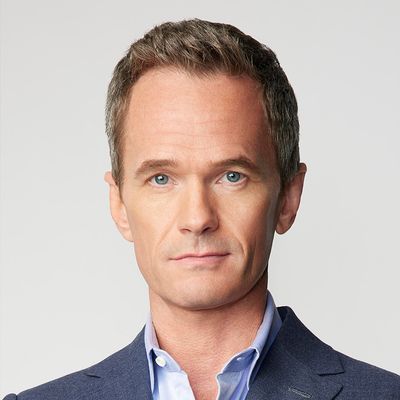
Emmy and Tony Award winner Neil Patrick Harris joins Robert Bannon for a special conversation about his new film Sunny Dancer — and we’re sitting down with the film’s writer/director George Jaques too!.. Read More
From the show: The Roundtable with Robert Bannon
Guests
About
Emmy and Tony Award winner Neil Patrick Harris joins Robert Bannon for a special conversation about his new film Sunny Dancer — and we’re sitting down with the film’s writer/director George Jaques too!
Neil talks about stepping into the world of Sunny Dancer, what drew him to the film and his character Patrick, while George reveals what Neil brought to the role that wasn’t necessarily on the page. And yes… when you put NPH and Robert together, the conversation takes a few VERY funny turns. 😂
But Neil is only the beginning of a jam-packed Movie Night!
🎵 Este Haim of HAIM & Zachary Dawes take us behind the music of Sunny Dancer and the process of creating the film’s score.
🔥 Aladdin star Mena Massoud joins Elijah Alexander to talk Daniel & the Fiery Furnace and bringing the epic story to the screen.
🚂 James Paxton & director Adam Rifkin close out the night with Last Train to Fortune, the new Western adventure starring Paxton alongside screen legend Malcolm McDowell.
It’s one of our biggest movie nights yet — actors, directors, composers and some fantastic new films, all at The Roundtable.
📺 Watch on YouTube & BroadwayWorld
🎧 Listen on Spotify, Apple Podcasts, iHeartRadio & the Broadway Podcast Network
The best is yet to come.
#NeilPatrickHarris #NPH #TheRoundtable #RobertBannon #SunnyDancer #GeorgeJaques #EsteHaim #HAIM #ZacharyDawes #MenaMassoud #Aladdin #ElijahAlexander #JamesPaxton #AdamRifkin #LastTrainToFortune #MovieNight #Film #Movies #CelebrityInterviews #BroadwayWorld
Transcript
This transcript was automatically generated and might contain errors.
[0:00] Robert Bannon: Are you ready? It's The Roundtable with me, Robert Bannon.
[0:09] Robert Bannon: Hi, this is Robert Bannon. This is The Roundtable on Broadway World, The Broadway Podcast Network, iHeartSpotify. And according to this book right here, Arnag's guests have quite the career. George and Neil, you both are out here killing it.
[0:23] George Jaques: Thank you so much. Where's my book? What the hell?
[0:26] Neil Patrick Harris: You gotta write one.
[0:27] George Jaques: Where is your book? This is Choose Your Own Adventure Autobiography. Where's yours?
[0:32] Neil Patrick Harris: Damn, you took my name?
[0:36] George Jaques: You have Choose Your Own Adventure Movie. That's what you have. And this movie is a very specific world and story. So where did Sunny Dancer come to you and what made you want to make this film?
[0:47] George Jaques: Yeah, I sort of started writing Sunny Dancer when I was 23. And it was off the back of my first movie. And my mum had cancer when I was growing up. So I always wanted to tell the cancer story, but do it really differently. And then for me, I was so excited as my second film to make a film that felt reminiscent of Breakfast Club and those ensemble films and trying to put all the coolest young British talent in one film. So we did a little Sunny Dancer. And yeah, that's where it all started.
[1:14] Robert Bannon: I need a shirt. That's the shirt. That's what's up. So also what's up in the trailer, as Neil says, sup? When the script came to you, what was it about it? What was about Patrick and this story that made you say yes?
[1:29] Neil Patrick Harris: I think it was a beautifully written script by George. It's a singular story of someone who's in remission from cancer that's also rebellious and wants to move on with their life and are sort of forced, I guess, like encouraged by their parents to go interact with a bunch of people who might be cringy, similar, sad sacks that are obsessing about something that happened in their past. Right. So when she goes into this world and finds out that it's much more human and then people that are like her and she gets to find rebellion within it and find love and romance and intimacy and vulnerability all within the confines of a quintessential summer camp environment. That was great. It was a beautiful read. And I was super happy to be involved in any context and to be the dorky, spazzy president that gets to jump around in short shorts. I'll never say no to that.
[2:46] Robert Bannon: Get his legs out. What could be better than that? So George, what did Neil bring to Patrick that you necessarily didn't have on the page? What was it like to see him come to life and what Neil did with the character?
[2:57] George Jaques: His kneecaps are really amazing.
[2:59] Neil Patrick Harris: Amazing.
[3:00] George Jaques: That's what they say. I've heard that.
[3:01] Neil Patrick Harris: Yeah.
[3:02] George Jaques: It's all filler.
[3:03] Neil Patrick Harris: The Neil Patrick Harris kneecaps are just amazing. No, I think Neil brought everything and more to the character. You know, it was...
[3:10] Neil Patrick Harris: Wait, that's an oxymoron. If I brought everything to the character, then how do I bring everything and more?
[3:17] George Jaques: He brought nothing to the character. It was all on the page, really. And he just turned up, you know, and he did his thing.
[3:23] Neil Patrick Harris: Cue cards.
[3:26] George Jaques: Neil was amazing. I mean, it was really that character. I was so excited to cast Neil because I'd seen Gone Girl and seen Count Olaf and obviously I'd seen How I Met Your Mother and so many things. And I was so excited to basically make a character where he got to do all the things in one and then have like play a dad. And Neil was obviously a father in real life and do all the things. I was so excited to show off the Swiss Army knife that he is in every way. He got called a Swiss Army knife earlier and I'm holding on to it now. But I got to show like the knife bit, the tin opener and all those things in one film. And I was so grateful when he said yes.
[4:03] Robert Bannon: He's a man of many talents. So, Neil, working with George, what did he pull out for you? What did he bring out to you that maybe... I know that sounded so inappropriate, not that kind of moment.
[4:12] Neil Patrick Harris: Sounded very, very...
[4:15] George Jaques: George, please.
[4:16] Neil Patrick Harris: George, behind closed doors, please.
[4:19] Neil Patrick Harris: I think I trusted George a lot because he's also an actor and he's gotten to do a lot of really interesting work in like the immersive world. And he's gotten to work with some really amazing performers in his own right. So, when you're being directed by someone who not only wrote the script, came up with the words, designing the shots and standing next to the camera, but is also aware of how actors process and be respectful of that, that's a real rare opportunity. And he is one of the kinder, sweeter people that you'll meet. I think you can glean that just from the way he answers questions. And so, to have a back and forth where you're in a situation where you're made to be uncomfortable, i.e. like in a room with strangers where you have to emote and cry multiple times, when you have a safety net that is as sound and resolute as George, it makes it a very safe space. And that was a... I was really appreciative of that.
[5:32] Robert Bannon: I love it. The 18th is out.
[5:34] George Jaques: Kneecaps.
[5:35] Neil Patrick Harris: You said kneecaps, and I said that whole soliloquy. So, suck on that.
[5:39] Robert Bannon: Keep it in your pants and look at his kneecaps. That's what we learned. Go see the movie, The 18th. Thank you so much for being here. I love you both, and I appreciate you spending some time with us.
[5:47] George Jaques: You're welcome. Keep it in your pants.
[5:49] Neil Patrick Harris: Get your kneecaps out. Get them out.
[5:51] Robert Bannon: Hi, everybody. My name is Robert Bannon, and this is The Roundtable.
[5:55] Este Haim: Hi, Robert.
[5:56] Robert Bannon: Hello. So excited to see you. Look at these music superstars up in here today.
[6:01] Zachary Dawes: I mean, you said it, Robert. You said it.
[6:04] Robert Bannon: Now you're not just music superstars. Now you are just making music for movies, beautiful, gorgeous movies. How did this come to you both?
[6:11] Este Haim: Well, I met George at a cute little coffee shop in London two years ago. Yeah, almost two years ago. We were set up on a blind date, George and I. We had coffee, and what was supposed to be an hour-long hang turned into a seven-hour movie music love extravaganza.
[6:35] Zachary Dawes: And by the end of it, I was like, whatever you want me to do, I will do. I just want to work with you.
[6:42] Este Haim: It was magic. I love an extravaganza.
[6:44] Zachary Dawes: It was an extravaganza. I love him so much. He's so brilliant, and he's so smart, and he's so talented and passionate. And I think that that's something that Bozak and I look for in collaborators. I think that if you're energized, it makes us feel energized and makes us want to do our best work.
[7:03] Este Haim: So yeah, I got sent the script, and I was like, oh, wow, it's about... I myself went to diabetes camp, so I had my first love, my first heartbreak. I was diagnosed with diabetes when I was 14, and I met some of my first diabetics when I went to diabetes camp, and it was really, really beneficial for me because I had never been around other diabetics. In my high school, I was the only diabetic, and now all of a sudden, I'm in an entire room with nothing but diabetics, and it made me feel not as alone.
[7:44] Este Haim: And to me, that's kind of how it felt when Zach and I saw Sunny Dancer for the first time. It was so inspiring, and I get chills just thinking about the first time we saw it, and we rushed to the studio and started woodshedding right after we got to see the first kind of rough cut. But yeah, it's a beautiful, beautiful film, and we feel really honored to have been able to, you know, just have a tiny, tiny something to do with it, you know?
[8:15] Robert Bannon: I love it. Zach, how do you describe the sound? How did you figure out what the movie was supposed to sound like?
[8:21] Zachary Dawes: I think a lot of the songs helped dictate what the score should sound like, and bands that Essie and I are both super familiar with, and songs that we're super familiar with, we just wanted to make the whole soundtrack feel seamless. So have the score really, you know, dance between the songs and feel like a nice cohesion between them all.
[8:48] Robert Bannon: I love it. So Essie, what does Zach hear that you don't hear? What does he bring to the table that makes your collaboration so special?
[8:57] Este Haim: I mean, I think Zach brings...
[8:59] Zachary Dawes: Thanks for asking.
[9:03] Este Haim: I don't hear you all the time.
[9:05] Zachary Dawes: True.
[9:06] Este Haim: I'm so complimentary to Zach.
[9:08] Zachary Dawes: That's true.
[9:09] Este Haim: I think the thing that Zach brings is Zach has such a vast knowledge of music. There's so many different types of music that Zach has a deep, deep knowledge of. And he's also so good at playing so many instruments. So whenever I'm not good at playing, Zach is very good at playing. So I lean on him heavily. I mean, especially when it comes to keyboarding and, you know, Zach's ideas are also so fresh. And I think that we just kind of are able to volleyball, you know, the ideas across the net from each other, if you will. But yeah, I think Zach's fucking brilliant. And he's also an amazing bass player. And all I want to do is start a band called Bass Face with him.
[9:54] Zachary Dawes: Oh, I could play...
[9:56] Este Haim: I'm here. This is my secret. My secret wish and want is I want to start a band with you called Bass Face.
[10:03] Zachary Dawes: Can I play cowbell?
[10:04] Este Haim: Great.
[10:05] Zachary Dawes: I want to play cowbell. More cowbell.
[10:08] Este Haim: Babe, get in here.
[10:09] Zachary Dawes: I'm in.
[10:10] Este Haim: Get in.
[10:11] Robert Bannon: What does she add to the collaboration besides both of you just being beautiful superstars that you are?
[10:19] Zachary Dawes: Oh, stop.
[10:20] Este Haim: Stop. Keep going. Keep going. I love it. I'll take it.
[10:23] Zachary Dawes: I think Esty's sensibilities and reading the, you know, emotional arc of the characters is really spot on. And also her pop music sensibilities. She knows more songs than anyone you know. And she could recognize... What's the thing where you could recognize a song within five seconds?
[10:42] Este Haim: Oh, the game called Beat the Intro?
[10:45] Zachary Dawes: Yeah.
[10:46] Este Haim: Have you ever played that?
[10:48] Zachary Dawes: No, you're like the human Shazam.
[10:50] Este Haim: She really is like the human Shazam. She knows more about every song you've heard and never heard more than anyone.
[10:58] Este Haim: If anyone from Beat Shazam is on this interview, I would love to be on the show. Call Jamie Foxx. Let's make it happen. I'm here.
[11:06] Zachary Dawes: Let's go. I would love to be on the show.
[11:08] Este Haim: Don't call Jamie.
[11:10] Zachary Dawes: I know.
[11:12] Adrienne: While you're waiting everybody, what you need to do is you need to go find Sunny Dancers at its theaters this Friday, September 18th.
[11:21] Adrienne: Thank you both for the incredible music and memories and what you do for us gives us all the joys and all the goosebumps and all the car sing-alongs. We love you and appreciate you. Thank you so much. It's so nice to meet you. Thank you. So nice to meet you.
[11:33] Adrienne: Hello. Hello. I am Adrienne. I am with The Roundtable and I am so excited to be here with both of you with Mena and Elijah.
[11:44] Adrienne: Hello. Welcome to The Roundtable. This is my first junket like this, so I'm really excited.
[11:50] Elijah: Mine too. That's great. That's great.
[11:53] Adrienne: So I do want to ask about this new film, Daniel and the Fiery Furnace. Very, very exciting. What is the importance of this? And if each of you can kind of give me a little tidbit why it's important now for everyday people to go and see something like this?
[12:11] Mena Massoud: I think nowadays, Adrienne, you know, we're so consumed by social media and artificial intelligence and all these materialistic things, this materialistic tech-forward world. And this is a film, I think, that makes you question that a little bit, makes you question really what is important. It holds a mirror up to you about how you're going to stand for your faith and how firm you're going to stand with that which you idolize. And is it God that you idolize or is it the materialistic things of this world? You know, I think we can get caught up in watching other people's lives, their cars, their vacations, their homes. And we go home and we just think about these things, but we don't actually stand for something that is divine, you know, something that is above all else, above that all. And so I think this film just helps you really take some questions to that, take some exploration in your own life to see if what you are idolizing really is as important as you think it is.
[13:34] Adrienne: Right. And Elijah, I'm actually going to ask you a different question. Do you have a favorite scene or a favorite moment that really means a lot to you in this particular production?
[13:47] Elijah: So many. You know, it's interesting. There's a scene toward the end between Daniel and Nebuchadnezzar. It's at sunset at twilight. And it was called kind of the sunship scene. And it was really important to me for many reasons. And when we shot it, they were setting it up and setting the lighting equipment up and it took six, seven hours. So we were sitting around waiting. But we knew we would only have a very short time to get it in because of the sun. The sun was setting and they wanted to shoot it at twilight. It's a vulnerable scene. It's one where you see both their hearts yearning for connection, yearning for the father, yearning to be a beloved son. All of it's involved. And it's a really personal moment of bonding.
And we got maybe three takes of it and the sun came down and I honestly left feeling very defeated because I didn't think we got the scene. And it wasn't until months later. I mean, I was really defeated. It was my last day of shooting, too. And it was so important to me. And anyway, I left not knowing, not believing that we got what they needed. It wasn't until months later when Matt reached out to me and he said, by the way, we got the scene. We cut it. It came out beautifully. And I think we got what you were after. And he said a couple of people who have seen the scene, it's their favorite and they were brought to tears by it. It's just a very human confession. And a moment, one of those sacred moments of pure connection where one person reflects another person's truth and it's received and honored. And it's a moment of stillness where we can just take a moment to be outside of our roles in history and our roles in our lives and just share presence.
[16:32] Adrienne: That's wonderful. So anyway, that's it. Yeah, I would say that's my favorite.
[16:36] Mena Massoud: Yeah. Oh, I love that so much. That's so fantastic. And, you know, just briefly, Mena, happy early birthday to you next week. Big, big birthday for you.
[16:45] Mena Massoud: Thank you. Appreciate it.
[16:47] Adrienne: What day?
[16:48] Mena Massoud: The 17th, right?
[16:50] Mena Massoud: Yes, that's correct. Thank you. Thank you.
[16:52] Adrienne: Yeah, I do my research. I do my research. And Elijah, did you compete in like an Ironman triathlon? Did I see that?
[17:00] Elijah: I've done triathlons before. Yeah.
[17:02] Adrienne: Wow.
[17:03] Elijah: Yeah, yeah.
[17:05] Adrienne: That's amazing. I'm not there yet. I'm working on my first like 5k, 10k. That's what I'm working on.
[17:10] Elijah: Yeah, I'm going to do another one. I think I'm going to do a Spartan race next spring. And then I'll do another triathlon in the fall.
[17:19] Adrienne: Oh, wow. That is wonderful. That is wonderful. Lovely, lovely to meet both of you. And Roundtablers, when you see this, please, please get your tickets. Watch this beautiful masterpiece, Daniel and the Fiery Furnace. Gentlemen, thank you so much. Have a wonderful, wonderful week. Such, such a pleasure speaking to both of you.
[17:36] Mena Massoud: Thanks, Adrienne. Thank you.
[17:38] Robert Bannon: Well, welcome to The Roundtable, everybody. My name is Robert Bannon. You're listening to us on Broadway, World of Broadway, Podcast Network, iHeart, Spotify, wherever artists talk about art. You know, as a boy growing up in New Jersey, I may have gone to the Teaneck Cinema to see Mouse Hunt back in the day. That was my movie, Adam. That was my movie.
[17:57] James Paxton: Thank you so much, Robert. God bless you, sir.
[18:00] Robert Bannon: He's still out here doing it. He's got every famous person in the world getting on a train with James Paxton. This movie's been in the works for a minute. And we have Adam and we have James here. Welcome to the show.
[18:11] Adam Rifkin: Thank you. This is Adam speaking. Thank you for having us.
[18:15] James Paxton: Hey, Robert. This is James Paxton. Really appreciate you having us on. It's funny you mentioned Mouse Hunt because the very first film that I was ever taken to see in a theater as a child was Mouse Hunt.
[18:28] James Paxton: And his dad told me that. His dad told me, we just had a wonderful experience taking James to his first movie, and it was your movie. It was so great.
[18:38] Robert Bannon: So cool you brought that up, Robert.
[18:40] James Paxton: I was a little gay boy in New Jersey, so you know, if Nathan Lane was going to be in a movie back in the 90s, I was there.
[18:45] Robert Bannon: Hey, hell yeah.
[18:47] James Paxton: Speaking of going to the movies, in all due respect to the PR people watching that I behave backstage right now, I went and saw the new Twister, which you have a role in. And I went, I'm recently married, I'm a newlywed, and I went to the drive-in here in Detroit, like Detroit Rock City also, Adam.
[19:05] Adam Rifkin: Wow. Hey.
[19:06] James Paxton: I'm here in Dearborn at the drive-in, and I'm thinking it's the first movie I'm going to as a married couple. I don't know, I grew up where the drive-in was a date night place, but not for anything that has to do with Twister. My husband was transfixed. It was not a lucky evening. I ate popcorn and just watched the movie. It was brilliant, and the homage that you paid and the dedication you paid to it, how it was done, is so brilliant, so I'm excited you're here.
[19:31] Adam Rifkin: Thanks, Robert. Well, first of all, I just want to say congratulations.
[19:34] James Paxton: Yes, congratulations, Robert.
[19:36] Adam Rifkin: That's such great news. And secondly, thank you so much for the kind words. I appreciate it. I felt a lot of – there was a lot of emotion stepping on that set, but I wanted to really just channel Dad and be there for him and help represent his spirit. And I think they did a really nice job with this new one, so I appreciate the kind words.
[19:55] Robert Bannon: Always. A brilliant family. Adam, they're a brilliant acting family. James has taken the torch, and he got to fill a role that you had talked to his dad about a long time ago. So tell us a little bit, because this movie was not made yesterday. It's been in the pipeline for a minute.
[20:10] Adam Rifkin: Well, it's interesting. This movie is a family affair from top to bottom. So as you may know, it was written by my mom, and it was written in 1986. When my mom moved out to L.A., she had come from Chicago, which is where we're from. She was writing local television in Chicago, came out here, got lucky, got into the Saturday morning cartoon business, was writing episodes of the Smurfs and Winnie the Pooh, but her dreams were to write movies. So she entered a contest, a PBS contest, looking for the great American Western screenplay. And she actually voted for the contest, and she actually won. But the prize was supposed to be the first, you know, the blue ribbon winner gets their movie produced at PBS.
But they said, it's too expensive for us to produce. So you won, bragging rights, but we're making the runner-up as our Western movie. So it didn't really help move the needle much. But a couple of years later, I'd say around 1990 or so, Brad Wyman, who produced a movie I directed called The Dark Backward, starring Bill Paxton, is where we all became very close with Bill. Simultaneously, Brad was also producing a horror movie starring Malcolm McDowell called Disturbed. And so we all became friends, Brad and myself and Bill and Malcolm. And then not long thereafter, the McDowell family and the Paxton family both independently moved up to Ojai. And so the families just got all the closer up there.
And so Bill and Malcolm had wanted to do a movie together. And I don't remember who suggested it. It might have been Brad. It might have been my mom saying, you know, my script, Last Train to Fortune, is the perfect vehicle for the two of them if they really do want to make a movie together. And so right from the start, they read it. They loved it. They were in. They were going to play the two roles. And at that time, I wasn't the director. It was going to be directed by the great Lindsay Anderson, who directed Malcolm three other times. The first one was a movie called If, which was revolutionary.
[22:52] Robert Bannon: C Spylon.
[23:23] James Paxton: As we all got closer to James, I think it was Malcolm at a lunch up in Ojai said, why don't we bring back Last Train to Fortune and why doesn't James play the role Bill was going to play? And it just clicked. Everybody said, that's a fantastic idea. And for whatever reason, the planets just aligned and Brad was able to find the money very quickly this time, and off we went.
[23:45] Robert Bannon: And off you went. You know, James, if you look at your career, I mean, you were supposed to be a journalist and you were supposed to be, I don't know, working in the props department to make ends, you know, to get your foot in the door. What's it mean for you now to be at the helm with Adam and this, I mean, this cast, Malcolm, Bernard, like you have stacked stars and you now in this big giant movie that's about to be out in this country.
[24:11] James Paxton: Thank you, Robert. Yeah, I mean, it's crazy. I've had many experiences that run the entire gamut of, you know, the entertainment business. And I know that that's exactly how dad would have wanted it. You know, he'd say it's character building. You go through all these things and you know, but it's rare that you often get to actually see a film all the way to the finish line that you truly believe in. You know, it's something that you want to, as an actor, you don't often have, you know, you go and you read for things, you don't often have a lot of control over the parts you land or don't land. And Last Train was just this film that as soon as I read the script, I was like, not only does this have this special, this whole family synergy to it with Adam's mother and my dad and then Malcolm, you know, Malcolm had his son, Beckett, help score the film, co-score the film.
And his sons Finn and Seamus are in it. It was like this real family affair, but it also has this positive message and something wonderful to impart on the world about the importance of education, all while being just a fun, family friendly, like Western adventure through, you know, with two guys and a horse most of the time. And it was like a masterclass every day, you know, stepping on set with Malcolm because we were first in and last out just about every day. And then we would have these great, yeah, actors come in like Mary Steenburgen and Bernadette Peters and Laura Marano. And Mary, I have a funny story about the casting of Mary Steenburgen. Malcolm and I, we're, you know, we're starting to really get into the project and we're trying to think of who we can maybe bring in on this adventure with us.
And he says, you know, who would be great? Mary. And I go, yeah, Malcolm, that's, that's a great idea. Like, you know, for Miss Mabel. And I'm like, yeah, that's perfect. And I go, can you call her? You know, they used to be married, had two children together. And he goes, oh, no, no, no, no, no, no, no, no, no, no, no. He goes, you cooler. And I was like, what? So I called Mary Steenburgen and asked her to be in the project. I remember I left a voicemail and I get a text back a couple hours later and she says, I'm in, I'll do it. And it was the first time they had worked together since they met on Time After Time and ended up falling in love and getting married. This is crazy.
[26:28] Robert Bannon: You left a voicemail?
[26:31] James Paxton: And she texted you right back?
[26:33] James Paxton: Yeah, she texted me back. Yeah. I'd met her a handful of times, you know, growing up. She also lives up in Ohio with Ted Danson. They've got a place and they knew my dad, of course.
[26:43] Robert Bannon: Of course.
[26:44] James Paxton: Yeah.
[26:45] Robert Bannon: Adam, that was easy casting for you. That was book, check.
[26:47] Adam Rifkin: It was fantastic. It was funny because Mary said, why, why didn't you call me?
[26:53] James Paxton: Yeah, yeah. Mary took the line and then she told Malcolm on the set, yeah, why didn't you call me, Malcolm? You know, and he goes, oh, I don't know. I thought it would be better coming from Jane.
[27:03] Robert Bannon: Not always a good idea to call your ex-wife, just as a hindsight.
[27:06] Adam Rifkin: That's true. Yeah, that's true.
[27:08] Robert Bannon: So Adam, when you're on set, when did you know you had something special when this all chemistry happened, when all of the magic happens of making a movie? I know there's anxiety. Is it going to work? Is it going to be good? Is there going to be chemistry? Is it going to gel? When was the moment you were like, oh, we got something here. This is going to be a special project.
[27:24] Adam Rifkin: Well, I have to be honest with you. I felt that it was a special project from the moment I read it. You know, my mother was a lifelong teacher and education was always her passion and instilling that in myself and my sister was very important to her. And so when I read the script, I was very moved by it because I knew immediately she had included in the narrative her two great passions, education and the Old West, because growing up in the 1950s, she romanticized being a cowgirl because every movie, every TV show was a Western in those days. And so when I read it, I just knew it was special. And then when Malcolm and Bill wanted to jump on, it just was even more special. And every step of the way just kept confirming to me that this is an important movie to make.
And I'm just so fortunate that I was given the opportunity to make it myself because I get to share my mother's words. I get to work with the great Malcolm McDowell, who's one of my heroes from my childhood. I get to work with James, who's one of the most brilliant young actors in Hollywood. I get to meet and work with these legends like Bernadette and Mary. You know, Mary is an Oscar winner, you know, and she's in our movie. It's just so great. And Laura Marano we bonded with and became all so close. And it just really when I'll tell you, though, to answer your question specifically, when I knew we had something super special, I texted my mother the pictures of James and Malcolm in the costumes from the first costume fitting. Yeah. And she texted back and said, that's exactly how I pictured them when I was writing the characters. And that, that, yeah, James.
[29:21] James Paxton: Yeah, I'm sorry. When did you realize that you had something special going on here? You know, I have to say, kind of, you know, following what Adam said, one of the most special moments for me also was had to do with Michelle, Adam's mom. And she was unfortunately not able to visit the set. Physically, she was, you know, she had some health stuff going on. And she was, she was laid up in bed at the time. But we, Malcolm and I FaceTimed her from the set. We were on Melody Ranch, you know, where they filmed all, you know, Gene Autry used to own it. They filmed, you know, all kinds of stuff there, like High Noon and they did Westworld there. We're on the set, we're in costume. And we got to talk on FaceTime with Michelle.
And she told Malcolm and I that it was like, we had just walked right out of, you know, her imagination and off the page and into the real world. And it was like, that was the most special moment because I, you know, and then I thought, and then it got me thinking about dad and stuff. And I know that he would have really been happy, honestly, with how this worked out, because there was something special about this iteration of the movie, you know, with all of that, that foundational history and support from, you know, our, you know, our loved ones that aren't here and stuff anymore. And, and in some ways, there was, there was this cooler relationship with the age difference between Malcolm being older, and then my character being younger, there was something that worked.
And I know dad just would have been really proud of us. So it was just like, but I think that getting to see because it was really it all started from Michelle. So getting to see her give the highest level of compliment is really the only compliment I ever needed from anybody on the film was really from her. So, yeah. And I will tell you this, I will tell you this. My mother did get to see the finished film prior to her passing. She was able to watch it on her iPad. And she loved it. And that just, that is all that matters to me, you know?
[31:24] Robert Bannon: Well, go to the 18th of September, everybody. Rolling out across the country. Look it up. Find the information is going to be below. Go see this in the movie theater. Go see a big Western experience and adventure film. Honor, oh, there's so much family. There's so much lineage and legacy in this movie. That is something special. So take the people you love. Take your kids. Take your parents. Take your grandparents. Go spend a night at the movies and go see this movie when it's out in this, across this country. And to you both, be they're growing up in this business or having family in this business or carrying the legacy of this business, thank you. Because I know that what's done on screen comes with a sacrifice of being away from home, being away from family.
It's hard work. It takes a lot of guts and courage. And the courage that you all have and all the people that have done it with you and your families have entertained us and given us joy for decades and will live on forever and ever. So thank you for what you do because we so appreciate you and owe you all a debt of gratitude. To your mom, to your dad, and to you both. Thank you. Congratulations to this incredible movie.
[32:25] James Paxton: Hey, you're the man. I really appreciate it. We love you, Robert. Thank you. Let's go. I can't wait to see it. I want to hang out. Congratulations again. It's so beautiful. By the way, Adam, you are a very, very handsome and charming man, Adam. But James looks like he's 16 years old. I need to know his skin routine, what he does. He doesn't have a wrinkle. That's unfair. What the hell is going on here?
[32:49] James Paxton: I just moisturize a lot, wash my face, and try to stay out of the sun.
[32:54] Robert Bannon: Moisturize. I got to try that. I need to too, Adam. I just bought some on Amazon. I need to. I got to do it. Go see the movie. No, you look great, Robert. Come on, come on. I'm really only 16 years old, James. I'm only 16 years old. Exactly. My fellow 16-year-old, you know? Congratulations. Thank you both so much for being here. We can't wait to see the film.
[33:15] James Paxton: Thank you so much, Robert. Thank you very much.
© Broadway Podcast Network, All Rights Reserved