

Today on The Roundtable with Robert Bannon, I’m joined by Emmy-winning filmmaker Nick Davis, whose latest documentary, This Ordinary Thing, delves into the untold stories of non-Jews across Europe who risked everything to save Jewish lives during the Holocaust... Read More
From the show: The Roundtable with Robert Bannon
Featured Shows
About
Today on The Roundtable with Robert Bannon, I’m joined by Emmy-winning filmmaker Nick Davis, whose latest documentary, This Ordinary Thing, delves into the untold stories of non-Jews across Europe who risked everything to save Jewish lives during the Holocaust. Using never-before-seen archival footage alongside first-person testimonies of over forty individuals, Davis crafts a powerful narrative of quiet courage in the face of unimaginable horror.
In our conversation, Nick and I explore the inspiration behind the project, how ordinary people find themselves in extraordinary situations, and what the film’s message means for today’s world — asking the provocative question: What would you have done? With insights from a cast of celebrated actors and a stirring score, the documentary goes beyond history to reflect on morality, identity, and the ripple effects of kindness. Leave the episode with the conviction that even one person’s act can shine a light in the darkest places — because the best is yet to come.
Available on all major platforms: YouTube, Spotify, Apple Podcasts. Visit robertbannon.com | Instagram: @RobertBannonHost
#ThisOrdinaryThing #NickDavis #TheRoundtable
Transcript
This transcript was automatically generated and might contain errors.
[0:14] Robert Bannon: Hello. Well, hello, how are you?
[0:17] NIck Davis: I'm good. How are you?
[0:18] Robert Bannon: I'm so excited to meet you here. And thank you for being here on the Roundtable. My name is Robert Bannon. You're listening to us on Broadway World over here on the Broadway Podcast Network, IHR at Spotify. And Nick, congratulations on this very important movie.
[0:32] NIck Davis: Thank you very much, Robert. I appreciate your saying that. You know, this Ordinary Thing, which is coming out and it's going to be in a limited release, and it's going to be, I'm sure, on demand and everywhere, and the big rollout is coming. We are living in crazily divisive times where we are in a world that is, I don't know, upside down. Why this movie and why now?
[0:54] NIck Davis: Um, I think this movie because we are living in such crazily divided times, and we are encouraged, not just by our politicians and our politics, but by almost everything by Instagram and our social media feeds and everything. We are divided into these camps, you know, red team, blue team, green team, orange team, and I came into contact with these stories, none of which I'd heard before. I mean, I had heard of Oscar Schindler and maybe one or two others who had done these amazing things during the Holocaust, but I didn't know that there had been so many people who all over Europe working totally independently. There was no network, you know. It was not, they weren't all texting each other, okay, let's do this.
It was just like knock on the door. Hey, can you help me? I didn't even know you were Jewish. Of course, I'll hide your suitcase, you know. And it goes from there. And of course I'll hide your baby. And well, if we hide the baby, we'll hide the baby's brother because they'll kill us for one, they'll kill us for two. And the next thing you know, we got 37 people in the attic. And all of these extraordinary stories were just grounded in this most basic humanity, and the sort of ordinary day-to-dayness of the whole thing really blew me away, as well as the acts of tremendous courage that they didn't feel like they were being courageous, and the tremendous evil that was sort of surrounding them on all sides. So I just felt like wow, these are incredible stories, and let's let them be told.
[2:36] Robert Bannon: Well, this documentary, everybody, is going firstly, I love a documentary that is less than two hours, an hour and a half long. Thank God, Nick. Thank God, my ADD kicks in. Secondly, when we live in times where you hear like being silent is making a choice, and we have to stand up for what's right. Literally, back when this happened, the Holocaust happened, there were so many people. I never heard these stories, Nick. I never even thought about all of the unsung heroes who saved millions, countless lives. And then you decided to get the most famous people in the world with the most incredible speaking voices, like Nick's voice, if you haven't noticed everybody. His voice is crazy. Can you read books to me when I go to bed at night, Nick?
[3:15] NIck Davis: That's amazing. I would be happy to, Robert.
[3:18] Robert Bannon: So he has this incredible lineup of people. What made you, how did you find these stories? And then how did you find these actors?
[3:24] NIck Davis: Well, so yeah, those are two very, very different questions. So the, I had heard about an organization called the Jewish Foundation for the Righteous, and they had collected a whole bunch of these kinds of stories, and my executive producer had heard of this foundation as well. And we were looking for a film, we'd made another film before, and we were looking for something to collaborate on. And he said when we came across this coincidence, oh, let's do this. Let's, he's also Jewish. He was like, let's thank the non-Jews for all they did for the Jewish people. And I was like, eh, at first I was resistant because first of all, I didn't know the extent of it. And then once I researched it, I was like, oh my God, we have to tell these stories.
And the fact is, I'd have been killed in the Holocaust. And so I better do this. And so went to the Holocaust Museum, and that's where I found this treasure trove of interviews that have been conducted in the 80s by these two women, Gay Bloch and Malka Drucker. And the interviews are amazing, but you know, a little hard to hear, and some of them are in foreign languages. And I got the transcripts and the translations, and I knew, all right, I'll get actors to do it. I had, as perhaps you gleaned, I had done some acting myself, so I knew a bunch of actors, especially from college. So I got all my college friends like, hey, can you read some of these and let's put it together? And the whole time I'm doing this, and I put, we put a sort of rough cut together with, you know, guys I did improv with or my wife's best friend, whatever.
My wife and partner in the company, Jane Mendelssohn, who's a brilliant author herself, was saying, yeah, this is fine, but we need real actors. And if she hadn't pushed so hard, I don't know that I wouldn't have eventually done what I did, which is I went to my agents and said, Can you help us? There's no money in it for the agents. I paid scale for these people. And they were like, Yeah, all right, fine, send us a letter. Three months go by, I hear nothing from them, and I'm starting to feel like, well, maybe I can live with Eric as you know, and then I get a call out of the blue. Dame Helen Mirren wants to be in your film. And it was the call you dream of. And I have no idea why. I mean, she's an incredibly big-hearted person and cares about all kinds of causes and cares about helping persecuted people.
And the next thing you knew, the floodgates opened, and I ended up with five Academy Award winners and all these Tony Award winners and Emmys and the whole thing. And just great, great actors and great voices. And so, you know, recorded them over Zoom entirely. Gave them to the editor. The film changed a lot at that point. And but you know, it was a gift, it was an absolute gift and a joy, obviously, to work with these people and then to work with their voices.
[6:27] Robert Bannon: Well, the lineup is incredible. I mean, it's if you love Ellen Burstyn, if you love Jeremy Irons, Carrie Kuhn. I mean, so many incredible voices telling these true stories. How do you give a story like this? I'm always fascinated by documentaries because they're my favorite film. And I don't know how you guys put a story together that tells a beginning, middle, and then how did you, how did you give this some structure? What is what can we expect when we watch it?
[6:54] NIck Davis: Um, what we can expect is it's a different film. Like, there's no one main character. It's a collective kind of story of the movement to do the right thing, or I don't even want to say the right thing because the right thing could be no, I'm gonna protect my family. Like I'm sorry, why would I put my family's life at risk? But these people did what they considered to be the right thing, which was helping people who were different than them and who were persecuted. And so it's a generally chronological story of we see this evil is coming in the 20s. Why aren't people seeing what's coming? He's announcing in Mein Kampf what he wants to do. Now he's rising to power. Now he's doing it. Okay, we gotta step in.
We gotta do something. And then, oh my God, there's a war on. This is incredibly dangerous, but we're gonna keep doing it. Sometimes in against horrifying things. I mean, Dame Helen Mirren tells a story of the Irene Gut Updike is the woman's name who hid 13 people in a villa in the basement, while the villa was occupied by a German general, and he was an old man, and eventually he found out, and she begged him, please, please, please, and he said, All right, I won't, I'll keep your secret, but you have to be mine and willingly. And, you know, it's an incredible story, it blows you away when you read it on the page. And then when you have Helen Mirren telling it to you, it's just unbelievable. So, yeah, so that's the film. I'm very excited for people to see it.
[8:45] Robert Bannon: If you don't know, you may have seen Nick's work and not even know it. If you're a sports fan, and you watch a lot of ESPN or documentaries about sports, then you probably definitely have seen Nick's work. As a Yankee New Yorker, myself, I've seen some work that Nick has done. If you're a theater fan, Nick somehow, I mean, you know, the guy who wrote Godspell has a movie coming out this week, and I think he may make it. I think he may have a big career ahead of him. If you've seen those documentaries, Nick has been a said, how do you choose these? You don't seem to have any rhyme or reason. It's a story.
[9:17] NIck Davis: Yeah, it's a story. It would be nice if I had a rhyme or reason. I mean, I'm a huge Mets fan, I'm a huge baseball fan. It was nice talking to you. Good night. Bye.
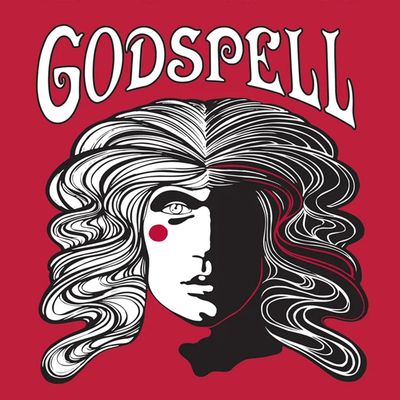
[9:28] Robert Bannon: Yeah, I've made, yeah, I mean, I made a film about Ted Williams, this is a Red Sox guy, and I made a film about the 2004 Red Sox, and I made a film about the 1986 New York Mets. I have never done a Yankee film yet, but I'd love to. I don't know, you know, these things sort of choose you. I mean, I do think that there is something about your core identity that makes you choose a film, and my psychological resistance to telling this story eventually eroded, and I realized like I'm Jewish and I have to tell this story, and I've been thinking about it a long time. So I have a lot of feelings about it, and I'll be able to pour it into this film. And the Godspell thing you mentioned, you know, I have a film coming out next year about the 1972 Toronto production of Godspell, which unleashed Martin Short and Gilda Radner and Eugene Levy and Andrea Martin and Paul Schaefer and Victor Garbert, all these people on the world and created the kind of comedy revolution.
And it's like I've just known about that story my whole life, and I couldn't believe no one had ever told it, so I wanted to tell it. And that was so joyful and amazingly fun that I think it permitted me to at the same time go into this sort of much darker place, even though it was stories of people who were doing this good thing. It's obviously a very dark world to inhabit. And I think these two films actually, you know, I've been thinking about them as like, I don't understand how they work together. It's so, you know, but actually I understand now it's not a whiplash, it's a complimentary, and one permits the other.
[11:03] Robert Bannon: Well, I'm really excited for all the work. Everybody, this Ordinary Thing is out, it's coming out. Stay up to date for the as it gets a wider release, no matter where you are, you'll be able to see it very soon. And if you're in New York, you should come December 5th through the 11th at Cinema Village. It's the greatest place to see, it's such a great place to see a movie. Go to Cinema Village. So the 5th to 11th, and everybody look out for NIck Davis. I can't wait for God. You're gonna have to come back and talk to us about Godspell. And when you're out here in this world, no matter what religion, ethnicity, gender, sexuality, no matter where you come from, we have to stand up for human rights, and we have to be the people that protect all the classes of people out here in this world. It's important, it's vital. And that's what I hope people take away. That, you know, silence is not always golden. We gotta protect our fellow humankind. Thanks for making a movie about that.
[11:48] NIck Davis: Thank you, Robert. Thank you so much. So grateful to be here with you. Thank you.
© Broadway Podcast Network, All Rights Reserved