

From living on Avenue Q to (not) paying Rent in the East Village to hanging out In The Heights, Kevin McCollum has produced as many Broadway hits as New York has neighborhoods... Read More
From the show: The Show Must Go On Sale!
Featured Shows
About
From living on Avenue Q to (not) paying Rent in the East Village to hanging out In The Heights, Kevin McCollum has produced as many Broadway hits as New York has neighborhoods. Kevin sits down with SpotCo co-founder Tom Greenwald to discuss the difference in marketing an original show versus a jukebox show, what it’s like to watch a hit come out of nowhere, and why Tony loser Something Rotten is in some very impressive company.
Transcript
This transcript was automatically generated and might contain errors.
[0:00] Kevin McCollum: When you're selling tickets, I take a lot of pride in that. And even when you're not selling tickets, you better be learning something.
[0:30] Kevin McCollum: It is a pleasure. 30-plus years later, you haven't aged a day, but you always had a special, unique quality. I'd love to start by talking about the very many kinds of shows you've produced, and if there is a different way you approach the marketing and advertising. You've done small shows, big shows, big IP shows, original shows. Many of your biggest hits have been original shows, jukebox shows. In terms of marketing, is there a different way you look at them? Have you looked back and gone, wow, the ones I thought would be hard turned out easy, the ones that I thought would be easy turned out hard? How do you attack all these different kinds of shows? Do you have a main mantra, or is it just every show has its own different challenge?
[1:48] Kevin McCollum: Producing is because you get excited about a story, right? Usually you get excited about a story because it affects you, because somehow you are reflected in the story, even if you're not conscious of it. The problem is with marketing in the theater today is people forget the story within the marketing. And I don't only mean the story of what is exciting about your show, but the story, which is as old as time, which is why would I possibly leave my cave? So I'm always about you have to know what your philosophy of storytelling is regarding the piece of art you are presenting that has its own story. And where are the concentric circles where those two interact and when you can ignore them and tell just the story of trying to get people out of the cave?
[2:56] Kevin McCollum: Well, you know, your home, your town or your sensibility when you come across a show that, oh, I know what that show is not for me. I know what that show is. My strength and my weakness, I think, is I don't like to give away a lot about the show if it's a new show, because it's not going to be effective. And I can talk more about that if you can't educate and sell at the same time, there is a period to educate and there's a period to sell. And when you have a known title, you can go right into sell mode. If you don't have a new title, you have to figure out what's going to capture the public's imagination. So they're interested first in being educated about your story.
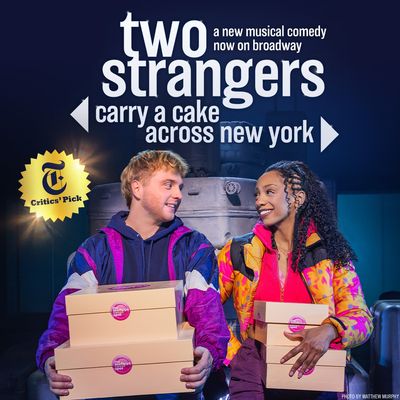
[3:36] Kevin McCollum: Yeah, I've said this on this podcast once or twice that I'm not a big believer in selling plot, because when you get into the weeds of plot, more often than not, you're going to turn someone off as opposed to turn them on. It's more the feeling that you have to get and you want to convey that people will get when they go to the theater. Since you've had such a round of success with sleeper hits, let's call them, starting from Avenue Q all the way up to Omeri and Two Strangers is showing nice strength, too. Do you take particular joy or pride in marketing a sleeper hit more than you would a Motown or a Rent?
[4:22] Kevin McCollum: When you're selling tickets, I take a lot of pride in that. And even when you're not selling tickets, you better be learning something. I do have a prejudice about Broadway itself, which is the sleeper hits are not really sleepers because they are usually completely original pieces of IP. So they're unknown, but I wouldn't call them sleepers. I would call them unknown. And that is a tremendous advantage to marketing in today's world, in the modern world, because and especially, you know, my first hit was really pre AOL right when AOL was happening, which was the rise of real direct communication, social media. And Tommy, you were there. You remember what we did with Rent. We did a live stream from the opening night party of Rent at Chelsea Pier in 1996.
And I think, you know, Anthony Rapp was very, very astute on this new technology. And so, you know, we had a bunch of computers at the opening night party where the actors, the original cast would be online talking about being at the party.
[5:38] Kevin McCollum: So, you know, that was that seems so, you know, analog now. But at the time, it was a tremendous shift of how we communicated. And when that shift happened, one of the things that we kind of knew instinctually with Rent, even from the first two rows being 20 bucks rather than putting them in the back, is that we were those kids kind of getting into our 30s who in our 20s were like, what is this thing called Broadway? It's not for us. And Rent allowed us to really use word of mouth in a peer group. And if the young people are excited about it, the older people will say, what is this? And we really played into the strength. We didn't even remember Rent. We didn't even call it a musical. We didn't call it an opera. We didn't call it a piece. We just called it Rent because we understood as marketers and producers, it's this event in the theater. And so why put it in a category?
[6:41] Kevin McCollum: So those are just things that happened that just developed my sense of you can't sell anything unless there's a conversation and a story behind the selling. 29 years later, you could say that same sentence and replace it with Omeri, which is kind of an interesting bookend in terms of getting young people interested in theater again. People have been concerned about that. People are rightly concerned about that because we haven't had that hit that's touched the zeitgeist for a number of years until Omeri came along. Were you like, holy moly, this is Rent all over again 29 years later?
[7:19] Kevin McCollum: No. Not at all. And not that they aren't both phenomenal journeys. Just some history on Rent. When I was producing Rent and I would go to more of the older establishment, which is sort of the age I am now, they kind of didn't get it. And I saw it off Broadway. Jeffrey and I saw it together. And he'd seen it a year before in a reading. And then there's been a lot written on this. And then I saw it with him in 94. And I turned to him after, will you light my candle? And I said, that's the best piece of music theater writing I've seen in a long time. After Act One, I said, I want to do this. And I pulled out my checkbook. And Jonathan Larsen said, do you want to see the second act? I'm like, is it as good as the first?
He goes, I think it might be better. And again, the first act was not perfect by any. But there was just so much energy. And it was about the music. Because I was also a writer when I was a performer and before I transitioned to producing. I was just aware that this was very special.
[8:30] Kevin McCollum: Now, with O'Mary, I have to give a lot of credit to Lucas McMahon, who's been working with me for over 13 years. Eight years ago, Lucas had been working with me for about six and right out of college. And I said, look, your job is to convince me I don't know what's happening. No one knew who Jonathan Larsen was, except for a few people who were really excited about his work, including a lot of artistic directors. Because he did, you know, J.P. Morgan's Saved the Nation. He did a bunch. He wrote a lot of stuff. And everyone knew he was great. But it's like, what's the story? What's the story? And even when we saw it in 94, Rent hadn't fully formed yet, but we knew there was enough there to do it. So O'Mary was also different because there's a big, huge group, given the fact the Internet was in play. When Rent, there was no interplay. If Jonathan Larsen were writing today, he would have gotten to market a lot faster.
[9:26] Kevin McCollum: And what happened was, I think Cole had a huge following. They were someone who had created a lot, especially during COVID. And I saw, you know, Cole's, you know, Bernadette Peters' Desert Taxes. It's a Broadway show. Okay, Broadway show. Yeah, I've done a couple of them. I'm not a lot on social media personally. I'm not a YouTuber. I'm not a TikToker. My company has an Instagram. But I do not live on social media. It's just not where I live. And Cole had created a great following. So Lucas was astute enough to know that Cole needs to really have a show. And their agents were like, we have a play, and we might have a partner for you. And Mike and Carly, who do a lot of off-Broadway. And it was just a really wonderful combination of, you know, Lucas had a mission to work with people that he knew.
And I had known of Cole, but I did not have, you know, full disclosure. And there's no – listen, my goal is to make sure people keep producing for the theater long after I'm doing it and long after I'm here. And so I was very heartened and excited to support the show at the Lord's Hell, even though for a play it was still a million-two. And there weren't a lot of people throwing money at us. We were just like, we're going to do this.
[10:58] Kevin McCollum: With Rent, really, you know, the cost of Rent was $150,000 for a musical at New York Theater Workshop. The threshold of cost was $1.2 million for a play at the Lucille Lortel. A small play. Yeah, but we did it commercially. We produced it commercially as opposed to work with a not-for-profit. So we were – we had a little more freedom to just do it and rent the theater. And when we went on sale, we had a very good day, you know, over $70,000 off-Broadway. And I was like, okay, the internet knows. And that's when I knew – I had actually more information about the show with that $70,000 wrap than I did the first time we put Rent on sale with New York Theater Workshop, which trickled it a few times.
[11:46] Kevin McCollum: They were very different experiences, Tom, even though they both captured the imagination. And, you know, the zeitgeist of O'Mary comes from the fact of, you know, it's about the presidency. It's about a piece of American history, you know, but it's really a comic romp and silly and genius at the same time. And we hadn't had sort of that original kind of laughter, pure belly laughs in a long time. And, you know, theater is always reflective of what we're thirsty for in our culture. And I think we are thirsty to last and live in the absurdity to figure out how we get back to center. And I think Rent did that in the storytelling of as New York got more and more expensive and artists were being pushed out, and we were dealing in the rearview mirror of, you know, basically 15 years before the decimation of the AIDS virus, and trying to find family and build family.
And they're both about, you know, aspiration of finding your voice. You know, O'Mary is really about finding your voice for Mary Todd Lincoln as a character. And we all can relate to that not being heard, or not being seen, or not being provided the opportunity. And that's what the theater often is selling. My shows are diverse, but my shows also have a central point. And you mentioned it earlier, I always said the biggest antagonist of a musical is plot. And the protagonists are understanding what the stakes are. And the stake I trade in primarily, and it's because I'm, I have an orphan mentality, which we can talk about, is that I am always attracted to stories where your protagonist is think they want one thing, but actually what they're really searching for is how to find their family against all odds.
So when I look at structure, and we actually talked about structure on Motown, because you were very influential at Motown, I did a reading. And you said, I don't know why you're not starting this way. And if it's really going to end here, and I think you remember it. And I'm like, that's right. That's a really good way. And Barry Gordy, who, you know, wrote it. And, you know, also had additional material by Dick Scanlon and David Goldsmith was that, you know, he was alive, and he still is. And he's great. And it's amazing to work with him and have worked with him. But he also wanted to make sure he told the story without hurting too many people or anybody, because, you know, there's always conflict in life.
But the stakes were, you built an infrastructure that allowed these black artists who were not being allowed in the room to be in the room, and you built your family. But eventually, the family has to grow up. This is a story about letting your kids go, which is still about how do you how does love conquer all. And so we talked a lot, if you remember about how we were starting, which sort of started very small, like some other musicals about lives and started this way. And you came to me because I don't understand why you're not just starting with a big beginning. I'm like, you're absolutely right. We should start with the Battle of the Stars and then really make it a much darker beginning to begin your flashback.
So, you know, Tommy, you're a writer, which is why you're a brilliant marketer. But it all is storytelling in the marketing and the story you're telling, and then how to tell the story. So I digress. But I guess what I'm trying to say is, you talked about the diversity of my shows. I'm just trying to stay in the room and form a family against all odds. I speak a lot about what producing is, and I talk more in philosophy, rather than a producer doesn't have tasks. A producer creates the infrastructure where the story that everyone is on the same vocabulary of what story you're telling, whether that's in the show or in your marketing campaign.
[16:02] Kevin McCollum: Kevin, let me ask you one more micro thing about O'Mary just before we talk about other stuff. When you started the conversations, you and Lucas and your producer partners with your advertising shop about when you were about to move to Broadway, did you say to yourself, we can go right out to the mass market and appeal to the casual theater goer? Or did you say, we have to stick to this smart downtown crowd that knows who Cole is and let them be our ambassadors and spread the word of mouth? And as you said earlier, once the cool kids go, everybody else is like, what's that thing the cool kids are going to? Did you stick to the cool kids early on or did you go out wide? The cool kids are everybody, right?
If you're living in New York and you're interested in the arts, the question is you're often disappointed because nothing surprises you. We knew we had a show that was a surprise. And I will say, I'm going to give Mike and Carly also a lot of credit. Mark and Carly are two of the most inventive producers we have working today. Their niche is a lot of comedy, one person and also authors and performers in the same entity. And I've done a lot of shows, whether it was Drowsy Chaperone or In the Heights or Title of Show and many, many more that might not have gotten to Broadway where the author is also in the show. And so Mike and Carly had developed a brand. Which because they had worked in a lot of downtown venues, they could actually keep their lists and the ticketing that came with the theater allowed them to create their own sort of brand with their data.
So they have a very robust sort of they talk directly to their customers and way it's a lot of commercial producers can't in the way our theater is currently structured. And so they had a very potent downtown, quote unquote, list. But living downtown is also the establishment as well as the cool kids. So if you're on the island of Manhattan or within a 50 mile radius, you're here for a reason. And it's because you're interested in the arts, a lot of people. So if we can put something that is surprising on the market and then backed up by our Off-Broadway reviews, which were some of the best reviews for an Off-Broadway show in a long, long time, and we were still kind of coming out of covid and looking for something to to sort of excite us about coming out of our caves.
O'Mary was that show. And we therefore didn't spend a lot. Advertising is very similar to what happened to the news where everyone would eat dinner and there'd be three channels to choose from. And all the news said it the same way. Now, there are so many opportunities from influencers to organic, social to regular, social to friends. So diffuse. It's all over the place. And therefore, as it is getting more diffuse, the most important thing is what did your friend think of it? The person that you spend time with on the holidays, do they like it? Do you want to go together? You know what you and also New York is a very cynical place and I'm a warrior against cynicism. So my favorite thing is, oh, yeah, I know about that show you're doing, but it's this.
And a lot of times it'll be like, yeah, it has only four characters or they'll talk about something about the economics they read. But a lot of times like but the show makes you feel something different or people wouldn't be talking about it. So you cannot advertise yourself into a hit. The element of surprise, Kevin, you mentioned that earlier. Have you found that it's harder to market and find the element of surprise when you've done you've done a few shows off of big IP like Doubtfire and Notebook? I'm fascinated by this topic because people keep turning to this epic IP to make theater, especially musical theater. And it's hard to make it work because I think the element of surprise is lacking a lot of times, whereas the Drowsy Chaperone, you didn't even have an off Broadway run.
You had an L.A. run and people were like, holy shit, what is this thing? It's incredible. How do you find the element of surprise? I'm going to make this about you again. Let me tell you about Tom Greenwald. Oh, boy. He's a lyricist. He's a poet. He's very astute. He lets others talk. And then when he says something, it's like, oh, right. That's true. What Tom taught me is your vulnerability can be your strength and our vulnerability on the Drowsy Chaperone. And I think I remember coming into a room and saying to you, look, look, we just had this L.A. run. I want to be in. I can't educate and sell at the same time. I was saying it back then and we were agreeing. And I'm like, but it's a really good show, but people don't know anything about it.
And that's such a unique format. And I don't want to give anything away, but I want to create anticipation. And I think theater people go to the theater to see something they've never seen before. And then you went away and came back with, I think, the greatest text ad campaign in the history of Broadway. And I know it is because there's a guy we all know and who has mellowed in his advanced years, who was always too smart to do what he was doing named Michael Riedel, who was trade was to put things down and be the snarkiest, most cynical. I knew it was a great campaign because after we put it out, Michael Riedel said it's the worst campaign ever. And as soon as someone is telling you it's the worst campaign, you're in the conversation and you are home free.
And for the listeners, I will tell you what the campaign was. And the first ad campaign for The New York Times was this full page ad when there was such a thing that said, sometimes you can tell just by the title the show is going to be amazing. This is not one of those times. The Drowsy Chaperone. Remember when you came into the room and we had a bunch of other stuff, too, and we looked at that like that is so audacious. That is the story I am telling within the story I'm telling because of people who don't know The Drowsy Chaperone. It's about a man who puts on the record because it's what he puts on to escape the real world, which is what I did as a kid in Hawaii growing up, raised by a single mom.
So I related to man and share as my as a human and nobody else got it because I actually experienced that as an escape to my childhood. When you came up with that line, I was like, OK, this could be an all text campaign. We haven't had an all text campaign. And I will say, I think we were the precursor to ad campaigns like what Spamalot did. The other thing we did with The Drowsy Chaperone is we put man and share when we bought an ad in the middle of what then was the ABC's around the Tony Awards. The ad campaign was was man and share holding the album and says, look, mom, I'm in the ABC's. So the character was living out their Broadway fantasy within. Even if you hadn't seen the show, like what is this show? And we were up against Jersey Boys, which is very clear to understand what Jersey Boys is. But we were that surprise. We were that Rice Krispie treat in the middle of the pie contest.
[23:31] Tom Greenwald: The granddaddy of all your audacious moves was the Something Rotten campaign, which was audacious from start to finish. I think the most audacious moment was when we had 12 Tony noms, maybe 13. We had 10 Tony noms. Are you getting the ad? Yeah, we had 10 Tony noms. For those of you on the radio, yeah. Still one of the best ads I've ever been a part of. So again, the headline was we lost the Tony to Fun Home. It was at the Tony party. Drew and you and I, we were sort of huddling and then we started talking about all the great shows like, you know, West Side Story lost to Music Man and Wicked lost to Avenue Q, which is a story I was also a part of. But the idea that great shows sometimes lose.
We should lead with our vulnerability, which is everyone's gonna say, oh, they lost. And like, let's celebrate it. And we all agreed. And in 24 hours, the headline, if you haven't seen it, is Loser, Best Musical. So Loser, but we still were able, because everyone says winner in their ads. We said Loser Best Musical, 2025 Tony Award. And then we wrote, we're in great company. And these are all the musicals we wrote. West Side Story, Gypsy, Oliver, Funny Girl, Hair, Follies, Grease, Pippin, Chicago, Dreamgirls, Sunday in the Park with George, Into the Woods, Miss Saigon, Mamma Mia, Wicked, The Drowsy Chaperone, Next to Normal, Matilda, Beautiful, The Carole King Musical, Aladdin. None of them won Best Musical.
That is incredible. Still incredible. Something Rotten is one of the highlights, just in terms of originality and comic genius as a show. And Kevin, you've done this all your career with your shows. When you do comedies, the marketing has to be funny if you want people to believe the show will be funny. And I think Something Rotten, everything we tried to do was funny. You've got some shows now that have been, you've got Six that's been running forever. You've had huge long runners in the past. Do you look at the marketing of a long running show and keeping it fresh as its own separate challenge? And how do you approach that?
[25:56] Kevin McCollum: The goal is what I've noticed, and I've been fortunate, I've had a lot of shows that have captured the public's imagination. And that's the term I use in terms of like, let's not talk about is this going to work in the moment? Is it going to capture the public's imagination? Is it going to create conversation? Because marketing today, and again, especially for young people, they know when they're being sold. Because their whole lives, especially my kids are now 25 and 26 and they grew up with this machine, you know, I didn't, but they know when they're being sold. So how you provide them information about the show, but still make it their choice is really, really important. You obviously got to get through your first year.
You know, you got to get through those, you know, you got to be able to run through the first season, hopefully get on the Tony Award. So people start writing and talking about you. But then if you're good enough to run two or three years, like, can I run to seven, seven is really important, because you were, let's say, 12, when it opened, and let's say it's Avenue Q. But once we got to seven years, and we did it by going to off Broadway. So together, we ended up running like 13, just as long as Rent, but nine of those were off Broadway, five of those were on Broadway. And it's those and now we're reviving it. In London, we've announced we open in April 16. In London, we're doing a 20th anniversary, because it's 20 years since it opened in London, if it catches on, we're going to make a couple of adjustments and it catches on, hopefully, we'll bring it back to New York and have a revival.
But in New York as well, but it's that how do you run to seven. And so you know, Six has been running for five, I think we'll definitely run at least till six years, and hopefully get to seven. And then there's a whole new rebirth that happens. Capture is now our friend, we always were afraid to film things and make it available. But maybe in year five or six, you know, you're hoping there's a movie or some something, Netflix does something to do or some HBO Max, or you just do it yourself and do it in movie theaters. You know, Six in London, film, the original company at Hampstead Court, which was the home of Henry VIII. I wouldn't let it come here. But they did it in London, it was the highest grossing, you know, in cinemas, sort of theatrical they've ever had.
Probably in the next year or two, I'm going to let it come here in the summer when we're not on the road. We tour every year, primarily from May, I mean, from September to May. And we usually don't, we let the summer because the touring markets aren't as strong in the summer. And that way, we get more clearance in the next year, because we haven't used up all the cities. And we can keep rejuvenating the tour, because you can go back to markets every two and a half to three years.
[28:36] Tom Greenwald: Well, wait a second, Kev, what's your theory on the movies of shows helping or hurting? I mean, the conventional wisdom has kind of changed over the years, right?
[28:53] Kevin McCollum: Yeah, well, Rent, you know, we had a hold back for Rent, it finally went out, and I think in our 10th or 11th year on Broadway. And that movie, I think helped us run another two or three years, regardless of what you thought of the movie, it just, you had a movie company putting, you know, at that time, $35 million of advertising, just to understand, for people at home, you know, if you spend 100,000 a week at that time, which was a lot, let's say it's 75,000 when we were doing Rent, right? So the most you're spending in a year is, you know, four to 5 million in advertising. And then in a two month period, you get $35 million of advertising of something called Rent. Even if people had seen the show, or they liked the movie or didn't like the movie, especially if you didn't like the movie, you said, I want to go see it live again.
And remember what it was live. And we had a huge uptick in, I mean, I think Chicago helped Chicago, because it's different. It's different on stage. So I think that helps. I think it helps. You just don't want to do it. If it's getting momentum, you want to get to a point where you need that extra advertising. I mean, I have the Devil Wears Prada in London, starring Vanessa Williams, and we're looking, you know, when we're going to bring it here. And we're going to do some other productions in Europe before that. And, you know, there's a movie. And just what it's done in London, just people talking about it, filming Devil Wears Prada 2 has been very, very powerful to us and reminding people, oh, there's a musical and there's only one place to see it.
And it's in the Dominion Theatre, which is the largest West End theatre of 2000 seats. And we've done, we've done, you know, we're into our second year and going strong. And Vanessa Williams is wonderful. And our cast, our original company, as well as our new company, just people are loving the show because it's a great night out.
[30:45] Tom Greenwald: Kevin, you mentioned the generational shift, like for Six, how long has it been running now? Five years?
[30:49] Kevin McCollum: Five years on Broadway. And it's been running around the world about eight.
[30:53] Tom Greenwald: If you stand in the back of the house now and you see a 12 to 14 year old girl loving the show, is it the same as the 12 to 14 year old girl who loved it five years ago? Is there anything different about that kid?
[31:05] Kevin McCollum: Usually it's also the cousin who is like 16, who wants to bring either the younger sister or the younger cousin, or she's now old enough to chaperone. So when she was 12 and said, I got to take you to, you're now 12, you're 13, you know, it becomes a theatrical bat mitzvah. In many ways, because and what makes the show work is it's multi-generational. I had the same thing at Motown. I mean, one of the greatest things at Motown, the story of seeing the grandmother, the mother and the daughter coming together to see Motown. And you get that same thing in Six as well. And there's a lot of also dads and boys, because it doesn't, you know, the thing about Six is every successful musical, Rent had it, Avenue Q has it, Two Strangers had it, is that it's not, again, it's not about the plot.
It's about the stakes and the code of the stakes. So finding your family against all odds. So what is Six really about? It's six female identifying characters, right? Who are having a contest of who had it worse, only to realize that, you know what, if we keep comparing ourselves, we're diminishing who we really are. Now, we have to work together. Now, I saw Six, and I didn't know anything about the Tudors, but I was raised by a single mom. And what I saw was I was living in a country in 2018 when I first saw it. And when it was just starting out in London. And that's when I didn't produce from scratch. So I give great credit to Andy Barnes, Kenny Wax, and George Stiles, who actually then came to me and said, would you help us get it to North America?
And I joined them as a producer. And I, we made some changes. And they, they were, we, we worked together on the campaign here, which was different. And I said, why it's going to be bigger here than you realize, because they thought it might should be going off Broadway. And I said, it's a Broadway show. If you're not gonna let me do it on Broadway, don't let me have it. Because I cannot, this is not an off-Broadway show. It's a Broadway show.
[33:26] Tom Greenwald: So when they originally came to you, Kev, they thought it was an off-Broadway situation?
[33:31] Kevin McCollum: Because, right. In fact, I was the only one who went to them and said, this is a Broadway show. And they kind of laughed at me. They said, no, it's too, I said, it's a Broadway show. And the reason it's a Broadway show is the stakes are really about women's rights. And there was no way to talk about the rising sense of misogyny in our country, coming from Trump one. And we weren't able to, and the great thing about art is that it reflects what people are thirsty for and tries live, live entertainment. You come in as strangers and you leave as a family through a collective watching in real time. There is something that happens to the neurological pathways that is much more powerful than watching a projected image.
And you feel safer and you hold the material longer in your brain and your body and your sense of self. And Six is really about women's voices and working with feminine energy of collaboration, as opposed to the male energy of competition is how we're going to survive as a species. That is truly, that's not hyperbole. That is the code that makes Six sick.
[34:51] Tom Greenwald: You're absolutely right. I feel like when I saw Six in Chicago, I honestly went in thinking, this is a jukebox musical with a bunch of songs from the eighties and nineties. I didn't understand what I was seeing. And then two songs in, I was like, wait a second, maybe even one song in the first song. So.
[42:19] Kevin McCollum: I just think that was a great campaign. I think everything we did in that first year was great. The best campaign within a campaign is when we realized and I brought it, you were at Spot and I said we realized. I said we just had the fall preview for 2002 and Avenue Q wasn't mentioned and it's because we opened in August which nobody at the time, Hairspray hadn't done that yet so nobody had opened in August but we had to open in August because that was the only date that Jerry Schoenfeld gave me the theater which was a playhouse that many of the Schubert's thought why are you doing a musical in a playhouse and I said it's perfect and so therefore we realized people forgot we're in this season and Vinnie and rest in peace and you and Drew and Jeffrey and I and Jim Edwards, Jim Edwards and we said we have to remind people we're in the season and we created the campaign where we bought ads for other shows to announce their opening because we were welcoming them to our season.
We needed to claim ownership because the people writing about the theater were too lazy to understand we were part of that season and I was so furious I remember that well and my rage helped I think create the urgency that we have to own the season and be the mayor and so we created a campaign where we created funny titles like Taboo was Faboo and we had and Never Gonna Dance was Never Gonna Have Legs and Puppets and we, those campaigns were great which culminated in authors writing a song during the Tony time like there's a lot of great choices but the key is Vote Your Heart because we knew people loved our show but everyone was saying Wicked was gonna win and Wicked's a great show and we, the authors came up with the idea of let's just write a song in the spirit of children's television to educate people that you do have choice, you know Vote your heart deep down you know you care so that was the campaign within the campaign but the campaign from beginning to end that really put the show on the map that I don't think we'd have the success where I think Avenue Q would have had the success even though if we didn't do that campaign but Drowsy Chaperone was unique, the one I wasn't involved with that I have a lot of admiration for and it goes back to word of mouth, it's what Mormon did with Twitter, owning the Twitter sphere which basically said you might think the show is too dirty or you can't see it but everybody is talking positively about it so even though it's really really on the edge of appropriate it's a great night in the theater and I think that was really really smart. Do you remember when in the life of that show that that Twitter thing took hold?
[45:15] Tom Greenwald: Really early, pretty early.
[45:17] Kevin McCollum: It was early right? And it was kind of early days of Twitter too right?
[45:21] Tom Greenwald: It was the early days of Twitter and they threw a lot of money at it and so it was everywhere, you couldn't ignore it. Now I don't produce that way but they were dealing, you know, Trey and Matt had you know, they had a television show behind them and I never had that kind of thing they were everywhere. They spent a lot of profits advertising when they were already sold out and sometimes people think that's the most, I don't produce that way, a lot of people do. Movie sensibility produces that way because you're always spending a lot before your big weekend and then your brand has value but the difference is in the theater we don't own the copyright, we don't own the copyright so it doesn't work out economically as well as it does when you're a movie.
[46:11] Tom Greenwald: Yeah and you also, you want to last for years in the theater and you want to last for weeks in the movies. The movies, everything's about capitalization. In the theater, everything's about running costs.
[46:21] Kevin McCollum: Ladies and gentlemen the wisdom, the wit the wonderful wizened wisdom of Kevin McCollum.
[46:27] Tom Greenwald: Not a lot of rage, Kev.
[46:29] Kevin McCollum: I still hear a lot of joy in your voice.
[46:31] Tom Greenwald: I hear a lot of joy in your voice for this business.
[46:35] Kevin McCollum: I do, I get along. I say I'm filled with rage just so people leave me alone.
[46:41] Tom Greenwald: Kevin's track record is one that should give him joy because he has figured out the magic formula for making shows that as he said have captured the imagination of this public again and again and again. Kevin, thank you so much for joining us.
[46:57] Kevin McCollum: Thank you Tommy.
© Broadway Podcast Network, All Rights Reserved