

Before there was SpotCo, Drew Hodges had Spot Design. Over the course of more than three decades, Drew has been at the center of theater staples like Rent, Chicago, and Hamilton... Read More
From the show: The Show Must Go On Sale!
Featured Shows
About
Before there was SpotCo, Drew Hodges had Spot Design. Over the course of more than three decades, Drew has been at the center of theater staples like Rent, Chicago, and Hamilton. Now, he and SpotCo co-founder Tom Greenwald sit down to talk reinventing Broadway artwork, the power of word of mouth, Drews big wish for Broadway marketing.
Transcript
This transcript was automatically generated and might contain errors.
[0:00] Tom Greenwald: Hi everybody, it's Tom Greenwald and welcome to the Show Must Go On Sale! podcast, where we talk about Broadway advertising and Broadway marketing and Broadway in general. Today's episode is near and dear to my heart because we have Drew Hodges joining us. I wouldn't be in this business we call show if not for Drew. Drew quite simply is the granddaddy, grandpapa, grandpuba of SpotCo. Back when I joined him, it was just transitioning from his design company, Spot Design. This is 1997, coming up on 30 years, if you can believe it. Drew and I have been colleagues and good friends for all of those years and no one has more interesting things to say about the state, the history, the present, the future of Broadway advertising and marketing than Drew Hodges. So it's going to be a really fun conversation. Welcome to the Show Must Go On Sale, a podcast all about Broadway advertising and marketing. I am not in Broadway advertising without our guest, Drew Hodges.
[1:10] Drew Hodges: No, you were already in it.
[1:12] Tom Greenwald: No, I was in entertainment advertising, really, although I dabbled in Broadway. I had written an off-Broadway show, John and Jen. I met Drew through a couple of mutual friends, Jeffrey Keller, David Stone. Drew was launching his ad agency, which had been a design firm, Spot Design. He did the artwork for a couple of small shows called Rent and Chicago. He said, you know what? I want to turn this into a full-fledged ad agency. He called a couple of people. Right off the bat, he called Jim Edwards, one or two other people, Tom Greenwald. I joined officially at the end of 1997. Drew has, for the better part of two and a half decades plus, been synonymous with innovation in Broadway advertising and marketing and imagery.
So he is a great person to have on this podcast as we kick off our first season. I would like to start, Drew, by asking you, what made you get into Broadway advertising originally? Why? I know you did all sorts of things for other kinds of products. What was it that brought you over to Broadway? Were you always a Broadway guy or did it kind of happen after the advertising thing started?
[2:30] Drew Hodges: Thank you, Tom. That's a lovely introduction. The thing that brought me over was actually Tom Viola of Broadway Cares fame, which is surprising and I don't get to say it enough. I did entertainment work first. I did some work for Swatch, both $35 watches, into MTV and a lot of work for MTV, into records, rock and roll, Aerosmith and Lisa Loeb and things like that. I was assigned, along with my friend Mark Bredet, by Sony Records to do the back cover of the Grammy program, the Grammy Awards at Radio City Music Hall. The back cover is a prestigious placing and normally what you're supposed to do is put all these minis. Minis are basically just album covers shrunk down to this big and you're supposed to stick them on the back cover and they just promote whatever are the albums of the year.
I said to Mark, this is dumb, a waste of the back cover, because the back cover is physical and it sits in everyone's lap who's anyone in music. I said, we should use this ad to do something. We called up Tom Viola and Roger McFarland. They physically were the owners of the red ribbon and we knew that and we called them and said, we have this idea to glue the ribbon on the back of the program of the Grammy Awards and become the first record label to take a stand on AIDS. The time was just right that they were like, okay, we'll be the leaders. And then Tom and Roger agreed to be backstage and hand out the ribbons for presenters to wear the ribbon. Out of that experience, which was a great experience, he asked me to do the poster or the Playbill cover for The Destiny of Me, which was Larry Kramer's sequel to The Normal Heart. There were four days before it went to press. That was the first Broadway poster that I ever did. And it was because of Tom.
[4:35] Drew Hodges: In terms of general Broadway advertising, I'm always fascinated to hear people describe how important and how effective they think Broadway advertising can be. And you and I are both Broadway advertising marketing professionals. So if anybody should think it works, it should be us. But my question to you is, how does Broadway advertising work? Can it turn a show into a hit or can it save a show from being a flop? Can it actually have that much impact or is it more of a gray area?
[5:11] Drew Hodges: I'm really clear on this, which is that it can't create, if there's zero momentum, if nothing's happening, it can't make it happen. As a matter of fact, it could probably hasten demise. If it's terrible and then you get more people in to see that it's terrible, then it's just terrible faster. But if there's anybody liking it, it just enlarges that pool. It's like the ripple goes out and you can get the ripple to go out further. So it just extends whatever success you're having. It should be able to take that specific success and enlarge it. So I do believe that if you can find your audience, it should be able to enlarge that audience. But that's also key. What's key in that is putting forward something that's honest, like emotionally honest to what the show is, which is why whenever producers want to make something that isn't the show, I think it's always the kiss of death.
Because then the wrong people, like if you have a rock and roll show and you want to play that down because you're worried that the general audience doesn't want to go to that rock and roll show. Okay, so then all that happens is they come in and then it's like blaring in their face. It's like the Max Elad. And then they hate it. And then they, because it's not, was it right for them? And then they just go home and tell everybody else that you'll hate it too. And then nobody goes. Whereas if you had actually marketed it to the people, honestly, as to what it was, then it might have found an audience that really wanted that and came for it and could tell other people who are like them that they would like it too.
And then you could have built on that success. I feel like Broadway marketing takes success and enlarges it sometimes rapidly, sometimes slowly. You know, you and I have worked on some huge successes that enlarge really slowly. Avenue Q being a really good example. In the Heights being a really good example. I'm just coming out just pretty slowly. But as long as you're coming up a bit, you're coming up. If you're retracting, then, you know, it ain't happening.
[7:31] Drew Hodges: You and I share a philosophy of Broadway advertising, which is, it's not the plot, it's the feeling. I'm a firm believer that if you have to tell someone what the show is about, then they're already not interested and telling them what the show is about will make them less interested. I remember one of our earliest shows, an off-Broadway play called Wit, and it was about cancer and we were like, okay, we're obviously not going to say a word about cancer. We're just going to call it great theater. And I think we had a beautiful picture of Kathleen Chalfant. All we needed to do was create her presence, her appearance and let people know what a great evening this was. That's an extreme example because it's about cancer.
But I think that's true of the Book of Mormon. I think that's true of Hamilton. I think that's true of pretty much every hit we've ever had or we've ever seen, which is don't go into the African missionaries, go into the funniest thing you'll ever see. The emotional promise. Can you talk a little bit about that emotional promise and how it's affected how you've approached advertising?
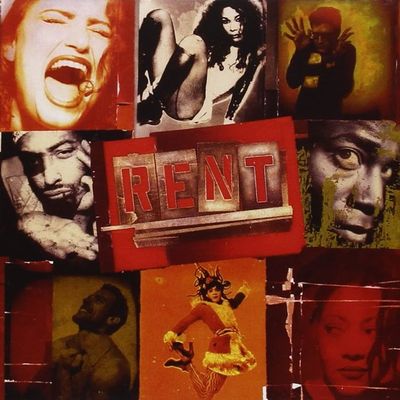
[8:35] Drew Hodges: Yeah. I mean, I think you said the words, now I do, but I think we had this approach without knowing it, which is even all the way back to Rent. I remember in the very beginning of Rent, the very first ad was just that white ad and that's because it was happening. And I just said to Jeffrey Seller, just create something that's so different that you deliver on that promise. The promise of Rent in the beginning was sort of not your father's Oldsmobile. So that was what that first ad was just meant to do. It was just to say, here's something completely different. But then when we did the color, I remember Serino arguing with me, why are we photographing these people? They're not famous. And their idea was that you only photograph celebrities.
I mean, literally, they said, we only photograph like Liza, which is such a cliché to me. But I couldn't imagine photographing Liza. But that was to their point. You only literally showed someone if they were a celebrity. And I said, no, no, I'm not photographing them. I'm photographing the emotion that they're putting off, you know, the white hotness of that cast. So I think even from the beginning, when we didn't have the words, we were trying to convey the emotion of the evening rather than the plot, right? We never really sold, you know, it's downtown in the village, and it's La Bohème, but it's superculosis, but it's AIDS, but it's like we never did that.
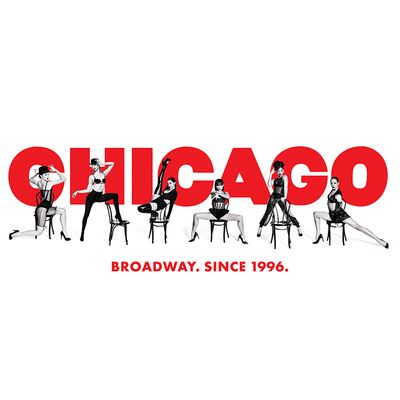
[10:07] Drew Hodges: Chicago, you also photographed the cast, and they were famous-ish, but they were not Denzel Washington. So would you say the same thing held true on Chicago? You wanted to shoot B.B. Neuwirth and Anne Reinking and the rest of the company, not because it was specifically B.B. Neuwirth, but because you were creating a mood. And we gave everybody the same weight as B.B. and Anne, I mean, the other four women, the merry murderesses, and it was the way we shot them. The story was Behind Bars, and we never showed the bars. And I once actually did this press conference. B.B. was nearby, and she heard it, and it was like, she was just like, like she didn't have any idea. But I said, look, we always had decided that if we were going to be that sexual with the women, then they had to be in power.
And that meant no Behind Bars. And so we never showed jail. Remember, we used to get in these ads from like Chicago and Buenos Aires, and they always had the jail, like the jail would always come into it. And we would be like, Nick, no jail, no jail. I mean, there was always that rule from the beginning that we were not going to show the jail. And I don't think people realize that, but that's what gave the women the power was that we never showed them in a position of vulnerability. And that allowed them to be so sexual. I don't know that we understood that maybe as clearly as that, but it was true. So we were able to have this feeling of sexuality and power that was in the show and not the story of them, of these eight women behind bars. So we didn't have to tell that story.
[11:47] Drew Hodges: But you know what is an interesting thing I want to say, Tom, is I think in some ways we made a bit of a monster there, because I feel like we started, like we came out of the era of the heads, right? The logos, the phantom mask, the Les Mis girl. And then I sort of moved it to photography, but really emotional photography. And then I think we're still in a world now where everyone photographs everything. But I think what people have forgotten is the reasons why all those photographs worked, or sometimes I think that because it's like we've slid from those things that were not movie posters, right? On movie posters, at least they have Brad Pitt and we don't. And I think that the core lesson was lost, which is we're selling the emotion. How does it feel to go? Not what is the story? And now people have moved it to look at my stars, which is okay if you have Hugh Jackman, but if you don't, it is not enough to just show their head and move on.
[13:06] Drew Hodges: And a huge star. He was known from *In the Heights* and it was obvious that he was going to be a huge star. It would have been an easy choice is my point to put him on a poster. I remember having a conversation with Jeffrey about, well, 'cause I always hate when people say, and they always say my show's for everybody, right? They always say that thing about like everybody can like this show and I always would say, you know, a show for everybody is a show for nobody. You know, if you can't figure out who you're gonna market to, then you're not really doing your job. And then I think by then we had seen that this was the only show I'd ever seen that literally worked for grandparents and grandchildren.
So that was the conversation was how do you actually make artwork for everybody? And that was when we got into the conversation of the mark because I've always kind of been nervous about that kind of mark. I don't know because I think that I'm not that good at it that, you know, the Russ England, which is the name of the guy who worked at the winners that made the *Les Mis* and made, I mean, Fravor made the beautiful *Sweeney Todd* mark, the other ones we think of which is the helicopter from *Saigon* and the phantom mask are all from this guy named Russ England at the winners who doesn't get spoken of ever and I've never met him, although I sure would like to. And I mean, those were just remarkable marks and they're not easy to do.
And I think also because in the early days, my big push coming out of music was why doesn't Broadway marketing look as contemporary as all the other mediums like movies and records? Why does Broadway stuff look like from 30 years ago? Why doesn't it just look like it belongs right next to a record or a movie or cable TV? Because I came out of records and movies and cable TV. So we just started using all the same photographers and illustrators that we were using. And Tom, you were working on movies in the beginning. We just started using artists that we were using across other entertainment fields. They had never done a Broadway show. So, you know, when you called them up and said, 'Hey, how about work on this musical with us?'
They were like, 'Yeah, let's do it. This is something I have never done.' So not only did we get the best people to jump in, but it was a much more contemporary look and that was, it was easy to see why that was a good thing for Broadway was to make things look more of the moment. And the same thing was true on *Hamilton* was like why don't we make something really look fresh and contemporary when Nikki Lindemann, who still works as Waco, showed first showed you the beginnings of the design that became the artwork. Did you, do you remember going, 'This is the one of all the ones'? Were you, when you put the eight on the wall, were you like, 'That's the one,' even before Jeffrey said it? Do you remember how we did it?
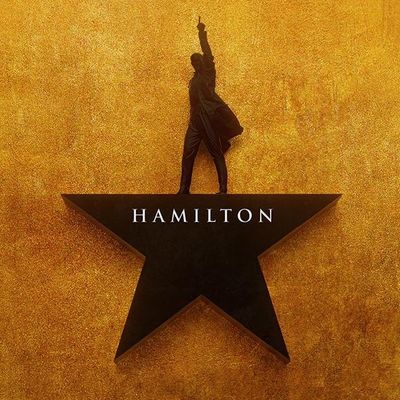
We had a room of reference all over the walls, all the way around the room of everything we could think of and we invited Lynn in with Jeffrey to look at all the reference and I said, 'Take everything down you don't like,' which is so much easier than pick out what you do like because people don't know what they want, but they know what they don't want. And we had pulled off as much reference as we could find on rap and as much reference as we could find on the Revolutionary War and we pulled and pulled and pulled and pulled and pulled and Lynn mainly pulled. And then we were left with mainly the gold. I think what came out of that day was okay, rap, Revolutionary War, gold, and Lynn said very clearly that he didn't want any of the rap tropes, the gold teeth, the grills, that like he was like, 'I don't want any of that.'
So then we knew we were out of that and then I knew I wanted Nikon and I think I maybe I could be just wanting to believe this. I think I talked about a figure and then there's a drawing, I know you've seen it, that Nikki did that is very, it's a pen sketch, but it is the logo. We didn't know that it would be that, right? I mean, that's Lynn, right? That came out of the photo shoot, but there was a figure standing on top of the star. Are you a believer in like all great shows have great artwork and all flops have bad artwork? Obviously not, but do you find it amusing that artwork becomes so associated with the show that obviously has a beautiful piece of artwork, but it could have just as easily been on a show called *Shmammelton* and it would never have been seen again?
I mean, obviously they gain over time. They gain resonance. I think kind of a production photography. I really do think that like if you can't find a good picture, then something is going on with that show, right? It's like if I look at your hand photos and they all just look like a big shmuggy, I just think, okay, like that somehow can't be it. But I don't know if I think that about artwork like the artwork gets better when the show is better. You know, our viewpoint of it gets backfilled by how we feel about the show. The emotional promise works both ways, right? As Tom knows, I am not always in New York anymore. I'm often on the West Coast and so I see shows break and then I often can't tell what they're gonna be like.
Like I should at least be able to tell, oh, that looks like that's gonna be a comedy, that looks like that's gonna be sexy, that's gonna be funny, that's gonna be scary, that's gonna be a satire. I should be able to tell some of that as to whether it's meant for me or not. So I hate it when I can't tell. Then I think, okay, that was the bare minimum of what the ads should have done, right? I should have been able to tell if I thought it was aimed at me or not. So the mood should be set. I mean, you know, I've said this a lot to clients, which is to say you should think about what you would like a person to say to another person because that is in fact how your show will sell. So you should know what it is you fear someone saying about your show.
It's too long, I didn't understand this part, I didn't like, I'm think about that and think about what how you would like to show to be recommended because I think it's worth knowing what is the story that you would like people to hand on. And if you can't figure that out, then something's off. Like you should know the way you would like the word-of-mouth to play out on your show because I think it's great to have that in your head. Yeah, this is how I want people to tell other people to go to this show. There's always several of those, but I think that there's a kind of a first and a second and a third, right? Because you could say, all right, *Death Becomes Her*, I think you can recommend that show because it's a big Broadway show.
You can recommend that show because it has these two female leads that are knockouts. You can recommend the show because it's funny. You can recommend that show because I used to love that movie. Like those are all valid points. So what's first? Which, what's, you know, what gets you in the door? Then that's what the ads should be doing. Now, I'm not always sure which ones they are doing, but they should be sure like what is the main sell? I always say to people there should be about five of those, maybe more, but then you should be able to put them in order. If you were suddenly granted one wish that would allow you to change one thing about Broadway advertising going forward, any idea what that might be?
Less literal. You know, everyone just showing the show as it is doesn't tell enough story. Doesn't, you know, shooting the b-roll, it didn't used to be like that. I think it's a financial decision as much as anything else. We used to really take cinematic swings, but they were expensive. Yeah, and they are expensive. But I would say, you know, the value of daring, you know, I mean, we were having a conversation with the agency the other day that I was trying to explain something was worth making because it was surprising. And I feel like it's all so logical and I'm like, yeah, but that doesn't stand out. You need some surprise for people and the surprises have to be genuine. They can't just be like invented ridiculousness.
But you know, I really do think you go all the way back to the first *Rent* stuff and it's really hard because now I know too much and then I didn't know anything. But the real good, the real greatness about the *Rent* and the *Chicago* stuff was that we didn't really know what it was supposed to look like, so it didn't look like that. And that made it all feel different and fresh and that was its own reward. So I just feel like everything has, it can very easily, everyone's very adept now and the photoshopping of America and like everything is very polished and very slick, but it doesn't feel terribly surprising. And I think people want to be surprised. I'm not saying this shows me maybe that's true too, but you know, when you get in *Oh Mary*, it seems like what's really great about it is that it's completely unexpected and people are like craving that completely and they don't really want the same thing.
So I think the same thing is true of the advertising. There's a huge relentless push to familiar IP for Broadway and people, a lot of people think the more successful the original IP, the more successful a Broadway show will be like a hit movie or something. And the opposite is really true. The more unknown something is, the better a chance it has to succeed on Broadway because of the element of surprise. Drew, I have what's called the 11 o'clock number Q&A, which is some quick questions and short answers. What is your favorite campaign of all the shows that you have worked on to date? Chicago. I love *Chicago* because it kept changing for so long. Is there one out there that like that you just feel a special fondness for that people might not remember as clearly? *Seussical* was pretty wonderful, which you mentioned was one of my most favorite things.
So, so a show that I loved, my favorite ones would be *Shrek*. There's some really, really great work for *Shrek* that was out there, but I just don't think you got its due because there was the show was trying to find itself. What's a campaign you loved for a show that you didn't work on right now? There's a campaign for the immersive *Grease* in London and I think the artwork is completely terrific. Last question, what's easier to sell, a celebrity in a bad show or an unknown cast in a great show? Celebrity in a bad show. Really? That answer should be how many weeks, right? Because in 14 weeks, celebrity in a bad show, here's 14 weeks. Yeah, you might even go and then you're out. Whereas in the other show, you gotta go like this and it's up and it's up and you may only get to hear it 14 weeks, so you gotta keep going, going, going to get to the same height of the celebrity, but you need more weeks.
That's the truth of that. Sadly, I should have put the preview weeks in there like you sell up and then you're slowly coming down on the celebrity and the other one goes like this, but it takes longer to get up to the same height. Sadly, as we're seeing, it's easier to sell the celebrity because really what you have is a celebrity in a mediocre show is probably a more accurate term because the rest of it, you know, a bad show, it's probably not bad. It's probably just okay. The second question is which would I rather go to? And that's easy. You want to go to the one, the good show with the unknowns any time, any day. Well, Denzel just did *Othello* and the general consensus was that it was an okay production, not earth-shattering and did sell gangbusters.
But then *Oh Mary* comes along and proves the old adage that if you really want to thrill the people, give them something they have no idea what it is. Maybe *Happy Endings* would be my choice of all of it. Drew, thank you so much. This was so fun. Thank you so much for having me on. Tom Greenwald: May we all go on forever.
© Broadway Podcast Network, All Rights Reserved