

He’s produced some of New York's biggest hit musicals including JUST IN TIME, HADESTOWN, and LITTLE SHOP OF HORRORS, powerful plays like THE INHERITANCE and THE PIANO LESSON, and movies including 2025’s KISS OF THE SPIDERWOMAN... Read More
From the show: The Show Must Go On Sale!
Featured Shows

About
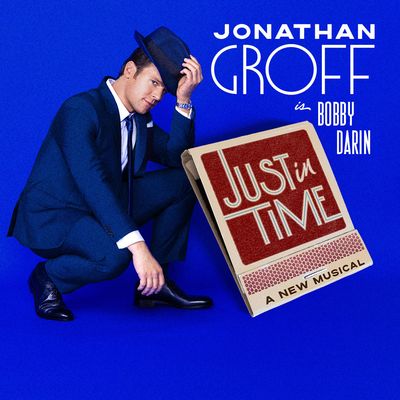
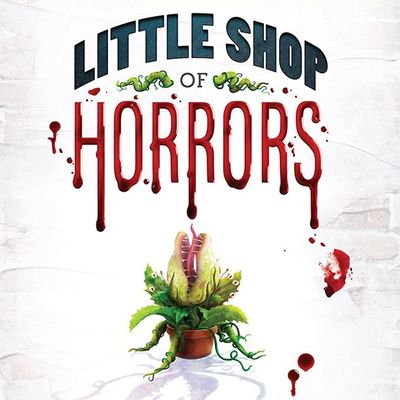
He’s produced some of New York's biggest hit musicals including JUST IN TIME, HADESTOWN, and LITTLE SHOP OF HORRORS, powerful plays like THE INHERITANCE and THE PIANO LESSON, and movies including 2025’s KISS OF THE SPIDERWOMAN.
Now, he’s unpacking his talent first approach with The Show Must Go On Sale host Tom Greenwald. A tale of two Toms, hear all about keeping casting playful, producing stories that need to be heard, and even a tease of what’s on deck for Kirdahy.
Transcript
This transcript was automatically generated and might contain errors.
[0:00] Tom Greenwald: There's not an easy answer to who gets people to leave their couches to go to the theater.
[0:12] Tom Greenwald: Hi, everybody. Welcome back to The Show Must Go On Sale!, the only podcast dedicated to Broadway advertising and marketing. However, today we may touch on some off-Broadway advertising and marketing because our wonderfully esteemed guest Tom Kirdahy plays in both playgrounds and has had hits, significant long-running hits in both playgrounds. And I think one of the things we might want to touch on today is the contrast between marketing a Broadway show and an off-Broadway show. Tom Kirdahy has been a force in the Broadway sphere for many years. He continues to produce empowering, enlightening, and most importantly, entertaining work and has quite a roster of shows to show for it, including It's Only a Play a number of years ago, Hadestown, The Incredible, The Inheritance, which I absolutely adored, The Spooky Greyhouse, Audra's Gypsy, the current juggernaut Just in Time, the other current juggernaut Ragtime, and off-Broadway, Little Shop of Horrors, which has been running, running, running, and running. Tom is also an incredible activist and has been an activist for decades and brings his power of passion to everything he does. Tom Kirdahy, welcome, and thank you for being part of this.
[1:38] Tom Kirdahy: Thanks for having me. I am fascinated by the fact that you currently have long runners on both the Broadway and off-Broadway stages. I haven't really talked with too many people so far about what it's like to market a long-running show, how often you feel you have to refresh marketing. You don't want to throw the baby out with the bathwater. You've established a brand, but you want to make sure you keep things fresh. And is there a difference between marketing a show on and off-Broadway?
[2:04] Tom Kirdahy: Yeah, it's an interesting time because within my office, right now we have four shows running in New York. We have Just in Time and Ragtime, which both opened this year. And we have Hadestown and Little Shop of Horrors, which are long-running shows. One is Broadway, one is off-Broadway. And the approach to the shows is very different. Hadestown and Little Shop both opened in 2019. So we're really in the seventh year for both of those shows. And the conversations we have around those shows are very different than the ones that opened in the past year. And so much of what we do on the older shows in particular is cast dependent. But I remember seeing a beloved musical that was a very long-running show a few years back.
This is pre-COVID. Just going to the show and felt like, the show is no longer running, but it felt very musty to me, like everything about it, from when I walked in and saw the front of house to what was going on on that stage. And it felt like a show that, frankly, didn't have a lot of love or passion behind it.
[3:33] Tom Greenwald: You mean people weren't paying attention to the upkeep of it?
[3:36] Tom Kirdahy: It felt that way to me, to be really honest with you. And that literally, that went from the ad campaign to the way the costumes fit on some of the actors. And I remember thinking, I never want any of my shows to feel like this. And if you go to Hadestown or Little Shop of Horrors, you will experience shows that felt like they opened last week. Both shows have spectacular new casts right now. But also we just redid the front of house at Hadestown. And our marketing campaign on Little Shop is very sort of fresh and feisty and a little naughty. And I think that the key to the longevity of both shows is making sure the art remains fresh, but also making sure that the campaigns feel both familiar and fresh.
There's still wit behind them. And a few years ago, with Hadestown in particular, when we had really created what felt like a global brand, we thought we had an opportunity to do a refresh that was about the emotion behind the storytelling. And so we leaned into the love stories. And that, I think, helped us turn a corner and reach a new audience. With Little Shop of Horrors, again, off-Broadway show, more offbeat, we've more recently leaned into wit and playfulness. And I think those different shows allow us different opportunities. With Ragtime and Just in Time, we're still creating those brands. And so we're leaning into what those look like.
[5:40] Tom Greenwald: You mentioned casting a minute ago when you were talking primarily about Hadestown and Little Shop. When did the light bulb go off and say, okay, if we're going to continue to run these shows ad infinitum, which looks like it could be at this point, because neither one of those shows opened... I mean, they both opened with incredible casts, but they weren't cast-dependent successes at the jump. They were show first, cast second, which is always what you want it to be when you first jump out. You don't want to be too dependent on a cast or a cast member. But at a certain point, you were like, we can continue to keep this fresh if we find cast members that people are particularly interested in. We can get more press. We can do some marketing. Do you remember what trajectory along the way that started to creep into your consciousness and your marketing team's consciousness that that was now going to be a thing you had to do?
[6:38] Tom Kirdahy: I think on Hadestown in particular, we made the discovery pretty quickly that we could lean into surprising people with our casting. André De Shields plays Hermes in Hadestown. He won a Tony Award. He's such an iconic figure that we knew we had to do something really special when he left the show. We had long conversations about who could possibly step in who could possibly step into those shoes. And the answer became another Tony winner, Lilius White. And we discovered that we were not bound by gender. And that was really liberating. And that sent a message to both the industry and to audiences more broadly that we are going to be fresh with our thinking. We're going to play, play, play. Within that playing, there will always be integrity.
But that unlocked so much for that. We were really drilling down on what a key role that character is in the show and how we had to really nail the casting on the first time. And we did. And that just unlocked so much. We planted a flag in the ground that said to the world, like, fasten your seatbelts. We're going to have fun with this and we're going to do it right. And we're going to, we're going to do it within the theatrical rules of integrity, but we're not going to be bound by convention. And that was the start of a really exciting casting journey on Hadestown. Just Friday night, I don't know when this will air, but just a few days ago, Joy Woods stepped into the role of Audrey in Little Shop of Horrors.
She was one of the urchins, one of the background singers as her first job out of college. And now she's playing this lead role, this iconic role. She was the first black woman to play Audrey in a major production of Little Shop of Horrors. And we have consistently been really playful and intentional in our casting on this show. Our first Audrey was Tammy Blanchard and she was with Jonathan Groff. They were extraordinary, but we've been able to run for almost seven years now because we're constantly surprising people. We've gone up in age, we've gone down in age. We've, you know, we had Milo Manheim and Elizabeth Gillies in not long ago and they were younger than Nicholas Christopher and Cherie Renee Scott in the roles of Seymour and Audrey. So we've really played with age and generations and we've had a great time doing it.
[10:07] Tom Greenwald: You mentioned interestingly a minute ago as your first examples, Lilius White and Joy Woods, theater royalty, but not names you would necessarily put at the top of your list for like box office, huge ticket sellers. As brilliantly talented as so many people are, when do you have to really examine the balance of box office versus quality of the show? Obviously, you've figured out a way to straddle the line to get people that do both, but do you do things like check out someone's social media following as part of the hiring process and part of the marketing calculus? Does it get that granular in terms of how to figure out where to cast in terms of these long running shows and keeping them top of mind for the theater goer?
[11:10] Tom Kirdahy: So as you know, I was married to the playwright, Terrence McNally. I believe he would come back and murder me if the first question I didn't ask was, are they qualified for the job? Can they sing the part? Are they good actors? He would find a way back. Having said that, it's art and commerce, right? And so do I look at the number of followers? It's never the first thing I do, but if something is on the margins and there have been times in the runs of both Hadestown and Little Shop where it felt like, oh gosh, we're running out of steam. We really do need someone or a group of people who can just give us the boost that we need to get our titles back in the conversation. I would be dishonest if I didn't say I look on there to see how many Instagram followers they have and more importantly, what level of engagement they have.
It doesn't always tell you. Someone with 2 million followers still may not move the needle. There's not an easy answer to who gets people to leave their couches to go to the theater. There's no question that I look at the number of followers, and I'm curious about the reach that some people have, but we do start with, can they act the role?
[13:40] Tom Kirdahy: I have said no to people that have been really pushed on us. And we've just said, no, I just not quite right. And I'm fortunate in I have great relationships with either the estates of these shows or the living authors. And I'm held accountable by them also. Let's pivot for a second from these long runners. I'm curious about Just in Time, which is a different kind of animal because it isn't often that you can create an ongoing hit with a show that is so identified with one particular actor. And I don't think it's a secret or a surprise to say that Jonathan Groff's performance in Just in Time has been the talk of the town for the year that he's been in it. And it's lauded properly so as one of the great Broadway performances in this millennium, frankly, in this century.
But he's going to leave. And you have announced Jeremy Jordan to go in, which is an incredible get. He's an incredible performer. But Jonathan hasn't left yet. He's got another couple of months. Jeremy's going in after him. How do you balance the come see Jonathan's last couple of months of performances with you're going to be blown away by Jeremy? So you got to see Jeremy. How do you build excitement for Jeremy while still making sure Jonathan ends with a bang, which will happen anyway? But I'm curious how you straddle that line.
[15:29] Tom Kirdahy: It's a great question. I think that for me, what has worked historically is that I am honoring two great artists. So if I tell the story of their particular gifts, one does not exist mutually exclusive of the other. And Tommy, you know that I am a recovering lawyer. I was a litigator for almost 20 years. And when you litigate a case in court, you separate out your arguments. And you're saying Jonathan Groff is giving one of the greatest performances on a Broadway stage you will ever see. Next argument. Jeremy Jordan is about to give one of the greatest performances you will ever see. And the connective tissue is that Bobby Darin was one of the greatest live performers in history. That's why we're telling his story.
And that's why we have been so rigorous in our process, that these two men at this moment in time can be playing this role. But the rigor that goes into this selection will be about telling the story properly. And that means that if you come to circle in the square, you will experience greatness. And we are ecstatic about Jeremy. And I think Jonathan understands that he is forever etched in history as the person who created this role. And he believes passionately that Jeremy will bring his own story to the role and is a worthy successor. And if you remember the show, the opening monologue is a bit autobiographical for Jonathan. I discovered the records of Bobby Darin while twirling in my mother's pumps.
Jeremy's story will be different and it will be tailored to him. But what I would say is if you loved Jonathan, you're going to love Jeremy. And the show is so fresh and so alive. And because the thesis is the power of live performance, it's never going to be stale. It's never going to be the same show in two nights. So I'd say double down and buy tickets to both.
[18:27] Tom Kirdahy: That would be an incredible coincidence if Jeremy also discovered Bobby Darin records twirling in his mother's pumps. It would be. But you never know. And you had experience with Hades and Little Shop, kind of making the mathematical equation of when do you make Jonathan a little smaller and Jeremy a little bigger? When do you start to shift from current to coming? I mean, obviously, there's going to be a certain point where Jonathan's last whatever will go clean and then you can be like, OK, moving totally on to Jeremy. But is that like as literal as a mathematical equation where you're like, OK, we're two months out, we're six weeks out, time to give Jeremy the lion's share of our marketing muscle?
[19:14] Tom Kirdahy: My guiding principle, and this is not necessarily data based. This sounds so corny, but I kind of have a moral compass with this. And I because I know I fall in love with my artists. I need to know that in promoting Jeremy, we're not ignoring Jonathan and vice versa. And I have a nervous system that gives me good instincts on that level. I mean, absolutely. Data will drive very concrete decisions like the fact that we just announced Jeremy was a very principled analysis. We had contracted him a month before, but we didn't want to announce before the holidays. We wanted to make sure that there was enough time for people to purchase tickets, plan their lives around seeing him. But also for all those fans of Jonathan, they'll still have time to see him.
And I have two incredible artists that I care a lot about that need to be their contributions to the production need to be honored. So there is a sort of personal moral obligation to them that's usually pretty consistent with practical realities. And I want to work with these people for the rest of their lives. It's not only about their egos, but it's also setting them up for success.
[20:55] Tom Kirdahy: Let's back up from the micro back to the macro. I think I know the answer to this question. I can just tell by how you talk about these marketing challenges. But you as a producer where many, many hats, you have to find a building, you have to cast a show, you have to fall in love with the show and raise the money and then the marketing and then the butts in the seats. And of all those things, where does marketing fall on your enjoyment level?
[21:21] Tom Kirdahy: Look, the art is my favorite process. I love standing in the back of a packed house in particular. And I love when the audience, I always love when the audience breathes as one. I just I love it. I feel like if the audience leaves the inheritance feeling healed or if the audience leaves just in time feeling a little more alive, I take such enormous satisfaction in that if people leave Hadestown thinking like, I can't wait to listen to that music or ragtime thinking, I can't wait to go to a rally or just have a conversation about with my family about what it means to live in a democratic society. That's the thing that I love most. But the wonk in me loves advertising and marketing. And I love working with people who are better at it than I am.
And that's why I've done so many shows with SpotCo, because you guys are so great at it and you stretch my thinking and the thinking of my team. And that's enormously satisfying. Another gift that Terrence gave me was the wisdom of the value of not feeling like the smartest person in the room. I don't want to feel like I'm the smartest guy in the room because then I feel like I'm not learning. And when I when I go into an ad meeting and SpotCo, I really feel stretched. And if I don't feel stretched, I usually have to make a call because either everyone's saying yes too much or we're trapped in convention here and it's you know, we're not mixing it up. I want to be naughtier or I want to be more irreverent or I just totally we're not we're not doing the thing that I want us to do. But I love it. I love, love, love the advertising and marketing piece.
[23:36] Tom Kirdahy: Do you think it can have a real effect on the trajectory of a show, the advertising marketing? Do you think it can help a show along that's already well on its way? It's tough to cut through in this clutter and word of mouth is so powerful. Have you found it as an effective tool to enhance or actually shape opinion?
[24:05] Tom Kirdahy: I don't think it can save a turkey, you know? Yeah, I do. I think I think if a show isn't good, I'm not sure the most brilliant campaign can save it unless you have a star and it's only 12 weeks, you know, and then sometimes shows are great, but they're not what the public wants. I think advertising can buy you a few more weeks, maybe or like awards glory.
[24:31] Tom Kirdahy: OK, let's let's talk about that for a second, because I did want to ask you about The Inheritance. Do you think about the marketability of a show when you're deciding to produce it? Do you think The Inheritance, which is one of my favorite all-time theater going experiences, I bullshit you not, and my mind too. Yeah, it was it was it was kind of heartbreaking that it didn't catch fire on Broadway. It had the two performances issue. Do you think you think about that when you say I don't care? I know how hard it's going to be. I want to bring The Inheritance to Broadway anyway.
[25:09] Tom Kirdahy: I did with The Inheritance and I when you say it didn't catch fire, it had the life I kind of expected it would to accept. Covid people were begging to be a part of The Inheritance and there were some people where I said I really would like for you to reduce your investment to make room for other people. And I want to be clear, this is going to be a very challenging commercial path. That's not and I left a paper trail. This is not why you're doing this. You're doing this because you believe this play needs to be seen and deserves to be seen on the most important stage on the planet, which is a Broadway, frankly, a commercial Broadway stage. And everyone, I think everyone who was involved with it was thrilled.
I mean, certainly I was thanked by everyone. We did win a Tony Award. We did, I think, change lives. I know countless people who lost loved ones to AIDS have said to me, thank you for the gift of The Inheritance. It was the single greatest theatrical experience.
[26:52] Tom Kirdahy: I didn't enjoy the challenge. I mean, it was, you know, it was a hard time, period, because it was the, it was 2019. It was the fall of 19. And, you know, by January, there were whispers of this virus that was scaring people and taking lives. And ultimately, it took my heart away.
[27:09] Tom Kirdahy: And, you know, Broadway shut down. It was a very, it was a terrifying time. Really, really painful, painful, painful time. I didn't take pleasure in the challenge, but I wasn't afraid of the challenge. And I don't think I'm afraid of the challenge.
[27:29] Tom Kirdahy: Really, really painful, painful, painful time. I didn't take pleasure in the challenge, but I wasn't afraid of the challenge. And something that we did that I'm enormously proud of was we got people to buy blocks of tickets so queer youth could see the play for free.
[27:52] Tom Kirdahy: You know, we had a number of people philanthropically buy like $100,000 worth of tickets so that any LGBTQ plus youth identified with the center on 13th Street could see the show for free. We fostered intergenerational dialogues. We did so much community engagement around it. It was always scary. And yes, it was frustrating.
[28:19] Tom Kirdahy: There's no question about that. But there was never despair around it. It was singular in its intentions, I guess, is a way to put it, you know.
[28:34] Tom Kirdahy: I want to circle back to one of your questions. I don't think Hadestown or Little Shop would still be running unless we had a great advertising and marketing campaign before. I think the key art for both shows are they happen to be SpotCo shows.
[28:56] Tom Kirdahy: That was not a setup, I swear.
[28:57] Tom Kirdahy: No, no, no. Look, I circled us back to it. But I think it does bear mentioning that, you know, like there is something really evocative about the Hadestown key art. Little Shop tells you very clearly that you're in for a fun time.
[29:19] Tom Kirdahy: And I don't know, I probably couldn't articulate it, but the quality of the key art on Little Shop feels more off-Broadway somehow. It doesn't promise grandeur. It promises a kind of offbeat, quirky, intimate experience that like, oh, you're going to have a good time here.
[29:44] Tom Kirdahy: And I think Hadestown offers a kind of mystery and I do think with our key art, we're saying you're not going to see anything quite like this on Broadway. It is its own thing. And I think putting resources into those campaigns has kept both going. I think it's an essential ingredient for their longevity.
[30:09] Tom Kirdahy: Thanks for circling back and the shout out. We appreciate it. If I had a dollar for every time someone said in a meeting, this is the show we need for right now. This is pertinent. I'd be like, I give up.
[30:22] Tom Kirdahy: Having said that, you cannot deny that some aspect of the power of what's happening with Ragtime right now is the fact that we are in the moment where a show like this is resonating so incredibly powerfully.
[30:36] Tom Kirdahy: The question brings me to the data versus gut thing. You and I are of a generation where data wasn't really a word spoken in the earliest Broadway meetings that we've gone to. Now it's spoken constantly.
[30:51] Tom Kirdahy: When Ragtime, I think obviously it was at Encores! originally, so nobody really was thinking at that point about the future life for it. But were you guys in meetings early on when you realized that this was going to become a bigger thing?
[31:08] Tom Kirdahy: Doing research, working up any data that said this would be a great moment for this show? It helps that it's an incredible production of an incredible show. But was there any sort of research towards this timeliness of it? Did you have any idea that it would kind of catch the zeitgeist the way it has?
[31:29] Tom Kirdahy: No, there was no data whatsoever on that front. When the concert version played, it was a gala production at the city center and the two weeks straddled the election.
[31:53] Tom Kirdahy: Going into that, we all thought, oh, wow, Ragtime will be an interesting show around the election because it's so much about who we are as a country. That was a point of interest, but there was no intention to move it commercially.
[32:15] Tom Kirdahy: In fact, there were external factors that made that not a conversation we were going to be able to have. As we got closer, the possibility shifted a little bit and then the sort of jaw-dropping difference between the experience of watching Ragtime the week before the election and the week after the election.
[32:43] Tom Kirdahy: Exposed just or revealed just how profoundly of the moment Ragtime was, and that was galvanizing. So it wasn't like, oh, my God, Donald Trump got elected on a Tuesday and by Thursday we were sold out.
[33:06] Tom Kirdahy: The show was a hit already, but the experience inside the theater was profoundly different, like nothing I've ever experienced before.
[33:18] Tom Kirdahy: And certainly I've been to the same show on either side of an election or a world event, and sure, there's a line or two that gets a response that like, oh, but this was unlike anything I'd ever experienced.
[33:35] Tom Kirdahy: Even before the election, it was so – I mean, frankly, the cast was so great and it was resonating so deeply with audiences. We thought, let's start thinking about how we make this happen.
[33:55] Tom Kirdahy: Terrence always dreamed Ragtime would be performed on the stage of the Beaumont. Lear, who did a brilliant job directing the concert version, had a vision for what it could look like.
[34:13] Tom Kirdahy: For those who don't know, the Beaumont is the main stage at Lincoln Center.
© Broadway Podcast Network, All Rights Reserved