

In this special episode, we draw from Laura’s experiences having lost both of her parents and discuss the ways in which creativity can help us to move through grief. We share thoughts on the non-linear path of grieving, and how to meet grief in the sometimes-unexpected places that it manifests... Read More
From the show: The Spark File with Susan Blackwell and Laura Camien
Guests
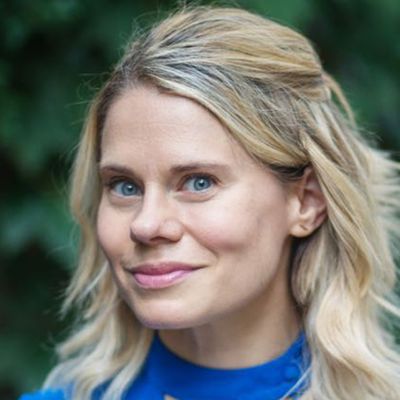

About
In this special episode, we draw from Laura’s experiences having lost both of her parents and discuss the ways in which creativity can help us to move through grief. We share thoughts on the non-linear path of grieving, and how to meet grief in the sometimes-unexpected places that it manifests. We also take a look at how profound artists like Frida Kahlo used grief in their own work. And, with examples from our lives, we examine the power of intentionally processing grief as a method of healing.
When we recorded this episode, we hoped it would be of help to others who are processing their own loss. Then came the news that our dear friend Gavin Creel had passed away. In addition to his prolific award-winning work as an actor and writer, Gavin was a longtime friend of The Spark File community and beloved by all of us. Along with Ian Axness, he was the music director of our theme songs (recorded live at The Performing Arts Project), and can be heard singing with Sophie Hearn in our closing theme. In honor of all the light he brought into our lives, we’ve dedicated this week's episode, “Grief + Creativity” to our friend Gavin.
In many ways, grief and creation often walk hand in hand. Much like the act of making something, grief is a process to be moved through. Creation can be fuel to move through grief, and grief can be fuel to create. Both require the love and support of like-minded individuals to shout “We love it! Keep going!” Most importantly, though, grief and creation share one very important ground rule: However you’re doing it, you’re doing it right.
You can listen to this week’s episode on Apple Podcasts, Spotify, YouTube, and directly on our website.
Transcript
This transcript was automatically generated and might contain errors.
[0:00] Laura Camien: The Sparkfile podcast may contain profanity and other adult content. Please use your discretion.
[0:10] Susan Blackwell: When I bump into something that inspires me, I jump in my spark file. Spark file to be something that I wanna make or how I wanna be. I pump it in my spark spa. Spark. I jump into my spark slide. Let's open up the spark file.
[0:37] Laura Camien: Welcome to the Spark File, where we believe that everyone is creative, but smart creative people don't go it alone. I'm Laura Camien, and I'm Susan Blackwell, and we are creativity coaches who help people clarify and accomplish their creative goals.
[0:52] Susan Blackwell: Hey, you should know that just by listening to this podcast, you are joining a warm and wonderful clan of creatives. But hold up, you may be asking yourself, what exactly is a sparkfile? A sparkfile is a place where you consistently collect all your inspirations and fascinations. Every single episode, we're gonna reach into our sparkfiles and we're gonna exchange some sparks. And from time to time, we're gonna talk to some folks who spark us too. And your mission, should you choose to accept it, is to take some of those sparks of inspiration and make something of your own. So without further ado, let's open up the Spark file.
[1:34] Laura Camien: Hi, Laura.
[1:35] Susan Blackwell: Hi, Suze. Hi, friends. We wanted to jump in here and tell you that this episode of the Spark File was recorded a few days ago. And it was inspired by a number of lessons that I learned about creativity and the power of creativity to heal when each of my parents passed away. Then we received news that our friend Gavin Creel passed away. Gavin received a cancer diagnosis back in July, and three months later, he is now gone. And we haven't quite wrapped our minds around this, but Laura, if I may say, you created such a beautiful episode of the podcast with this episode, and it feels like the perfect episode to share as many of us try to figure out how to process our feelings around Gavin's death or the passing of others that we may have loved and lost. Laura, I feel like you really captured something that we hope is of service to you.
[2:50] Laura Camien: That's right. That was the, yeah, the intention behind it, and not realizing just how soon we might need to be able to do it.
[2:58] Susan Blackwell: How timely.
[2:59] Laura Camien: Yeah, exactly. So one of Gavin's best friends was Sparkviler, Celia Keenan-Bolger.
[3:06] Susan Blackwell: And Celia.
[3:22] Laura Camien: Yeah.
[3:22] Susan Blackwell: And I was like, nailed it.
[3:24] Laura Camien: Celia Keenan-Bolger.
[3:26] Susan Blackwell: Correct.
[3:27] Laura Camien: Yep. Gavin Creel. Uh to he was one of those to know him was to love him.
[3:34] Susan Blackwell: Yeah.
[3:35] Laura Camien: Is to love him.
[3:36] Susan Blackwell: Yeah. He is what we would call a lighthouse person. And this is just a, I mean, I have so many wonderful memories of Gavin. And I just wanted to share one. Back in 2013, I was doing a musical. I think it was the one of the last musicals I've performed in. And I was doing my level best. The singing, the sing was probably a little bit too big for me, but I was doing my best. And I, you know, Gavin was known for being such an extraordinary singer, all singing teacher, a phenomenal teacher.
[4:21] Laura Camien: That's exactly right, Laura.
[4:23] Susan Blackwell: And um I wrote to him, and I wrote, among other things, I wrote, I wish you could be here to see this show I'm doing, Gav. It's bringing me so much joy. There are parts I'm still shaky on singing-wise, but I'm running full steam ahead off those cliffs like Wile E. Coyote. I think you would love it. And he wrote back, you are a great singer. I love your voice because it isn't just a voice, it is soul, it is story, it is communication, which is what really great singing is supposed to be. It is what makes it more than just notes and pretty vibrations saying baby.
[5:04] Laura Camien: Oh.
[5:06] Susan Blackwell: And I emailed him, I'm taping your email to my dressing room mirror. And he wrote back, I'll send the tape. And a few days later, a bulk box of Scotch tape landed on my doorstep. And I have to tell you, Laura, that was in 2013, and I am still working. It was that much tape. I am still working through that Scotch tape. I got a lifetime supply of Scotch tape to tape those beautiful affirmations to all my dressing room mirrors. Thank you, Gavin Creel.
[5:43] Laura Camien: Oh my God. What I mean. What a joy.
[5:46] Susan Blackwell: And now you get to think of him every time. You're like you could be doing anything, taping an envelope shut, and you get to smile the joy of thinking of Gavin Creel.
[5:58] Laura Camien: Every time I use the tape, I use it a lot when I'm doing the Sparkfile bookkeeping. Because I tape receipts to pieces of paper to keep track of them. And I'm always like, Gavin Creel, Gavin Creel. Gavin Creel. There's a legacy for you.
[6:14] Susan Blackwell: I've had so many creative adventures with Gavin. Um as each moment passes as I reflect on him and um the fact that he is uh taken flight off the planet. I keep remembering things that I forgot and um and how lucky I am that I got all that Gavin in my life. But one of the creative adventures we had with Gavin is baked into this podcast at the Performing Arts Project along with Ian Axness, Gavin musical directed the theme songs for the Sparkfile podcast.
[6:54] Laura Camien: Yeah.
[6:55] Susan Blackwell: And you can hear him singing the closing theme song along with Sophie Hearn.
[7:03] Laura Camien: So that was oh my god. That was a magical, magical day because he music directed um along with Ian. Hi, hi Ian. The whole group, the whole group, so that everyone in that auditorium when singing um the Sparkfile, they all of them when Lila got up, when we plucked Lila Garagna out of the audience and we were like, we heard you singing in the hallway. Wanna take a shot at this um she was shaking and he guided her through the singing of the theme song that's one we use for the opening and then he sang with Sophie on the one that we use for the closing and it was an extraordinary day.
[7:48] Susan Blackwell: Extraordinary day it was beautiful.
[7:49] Laura Camien: Yeah. Incredible to watch him in action.
[7:53] Susan Blackwell: Yeah what what a gift thank you so much Gavin Creel for your beautiful voice and your beautiful humanity we dedicate this episode of the podcast to you and to anybody else who's going through it.
[8:13] Laura Camien: I want to dedicate this little spark to all the friends that I know who are dealing with loss and grief. They're all on my mind. They're all on my mind and so I would like to share this spark with you. So I was reflecting recently on the fact that I am now part of a very particular club. It is not a club that I asked to join um but with the loss of both of my biological parents, I have no parents walking the earth. I'm now part of this parentless club. And I'm very thankful my stepmom is still with me, but my biological mom and dad have now both passed on.
[9:10] Laura Camien: And what I have discovered is that being a member of this club means that there are no more early morning phone calls on my birthday from somebody that brought me into the world who wants to be the first to say happy birthday. Um there's no concerned parent calling me when an earthquake hits New York City. There's no more checking with mom or dad to see what they might think of a big decision that I'm about to make, or no more opportunity to ask them questions about our family history or their history or my history that I can't recall or forgot to ask. No more expressions of pride from them. When I achieve something great, no more chances to get advice or a pep talk. Those are just some of the things that come to mind when I think of like what's it, what's it like to be a member of this club?
And people, I'm sure a million people have a million different feelings about it. But my mom passed away 12 years ago, and my dad passed away just one year ago. And I was thinking about the way that I grieved, the loss of each of my parents is so vastly different. One of the reasons, of course, is the difference in circumstance, the difference in like the relationships that I had with each of them. But maybe the greatest difference in my grief process is what I know now that I did not know then. And that is that creativity is an incredible healer. We can literally intentionally tap into our creativity in order to help us heal from a loss or a grief of any kind. I now know this to be true with every bone in my body. I wish I had known it when my mom passed. I did the exact opposite. My creativity like shut down and I did not access it for years. Um wow.
[11:27] Laura Camien: And I know that, you know, grief is different for everybody. You get to grieve in the way that you need to grieve. Like absolutely no judgments and what works best for you is what works for best for you. But if you're curious about how your own creativity may help you to process that grief, I would like to share some sparks just in case there's anyone out there who might need it.
[11:52] Susan Blackwell: Laura, I love this.
[11:55] Laura Camien: I love this so much. And I do feel like maybe it's because we're getting older.
[12:01] Susan Blackwell: Um who? Me?
[12:03] Laura Camien: Or just living being a human in the world. Like there is a lot of loss, yeah, uh a foot. And as a very wise friend of mine said, and they did not mean this in a negative way or a pejorative way, it's gonna keep happening.
[12:22] Susan Blackwell: That's right. It's gonna keep happening.
[12:25] Laura Camien: So I welcome any tools, sparks, you got sparks for me.
[12:30] Susan Blackwell: I'm gonna show you.
[12:32] Laura Camien: We'll see what happens.
[12:34] Susan Blackwell: But I will say that in the years between my mom's passing and my dad's passing, I learned a whole lot about the intentional way that we can approach death. And Suze, you've been a big part of that because in the early seasons of the podcast, you did sparks on two different books, The Art of Dying Well and Let's Talk About Death Over Dinner. At one point, we had to talk about like let's not have our podcast be all about death. Just kidding.
[13:01] Laura Camien: One death spark per season.
[13:05] Susan Blackwell: One death spark per season is where we limit it. So this will potentially be that.
[13:10] Laura Camien: Oh no, you fulfilled the quota.
[13:12] Susan Blackwell: Oh God. But those were both incredible sparks. And I learned so much, and it got me thinking so differently about death. And then our dear Sparkfile alum, Celia Keenan-Bolger, became an end-of-life doula. And she met with each of us to talk about our parents and how we could choose to support them and connect with them during their twilight years.
[13:39] Laura Camien: She even came back and taught a session for our Blaze class about how acknowledging our death can help us lead a more vibrant life.
[13:50] Laura Camien: And of course, all the while, for many years, I've been digging into not only my own creativity, but creativity as a whole and how it shows up in our lives, how to embrace it, enjoy it, let it flow, all of it.
[14:03] Laura Camien: So as it became clear that my dad was preparing for the end of his life, I had the choice to approach my grief with intention and really lean into my creativity and empowering myself to be intentional made such a difference.
[14:21] Laura Camien: Like I wasn't bracing against the pain, like waiting for a tidal wave to hit me.
[14:27] Laura Camien: I was like bobbing on the surface, ready to flow wherever the emotions took me.
[14:34] Laura Camien: And I'm so grateful that I had the opportunity to spend time with my dad in the months leading up to his passing.
[14:42] Laura Camien: I was able to sit with him and ask him many of the questions that Celia had provided.
[14:48] Laura Camien: I recorded his answers, I took notes.
[14:52] Laura Camien: And I really like, uh I feel such a war, just a really warm connection when I feel like when I think about that moment, because the morning that we decided to like sit down and talk, there was a caretaker in the house, and I had just met her.
[15:10] Laura Camien: And when we sat down for this conversation, my dad was beaming, and he said to her, This one's my deep thinker.
[15:17] Laura Camien: And we had such a good laugh about it because I mean, my siblings are deep thinkers too, but I think as a kid, it was always obvious and maybe even a little annoying that even you know, at Yay High, like I wanted to dig into the deep emotions.
[15:36] Laura Camien: I wanted to understand other people's experiences.
[15:40] Laura Camien: And I was highly sensitive from the beginning.
[15:44] Laura Camien: And it was like I could sense emotions in the air, you know, uh the unspoken feelings.
[15:50] Laura Camien: And in particular, if someone's words did not match their actions or their energy, I couldn't let it go.
[15:57] Laura Camien: Like I would just be, I gotta ask about this over and over again, just until we would talk about it.
[16:04] Laura Camien: Like, what is really going on?
[16:06] Laura Camien: What's happening?
[16:07] Laura Camien: Because I feel something.
[16:08] Laura Camien: And it drove my parents a little crazy, I think, because they wanted to answer with like I'm fine, or we're fine, or don't worry about it.
[16:15] Laura Camien: And I just couldn't, I could not leave it alone.
[16:20] Laura Camien: So it was nice to know some things don't change.
[16:23] Laura Camien: Um, and so dad and I really like had this what this ended up like this was my last real conversation with him.
[16:35] Laura Camien: Yeah.
[16:36] Laura Camien: And so it was it was it was really nice to be able to laugh, you know, about ourselves.
[16:43] Laura Camien: And here we are, like facing my dad's death, and I wanted to go deep and I wanted to know how he was feeling and how I could support him.
[16:52] Laura Camien: And I'll just I'll just cherish that moment like forever, forever.
[16:59] Laura Camien: So these conversations and writings were some of the first ways that I intentionally turned into my creativity.
[17:08] Laura Camien: I recorded them, I took notes.
[17:10] Laura Camien: I don't know, I didn't know then, and I don't know now what I might make of them, but yeah.
[17:16] Laura Camien: And then the weekend that dad passed, we got a call from my stepmom letting us know that it was likely, you know, that it was that it was um likely to happen.
[17:27] Laura Camien: The end was near.
[17:29] Laura Camien: And again, I turned to my creativity to honor my dad and help me grieve.
[17:34] Laura Camien: I had um recently purchased a dining table and chairs from this estate sale, and the chairs needed to be reupholstered.
[17:43] Laura Camien: And I know this is not quite the same as my dad's woodworking abilities and like building something from hand.
[17:48] Laura Camien: But listen, we're working with some creative limitations.
[17:52] Laura Camien: My skill level.
[17:54] Laura Camien: But I was using a drill and a staple gun and working on these old mahogany chairs.
[18:01] Laura Camien: And I put Merle Haggard on the speaker system, and I told Wes what I was doing, and he was like, okay, babe, just go for it.
[18:07] Laura Camien: And for hours, just listening to Merle Haggard, I just proceeded to like work with my hands and these big huge teardrops dripping from my face onto the upholstery that I'm like covering these chairs with.
[18:23] Laura Camien: And it was incredibly cathartic.
[18:25] Laura Camien: And I'll always look at those chairs and think of my dad and the way that I leaned into the pain and into the creativity every step of the way.
[18:34] Laura Camien: And it's so different to allow yourself to create in these moments where this isn't about something I need it to be, other than an expression of how I'm feeling and what I'm, you know, thinking in this moment.
[18:48] Laura Camien: I don't need it to be.
[18:50] Laura Camien: I hope this is the best writing I ever do.
[18:52] Laura Camien: I hope this is the best upholstered chair that ever was upholstered.
[18:57] Laura Camien: I guarantee you it is not bad.
[19:00] Laura Camien: But it was, it's so freeing.
[19:02] Laura Camien: It's so uh liberating.
[19:06] Laura Camien: So I have a few lessons that I learned through my grief experience that I really would like to share.
[19:11] Laura Camien: After dad passed, one of the first concepts that I grappled with in my grief process is that grief is non-linear.
[19:20] Laura Camien: I had always had the idea that it was something you could tackle and be done with, you know, cross that off the list.
[19:26] Laura Camien: I did it, I grieved.
[19:28] Laura Camien: Like in ye olden times when there was like a designated period of mourning, and then you could suddenly like wear bright colors again to signify you're officially done grieving.
[19:39] Laura Camien: Well, my stepsister Carrie sent me a poem after dad passed, and I have tried to find the writer of this poem, it but it is just listed as anonymous.
[19:49] Laura Camien: So whoever you are, I am grateful you wrote this little poem.
[19:53] Laura Camien: I'm grateful it made its way to me when I needed it, and it summed up this new understanding of grief.
[20:00] Laura Camien: Here it is.
[20:02] Laura Camien: I had my own notion of grief.
[20:05] Laura Camien: I thought it was the sad time that followed the death of someone you love, and you had to push through it to get to the other side.
[20:12] Laura Camien: But I'm learning there is no other side.
[20:16] Laura Camien: There is no pushing through, but rather there is absorption, adjustment, acceptance.
[20:23] Laura Camien: Grief is not something you complete, but rather you endure.
[20:28] Laura Camien: Grief is not a task to finish and move on, but an element of yourself, an alteration of your being, a new way of seeing, a new definition of self.
[20:41] Laura Camien: So embracing that understanding that this grief isn't something I'm going to complete and be done with was a big, big lesson.
[20:50] Laura Camien: And in case you're not aware, there are a million reasons why it's important to process our grief in a healthy way.
[20:56] Laura Camien: And that I recognize like that could be medication, that could be therapy, that could be creativity.
[21:03] Laura Camien: However, you choose to process it, it.
[21:05] Laura Camien: It's just important that you do.
[21:09] Laura Camien: It's important that you do because grief is tied to all sorts of brain functions, neurological changes, cognitive effects, stress response, even your brain's neural map can be changed by grief.
[21:24] Laura Camien: So obviously, your moods and behaviors can be impacted.
[21:28] Laura Camien: Your relationships can be disrupted and impacted by unprocessed grief.
[21:33] Laura Camien: Your physical health and mental health can be impacted as well.
[21:37] Laura Camien: Ongoing loss of sleep can be an issue, but grief can also show up as illnesses, digestive issues, muscle tension, headaches, high blood pressure, and other physical symptoms.
[21:49] Laura Camien: Wow.
[21:49] Laura Camien: Suze, I think I told you this recently.
[21:51] Laura Camien: It's been on my mind because of some losses some of our friends and family have gone through recently.
[21:58] Laura Camien: But a few years ago, I learned that it is actually possible to die from a broken heart.
[22:04] Laura Camien: Yeah.
[22:05] Laura Camien: It's rare.
[22:06] Laura Camien: It's totally rare.
[22:08] Laura Camien: So I don't say this to scare anybody, but it is a real condition called broken heart syndrome.
[22:13] Laura Camien: And it has a medical name.
[22:16] Laura Camien: Tatsuhubi Cardiomyopathy.
[22:20] Laura Camien: I'm sure I didn't get that right.
[22:22] Laura Camien: Essentially, this condition can weaken and expand the left ventricle of the heart, which makes it difficult to pump blood.
[22:30] Laura Camien: It can lead to heart failure in rare cases.
[22:33] Laura Camien: But more common is low blood pressure, arrhythmias, and other heart complications.
[22:39] Laura Camien: Wow.
[22:40] Laura Camien: Again, I heard in olden times that they would write on the tombstone of a widow, like died of a broken heart and things like that.
[22:48] Laura Camien: And I thought that was just like poetic.
[22:51] Laura Camien: Poetic, romantic.
[22:54] Laura Camien: But it turns out it's very possible their grief caused a heart condition.
[23:00] Laura Camien: Wow.
[23:01] Laura Camien: So I saw in an interview with Tyler Perry, and I think it was with Oprah, and you do know I love Oprah so much, but Tyler Perry was talking about his grief, and I think it was when his mother died, and he said this grief is a very living thing.
[23:20] Laura Camien: It visits at random.
[23:22] Laura Camien: You can't schedule it.
[23:23] Laura Camien: I tried to work it away.
[23:25] Laura Camien: I tried to drink it away.
[23:27] Laura Camien: I tried to book myself like crazy.
[23:30] Laura Camien: All it did was wait for me to finish.
[23:34] Laura Camien: So when it shows up, however it shows up, let it show up.
[23:40] Susan Blackwell: Yes.
[23:41] Laura Camien: Yes.
[23:42] Laura Camien: Yes to this.
[23:43] Laura Camien: I think I told you just earlier today, Suze, that like I'll just sometimes be making coffee.
[23:50] Laura Camien: I have a picture of my dad on the fridge, and you know, Wes will come out and he'll be like, good morning.
[23:55] Laura Camien: Hey, are you okay?
[23:56] Laura Camien: And I'm like, yep, yeah, just having a little cry about dad.
[24:01] Laura Camien: And he's like, okay, no problem.
[24:03] Laura Camien: Hug it out and move on.
[24:05] Laura Camien: And I've really, dare I say, like, loved giving myself permission to simply let it show up.
[24:14] Susan Blackwell: Yeah.
[24:14] Susan Blackwell: If I can interject, please.
[24:16] Susan Blackwell: It has been really something this past year to watch this in practice where you have like made it okay for yourself to let it rise up when it rises up.
[24:35] Susan Blackwell: And it I it's really something to see to just be like because I think we are so conditioned.
[24:43] Susan Blackwell: I'm stating the obvious, but we're so conditioned to be like, nope, I'm at work.
[24:47] Susan Blackwell: Uh get it together, get it together, get it together.
[24:50] Susan Blackwell: And and you know, you'll just like we've talked about this before, but you'll just sort of let it the cloud kind of like pass over and pass through.
[24:59] Susan Blackwell: And uh it's a great, it's it's an amazing thing to observe.
[25:06] Susan Blackwell: I I have a feeling, I don't know.
[25:09] Susan Blackwell: It's you've you've handled it with a lot of grace and kindness with yourself.
[25:16] Susan Blackwell: And I just knowing myself, I feel like I'll just want to make it all wrong for myself.
[25:23] Susan Blackwell: But uh you've done a great job.
[25:26] Laura Camien: It's tempting.
[25:27] Laura Camien: And like I said, like some other podcasts, I'll talk about how it was uh the opposite when my mom died, and I dealt with it so entirely differently, and it shut me down in so many ways.
[25:40] Laura Camien: And you know, but we live and we learn.
[25:40] Laura Camien: We live and we learn.
[25:44] Laura Camien: And it is a gift for me to get to spend my days with you and my nights with Wes Day.
[25:51] Laura Camien: I'm thinking my I don't know where that came from.
[25:59] Laura Camien: But to spend my days and my days with you and Wes because both of you are such a gift.
[26:06] Laura Camien: You are so calm.
[26:09] Laura Camien: Like if I am talking about something and tears just well up and start dripping down my face, it's just accepted, like it's okay.
[26:16] Laura Camien: We don't need to do anything or fix anything.
[26:19] Susan Blackwell: Totally.
[26:19] Susan Blackwell: They're just tears.
[26:20] Laura Camien: And um, oh, this is a sidebar about some science that I'm totally not gonna get right because I didn't I didn't research this more, but I did see a little an article about how tears underneath a microscope are different for like different formations of and different chemicals.
[26:39] Laura Camien: Yeah.
[26:40] Laura Camien: Like the tears that you cry when you cut an onion, different than the tears that you cry when you lose a parent, different than the tears you cry when you're breaking up with someone.
[26:49] Laura Camien: And it is uh your tears are a chemical release, just like you talked about in that book, burnout, um, and the ways in which we can process our emotions.
[26:59] Laura Camien: It's your it's just your body saying, uh, we have a little chemical overload here, and we're gonna release the valve and let some of this out through our tear ducts.
[27:09] Laura Camien: It's that's it.
[27:10] Laura Camien: It's such a gift to be around people who are like, I'm not scared by tears.
[27:15] Laura Camien: We're okay, everybody's okay.
[27:18] Laura Camien: So the beauty of utilizing our creativity to process this grief is that our creativity can be accessed anytime you need. I mean, my feelings of loss are gonna change and morph over time, and the way that I may choose to process and express can change and morph over time too. You know, maybe one day that's writing in my journal, maybe one day that's painting. Who knows? But it's all up for grabs. There's so many ways to apply your creativity to help you intentionally process your grief. So one of the things I did after dad passed, I worked with my family members and an incredible Spark File alum, Andrew Nielsen. Andrew, we love you so much. He helped me make a short video for my dad's celebration of life, and this whole process was such a gift that kept giving back to me a million times over because it put me in contact with relatives near and far just to get the photos, swapping stories of dad.
It had me digging into all of dad's favorite music. And I cannot say enough about the healing power of music. We all know that. That's ten other sparks for ten other days. But this whole process stirred up a ton of memories. And then I would write about those memories and be like, oh, make sure, and even just make lists like don't forget to write about this, that, and the other thing that just came up through this process. But other ways that people choose to grieve through their creativity include writing of all kinds, obviously making a music playlist, creating a shrine, photo displays, collages. People make books, photo books, or complete histories of the loved one's life. They take adventures in the spirit of the person that you lost, something they always wanted to do and never got to do, or they take a trip to spread the ashes somewhere, celebrations of life.
My stepsister Nori took some of dad's clothing and had pillows made for each of us. Susan, it was the Christmas gift that brought down the house. I mean, there was not a dry eye. My pillow is made out of one of dad's summer shirts that he wore in Florida in the Florida chapter of his life. And it has a little tag on it that says, This is a shirt that I used to wear. When you hold it, know that I am there. Love, Dad. Wow. Nori was made for all of us. And I'm like, Nori. Whoa. Thank you. And what a beautiful expression of creativity. Wow. We learned recently that a dear friend of ours is using AI to make a digital avatar of his father before he passes. Yes. I'm so moved by this idea. And so much incredible art.
I mean, listen, we can't even, there's so much through the ages that have been made that's been made from grief or as a reflection of the grieving process. Poetry, film, novels, TV shows, all of it. It's way too long of a list. But I do want to highlight a few things. Just a few days ago, as it like right on time, we got a message from one of our blazers, Mariah Grandy, who said that Reservoir Dogs, a show on Hulu right now, not the movie, but a show on Hulu, is one of the most profound and best descriptions of the impact of grief. So that went immediately on my watch list. But there's shows like Shrinking or Ricky Gervais' Afterlife, Fleabag, The Good Place, Six Feet Under. I mean, there's so many.
Frida Kahlo famously depicted her experience of her pregnancy loss at age 24 in the painting Henry Ford Hospital in 1932. It was revolutionary at the time. No one publicly or artistically expressed grief around a mother's loss of a child. There is a Japanese artist, Yamamoto, who creates this installation artwork that he makes out of salt, symbolizing purification and memory in Japan. After his sister died of a brain tumor at age 24, and his wife of 25 years died of breast cancer. Oh my God. He started making these things. And he has this return to the sea project, which began in 2006, but he uses huge amounts of table salt, like tons, to arrange in different patterns to resemble lace or sea foam or blood vessels.
And if you attend the very last viewing of the exhibition, you are invited to take handfuls of the salt and return it to the sea. And he has said that this artistic process has helped him heal from his grief, calling it a rebirth, explaining how his art is all about connecting the people and the ocean and continuing the process of healing. He said, I keep creating.
[32:47] Laura Camien: So oh my goodness. Sorry. And I think that grief, you know, there's obviously so many kinds of grief. It does not need to be the loss of a person. Someone asked me recently, did I read the book Eat Pray Love? Did I see the movie? Both. The truth is both, but Eat Pray Love because you love Julia Roberts. I do love Julia Roberts. So I was that is exactly what I said. I'm like, um, of course I saw the movie. But in this case, I actually already read the book prior to that. And I love the book. The movie wasn't in my mind the best expression of the book, but that's another story. I have a lot of side sparks on this. Sorry. That's okay. So the Eat Pray Love, I remember it because in my early 20s, I got married and quickly realized I shouldn't have gotten married.
And in this book, it starts with her grieving like the loss of this relationship that she has not yet had the courage to tell her husband to actually end. Yeah. To actually end it. And there's this whole scene of like her crying, like just in a lump in the middle of the night on the bathroom floor crying. And I just was like, oh God, I remember the pain because I could not articulate. I just knew once I said it, it would set off a chain of events. Yeah. But all about Eat Pray Love, like talk about intentionally using your creativity to work through a very profound loss and a further understanding of herself. She got the book deal based on the idea and was like, I'm gonna travel to Italy, I'm gonna travel to India, and then the book writing as she went was, you know, I'm sure it's a finely edited version of events, but it was essentially cataloging her grief process and her rebirth into her next chapter of her life.
Got it. So there is literally no end to what you could create by pouring your feelings of loss and grieving into your creative work. Just to recap some key lessons that I learned in my grief process. Grief is nonlinear and will never be complete. Whenever, however, it shows up, let it show up. You can choose to intentionally process your grief through creativity, and it is a profound way to heal. The beauty of all of this is that you can make anything, literally anything, and you can choose to keep it to yourself. You can share it just with a tight circle of friends, you can share it with the world. When you do, you can help to heal yourself and to heal others. The power of your creativity is astounding.
In his 2020 TED Talk, Ethan Hawke said this about creativity. So you have to ask yourself, do you think human creativity matters? Well, hmm. Most people don't spend a lot of time thinking about poetry, right? They have a life to live, they're not really concerned with Allen Ginsberg's poems or anybody's poems until their father dies, and they go to a funeral, you lose a child, somebody breaks your heart, they don't love you anymore. And all of a sudden, you are desperate for making sense out of this life and asking, has anybody ever felt this bad before? How did they come out of this cloud? Or the inverse something great. You meet somebody and your heart explodes. You love them so much you can't even see straight.
You know you're dizzy. Did anybody feel like this before? What is happening to me? And that's when art is not a luxury, it's actually sustenance. We need it. I think we need it collectively. I think we need it individually. And I just want to dedicate this whole spark to anyone out there. If you are processing grief of any kind, please consider giving yourself the gift of intentionally leaning into your creativity and self-expression.
[37:24] Susan Blackwell: Absolutely beautiful. Absolutely beautiful. Feels very timely and I'm so sorry for your loss and how beautifully you have processed, you've demonstrated and lived exactly what you sparked me with today.
[37:44] Laura Camien: Oh Suze, I'm glad to hear that I am proud of how I handled it this time around. I'm very thankful. And like I said, it has everything to do with the sparks that you sparked me with years ago probably season one and two. Celia's work and her like generous sharing of that work with us in both, you know, with our class and with us individually and listening to us talk about what our parents are going through. And then this whole journey of the spark file it's an extraordinary gift to really learn about the power of your creativity. Good times and bad, you know our creativity can be the greatest expression and it can be the most painful expression, but you know, just like those tears, it's like a release valve that we can use to help get those emotions up and out of us.
[38:44] Susan Blackwell: Beautiful spark. Thank you so much. Thank you for sharing.
[38:53] Laura Camien: Oh, I hope it's helpful. I really, really do. Sending my love to everybody who's going through it.
[39:00] Susan Blackwell: Well, that is it. This episode of The Spark File was made on the lands of the Lenape and the Mohican people. And as always, we hope this put another bunch of sparks in your file. Hey, listen, if there's a spark you'd like us to explore, or if you'd like to learn more about how to coach with us to accomplish your creative goals, you can email getcreative@thesparkfile.com or reach us through our website, thesparkfile.com. We will even happily take your feedback, but you know the price of admission. First, you gotta share a creative risk that you've taken recently. You can follow us on social at The Spark File and be sure to subscribe, rate, and five-star review this podcast. It really helps other listeners to find us, and we really appreciate it.
Also, if you liked this podcast, we hope you'll share it with people that you love or people that you think it would potentially help. And if you didn't like it, listen, life's too short. Life is too short and precious. So, friends, if something lights you up and gets your creative sparks flying, we are writing you a forever permission slip to make that thing that's been knocking at your door. It's your turn to take that spark and fan it into a flame. You know, you gotta take it and make it, make it beautiful.
[40:26] ♪ Musical number ♪
© Broadway Podcast Network, All Rights Reserved