

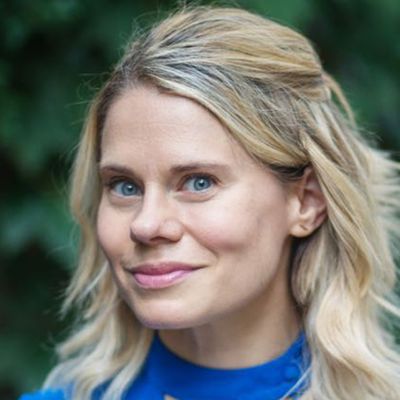
In this very special episode, Susan and Laura talk with Celia Keenan-Bolger, who reads an original piece for us about the inspiration behind Broadway Feeds Bellevue, and the beauty of community... Read More
From the show: The Spark File with Susan Blackwell and Laura Camien
Guests
About
In this very special episode, Susan and Laura talk with Celia Keenan-Bolger, who reads an original piece for us about the inspiration behind Broadway Feeds Bellevue, and the beauty of community.
Transcript
This transcript was automatically generated and might contain errors.
[0:37] Laura Camien: Welcome to the Spark File, your Spark Bank for creative inspiration.
[0:41] Susan Blackwell: I'm Laura Camien.
[0:42] Susan Blackwell: And I'm Susan Blackwell.
[0:44] Laura Camien: If you're an OG listener, welcome back.
[0:45] Susan Blackwell: Sparkler, if you're joining us for the first time, welcome.
[0:49] Laura Camien: But you may be asking yourself, what exactly is a spark file?
[0:53] Susan Blackwell: Where do I get one? What do I file in it?
[0:55] Laura Camien: These are good questions, and we do have answers.
[0:58] Susan Blackwell: A spark file is a place where you consistently collect all your inspirations and fascinations.
[1:04] Laura Camien: And if you're like us and you're making stuff all the time, sometimes the wellspring of inspiration can run a little dry.
[1:11] Susan Blackwell: We're here to refill it.
[1:13] Laura Camien: Yes, we're on the lookout for fresh ideas, images, and inspiration that spark our creativity and pique our curiosity.
[1:20] Susan Blackwell: Things that inspire us to get up off of our asses and make things like this podcast.
[1:25] Laura Camien: Or creative ordered days for your kid during a pandemic quarantine.
[1:31] Susan Blackwell: Or a campaign that uses the megaphone you have to support frontline hospital workers.
[1:36] Laura Camien: On today's Maker's Ode, we're gonna talk to someone who truly sparks us.
[1:41] Susan Blackwell: And that special someone is our first repeat guest.
[1:52] Celia Keenan-Bolger: Guys, thanks for having me back.
[1:55] Susan Blackwell: Thanks for coming back.
[1:56] Celia Keenan-Bolger: I feel like the first time that I was on this, I didn't have the pleasure of getting to listen to so many episodes.
[2:05] Celia Keenan-Bolger: So now being on the other side and having heard so many interviews and sparks, I feel like even more excited to be here.
[2:15] Susan Blackwell: Oh, Celia, thank you. You're like an OG guest as well, because you came on our podcast before we had launched any episodes, I think.
[2:26] Celia Keenan-Bolger: That's right.
[2:27] Susan Blackwell: So it was impossible to know what this was gonna be.
[2:31] Laura Camien: You might have been the second person we interviewed.
[2:35] Celia Keenan-Bolger: Is that right, Cam?
[2:36] Laura Camien: I think so.
[2:37] Celia Keenan-Bolger: I think so too.
[2:38] Susan Blackwell: That is friendship and that is willingness to be like, let's go on this adventure.
[2:43] Laura Camien: Thanks for taking a risk on us.
[2:46] Celia Keenan-Bolger: Thank you.
[2:47] Susan Blackwell: We're so glad you're back.
[2:48] Laura Camien: We're so glad you're back.
[2:49] Susan Blackwell: Before we get to the Spark File Price of Admission, Celia, can you tell us where are you?
[2:56] Celia Keenan-Bolger: How are you? What do you look like? What are you wearing?
[3:00] Celia Keenan-Bolger: Thanks for asking.
[3:02] Celia Keenan-Bolger: What if you're like, I'm wearing a ball gown?
[3:05] Celia Keenan-Bolger: I wish! I like to get real dressed up.
[3:07] Celia Keenan-Bolger: That's how I do quarantine.
[3:10] Celia Keenan-Bolger: You guys, I wish I could post a picture. It is deeply sad.
[3:15] Celia Keenan-Bolger: I'm wearing a t-shirt and pajama pants and fuzzy Birkenstocks.
[3:20] Laura Camien: Yes.
[3:22] Laura Camien: I'll take all that.
[3:23] Laura Camien: That seems like perfect quarantine wear.
[3:26] Celia Keenan-Bolger: I actually would like a picture.
[3:27] Celia Keenan-Bolger: So if you feel like sending us one, I'm gonna do it.
[3:32] Laura Camien: Does your t-shirt have any graphics on it?
[3:34] Laura Camien: Is there any writing on your t-shirt?
[3:36] Celia Keenan-Bolger: Nope. Just a blue t-shirt with no bra.
[3:39] Celia Keenan-Bolger: Stains.
[3:39] Laura Camien: Yes, no bras.
[3:41] Celia Keenan-Bolger: No stains.
[3:42] Celia Keenan-Bolger: Yes.
[3:42] Celia Keenan-Bolger: But we're, you know, just comfy.
[3:45] Celia Keenan-Bolger: But it's early in the day.
[3:47] Celia Keenan-Bolger: I mean, isn't it?
[3:48] Celia Keenan-Bolger: I feel like on the weekdays, I really task myself with getting out of the PJs and into the world.
[3:55] Laura Camien: And on the weekends, for a little delineation, I'm just like, yeah, we can all watch television and eat two breakfast.
[4:03] Celia Keenan-Bolger: Yeah, that's right.
[4:04] Laura Camien: I make that distinction as well.
[4:07] Laura Camien: Like during the weekdays, it's up, and I actually do brush my hair.
[4:11] Celia Keenan-Bolger: And so today I haven't brushed my hair.
[4:13] Celia Keenan-Bolger: Nothing.
[4:13] Celia Keenan-Bolger: I'm like, it's Saturday, and that's what I get to do on Saturday.
[4:19] Laura Camien: That seems perfect.
[4:23] Celia Keenan-Bolger: Perfect.
[4:24] Laura Camien: Yay.
[4:24] Laura Camien: And how are you doing, Celia?
[4:27] Celia Keenan-Bolger: You know, I'm doing better than I have been doing in this isolation time.
[4:34] Celia Keenan-Bolger: I feel like I don't know, maybe three weeks ago, I hit a kind of low that was like so intense.
[4:43] Celia Keenan-Bolger: Where I was like on a Zoom with my therapist, just like crying and crying and crying.
[4:51] Celia Keenan-Bolger: And I can't tell if that's just part of this, or I mean, there are so many, I have so many questions about what we're processing right now.
[5:03] Laura Camien: Yeah.
[5:04] Celia Keenan-Bolger: But I think having that conversation with her, having a conversation with John, my husband, and then I started taking something called Sam E, which was initially given to me by my acupuncturist, but is like a kind of mood lifter that I bought at the grocery store, and I have to say, on the ninth day of taking it, I was like, I feel less dull and a little lift.
[5:38] Celia Keenan-Bolger: So since then, and I don't know if that's also just like that I was able to purge a lot of feelings or like process some of the grief that I was feeling just at the beginning of all of this, but I definitely feel a little more motivated.
[5:57] Celia Keenan-Bolger: I feel like things are a little more manageable.
[6:02] Celia Keenan-Bolger: I'm still, you know, struggling enormously.
[6:08] Celia Keenan-Bolger: But there are days when I feel like there's beauty and comfort in things that were in short supply in my previous life before all of this.
[6:20] Laura Camien: How does the struggle show up for you, Celia?
[6:23] Laura Camien: Is it hard to get out of bed, or what is this?
[6:25] Celia Keenan-Bolger: How does it show up?
[6:27] Celia Keenan-Bolger: I think it's just a sort of flat sadness that I'm unfortunately, or maybe fortunately, no, I think unfortunately, like extremely high functioning inside of my depression or anxiety, which I think usually only adds to whatever thing I'm dealing with, because I'm just like, you know, you have to keep going, you have to keep going.
[6:52] Celia Keenan-Bolger: And I think it would be better maybe if my body was like, no, no, we're done for like two days, you just get to like tap out.
[7:02] Celia Keenan-Bolger: But I do think, you know, William is five, and that having a kid inside of this, like it just really in some ways I've been able to just say, like, whatever the day looks like is okay, but also there are things that I have to show up for, and it has felt when I was like at the lowest of lows that staying in bed all day was not an option.
[7:27] Celia Keenan-Bolger: Definitely make that really clear.
[7:32] Celia Keenan-Bolger: Like you literally cannot, you don't have that option.
[7:36] Laura Camien: Yes.
[7:37] Celia Keenan-Bolger: And I think there's just a lot of, it's like my lows I think show up more as sadness than anger or anxiety.
[7:54] Celia Keenan-Bolger: Like it's definitely just been like crying.
[7:59] Laura Camien: Yeah.
[7:59] Celia Keenan-Bolger: I do, I have also started taking like an hour walk every day and running at the track, kind of close to where we have an Airbnb upstate.
[8:10] Celia Keenan-Bolger: And there was a time when I would have been like, you can go fuck yourself. I'm not running, I'm not doing that damn thing.
[8:18] Celia Keenan-Bolger: But it was like something turned over in me where suddenly I was like, you know what might feel good is to move my body.
[8:24] Laura Camien: Yeah.
[8:25] Celia Keenan-Bolger: And I, you know, and but I don't say that in a like, if you're feeling bad, you should move your body too.
[8:30] Celia Keenan-Bolger: Like, I really am not.
[8:31] Celia Keenan-Bolger: I think that comes to you when you need it, yeah.
[8:35] Celia Keenan-Bolger: And it's been helpful to me.
[8:37] Laura Camien: That's great.
[8:39] Laura Camien: That is one of the things I love about you, Celia Keenan-Bolger, is your honesty.
[8:47] Laura Camien: Just your candor about this is so, I just love it and I welcome it.
[8:52] Celia Keenan-Bolger: Good job.
[8:53] Laura Camien: You're doing this podcast.
[8:55] Laura Camien: Great.
[8:57] Laura Camien: So well.
[8:58] Susan Blackwell: We're gonna keep you on.
[8:59] Laura Camien: That's right.
[8:59] Laura Camien: You get to continue on.
[9:02] Celia Keenan-Bolger: Oh God.
[9:03] Celia Keenan-Bolger: All right.
[9:04] Laura Camien: But now back to business as usual.
[9:07] Laura Camien: The Spark File Price of Admission, real quick, you have to tell us a creative risk you've taken recently.
[9:12] Laura Camien: We know that you've been taking some big creative swings these days.
[9:16] Laura Camien: So if you want to give us a taste, we'll unpack more of it in just a moment.
[9:23] Celia Keenan-Bolger: I listened to this podcast with Cheryl Strayed and George Saunders, like at the very beginning of this whole thing.
[9:30] Celia Keenan-Bolger: And he kept saying, he was like, it's not our job to process it, what we're going through.
[9:37] Celia Keenan-Bolger: It's just our job. It's an artist's job to keep the record.
[9:42] Celia Keenan-Bolger: And I feel like that resonated with me so deeply because it also took some of the pressure off that it was like, and he kept saying, you know, in 60 years, no one is gonna believe what this was.
[9:55] Celia Keenan-Bolger: And so if we don't have stories to give it context, then it doesn't mean anything.
[10:01] Celia Keenan-Bolger: Then it's just that COVID thing that happened in 2020.
[10:06] Celia Keenan-Bolger: And so I've just been really trying to write a little bit more about my experience day to day or what's come up.
[10:15] Celia Keenan-Bolger: This like some random stories that I'm remembering or thinking about inside of this isolation.
[10:24] Laura Camien: Yeah.
[10:24] Celia Keenan-Bolger: And that is not something I have ever really done before.
[10:27] Celia Keenan-Bolger: So that felt like a risk.
[10:29] Laura Camien: This goes, this dovetails in with the candor piece I was just talking about.
[10:33] Laura Camien: Not like candor and ebb, but candor like honesty.
[10:36] Laura Camien: You wrote and shared a piece recently on Mother's Day as part of a Mother's Day celebration, and your mom passed away some years ago.
[10:47] Laura Camien: And your piece was, you know, there's that time Laura's mom has passed away.
[10:54] Laura Camien: Hunter Bell, who's quarantining with us, his mom passed away in the past few years.
[11:00] Laura Camien: And that piece, I was like, this is some real talk.
[11:04] Laura Camien: I'm not parsing on anybody who like posts a beautiful picture of them and their mom and a beautiful passage on social media.
[11:12] Laura Camien: I'm not, but I was just like, this is of real service to people who share this experience with you.
[11:20] Celia Keenan-Bolger: And I shared it with Hunter because he was having a really, really hard time.
[11:25] Celia Keenan-Bolger: And I was just like, that honesty is so helpful.
[11:31] Laura Camien: So I love that you're taking great notes and your writing and your, it's very whole.
[11:37] Laura Camien: It's very honest and very whole what you're writing and sharing right now.
[11:43] Laura Camien: I really just want to say hats off to you.
[11:45] Celia Keenan-Bolger: And then I also feel like, and I know you sort of know this, but you have been like such a major help.
[11:52] Celia Keenan-Bolger: And honestly, this podcast, like my spark file and the way that I write things down and like come to inspiration, and the way that you've just sort of nudged me along has been, I feel like it was like the beginning of 2020 when I started being like, maybe I'm gonna write some more things, and that it just has been such, especially at a time when like being an actor is just non-essential, and that there are, it's like I'm not gonna do monologues in my bedroom.
[12:22] Celia Keenan-Bolger: There's no place really to be an actor.
[12:25] Celia Keenan-Bolger: And so then what does this look like creatively when the thing that I value the most in my creative life is taken away?
[12:34] Celia Keenan-Bolger: And I just feel grateful to have had a tiny foundation before all of this started with you guys and with Susan to like have a jumping off point.
[12:45] Susan Blackwell: Thank you, but I shine it right back at you because you've been doing all the work.
[12:49] Laura Camien: So, good.
[12:51] Laura Camien: Yeah, we're really proud of you.
[12:53] Susan Blackwell: We're really proud of you.
[12:55] Laura Camien: Yeah, and we're gonna dig into some of what you just talked about a little bit more.
[13:00] Laura Camien: But before we get too far ahead, for people who don't know you or didn't listen to the first episode, shame on them.
[13:08] Susan Blackwell: But how we shame you.
[13:11] Laura Camien: I know that's a first in the Spark File.
[13:14] Laura Camien: But yeah, if you didn't listen to Celia's first episode, shame on you.
[13:18] Celia Keenan-Bolger: Um, but how do you identify?
[13:18] Celia Keenan-Bolger: Double down on it.
[13:24] Celia Keenan-Bolger: Um, how do you identify creatively?
[13:27] Celia Keenan-Bolger: And what would you say that you're most well known for just to catch people up?
[13:32] Celia Keenan-Bolger: Yeah, I mean, I think I identify the most greatly as being an actor.
[13:38] Celia Keenan-Bolger: And I spent all of last year as Scout Finch in To Kill a Mockingbird on Broadway.
[13:48] Celia Keenan-Bolger: I think the theater is the place that I feel the most at home, that I love the most.
[13:55] Celia Keenan-Bolger: Um, and obviously there are all kinds of other places where I would like to be an artist.
[14:01] Celia Keenan-Bolger: And I think one of the interesting things about the Spark File and sort of talking with Susan is that I've been like, I am an interpreter.
[14:09] Celia Keenan-Bolger: I am like squarely a person who shows up at rehearsal and sees the words on the page and I have some great insights and some thoughts about where things can go, but I'm not very interested in being a creator.
[14:24] Celia Keenan-Bolger: And I would say that 2020 is a year of a little bit of shifting in that identity.
[14:31] Laura Camien: So interesting because we had this noted from, you know, from the last time we spoke and you gave the answer to that question that you were strictly interpretive.
[14:41] Laura Camien: And through the course of our conversation, we dug into that just a little bit, just inquiring minds want to know, you know, is that just because that's where your comfort level is or that's what you've always done, or is it because you think you can't originate or you don't have any interest in originating?
[14:59] Laura Camien: We just sort of explored some of that, and that was a really fun conversation to have, and we were curious, you know, has that answer evolved for you in this span of time?
[15:00] Laura Camien: And it sounds like it has shifted a bit.
[15:16] Celia Keenan-Bolger: So it is and I think it's I think in some ways the older you get it goes it goes both ways that I I have been surrounded by so much incredible art that there is a little voice that says why would you why would you think that you can write when there are people who have been doing this as long as you have been acting yeah that little vampire yeah but then there's another and what I realized is that when I figured out what I wanted to write, which I think if you're a if you're an actor, usually you're like, I guess I gotta write myself a pilot or a one woman show.
[15:55] Right.
[15:56] Celia Keenan-Bolger: And I was like, I don't know. About Emily Dickinson. Let's get to something. Actually, you you actually could, if you had any interest in it, you probably be a hell of an Emily Dickinson.
[16:07] I feel like that's taken. I feel like that one might someone's got someone's got dibs on it.
[16:12] Dibs, exactly. But I think once something opened up about like what would I actually want to write about, yeah, that not only did I find it, I didn't find myself doing the sort of compare and despair that I maybe do as an actor, it felt like in some ways the stakes were less high because I was like, I don't know, I'm not a writer. I'm just gonna put this down and I don't feel precious about it. I don't feel um overly like married to anything that's like on the page.
[16:48] And I have actually found that to be so liberating creatively that there's freedom in that for sure.
[16:54] Yeah.
[16:55] Laura Camien: I love this little shift. I love this little tectonic shift in you. And while I don't wish this global pandemic on anyone, I we are we I don't, but we are looking for how to use it as a catalyst for positive change.
[17:14] And this is one way that you are in a situation like many of us, we relate to this deeply, where our work vanished as a result of this.
[17:24] Work as we know it, work as we know it. And um, that you are just following kind of the thread of as uh Emily Fletcher, my meditation teacher would say, following charm and sort of finding what you want to talk about, and then using the time that you have now to keep record, as George Saunders would say.
[17:48] Celia Keenan-Bolger: I love that. I love that. Um, and to that end, we're gonna try something new today. Celia wrote a piece that we have asked her to read, and we're so excited for her to share what she's making and what she's written because nested within this writing, it's like a Russian nesting doll. There's there's writing that you've made, but there's also um there's also big initiatives that you've helped to make.
[18:16] And they're all uh this is this is a little bit of um those things, dovetailing. So we'll I we'd love it if you would read it and then we'll chat a bit after. So when you're ready, Celia, take it away.
[18:28] Celia Keenan-Bolger: Take it away. Oh my gosh. So I just also want to preface it. I was reading it this morning, and there's something about time and quarantine that I was like, yeah, I just wrote this like not even a month ago, and yeah, it feels to me already like a lifetime.
[18:45] So we have you know, we can do with that whatever we may, but okay, so um it's just called Broadway Feeds Bellevue.
[18:56] October 2019. Gideon Glick, Will Pullin, and I are backstage in Gideon's dressing room at the Schubert Theater in between shows of to kill a mockingbird.
[19:05] It's a Saturday evening, and we're eating our dinner that's just been delivered from Westville. For maybe the 37th time this year, I'm having chicken with a side of mushrooms and sweet potatoes, a meal that gives me enough energy to get through a two-show day and doesn't make my stomach hurt when we run from Boo Radley's house about 20 minutes into the first act.
[19:22] Today, Gideon's fiance Perry is joining us, and we do a thing that all actors do in a long-running show, talk about the audience. We tell Perry about the matinee and how the audience started a little chilly and coffee, but then audibly wept through the second half of the second act and stood up to applaud before the play was even over.
[19:39] Perry and Gideon talk about their wedding plans and how they've settled on a venue and are picking up their suits on Monday. They're getting married three weeks after we close. Perry is a doctor, and he's on a schedule where he works for a bunch of days in a row and then gets a few weeks off.
[19:54] He's about to start one of these work shifts, which means they'll be on opposite schedules and won't get to see a lot of each other. So they want to nail down the details of the wedding now. I've never spent a lot of time with a doctor, and I'm intrigued by Perry's unemotional but nuanced take on our conversations, especially around the theater.
[20:12] Despite his schedule, he's seen more Broadway shows than anyone I know, and I like hearing his response to them since he's not in the business, but sees so much.
[20:21] February 2020. I'm reading an article about medical care workers in Wuhan, China, where nurses are collapsing from exhaustion, and Li Yuan Liang, the doctor and whistleblower who tried to warn the world about the new coronavirus, has died.
[20:36] I record a track of a song at Atlantic Records for an upcoming movie I'll be shooting at the end of March. I go see my husband John in a hilarious and poignant new downtown play called Too Macho by our friend Ethan Lipton.
[20:50] As the first cases are reported in Washington State and Wisconsin, I read an article about the startling shortage of essential medical supplies in the U.S. I think of Gideon and Perry. I go to five Broadway shows because I'm a Tony nominator this year, and I'm trying to catch up on all of the shows before April when a whole new crop of productions will open.
[21:08] I think of how many of these shows Perry has already seen. I walk to a costume fitting in Green Point for a new television show I'm supposed to start shooting in March and listen to a podcast about the ongoing crisis aboard the Diamond Princess cruise ship.
[21:22] Mike Pence is appointed to lead the coronavirus task force. It makes me think about the HIV outbreak he faced in 2015 while he was the governor of Indiana when he resisted calls from his own state legislature, including Republicans, to establish a needle exchange program.
[21:38] He instead went home to prey on it. I think about that same plague and how it took the lives of so many in the New York theater community and wonder what's coming for all of us.
[21:49] I walk my four-year-old to school, and we notice that the Valentine's Day window at Rite Aid has already changed over to Bunnies and Baskets.
[21:56] March 2020. I'm set to co-host a women on Broadway event at the New Amsterdam Theater on the 10th. A week before the event, we're sent an email that asks us to disclose any international travel to China, Italy, or Iran.
[22:10] It's announced that Hillary Clinton will be the keynote speaker. As I watch backstage, she speaks about the catastrophe of November 2016.
[22:20] She talks about the months that followed and the extensive media coverage of her long walks in the woods and glasses of Chardonnay, but tells us that it was going to the theater, being transported by stories and feeling the energy of an audience that she really cherished during that time.
[22:37] More U.S. states confirm cases of COVID-19. There's almost no testing to be found in New York City. Italian hospitals are overwhelmed.
[22:46] Social media feeds slowly fill with posts about the increasingly dire situation faced by the medical workers tasked with fighting this real and terrible virus that is now clear coming for us.
[22:58] I text with Gideon, and he tells me that Perry is set to start a 12-day shift at the end of the month. At a table read for my new television show, a huge room of incredible actors struggle to know how to greet one another.
[23:09] There are elbow bumps, handshakes, and hugs. It's weird. John gets word that his run of Tumacho will end early.
[23:16] I'm mindful of the new CDC guidelines and do not attend performances of two shows that have just opened as part of my Tony nominating responsibilities.
[23:24] At a reading of a new play with music about the musician Karen Dalton, I perform for an audience that sits with two chairs between them.
[23:31] At the end of the reading, we get word that Broadway is shutting down. I start to think about how to self-quarantine in our New York apartment with my extremely energetic son William.
[23:41] Our babysitter flies back to be with her family in Washington. I buy cans of beans and pasta. We only leave the house once a day.
[23:49] William usually wants to walk uptown so we can look at the Empire State Building. The days feel long.
[23:55] I haven't spent this much time with William since he was a baby. It feels good. It feels hard.
[24:00] We start to hear rumblings about sheltering in place in New York and worry that we might not be able to leave the city and that the three of us will be stuck in an apartment and not be able to go outside for months and months.
[24:10] John suggests we try to find an Airbnb upstate. My TV show delays the start date of shooting.
[24:17] We find a house in upstate New York and pack our car full of groceries so we won't have to shop for 14 days.
[24:37] We take walks as a family. I cook our meals and wipe the counters and sweep the floors and try to come up with crafts for William.
[24:44] I think about my mother who died almost 20 years ago and how much I miss her and how comforting it would be to have her wisdom right now.
[24:52] A different March 2000. It's spring break, and I'm home visiting my family from the University of Michigan.
[24:59] My mother is lying on our couch, her face swollen and head bald as we are talking about Christopher Isherwood's novel I Am a Camera because I'm playing Sally Bowles in the Spring University production of Cabaret.
[25:10] There's a knock on our front door, and Gail Babel is standing there holding a dish of lasagna in her oven mitted hands.
[25:17] I know Mrs. Babel from Gross Point Theater, where she was a box office volunteer, and her husband Denny helped build the sets.
[25:24] My brother Andrew, sister Maggie, and I performed in the musical The Secret Garden there. Gail has set up a meal train for our family with a group of other people from the theater.
[25:35] Since my mother is exhausted and recovering from a stem cell transplant, and my father is overwhelmed and caring for his wife with cancer and his three kids, two of whom are only 12 and 14.
[25:45] Mrs. Babel decides food might be helpful right now. Flash forward, I send a text to Gideon.
[25:51] I'm thinking about you nonstop. Is there any way to send food to Perry's floor at the hospital? Could I start a meal train for him?
[25:59] Gideon responds that he's doing okay, but now living in a different apartment in the same building since Perry started working.
[26:05] Perry says it's like the wild west at the hospital. And while he likes the idea of food being delivered, he feels like there are hospitals in New York that are dealing with a greater number of patients and fewer resources.
[26:16] He suggests we get in touch with his friend Gabriella, a doctor at the intensive care unit at Bellevue Hospital.
[26:22] I remember my sister telling me that Bellevue was a hospital where no one was ever turned away. In its past, if there weren't enough beds and a sick patient arrived, they stole a bed from another unit or made a bed with parts from a hospital closet.
[26:35] At the height of the AIDS epidemic, Bellevue took care of hundreds of patients that other hospitals turned away. I think about those hospital workers and how they took care of our community in the 80s and asked Gideon to reach out to Gabriella.
[26:49] April 2nd, 2020. Victoria Myers and I are texting.
[26:54] Victoria, who I know from when she was the editor of the online theater publication, The Interval, is sending me photographs taken by Joel Meyerowitz and Stephen Shore in the 1970s and a good article from New York magazine.
[27:07] I float the meal train idea by her and explain how I want to set something up where the Broadway community can help feed the Bellevue hospital staff.
[27:15] But how between establishing a homeschool routine for William, my participation in this upcoming reading of Lips Together Teeth Apart to raise money for the Broadway Care's Equity Fights AIDS emergency fund, and finding out that artists have recently been deemed a non-essential, I'm left with a sort of flat sense of self.
[27:32] I can't find the time or energy to figure out the mail train website. She replies, I'm on it.
[27:38] Victoria makes us a page. Gideon calls four local restaurants that are still delivering in the city, one of which is our beloved Westville chicken and mushrooms and sweet potatoes for everyone.
[27:50] He figures out a plan with the owners to put in an order in the morning so that the food can be delivered at 6 45 p.m. before the night shift begins.
[27:58] We've made contact with Gabriella at Bellevue and she tells us she can pick up the delivery outside the hospital.
[28:03] I make a list of people I've worked with and love, Lynn Manuel Miranda, Kelly O'Hara, Latanya Richardson Jackson, Gavin Creel, Cherry Jones, Laura Bonante, and decide to ask them for money to start us off.
[28:16] If people see the names of these Broadway stars, I reason they might be more inclined to donate. We set our goal at $10,000, which feels possible but also scary, since so many people have lost their jobs and are stressed about money.
[28:29] The website goes live. That night I try to fall asleep but keep thinking about November of 2019 when Perry and Gideon got married.
[28:37] So many of their wedding guests were members of the Broadway community. We stood around them in a bar on the Lower East Side while they spoke their beautiful vows to one another.
[28:46] And when the ceremony was over, we all joined in a call and response version of Stephen Sondheim's Losing My Mind, led by a drag queen named Martha Graham Cracker.
[28:55] She sings, Good morning, we sing, I think about you. She sings, I talk to friends.
[29:03] We all sing I think about you. And do they know? It's like I'm losing my mind.
[29:15] In bed, my mind jumps to the glass menagerie where we would fundraise for Broadway Care's Equity Fights AIDS, and Cherry Jones would float down the aisle in her big white dress with her red bucket to collect money after every single performance.
[29:29] It is our duty, she told me. We have to raise this money.
[29:34] April 13th, 2020, 10 days later, we've raised over 100,000. I am amazed.
[29:43] I remember that tiny theater in Michigan, organizing food for my family as we moved through a collective despair, struggling to maintain something that resembled normalcy.
[29:53] I think to myself, theater people are the best people. Since I was five years old performing an Annie Get Your Gun, I have known this, and I knew it last November as I took my final bow and to kill a mockingbird.
[30:06] Celia Keenan-Bolger: Being a theater actor gives me a deep sense of belonging and community. And I think that when you feel like a part of a community, it's easy to give back and serve another community. Performing on Broadway means you see the same people eight times a week, so you end up sharing both your artistic and personal highs and lows with those people day after day. Their pain becomes your pain. Their joy belongs to you. This processing of emotion backstage on the floor of a dressing room or in front of 1,500 people is intense, but it is also unbelievably nourishing. You examine your life, you feel supported, you build a community. Like many actors I know, I grew up feeling like a bit of an outsider. And then I started doing theater, where the expressions of love, the space for big emotions, the positive feedback, they not only made me feel good about myself, but they made me feel like myself.
I wonder about all of the people who grew up feeling like outsiders, who didn't have a place to feel comfortable in their own skin or share in someone else's life experience. And it makes me think that when you don't feel seen, you feel scared. And feeling scared keeps you from reaching out and helping other people.
[31:27] Celia Keenan-Bolger: Not just because we raised so much money on this meal train that now we're not only feeding the ICU but also internal medicine and anesthesiology and are also feeding the vital cleaning staff as well. But because among them, I feel seen and valued, a feeling powerful enough to mobilize me, a non-essential person during this paralyzing, overwhelming, creatively uninspired, hard to navigate time. On some fundamental level, I knew that if I put out the call, it would be answered. That is community. And as I sit in front of my computer clicking the refresh button on the Broadway Feeds Bellevue Meal Train page and see donations ranging from five to five thousand dollars, I think that when we emerge from all of this, community is what might save us all.
[32:19] Laura Camien: Oh my God. Every episode, the open weeping. Oh, Celia. Tune in to cry with us.
[32:28] Susan Blackwell: Celia, thank you so much for sharing that. And uh I didn't I didn't want to spoil or alert it, but the amazing thing about this is sort of it is sparks on sparks and it is layers of creativity. It's the creativity of you creating this movement to feed these frontline hospital workers. And it's also your documentation of it, this beautiful documentation of it that we find so very moving.
[32:58] Celia Keenan-Bolger: Oh my gosh, thank you for sharing that.
[33:00] Susan Blackwell: Oh my gosh, thanks for giving me a place to share. Celia, this when you don't feel seen, you feel scared. I just think that that is going to resonate for so many people and be such a reminder of the importance of community and seeing each other and saying, you know, Celia, we see what you're doing. Gideon, we see what you're doing, Bellevue, we see what you're doing, how you're helping. Uh it just it just means so much.
[33:30] Celia Keenan-Bolger: Oh, thanks, guys. I think it also I've been really trying to wrap my head around the divisions in our country right now and how it feels like there is good and there is bad, and that they really believe that they are good and we really believe that we are good. And how much I think I attribute some of the behavior on the side that I'm not on to this sense of feeling scared.
[34:01] Laura Camien: Yeah, yeah.
[34:03] Celia Keenan-Bolger: I rack my brain with what might bridge that divide. And I I, you know, on my days where I'm despondent, it's because I can't think of anything that is gonna bring these two groups closer together. Um, but you know, I have better days where I'm more imaginative of solutions, but it is it really does feel so separate.
[34:27] Susan Blackwell: I think it's the arts. I mean, not to be so like when I think about even doing To Kill a Mockingbird, where I was like, that demographic of that audience, there are more people from the south at the stage door than anything I've ever experienced. And there were, I think, a lot of people in those audiences that voted for a different person than I voted for in November of 2016. And yet that audience went through something together. And I think what they took away might have been different, but like the sort of that that's something that I hold on to that I'm like when we make things that make us feel more alike than different. Yeah, that is a balm.
[35:13] Celia Keenan-Bolger: Yeah, I agree.
[35:14] Laura Camien: I also just want to jump and shout out to Victoria Myers. I feel like it is the Victoria Myers of the world who um who you it sounds like you collaborated with and she helped with the parts that you were like, I don't know how to create a website and do this.
[35:35] Celia Keenan-Bolger: Percent. Those are you know though when we can collaborate with people who complete us and sort of like fill in those spaces where we feel like we are deficient, you can really get some good shit done.
[35:50] Celia Keenan-Bolger: Oh my God, yes. And that her background and her point of view and her insight is so different from mine in Gideon's that she's like an essential part of the whole thing because she brings a totally different point of view.
[36:06] Susan Blackwell: Yeah I know that this time you had you talk about in the piece how you had all of this beautiful it seems like very exciting work that was all lined up and I can only imagine how excited you were to do that work and how um what a loss it must have felt like when each of those things sort of evaporated out of uh the necessity of the times we're living in I should add also I've heard you say how some of the things that you've been invited to participate in you're sort of like I don't want to necessarily read a play on Zoom. It doesn't it's not exactly um giving me that satisfaction that I'm seeking. But my hope is that talking about these very real stories in this piece that you just shared with us and the piece that you wrote around Mother's Day, uh, that they are giving you an opportunity to have that deeper sense of creative satisfaction and self-expression, even though it may not look exactly like work that you have done previously.
[37:12] Celia Keenan-Bolger: Yes, I really do feel that way. I also I was I did an interview a couple days ago, and they asked me what like how when do you feel the closest to being an actor? And I was like, you know, when I feel the closest being an actor is when I'm talking like on a FaceTime call or on the telephone to the people that I love. And I was like, what is that? Like what, why is that? And I was like, I guess, yes. And I think telling stories and reexamining things from our past, yes, it takes it like brings up something in me that feels more deeply artistic than almost anything else that I've gotten to do.
[37:57] Laura Camien: Yeah.
[37:57] Celia Keenan-Bolger: That real meaningful engagement, yes, and analysis.
[38:02] Laura Camien: Yeah.
[38:03] Celia Keenan-Bolger: Yeah, exactly. Like a really, really good like table work session.
[38:13] Susan Blackwell: Yeah.
[38:15] Celia Keenan-Bolger: Yeah. I like that. I like that. It's good to know that stuff because in this time when you may be separated from what has been the source of your self-expression and creative satisfaction, it's good to be able to identify alternatives. So I'm I'm proud of you for even continuing the search.
[38:34] Laura Camien: Yeah.
[38:35] Celia Keenan-Bolger: Yeah. I think there's a lot of people struggling with that, you know. To be an actor must there be an audience, you know, and uh and and what so if the audience cannot gather, where does that leave you? But I think you're right in that it does go back to the storytelling and the doing the work, the dissecting of the of humanity, because that's really what we're all trying to do as artists is like dig into this meaty stuff that we've been given to work with and figure out what it's all for.
[39:11] Susan Blackwell: Yeah, which leads to this question, Celia. We've asked you this before, but your answer may have changed in the light of these new circumstances. What's it all for?
[39:22] Celia Keenan-Bolger: Human connection.
[39:25] Laura Camien: Word.
[39:26] Celia Keenan-Bolger: I mean no question. Yeah. That to me feels like it's something I have always known about myself, but like there's something about the social isolation of this moment that that is the thing that I long for.
[39:43] Susan Blackwell: That's a good what's it all for? That's a good one. Celia, going deep.
[39:48] Laura Camien: Um what can you give us a juicy tidbit of something? Who or what that is sparking you these days?
[39:57] Celia Keenan-Bolger: I am like on a real podcast jag. So it's a bender. I really am. I can't, I like haven't been watching television. I haven't been watching movies, but I I really, really recommend Cheryl Strayed's Sugar Calling podcast, where she calls different writers who are over the age of 60 to try to get their wisdom about what to do in the middle of tragedy. It is like amazing good. Oh my gosh. It's so good.
[40:31] Laura Camien: Yes.
[40:32] Celia Keenan-Bolger: I've also really been enjoying Brene Brown's podcast, which feels like it came just at the nick of time. I was like, Brene, have you been planning this or did you respond to me to this? Uh I'm amazed. So really, yeah. And then I feel like um I read Glennon Doyle's book, Untamed, which I also really like.
[40:57] Laura Camien: Why is that? What is that about?
[40:59] Celia Keenan-Bolger: It's about her experience of leaving her husband and marrying a woman, and sort of really fast, she just tells the story about how she takes her kids to the zoo, and uh they're like, we're gonna do a cheetah run, and they bring out a dog, and they're like, is this a cheetah? And she everybody's like, no. And they're like, This is Lila or whatever her name is, and we're she teaches this cheetah Doris how to be, and and watch, Lila is gonna chase this pink puppy on the back of a Jeep. So then Doris will know how to do it, and the Labrador chases, like they run the Jeep around the zoo, and he chases the little pink puppy or whatever it is that's tied to the back of it. And then they're like, Okay, now watch Doris do it.
And then Doris chases this dirty puppy strapped to a Jeep. And Glennon Doyle is like, if a cheetah can be told that this is what her purpose is in the world, then the rest of us are fucked. Because if a cheetah can be tamed out of herself, then the rest of us have to sort of try to untame all of the learning that we have metabolized over our lives to become our most essential selves.
[42:23] Laura Camien: Oh.
[42:24] Celia Keenan-Bolger: Oh, that's that's that's all right.
[42:28] Laura Camien: Glennon Doyle. Good.
[42:29] Celia Keenan-Bolger: These are good sparks. Um Celia, you are a balm for our soul. Amazing. And thank you so much for joining us again. And for all the work you've been doing during this time, your activism, your creativity, your honesty, inspiration. You're a human walk and talk and spark, Celia Keenan-Bolger.
[42:35] Celia Keenan-Bolger: Thanks for watching.
[42:35] Laura Camien: Thank you.
[42:54] Celia Keenan-Bolger: Thank you. Appreciate it.
[42:56] Susan Blackwell: I guess that's it. We hope that this put another bunch of sparks in your file. Listen to us. If there is a spark you'd like us to explore, or if you've taken a spark and you fanned it into Creative Flame and you'd like to share that, or if you have a question for us, need some advice, write to us at thesparkfile at gmail.com or submit it through our website, thesparkfile.com. We will even happily take your feedback, but you know the price of admission. First, you have to share a creative risk that you have taken recently.
[43:26] Laura Camien: That is correct. Um, if you need us, you can find us on social media at the sparkfile. And if you want more sparky numbs, be sure to subscribe, rate, five-star review this podcast. If you like it, share it with people you love. If you didn't like it, I don't know, Celia, what are you saying to your critics these days?
[43:45] Celia Keenan-Bolger: I say just keep making your own thing and see how that goes for you.
[43:54] Susan Blackwell: If something tickles your fancy and gets your creative juices flowing, we are writing you a forever permission slip to make that thing that's been knocking at your door. It's your turn to take a spark and fan it into a flame. You gotta write it, then review it, rehearse it, then run through it. You gotta choose to use your voice, and Broadway feeds Bellevue it. You gotta take it and make it Celia.
[44:25] Celia Keenan-Bolger: Thank you, Celia.
[44:27] Laura Camien: Thank you guys.
[44:29] Celia Keenan-Bolger: When I bump into something that inspires me, I dump it in the spark fire. Spark could be something that I wanna make or how I wanna be. I'll pump it in the spark fire. Spark. I jump into my spark five. Let's open up the spark fire.
© Broadway Podcast Network, All Rights Reserved