

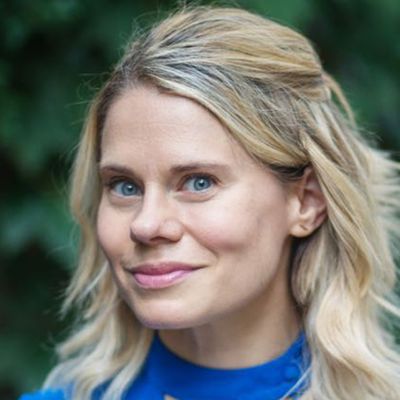
Episode #19 is brimming with sparks of creativity as Susan and Laura talk theater with TONY Award winner, Celia Keenan-Bolger. Celia shares her origin story, how she learned she was a bridge-builder, and the freedom of owning her desire to win a TONY award... Read More
From the show: The Spark File with Susan Blackwell and Laura Camien
Guests
Featured Shows
About
Episode #19 is brimming with sparks of creativity as Susan and Laura talk theater with TONY Award winner, Celia Keenan-Bolger. Celia shares her origin story, how she learned she was a bridge-builder, and the freedom of owning her desire to win a TONY award. Celia's theatrical career spans To Kill a Mockingbird to Glass Menagerie, Putnam County Spelling Bee, Peter and the Starcatcher, The Light in the Piazza and so much more.
Transcript
This transcript was automatically generated and might contain errors.
[0:38] Laura Camien: Everybody, welcome to The Spark File, your one-stop sweet shop for creative inspiration.
[0:42] Susan Blackwell: I'm Laura Camien and I'm Susan Blackwell.
[0:44] Laura Camien: And if you're joining us for the first time, welcome.
[0:47] Susan Blackwell: You may be asking yourself, what exactly is a spark file?
[0:50] Laura Camien: Where do I get a spark file?
[0:52] Susan Blackwell: What do I have file in it? These are awesome questions.
[0:54] Laura Camien: And we've got some answers.
[0:56] Susan Blackwell: Yes, we do. A spark file is the place where you consistently collect all of your inspirations and fascinations.
[1:02] Laura Camien: And if you're like us and you're making stuff all the time, sometimes the wellspring of inspiration can run a little dry.
[1:09] Susan Blackwell: We are here to refill it. So we're on the lookout for fresh ideas, images, and inspiration that spark our creativity and pique our curiosity, things that inspire us to get off our asses and make things like this podcast.
[1:22] Laura Camien: Or a Tony Award-winning performance.
[1:24] Susan Blackwell: Or even a conscious kick-ass relationship with our siblings.
[1:30] Laura Camien: On today's Makersode, we're gonna talk to someone who sparks us.
[1:34] Susan Blackwell: And that someone is a little lady.
[1:37] Laura Camien: I like to call Celia Keenan-Bolger.
[1:40] Susan Blackwell: Celia, welcome to The Spark File.
[1:44] Celia Keenan-Bolger: You guys really good work. Really good work.
[1:48] Susan Blackwell: And we're out. What if the introduction was the entire time?
[1:50] Laura Camien: Thanks for coming.
[1:51] Celia Keenan-Bolger: Just a micro pod. We just wanted you to watch us doing that.
[1:56] Susan Blackwell: How'd we done when you're released?
[1:58] Celia Keenan-Bolger: Thank you for everything.
[2:00] Laura Camien: Thanks. We're so happy to have you heard you spark us.
[2:03] Celia Keenan-Bolger: Oh my gosh. So much, so much.
[2:06] Laura Camien: So we kind of want to start at the beginning. Would you give us a little bit of your backstory?
[2:10] Susan Blackwell: And in particular, in relation to creativity, and when you started to think of yourself as like, yeah, I might, I might be a creative person.
[2:21] Celia Keenan-Bolger: Uh-huh. So I grew up in Detroit, Michigan.
[2:25] Laura Camien: Okay.
[2:26] Celia Keenan-Bolger: And my grandparents on my mother's side lived like two blocks away, and we were very close with them.
[2:33] Celia Keenan-Bolger: And they were very, um, we were like all pretty poor, but there was like a cultural sort of rigor, particularly from my grandparents.
[2:33] Celia Keenan-Bolger: There was like a lot of reading and a lot of records and a lot of like music, and my grandmother played the piano.
[2:50] Laura Camien: What do you remember? Like, what record did you wear out?
[2:54] Celia Keenan-Bolger: Oh my god. Well, The Sound of Music.
[2:57] Laura Camien: Oh that little gym jam.
[2:59] Celia Keenan-Bolger: I mean, remember that tournament. Um, there was like a hello muddle, hello father Alan.
[3:05] Laura Camien: Yes, yes, it was that bad guy.
[3:07] Celia Keenan-Bolger: That was like so like comedy records, yes, musicals.
[3:10] Laura Camien: And would you listen as a family?
[3:12] Celia Keenan-Bolger: Oh, yeah. Well, the I would be after my sister was born, which was when I was around six years old, they I just went over to their house all the time.
[3:19] Celia Keenan-Bolger: So it was really the three of us. Like my mother at one point I remember being like, get out of the house.
[3:24] Laura Camien: Yes.
[3:25] Celia Keenan-Bolger: But she was like, but you can't invite yourself to spend the night.
[3:28] Celia Keenan-Bolger: And so I would just like do a whole bit. Maybe this is when I first found myself being creative.
[3:32] Celia Keenan-Bolger: Where I would sit at the dinner table with my parents around and say, I love to spend the night at your house.
[3:39] Celia Keenan-Bolger: You know what I love about this house, grandma, grandpa? Spending the night.
[3:42] Celia Keenan-Bolger: Spending the night would be.
[3:44] Laura Camien: And they would say, Well, would you like to spend the night to me?
[3:46] Celia Keenan-Bolger: And then I would lie in bed with them while they would read a chapter book to me.
[3:51] Celia Keenan-Bolger: And my grandfather would cry.
[3:53] Celia Keenan-Bolger: My grandfather was then incredibly emotional and highly evolved. Sensitive.
[3:59] Laura Camien: Oh, what a sweet.
[4:00] Celia Keenan-Bolger: Like what book Little Women is the first one that shut down.
[4:04] Laura Camien: Come on.
[4:05] Celia Keenan-Bolger: God damn.
[4:06] Laura Camien: I know. Your grandparents would read you Little Women and your own.
[4:10] Celia Keenan-Bolger: Yes.
[4:10] Laura Camien: Yes.
[4:10] Celia Keenan-Bolger: He was, I mean, it's so they were special.
[4:14] Celia Keenan-Bolger: They were. My grandmother was like a genius who grew up on a farm.
[4:19] Celia Keenan-Bolger: Who her sisters were like, You're never ever gonna get married.
[4:22] Celia Keenan-Bolger: Because you're like a marmy librarian type.
[4:25] Celia Keenan-Bolger: And then she met my grandfather, and they found this gym.
[4:28] Laura Camien: Yeah.
[4:28] Celia Keenan-Bolger: And they were like, and then they had seven kids.
[4:32] Laura Camien: So many kids.
[4:33] Celia Keenan-Bolger: Why so many kids?
[4:34] Laura Camien: They had seven.
[4:35] Celia Keenan-Bolger: That's how you do it then, right?
[4:36] Laura Camien: I guess.
[4:37] Celia Keenan-Bolger: I guess.
[4:38] Laura Camien: Holy moly.
[4:40] Celia Keenan-Bolger: Where did your mom fall in that?
[4:41] Celia Keenan-Bolger: She was the she was a twin, and she was the second oldest.
[4:46] Laura Camien: That's so interesting.
[4:47] Celia Keenan-Bolger: We were talking about Zachary Quinto's aunts, the twins.
[4:52] Laura Camien: Yeah, it's the twins.
[4:58] Celia Keenan-Bolger: And so that was sort of the like the aun.
[5:02] Celia Keenan-Bolger: I mean, I saw I met them all the time.
[5:04] Celia Keenan-Bolger: They were always around.
[5:06] Celia Keenan-Bolger: So that was they were sort of the first exposure, just like as a kid to art and music.
[5:15] Celia Keenan-Bolger: And then my parents took me to a children's theater production of The Sound of Music.
[5:19] Laura Camien: Okay.
[5:19] Celia Keenan-Bolger: And I was like, I want to do that thing.
[5:21] Laura Camien: Do you remember how old you were?
[5:23] Celia Keenan-Bolger: I think I was five.
[5:24] Laura Camien: And you were like that thing.
[5:26] Celia Keenan-Bolger: And I remember the woman sitting next to me, like I couldn't quite sit still.
[5:29] Celia Keenan-Bolger: And the thing that I remember the most is that I kept kicking the woman next to me.
[5:33] Celia Keenan-Bolger: And she would like move my little foot back to where it was supposed to be.
[5:36] Celia Keenan-Bolger: And then like 20 minutes later, she would move my little foot on.
[5:40] Laura Camien: That's honestly, I mean, that's my main memory of the sounding scene.
[5:45] Celia Keenan-Bolger: But simultaneously inside, you were like, that's me. I'm gonna do that.
[5:48] Laura Camien: Yes.
[5:50] Celia Keenan-Bolger: Did you have a sense?
[5:51] Celia Keenan-Bolger: I Cam's, this is a question for you too.
[5:53] Celia Keenan-Bolger: Okay. I'll start by saying, I actually, when I was younger and I would see things on stage and watch things on television, I would think that I want to do that, and I'm pretty sure I can do it better than you.
[6:06] Celia Keenan-Bolger: Like soap offless.
[6:07] Celia Keenan-Bolger: I was like, this is hack.
[6:08] Celia Keenan-Bolger: Yeah.
[6:08] Celia Keenan-Bolger: And I can do it better than you.
[6:10] Laura Camien: Yeah.
[6:10] Celia Keenan-Bolger: Or I had the version of that that was like, I really hope someone gets sick tonight, and that they just pull someone from the audience.
[6:17] Celia Keenan-Bolger: Is there a little girl?
[6:18] Celia Keenan-Bolger: And the audience is a good idea.
[6:19] Celia Keenan-Bolger: No problem.
[6:19] Celia Keenan-Bolger: I would be happy to take this person on the stuff.
[6:22] Laura Camien: I feel like I still at this at my tender age have fantasies like that.
[6:26] Celia Keenan-Bolger: That's awesome.
[6:27] Laura Camien: Did you ever feel like when you could watch it?
[6:28] Celia Keenan-Bolger: I did.
[6:29] Celia Keenan-Bolger: I felt like you, I was like, oh no, let's go back.
[6:32] Celia Keenan-Bolger: I'll say that line.
[6:33] Celia Keenan-Bolger: I'll give that to you.
[6:35] Laura Camien: I was like, yeah, I'm so bad.
[6:36] Celia Keenan-Bolger: That's when you started having that feeling of like I could do that.
[6:42] Laura Camien: Yes.
[6:44] Celia Keenan-Bolger: I want to ask you when you reflect back in your life in its entirety, is there a defining moment that you sort of feel like my life before this, my life after this?
[6:55] Celia Keenan-Bolger: Do you divide your life up like that?
[6:57] Celia Keenan-Bolger: It's funny. I don't know that I've really thought about this.
[6:59] Celia Keenan-Bolger: It's such a good question.
[7:01] Celia Keenan-Bolger: I do remember I had like a crazy summer before eighth grade.
[7:07] Celia Keenan-Bolger: This is not where I thought we were going.
[7:10] Celia Keenan-Bolger: Where we found a dead body down by the river.
[7:13] Laura Camien: And it's changed.
[7:16] Celia Keenan-Bolger: Where I was um my parents found this thing called the Peace Child Foundation.
[7:21] Laura Camien: You know about the Peace Child Foundation.
[7:23] Celia Keenan-Bolger: We've no, we haven't talked about it.
[7:24] Celia Keenan-Bolger: I know up with people something like that.
[7:26] Celia Keenan-Bolger: It was basically so there's this um philosophy in Papua New Guinea when there are tribes that are feuding, that they send a child from each tribe, they like swap tribes.
[7:37] Laura Camien: Wow.
[7:38] Celia Keenan-Bolger: And that that child like lives among the people.
[7:41] Celia Keenan-Bolger: So that as they are pursuing conflict resolution, they have this child with them.
[7:48] Celia Keenan-Bolger: Unbelievable.
[7:49] Celia Keenan-Bolger: And that they're holding this child as part of like how they treat the other side.
[7:55] Celia Keenan-Bolger: So this whole idea was then this was still during the cold war.
[7:59] Celia Keenan-Bolger: So they were like, we'll do the same thing with the United States and the Soviet Union.
[8:03] Laura Camien: Oh.
[8:04] Celia Keenan-Bolger: So I went to Russia as a peace.
[8:09] Laura Camien: Yeah.
[8:10] Celia Keenan-Bolger: Oh my god.
[8:11] Celia Keenan-Bolger: I think for like $2,000 that we had to pay that we had like a fundraiser that my parents like through so we could raise money.
[8:18] Celia Keenan-Bolger: And I went to Russia with these other Americans with like 15 other Americans, and we made this play with Russians in Russia.
[8:25] Laura Camien: Wow.
[8:26] Celia Keenan-Bolger: And then I came back, and then I did a production of Runaways.
[8:32] Celia Keenan-Bolger: And it was like that moment was where I was like, oh, theater up to that point.
[8:36] Celia Keenan-Bolger: I had just been like, theater is the fucking best.
[8:39] Celia Keenan-Bolger: And singing and musicals are the best.
[8:42] Celia Keenan-Bolger: And I love it. I love it.
[8:44] Celia Keenan-Bolger: And this was like, it was like a more serious moment where I was like, oh, wait, it could it can also be transformative, or it can have it can be deeper or more important than just like singing and dancing and stuff.
[8:57] Laura Camien: Yes, like social impact.
[8:58] Celia Keenan-Bolger: I'm curious how that I mean I would love to hear you talk more about I feel like you live this.
[8:58] Celia Keenan-Bolger: I feel like you embody it how that summer, that summer in Russia with that and and then Elizabeth Swedos, is that who that is?
[9:14] Laura Camien: Um how that impacted you creatively because I feel like you live this now.
[9:21] Celia Keenan-Bolger: Interesting.
[9:22] Celia Keenan-Bolger: I think you know what I the first thing that comes to my head is the otherness of it all that I was like, I felt so on the outside.
[9:34] Celia Keenan-Bolger: Even though I was very much on the inside of both of those experiences, there were so many others, like the obviously with the Russians, that we were constantly trying to find like what is the shared space?
[9:46] Celia Keenan-Bolger: Like where do we, where does the Venn diagram come together?
[9:50] Celia Keenan-Bolger: And then in Runaways, like they sort of did a thing where it was like a bunch of kids from inner city Detroit and then some kids from the suburbs.
[9:58] Celia Keenan-Bolger: And of course, I lived in Detroit, but I was white, and all the rest of the kids from the suburbs were white, but all the kids from Detroit were black.
[10:07] Celia Keenan-Bolger: And so they were trying to do this thing that was like, you know, how can we, what are these like shared experiences?
[10:12] Celia Keenan-Bolger: And I felt like particularly in that Runaways experience, I was like, I can I I'm actually as comfortable hanging with the black kids as I am with the white kids.
[10:22] Celia Keenan-Bolger: And like, can I be a little bridge in this creative process so that like all we don't all like sit at different tables at lunch?
[10:31] Laura Camien: Yeah.
[10:33] Celia Keenan-Bolger: I don't know if this is really a good answer to this question, but it's I I will also say, not to leave the witness, but I will also say that I feel like you give so um right now, I don't know when y'all are listening to this podcast, but right now Celia is performing in To Kill a Mockingbird a Tony Award-winning tone, a scalp finch.
[10:54] Laura Camien: And um and I feel like you have brought so much of like this thoughtfulness to the underpinnings and all the surrounding, you know, when I listen to you talk about it, when I watch your performance, I feel like this eighth grade summer lives in that 100%.
[11:15] Celia Keenan-Bolger: And that I'm not sure I've ever had an experience where I was like, oh, I feel like my whole life like led to this, that like I was going to be like using all of these resources that I've accumulated that aren't just about like doing shows.
[11:33] Celia Keenan-Bolger: That's right. That are like actual like different creative experiences and just being like a human in the world.
[11:39] Laura Camien: Yes.
[11:39] Celia Keenan-Bolger: That suddenly, which is why I think it's also been so like gratifying for me, and also that maybe I've had so much success in it.
[11:47] Laura Camien: Yeah.
[11:47] Celia Keenan-Bolger: Yeah.
[11:48] Laura Camien: That makes sense.
[11:49] Celia Keenan-Bolger: You got those good deep roots.
[11:51] Laura Camien: Yeah.
[11:51] Celia Keenan-Bolger: Those good eighth grade Russian roots.
[11:53] Celia Keenan-Bolger: Oh my God. Well, being a bridge in general, like there's so many applications for that in life that could be useful and in this particular industry, but bridging, you know, between castmates who have come from disparate, you know, experiences, bridging between the audience, just that like bridging between, I'm just thinking right now, like between the creatives and the laborers.
[12:21] Laura Camien: That's right.
[12:22] Celia Keenan-Bolger: Yeah, that's like being a person that is able to really navigate that relationship, I think has served me like as much as all of my technique or whatever I like bring to the table. Yeah, there's something about this is like a little sidebar. Please enjoy my ramblings. I've been thinking a lot about something I heard a long time ago, which is sometimes like if you have unresolved pain and old wounds that haven't been processed, it can be really hard, nigh on impossible to like lift up your head and look out and acknowledge other people's experiences and be of service to other people. And so sometimes it takes like cleaning up that stuff inside to like lift your head up and just like with a like clear eyes and a full heart Friday night lights.
Friday night lights, like being a service to other people. And there's something about, and I'm not saying that your life has been pain-free and trauma-free, because I know that is not true, but there's something about your family and the way that they raised you that they prioritized it. I think from an early age, like to lift up your head and to be empathetic and to like be that bridge.
[13:37] Laura Camien: Yeah, I think that is true.
[13:39] Celia Keenan-Bolger: And the butter your breath is so nice, but it really does like when I think about it, it goes back. I feel like everybody's story of their grandparents is like, yeah, you just can't. There are certain things you can't talk about with my racist, homophobic grandparents.
[13:51] Laura Camien: Yes, right.
[13:52] Celia Keenan-Bolger: And then I'm like, I have that. No, and I don't understand like what they understood.
[13:59] Laura Camien: Right.
[14:00] Celia Keenan-Bolger: Because they're before their time in a way. It was all of that. You're talking about like both of your a very empathetic grandfather and a grandmother who read a lot, which I think does open the eyes up.
[14:11] Laura Camien: That's true, and like gives you access. If you read a lot, it really does give you, depends on your what you're reading, but it can give you a lot of access to the world and a lot of different viewpoints and dimensions. Um I will say thank you to I assume your grandparents have passed. Thank you to the bones.
[14:31] Celia Keenan-Bolger: My imaginary tipping bones of your grandparents. Because they I think they did they your whole family is so like your siblings are solid as fuck.
[14:39] Laura Camien: You know what I will say though is that I think actually about my siblings. I talk about this in therapy all the time. That there is with a family like this, there comes um that the way that you process big feelings or pain is very, very healthy. Like everything is talked about, but there is not necessarily a ton of room for like sloppy emotion.
[15:07] Celia Keenan-Bolger: Interesting.
[15:08] Laura Camien: And that that is a place, I mean, I think it's part of why I love being an actor so much as that. Because you can scare around.
[15:13] Celia Keenan-Bolger: Correct.
[15:14] Laura Camien: That's right. But that is something I think about a lot as a parent, that I'm like, it's not about like go get yourself together and come back to me, or don't just we're not doing that in this family. Because if we're as well adjusted and and strong and empathetic as as they were, I do think the one sort of blind spot in there is a emotional mess, is not something that we're I appreciate you telling the tale. I appreciate you c you like telling the truth about that. Um because I I don't know, don't mean to like deify them, but that's interesting.
[15:50] Celia Keenan-Bolger: Yes, but you still get your yah yas out on stage, so there's a heck job.
[15:54] Laura Camien: Yes.
[15:55] Celia Keenan-Bolger: When you reflect on what you've created so far in your life from this moment to the beginning of you, what is the thing that you are with the most proud of?
[16:07] Laura Camien: And the most that I'm the most proud of creatively, or just yeah, let's do creatively.
[16:15] Celia Keenan-Bolger: Um it might be to kill a mockingbird. That's a crazy thing to say. You know what's fun. You're doing it right now.
[16:24] Laura Camien: That's right. You're doing it right now. Why why is that crazy?
[16:28] Celia Keenan-Bolger: I just because it's happening right now. Savor it. What about it? I mean, there's obvious things I can imagine people would be proud of to you know to be a part of it, but how does that live for you?
[16:40] Celia Keenan-Bolger: I think in the ways that we just talked about, because it felt like I was bringing so much of myself. Yes, it synthesized so many parts of you and so many superpowers and so many interests and so many things that make your heart beat faster.
[16:55] Laura Camien: Yeah.
[16:56] Celia Keenan-Bolger: And that is like so nourishing. Yeah. And I also think the fact that I'm a little bit older now, and that there was a way that I felt in this process, and maybe it's because I've worked with Bart two other times, but that I'm not sure director to kill a mocking bird.
[17:15] Laura Camien: Correct.
[17:15] Celia Keenan-Bolger: Tony Award winner. Not for to get a mocking bird. Um that I knew I could be, I think my whole identity of being an actor in the past is like just be fucking cool, be easy, be a collaborative collaborator. Don't take up all the air in the room because we've been in those rooms where and I was like, just be cool, and then when you need help, you'll get it because you haven't asked for it the whole time.
[17:46] Laura Camien: That's right.
[17:47] Celia Keenan-Bolger: You're saving it. Saving.
[17:48] Laura Camien: Yes.
[17:49] Celia Keenan-Bolger: And I really, really did not do that this time. But I was like, I am gonna be difficult as far.
[17:55] Laura Camien: What?
[17:55] Celia Keenan-Bolger: Yes. And tell me more.
[17:58] Celia Keenan-Bolger: That I felt like I was with somebody who could take it.
[18:01] Laura Camien: That he actually you had a relationship.
[18:03] Celia Keenan-Bolger: Yes. And that I learned about myself that like my version of being difficult, as it turns out, is not that difficult. It's not that difficult. I can't even imagine. I feel like it goes straight back to the thing with your grandparents, the blind spot.
[18:16] Laura Camien: That's right.
[18:18] Celia Keenan-Bolger: No, get yourself together, then come back, and then we'll have a conversation, young lady.
[18:22] Laura Camien: Yes.
[18:22] Celia Keenan-Bolger: But no, you were like, I'm gonna bring some mess and I'm gonna bring some I'm gonna keep asking. Like, and I think every other show I have done, there comes a scene or a moment in either the play or the musical where I'm like, what is going on here? Like, what is this moment? What is this? I hate this. Anyone know what this is? I don't know how to do this. Night after night, I'm hitting my head against the same moment.
[18:45] Laura Camien: Yeah, yes.
[18:46] Celia Keenan-Bolger: And then I was like, I am going to do my best for there to be zero moment like that in this show. And you guys, I mean, there are things that I'm still always like, this is like thorny, but I have, and I think what's so amazing about Bart is that he was not there to solve problems, he was there to ask more questions. That he was like, I think we just have to like keep that he he wasn't he was never like it's this. He was like, I don't know. I don't know, let's sort of lead you to I don't know, let's put it on the question list. Or he would come back the next day and he was like, I read this thing, and it made me think about that thing you were asking about, and you should read this thing.
[19:23] Laura Camien: That's so collaborative.
[19:23] Celia Keenan-Bolger: Very collaborative. Wow, I love hearing that. Wow. So, okay. So the thing you're proudest of to kill a mocking bird, real time realness, I love it. Can you trace it back to the original spark? Did you love this book? Had you been exposed to it as a younger person? What was the original To Kill a Mockingbird Spark?
[19:41] Celia Keenan-Bolger: Spock. Spock. That's how I pronounce it. Also, this is, I mean, there are like two parts of this. And one is that it was like one of the first books that I remember my mother reading to me. Shit balls. That she that it was like a chapter book when before I could read chapter books. That's amazing. So that was amazing. And then the other is that when I was auditioning for my first play ever, The Grapes of Wrath at the Hillbury Theater in Detroit, Michigan, they asked for a monologue, and I was like, I don't really know what a monologue is. And I was like, it's just a lot of talking. And my mother was like, Well, there's that speech on to kill a mocking bird when she like sees Mr. Cunningham. That's a lot of talking. And like, you could just do that speech. She just ripped the page right out of the house. Went through the book and was like, okay, I can take that.
[20:30] Laura Camien: So you did it as a like when you were weak for your first play edition. Did you get the part?
[20:35] Celia Keenan-Bolger: Did you book?
[20:36] Laura Camien: You booked.
[20:38] Celia Keenan-Bolger: So that was the initial baby spark when you were a baby. And then how did it meet you at this point in your life?
[20:45] Celia Keenan-Bolger: Well, I got a call to come play this part. Well, no, I got a call. They were, you know, it had been announced, and they were like, would you do uh Aaron Sorkin a favor? And I was like, I will do that. I will do that. Sure. And they were like, obviously, they're going to cast kids in this part because they're right. Because it's to kill a mockingbird. But he needs to work on the play. And would you just come and read the first draft out loud? Yeah. Interesting so that he can work on it. Because they're just they they're not giving advanced copies, but yeah, smart.
[21:20] Laura Camien: That's right.
[21:21] Celia Keenan-Bolger: Yep. And help him understand where he needs to work on. Wow. And then you'd read that at a round a table. And he decided. And were they like you got the job?
[21:32] Celia Keenan-Bolger: Going back. Yeah. That's amazing. Did they did you get a call from your agent? Is that how you found out?
[21:38] Celia Keenan-Bolger: I got an email from Scott Rudin.
[21:40] Laura Camien: Wow.
[21:40] Celia Keenan-Bolger: Wow. Yes.
[21:41] Laura Camien: That's awesome.
[21:43] Celia Keenan-Bolger: And you say yes, will I do a favor? Yes, I will. What are the terms?
[21:49] Laura Camien: Exactly.
[21:50] Celia Keenan-Bolger: That's right. Tell me more. It was many. Um it's like the un I don't know. The universe was like there's something about the synthesis of all this for you. Yeah, enjoying very much.
[22:01] Laura Camien: That's right. It all feels so right.
[22:04] Celia Keenan-Bolger: So can we look at the flip side of that for a second? Is there anything? Because this all feels like it happened so easily. But for the mere mortals among us, myself included, is there anything that you struggle with when it comes to creativity that you'd be willing to share for the rest of us?
[22:22] Celia Keenan-Bolger: I don't really struggle with any God. I mean it's all effortless. One of the things I will say this just sidebar like one of the things I do love about you is how authentic and honest you are about like when things give you the strugs. You'll you'll sort it. I feel like you're pretty good about like like sorting it out in real time. And like a screen for people to know because a lot of people that we work with and who are listening are, you know, who frankly hit a bump in the road and are like, well, I guess if it was meant to be, there wouldn't be any bumps in the road. And that's just not true.
[22:57] Laura Camien: No, I think in some ways, the higher the the more bumping you get, the more bumps. They're different bumps. No money, more problems.
[23:09] Celia Keenan-Bolger: So what do you tell me? Well, I suppose I mean where to even like where to begin. Let me think of like right now in my life, what I am feeling is what how does one follow up this experience? That's interesting. Because I am not only like so enormously gratified inside of it, but I've also gotten a lot of attention sort of externally. Right. And it feels like the next thing is extremely important. And a little bit of what we were talking about before you started the interview of like, okay, I have this wonderful moment.
[23:52] Susan Blackwell: Don't fuck it up. So like that's what I was saying to Celia. I was like, do not fuck this up. And then I flipped the table on it always really scary. Something like that. We were just saying, like, it, you know, now I have to choose wisely.
[24:03] Laura Camien: Yeah.
[24:04] Susan Blackwell: And that it feels like, and the truth is, I mean, I think I know this in my bones, like the next decision will be the right decision. Like it's just no such thing. But in this moment, I feel an enormous amount of pressure to pick the right follow-up. We were actually having this conversation with Zach, and I'm sure he's had this conversation with you because you all are dear friends. But he was saying how after he did—was it Angels? He felt this—he felt the need to do, or it might have been, no, it was Glass Menagerie. He felt the need to do, he was like, I gotta do a movie. I gotta do like a big movie. But he had a lot of things. And he was like, he said he was on the plane to do the movie, and he was like, I don't want to be wrong choice.
[24:47] Celia Keenan-Bolger: Yeah.
[24:48] Susan Blackwell: Um, because he had a set vision of like it'll be theater than movie, theater than movie. And he thought he had to stick to it because he had made that picture. So what we're trying to say to you is it's gotta be a movie and it's gotta be an action. I remember training for it. It was—I mean, this is also something that I am at odds with in myself, which is that right now the most important next thing I can do for myself is recharge the battery, which is one of my least favorite things to do.
[25:21] Celia Keenan-Bolger: You like to be out in the world.
[25:22] Susan Blackwell: But here's what I want to say to you. I think another—not to add like just rub salt into your wound, but I think another potential challenge is this has been—this project is the synthesis of so much that inside you, so much like that gives you a visceral response, so much that makes your heartbeat faster, so much that you care about. It's all sort of braided together in this beautiful project, and it's so—it's sort of like, yeah, I do think you have to examine like what else makes my heart beat fast. And that that is actually more important than what a person who has been in a hit show who wins a Tony does next.
[26:01] Laura Camien: That's true.
[26:01] Susan Blackwell: Because I think the brain immediately is like, well, you obviously have to get a television show.
[26:08] Laura Camien: So it's a franchise, right?
[26:09] Susan Blackwell: Yeah, it's an action franchise. I want Celia Kids Marvel or nothing. I want her to be the next Bond. That's my pick.
[26:18] Laura Camien: Um, I have a question. Like, what is—what's one of the biggest failures that you have or challenges? It can be a challenge, it can be failure that you have faced. And how have you processed it and how has it impacted your creativity now?
[26:37] Celia Keenan-Bolger: I mean, I would say in general, my—the thing that I am constantly disappointed in myself about, or not constantly, but fair amount, is just follow-through. That like I am—I just I was at this benefit last night that these women put together, those hysterical women in society, and I was like, I will show up to any of these things, but I cannot make the thing. Like I am—and I—it like even extends like I'm such an interpreter. Like I am a creator, I am a straight-up interpreter.
[27:14] Laura Camien: Do you do you look at yourself? Do you think that reflects poorly on you? Are you like, this is who I am, and I embrace it?
[27:20] Celia Keenan-Bolger: That's who I am, but I do think there are so many things, both like politically and creatively, that I'm like, I've got this great fucking idea, and nothing's ever gonna happen. Here's my idea. You okay, you take this Tony Win, you just blow up, you get that franchise, you get that action franchise, your next James Bond. Then you create a projection production company, and you can have those great ideas, and then your team can execute that one maybe.
[27:44] Laura Camien: Well, that's the thing, yeah.
[27:45] Celia Keenan-Bolger: Yeah, maybe it has, yeah. I mean, I think you're a benevolent leader. Do you not have the desire out of curiosity? You're like, oh, it is a great idea, but I just like I don't want to make it, or do you feel like I couldn't make it?
[27:58] Celia Keenan-Bolger: Okay, that's a really good question. Thanks for the case. Because they're hard to—um they are hard to sort of separate because I was talking about this last night also with Betty Gulpin, where I was like, I'm now at an age, it's the whole Ira Glass thing where it's like now I've just—I’ve been around so many talented people and people operating at a very high level, why on earth would I throw my hat in the ring with zero—like for to write something say, but my thing is like if you're—if that's not how you move, are moved to move, I'm like then why are you trying to like, yeah, right, shove a square peg into a round hole? And I think that is also a—it's a tricky thing because it's like you have to create your own content, you have to create your own content, and I'm like this guy over here is interested in interpreting somebody else's content word, but that's—you know.
[28:01] Laura Camien: Yeah. Do you share those ideas with anyone though? Because like a collaboration partner who could put words on the paper for you to interpret?
[28:01] Celia Keenan-Bolger: It's funny, I have been trying. I was just—I can't remember where I was. It was like a some social justice situation, but that they were talking about saying ideas out loud and the importance of speaking ideas in a room that just to be like that—that will carry maybe someplace else, yeah, and so that's what we're trying to do here.
[29:26] Susan Blackwell: Yeah, we're just like we're—we're not gonna do is here's gonna do all the things that you know we're just sharing sparks and if somebody wants to write that screenplay, write it. If somebody wants to organize that political activism campaign, do it.
[29:39] Celia Keenan-Bolger: Yeah because we have other stuff that we're doing.
[29:41] Laura Camien: Yeah, yeah that are taken but we don't want those ideas to be lost, you know. Someone's gonna stick to someone, and they're gonna be like that.
[29:50] Susan Blackwell: You think they're gonna dedicate the spark file?
[29:52] Celia Keenan-Bolger: I think that's your next big project. Welcome, Celia. Um what is—what is the thing you need to do before you're done? Is there a thing like a big idea or a role? Like, is there a thing that you need to do before you're done?
[30:13] Celia Keenan-Bolger: I mean, I'm again, I'm just gonna go with the first thing that comes to mind. Which is that I would get to like do like some sort of repertory situation where I was playing a bunch of different roles at one time.
[30:28] Laura Camien: Oh you will get snatched up. You say the word, people will be like, we've got your repertory right there.
[30:35] Celia Keenan-Bolger: They would be so—they would be so lucky to have you.
[30:38] Susan Blackwell: Right now, people will begin to build seasons around. Guthrie Theater appeared. We've got a spark for you, have we got a spark for you? Her name is Celia Keenan. We're making some calls tomorrow.
[30:48] Celia Keenan-Bolger: I mean, I don't know that I really knew that about me either. We're learning in real time.
[30:53] Laura Camien: That's right.
[30:53] Celia Keenan-Bolger: That's really cool.
[30:54] Laura Camien: Yeah. Any chance? This is sidebar, but any chance you have any idea of what some of those shows would be in rest?
[31:01] Celia Keenan-Bolger: Oh, I feel like two of them would be new, and one of them would be old.
[31:05] Laura Camien: I thought you were gonna say two of them would be news.
[31:08] Celia Keenan-Bolger: And I was like, that's interesting.
[31:09] Laura Camien: And nudity and nudity.
[31:11] Celia Keenan-Bolger: So L Calcutta, newsies.
[31:15] Laura Camien: This is gonna be an amazing season for the Guthrie.
[31:19] Celia Keenan-Bolger: Sorry, Guthrie.
[31:21] Susan Blackwell: Celia, I have to ask you this question that sometimes haunts me. Every so often I just kind of get kicked in the gut with this question out of nowhere. And the question is, what's it all for?
[31:29] Celia Keenan-Bolger: Oh my god.
[31:29] Susan Blackwell: What's it all for? It always surprises me when it comes up, and I'm like, there you are. What's it all for? Do you have a sense of you're working real hard? What's it all for?
[31:45] Celia Keenan-Bolger: I mean, truly. I would say selfishly, what it's all for is creating a community of artists and relationships that are like the most important thing.
[32:03] Laura Camien: You really aren't gonna be a co—that's how you do what's it all for?
[32:07] Celia Keenan-Bolger: That's it right there.
[32:08] Susan Blackwell: Nice. Finally, what is sparking you these days? I feel like you're sparking a lot of people with your sparkish sparkiness.
[32:15] Celia Keenan-Bolger: That's right on stage and also just like in your social media, etc. But girl.
[32:23] Celia Keenan-Bolger: I will say this is a um a hard question because my uh bandwidth for um like even taking in—that's the truth right there.
[32:36] Celia Keenan-Bolger: Yeah, it is. I did just start watching When They See Us.
[32:41] Laura Camien: Oh you did, I did, and I it's so good and so hard, and I think in a strange way, like I do have a higher threshold, like I'm enjoying The Handmaid's Tale.
[32:54] Celia Keenan-Bolger: Well, they're like, what the fuck are you watching that for? It's too hard right now. And similarly, but uh I feel like that show is like both nostalgic to me and for something that I never experienced.
[33:10] Laura Camien: Which one? When They See Us?
[33:12] Celia Keenan-Bolger: Ava Duvernay, if you're listening to the sound of our voices, Ava. Thank you.
[33:16] Laura Camien: Thank you for the sparks.
[33:19] Celia Keenan-Bolger: Thank you. Thank you. I also will just say, in an effort to get off my phone a little bit more, I've read like 10 books in the last one. The last one I just read was called Ask Again, Yes.
[33:32] Laura Camien: You ask again.
[33:33] Celia Keenan-Bolger: Ask Again, Yes. Do you know who wrote that?
[33:35] Laura Camien: Her name is Mary Beth Keene.
[33:37] Celia Keenan-Bolger: I love the way you pulled that out of your ass.
[33:38] Laura Camien: Yes, goodness.
[33:39] Celia Keenan-Bolger: Nice. I gotta say, my line is next, and that is thank you so much.
[33:39] Laura Camien: Thank you.
[33:45] Celia Keenan-Bolger: I don't want this to be show. But we, you, one of us has a really fancy show to do.
[33:53] Susan Blackwell: And it's not Laura.
[33:58] Laura Camien: That's right.
[33:58] Susan Blackwell: We're losing a co-host today, and that's really sad. This little Norwood Club. We're recording today at the Norwood Club, so thanks for letting us sit in this fancy room on 14th Street and record this podcast.
[34:07] Laura Camien: Thanks, Norwood.
[34:08] Susan Blackwell: That's it. Suckers, we hope this put another bunch of sparks in your file. If there's a spark that you'd like us to explore, if or if you've taken a spark and you fan that little spark into a creative flame and you'd like to share it, won't you email us at thesparkfile@gmail.com or submit it through our website.
[34:24] Laura Camien: That's right. We've got a website. And be sure to subscribe to this delicious podcast.
[34:29] Susan Blackwell: Wherever you get your podcasts, subscribe, rate, and review. And if you like this podcast, share it with people that you love. And if you didn't like it, share it with people you wish ill upon.
[34:41] Laura Camien: If something tickled your pantsy today or got your creative juices flowing, we are writing you a forever permission slip to make that thing that's been knocking on your door.
[34:52] Susan Blackwell: It's your turn to take a spark and fan it into a flame. You gotta fillet it. You gotta sauté it. You gotta turkey baste it. You gotta Elmer to paste it. You just take it and make it.
[35:06] Celia Keenan-Bolger: When I bump into something that inspires me, I dump it in the spark files. Could be something that I wanna make or how I wanna be. I pump it in my spark files. I jump into my spark files. Let's open up the spark fire.
© Broadway Podcast Network, All Rights Reserved