

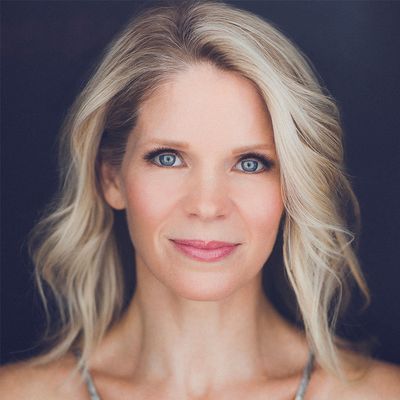
On this episode of The Spark File, Susan and Laura connect with the extraordinarily talented and kind human being, Kelli O'Hara. Kelli shares a valuable artist life hack -- her backstage self-talk. You won't want to miss her secret for beating performance anxiety!.. Read More
From the show: The Spark File with Susan Blackwell and Laura Camien
Guests
Featured Shows

About
On this episode of The Spark File, Susan and Laura connect with the extraordinarily talented and kind human being, Kelli O'Hara. Kelli shares a valuable artist life hack -- her backstage self-talk. You won't want to miss her secret for beating performance anxiety!
Transcript
This transcript was automatically generated and might contain errors.
[0:38] Laura Camien: Welcome to the Spark File, your one-stop vaudeville act for creative inspiration.
[0:42] Susan Blackwell: I'm Laura Camien.
[0:43] Susan Blackwell: And I'm Susan Blackwell.
[0:44] Laura Camien: If you're joining us again, welcome back, Sparkler.
[0:47] Laura Camien: If you're joining us for the first time, welcome.
[0:49] Susan Blackwell: But you may be asking yourself, what exactly is a spark file?
[0:52] Laura Camien: Where do I get one?
[0:54] Susan Blackwell: What do I file in it?
[0:55] Laura Camien: These are good questions, and we do have answers.
[0:57] Susan Blackwell: We do.
[0:58] Susan Blackwell: A spark file is the place where you consistently collect all of your inspirations and fascinations.
[1:04] Laura Camien: And if you're like us and you're making stuff all the time, you know that sometimes the wellspring of inspiration can run a little dry.
[1:12] Susan Blackwell: That's why we're here to refill it.
[1:14] Laura Camien: We're on the lookout for fresh ideas, images, and inspiration that spark our creativity and pique our curiosity.
[1:20] Susan Blackwell: Things that inspire us to get up off of our booties and make things like this podcast.
[1:27] Laura Camien: Or a performance that brings new life to a classic character.
[1:31] Susan Blackwell: Or a concert that expresses your heart through another's lyrics.
[1:35] Laura Camien: Or a family of kind, clever creatives.
[1:38] Susan Blackwell: Or a seemingly effortless singing voice that sounds like the love child of a bird and a bell.
[1:45] Laura Camien: On today's Maker Sode, we're gonna talk with someone who truly sparks us.
[1:49] Susan Blackwell: And that special someone is Kelli O'Hara.
[1:52] Susan Blackwell: Kelli, welcome to the Spark File.
[1:57] Kelli O'Hara: Does this make me a sparkler?
[1:59] Susan Blackwell: Yeah.
[1:59] Kelli O'Hara: Yes!
[2:01] Kelli O'Hara: Oh my god, I love your boots.
[2:03] Susan Blackwell: Oh, thank you.
[2:03] Kelli O'Hara: I was just about to change them actually.
[2:04] Kelli O'Hara: Thank you for the reminder.
[2:07] Kelli O'Hara: Always a wedge.
[2:09] Kelli O'Hara: Always a wedge.
[2:09] Kelli O'Hara: Always a wedge.
[2:10] Kelli O'Hara: Always a wedge with you.
[2:11] Kelli O'Hara: I'm you know, never not a wedge.
[2:13] Kelli O'Hara: Sneakers.
[2:14] Kelli O'Hara: I feel like just for the folks that are listening at home, we should probably it's just an ug boot.
[2:19] Kelli O'Hara: That's an ug boot.
[2:20] Kelli O'Hara: And I can't find it again.
[2:21] Kelli O'Hara: I need a new pair.
[2:22] Kelli O'Hara: These are so old.
[2:23] Kelli O'Hara: But you remember yours in my torso problem, right?
[2:25] Kelli O'Hara: With your legs and I can't believe you brought away.
[2:29] Kelli O'Hara: Because it makes me in case you were wondering, Kelly O'Hara's uh how tall are you?
[2:33] Kelli O'Hara: I'm I'm saying it.
[2:35] Kelli O'Hara: I'm five, four and three quarters.
[2:37] Susan Blackwell: Okay.
[2:38] Susan Blackwell: That sounds inspirational.
[2:41] Kelli O'Hara: Five's six.
[2:42] Susan Blackwell: But I would say I'm a full head taller than you standing.
[2:45] Kelli O'Hara: But when we sit down next to each other, you're so long waisted that we are.
[2:49] Kelli O'Hara: I'm a full head taller than you.
[2:53] Susan Blackwell: I think you're misremembering.
[2:54] Susan Blackwell: I think I'm a full head taller than you when we flip.
[2:57] Kelli O'Hara: Um but wait, we're getting ahead of ourselves.
[2:59] Laura Camien: Yes.
[2:59] Laura Camien: Oh, yeah.
[3:00] Laura Camien: Uh Kelly, the Spark File Price of Admission, you know, we need to hear real quick a creative risk that you have taken recently.
[3:10] Kelli O'Hara: Uh I guess I would have to say that I've been delving back into some classical singing.
[3:17] Kelli O'Hara: Which is my background, is my is my degree in college, but it is extremely scary to me.
[3:24] Kelli O'Hara: This fall I did Summer of 1915 by Barber with the New York Philharmonic.
[3:29] Kelli O'Hara: And it's like a I don't remember how many minutes it is, but it's it's in English, thank goodness.
[3:34] Kelli O'Hara: But it's it's an art piece.
[3:35] Kelli O'Hara: It's an art song, and and learning it.
[3:38] Kelli O'Hara: Uh yeah, when you do that, you're off book, right?
[3:41] Kelli O'Hara: You don't have the music.
[3:42] Kelli O'Hara: No, I was off book and uh off mic in Geffen Hall.
[3:47] Laura Camien: So you're just spinning that voice out to the back row.
[3:50] Kelli O'Hara: I'm do the attempt is there to spin that voice out to the background.
[3:54] Kelli O'Hara: Uh so I did that for four or five nights.
[3:56] Kelli O'Hara: We did it again out of town.
[3:58] Kelli O'Hara: Uh, you know, those kind of things.
[3:59] Kelli O'Hara: I want to push myself.
[4:01] Kelli O'Hara: I want to get to the end of it and say I did that, but whether or not I should be, or that sort of thing.
[4:07] Kelli O'Hara: But that is a risk, and I took it and I'm happy I did at this point.
[4:11] Laura Camien: When you were in the middle of that risk, how does risk show up for you?
[4:15] Kelli O'Hara: Well, I put this in the same category as singing opera again.
[4:18] Kelli O'Hara: I've done a couple of operas at the Met now.
[4:21] Kelli O'Hara: And one night on the Met stage, right down center in front of the entire orchestra.
[4:28] Kelli O'Hara: I know where that is, sure.
[4:29] Kelli O'Hara: Uh during a bit of reset, I went up in a t it's in Italian.
[4:34] Kelli O'Hara: I was doing Così fan tutte.
[4:35] Kelli O'Hara: And I mean, I haven't gone up like that even in my Broadway career or concert career, maybe ever.
[4:41] Laura Camien: Did you know as you approached it, did you know you didn't have it?
[4:45] Kelli O'Hara: Yes.
[4:46] Kelli O'Hara: I knew that I was headed straight for the world.
[4:49] Kelli O'Hara: I didn't know what my name was.
[4:50] Kelli O'Hara: It was one of those blackouts.
[4:51] Kelli O'Hara: I didn't know where I was.
[4:52] Kelli O'Hara: So my way to there was no prompter, which they often have prompters, but they decided not to because it was such a it's such a well-known opera, and everybody knows it except for me.
[5:01] Kelli O'Hara: Because I learned it when you're talking about it.
[5:04] Kelli O'Hara: No, so I stood there with the person who I sing with, and but it was just me.
[5:09] Kelli O'Hara: It was just long, long rest like, you know, just in front of an audience.
[5:12] Kelli O'Hara: Yes, Italian.
[5:13] Kelli O'Hara: Wow.
[5:13] Kelli O'Hara: So I stop and then I think to myself, just open your mouth and it will come out.
[5:19] Kelli O'Hara: So I started to sing gibberish on the Met stage.
[5:23] Kelli O'Hara: Oh, rickaloo, fashion.
[5:26] Kelli O'Hara: Stopped, realized that wasn't working.
[5:29] Kelli O'Hara: Oh stood there for what seemed like another eternity.
[5:33] Kelli O'Hara: And Christopher Maltman, who is the best guy in the world, who's playing Don Alfonso, knew his cue line because everybody knows their cue line.
[5:41] Kelli O'Hara: And he said, "Ingloria."
[5:42] Kelli O'Hara: And I said, "Ingloria," and walked off the stage.
[5:46] Kelli O'Hara: That's all I could do.
[5:47] Kelli O'Hara: I walked off thinking, please tell me this was please tell me this was a nightmare.
[5:53] Kelli O'Hara: And I'll wake up from it.
[5:54] Kelli O'Hara: And I it wasn't, and it happened, and I'm over it.
[5:57] Kelli O'Hara: And I went on to do like nine more performances.
[6:00] Kelli O'Hara: But I did it.
[6:01] Kelli O'Hara: I did it on the Met stage even.
[6:03] Kelli O'Hara: I did that.
[6:03] Kelli O'Hara: Go big.
[6:05] Laura Camien: Tell me a little bit about how we get to I'm over it.
[6:08] Kelli O'Hara: How did you get there?
[6:11] Kelli O'Hara: Well I had to get back up on the horse.
[6:13] Kelli O'Hara: I had to get back up on the horse, and that's exactly what happened because I think the next performance was the HD filming.
[6:22] Kelli O'Hara: The next was on a Tuesday night and Saturday.
[6:25] Kelli O'Hara: You know, and I was already nervous going on in with the Italian.
[6:28] Kelli O'Hara: Um I learned everything.
[6:29] Kelli O'Hara: I mean, I'm telling you, I had it backwards and forwards.
[6:31] Kelli O'Hara: I think over and over again, if I had just gone back to the beginning of my phrase, perhaps if I had just turned in a circle, I would have, you know, how many times I had stood in my living room and just started the phrase over and over again.
[6:41] Kelli O'Hara: But I couldn't, I couldn't figure out where I was.
[6:44] Kelli O'Hara: So what I did was now, granted, for the next for the entire rest of the run of the show, which is in total like 11 performances, I went over that thing.
[6:53] Kelli O'Hara: I did that whole thing that you do where you go over it and you go over it.
[6:57] Kelli O'Hara: But I learned this trick.
[7:01] Kelli O'Hara: Well, there wasn't, there is no prompter.
[7:03] Kelli O'Hara: There's no person.
[7:04] Kelli O'Hara: Okay.
[7:04] Kelli O'Hara: They didn't use a prompter for that show.
[7:06] Laura Camien: Oh, a prompter is a person in the box.
[7:09] Kelli O'Hara: Literally, their head is that's right.
[7:10] Kelli O'Hara: I was thinking of something sort of like a something.
[7:13] Kelli O'Hara: No, I know.
[7:13] Kelli O'Hara: Well, a teleprompter.
[7:14] Laura Camien: Okay, yeah.
[7:15] Kelli O'Hara: Um, I began this conversation with myself, and I now use it all the time.
[7:19] Laura Camien: Please tell us.
[7:20] Kelli O'Hara: It is on the side of the stage, and it goes a little something like this.
[7:24] Kelli O'Hara: You have done your work.
[7:26] Kelli O'Hara: You are here because you earned it.
[7:28] Kelli O'Hara: You can do this, and you will walk away having succeeded.
[7:32] Laura Camien: Oh.
[7:32] Kelli O'Hara: Oh, wow.
[7:34] Kelli O'Hara: And it works, my friends.
[7:35] Kelli O'Hara: It works.
[7:36] Kelli O'Hara: For the most part, it works because you set you tell basically, and it it accompanies this.
[7:42] Kelli O'Hara: Shut up.
[7:44] Kelli O'Hara: Shut up.
[7:45] Kelli O'Hara: You are here because you earned it.
[7:47] Kelli O'Hara: You have done your work, and you will walk away from it having succeeded.
[7:51] Laura Camien: Now it's not always perfect, but I'm telling you, if I literally say shut up, really to my head, it disrupts it.
[7:59] Kelli O'Hara: Well, I'm just I'm to I'm in charge.
[8:00] Kelli O'Hara: Yeah.
[8:01] Kelli O'Hara: Not you.
[8:01] Kelli O'Hara: Yeah, I'm in charge.
[8:03] Kelli O'Hara: I guess my heart is in charge of my head or something.
[8:05] Kelli O'Hara: I mean but I I had to because I was killing myself.
[8:07] Kelli O'Hara: I was pacing with nerves.
[8:10] Laura Camien: I'm gonna make this our new ringtone.
[8:11] Kelli O'Hara: Oh my gosh.
[8:12] Kelli O'Hara: Shut up.
[8:13] Kelli O'Hara: Shut up.
[8:14] Kelli O'Hara: You have done your work.
[8:15] Kelli O'Hara: You've done your work.
[8:16] Kelli O'Hara: You you've earned the chance to be here.
[8:18] Laura Camien: Yeah.
[8:19] Laura Camien: Anyway.
[8:20] Laura Camien: I'm nervous right now just talking about it.
[8:22] Susan Blackwell: I thank you for sharing that.
[8:24] Susan Blackwell: I feel like thanks for taking us on that little adventure ride.
[8:27] Susan Blackwell: I feel like that is news people can use.
[8:30] Laura Camien: I think so.
[8:31] Laura Camien: Like if we say nothing else from this point, this is a wrap on this episode of the race episode.
[8:36] Susan Blackwell: But seriously, oh, sorry, Kelly, you are now admitted into the Spark file.
[8:40] Susan Blackwell: That was a definite price of admission.
[8:43] Laura Camien: Okay.
[8:44] Laura Camien: Uh, we should say we're recording today backstage at the extraordinary United Palace, located in New York City at 175th in Broadway.
[8:50] Laura Camien: We feel extremely fortunate to be hosted by this beautiful historic theater.
[8:55] Susan Blackwell: It is truly a cathedral of creativity.
[8:58] Kelli O'Hara: It is.
[8:58] Kelli O'Hara: I feel lucky.
[8:59] Laura Camien: Um, for people who don't know you, Kelly.
[9:02] Laura Camien: Here's a two-part question.
[9:04] Laura Camien: When people say, What do you do?
[9:07] Laura Camien: How do you identify yourself creatively?
[9:11] Kelli O'Hara: Um it's that's funny.
[9:13] Kelli O'Hara: It depends on who I well, I'm a I'll say sometimes at home, like I'm an artist, we're artists.
[9:18] Kelli O'Hara: My husband and I are just artists.
[9:19] Kelli O'Hara: Oh, that's what I say.
[9:20] Kelli O'Hara: Because if you get into I'm an actor, you get this look like, oh because they don't know me, so they'll say she's not a working actor.
[9:29] Laura Camien: When you say at home, you don't mean in your living room.
[9:31] Laura Camien: Do you mean No, I mean in the town where I live in the house, like in your neighborhood where you live, yeah, or with the city.
[9:36] Laura Camien: If you're meeting other parents, that sort of thing.
[9:38] Kelli O'Hara: Got it.
[9:39] Kelli O'Hara: Sometimes I'll say, um, I'm a singer.
[9:42] Kelli O'Hara: Uh sometimes I'll say I'm an actor, but most of the time it's just, you know, we're artists.
[9:47] Susan Blackwell: And love it.
[9:48] Laura Camien: What are you most well known for?
[9:50] Laura Camien: So, like when people do know something, what is it typically?
[9:53] Kelli O'Hara: See, that's a repertoire.
[9:54] Kelli O'Hara: I bet it could be Sex and the City.
[9:56] Kelli O'Hara: You're kidding.
[9:57] Kelli O'Hara: I had one line in the you were beautiful.
[9:59] Kelli O'Hara: In the second looked in that movie.
[10:01] Kelli O'Hara: I had just had a bit anyway.
[10:02] Kelli O'Hara: Thank you.
[10:02] Kelli O'Hara: That's very nice.
[10:03] Kelli O'Hara: You had that sidebund.
[10:05] Kelli O'Hara: Oh, they were they were good with the makeup.
[10:08] Kelli O'Hara: Let me tell you, it was yes.
[10:09] Kelli O'Hara: I mean, you're pretty cute to begin with, not to objectify you, but then you I was like, but then they put some like filter on you and stuff.
[10:16] Kelli O'Hara: No, but uh no, I'm I'm kidding.
[10:18] Kelli O'Hara: I bet it is funny when uh when you talk about people know knowing who you are, if they've seen anything on television, that's gonna be 10,000 times more than all the 20 years of theater work you've ever done.
[10:30] Kelli O'Hara: You've done so much Broadway.
[10:34] Kelli O'Hara: As you just mentioned, you sing on the stage of the Metropolitan Opera.
[10:37] Kelli O'Hara: You have a pretty uh active concert career.
[10:42] Laura Camien: Um that's how others know you.
[10:45] Kelli O'Hara: Of all the things that you have created so far, what are you most proud of?
[10:50] Kelli O'Hara: Well, you know I'm gonna say my babies.
[10:52] Kelli O'Hara: Oh I created those in my tomtes.
[10:56] Kelli O'Hara: Uh I've got a 10-year-old boy Owen and a six-year-old daughter Charlotte.
[11:00] Kelli O'Hara: I can't believe they're 10 and 6.
[11:02] Laura Camien: Meaning that are those babies, they're big growing, they're like little weeds.
[11:06] Kelli O'Hara: Are they kind?
[11:06] Kelli O'Hara: Are they not?
[11:07] Kelli O'Hara: Like, what are they like at 10 and 6?
[11:10] Kelli O'Hara: Um both of my children have their phases, and as anything they'll say it's a phase.
[11:16] Kelli O'Hara: I I do have a very sentimental, unemotional boy.
[11:21] Kelli O'Hara: And I have a very kind of badass little girl who's who's who pushes the the limits in the envelope all the time.
[11:31] Laura Camien: Really?
[11:31] Kelli O'Hara: But I've said from a very young, her very young age, and she's only six, but for years, I've said, I'm going to learn far more from this girl than I could ever teach her.
[11:40] Kelli O'Hara: I say that sentence all the time because she has a lot of the characteristics that I always wished I had.
[11:47] Kelli O'Hara: Um then my son is delicious in so many ways because um we're very close because he reminds me so much of me.
[11:54] Kelli O'Hara: So and therefore I'm hard on him in certain ways too, because I want him to be better than that.
[11:58] Laura Camien: Yeah.
[11:58] Kelli O'Hara: Yeah.
[11:59] Kelli O'Hara: I I feel like I've only met Charlotte one time, and she was little.
[12:04] Kelli O'Hara: She was in her high chair eating spaghetti to be specific.
[12:08] Kelli O'Hara: And even then, she was like super laughy and super gregarious for a baby for a little baby.
[12:15] Kelli O'Hara: I was like, this baby's got tons of personality.
[12:18] Kelli O'Hara: And uh, and your son was climbing a doorway and wanted me to tell him jokes.
[12:23] Kelli O'Hara: And I would tell him jokes, and he was I uh he was a let's just say he was a tough critic of my jokes.
[12:31] Kelli O'Hara: He's a discerning he's still into jokes.
[12:35] Kelli O'Hara: He's still he loves to write.
[12:37] Kelli O'Hara: He's a beautifully emotive kind of writer and thinker and and emotional, like he wants to, you know, get all your emotions.
[12:44] Kelli O'Hara: He wants to make you laugh.
[12:45] Kelli O'Hara: He wants to look at you if you're upset, he wants to understand if you're okay, he wants to check in on you.
[12:51] Kelli O'Hara: Whereas Charlotte is like, smell you later.
[12:51] Kelli O'Hara: Smell you later.
[12:56] Kelli O'Hara: Do you learn from them as a creative person?
[12:59] Kelli O'Hara: Oh my goodness, so much. I think you learn about human nature.
[13:03] Kelli O'Hara: Yes. Watching a child grow into a person from little larvae.
[13:08] Kelli O'Hara: You learn about what human nature means and therefore about acting, about being and what makes somebody act a certain way or think a certain way.
[13:16] Kelli O'Hara: I mean, through your children, you could learn even about politics. You could learn about why some people feel certain things about humanity and others don't.
[13:26] Kelli O'Hara: Yeah. Because you can see that not with my children, because I will say both of my children are incredibly compassionate, both of them, which just makes me so happy about certain things.
[13:37] Kelli O'Hara: But you can see in people where some are born with too much on their arm, their sleeve, too much not sleeping at night because the world is suffering.
[13:49] Kelli O'Hara: And then there are people that are that there is a disconnect, and it by no fault of their own, it's a very genetic, egocentric or internal way of thinking.
[14:00] Kelli O'Hara: And as much as you don't agree with it, um, some things are definitely and most a lot meant much is taught.
[14:07] Kelli O'Hara: Let's not kid ourselves.
[14:08] Kelli O'Hara: Yeah.
[14:09] Kelli O'Hara: But there is something that is there's a different makeup in us.
[14:12] Kelli O'Hara: I do think things can be learned in the positive as well.
[14:16] Kelli O'Hara: Yeah.
[14:16] Kelli O'Hara: But I do think there's a general makeup of human beings that make us feel differently about the world and about people and about things and about like, for instance, if you don't believe in the wanting to help the environment, there is a shortstop there.
[14:30] Kelli O'Hara: There's something that doesn't go beyond yourself. You see, it doesn't go beyond this time that is right in your peripheral vision right here.
[14:38] Kelli O'Hara: Um so you learn a lot about kids creatively and life-wise.
[14:42] Kelli O'Hara: I had a psychiatrist once who I've never wanted to have children, and the most compelling argument I've ever heard for having children came from the psychiatrist who said, um, you know, a lot of people have different purposes in life.
[14:58] Kelli O'Hara: It could be the acquisition of power, it could be the acquisition of money, it could be to have meaningful engaged relationships with other people.
[15:08] Kelli O'Hara: And I was like, Me, me, that's me. I want meaningful, engaging relationships with other people.
[15:12] Kelli O'Hara: And he said, Well, one of the most meaningful engaging relationships available to us is the relationship between a parent and a child.
[15:23] Kelli O'Hara: And I was like, that is the most compelling reason I've ever heard. And I think that extends into creativity and observing human nature, knowing oneself, having, you know, like a thoughtful contemplative potentially.
[15:36] Kelli O'Hara: I know that's not all how all people relate to their children.
[15:39] Kelli O'Hara: It was one of the most compelling arguments I'd ever heard for having children, and yet I still chose not to.
[15:45] Kelli O'Hara: And I'm great with that.
[15:47] Kelli O'Hara: But I love that you have that.
[15:48] Laura Camien: Yeah.
[15:49] Kelli O'Hara: I think there's great humility in being a parent if you listen, if you're part of it.
[15:53] Kelli O'Hara: There's also the ability to shuffle it off to someone else and really never go there.
[15:58] Laura Camien: Yeah.
[15:59] Kelli O'Hara: But you cannot make a child do be who they're not.
[16:03] Kelli O'Hara: You cannot make them be something they're not.
[16:05] Kelli O'Hara: And what happens is we can do that for ourselves.
[16:07] Kelli O'Hara: We can build this facade.
[16:09] Kelli O'Hara: We can let the world see whatever we think that we want them to see.
[16:12] Kelli O'Hara: You cannot do that for your child.
[16:14] Kelli O'Hara: So there's a great humility in that, and you learn a lot about just human nature in general, and you feel that the deepest core of vulnerability kind of come through that.
[16:24] Laura Camien: I was really moved by what you said about um critiquing your son, I think you said, who was more like you, and the self-awareness that that you have is such a gift because I do see that and had that growing up where I was, you know, more criticized for certain things than others.
[16:43] Laura Camien: And I just what a gift you must be to those kids because you know yourself that well, and you know, to can just keep an eye on that as you move along.
[16:56] Kelli O'Hara: Yeah, I mean, I just want to be I want to be aware.
[16:59] Kelli O'Hara: Uh I think sometimes my husband uh accuses me of being, you know, too we're over worrying certain things that might have been best left alone.
[17:08] Kelli O'Hara: But I'm one of those people who just wants to get it all, talking about it all and everything.
[17:12] Kelli O'Hara: Um but you know, it's every day's a learning experience.
[17:16] Kelli O'Hara: You don't go in with all these tools and you know how to use them and you turn the switch.
[17:19] Kelli O'Hara: It's just different every day.
[17:21] Laura Camien: Um when you reflect on your personal life thus far, is there a line of demarcation, like an event or a chapter that defines your life before that moment and after that moment?
[17:34] Kelli O'Hara: That's a great question. I mean, I think I could answer that burst, you know, both personally and professionally.
[17:39] Laura Camien: Yes, please.
[17:40] Kelli O'Hara: You know, when I met my husband, I think a lot of things changed just for me personally, just to go from someone doing this as a solo person, and then the difference between doing this as a team.
[17:55] Kelli O'Hara: And that's very much how we do ours. Not everybody does.
[18:00] Kelli O'Hara: But my life, I was good at I was a good solo person.
[18:03] Kelli O'Hara: I mean, I always dated somebody, but I as far as my career and how I was living, I was doing fine.
[18:08] Kelli O'Hara: But then to make the decision to be a team to go forward, you know, that was a huge shift in my life.
[18:15] Kelli O'Hara: And then of course we added kids to that.
[18:17] Kelli O'Hara: So that was, and that was 17 years ago.
[18:19] Laura Camien: Um Can you tell us more about uh what changed for you and how that affected your creativity or your career, your creative career?
[18:29] Kelli O'Hara: Well, you know, sometimes I I don't take for granted that I married an artist, that I fell in love with one who was the son of an artist who gets it, who is in this business.
[18:40] Kelli O'Hara: I think about people often and think about how hard it must be.
[18:44] Kelli O'Hara: Um I mean, I read I remember dating someone very quickly who said something like, You're gonna miss Christmas at the end of your life?
[18:51] Kelli O'Hara: Are you gonna be glad that you missed Chris?
[18:53] Kelli O'Hara: I mean, are you gonna think about you know, your career?
[18:55] Kelli O'Hara: Are you gonna think about career or are you gonna think about those Christmases that you missed with your family?
[18:59] Kelli O'Hara: You know, he was really adamant that that my choices career-wise.
[19:04] Kelli O'Hara: Meaning if you had to stay in New York, well, if I had to do a show, you know, with you couldn't travel to be with a family at Christmas, exactly.
[19:10] Laura Camien: Exactly.
[19:10] Kelli O'Hara: But that's our reality.
[19:12] Kelli O'Hara: That is our reality.
[19:12] Kelli O'Hara: And it takes nothing.
[19:14] Kelli O'Hara: Now, listen, I I make Christmas every time I can.
[19:16] Kelli O'Hara: I think I've only missed, you know, if we had a very few times have I had a Christmas show.
[19:20] Kelli O'Hara: I just use that as an example.
[19:22] Kelli O'Hara: But um I think that sometimes people are in relationships that do go down a path that is not quite right.
[19:32] Kelli O'Hara: And it's not our egos uh keep us from allowing the person with us to uh really excel.
[19:42] Kelli O'Hara: There's a holding back.
[19:44] Kelli O'Hara: I happen to get a guy I feel who has said, I wish you wouldn't do that benefit.
[19:52] Kelli O'Hara: Uh the kids and I would love to have you home tonight.
[19:55] Kelli O'Hara: And that's a ding-ding for me.
[19:56] Kelli O'Hara: You're right.
[19:58] Kelli O'Hara: But we didn't plan on you being gone for that big job, but you gotta take it.
[20:03] Kelli O'Hara: You gotta take that one.
[20:04] Kelli O'Hara: That is a creative, that is now that doesn't pay so well, but that's a really good, that's a really good creative thing for your soul.
[20:10] Kelli O'Hara: I know you're gonna be a happier mom and you're gonna be a happier wife.
[20:13] Kelli O'Hara: Um it's there's a little balance of of opinion.
[20:17] Kelli O'Hara: Now, I could say, you don't get to make my decisions.
[20:19] Kelli O'Hara: I'm gonna do all of them.
[20:20] Kelli O'Hara: I'm gonna do all the benefits and all the jobs, and it and I know that I would have made some choices that weren't best for the team.
[20:27] Kelli O'Hara: And then ultimately best for me, because the team is so important to me, so integral to my life.
[20:34] Kelli O'Hara: So I happen to get a a very selfless and kind of generous partner, but I could just imagine the opposite for someone and how you really lose sight of um what's what's important.
[20:48] Kelli O'Hara: I don't consider those those kind of nudges of why don't you not do that one as him holding me back?
[20:55] Laura Camien: Right.
[20:55] Kelli O'Hara: Um it sounds like it's about a balance.
[20:59] Kelli O'Hara: Oh, yeah.
[21:00] Kelli O'Hara: We talk it through.
[21:00] Kelli O'Hara: And it's like a balance.
[21:02] Kelli O'Hara: And you probably do the same for him, I suspect.
[21:05] Laura Camien: Absolutely.
[21:06] Kelli O'Hara: I mean, I I think what kind of partner or wife or mother of his children would I be if I didn't want him to be the biggest version of himself he could be.
[21:17] Kelli O'Hara: You know, I'm um I want to say, oh gosh, that's just such a great uh great opportunity, even if it's terrible timing, go, go do it.
[21:25] Laura Camien: Absolutely, and vice versa.
[21:27] Kelli O'Hara: You know, we have to feel we have to feel that we want the best for for each other.
[21:31] Kelli O'Hara: I've never understood that either with say like a divorced couple with children, how one might tear the other down to the children.
[21:40] Kelli O'Hara: But ultimately you can biased your children against someone, but if it's their father and they judge their person on who their own father is, their character, what kind of father did I have, or what kind of mother did I have?
[21:52] Kelli O'Hara: What kind of person does that make me?
[21:54] Kelli O'Hara: Then as the divorced parent, I would never sour, no I think no matter what.
[22:00] Kelli O'Hara: Yeah.
[22:00] Kelli O'Hara: I mean, unless we had a, you know, we're talking about a murderer or something.
[22:03] Kelli O'Hara: I'm sorry.
[22:03] Kelli O'Hara: Then he's not who you are.
[22:05] Kelli O'Hara: You know, marrying a murderer.
[22:06] Kelli O'Hara: But I'm just saying you it to sour the character of the person who's your makeup.
[22:10] Kelli O'Hara: Yeah.
[22:10] Kelli O'Hara: 50% of your makeup.
[22:12] Kelli O'Hara: For all the kids of divorced parents.
[22:15] Kelli O'Hara: That is a gift.
[22:16] Laura Camien: I'm like, is it too late for Kevin?
[22:17] Kelli O'Hara: Well, I've watched my mom.
[22:18] Kelli O'Hara: Well, I've watched it happen.
[22:20] Kelli O'Hara: Uh you know, and I I just really feel like it's it's so detrimental to a person's own feeling about who they are.
[22:26] Kelli O'Hara: I think a lot about, oh, I'm like my dad.
[22:28] Kelli O'Hara: Oh, that's so much like my mom.
[22:30] Laura Camien: Yeah.
[22:30] Kelli O'Hara: And a lot of times I want most of the time I want it to be like, oh, I'm proud of that.
[22:33] Kelli O'Hara: But on the negative things, can you imagine if all you ever heard was negative?
[22:37] Laura Camien: Yeah.
[22:37] Kelli O'Hara: I must be just like I must, yeah, I must be that way too.
[22:40] Laura Camien: Definitely.
[22:40] Kelli O'Hara: I mean, I'm sure I'm not alone in saying like I completely lived that and everything that was about my dad, you know, was was a negative, except that the rest of the world would tell me that it was a positive, you know.
[22:51] Kelli O'Hara: So I had a balance.
[22:52] Kelli O'Hara: I had a balance there.
[22:54] Kelli O'Hara: But definitely uh when I got older and in therapy, I did have the opportunity to to say to my mom, like, I don't understand why you wouldn't want me to have a great relationship with my father.
[23:05] Laura Camien: Um, so you I mean it doesn't sound like you're, you know, headed for that situation yourself, which is great, but that perspective is incredible.
[23:15] Kelli O'Hara: Well, and I know some some people, because I have not been through it, but it's uh I know that it might seem like I don't have the perspective to talk like that, but I think that it's just important to put the child that's right, the child's well-being.
[23:25] Kelli O'Hara: You've been in close proximity with that.
[23:27] Laura Camien: Yeah, yes.
[23:28] Kelli O'Hara: Is there a it was is there a creative thing that you view as a line of demarcation, sort of like my life before my life after this creative thing?
[23:37] Kelli O'Hara: Well, it's interesting because we live our lives in such a a little kind of um capsule where we think that what we're doing is very important, or and I I feel like it was not the most important thing.
[23:50] Kelli O'Hara: Well, it's just when people will say, Oh gosh, I I saw you in in such and such show, it was right when you started, and you think, Oh, I was here for many years before that.
[23:59] Kelli O'Hara: So I would say that uh for the outside world, it was pretty much light in the piazza because I've heard many times like that was your first thing, right?
[24:08] Kelli O'Hara: Are you kidding?
[24:09] Kelli O'Hara: I think people say that all the time, but I was doing it was to me.
[24:13] Kelli O'Hara: I mean, it was the first, I guess it was the first Tony nomination, but literally I think people like thought I got off the bus and got light in the piazza or something.
[24:20] Kelli O'Hara: Wow.
[24:21] Kelli O'Hara: I was 29 years old, 28 years, whatever it was.
[24:23] Kelli O'Hara: Um, but I think career-wise, as far as just getting on that train and writing it, um that would have been the the kind of the turning point as far as the industry is concerned.
[24:38] Laura Camien: Gotcha.
[24:38] Kelli O'Hara: As far as me then going to another role to another role to another role.
[24:42] Kelli O'Hara: Um, because the first big role I had was in a show that didn't that didn't make it, sweet smell of success.
[24:48] Kelli O'Hara: And so before that it was ensemble and understudying and things like that on Broadway for the other two shows, two or three shows or whatever it was.
[24:56] Kelli O'Hara: So I think that is kind of a turning point.
[24:59] Laura Camien: Um how did it impact you creatively?
[25:03] Kelli O'Hara: Well, the most impactful show creatively for me was the sweet smell of success because I learned I l I look back at that, I still weigh if I had had a voice then, if I had the voice I have now.
[25:18] Laura Camien: For people that don't know exactly what you mean by that.
[25:20] Kelli O'Hara: What do you mean by that?
[25:23] Kelli O'Hara: I think that when you are a creative person and you're putting together a show, it is absolutely up to you to bring what you can do bring to the character.
[25:40] Kelli O'Hara: I came very late, sort of, I didn't grow up really doing a lot of it. And um the words on the page and the music in the in the book, that's what you do. You do it and you have someone telling you where to go and what to do. I knew at the time that I that what I was being told to do wasn't as enough, wasn't as much as she deserved, wasn't as much as I could do. I was deathly afraid of being fired because I was replacing someone who had been. Yeah. Um there was it was a lot of male energy around me. Um, there was a lot going on. I actually liken it when I think about it with my eyes closed. I liken the experience to being in a straitjacket. Like I couldn't, I remember my arms, uh, even during the the the show, standing with them straight down and thinking to myself, I should be have a prop.
I should be doing something with my body, like some sort of really inexperienced actor, is how I felt. Like I should just make a choice to pick that picture frame up and look at it, but I didn't know that I could. And so you hadn't granted yourself permission to sort of have a say, to have a vote, to have input.
[26:44] Laura Camien: Yes.
[26:44] Kelli O'Hara: Even about what I'm gonna do with my arms. Yeah, but was there something also about the culture that was created during that show that that you think added to that feeling?
[26:54] Kelli O'Hara: There absolutely was. I mean, overall, there were a lot of positive aspects to it. I worked with some really wonderful, I mean Brian Darcy James and the Love Affair with Brian Darcy James out, you know, um, and and everybody was lovely. I loved working with John and Jack Noseworthy and say everybody that was in the show. I just I remember one day speaking up, and I'll never forget it. Um, because once I kind of hit a certain temper, I will. But it makes me very nervous, and then I think on it for 20 years. Um I was I was I was rehearsing a scene with Jack, who was my love love interest, and I I was a woman. I was 24 or five years old. I was a woman, and I remember, and the director didn't like the way I was touching him.
I think he said, It looks like you're mothering him, which was not my issue. And I screamed, I know how to touch a man. I did I knew at that moment that I was right. I knew that I was right. There was nothing wrong with the way, yeah, but for weeks I had been feeling I had been, I knew that stuff what was being seen was not what they want. Yeah, but then I realized it wasn't what I was doing, it was a perception.
[28:06] Laura Camien: Yeah.
[28:07] Kelli O'Hara: And that that gave me a little chutzpah, a little bit. And she'll broken. She got a little bit more strong. But by the time we it was just too late. Yeah. I had a stage manager, you know, giving me notes until places and I until I was in tears every night. Oh my god. I was late to my places call because it isn't showbiz glamorous. Like the pages and pages of notes that I didn't understand, or I think they were grasping at straws of where the problem was. And at the after that, I grew up here and I started to speak up for myself.
[28:43] Laura Camien: Was it a conscious choice?
[28:46] Kelli O'Hara: It was it was little by little it was a conscious choice until I started to be in a position where um or put myself in a position where I'm here. Shut up. I've done my work. I earned my spot here. And they want to hear from me.
[29:04] Laura Camien: Yeah.
[29:04] Kelli O'Hara: And I probably learned that from working with probably Bart, who I'd worked with Bart Shear, who I'd worked with so many times that very talented, esteemed Broadway director. Yeah. I think that knowing that he was he he needed me to speak up. There was a listen, there was a there was a communication that was dependent on both of us speaking up.
[29:24] Laura Camien: Yeah. Prior to that, did you experience uh this is sort of a leading question? Um, but Brene Brown calls it like a vulnerability hangover that like once you burst out with something that you obviously very much needed to say, did you then have to process a bunch of feelings about having said it?
[29:46] Kelli O'Hara: Or you were free.
[29:48] Kelli O'Hara: I have never been free a day in my life, except maybe with my children. Um and maybe not even then. Wow. Well, yes. I have never been free. Do you perseverate on something like an outburst like that? Would you think about it and turn it over and consider it?
[30:04] Kelli O'Hara: I will feel very confident right here speaking to you, and then I will assess it. Yeah. For hours after I leave you. Just to make sure that I that what I say, I mean, and I speak without thinking.
[30:11] Laura Camien: You're like us.
[30:11] Kelli O'Hara: I speak without thinking. I don't overanalyze when I'm, I don't try to be perfect. I don't care to be perfect. Everybody, I have I have a perception of myself that I think that others think that I'm perfect that I try to be perfect. Like there's this a goody two shoe.
[30:29] Laura Camien: That's not my perception of you.
[30:30] Kelli O'Hara: It's but I've never felt that except then I'll go and make sure that if I go too far, and by too far in the moment, it didn't feel too far at all. But if I say something that is more than than the safe road, I'll think about it and I'll think about was that right? Was that and then I can usually let it go. I can usually say a little bit of it's fine, it's fine. But I'll think about it. Man, wow. I am uh this is one of those moments where I I'm like a s uh gog a little bit because my perception of you is as somebody who is I'll throw some words out sane, grounded, warm, loving, funny, free, smart, talented, but free and easy, like free and easy.
[31:22] Kelli O'Hara: Like I talked to my husband. I had answered my husband's. It's interesting to me that you I think Cam's, I think of you in this way, and I think of myself in this way, that we will then just just go over our tracks, just sort of like our mind will noodle over what has been said. We'll check back. Is there any do we need to clean up do we need to clean up anything? Has any have I but some of it is is a very healthy self-reflection. What that I wouldn't change about myself, but when it tips to perseveration and anxiety too much. Then for me, yeah, I'm only living this life. But for me, it feels that's where I'm like, oh, easy. Where is that? Because I want to be free.
[32:07] Laura Camien: Yeah.
[32:07] Kelli O'Hara: Well, that's your conversation.
[32:08] Laura Camien: Oh, easy.
[32:09] Kelli O'Hara: Mine is shut up. I'm not getting it. Mine is mine is more strangling, but it's it is I know the difference between, and I've had lots of anxiety at times and lots of certain types of uh valleys and dips and and uh uh highs and lows, but I know the difference between this is getting out of control. Yeah, shut up, move on, move on. Um I'm I love all those perceptions you have of me, but nobody is free completely. I don't know unless you're not gonna be able to do it. Like the that's who's free, and that's not good.
[32:44] Laura Camien: Right, yeah.
[32:45] Kelli O'Hara: No, and anybody who is thinking and thinking about uh doing no harm in life, like what did I say that you know, or or I think because my main objective here is and I went by here, I mean here is is do no harm, uh but also do some good, yeah, you know, and so you do think if you are a feeling and a compassionate person, you think about yeah. Did I offend? I'm not here to like start to bad mouth people. I'll think about my conversation about sweet smell, I'll think about it because that's the most I've ever said about that particular experience in the room. I'll think about that because I don't, I haven't really spoken on that particular thing very much.
[33:26] Laura Camien: I wonder just jumping back to that, just so that this is useful for people. If you're a uh artist who is, you know, you're starting to evolve and develop as an artist. I've thought of that about this myself. Like when is it time to give yourself, when is it time to listen and learn and absorb? And when is it time to give yourself permission to have a say, to have a vote?
[33:54] Kelli O'Hara: And the thing I will add to it is I don't know if this is always true, but this is what I have said historically is offering if you're an interpretive artist, moving through the world as if you're a creative artist, as if you're on the creative team, as if you're a maker and sharing things and offering things and then releasing attachment to the outcome. I think that's the trick. It's the releasing the attachment. Because I can distinctly recall the period in my life where I was learning to allow myself to have a voice.
[34:26] Laura Camien: Yeah.
[34:27] Kelli O'Hara: And I was so proud of myself. I'm having a voice. And then I was like, oh, it comes with a consequence. It comes with a responsibility.
[34:36] Laura Camien: Yes.
[34:37] Kelli O'Hara: So then I had to link those things of like, oh, I can have a voice. It doesn't mean everyone's going to agree. It doesn't mean I always get what I want, but it means that I get to have said that and then I can release attachment to it. Do you have thoughts on that?
[34:50] Kelli O'Hara: Thoughts? Lots of lots of thoughts. But I also think that um now your consequences might have been something you actually heard or read. I think my thought in life is that um I actually haven't heard a lot of negative consequences because I've been so safe, which sometimes makes me angry because I just want to explode on social media like everybody else about certain things. And I think that I have played it safe when I should use my voice more. But I think that it's not the consequence that I've read back to myself, it's the assumptions that I make. Not even about the negative. Like if I said something, my entire state of Oklahoma would come after me. Oh, can we pray for you, lost girl? You know, about my certain views and and values.
Um it's not, but it's the assumption like it's so you fear a potential outcome, like a future or even in the but it even in the good. Like uh, I might do a big concert and everybody's clapping, but my assumption that I you can't, not everybody loves the way you're not. You can't please everyone.
[35:54] Laura Camien: No, and so you you have that. There can be a million people clapping, but you're you think you're being smart with yourself by acknowledging the fact that there's a lot of people who you're not their thing.
[36:05] Kelli O'Hara: Yeah. You know, that that assumption that there's gonna be the the naysayers, the haters, the whatever it is. You you know there are gonna be the naysayers, and what do you do with that when you have them? Can you ignore them? Do you not look at them? Do you do you go back and re- you know, give your retort? Do you make it an argument? Whatever it is. Um I'm not a huge lover of yeah of that kind of combat. I mean, I can be, but um, sometimes I don't want a a stupid argument.
[36:26] Laura Camien: Right.
[36:33] Kelli O'Hara: Because I'm sorry, no matter what anybody says, I will always fight that humanity and equality make sense. And so the other argument, I have no time for it. Right. So I don't I don't understand starting it and then getting belligerent and going back and forth. Yeah, sometimes I'm just like, I am not, I don't want to use my time in this world.
[36:50] Laura Camien: Well, that's what I mean. I I don't want to give that any air.
[36:53] Kelli O'Hara: Yeah.
[36:53] Kelli O'Hara: I don't even want to give them my voice. You want to spend time with your family. You want to spend time making things. We want to surround. Yeah, I remember thinking about social media a lot because I've had a love, really lovely relationship. I I know that there have been times where, and I don't get a lot of this, but I'm also I don't put a lot out because I don't want to use my time in that way. But every once in a while somebody'll zing me, and I'm I have to say, it's hard for me to step away. I usually have I'm like, this is a teaching moment, and I find a way to teach. The whole price of admission that we do. The price of admission is based on that. On social media is where somebody just like was lobbed to criticism and I and I lobbed back. Hi, I'm a person. I'm trying something for the first time. It's not perfect, but it's progress. Tell me something our creative risk you've taken recently. It came out of that. That's what that is born out of.
[37:49] Laura Camien: So that's it.
[37:51] Kelli O'Hara: But see, that's so positive. But like I love that. That's what I mean by the teaching moment. And if we don't use our voices for that, and I try to use it in the way I live and the things that I do stand for and the things that I do come out and say, and everything, but I'm talking about the well, no, you're ugly. You know what I mean? It's like no fuck that shit. Yeah, you know, no, you're you're no, you are. It's it just starts to become well, and you know.
[38:14] Susan Blackwell: Yeah, I I mean, we don't have to go deeply into it, but uh there have been a few times recently where I'm like, even things like that, like uh that girl about myself, and I'm like, I will swing back and say, Hi, permit me to introduce myself. In in 140 characters or less, I'm Susan Blackwell.
[38:31] Kelli O'Hara: I'm a person who tries to make the world better by putting creative things out into the world. And usually people are like, oh, I'm gonna do better on social media. Yeah, I didn't mean to I'm gonna do better. Why is it that people are though forgetting that there is a human on the other side? Why do we detach like they're tethered to a glass screen? It's very disconnected.
[38:53] Susan Blackwell: In any event, social media related question.
[38:57] Laura Camien: Yeah, I was gonna do something related. Um, so one of the topics that we're obsessed with um on this podcast is how we process and deal with creative failure or perceived failure. Is there something or a moment that you have felt like you failed at something? And how did you deal with that?
[39:19] Kelli O'Hara: Uh yes, I mean, there are many. I think I do spend some time on one in particular occasion. Um, this has been in my journey to just be who I am, which I think at my age, you can start to feel that a little, you can feel the light of that coming through. Maybe not completely, but being just prouder of it. Um, years ago when I was doing South Pacific, uh, which was kind of the first show that got a broader audience, I would say. I was another, it was a revival, but it did. And Steven Spielberg came to see the show. And um, I think about this a lot actually. And the next year I got pregnant and had my son, and then so I was a little post-partum, I wasn't feeling my best, but I was out in LA doing a concert, and they called and said, since you're out there, would you like to have a meeting with Steven Spielberg? Because there's a project. I mean, I was like, Spielberg's called. It's exciting. This is in my mind, right? That I'm I've got a chance.
[40:22] Laura Camien: Yeah.
[40:22] Kelli O'Hara: And I go there. I didn't feel great about myself physically or kind of just where I was. I was all smushy and really into my baby. And I went in and I sat down with him and we are having this conversation. And he says to me, and he's been very, very complimentary about just my album and music. And my first album was kind of jazzy because I had made it with a he's like, you must love jazz. And I said, oh yeah. Oh, I love jazz. And I'm sort of thinking American standard jazz, right? He's talking about, you know, buddy guy and jazz, jazz jazz. But I it becomes clear, like as I'm crawling inside myself, even right now, that I don't really said, you know, that's I I'm not really a jazz person. I mean, jazz aficionado. I enjoy it when I go, but I just don't have a lot of but I I kind of was winding myself up and was he starting to go deep into jazz.
[41:21] Laura Camien: Yeah, he was starting to talk about names and I didn't I certainly didn't say, yeah, I love her, but I was like, oh yeah, you know, and context clues, that sort of yeah. And I think I walked away from the I think it was successful in a in a in a we're nice people and we had a nice conversation. But there was no engagement of you know what, I don't know that though that tell me tell me these are deep cuts.
[41:44] Kelli O'Hara: Yeah, and but you know what? You know what I love? I grew up on you know, listening to Ella Fitzgerald and you know, and this kind of I I didn't open it up to the things I know, yeah, the things that I can be really vibrant and and uh you crawled inside yourself.
[41:59] Laura Camien: I did, and I tried to be sort of something that I'm not. And um I really never heard from him again.
[42:07] Kelli O'Hara: Oh, I mean, I ran into him once, you know, he's very nice. But I think in a in an interesting kind of artistic, what do you have to say kind of way? If there was a check mark, yay or nay, I feel very much like I got a nay. And I walked out of that room. Now I don't know what was gonna happen for my career or anything like that. But I think when you have the opportunity to make a difference in your journey as far as your career goes, the more authentic you can be, yeah, you will be you will either the check will be nay for the wrong reasons. It will be that's not my type.
[42:44] Laura Camien: Yeah.
[42:44] Kelli O'Hara: But if you are thoroughly who you are, the right thing will say, I gotta know more about this person.
[42:49] Susan Blackwell: Yes.
[42:50] Kelli O'Hara: I think we're always thinking we need to fit in with that person when what most artists are looking for is the person they can be inspired by. And I have a lot to say. And if I had said to him that day, you know what I do know though? I you know what, I got I can do this, I did this, I love this kind of music. I grew up doing this, which is so weird because this is what I, you know. If I had gone into the things that I'm passionate about and just he might have said, well, not the idea that I had, but now I've got a whole new idea.
[43:17] Laura Camien: Yeah, right.
[43:17] Kelli O'Hara: And instead, and I really look on that particular one moment opportunity as a real lost cause because I wasn't who I am.
[43:26] Susan Blackwell: Oh, but you know what?
[43:28] Kelli O'Hara: I wasn't who I am. You know what I'm saying?
[43:30] Laura Camien: You know what we would say about that?
[43:33] Kelli O'Hara: That that is an opportunity for a let me try that again. And as long as you're living, and as long as Steven Spielberg is living, or as long as you're living and you're moving through the world with that realization of that knowledge, you get to let me try that again. And next time somebody starts going into some deep jazz cuts and you're not exactly familiar with it, you can say, I don't know that. I'd love to know more about that. Here's what I do know, and light up with what you do know.
[44:01] Laura Camien: So I feel like that's one of those that's a let me try that again that you'll either get to have with Steven Spielberg.
[44:07] Kelli O'Hara: Yeah.
[44:08] Laura Camien: Next time you have lunch, and you'll can say, do you know last time we talked? Not thinking that's gonna happen, but I think that I mean, do you think he's listening to Spark File?
[44:17] Kelli O'Hara: Um, but I do think it has made a difference in some other chances I've had like that.
[44:23] Laura Camien: Sure.
[44:23] Kelli O'Hara: So, you know, you you take those with you and you look at it. I feel like those let me try that again moments where where they you have obviously given this some thoughts since it happened. Those things that you're like, oh, if I could just play it, do that over again. If I could just have that moment back and get to do it again.
[44:42] Laura Camien: You do you get to do it again next time you're in a situation where you start to crawl inside yourself. You get to go, oh, I'm having a feeling in my body. The feeling is that I'm crawling inside myself, and I'm gonna crawl right back outside of myself, and I'm gonna use my voice and I'm gonna be authentic.
[44:59] Kelli O'Hara: So I and that's the let me try that again too.
[45:02] Laura Camien: Yeah.
[45:02] Kelli O'Hara: Yeah. That impasse. You're like, oh, there's the way I've done it before, and there's a new way.
[45:11] Laura Camien: Um Kelli, is there a creative thing you need to do before you're done?
[45:17] Kelli O'Hara: Work with Steven Spielberg.
[45:18] Laura Camien: No.
[45:25] Kelli O'Hara: I just I want to do a play.
[45:27] Laura Camien: Oh, I really would love to do that.
[45:29] Kelli O'Hara: Something specifically, I don't. And that's where drama, comedy, drama. That's where I I think that it has to be a drama and very, very intricate and familial and dark.
[45:40] Laura Camien: Oh.
[45:41] Kelli O'Hara: And I think that I think you're August Osage County.
[45:45] Laura Camien: Yes.
[45:45] Kelli O'Hara: Ding ding ding. Yes. I know that woman very deeply. Um I think that I it's a hard press to shake. I'm the shake the boxes a little bit that we're in. And I'm not, I also don't think that I'm quite ready.
[46:07] Laura Camien: But I think that, or not even quite, but like I think that by the time I see myself as someone who wants so badly to continue just being creative, whatever that means, that I'll be ready.
[46:21] Kelli O'Hara: And I can do it.
[46:22] Laura Camien: Kelli, I know that we don't get a vote, but we're gonna go ahead and vote.
[46:26] Kelli O'Hara: Let's vote.
[46:28] Laura Camien: You are such a great actor.
[46:33] Kelli O'Hara: Not a not even a singing actor, just an actor.
[46:38] Laura Camien: Uh we think you're ready.
[46:40] Kelli O'Hara: Yeah.
[46:41] Laura Camien: When but when you feel like you're ready, and when you find that thing, that vehicle that you feel like is the thing that makes your heart beat faster and your eyeballs become cryballs and makes your ears ring when you read it with that creative team that's just right.
[46:57] Kelli O'Hara: We vote that you're ready.
[46:59] Kelli O'Hara: Thank you. I I would love to see it for myself. You know what I would love to feel it and see it and know it. It's that unknown. It's kind of when I why I went to do an opera. I didn't know what would happen. And it's the scariest thing in the world, but it's the most creative thing to kind of stretch and push. And and that's how I feel about a a real play, you know, to kind of one that one that is above my my grade.
[47:23] Laura Camien: But you're so good.
[47:24] Kelli O'Hara: You're ready.
[47:25] Laura Camien: You're ready.
[47:25] Kelli O'Hara: She's ready.
[47:26] Laura Camien: She's so ready.
[47:26] Kelli O'Hara: I like you girls.
[47:27] Laura Camien: It's true.
[47:28] Kelli O'Hara: We speak the truth.
[47:29] Laura Camien: We speak the truth.
[47:32] Kelli O'Hara: You do so much for so many. What is it all for?
[47:39] Kelli O'Hara: Oh gosh. What is it all for? Um I I don't know. I mean, I think I self-analyze a lot. You sort of said it earlier. It's for do no harm and it's for contributing to the greater good.
[47:50] Laura Camien: Yeah.
[47:50] Kelli O'Hara: Do no harm and do some good. Do as much good as you can. Um, I just think that's part of my part of what I'm here to do.
[48:01] Susan Blackwell: That's pretty good.
[48:02] Kelli O'Hara: What's it all for?
[48:04] Laura Camien: All right. And finally, who or what is sparking you these days?
[48:11] Kelli O'Hara: Oh, nice. Um, what is really sparking me? Um new projects I have coming are really sparking me. Um, you know, I've been working for several years now with a guy named Marion Moyed with Waterwell. We've been doing some shows, and I'm working on the courtroom this week. Just the kind of projects he and Lee are doing there.
[48:32] Laura Camien: Um he's a maker.
[48:34] Kelli O'Hara: Yeah, you guys are makers. I mean, the people that are doing things because it's not for a lot of fanfare. It's to kind of talk about how they're doing loving in the game.
[48:44] Laura Camien: Yeah.
[48:44] Kelli O'Hara: And I said to some students recently, I said, social media wise and everything, you have to ask yourself one question right now as you're heading into this. Are you interested in the celebrity or the craft?
[48:57] Laura Camien: Yeah.
[48:58] Kelli O'Hara: They're two different roads. Pick it.
[49:00] Laura Camien: Two entirely.
[49:01] Kelli O'Hara: Do you want to be doing it forever? That's the craft. Do you want it to go up to the top for a minute? That's the celebrity. Choose if you want celebrity or craft and build your world that way. And if you want craft, take a slow local ride.
[49:15] Laura Camien: Yeah.
[49:16] Kelli O'Hara: You know? Marathon, not a sprint, everybody.
[49:20] Susan Blackwell: Oh my gosh. Thank you so much to our beautiful guest, Kelli O'Hara.
[49:25] Laura Camien: That's it. We hope this put another bunch of sparks in your file. Listen, if there's a spark you'd like us to explore, or if you've taken a spark and you fanned it into a creative flame and you'd like to share that, won't you email us at thesparkfile at gmail.com or submit it through our website.
[49:40] Susan Blackwell: That's right. We've got a website. Fancy thesparkfile.com. We will even happily take your feedback, but you know the price of admission.
[49:48] Laura Camien: First, you have to share a creative risk that you have taken recently.
[49:51] Susan Blackwell: And be sure to subscribe to this podcast wherever you get your podcast.
[49:54] Laura Camien: Subscribe, rate, five star review it.
[49:57] Susan Blackwell: Hey, listen, if you like this podcast, share it with people you love. If you didn't like it, I don't know. Kelli, what do you say to your critics?
[50:07] Kelli O'Hara: Shut up.
[50:09] Susan Blackwell: That's right. If something tickles your fancy and gets your creative juices flowing, we are writing you a forever permission slip to make that thing that's been knocking at your door.
[50:22] Laura Camien: It's your turn to take a spark and fan it into a flame.
[50:27] Kelli O'Hara: You gotta get still and quiet.
[50:29] Laura Camien: You gotta put your neuroses on a diet.
[50:32] Kelli O'Hara: You gotta use your voice like Kelli O'Hara and full on king and I it.
[50:37] Laura Camien: You gotta take it and make it.
[50:42] Kelli O'Hara: Bye, Kelly O'Hara.
[50:43] Laura Camien: Bye Kelly.
[50:45] Kelli O'Hara: Wow.
[50:46] Kelli O'Hara: When I bumped into something that inspires me.
[50:51] Kelli O'Hara: Dump it in my spark files.
[50:56] Kelli O'Hara: Could be something that I want to take, or how I wanna be I pump it in my spark files I jump into my spark files let's open up the spark fire.
© Broadway Podcast Network, All Rights Reserved