

Part Two of a conversation between co-hosts Susan Blackwell and Laura Camien and actor, producer, creator Zachary Quinto... Read More
From the show: The Spark File with Susan Blackwell and Laura Camien
Featured Shows
About
Part Two of a conversation between co-hosts Susan Blackwell and Laura Camien and actor, producer, creator Zachary Quinto. Get to know the thoughtful, original mind of this prolific maker as he shares experiences from a creative life full of blockbuster films (Star Trek), television hits (Heroes, American Horror Story), Broadway theater (Boys in the Band, Glass Menagerie), and his personal off the beaten path Netflix options.
Transcript
This transcript was automatically generated and might contain errors.
[0:00] Susan Blackwell: Hey everybody, this is part two of our conversation with Zachary Quinto.
[0:03] Laura Camien: If you haven't listened to part one, you might want to go back and listen to it.
[0:06] Susan Blackwell: Or not. You do you. But please do enjoy the show.
[0:09] Susan Blackwell: The SparkFile podcast may contain profanity and other adult content. Please use your discretion.
[0:19] Zachary Quinto: When I bumped into something that inspires me, I jump in my spark file. I pump it in my sparks. I jump into my sparks.
[0:42] Susan Blackwell: Let's open up the sparks. Here's a question for you. When you reflect on what you have created, made so far, participated in the making of, to this point in your life, what are you most proud of?
[0:59] Zachary Quinto: The Glass Menagerie.
[0:59] Susan Blackwell: Do you remember what was the initial spark for you with that production?
[1:07] Zachary Quinto: Or with The Glass Menagerie, actually, because you may have been invested in that material.
[1:12] Zachary Quinto: No, I was not.
[1:13] Susan Blackwell: You weren't?
[1:14] Zachary Quinto: No, no, no, no.
[1:14] Susan Blackwell: Really? So how did it come to you?
[1:15] Zachary Quinto: Um, it was a call that I got. I mean, I made a very clear declaration. So in 2010, I mean, all of the theater that I've done in New York has been seminal to me on some level or another.
[1:25] Zachary Quinto: Um, my first production in New York was Angels in America that I did at the Signature Theatre in 2010.
[1:31] Laura Camien: You were so good.
[1:32] Zachary Quinto: Um, and that was a moment for me. A lot of dingers in that.
[1:34] Laura Camien: A lot of dingers.
[1:35] Zachary Quinto: Yeah, you love to talk about our dingers.
[1:37] Laura Camien: How could you not?
[1:38] Zachary Quinto: But I do remember the dingers in that show. Fondly, fondly. Um, but that for me was a moment when I had made a real declaration that I wanted to do more theater.
[1:50] Zachary Quinto: I'd never done a play in New York, and that was so when I graduated from Carnegie, so we sort of a maybe I went to Carnegie Mellon for I did that it all worked out.
[1:58] Zachary Quinto: I went to Carnegie Mellon, studied musical theater, graduated in 1999. Uh, and I moved right to LA kind of unexpectedly and inadvertently moved to LA because a lot of people told me I should.
[2:09] Laura Camien: Yeah, like you got a musical theater degree and then said I'm headed to the city.
[2:12] Zachary Quinto: But I did the showcase at the end of our time at Carnegie Mellon with the actors, not the musical theater students.
[2:17] Zachary Quinto: So I made a choice that I didn't want to pursue musical theater like for myself.
[2:20] Laura Camien: You used to have a very sophisticated sense of your career track.
[2:31] Zachary Quinto: Well, I just knew that I wanted to be seen as an actor, not as a musical theater performer because I also, frankly, I wasn't as good as my classmates at singing.
[2:38] Zachary Quinto: You know, I was a better actor than I was a singer, and I honored that in my life.
[2:43] Zachary Quinto: And when you go to Carnegie Mellon, some of those singers are world class.
[2:48] Laura Camien: Amazing.
[2:48] Zachary Quinto: My whole class. We had a really talented class. There were 11 of us in the musical theater program, and I was probably like the, you know, maybe ninth best singer, tenth best.
[2:58] Zachary Quinto: I was not like one of the top voices in my class, but I was feeling myself as an actor, yeah.
[3:02] Zachary Quinto: Yeah, yeah. Um, and so I felt like I wanted to kind of honor that, and so I chose that.
[3:08] Zachary Quinto: Um, and so there was a lot more interest in me in LA, which was surprising, but I was like, I never want to live in LA.
[3:14] Zachary Quinto: And then I said, you should come to LA, you should be on a sitcom was the reaction that I got when I got out of school.
[3:19] Zachary Quinto: You were like, ah.
[3:19] Zachary Quinto: I was super skinny and I had super, no, I was like, please, like tell me whatever the fuck you want me to do.
[3:24] Zachary Quinto: I had super skinny and like really spiky hair, and I did this monologue from Pounding Nails on the Floor with My Forehead by Arkagoshi.
[3:32] Zachary Quinto: And I did a scene from This Is Our Youth, and I think people were like, they saw me more in that vein, and so I came to LA.
[3:39] Zachary Quinto: And I started this path for myself in LA.
[3:42] Zachary Quinto: So it wasn't until years later after I had sort of achieved a level of success in LA that I was like, I need to now go back to the thing that I always envisioned for myself, which was theater.
[3:52] Zachary Quinto: And so, uh, Angels was the first thing. I auditioned for that and I got it and I did it.
[3:57] Zachary Quinto: And um, and yeah, what was the point of that?
[4:01] Susan Blackwell: Because you asked me a question about it.
[4:02] Zachary Quinto: I wanted to know where the spark from The Glass Menagerie came from.
[4:05] Zachary Quinto: So when I did Angels in America, I said, okay, now that I've done my first play in New York, it's my goal to do a play here at least every other season.
[4:12] Laura Camien: Oh.
[4:12] Zachary Quinto: That was like a problem.
[4:15] Susan Blackwell: Yeah, with the goddamn clarity in you.
[4:18] Zachary Quinto: So when the time came after Angels in America, the time came for me to be like, okay, like what's my play gonna be now this season?
[4:27] Zachary Quinto: Uh, and my agent called me up and said, they're doing a production of The Glass Menagerie at ART in Cambridge.
[4:35] Zachary Quinto: Um, and there's no guarantee as to whether or not it'll have life beyond that, but it's with Cherry Jones, okay, and John Tiffany is directing it, and I was like, okay.
[4:46] Zachary Quinto: I was like, but The Glass Menagerie, that old thing, like that dusty old chest.
[4:50] Zachary Quinto: I remember I was reading it, I was on a plane, and I like read the play, and I was like, what is this?
[4:55] Zachary Quinto: I mean, I'd read it in college, but like, wait, wait, before you started reading it or when you were...
[5:01] Susan Blackwell: After I closed, after I finished it, I was like, what's really, where's the life in this old thing?
[5:05] Zachary Quinto: You're kidding me.
[5:06] Zachary Quinto: So no sparks, yeah.
[5:10] Zachary Quinto: Not to the material.
[5:12] Zachary Quinto: And then I said, but this John Tiffany is really an interesting character.
[5:12] Zachary Quinto: I hadn't seen Black Watch, but everybody was like, Black Watch, Black Watch, Black Watch.
[5:20] Zachary Quinto: Um, and of course, Cherry was a spark.
[5:22] Laura Camien: Yeah.
[5:22] Zachary Quinto: Because I had known Cherry. She's obviously a famous alumna of Carnegie Mellon, and she's like, there's that.
[5:27] Zachary Quinto: She's the kind of, you know.
[5:29] Zachary Quinto: Um, so then I had a video chat with John Tiffany.
[5:33] Zachary Quinto: And by the end of the video chat, I said, I'll do it.
[5:35] Zachary Quinto: Because of his spark.
[5:36] Zachary Quinto: Just because of like his vision.
[5:38] Laura Camien: Interesting.
[5:39] Zachary Quinto: Yep, yeah. I was like, there was the spark.
[5:40] Laura Camien: So the spark was John Tiffany.
[5:42] Zachary Quinto: He's a tinderbox of sparks.
[5:44] Laura Camien: Well, what do you remember anything specific from that conversation that you were like, I'm in?
[5:49] Zachary Quinto: It was his uncertainty about what it would be.
[5:52] Zachary Quinto: He was very honest about, and this is how he works, which is I don't know yet, but I want to find out.
[5:58] Zachary Quinto: And the curiosity and the confidence and the kind of magnetism of that was like unavoidable.
[6:04] Zachary Quinto: It was so, um, yeah, the charisma of it and the, um, that is so goddamn interesting.
[6:13] Laura Camien: It is, and to have people hear you say that you saw uncertainty as a positive and as a spark, because I think so many people are like, all these things happen, they appear as a little package wrapped up in a bow, and it all makes sense and it's perfect, and you follow this little straight line.
[6:30] Laura Camien: And if it seems uncertain, I'm not going to do it.
[6:34] Zachary Quinto: No, I crave uncertainty of creativity.
[6:36] Zachary Quinto: I think it's, uh, in that experience, it was like, well, I mean, there's nothing to lose, you know what I mean?
[6:43] Zachary Quinto: We're gonna go do this play for three months in Cambridge and sort of see what happens with it, and like why not?
[6:50] Laura Camien: I've never heard somebody articulate that in quite that same way before.
[6:54] Zachary Quinto: But it was really like we're gonna go out past the edges of the known.
[6:58] Laura Camien: But I guess you were also like, well, this guy made Black Watch.
[7:02] Zachary Quinto: That's really, you know, you have some trust gifted as hell.
[7:05] Laura Camien: Yeah.
[7:06] Zachary Quinto: But also there must have been a way that he talked about things and the way that he, that was your head.
[7:12] Zachary Quinto: It was, there was, yeah.
[7:13] Zachary Quinto: And Cherry too.
[7:14] Zachary Quinto: And I wish I had, you know, my phones since then have been, um, but Cherry left me this voicemail that I forever would like, you know, hello, Zach.
[7:23] Zachary Quinto: It's Cherry.
[7:25] Zachary Quinto: And like just sort of like her magnetism of like, absolutely no pressure, but like I would love to have you.
[7:32] Laura Camien: That's pretty good, Cherry Jones.
[7:33] Zachary Quinto: You serving me.
[7:34] Zachary Quinto: Yeah, I love me some Cherry Jones.
[7:37] Susan Blackwell: Oh.
[7:38] Susan Blackwell: So walk us through from that initial spark of that conversation.
[7:41] Susan Blackwell: It's so fucking fascinating. You are a barrel full of surprises.
[7:45] Susan Blackwell: So you had that initial spark with that conversation with John Tiffany.
[7:48] Susan Blackwell: And the spark was the sort of like, I don't know, the uncertainty of what it would be, but the interest in finding it together.
[7:58] Zachary Quinto: Together.
[8:00] Susan Blackwell: And then walk us through the path to the moment. We're really interested in that creative life side of it.
[8:03] Zachary Quinto: Yeah.
[8:04] Susan Blackwell: How did you get to the moment when you finally like served it up to the people?
[8:08] Zachary Quinto: Um, it was magical.
[8:12] Zachary Quinto: Um, that production was goddamn magic.
[8:16] Zachary Quinto: I also decided in conjunction with because there was a little part of me, because you know, we knew that the production in Cambridge was going to be enhanced by Broadway producers.
[8:24] Zachary Quinto: So we knew that there was the vague possibility that if it did well there, that it could have life beyond it, but that it wasn't guaranteed and that it wasn't why we were doing it.
[8:34] Zachary Quinto: But I did use it as the moment of decision to leave LA.
[8:39] Zachary Quinto: So I had been living in LA for 12 years at this point, and I thought, well, I'm gonna go do this play in Cambridge, and I'll finish in about March, and then I'm gonna move to New York.
[8:49] Zachary Quinto: I'm gonna keep my house in LA and rent it out, but I'm gonna sort of use this as a moment to like pack up my life, my animals, get out of my house, and go start to explore life in New York.
[8:58] Zachary Quinto: And whatever that means, we'll figure it out.
[9:00] Susan Blackwell: So there was a kind of larger life moment that was happening at the same time.
[9:04] Zachary Quinto: So when I left LA, it was a real kind of true departure, you know.
[9:09] Zachary Quinto: Um, and I came to New York.
[9:13] Zachary Quinto: I remember we did the first week of rehearsals before the holidays at the Players' Club on Gramercy Park.
[9:19] Zachary Quinto: So I stayed for two weeks.
[9:21] Laura Camien: It's funny that you rehearsed there.
[9:23] Zachary Quinto: Yeah, we just did like around the table for like, um, feels right for that play five days before the holidays.
[9:28] Zachary Quinto: That's true.
[9:28] Zachary Quinto: And so I stayed for two weeks at the Gramercy Park Hotel, which is my favorite hotel in New York with both my dogs, and just had this very like wintry rich experience of getting into the play.
[9:42] Zachary Quinto: And I remember sitting around that table with Cherry, and by this time Celia Keenan-Bolger, who's a true angel of the theater, um, and Brian J. Smith and um, Bob Crawley, who did the sets and the costumes, and Natasha Katz, who did the lights, and um, and Stephen Hoggett, of course, who did the movement and uh, Nico Muley, who did the music, and I remember sitting around the table, and John played us the music, Nico's music that would open the show, and we all just were crying in silence listening to this music.
[10:20] Zachary Quinto: There was something so, um, so fucking so that was like the beginning of like, oh, this is gonna be something amazing, no matter what happens.
[10:29] Susan Blackwell: But you intuitively knew you were, you made a good decision.
[10:31] Zachary Quinto: And then we shipped off to Cambridge for an amazing time of togetherness and celebration and exploration and bourbon.
[10:39] Zachary Quinto: Man, did we.
[10:39] Laura Camien: That's where I can't, I can't saw you up there do that.
[10:45] Zachary Quinto: Yeah, you came like the closing, didn't you?
[10:47] Zachary Quinto: Oh, the night before we closed.
[10:49] Zachary Quinto: I think you didn't, wasn't Jesse there with you?
[10:49] Zachary Quinto: It was Jesse Tyler Ferguson, name dropping and uh Steve Pasquale and I drum up together.
[10:55] Zachary Quinto: I thought that's a good thing.
[10:56] Zachary Quinto: And we all went back to our, and we went to your apartment after, and I stayed the night.
[10:59] Zachary Quinto: But I do remember I ate a lot of.
[11:01] Zachary Quinto: I was like, Steve Pasquale, I brought all cheeses of the world for our road trip.
[11:04] Zachary Quinto: And we ate a lot of cheese, and I parted a lot in Steve Pasquale's car.
[11:08] Laura Camien: Wow.
[11:09] Zachary Quinto: Yeah.
[11:10] Zachary Quinto: Oh, she's in a road.
[11:10] Zachary Quinto: And also that production was magical.
[11:13] Zachary Quinto: That production was Susan farted away through our magical production of The Glass Menagerie.
[11:20] Laura Camien: It was that, that Steve Pasquale.
[11:22] Zachary Quinto: Oh my god.
[11:22] Zachary Quinto: That production.
[11:23] Zachary Quinto: Yeah, it was a real slice.
[11:25] Susan Blackwell: So you, it sounds like you knew throughout the course of that creative life cycle that you were in a special room making with special people making something special together.
[11:37] Zachary Quinto: Yeah.
[11:37] Susan Blackwell: How excited were you to share that?
[11:40] Zachary Quinto: It remains one of the highlights of my career.
[11:45] Zachary Quinto: Oh, to bring that production to New York, um, and to be met with the response that we were met with here was, you know, something I'll always cherish.
[11:54] Zachary Quinto: Yeah, you know, and, and you know, to which I'll always measure other experiences that I have, I think on some level.
[11:59] Zachary Quinto: Because it was my Broadway debut. And it's not always like that. It's not, no, no, no, it's not. Uh that was a good one. Um do you have um do you have challenges and and particular struggles that you personally find along this road just so people can hear a little more of like creative paths? Yeah, like you you know, it's not a straight line, and it's not like and it's not always the Glass Menagerie. And I can actually, an interesting segue would be m the decision I made at the end of the Glass Menagerie, which was I uh as magical as that experience was and as creative a journey as it was, and as successful as that production was, um, as the time so we so we did the production, then they were five months off and and I was doing a press tour for the the second Star Trek movie.
So it was like I did Glass Menagerie in Cambridge, then had like a whirlwind press tour for like you know, basically a month and a half, two months, and then got resettled in um in New York, got an apartment, got sort of set my life up, and then went into rehearsal for the Broadway production. And then we did the play on Broadway for six months. Excuse me, hearing made my own creative at me. Uh and then we did the production on Broadway for six months, and then I needed a job, and I was desperate for a job, or in my mind I felt like I've spent all this time on Broadway, like, what am I gonna do? Like, I gotta do a movie, I gotta do a movie, I gotta do a movie, you know, and calling agents saying like, what's my movie gonna be?
What's my movie gonna be? And rather than allowing the experience of the Glass Menagerie to come to a natural end and give myself a buffer of time to perhaps go away or settle into like what the impact of that experience was, I was hustling so hard for them to get me a movie that they sent me this script for this movie that I remember lying in my dressing room at the Booth Theater reading and saying, like, uh okay, like I could do this. And it was an offer, and this was the thing, like you know, straight off. Like straight off first. We're like, we got you this offer to do this movie, it's a studio movie, it's for Fox studio, whatever, and like you, you know, and I was like, okay, and like I allowed myself to be talked into something that I never should have done.
Interesting. And the day after I closed the Glass Menagerie, I flew to Berlin to start production on this film movie. Yeah. Um is this a blind item, or are we naming it? Yeah, or we naming uh it's called Agent 47. It's not a great moment in the cinema. Okay. Um, you know, like it was a fine experience. Um, but it was not there were there were many red flags that I should have heated that I didn't because I made a decision that was not based in creative instinct or in an appetite for what I wanted to do or how I wanted to challenge myself. I made a decision based on um based on an appetite to I don't know, keep up with the Joneses in the industry and like do a studio movie that was like it didn't serve me.
It was uh it was uh, you know, it didn't serve me in a way that I feel like had I just breathed into the uncertainty of what came after the Glass Menagerie, something more impactful would have revealed itself. Did you know it like the moment I landed in Berlin? Oh the moment I got there, then you're in it. The only way out is through, baby. Yeah, it was a true personal um disaster. Did you have you taken that learning though and marched it into your life now? I would say so. And yeah, I would say so. I feel like I might have witnessed a moment that an example of obviously you having learning from this. I'll just say, like, I don't know you that well as a person. I don't know you, and I don't like you.
I just met you. Jury's still out on you as a human. Damn it. It's a fucking dick. But honestly, I fell a little bit in love with you when I was watching Project Greenlight. And you The Chair. You made a mo Yeah, you made a decision. Not Project Greenlight, but the chair. No. On Project Greenlight. The show that I was on. Oh, it's called the Cameron. Is it called the Chair? Oh, sorry, sorry. It's the evolution of Project Green. Chris Moore, who was the producer on Project Greenlight, made that show thus, but it's called The Chair. Okay. Do you want to start that again? Yeah, no, I don't mind saying that. I mean, unless you do you want me to say I don't care. Yeah, I don't care. You know what?
We make mistakes, people. We do. This is another. It's called The Chair. But I thought all along I was watching Project Greenlight. That's the truth. So the whole time. Nana thought she was watching Wheel of Fortune. Oh, I love the show. And also, just to add to that, I was probably three years after it actually aired. You know, I just stumbled upon it on uh Amazon. I was like, oh, I used to like that. Um I didn't know you were a part of it, but as I was watching, um for all you listeners, Zachary made um a decision on that show where he had to tell everyone involved and the the young filmmaker that he was you were stepping off. You did not want to put your name on it. So the the premise of that show is a a documentary series that in the vein of Project Greenlight, Project Greenlight follows a uh script through development into production.
And this show basically gave a script to two filmmakers, a script that was already written to two filmmakers, first time filmmakers, feature directors, and allowed them to do a rewrite on the script to reflect the the story that they wanted to tell, but using the same sort of plot points and sort of general version of the characters, and then with the same set of resources, meaning schedule and budget, they had to go make their version of the film. And we documented the experience of them shooting the film. We also executive produced both of those films. Um, and then uh it was sort of a competition that the final product was then sort of judged. And and and there were a few things about that show.
I thought it was a really interesting idea. I thought the format of it worked really well, and I thought it could have been something significant under different circumstances. And one of those circumstances was that we inherited one of the filmmakers, like we weren't a part of the selection process to choose this one young filmmaker who ultimately I just really did not um I did not jive with his vision or his style or his manner, and I felt like the product, the the end product that he made was um for me, it was it was untenable, it was not something that I could sanction. And and through all of the efforts of me trying to kind of guide him and steer him and give him notes away from what he ended up making, he he ended up making what he made, and I didn't feel comfortable with my name on the project as an executive producer, so I took it off.
You made like a lifelong fan and supporter from that, and I'm sure I'm I'm not the only one, like the only dedicated maybe 30 seconds on the show, but I was like it was much more dramatic in real life, but it took my breath away because I think we all make those decisions, and maybe we get halfway down the river and we're like shit, I should not be in this canoe. I'm jumping ship. Um, and I have felt that way on a much smaller scale. Like, how do I tell these people? Some are my friends, some are not. How do I say, like, I I just I can't say my name on that, um, because our name is is what we have. And and Susan and I got to talking about that, and and that led us to talking about your like sense of clarity, your sense of self that you obviously have developed over time and the ability to to voice tough decisions.
That's nice. I mean, it it is something that comes with age, I'll tell you that, you know, and and and knowing myself more, knowing myself more and loving myself more as well. I think. Yeah, it's impressive. It's so it's it's that is sparkish to me. That's really sparkish inspiring behavior. Yeah. What's the biggest just to use as a departure point for discussion? What is the biggest deal, like the highest most visible thing you've ever done? Probably Star Trek. Okay. Using Star Trek as an example. One of my favorite games to play is we know what it looks like on the outside. It looks like this very just speaking for myself, this very like beloved, exciting, polished, sci-fi action, screaming fans, franchise, carbon fans, red carpet, like looks great, it feels great to watch it.
Like, I know what it looks like on the outside. That's pretty much what it is. How does it feel on the inside? That one feels like that. It feels like that on the inside. I mean, that's that's for me. Interesting, you know, there's nothing but joy that I associate with that experience. Really? Yeah, yeah. Is it hard work? Sure, yeah, of course. I see you do some of that shit at uh we've talked about this before, but like flight scenes and things that would make me super scared and anxious. I you have said to me stuff about like you prepare, you you learn those those pieces of fight choreography, you prepare for a long time. You get in there, they change it day of filming. And I was like, Does that make you insane?
Does that make you nervous? And you were like, not really. And I was like, what superpowers are working inside of you? Like. I don't know. I mean, you know, on on something like that, with you know 100 plus million dollar budgets, you know, you're you're really surrounded by like the top of the top. And when you're working with somebody like JJ Abrams, um, there's no sort of stone left unturned in terms of like, you know, just and and you have time, like there's not a lot. I mean, there is pressure when you're making those movies, but you know, you you have the fight sequence, the the biggest fight sequence that I've done in the franchise so far was in the second film. Um, and it was like a I think we had 11 days of principal photography to get away.
Oh shit. And then there were five or six days of an addict batch. Yeah, there were there were 11 days of principal photography and then like five or six days of B units. So there were like 17 days to get that to get like a three or three minute thing. And all those days you're like, I love being here, I love this work and I love my job. Or are you like, oh, this is day 72 of the five years. Sure. I mean, the ups and downs of any kind of experience that is fully immersive and you know, really taxing and and really demanding of both physical and mental energy um comes with pockets of resistance, you know. But but it by and large, I mean, what the the sense of gratitude for being involved in that world and being able to be a part of telling those stories far outweighs any sense of um, you know, um annoyance or kind of like dishatchment from wanting to be there.
You just pull yourself up by your bootstraps, do the fucking work. Like that's what you're there for. Are you it just occurred to me if you have 72 days to film a complex fight scene, but a fight scene, are you taking it in small enough chunks that you're like, we're going to do this. Well, it depends because you mean you have to do masters, and you have to do you know, wider angle shots of the whole fight or at least bigger chunks of the fight, and then you get into you know more close contact stuff as well. So you're doing it a lot of different ways, a lot of different times. You're doing it for you know, there's helicopters that come in. Oh, it's New York City. Is there do you feel like you have you are able?
Here's a question are you able to insert any of your own creativity in that, or are you really well with a fight? It's much more about the choreography. Yes, you can you can infuse that choreography with your own perspective on like what's motivating the character in that moment, but by and large, it's like I don't want to die, so I need to fight my ass off.
[23:56] Zachary Quinto: Like, you know, it sounds great.
[23:57] Laura Camien: Right, it sounds great.
[23:59] Zachary Quinto: Love that.
[24:00] Laura Camien: Love it.
[24:01] Zachary Quinto: But you're uh I love what you're saying, which is in that example, which is you know, that's a big fucking deal, those movies.
[24:07] Laura Camien: It feels what it looks like on the outside, it feels that there's a satisfaction and a joy, and you really love those people and your collaborators on the Yeah.
[24:19] Zachary Quinto: I feel like when you can line up what it looks like on the outside and what it feels like on the inside, that is there's like authenticity in there.
[24:26] Laura Camien: That's the dream, right?
[24:27] Zachary Quinto: That's the dream for sure.
[24:28] Laura Camien: That's the dream.
[24:29] Zachary Quinto: Good job.
[24:30] Laura Camien: Zachary, what is it that you need to do before you're done?
[24:35] Zachary Quinto: Like, is there anything that you're like, I won't be done until I do yeah, what's the big idea?
[24:41] Zachary Quinto: Gotta bring to life.
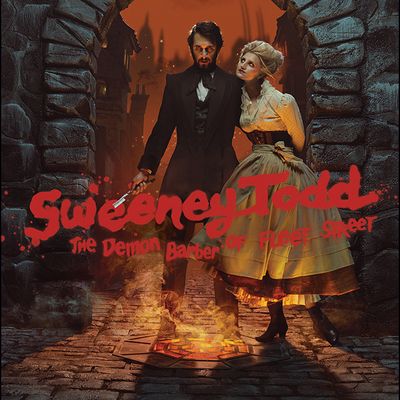
[24:43] Zachary Quinto: Well, I mean, Sweeney Todd is that thing for me in a lot of ways, honestly.
[24:47] Zachary Quinto: I really feel like that's something I'm I'm I have to be able to do in my life.
[24:50] Zachary Quinto: Um I I I just I mean I just have to keep working.
[24:50] Zachary Quinto: I mean, I just have to keep working.
[24:56] Zachary Quinto: That's it's I know that's kind of like a l general um response.
[25:01] Zachary Quinto: But it's like I have to I have to do more theater.
[25:03] Zachary Quinto: I have to just do more theater.
[25:05] Zachary Quinto: I have to do more theater at at a level of um, you know, real uh consistency and excitement and you know, honestly, and I say this and I don't I say it half jokingly, but I really do mean if I could cultivate the same level of uh experience and and and living for myself doing only theater, then you'd never see me on film or TV.
[25:26] Laura Camien: I feel you never.
[25:27] Zachary Quinto: Wow.
[25:28] Zachary Quinto: I would only do theater.
[25:29] Zachary Quinto: I I love that about you.
[25:30] Zachary Quinto: If I could go from play to play to play to play to play, I would starting today.
[25:36] Zachary Quinto: If you told me right now you can never do another film or television job as long as you live, but you can do as much theater as you want for the rest of your life, I would sign on the dotted line without even blinking an eye.
[25:48] Laura Camien: Wow.
[25:48] Zachary Quinto: No question.
[25:49] Laura Camien: Wow.
[25:50] Zachary Quinto: See, you know what your heart is.
[25:51] Laura Camien: You're very that's right.
[25:52] Zachary Quinto: You're very clear.
[25:53] Laura Camien: Is there anything you want to make?
[25:55] Zachary Quinto: I I'm leading the witness counselor.
[25:57] Zachary Quinto: Is there anything you want to make?
[25:58] Zachary Quinto: We've talked about this.
[25:59] Zachary Quinto: I mean, I would love to direct.
[26:01] Zachary Quinto: I would love to find my way to that, and I've been really open to her a lot more lately.
[26:06] Laura Camien: I think you'd be good at that.
[26:07] Laura Camien: Especially on the film side of things.
[26:09] Zachary Quinto: I've been really like in terms of my spark file, like I've been really like going into um going into the like sources of inspiration for me.
[26:19] Zachary Quinto: Um I was just in Spain and it really reconnected me to my love for Alma Dovar.
[26:24] Laura Camien: So I came to that.
[26:26] Zachary Quinto: You've been watching this.
[26:27] Zachary Quinto: I watched like five Almadovar movies in the last five days, and um like really getting into like the vision of of geniuses like him is such an amazing filmmaker.
[26:37] Zachary Quinto: It's crazy what he's able to tap into and how he brings other sort.
[26:41] Zachary Quinto: I mean, talk about like a spark file, right?
[26:43] Zachary Quinto: Like probably my favorite Elma Dovar movie, although I haven't seen the entire filmography.
[26:48] Zachary Quinto: I've seen many of his films and all the heavy hitters, but um, and you know, a lot of the early ones too.
[26:54] Zachary Quinto: But but my I think my one of my favorites is definitely Talk to Her.
[26:58] Zachary Quinto: And Talk to Her opens with like a three or four minute sequence of Pina Baush.
[27:03] Laura Camien: Yes, it opens with another artist's work.
[27:06] Zachary Quinto: That's right.
[27:07] Zachary Quinto: That's how the movie opens.
[27:08] Zachary Quinto: And like Women on the Verge of a Nervous Breakdown has a whole through line of all about Eve.
[27:12] Zachary Quinto: And and Cayetana Veloso shows up and talked to her and does just a whole scene.
[27:16] Zachary Quinto: You know, he's a he's an artist who's like, I am inspired by these people, and not only am I going to honor their source of inspiration, I'm just gonna put them in my movies and use them as part of this pastiche that I'm creating, which is so unique in terms of then how it applies to his voice, which is so singular and powerful and and human, you know, for all of the all of the failings of humanity, and talk to her is a prime example of that.
[27:43] Zachary Quinto: You know, he is he does not shy away from that darkness and from bringing the beauty that's the counterpoint to that darkness into the work, and that siren agrees.
[27:53] Laura Camien: And that's that's how it says.
[28:12] Zachary Quinto: Well, even this conversation has been real sparky for me.
[28:15] Zachary Quinto: I'm really grateful to you for having me talk about this stuff because I see what you mean.
[28:20] Laura Camien: Likewise.
[28:22] Zachary Quinto: Oh my gosh.
[28:22] Zachary Quinto: I'm glad you do.
[28:23] Zachary Quinto: Because even like the flu in your family.
[28:27] Zachary Quinto: Your love of theater.
[28:28] Zachary Quinto: And uh the way that a motovar is bringing Peanut Bausch and putting it on the screen.
[28:34] Zachary Quinto: I can imagine a way that you take that love of theater and your love of certain theater artists, and you do, you know, that your movie begins with a three-minute piece that John Tiffany and Stephen Hoggett, you know what I mean?
[28:47] Zachary Quinto: Like I can really this gives me feelings.
[28:50] Zachary Quinto: Like I that gives me visceral feelings on your behalf.
[28:53] Laura Camien: I love what it's worth.
[28:55] Laura Camien: I think we might be about to wrap, but I have one little question I want to ask you.
[29:00] Laura Camien: I have a question that follows me around and probably has my whole life and kind of knocks me upside the head when I least expect it.
[29:07] Laura Camien: Just rattles around in there, and I want to ask you that question.
[29:10] Laura Camien: The question in my head is, what's it all for?
[29:10] Zachary Quinto: What's it all for?
[29:18] Zachary Quinto: Hmm, what is it all for?
[29:20] Zachary Quinto: Um I feel like it's it's all for love.
[29:30] Zachary Quinto: Um on some level or another, it has to be all for love.
[29:35] Zachary Quinto: Um it's so easy to get caught up in our circumstances.
[29:44] Zachary Quinto: Um, but but if we if we can separate from them to any degree, I feel like we can be connected to something that's bigger than us.
[29:54] Zachary Quinto: So it's all for love, it's all for connectivity.
[29:57] Laura Camien: Yes.
[29:57] Zachary Quinto: It's all for lineage.
[29:58] Zachary Quinto: Like I am such a believer in the idea that like when we leave this earth, where does our creative spirit go?
[30:08] Zachary Quinto: It doesn't just die with us or else creativity wouldn't exist.
[30:12] Zachary Quinto: So I I really do believe in this like this kind of realm of connectivity that exists beyond us as individuals, but it it embodies um in us as individuals.
[30:24] Zachary Quinto: And so we're serving something that has been served by Tennessee Williams, by you know, Peanut Bausch, by George Gershwin, by you know, people who were um Betty Davis, you know, like the the greats of our time in the creative world, like these are people that were struggling with the same things and who are dogged by the same questions that we are, and we're all part of this same miracle that is humanity, and so I feel like it's about honoring that on some level and you know, trusting that it'll take us where we're meant to go.
[31:01] Zachary Quinto: I watched this film, which I'll, you know, I just um it's it's truly it's called Capernaum, uh C A P E R N A U M Capernaum, Capernaum.
[31:15] Zachary Quinto: Um, and it is one of the most I just watched it last night, and it's one of the most, it was in Cannes last year, and it won the Palm d'Or for Best Actress Award and Best Actor and the Palm D'Or.
[31:28] Zachary Quinto: Like I didn't know of it.
[31:29] Zachary Quinto: I just it was in terms of perspective and understanding how easy it is for us to get caught up in these things that to so many people on this planet are unfathomable.
[31:46] Zachary Quinto: Like, oh, I didn't get the job, I didn't get the movie.
[31:49] Zachary Quinto: I didn't get Lorenzo's oil.
[31:52] Zachary Quinto: Or I, you know, like this is a film about a 12-year-old boy who is totally I mean, like the circumstances of his life are um just literally unimaginable.
[32:05] Zachary Quinto: And like a film about his spirit, a film about um his obstacles.
[32:10] Zachary Quinto: I mean, I want to know everything about this filmmaker and this film.
[32:14] Zachary Quinto: I'm late to the party, it came out last year, but I'm so grateful to see it because it really makes me understand that what's it all for is like to somehow appreciate why we're here and to appreciate how fucking lucky we are, and to not lose sight of that gratitude because our circumstances, I mean, we are so beyond privilege.
[32:37] Zachary Quinto: So beyond privilege, and it's so easy to lose sight of it.
[32:39] Zachary Quinto: So that we get to have this conversation.
[32:41] Zachary Quinto: It's so easy to lose sight of that and to be like, well, when I had a car accident when I was 16 in my mom's car that I cried, like then I wanted to be an actor, like what?
[32:49] Zachary Quinto: Like this is a these are there are people in this world who literally, you know, cannot even figure out how to, you know, survive the day without being, you know, incarcerated, imprisoned, persecuted, deported, you know, raped, murdered.
[33:06] Zachary Quinto: You know, it's and so I guess I just feel like it's all for gratitude as well.
[33:11] Zachary Quinto: You know, we all have to be grateful for what we have because it could it could all fucking just evaporate in the blink of an eye.
[33:18] Laura Camien: Oh my god.
[33:19] Zachary Quinto: Anyway, not to get too heady or heavy.
[33:20] Laura Camien: I love it and shape that as you can.
[33:22] Laura Camien: I was gonna ask my final question was um what is sparking you right now?
[33:26] Zachary Quinto: Like to share a spark?
[33:27] Zachary Quinto: I think you just did.
[33:28] Zachary Quinto: Uh I mean, yeah, I've been really diving into films that are not on the like home page of my Apple TV.
[33:35] Zachary Quinto: You know what I mean?
[33:36] Zachary Quinto: Going back to Almadova, going back to things that I'm like, I have to make a little bit of a lot of it.
[33:36] Zachary Quinto: I have to make a little, I have to make a little investment in in these stories and and to be inspired and moved and challenged.
[33:49] Zachary Quinto: It is it is a conscious act, it's a conscious investment.
[33:53] Zachary Quinto: We talked about that.
[33:54] Zachary Quinto: Like it's it's we have been training ourselves doing this podcast to moving through the world with our eyes, our ears, our hearts, our minds open and really actively, and it is a goddamn privilege, actively um seeking those things that will spark us.
[34:10] Laura Camien: Yeah.
[34:11] Zachary Quinto: Uh we live in we live in privileged towns.
[34:13] Laura Camien: God, I love you.
[34:14] Zachary Quinto: Wow.
[34:15] Zachary Quinto: I hope that this put another bunch of sparks in yellow spark file.
[34:19] Zachary Quinto: If there is a spark that you would like us to explore, or if you've been moved to make something and you'd like to share that with us, won't you please email us at the sparkfile at gmail.com or you can submit it through our website.
[34:30] Zachary Quinto: And be sure to subscribe to this kettle of nonsense wherever you get your kettles of nonsense.
[34:35] Zachary Quinto: Subscribe.
[34:35] Zachary Quinto: Five-star rate it, review it.
[34:37] Zachary Quinto: If you like this pood cat, share with people you love.
[34:39] Zachary Quinto: If you don't like it, let's just forget this ever happened.
[34:44] Zachary Quinto: If something did tickle your fancy and get your creative juices flowing, it's your turn now to take that little spark and fan it into a flame.
[34:53] Zachary Quinto: You gotta reboot it, you gotta shoot it, you gotta crop it, you gotta Photoshop it.
[34:57] Zachary Quinto: You just gotta take it and make it.
[35:00] Zachary Quinto: Bye.
[35:01] Laura Camien: We love you, Zachary Queenlow.
[35:04] Zachary Quinto: Love you.
[35:05] Laura Camien: Totally love you, legit.
[35:06] Zachary Quinto: Legit love you now.
[35:07] Zachary Quinto: I'm happy to be on the spark.
[35:09] Zachary Quinto: Let's make it.
[35:11] Zachary Quinto: When I bump into something that inspires me, I dump it in my spark files.
[35:20] Zachary Quinto: Could be something that I wanna make or how I wanna be.
[35:25] Zachary Quinto: I pump it in my spark files.
[35:30] Zachary Quinto: I jump into my spark files.
[35:35] Zachary Quinto: Let's open up the spark fire.
© Broadway Podcast Network, All Rights Reserved