

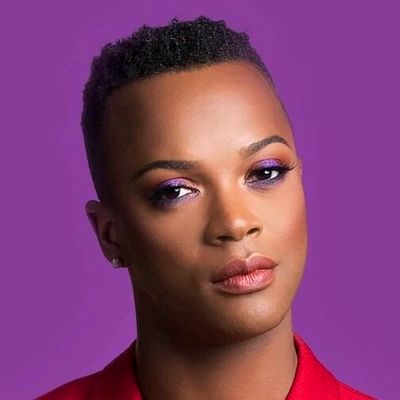
For our fourth episode, we will hear from Tony Award winner J. Harrison Ghee. He will be performing at this year’s annual gala for Only Make Believe on November 6th. I first met and worked with J. in a production of Kinky Boots at The Muny in St. Louis... Read More
From the show: The Spotlight Series
Guests
Featured Shows

About
For our fourth episode, we will hear from Tony Award winner J. Harrison Ghee. He will be performing at this year’s annual gala for Only Make Believe on November 6th. I first met and worked with J. in a production of Kinky Boots at The Muny in St. Louis. It was a fantastic production and J. definitely stole the show as Lola. We discuss that role as well as his award-winning turn in Some Like It Hot, and talk about the community that theater brings to all actors, especially those looking for a place to belong and be their best selves.
To learn more about Only Make Believe and how you can be a part of their mission to help children, then please visit their website for more information.
Transcript
This transcript was automatically generated and might contain errors.
[0:04] Patrick Oliver Jones: Welcome to the Spotlight Series, an in-depth look at those making a difference in the arts and beyond.
[0:13] Patrick Oliver Jones: I'm your host, Patrick Oliver Jones. And in this first season, I'll be putting the spotlight on a wonderful nonprofit organization called Only Make Believe.
[0:24] Patrick Oliver Jones: For more than 20 years, they have brought interactive theater into children's hospitals, special education schools, and care facilities with the goal of inspiring joy and imagination in those who have medically fragile conditions and developmental disabilities.
[0:40] Patrick Oliver Jones: Well, that's the beauty of theater and art. We come into these spaces and we surrender to the imagination. You let go of reality and you give in to whatever world is being presented to you.
[0:54] Patrick Oliver Jones: For our fourth episode, we will hear from Tony Award winner J. Harrison Ghee. J. will be performing at this year's annual gala for Only Make Believe on November 6th. I first met and worked with J. in a production of Kinky Boots at The Muny in St. Louis. It was a fantastic production, and J. definitely stole the show as Lola. We discuss that role as well as his award-winning turn in Some Like It Hot and talk about the community that theater brings to all actors, especially those looking for a place to belong and be their best selves.
[1:38] J. Harrison Ghee: It is so good to see you again.
[1:40] J. Harrison Ghee: So good to be talking with you. Thank you for having me today. Good to see you.
[1:45] Patrick Oliver Jones: Now, you and I got to know each other with Kinky Boots, a show that has meant a lot to you, of course, for your career. What was it about theater in general? You know, whenever you were young, what was it about that first sparked that curiosity, that interest in you?
[2:02] J. Harrison Ghee: Well, I've I grew up singing in church really. Um, and my brother plays the piano and music has always moved me. Um, no matter where I was or what I was doing, I was always engaged by the arts. Um, and then I got to high school and was in show choir and the movement and the dance, putting it all together, and then I finally was like, oh, I can go do this as a job. This will be fun, and actually have a like happy life. And then I really found community. Um, I found a safe space, I found somewhere to really continue the process of freeing myself. Um, that's the ministry I try to walk in in my life and share with others. And that's what theater is for me. It's a place of freedom, of exploration, of growth, of expansion. Um, and I think that is something everyone can and should benefit from. Um, and that's one of the things I love about Only Make Believe, like tapping into the imagination, to the play, to the freedom, um, and it's healing.
[3:10] Patrick Oliver Jones: Yeah, because theater, I mean, much like you, theater was a place that I found my community, my people, the ones who kind of got me just because I thought a little differently or I felt things a little differently. But taking that community, taking what can be just a hobby as we kind of grow up, and then turning it into a job, a profession, a career. What was that transition like for you? Or what made you think, oh, I can actually make a living at this?
[3:40] J. Harrison Ghee: It was truly a leap of faith. It was my ticket out of North Carolina. I grew up in Fayetteville, North Carolina, and I just watched people living complacent lives. And I knew that there was more for me to explore and find. And so choosing theater was just a way of saying, oh, I can have a happy life. I was gonna do PR or communications or do something very safe that my parents wanted me to do. And I was like, no, I'm a risk taker. I like to be different, I like to be bold, I like to be brave. So why not leap into the unknown? And it truly has been a journey ever since.
[4:23] Patrick Oliver Jones: I bet, I bet. Now, speaking of that journey, when you and I met doing Kinky Boots, you had been a part of that show in various incarnations for many years. What was it about that show that really spoke to you? What was it that you loved so much about Lola, that character?
[4:42] J. Harrison Ghee: Well, it was very parallel to my real life. I was the only Lola to ever actually be a drag queen. Like I worked New York City nightlife. I'd done the parties and the gigs and hosting shows at bars and all the things and entertaining kids at their birthday parties and drag, all the things, like the whole spectrum of it. Um, and I had that relationship. So singing "Not My Father's Son" every night was truly cathartic and it was therapeutic for me. I got to get my mess out on stage. Um, so it was really therapy for me for five years doing that show. Um, and it changed my life and my career and really elevated me in so many ways.
[5:28] Patrick Oliver Jones: Yeah, because theater, yes, we are inhabiting characters, we're exploring the different nuances of what this character wants and what he does. And at the same time, we're doing that within ourselves. We're figuring out what we want, what it is that I need, and it seems like that journey for you was in parallel because a lot of times they can be happening at different times, but it seems like for you they were happening at the same time.
[5:54] J. Harrison Ghee: It seemingly has been my career of finding things that I love. I love finding things that are parallel to my real life that I can work on in and out of the show. You know, Lola, that was the time to really free me and help me step out of how I conditioned myself or how I was conditioned to operate in the world and in theater, and then doing "Mrs. Doubtfire" after that was so wild because my parents were divorcing at the time, and so I got to deal with that on and off stage, and then now stepping into "Some Like It Hot," it was an even more freeing journey of really allowing myself the expansion of being the human that I am and allowing that to be a mirror for others as well. Um, I love to say there's a little Daphne in everybody, and that doesn't mean that you need to go run out and put a dress on, but find that freedom and that expansion beyond what you were told is right or the successful way to do something.
[7:02] Patrick Oliver Jones: Now, the musical did update itself a bit from the old movie. How much of that was the writers themselves taking these characters in new directions? How much of it was you once they cast you and basing it around that?
[7:16] J. Harrison Ghee: It was a collaboration. Truly, the first time I read the script, I joined the project in 2019 when we did a reading. And I saw the potential of what it could show audiences, how it could affect people, how we could touch hearts and minds. And then as we continued to work on it and build on it together, I got infused into it more. Things I say in my real life found their way into the script. And it wasn't a need to like sit down and have a conversation of I need this to be a part of my character's journey. They were just actively listening to how I moved and operated as a non-binary person and let that inform the art.
[8:02] Patrick Oliver Jones: And that has been your own arc of finding yourself as a non-binary person, discovering these different facets of yourself. What has that journey been like? As you say, theater's kind of mirrored it, but at the same time, you've had your own personal walk to go through as well.
[8:19] J. Harrison Ghee: Yeah, it's really just made me ground myself in who I am that much more. It's made me understand myself and then also give myself the grace and the space to grow. And so every day I wake up and when I get dressed, I get dressed according to how I feel and how I want to express myself, not based on societal limits or labels or boundaries to keep me confined or compartmentalized for the sake of others. So I encourage people. I love when people look at me and say, oh, I can never wear that thing, or I can never do that. I'm like, no, because you haven't freed yourself to see yourself there. You haven't given yourself the space to even play in that area or use that crayon out of the box. Like you really have to break how we've been taught to live and experience life.
[9:22] Patrick Oliver Jones: And with the Tony nomination, obviously that was a confirmation of the work that you've done in "Some Like It Hot," but then winning it, what was that feeling? Obviously, there's a sense of joy and excitement, but what did it mean to you to have that type of award?
[9:40] J. Harrison Ghee: It meant everything. And just like I said in my speech, I did what I did for those non-binary, transgender non-conforming people to feel seen. And that approval of the work and humanity was so fulfilling far beyond me. Um, every day at the stage door, I interact with queer and trans and non-binary people who feel so seen and so represented. Um, kids and students who are saying they've never seen themselves like this in theater, and it like gives them hope. And that's why I do what I do. This is more than a job to me. This is my ministry. This is me walking in my purpose and being intentional about what I do and how I move in the world.
[10:33] Patrick Oliver Jones: And do you think that's with "Some Like It Hot"? Because you have Christian Borle there as well, a straight actor, and then you and non-binary, both of you wearing dresses, does that also say something about freeing ourselves and about allowing ourselves to be something more than we are?
[10:49] J. Harrison Ghee: Oh, absolutely. And that was the thing. We were so intentional and conscious of making sure that the comedy and the work that we were doing was not based in a man in a dress and making the comedy about that fact.
[11:06] Patrick Oliver Jones: Which is what the movie did a lot of, right?
[11:09] J. Harrison Ghee: Exactly. And it worked for its time and was ahead of its time. And so we had to do our version of "Some Like It Hot" and be true to us and to today and the future. And it was so wonderful to get to collaborate with Christian and to build our relationship of trust and love. And he had to give into it and trust that he was capable of doing it. And he really did step up to the plate and we just had fun. We came into it and we were respectful of each other, respectful of the work, respectful of humanity, and then allowed the collaboration and the trust to really be our foundation of how we built everything.
[11:53] Patrick Oliver Jones: As you were saying that, it made me think whether you were doing Lola or Daphne. Was there ever any internal pushback of, oh, can I go that far? Oh, can I go there?
[12:06] J. Harrison Ghee: No. I was pushing everybody else in the sense of asking that, you know, everyone was so conscious of, well, we, you know, people are gonna think, what can we add, and there came a moment where again I had to stand firm in myself and be the voice and say, can we just create art that causes conversation? I also, like, you know, I used to say I wasn't a political person, but during the pandemic, I had a revelation for myself, and it was confirmed with an interview I saw of Toni Morrison saying that as artists, we are innately political. Our existence is political. We comment on the times, we represent the times and we shape culture. And so sometimes, more oftentimes, effective art is going to cause conversation or should. And we should allow it to do that and not be so bogged down by making sure that we're politically correct all the time.
[13:08] J. Harrison Ghee: There has to be a little grit and there has to be some growing pains in order for change to effectively happen.
[13:16] J. Harrison Ghee: Yeah, I mean, because it's a matter of not just showcasing the wonderful things that can happen and the wonderful ways that we can progress and improve our lives and the lives of others, but we have to kind of get into the dark stuff too.
[13:29] J. Harrison Ghee: We have to show because the only way that you know where the light is is if there's darkness around you. It's that kind of thing. You only know one if you have the other.
[13:37] J. Harrison Ghee: So as you say, that the characters that we choose to do, the types of shows that we audition for and characters that we portray, these are making a statement.
[13:48] J. Harrison Ghee: Yeah, always. And again, it's it is it's something we we as the artists have to be considerate of of the work we choose to do.
[13:58] J. Harrison Ghee: Yeah, we get those gigs where you're like, Yeah, yeah, this is a paycheck, this will, you know, pasti, and I I'll do it, whatever. And then there comes a time where you're like, no, I I can't give up myself in that way because I that breaks something in me, or it doesn't align with my morals or where I stand, or I again I look for roles that there's some truth that I can connect to, and if I can connect to that truth, I can effectively share that with audiences and be a mirror so that people can see humanity and themselves and and expansion.
[14:45] J. Harrison Ghee: Only they believe only believe in you. And I think in a broader sense, that's what only make believe does.
[14:55] J. Harrison Ghee: It brings these actors into these facilities and children who in for various different reasons may not see themselves fully. And these shows allow them an opportunity to really come out of their shells, to maybe even get out of their wheelchair or use their crutches, whatever they have, and inhabit these characters and have a sense of joy and imagination on a stage.
[15:21] J. Harrison Ghee: And I think all of us as actors, we want an audience to feel that kind of freedom.
[15:27] J. Harrison Ghee: Well, that's the beauty of theater and art. We come into these spaces and we surrender to the imagination.
[15:36] J. Harrison Ghee: You let go of reality and you you give in to whatever world is being presented to you. And it's amazing how we collectively come in and do that and and forget about ourselves as individuals and allow that space to heal us, knowingly or unknowingly.
[15:54] J. Harrison Ghee: That's you know, one of the things during the pandemic, I I kept so true and and close to my heart that artists were essential workers because what we do reaches hearts and minds on a molecular level that people can't grasp the fullness of, and it's something I encourage artists to understand the power we possess.
[16:18] J. Harrison Ghee: It's not something to take lightly. Because uh what I what I kept hearing on the news and other things, and what what were people doing during the pandemic when they're in their homes? They're watching Netflix, they're watching TV, they're reading books, they're they're going to artists to kind of fill their day to fill their lives with something when outside they can't do anything.
[16:39] J. Harrison Ghee: So that I was of the same mindset thinking, well, art is essential. It's it's what everyone's going to right now. When there's nothing else, you you shop, you sleep, you know, you eat, and then you go to the arts. I mean, those that's what everyone was doing.
[16:55] J. Harrison Ghee: Yeah. And then it's that thing, it's like you binge watch something because you're connected to it. Something has grasped you in a way that your attention is is focused there, and you're you're invested in this world again that has been created.
[17:12] J. Harrison Ghee: And if that was taken away, what would people have? And it's more than just entertainment. It it makes you feel things. It literally releases all kinds of things in your brain, in your body that allows you to feel so much.
[17:33] J. Harrison Ghee: Um, and that's something I I want people to tap into more. That, and it's something I'm doing even for myself of getting back in touch with with feeling more and allowing all feel all the things, be all the things.
[17:48] J. Harrison Ghee: It reminds me of that quote from First Wives Club, Goldie Hahn. I'm an actress, I have all the feelings.
[17:54] J. Harrison Ghee: Yeah. And it's so true. Like, as the artist, we we possess all of those things, and we are able to tap into that to be able to tap into it in the audiences to make you feel whatever it is we want you to feel.
[18:10] J. Harrison Ghee: And it is again, it it just goes so deep, and I don't think people really understand the power of that.
[18:16] J. Harrison Ghee: Well, I think us as actors, I think we can forget too, because I mean, it does become a business, a profession. You know, as you say, we take those jobs where it's like, okay, well, I'll make this amount of uh money a week, I'll get some insurance weeks, you know. And sometimes we have to do that, but you're right. There are those performances, those roles where we get to tap into something that's that's more than a paycheck, it's something personal within us.
[18:42] Patrick Oliver Jones: And for you, I understand it was Brad Oscar that introduced you to only make believe. How did that conversation go? And what was it that interested you?
[18:51] J. Harrison Ghee: Brad and I did Dowfire together, and I just love him as a human being. Um, I I adore his heart. Um, and he and his husband Diego and the beautiful work that they love to do and be in the world. And so him coming to me about only make believe and the incredible work that the organization does to heal and to inspire and to expand, um, was so easy to say yes.
[19:21] J. Harrison Ghee: Uh again, he taught me so much about how to love and how to give, and watching Brad operate in the world and then the work he does beyond the stage. It was so easy to support him. Um, he will always be my work husband. Like he brings me joy just seeing his face.
[19:42] J. Harrison Ghee: And so again, it's easy to just support him and all that he is and all that he does. Um, and I mean, the name says it all, like only make believe. If you really just give in to the idea of of imagination and surrendering to your circumstances and allowing art to heal and to fuel you and to give you strength beyond your own means, that's something I can always support.
[20:17] J. Harrison Ghee: As a kid, I would go sit on a swing in our backyard and just look at the clouds and truly make believe of what was possible beyond that physical place. And I hope to be able to help people to tap into that kind of living, that limitless thinking that uh the that the bound, the limit does not exist of what's possible and how healing can happen.
[20:45] J. Harrison Ghee: Yeah, because it's it really is a part of finding audiences, whether it's in a Broadway stage or with only make believe and the facilities of meeting an audience where they are, but then at the same time helping them see something beyond that, beyond themselves. So it's it's this two-step process of recognizing what is, but also what can be.
[21:11] Patrick Oliver Jones: And for you, you'll be supporting through the gala and performing. What song will you be performing and why did you choose it?
[21:19] J. Harrison Ghee: I'm singing I am what I am. And it's such an anthem. I have a disco dance version that I do. Um, and it's such a uh an empowering statement. I am what I am, and what I am needs no excuses. No matter what the circumstances are, no matter who you are, what you're doing or being in your life, standing in who you are is the most radical thing you can do.
[21:49] J. Harrison Ghee: Uh uh beyond anyone else's understanding. And so I want to empower people to really stand in in who you are and be proud of the fullness of who you are.
[22:02] Patrick Oliver Jones: And I would certainly say that over the years, as I've known you and watched you, I would say that no matter where you were in your career or personal life, it seemed like you were always, at least from my perspective, fully embodying that. Even as you've grown and changed and evolved, it seemed like that is and in some ways, just like you have a beautiful voice and it comes across so easy on stage, it almost seems easy for you.
[22:29] J. Harrison Ghee: But I I it is does it come naturally to be so fully embodied and wherever you are in your particular point in life?
[22:38] J. Harrison Ghee: I uh I guess it's seemingly. Um, but it's I mean, it's an everyday journey. It's not it, it's not easy. I will say that it's not easy, but it's the choice, it's the choosing every day. The first thing I do every morning is go to my altar, pray, meditate, meet myself, meet the day there.
[22:57] J. Harrison Ghee: And I repeat the lyrics of my friends have this song, a group called the Shindelas. It's the lullaby. And the lyrics say, I am what God made. Beautiful and brave. Every fiber of me is perfectly lovely. I will be myself today. I have to remind myself every morning the way I was created, the way I rose today, everything that I'm feeling, everything that I'm going to is just as I am supposed to be.
[23:26] J. Harrison Ghee: Now take the power of who I am, who I was created to be, and the energy of knowing that I am in control of my own experience and take that into my day. And anything is possible.
[23:40] Patrick Oliver Jones: I love that.
[23:41] J. Harrison Ghee: Yeah. And it's a constant reminder for all of us to live within not just what we are and what we see, but the power that comes with that as well.
[23:49] Patrick Oliver Jones: What is possible for us to do that day and going forward? So thank you so much for talking with me today and sharing your lovely story. It it always is inspiring to me to hear from you. So I I greatly appreciate it.
[23:53] J. Harrison Ghee: Thank you.
[24:04] J. Harrison Ghee: It's again, I I really hope that people will be inspired to free themselves, even if it's just a little bit. It just find the smallest thing, one of my favorite things during the pandemic. I stop asking people how are you or how you do it. And I start asking people, what's bringing you joy these days? And it's always wonderful to watch people to have to take a second and really think about what's bringing them joy.
[24:28] J. Harrison Ghee: Yeah. And then to encourage them to do that just a little bit more. Even if it's like, oh, I love my cup of coffee in the morning. Great. Add a flavor to it or something. Like do something to like make it a ritual that brings like really infuses joy into your life and keep seeking joy and keep seeking the freedom and and and stretching beyond again what is to what's possible because we are a society in a world where we are conditioned to live a certain way and just keep our head down and do this to be successful as opposed to finding the fun and the frivolity and the the the silliness and the imagination and the creativity to just like elevate everything a little bit more.
[24:38] Patrick Oliver Jones: Well you certainly elevate things and uh I can't wait to see you perform you will elevate that performance nonetheless as well so thank you so much for being here.
[24:38] J. Harrison Ghee: Thank you so much Patrick. To learn more about only make believe and how you can support them and be a part of their mission to help children then please visit only makebelieve.org for more information. I'm Patrick Oliver Jones and be sure to join me next week with another member of the OMB family here on the Spotlight series that is our show to go.
© Broadway Podcast Network, All Rights Reserved