

Part 5 – The Tony Awards: The Press Room: The 73rd Annual Tony Awards Awards took place on June 9th 2019, at the Radio City Musical Hall, hosted by James Corden. The Antoinette Perry Award for Excellence in Broadway, more commonly known as the Tony Award, recognizes excellence in live Broadway theatre... Read More
From the show: The Theatre Podcast with Alan Seales
Guests
Miniseries Inclusions

Featured Shows
About
Part 5 – The Tony Awards: The Press Room: The 73rd Annual Tony Awards Awards took place on June 9th 2019, at the Radio City Musical Hall, hosted by James Corden. The Antoinette Perry Award for Excellence in Broadway, more commonly known as the Tony Award, recognizes excellence in live Broadway theatre. The awards are presented by the American Theatre Wing and The Broadway League . The awards are given for Broadway productions and performances, and an award is given for regional theatre.
This 5-part mini series brings you exclusive, behind-the-scenes content from the 2019 awards season, ranging from the Tony Nominations themselves to red carpets to press rooms and conversations with this year’s biggest winners.
Interviews in this episode:
- Rob Howell, The Ferryman
- Bradley King, Hadestown
- Bertie Carvel, Ink
- Rachel Hauck, Hadestown
- Bob Mackie, The Cher Show
- Fitz Patton, Choir Boy
- Robert Horn, Tootsie
- Rachel Chavkin, Hadestown
- Sergio Trujillo, Ain't Too Proud
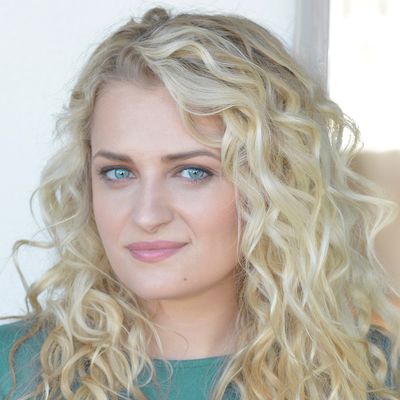
- Ali Stroker, Oklahoma!
- Ryan Murphy & David Stone, The Boys in the Band
- Rosemary Harris, lifetime achievement award
- Anais Mitchell, Hadestown
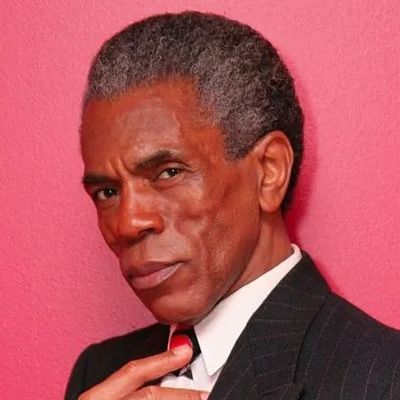
- André De Shields, Hadestown
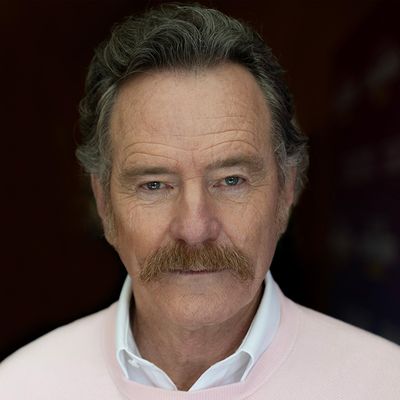
- Bryan Cranston, Network
- Stephanie J. Block, The Cher Show
- Hadestown wins Best Musical
- The Ferryman wins Best Play
Connect with The Theatre Podcast:
- Support us on Patreon: Patreon.com/TheTheatrePodcast
- TikTok: @thetheatrepodcast
- Twitter & Instagram: @theatre_podcast
- Facebook.com/OfficialTheatrePodcast
- TheTheatrePodcast.com
- Alan's personal Instagram: @alanseales
- Jillian's personal Instagram: @jillianhochman
- Email me at feedback@thetheatrepodcast.com. I want to know what you think.
Thank you to our friends Jukebox The Ghost for our intro and outro music. You can find them on Instagram, Twitter, and Facebook @jukeboxtheghost or via the web via jukeboxtheghost.com.
A very special thanks to our patrons who help make this podcast possible!
If you would like to see your name in this show notes or get a shout out on the pod itself, visit ttp.fm/patreon to become a member and show your support!
Transcript
This transcript was automatically generated and might contain errors.
[0:00] ⚠ About 3 minutes of audio could not be automatically transcribed.
[3:15] Alan Seales: And quietly began recording, trying our best not to disturb anyone around us who was listening to the live telecast of the Tony Awards themselves.
[3:23] Alan Seales: Guys, we're here. Oh my goodness, it's 7:55 Eastern Standard Time. We shot that whole thing without a script. Yeah, but it was great. We're in the Press Room right now. We're in the, yeah, the Media Room, the Press Room. I don't know exactly what it is. Yeah, oh, my feet hurt.
[3:41] Alan Seales: What it is. Yeah, oh, we were standing for so many hours. I hear James Corden's voice. We saw, we met James Corden and met his parents, and one of the best moments of the night was when he introduced Jeff Daniels to his parents. His dad's a crier. It's so cute. He's just so proud of his son. They are both so proud.
[4:01] Alan Seales: Alan, do you want to describe what this room is, what we're seeing right now? This room, okay, so the Press Room. Imagine if you've ever been to a press junket, which I'm sure doesn't help a lot of people. So we're basically all at tables that are rectangular tables. There's one, two, three, four, five, six. It's almost like classroom style. Yes, classroom style. Six rows of tables, three, there's two aisles, so three sections and it's probably 50 feet wide.
[4:33] Alan Seales: We're in a big room across, directly across 51st Street from Radio City. So when the winners win, they will come across the street, come up onto the stage here. There's a nice step and repeat that has Tony, CBS, all over the place, and then it's basically, if you imagine, okay, the White House briefings, where somebody stands in front and everybody raises their hands and asks their questions and so everyone's asking questions publicly and hearing each other's answers.
[5:03] Alan Seales: The energy in here is much, much less stressful. The red carpet, man, that was stressful. It was like the best kind of stressful though. It was an exciting stressful. Yeah. Yeah. Like, I won't sleep tonight, but like, because this is literally dreams come true right now. I really like, in here, it's nice and cool. There's some sitting. They gave us these cool snack boxes. We have the Tony Playbill. I'm so excited. I've been collecting Playbills since I was 12.
[5:23] Alan Seales: Oh wow, so yeah, this is. This is like the pinnacle of my collection right now. The pinnacle of your collection. This is kind of incredible, yeah. Not everything asked or spoken made it into the final cut of this episode, but we'll try to give you a glimpse into what made us laugh, get inspired, and maybe even shed a few tears.
[5:43] Alan Seales: The very first person to come speak with us was someone we'd spoken to already when she won her Drama Desk Award, Celia Keenan-Bolger, who now stood in front of us holding her Tony Award for Best Supporting Actress in a Play. When asked why now is the right time to play her character of Scout in Aaron Sorkin's Broadway adaptation of To Kill a Mockingbird, she had the following to say.
[6:03] Celia Keenan-Bolger: Yeah, I mean, I think so much of why it feels like right now it's important has to do with
[6:08] Unknown speaker: What Aaron Sorkin did with the script and the way that I feel so attached to what he is trying to put out onto a Broadway stage that is asking these really big questions about our country's relationship to race and where we've come from and what more morality and justice mean. I think this is also the first time I've been nominated when I had a four-year-old child, and so everything is sort of being filtered through the lens of also being a parent and what his experience of watching To Kill a Mockingbird or reading To Kill a Mockingbird will be. So, I just think it's almost less, it's about the characters, certainly, because I have been obsessed with Jean Louise Finch for as long as I can remember, but it's also very much about this play and this moment and this cultural moment that we're living in right now.
[7:07] Rob Howell: Who took home not one but two Tony Awards for Costume Design and Scenic Design for his work in The Ferryman, the most decorated play of the evening, gave the following answer when asked what it means to him to win two awards. We're very, very lucky people, that's a given. We put on plays for a living, that's a lot to be able to say that we do, and I'm proud of the journey that I was allowed to be part of with The Ferryman, and I can't remember what I said in my speech, what I was trying to say was that we all started with an unfinished but already beautiful thing, and to be part of a band of people who are committed to something which still isn't finished, but we're all committed to, that is a tremendous privilege.
[7:55] Bradley King: The most decorated musical of the evening was, of course, Hadestown. First to speak on behalf of the show was Bradley King, who won the award for best lighting design of a musical, and he tells us about why he was able to collaborate so well with the rest of the Hadestown creative team. It helps when you've spent three years together sort of marinating in the same pot, when you've spent a winter in Edmonton, Canada like many of us has, that brings people really close together, and then when you travel out of town to London for a month, that brings you even closer, and it's just the opportunity to really, really develop a design over many years, I think leads to some really great collaboration and some really well, the design elements interacting really well with each other.
[8:33] Bradley King: When asked about his opinion on how to get more women, especially women of color, involved in lighting design, he has the following to say. You know, I think a lot of people think that there's a pipeline problem, and that, oh, well, we don't have younger designers of color, or we don't have younger women designers. That's absolutely false. They, I work with them all the time. They're my friends, they're my colleagues, but they aren't given the opportunities for the bigger and bigger shows. They're not in the room to make the connections that, this is an entirely connection-based business that designers are in. It's about knowing producers, it's about knowing directors, and if they, if you're not allowed into the room, then you can't develop those connections and build a career.
So I think it's incumbent on, not just on producers and directors and artistic directors, many of whom are often picking the design teams for their directors at non-profit theaters, to cast their nets wider, but also for those of us doing bigger shows, to make sure that our assistants and our associates are really from diverse backgrounds, economically, ethnically, we need to cast a much wider net.
[9:36] Bertie Carvell: After winning Best Featured Actor in a Play for his work in Ink, discusses how he chooses what roles he wants to accept in his future. Exciting ones and things that I haven't done before. I've made a rule not to repeat myself, so I hope I can do that. The problem with that is that nobody recognizes you, and then you don't get cast in things, because they're like, wasn't that guy who did that completely different thing? So I'll hope to carry on that pattern. Bertie also speaks to some feedback he got from Rupert Murdoch himself, and what he thinks the responsibility of journalism actually is. I think art and journalism in common have a duty to the truth, but I think their way to it is different, and we are doing a play, and my first primary job is to serve the play.
The play is not a play about Rupert Murdoch, it's a play about populism, it's a play about journalism and the state of it now, and how we got there. And I think in thinking about those things, I've got more license than a journalist would have. In answer to your question, what did he, what feedback did we get? I asked him what one thing he'd changed, and he said nothing. Having said that, you know, it was too late by then, so he probably took the right, took the right tack.
[10:52] Rachel Hauck: Next to win for Hadestown was the scenic designer Rachel Hauck, who in her own way echoed what was said previously by Bradley King about the entire show being created as a single entity, born all at once from a collaborative team. It's extraordinary. I mean, it is hands down the hardest thing I have ever done. Those lyrics and that music is pure poetry. It could look like anything, and for us to have journeyed so long together, those designs are fused together. There's no sort of separation in ideas, and I think the reason that the piece is so powerful from the design standpoint, amongst many other things, that it carries great power, the music was born together, the orchestrations were born together, the lights and the sound are completely interwoven with the set.
So, you know, for all of us to have taken this very long, very extended journey to the birth of this piece together, and it's grown and grown and grown, and we've learned a lot about what it is and a lot about what it isn't, and all of that journey.
[12:03] ⚠ About 4 minutes of audio could not be automatically transcribed.
[16:03] Rachel Chavkin: So I think inclusion is at the forefront. And before we worry about fixing problems elsewhere, I think there has to be a lot of attention paid to our own backyard. And Broadway is the most visible part of the backyard. Other parts of it are thriving. And I think we're seeing this incredible renaissance of voices, writers and directors and designers and choreographers working downtown and off-Broadway and regionally around the country. So that's what I meant when I said everyone is ready to go. It's not a call for altruism. It's just a call for hiring the people and not assuming that directing on Broadway or X-ing on Broadway is a prerequisite for X-ing on Broadway because that's just a recipe for disaster.
[16:45] Alan Seales: Continuing with one last sound clip from Rachel, here's what she had to say when I asked her how it happened that she started working with Anais Mitchell. Anais told me that she contacted you after she saw your work on Great Comet.
[16:58] Rachel Chavkin: Comet, yeah. Do you remember where you got that call and how you felt when you got this call and Anais was on the other line and said, I want you to do...
[17:04] Rachel Chavkin: It was 2012, so it was an email and it was a friend. Actually, it was a mutual drummer who is like a really sick drummer and he wrote to connect the two of us. And we spent about six months dating, actually, as colleagues trying to figure out what collaboration would be like. And then finally in 2013, by that time, I had fallen very deeply in love with the 2010 studio album and with Anais as a human being. And when we like leapt in finally in like one four and a half hour Skype session. But years later, actually, I was looking through on my iPhone, I keep just a running list of like dream projects and collaborators and things that I hear about. And I was, for some reason, going through it. And at the very bottom of the list was the note, Anais Mitchell, songwriter, heard on soundcheck that I must have taken in like 2010, two years before we ever connected. So in retrospect, it feels like kismet. But that's the story.
[18:08] Sergio Trujillo: Sergio Trujillo won the Tony for Best Choreography for Ain't Too Proud. When asked if he felt he was at a disadvantage because they didn't have an official out-of-town tryout, he had the following to say.
[18:18] Sergio Trujillo: Yeah, I mean, I think going into this show, I had a head start because I knew Ephraim Sykes was in Memphis. He was actually 20 years old when I hired him. He was one of my lead dancers in the show. Derek Baskins was also in Memphis. Jim Harkness, he's danced actually in three of my shows.
[18:36] Bertie Carvel: And Jeremy Pope danced in Invisible Thread, which is an off-Broadway show. And so going into this, I had a head start. So what's been great about the journey of Ain't Too Proud is that we did Berkeley, Washington, LA, Toronto. And so we developed a sort of shorthand in the process. So when you open a show cold in New York City, it really creates a lot of pressure, a lot of stress. And it may not at times be the most sort of constructive way of working. But in this way, we were able to breathe life into it. And I was able to continue to just, even the day before opening night, I was fine-tuning all the choreography because I felt like this was an opportunity for me to step up to bat and hit a home run. Making history tonight was the first person in a wheelchair to win a Tony Award. The Tony for Best Featured Actress in a Musical went to... Ali Stroker!
[19:32] Alan Seales: Oh, yes! Ali Stroker! Ali Stroker! Ali Stroker! She had some amazing advice for producers and theater owners on how to be more accessible, not only for front-of-house patrons, but backstage actors. Well, the theaters for the house where all the audience comes in, that is all made accessible to patrons. But the backstages are not. And so I would ask theater owners and producers to really look into how they can begin to make the backstage accessible so that performers with disabilities can get around. She gave a wonderful explanation of her process of working with her director and choreographer from Oklahoma to explore what she can and cannot do and have real conversations about what's feasible on stage.
[20:15] Ali Stroker: Yeah, I got to collaborate with our choreographer and our director very closely because the reality is that I know my vocabulary as far as movement goes the best. And so we talked a lot about what could work throughout the show, especially because this character in this role has relationships with two different guys. And so how are we going to physicalize all of that? And I think the first part of that process is trust, you know, is to have these conversations with them about the way that I move and the way in which we can portray this woman's sexuality and physicality is all going to be done in a safe way. Because for them, they have never worked with someone in a chair. So it's been really, really fun to find that with them.
[21:30] Ryan Murphy: Winning the Tony for Best Revival, producers Ryan Murphy and David Stone accepted the award for The Boys in the Band. Speaking first is Ryan. They were asked about being attached to the Netflix production of this, to which they said, David and I are producing it. Joe Mantello is directing it. It is one of the first things that I set up right when I did my Netflix deal. And, you know, this is the 50th year of this play. And what I'm excited about is, you know, 165 million people all over the world internationally will now have access to watch this play. And I remember being a very, very young guy, six, seven, and seeing Boys in the Band on television. And it was the only thing that I had. It was the only group of gay men I had ever seen.
So I'm just excited about the evolution of that idea and bringing it to a new audience. And Joe, who's such a brilliant theater director, getting the chance to work in a different medium with great support. You know, Mart has mentioned that this is probably the only property in history that was filmed with its original off-Broadway cast and made a film in 1970 and then filmed with its original Broadway cast, both 50 years later, 50 years from the play, and then 50 years from the film.
[22:49] Alan Seales: One of the most satisfying moments of the night was right after Rosemary Harris was given her Lifetime Achievement Award for her amazing 67-year Broadway career. She made her Broadway debut in 1952, and before this, the only Tony she received was in 1966 for The Lion in Winter. She was just seen in My Fair Lady and speaks to why she decided to accept the role.
[23:10] Rosemary Harris: Yes, my base camp, I live in North Carolina. And I was there when Andre Bishop emailed me and said, would I like to come and replace Dame Diana Rigg, who was leaving? And I thought about it. My husband had just passed away, and so I was in a fog. I wasn't really quite sure what I wanted to do. But my daughter, Jennifer, said, well, perhaps you should go up and see the show first before you make a decision. So, of course, I came up and fell in love with it. It's the most beautifully realized production. But I decided that it was far too difficult. It would be like trying to get onto a moving train, an express train while it was moving, and I didn't think I would be capable of it.
[24:07] Unknown Speaker: But I thought a little bit more about it. I wrote an email to Andre Bishop but I didn't send it. I kept tweaking it and tweaking it and tweaking it and finally I decided maybe I should bite the bullet and be brave and do it and I'm very very grateful. And they made it so easy for me. I came up, I've never been in a musical before. I'm learning all this new jargon like put-ins and tracks and all the new words I'm learning. But they couldn't have been kinder and sweeter and helped me and there I am and alas we've only got four more weeks.
[24:50] Unknown Speaker: Anais Mitchell won the Tony for Best Original Score for Hadestown. When asked what she was planning on doing next, of course she has a few irons in the fire.
[24:59] Anais Mitchell: Oh yes, back to the world of music. I've been working on a new folk band project. It's a band called Bonnie Light Horseman, Bonnie B-O-N-N-Y. And it's myself and the frontman from a band called Fruit Bats and a guy named Josh Kaufman who's a guitarist and we're going to do Newport Folk Festival and Pickathon and some stuff this summer.
[25:23] Unknown Speaker: Andre De Shields, with a career spanning half a century, is probably one of the most composed of the evening even though this is his first Tony win of his lifetime. He took home the award for Best Featured Actor in a Musical for Hadestown. Simply asked how he felt, he had the following to say.
[25:38] André De Shields: I felt successful. I felt a kind of completion because I wasn't going to leave Broadway until they gave me what I thought I deserved. But there's so many other adventures that I want to have. There's so many other mountains that I want to climb because at the end of that statement you'll recall I said the top of one mountain is the bottom of the next. Keep climbing. I gaze at the stars because the stars gaze at me. So every decision I make has to do with my being a triple Capricorn. And of course Capricorns are mountain climbers. So I'm looking for my next peak.
[26:37] Unknown Speaker: Perhaps best known for his work on television as the neurotic father on Malcolm in the Middle or the psychotic meth dealer on Breaking Bad, Bryan Cranston cemented himself as one of the greatest actors of the last few years, winning his second Tony award for his second role on Broadway for his work in Network. When I asked him about whether he wanted to do more theater, of course he too said yes.
[26:57] Bryan Cranston: I love it. I do. I love it. It's really the most fun and connective that an actor can have is to be on stage. It drains the hell out of me though. It really does because I seem to be attracted to really damaged characters. So I don't, I keep thinking of like a comedy where I'm sipping tea or something and I think, well that'd be nice. Wouldn't that be lovely to just sit around? But unless something really catches me and I sense a journey for someone, even if it's unobtainable, I am attracted to that damaged. So four years, like every, yeah, I have to go recuperate and then come back.
[27:52] Unknown Speaker: Also in what was inevitably some of the best advice given to other actors, he explains why he simply doesn't get on social media. He just tries to focus on the good and the positive.
[28:01] Bryan Cranston: I don't read anything on social media coming in because I don't need to. I don't mean that in a crass way. I mean that in a, I don't need to be the recipient of a bombardment of negativity and vilification, you know, because I speak out on a lot of things and it's just, I want to speak my truth. If you don't agree with it, that's okay. But I don't, I don't think we want to make enemies of people who have a different opinion.
[28:34] Unknown Speaker: Winning her first Tony for Best Actress in a Musical after two previous nominations, Stephanie J. Block speaks to us on actually texting Cher.
[28:39] Stephanie J. Block: It's really crazy. Well, she's not Cher in my phone, as you can imagine, because if you lose your phone, that's something, that's information that shouldn't get out. But I do, every time my phone kind of goes ding, ding, ding, ding, ding, ding. If you get seven or eight dings, I pretty much know it's going to be sweet Cher on the other side. So she was wishing love. She's really proud of the show. She said that it's bringing so much joy in a time where, you know, some of us have some heavy hearts. She was delicious in the sense that she said, good luck tonight. I mean tomorrow. I mean tonight. No, I mean Sunday. Right. Sunday. I love you doll. Sunday. And then, you know, the kiss emoji. It's all very Cher. I mean, she's so authentically herself, whether it's an email or a text message or in person. So she translates the same and it's just so beautifully authentic.
[29:30] Unknown Speaker: In Stephanie's televised acceptance speech, she referenced a journal entry that she wrote to herself when she was a small child. Here is her response when asked what the younger Stephanie would think about present day Stephanie.
[29:40] Stephanie J. Block: Well, when I go to my therapist, we will talk about that. It's really amazing just because it is something you don't work for the award, but it is always that hope, that wish, that dream, that goal. And I'm serious. I mean, that little journal paper was from 1984. And so to stand up there 30 some years later and to know that that actually happened really brings me to my knees because there were so many times that I just thought New York is just too much. It's all too much. I quit this business at least two, three times a year. And yet I still stand here because of the people who love me. And I know it all takes endurance and tenacity. And, you know, not to bring it back to Cher, but that was one of the reasons why I said yes to play her. Her tenacity and her resilience and never giving up on whatever life throws at her has brought me here. I'm just so grateful.
[30:42] Unknown Speaker: As the night wears to a close, Hadestown takes the coveted Tony Award for Best Musical. This brings Anais Mitchell and Rachel Chavkin back to the media room once again, along with several others from the production team. Again, we hear from Anais.
[30:55] Anais Mitchell: It's pretty surreal. The whole night is pretty surreal. And I'm so grateful that this show has found a home here on Broadway, having come from this really wild and unconventional place. And really everyone who's touched the show, artists and producers alike, has put the art first. And so the fact that art and commerce go together sometimes is a beautiful thing.
[31:24] Unknown Speaker: Credited as being the primary driving force behind bringing Hadestown to the Broadway stage, producer Dale Franzen gives her thoughts.
[31:29] Dale Franzen: I would just say, as a woman, I think tonight was a really incredible night for women. I just want to say that. And I hope that what Rachel said in her speech becomes the norm and that we don't have to say that anymore, that women need to be producing, they need to be directing, they need to be given the opportunity. So for me, it's been, I'm Californian. This has been an eye opener, what it's like on Broadway. It's an amazing place, but we do need to do some work here. And we're really proud, Mara and I especially, that we are like the fairy godmothers of these two incredible women who are the future, right?
[32:06] Unknown Speaker: Yeah, I was just going to throw out there also that multiple times working on this with Rachel and with our creative and design teams, we've felt like we were chipping away at a sculpture that was already in the stone. And that is the feeling of working on these really old myths and stories that we were chipping away and chipping away. And sometimes you'll see like the left ear of the thing suddenly comes into focus and it came through a choreography move or a costume piece or a sudden staging idea or a new rhyme in the lyrics or a violin part. And to have so many artists coming together to be trying to divine what this thing already is and wants to be chipped out of the stone to become more clear, that has been what it's felt like to me.
[32:52] Unknown Speaker: That's great, everyone! Take five! Take five!
[32:55] Unknown Speaker: I'm tired. It's 11:37 p.m. Eastern Standard Time. That joke is done. It's a sad song. Guys, this is the best night ever. We're both exhausted, but it's amazing. Hadestown creative team just left.
[33:18] Unknown Speaker: Coming into the press room in a different order than how the awards were actually given out, the final two to speak to the press room are Jez Butterworth and Laura Donnelly from The Ferryman, which won Best Play. Jez gives us a little insider information before speaking to the content of the play itself, which was based off of the real-life murder of Laura's uncle by the IRA.
[33:35] Jez Butterworth: The first thing I felt when we won was, how am I going to get past? I'd been instructed to get up there as quickly as I possibly could. As you can probably tell, I'm not a speed-based animal. I move quite slowly, so I had to get past Laura's dress to get on the stage to say anything of any import. By the time I got up there, it already said, can you wrap this up on the teleprompter? So I thought I'd blown it by that point. I thought I'd let you down. I've never written a play before that is based on somebody else's life story who I'm that close to so consciously. It has felt from the beginning as if I was borrowing from her family's loss and her family's grief in a way that I'm not sure I've ever been entirely comfortable with, but I also feel I've never felt... I've written seven plays and twice I've felt as inspired by an actor to write it. One was Jerusalem with Mark Rylance and the other one was The Ferryman. One was Jerusalem with Mark Rylance and the other one was this one with Laura.
[34:41] Unknown Speaker: We made it to the end. Thanks for listening to Episode 5 of Serial, part of The Broadway Lover's Complete Breakfast. Visit us online via theater underscore podcast on Instagram and Twitter, via thetheaterpodcast.com or send us an email via feedback at thetheaterpodcast.com and make sure to follow Parody Bill on Instagram for more amazing Playbill mashups.
[35:11] ♪ Musical number ♪
© Broadway Podcast Network, All Rights Reserved