

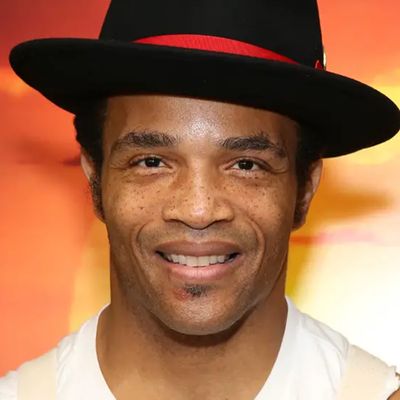
James Harkness is a Broadway veteran, as well as a best director nominee, and award winning choreographer, and a songwriter. He made his Broadway debut in AIDA in 2001, and has been on a roll ever since... Read More
From the show: The Theatre Podcast with Alan Seales
Guests
Featured Shows
About
James Harkness is a Broadway veteran, as well as a best director nominee, and award winning choreographer, and a songwriter. He made his Broadway debut in AIDA in 2001, and has been on a roll ever since. He is currently starring as Paul Williams in Ain’t Too Proud - The Life And Times Of The Temptations, and previously could be seen in Beautiful: The Carole King Musical. Other Broadway credits include Chicago and The Color Purple, as well as the Dreamgirls national tour. In 2017, James wrote and performed his debut show, Fragments of Me, at the Metropolitan Room in New York. And on August 4th, he can be seen online performing more of his original work through the Times Square Alliance Broadway Busker’s Concert series.
Originally from El Paso, Texas, James grew up constantly bouncing around and jumping “off all the things” - including the roof of his single-story childhood home. He recalls his mother always singing and dancing around the house, and is sure he learned to move by watching her. But it wasn’t until high school that he encountered structured dance classes, which changed his life. He had found a place that made him “100% happy”. After graduation, James joined the Navy and was stationed in San Diego, and it was there that dance came back to him. Throughout his career in the Navy, James would spend his days working on a ship, and then attend dance classes in the evening. When he left the military behind, James started going on regular job interviews. He signed up with a temp agency, and got an office job. But, he also continued going on dance auditions.
James shares with us how a one-off audition for Whitney Houston’s concert tour led to him signing with an agent, auditioning for Debbie Allen, and finally meeting Kenny Ortega at an audition to dance for Michael Jackson on tour. While he didn’t tour with Michael Jackson, James would spend two and half years on tour dancing for Puerto Rican Latin pop singer Chayanne. And after continuing to pursue a career as a commercial dancer in LA, he was pulled to Las Vegas by work and friends. It was in Las Vegas he would book his first job singing and dancing as the lead in a show - “one of the best things that has ever happened” to him. And a little while later, when Broadway came calling - it called twice. James simultaneously booked Saturday Night Fever and AIDA, all without an agent. And he has been gracing stages in New York City ever since.
In this episode, we talk about:
- The nickname his AIDA cast mates gave to him
- How he came to find dance again when stationed in San Diego
- The Whitney Houston concert tour gig he was offered, but couldn’t take
- Shaking Debbie Allen’s hand
- What a typical audition day looked like for him between LA and San Diego
- The theater experience that convinced him to move to Las Vegas
- The honor and responsibility he feels in portraying Paul Williams in Ain’t Too Proud
Connect with James:
- Twitter: @ijamesharkness
- Instagram: @ijamesharkness
- Watch the Broadway Buskers: TSQ.org/BroadwayBuskers or on our Facebook page: Facebook.com/TimesSquareNYC
- Le James Cafe with The Wiggles
Connect with The Theatre Podcast:
- Support us on Patreon: Patreon.com/TheTheatrePodcast
- Twitter & Instagram: @theatre_podcast
- Facebook.com/OfficialTheatrePodcast
- TheTheatrePodcast.com
- Alan's personal Instagram: @alanseales
- Email me at feedback@thetheatrepodcast.com. I want to know what you think.
A very special thanks to our patrons who help make this podcast possible!
Cheryl Hodges-Selden, Paul Seales, David Seales
If you would like to see your name in this show notes or get a shout out on the pod itself, visit ttp.fm/patreon to become a member and show your support!
Transcript
This transcript was automatically generated and might contain errors.
[0:00] Alan Seales: Welcome to The Theatre Podcast. Intimate personal conversations with theatre's biggest names. I'm your host, Alan Seales, and this episode is with James Harkness, who's currently playing the role of Paul Williams in Ain't Too Proud on Broadway once it returns. And this conversation with James was a lot of fun for me because I sort of watched him go through this evolution as he described growing up as a kid and into adulthood and then his 20s, 30s, and then into his professional life of just gaining more and more and more confidence. And his stories, I pointed this out to him, his stories were him basically talking himself out of doing something good or trying something good and then reluctantly doing it and getting the job that just changes his life.
And it's these stories over and over again that are a common theme of just like, well, I didn't want to do it and I left, but then I came back and then I got the job and my life's completely changed and it's wonderful. So the takeaway from all of this is if you don't try, you're never going to get it. If you're listening now, I would greatly appreciate a rating and a review. The ratings help keep the podcast going in iTunes and find me on Instagram and Twitter at theater underscore podcast on Facebook at slash official theater podcast. And now everybody, please enjoy this episode with James Harkness.
[1:44] Alan Seales: My guest today made his Broadway debut in AIDA back in 2001 before moving on to productions such as Chicago, The Color Purple, Guys and Dolls, The Dreamgirls Tour, and even Beautiful: The Carole King Musical. And once Broadway returns, he will resume his role as Paul Williams in Ain't Too Proud and can be seen online performing his original work on August 4th through the Times Square Alliance Broadway Buskers Concert Series. Lord James Harkness, welcome to The Theatre Podcast.
[2:14] James Harkness: I so love that you use my nickname. That was given to me actually when I was in AIDA by one of my cast mates, two of them, but specifically one, but they both kind of were joined at the hip a little bit. And, uh, they started calling me Lord Harkness and I was like, what, what, why, why are you calling me that? And, um, I have to say my insecurity part of me, which booms quite large in me sometimes took it as something that was a negative. And it took a little while to really understand that it was something that came out of love. Um, and once I did, that became my nickname and it followed me around. Like it just, for some reason seemed to fit. And as soon as they started calling me Lord Harkness or as Esmeret would say, Lord Harkness, um, it just stuck to this very day. People will still call me Lord Harkness.
[3:21] Alan Seales: I think it's wonderful. And, and, uh, on social media, uh, I think you changed your, your name recently, or maybe it's still like that on Twitter. I don't know.
[3:30] James Harkness: I changed it. And, and there's a part of me that regrets that I wish that I had just left it because, but the reason that I changed it to my name was just to make people, to make it easier for people to find me. Because a lot of times, you know, it was in the playbill, it's in my bio with Lord Harkness, yada, yada, yada. But a lot of times people don't read your whole entire bio. They'll see your name and that's what they'll type in for social media. So I just went, I'm going to leave it. I'm going to change it to my name. But one of these days I want to be able to put it back. Um, it is such a part of me.
[4:11] Alan Seales: Well, tell us more about who you are though. So I know you, you are from Texas. Is that where you grew up?
[4:18] James Harkness: Yeah, I am. Originally I'm from El Paso, Texas. Um, I went to Bel Air High School, which is really where a lot of this started for me. That was the first time that I was in a dance class. Um, and that is where everything shifted. Like I had always danced. I always sang. I was a gymnast. I used to jump off of my house. I'm not even kidding. Now mind you, we have like just, you know, regular one story home. But one of my favorite things to do was climb up on the roof and sit on the edge of the pitched roof. And I would look down and go, and then I would jump. And I was always jumping off of the couch, running along the wall, trying to do like cartwheels and aerial cartwheels on the fence in the backyard. So athletics was, was something that I was lean towards. And, uh, then dance came into my world in a structured way and it changed my life. It really, truly did. I found a place that made me 100% happy. And so that all started in high school in Bel Air.
[5:37] Alan Seales: So you were doing parkour before even realizing what you were doing.
[5:40] James Harkness: You know what? Actually, I guess I actually, I was, that's so funny, but I was literally, I would jump off the house on a day, almost a daily basis.
[5:51] Alan Seales: Your parents never came out and were like, James, you're going to break your legs. You're going to break your wrist, whatever it is. They just, they didn't know where they didn't like what, what was, I think as a parent, I would just go insane. If I saw my kid, even my mom never saw that. Did you have any, uh, do you have siblings?
[6:10] James Harkness: I do. I, um, I have two older sisters and I had, well, I had, uh, two older brothers. And then I have two, what I call my niecesters. Um, they're my nieces, but we've raised them from birth. So they're like my sisters to me.
[6:30] Alan Seales: And did everybody else in the family kind of, uh, get into performing too, or are you sort of the outlier?
[6:35] James Harkness: I'm the only one. I'm the only one. We all, yeah, we all love music. Um, music is an intrinsic part of our entire family and we're not, we don't sing together or anything like that. It's just music has always been a part of the family, but, uh, yeah, I'm the one I'm the one I got it from my mom though. She was always singing and dancing around the house. Um, I have like visuals of her memories of her in the kitchen. There's this song called, let me tell you about a hat, the rat King of the seven, uh, King of the something. Um, and she would be in the kitchen washing dishes. And I could see her like from the back doing like Egyptian neck, like what we kind of know of as Egyptian neck to that song. And I learned, I, yeah, I learned how to move and stuff by watching her move, but then dance itself just came through. I guess it's genetics. Yeah. But I'm the only one, only one.
[7:42] Alan Seales: Well, then did you go to school for this or like through middle school, high school? When did, like, when did you start really, I guess, incorporating the theater aspect of dance into everything?
[7:47] James Harkness: Uh, theater aspect of dance when I got my first Broadway show. Well, really like you did, did you move to New York just to be a dancer?
[8:06] James Harkness: No, no, no. My journey is much more complicated than that. Um, but it's also not typical. So most of the people that I work with, I'd say 85 to 90% of them went to school for musical theater. Like they started in tap and jazz and ballet classes at the age of six, seven, eight, nine. None of that happened in my life. Um, I really, like I said, I didn't discover organized structured dance truly until I was in high school. I watched everything on television. I watched all the movies, all the music videos. I wasn't truly aware that that was a job. Some people today still aren't fully aware that that is actually a job. Um, but no, I didn't really get, I don't even in high school, high school was high school.
I took dance in high school from my sophomore and junior year, stopped in my senior year. And after high school, I joined the military and it was in the military where dance came back to me. And, uh, I say that because I was not expecting to hear, of course not. Like I told you, my journey is not typical. I don't think anyone's journey is typical, but I think when you do talk to people that are in musical theater, um, they took musical theater classes. They took a course in it. They went to college for musical theater. Their parents were such and such, you know, there was a drama club. I didn't do any of that. Um, I, when I was stationed in San Diego, I was walking around downtown San Diego late one night and getting myself familiar with downtown San Diego.
And I was walking down seventh Avenue and I looked up cause I'm one of those people. I look at the top of buildings. I like to see what's up there. And I saw a sign that said stage seven, nothing else on the sign, just stage seven. And it was, I looked through the window. All I saw were stairs leading up and I was like, well, darn. So darn, I had to use that because we're on radio. And I said, I'm going to come back here tomorrow because my heart is telling me that this has to be something with performing. And even if it's not, I'm still coming back. Got off the ship next day, ran as fast as I could to get there and walked up the stairs, two flights of steps up. As I got closer to the second flight through the middle, I could hear music and I crested and I saw people sitting, stretching.
I saw a reception booth. There were two dance classes going on, a ballet class and a jazz class. And I was just like, Oh, I had found home. And, um, so that's what happened. I started taking dance classes at night on, on the weekends, if I could get away. And I was on my ship during the day and that was my life for three years until I got out of the military.
[11:05] Alan Seales: I get, well, just continue your story. I don't, I didn't know where that conversation because it sounds so interesting. Yeah. Just continue.
[11:17] James Harkness: Oh man. Uh, well, once I left the military through, okay. There's so many things. Um, I, when I was taking dance tests, I was still in the Navy. There was a girl that I met Roberta and she was like, you need to come with me to Los Angeles. I'm going to go audition for an agent and you should come with me and audition as well. And I was like, no, I'm not doing that. And she was like, why not? And I was like, in my head, I'm from El Paso, Texas, small town, small city, Hollywood was television. Hollywood was movies. Agents were movies, you know, talk to my agent. You know, that's what that was. I was never, that was never something that I saw in my life. She convinced me to go with her and audition.
So I did and walked into a room. I saw more male dancers than I had ever seen in my life. And I was totally intimidated, but also very excited. Um, I was there to support her, but I took the experience because she was like, at least experience what it's like to go to a real audition. So I did put the number on the whole nine yards. And at the end of the audition, the agency was like, thank you guys so much for coming. Great work. You'll hear from us in a week or so. If we're interested in you, if we're not interested in you, please don't give up. We just don't think that you're ready right now. Come back to us another time. We leave.
[12:48] James Harkness: Wow. That's a great message.
[12:49] Alan Seales: Yeah, they're great. Um, and, uh, so we take off, I get back, we get back, I get a phone call the next day. I was not prepared to get, I was not expecting any of that. And they were like, Hey, we thought you were wonderful. We would love to sign you because we have a job that we want to send you out on that we think you'd be great for. And I was like, I can't, I'm in the Navy. And there was like this moment of silence and it wasn't, it wasn't, it wasn't a long moment of silence, but it was one of those silences where it was like, well, why the hell did you come to this? You know, that's what, that's what I took that silence to me. Right. And she was like, Oh, okay, well that is great. Then well, what are your plans?
And she was like, if you get out, give us a call. If you, if it's something that you decide that you want to do, give us a call. We'll re audition you. And, uh, thank you. And that's too bad. And I was like, out of curiosity, what is this audition for? Cause I had to know, I, you know, and, um, she was like, Whitney Houston is going to be doing this concert tour and they're looking for one more boy. And I was like, Oh, like my whole insides just went, blah. But that was, that was like my brush in that moment. And, um, I finished out my military time. I got out of the military again. I was not
[14:27] James Harkness: Pushing myself towards this industry whatsoever. I started going to night courses. I wanted to do something with computers. So I was taking courses and I was going on job interviews. I signed up with a temp agency, and that's what I was doing. I would do temporary work from time to time. I eventually got a job with a company and figured that I would work my way up in the company and have my little office and my briefcase and my suit and tie and all that. And that's what I did. But I also decided to call that agency up because I'm like, I'm out now. I was like, I might as well try and have fun with it and see what it's all about. So I went back to LA, they auditioned me again, and they signed me. And I started going to auditions.
[15:18] James Harkness: So I went to my boss one day and I was like, Hey, I have an audition to go on. It was like my third audition or something like that. And I was like, it's a pretty big deal. And he was like, audition? What are you talking about? I was like, I dance. He was like, you're a dancer. Oh, wow. That's interesting and exciting. He's like, yeah, cool. Take the day off. This was a Friday. And so I took my day off, went and auditioned. Huge audition. I walked in, saw people that I had seen in music videos, in commercials, in movies, all of the things that I used to watch. All of those boys, and this was male audition only, dance call, were in this room. People that had danced with Michael Jackson, people that had danced with Prince, people that had danced with Madonna, people that had danced with my all-time favorite Janet Jackson.
All of these people in this room. And I put my bag down and I sat down and there's this dancer. I have to say this story specifically because this is what happened. Eddie Garcia. If you watch the nasty Janet Jackson's nasty video, and there's this one guy that does all of these turns, he does eight pirouettes. That's Eddie Garcia. So I'm sitting there, I'm stretching, I'm looking around and Eddie is to my right and he's at the bar. And then he does, he goes step, step, prep, turn, turn, turn, turn, turn, turn. I was watching it in real life. I picked up my bag and I walked out. Because I was like, I can't do this. You know what I mean? I was so intimidated. I was so incredibly intimidated. But then I stopped myself and I was like, if you don't do this, you have to do it.
So I turned around and I walked back in to the audition and sat down and auditioned. And I made it through the first day of auditions. Debbie Allen, the great Debbie Allen was holding this audition and she shook my hand. Those of us in the group that I was in that she kept, she shook our hands. She was like, great work, work on that. I'll see you tomorrow. Debbie Allen had shaken my hand. Debbie Allen that I used to watch every Sunday night. Fame, I'm going to live forever. You want fame? Well, fame costs. And right here is where you start pain and sweat. Shook my hand. I didn't know what to do with myself. And I was like, I'm never going to, you know, when people say that, I'm never going to wash this hand again.
I totally said that. I washed my hand, but I totally said it. Um, went back the next day on Saturday. You know, that's it. Uh, I went back to the audition on Saturday. I got cut, but I didn't care because I had done something that I didn't know that I was going to do. And I went back to my work. Things were cool. Um, another audition came up. I asked for the day off and he was like, okay. And they gave me the day off. Didn't get that. Another audition came up. This is all I say within the span of like two, three months, another audition comes up huge, huge audition. And I go in and I was like, Hey, can I get the day off? And now I'm sure your face is probably going. No, basically the guy was like, you need to figure out what you want to do.
I can't keep giving you days off. This is, you either are going to work here or you have to go off and pursue them. He's like, if you want to go do that, that's great. He's like, but I, you need to make a decision. So I made the decision and I went to that audition, which I didn't get, but, but, but, but, but that audition got me my first job. That audition was for Michael Jackson. And I made it down to the last group of guys that Michael was going to pick from for his next concert tour. Whoa. Yeah. Huge, huge thing. I couldn't believe it. Like I was in the running with his old dancers because they had to re-audition and some other dancers. And I would not believe it. I got to go into a room with these men, Kenny Ortega, who you probably, hopefully, you know who Kenny Ortega is, the great Kenny Ortega who directed all of Michael's tours and who's directed tons.
He's done tons of movies and, um, you know, uh, uh, oh God, Muses, you know, that was one of his movies back in the day. Um, he, I got picked to be one of the guys I'm in the room with this man and we got to do the coolest thing. So we all did the combination together and then they showed us freestyling and then they pulled us in individually to do the combination and to freestyle. And they were like, and you can give Michael a personal message, whatever it is, you can say anything you want to. When was this little Texas boy who Michael, Michael Jackson and Janet Jackson, two of the biggest things in the world. And I get to stand here and give him a personal message. So I did. And, um, that job ended up not coming through because Michael decided that he wanted to use his old dancers from the last tour.
Um, and you remember what your message was? I do. Of course. Um, I was like, Hey Michael, my name is James Harkness and I'm really excited. To audition for you. And I was like, I think I have something in common with you that the other dancers won't. And, um, I was also raised as a JW. So, and I know, you know what that means. So, and that's what I said.
[22:03] James Harkness: And that is a Jehovah's witness. I was raised as Jehovah's witness. So, yeah, yeah. So I didn't get the job. Um, no, but it had nothing to do with that. Um, but Kenny Ortega liked me. There was another audition. My agency called me up and they were like, Kenny Ortega says, if you can come into this audition and dance as well as you did for the Michael audition, you have a really good shot at getting this job. So go in there and do everything you know how to do, which I did. And, uh, I got my first job. I found out that night and it was incredible. And that was for Cheyenne who is a huge Puerto Rican singing star. Um, there was a day when it was Cheyenne and Ricky Martin, like before Ricky Martin broke into the American market in the Latin market, Cheyenne, Ricky Martin, Ricky Martin, Cheyenne, Cheyenne, Ricky Martin.
That was, those were the two like pop pop stars. Of course, there are tons of other ones, but those were those two names. And I got to tour with him for like two and a half years. And that was incredible. Um, so that's what happened. And that's how the business came to me in reality, the business came to me. I wasn't searching for it. So, yeah. And this Broadway is very similar. Um, I didn't grow up on musical theater. I watched Hollywood movies. I used to see the Tonys on television, but to me, the Tonys was no much, no more different really than watching the Oscars or watching the American musical awards or the Grammys. And part of that was because I was seeing people on the Tonys that were on television and that were in movies and stuff.
So I just assumed that it was another award show. It didn't have, it didn't have any significance to me beyond that. Um, until many, many years later, of course, I'm on Broadway and I'm going through old VHS tapes and I'm looking at recordings from the Tony awards. And now I'm like, Oh, I was watching this all these years. Um, and, uh, I, um, so now I'm on my path as a performer and I'm dancing and I'm trying to make it in LA and I never really made it in LA the way that I dreamed that I would, that I hope that I would be on Cheyenne. Nothing more. Stop. Go ahead.
[24:40] Alan Seales: Yeah. You've got experience. I'm saying you've got experience in a, in a realm of performing and dance that, that like, I know about it. I just never, I haven't thought about it in so long. Like the, the world of professional backup dancers, right. You know, commercial dance, people make their whole lives.
[24:59] James Harkness: Yeah. Commercial dance. And, and I don't, we don't hear a lot of that and we don't see a lot of that in New York though. That's more LA based.
[25:09] James Harkness: It's very much LA based. I mean, there's some of it that happens in New York, but it is definitely part of the market in Los Angeles. And yeah, people make their careers dancing behind stars. Um, yeah. Prime example is the guy that, so when Michael chose his, all of his old dancers for that tour, one of the dancers was not able to do the tours. So he chose one dancer out of the group of us. That dancer was Jamie King. Jamie King is a brilliant dancer. And he took that job dancing backup for Michael Jackson. And he has become one of the premier directors of, of stage of concert tours. He, he choreographed and directed for Prince for a long time. He choreographed and directed for Madonna for a long time.
He did it for Ricky Martin. He he's worked, he, that became his jump off point. Tina Landon's a great example. You wouldn't know Tina Landon from Janet Jackson years, but that was a jump off point for her to become a choreographer and creative director for huge stars. That is one of those things that happens in the commercial dance world.
[26:28] James Harkness: And, uh, it was one of the things that I hoped for and it did not happen like LA didn't happen for me. And part of the reason for that is because like people who want to make it on Broadway, you have to live in Los Angeles to make that happen. I was living in San Diego. I was still, I had gotten out of the military, but that was where I knew. And that was where I stayed because I was afraid of moving to Los Angeles. Every time I would go up there, it was too big of a city for me to wrap my head around. How do I find a place to live? What am I going to do? Like I didn't have a car. I w so I didn't know how things were going to work. And as it was, I would commute and a typical audition day for me.
And this lasted for years upon years from San Diego. If I had an audition, say that audition was at one o'clock in the afternoon, I would have to take the first, very first train or bus out of San Diego to get to Los Angeles, to get to downtown Los Angeles. And then from downtown Los Angeles, I would have to figure out the bus system to either get me to Hollywood, West Hollywood, Santa Monica, or wherever that audition was. Then I would walk the extra blocks or whatever if the bus didn't drop me off close enough to wherever that audition was. If I made it and I got a call back, that was either later on that day, which sometimes they were, then my evening lasted until, who knows, 10 o'clock at night.
Then I would backtrack and do that and get myself all the way back to San Diego. So I would get home around two, three o'clock in the morning. If I had a call back, that was the next day. I would have to figure out where to stay or essentially I would have to go back to San Diego, go home, shower, change, sleep a couple of hours, get back up and turn around and do that whole process again to, to get back to a call back. Those were my years of Los Angeles because I was too afraid to move to the city. Then I got to a point where I was like, you have to figure out what you're going to do because the money that I had made from that.
[28:54] James Harkness: Thankfully, there was a choreographer who, another thing that we don't talk about in the New York dance world is industrials, which was a huge thing in the Los Angeles market. An industrial is, I used to do them for Reebok. So instead of hiring models, they would hire dancers to show off their next line at these big sports conferences that these different stores, champ athletic wear, blah, blah, blah, blah, blah. They're going to come look at what, excuse me, what Nike's new or what Reebok's new line is. So you have a bunch of dancers doing what models can't do, showing the active wear actively. And industrials were huge, so much. Oh, Lord, sorry. Edit that out. I mean, it's radio. Edit that out.
So much fun. It was so much fun. And so that's one of the things that kept me afloat while I was in Los Angeles. While I was trying to get that music video, I was trying to get that movie, I was trying to get that concert tour. I auditioned for Janet. I auditioned for Madonna. I auditioned for, and I didn't get it. Michael was the only, the creative team for Michael was the only people that thought I was good enough or had the right style to possibly tour with this artist. So what ended up happening was I had friends from San Diego. My story is so long and complicated. It's crazy to getting me to Broadway. I am fascinated by the way, like it is amazing the turns you've taken so far and you're not even to Broadway yet.
I'm not even near Broadway yet. I'll get through the next chapter quicker. I had friends that I met in San Diego at the dance studio that had moved to Las Vegas and they kept calling me going, James, you should come to Vegas. You'll get a job in a second because they knew that I wasn't working the way that I wanted to work. But the Los Angeles mentality, especially at that time, was if you're not good enough to dance in LA or you're too old to dance in LA, you go to Las Vegas. Las Vegas was like the graveyard for dancers. And so I was like, in my head and heart, I was like, I'm good enough. I have to be good enough to make it here. So I am going to make it here. So I kept saying no, no, no, no, no, no. I did an industrial that took me, that took us out to Vegas and I decided to visit my friends and hang out for a little bit.
And I had a gap between that part of the leg of the industrial and the next one. So I hung out in Vegas. They immediately started sending me up on auditions and I was like, okay. And then they would set up an audition and then I would call those people back and I would be like, hey, thank you so much. I'm not going to be able to make it, but I really appreciate it because I didn't want to tell my friends no. But I also didn't want to do Las Vegas. Well, one day I decided to go see a Vegas show. There was one show that they kept pushing on me, which was called Enter the Night. That was at the Stardust Hotel and Casino. And I remember getting off the airplane in Vegas and that was my first time in Vegas, getting off the airplane.
And one of the first things I saw as I came off the airplane into the terminal, Enter the Night, the one show you must see, Stardust Hotel and Casino. And everywhere I walked, the thing that I kept seeing, Enter the Night, the one show you must see, Enter the Night, Enter the Night. And I was like, fine. So I was walking down the Vegas strip and I ended up underneath the Stardust sign. And I was like, James, go see the show. So I went, got a ticket, and I watched the show. So that show opened. They gave me a great seat because I told, they were like, if you go see the show, ask for this person. I did. They gave me a great seat. And I, my mouth was open, probably for all the flies were going in and out of my mouth because I had no idea that this was what a Vegas show was.
All the things that I heard or the feelings that I heard about Vegas, none of that was what I was watching on stage. And I was like, why are there ice skaters and laser show? And I was like, what the hell? So I was like, I want to do this show. This show sounds, this show looks amazing. So I auditioned for the show. The next day I went backstage and I met the people and I was like, I'd like to audition. And they were like, can you audition now? And I was like, can I come back? And they were like, sure, come back tomorrow. So I auditioned and they offered me a job and a swing position, which I had no idea what a swing was. And they were like a vacation swing. And I was like, I don't know what that means.
They're like, we have someone in the show right now who's going to go do a movie. We need someone to cover his spot while he's gone. And then you would stay on as a swing. Meaning if someone gets sick, you come in and you do their position. Otherwise, you know, you're just on call. And I was like, oh, okay. Well, San Diego is not that far from, it's only a little bit of a flight away from Vegas. So I'm sure they could call me up and I can hop on an airplane and I'll be. And she was like, and I said that out loud and she was like, no, no, no, no, no, no, no, no, no, no, no. You actually would have to move. Cause she was like, if someone gets sick at three o'clock in the afternoon and we need you to go on.
And I was like, oh, right. And I was like, I need to think about this. And, um, and they were a little bit taken aback, but I also explained to them that I didn't live in Vegas and they understood that. So they were like, we'll give you a couple of days. Take three days or so. Think about it. Give us a call back. And I was like, okay. I went on to my next leg of this industrial. And I sat and I thought about it and I just went, you know what? You can move to Vegas, do this thing for six months. If you hate it, then you're done. You've made some money and you can finally move to LA, which was what the ultimate goal was. So I called my friends up who were friends with those people at the Stardust.
And I was like, left them a message. And I was like, Hey, can you call or do the Stardust? Let them know that I would like the job. I'd appreciate it. See you later. Now, three or four days, I didn't hear back from my friends. Four or five days has now passed. I called them back up and leave them another message. And I was like, Hey, just wanted to check in. Did you hear anything back from the Stardust? Let them know that I'm interested. I get back from, from this industrial I'm back in San Diego and I call my friends and they answer the phone. And I was like, Hey, so what did they say? And they're like, what did they say about what? And I was like about Enter the Night at the Stardust. And they're like, what are you talking about?
And I was like, I left you messages. Oh no. And they were like, Oh James, our, our answering machine has been broken. We just, I was like, um, and they, so they got on the line. Now, mind you, I still do not remember to this day why I never called the Stardust myself. I don't know if I lost their number. I truly do not remember. We get in touch with the Stardust now, like it's certainly over a week has passed by. It's definitely been more than three days. They had waited to hear back from me. The job was still open for me. That was a sign I packed up and I moved to Vegas. And what year was this? Where are we in time right now? Do I need to answer? No, I'm just kidding. Um, I'm not answering that question.
That's going to date me. Um, this wasn't, this was, um, I moved to Vegas in 95, 95, 94, 95. Okay. Okay. I think I wouldn't say, I wouldn't say not with you. I wouldn't say 94. Um, so I moved to Las Vegas to do this show and it was one of the best things that has ever happened. It was an incredible world. That show made me a lead. So I went from being a vacation swing to being a lead. One of the singer dancers in the show was leaving. They asked me if I could sing. And I was like, yeah, I can sing, sang the songs. They were like, you're hired. So the next thing I knew I had a key to a dressing room that I was sharing with two other, with the two other singers in the show, I had my Janet Jackson microphone.
So, you know, her old microphone that she used to wear, but she still wears them. Um, but I had, I had a Janet Jackson microphone, which made me so incredibly happy, like nobody's business. And I was singing and dancing in a Vegas show. I never knew something like that would happen to me. And that was my life. Many things happened to me in Las Vegas. I met a guy named Michael Balderrama who I had met previously. He became my best friend. I hired him to do a show that I was in working with recording artist, Christine W who everyone should know about. I wish that everyone did know about her. Um, Michael ended up moving to New York to do Saturday Night Fever. He reached out to me and he was like, some position is opening up in Saturday Night Fever.
You would be great in the show. Plus I missed working with you and I missed working with him. We were a force like no other. At least that's my point on us together. And, um, I auditioned for Saturday Night Fever. I booked Saturday Night Fever. Now I'm at this point in time, I'm in Reno and I'm doing a show that I was the, one of the featured performers. Like my face was in menus in the hotel. Um, super crazy. Um, and I was trying to figure out finding someone to replace me in that show. And at that time, the casting company, while they were trying to figure out how to get me into Saturday Night Fever, they also called me up and said, we have another show that we'd like you to audition for. It's called AIDA.
And I was like, Oh yeah, I know of AIDA because someone that I had met right before, um, I moved to Reno was had left Los Angeles to do AIDA and he booked his first Broadway show and he was talking about it. So I had a reference and then I saw the Tonys that year and saw the visuals of AIDA, you know, when PBS used to do the first 13 awards, that's where I saw a little bit of AIDA. And so I went and I auditioned for AIDA and I booked AIDA. So now I had booked two Broadway shows and I didn't have an agent. I called my friends cause I hadn't let my dance agent go. I called my friends. They hooked me up with an agent and I came to them and I was like, I have two Broadway shows and they started representing me.
Saturday Night Fever went away because they needed me and I couldn't get out of that job. So AIDA is the job. Wow. That is, that is such a story. So you're showing up in New York knowing so little about Broadway in general and gosh, your whole career has just been like, you know what, that's so funny that you say that cause I've never thought about it that way. Your whole career has been falling into these jobs after trying to actively talk yourself out of them almost every single time. As many times as I've told this story, I've never thought about it that way. And yes, that is exactly what has happened. First, okay, well, but, but let me tell you, let me add onto that. Now that you said that and I'm laughing and eating grapes.
Um, so let me tell you about AIDA. That's insane. I mean that. I auditioned for it. So they were like, we have this other show, AIDA, they're auditioning for the first national tour and future Broadway replacements. My first job was a concert tour. So I was like, Ooh, a tour. I would love to go on tour. That's where my brain was at. So when the phone call comes and my agent was like, guess what? You booked AIDA on Broadway. And I said, I didn't get the tour. I'm not even kidding. And she was like, no, you booked the Broadway company. And I was like, is that a good thing? And she was like, it's Broadway. And I was like, I was like, okay, you know, I, again, I didn't, I didn't understand the significance of it, but it was also a job.
And I knew that it was going to be a good job. And I had seen that snippet on television, but again, the Tony awards did not have the significance to me then that it does clearly now. So, yeah, yeah. And I didn't talk myself out of AIDA, but I was really hoping to go on tour. So, you know, it's such a crazy thing. I'm just, I'm very, very thankful.
[43:52] James Harkness: And Janet Jackson, and all these icons that you grew up with, and now we're like the Temps part of your influence as a kid. Did you know about them? Like playing Paul Williams, what does that feel like?
[44:04] Alan Seales: Of course I knew about the Temptations. Who really accepts kids now? And even kids now, depending on who your parents are, you know who the Temptations are. If you haven't heard that song, then something is wrong. So yeah, of course, you know, Temptations was played at home. Temptations was played in the car. Still, my mom still has the $45 Confusion, you know? I remember sitting in the car waiting for that song to come on because I used to love that bass line. And that guitar, you know, so classic, so incredible. And I used to like get as close to the speaker as I could because I wanted to hear the vibration. I wanted to feel the vibration. So yeah, Temptations, of course, they're a part of life.
Now, I didn't know a lot about the Temptations beyond their music. So getting to play, I didn't even know their names. They were the Temptations. Getting to play Paul Williams is a dream that I never could have possibly dreamt. That's what this whole process is. People have asked me, man, this must be a dream come true. And I'm like, there's no way I could have dreamt this. Are the components dreams come true? Yes, of course. Of course, I've wanted to be. I was going to say, just playing these, this iconic character for this iconic show, the Temps, I mean, when I saw Ain't Too Proud, the majority of the audience is just there singing with you. And it's almost, I mean, it's a story, it's a concert, but you're telling this wonderful story.
And there's so much history that I didn't know about. I don't know how many other people knew about the history either. But watching it all come to life, I mean, just watching the show and knowing you and the other guys, what it means to play these characters, it's got to feel good at the end of the day to be bringing this history to the audience, who's obviously, you can see them just smiling and laughing and singing their ass off for the majority of the show. Yeah, yeah, it's incredible. And crying and going through the whole emotional spectrum that you get to go through, not only being in the show, but watching the show. And yeah, it's an incredible thing to honor these men, to bring their story to life in a way that hasn't been done yet.
Yes, there was the mini movie that was done that is a classic for so many people. But bringing it to life on a nightly basis, channeling these people, letting their spirit flow through us to tell these stories is incredible. It's truly an incredible thing. And it means so much to so many people for so many different reasons. Because we know how important music is to our lives, how intrinsic it is, you can pinpoint specific moments in your life tied to specific songs. And the Temptations are a part of that for so many people. So it's an incredible responsibility. Sometimes that responsibility, especially in the beginnings of it, was so daunting. And then the responsibility has shifted now that it has become a successful show.
And now it's the ongoing staying truthful to the show and to the storytelling. That becomes a different part of the responsibility. But it's truly an incredible thing. And Paul Williams is a gift to my life.
[48:00] Alan Seales: Go ahead. And you worked with Otis. Otis Williams helped shape a lot of the show, right? So what was that like working with him and kind of crossing that barrier?
[48:12] James Harkness: Well, he actually didn't help shape the show so much as he, of course, gave permission for this story to be told. He and Shelly Berger, who's still the Temptations manager from then until now. And he was there to give us the Temptations some guidance as to what it was like to be a Temptation. And he definitely sat us down many times and told us many stories about what it was like for them. But he sat with Dominique Morisseau, who wrote our show. And they definitely had plenty of conversations. And she did all of her research and stuff like that. But he wasn't in the room during the rehearsal process, giving any real guidance or anything like that. He would speak up from time to time, the days that he was there. But he was really there more as to watch it. And if we had questions, we would go to him kind of thing. And that is an incredible thing to have this man in your life we call Uncle O.
[49:16] Alan Seales: I was just going to say that on Broadway, I mean, so many celebrities and so many big names come to see the show, come to see these shows all the time and come backstage and meet the cast and everything. Have you been able to meet some of the people that, you know, like life coming full circle? Have you been able to meet the people that you previously in life auditioned for that never got to go on tour with?
[49:36] James Harkness: No, I have not. But I have definitely, speaking of stuff like that, I have definitely had the opportunity of meeting people, especially through Ain't Too Proud, because it's The Temptations, people that I would love to have worked with, people that I thought the world of and was like, God, what it would be like to dance with or for that person. Though those opportunities never came around, but I have had the opportunity to meet them and getting to meet them after them seeing Ain't Too Proud is such a spiritual experience because their hearts are open. They come backstage full of emotion and so they're not coming backstage like it's been in other shows that I've been a part of where the show's wonderful and they've enjoyed the show, but they're also coming backstage because it's part of the publicity of the situation and they're very nice and they say the hellos and things and we all take the cast picture together and they've enjoyed the show and thank you very much and da-da-da-da-da.
With Ain't Too Proud, also kind of like it was with Beautiful the Musical, people come backstage, I'll tell you a story, a short one, TLC came to see the show. And you know, yep, exactly, it's TLC. And so they were like, you know, TLC's on stage, of course we want to go say hello to TLC. And I was like, oh, I'm going to sing this song to them because that's one of the things that I like to do because I'm an idiot. I get on stage and I'm waiting and I'm up next in line and Chili sees me and before I can even get too many words out, she's like, can I give you a hug? She's like, I just need to give you a hug. And that's what Ain't Too Proud does. So to get to meet these people who, yes, they are still coming backstage because, yes, part of it is a celebrity thing and that is part of our business, but they also come backstage, hearts open.
[52:07] Alan Seales: Well, the show just means so much to so many people on many different levels because the Temps have been around for so long and they have so many hits throughout the decade. Like you said, a song can take you back to one of the greatest moments of your life, right? So they've had just hit after hit after hit over decades. So there's so many generations, multiple generations that appreciate the show and the story and everything on so many levels.
[52:26] James Harkness: I completely see that. I completely understand. Absolutely. And because of the time period when their music was coming and becoming famous was the 60s and the 70s when our country was going through what it's going through as we are going through it now. So that also sits in the place for that generation of people that come backstage. So like, yeah, there's a story I wanted to share, but I'm not going to because it's just going to be one of those things that's going to take the time that it's going to take and I don't want to do that, but it has just been amazing. I know it's crazy, but it is an incredible thing how people respond to Ain't Too Proud. So when we do get to meet them and they come backstage and they want to share stories of their Temptation stories where like women, people, women, but people have come back and they're like, I was there that night when David Ruffin came up on stage in the middle of a concert and took the mic away and started singing the songs.
They were like, I was there. And so it's like crazy when those things happen, you know? So yeah, it's Ain't Too Proud is a spectacular piece of work that I truly am blessed that I am a part of and I know that the rest of us feel the same way.
[54:01] Alan Seales: So that's amazing. I could dig into this for a long time, but I want to get over to the Broadway Buskers. So the Buskers Concert Series is put on by the Times Square Alliance, who for those who don't know, they're like this organization that helps to promote and market Times Square and bring like concerts and like they're the company that manages the ball drop every year, you know, for New Year's Eve and other, all these other big events. But the Broadway Buskers traditionally, it has been like an in-person thing, which this year is going virtual. Yeah. And yeah. And, and well, tell me more about that. Cause that's, this is all original music, right?
[54:42] James Harkness: Yeah, I am so blown away by this moment that is happening that I get to be a part of this event and that I get to present my original material to whoever's going to be watching this online. I've been writing songs for a long, long, long time, and it's taken me a long, long, long time to get out of my shell of sharing that kind of stuff with people because it's such a very private thing. And this journey as a singer in this business, especially has not been the easiest thing for me. And I've had a lot to learn because I've had to get better. I'm not one of those people who I didn't grow up in the church singing gospel music. I don't come from that type of background. As I said, I don't come from a musical family.
So we weren't sitting around, you know, like the Von Trapps or the Jacksons or the Jonas Brothers singing. I just throw those random things out there. Singing music. So dance is my foundation and I'm actually really very proud of that. And I hope that people enjoy it. I really do. Like I said, I wrote my first song when I was in seventh grade and there's just been little, I know this is all like, I'm all tongue tied now when I'm talking about my own stuff. I just love it. My style, people are like, well, what's your style? And I'm like, I really cannot answer that question because I'm influenced by too many different types of music, including musical theater, which has had a big influence on storytelling for me with my writing.
So some music is poppy, some music is a country song. I've written several country songs or country-esque songs that I absolutely love. Some of it's rocky, some of it's R&B. It all ultimately is just me. And I'm really thrilled. So I'm thankful to Ben Cameron, who brought me into this. And I'm thankful to Broadway Buskers for saying, yeah, we'll take a chance on that guy.
[57:06] Alan Seales: It's interesting to me, your whole story, the first two thirds of this hour, right, was all just dance, dance, dance, dance. And then out of nowhere, of course, you get hired because you could sing as well as dance. And now we're talking today because you've written your own music and you're just such a fascinating person to me because I feel like anything that you let yourself do, you could probably just go do it. I think you're your own worst enemy. That's what it sounds like to me.
[57:35] James Harkness: I am the worst enemy. Like, I can go out and I'm just going to go to Vegas and I don't want to audition. Oh, crap, I got a job. I'm just going to audition for a Broadway show. Oh, crap, I got two. Oh, yeah, like, oh, I get going, going.
[57:50] Alan Seales: Now, you know, you're starting to write your own music and starting to perform this. I feel like, you know, two years from now, we're going to be having another conversation and be like, well, now I'm, I'm searching for Broadway dancers or for backup dancers out in LA. Cause you're going on your own concert tour. Look, if we have that conversation, I don't even know what to say. Look, I, well, again, I've been writing songs like consistently, uh, consistently is the wrong word, but even though I wrote my first song when I was 14, the first time I actually recorded a song of mine was when I was in San Diego. So when I was, uh, transitioning out of the military. So this is a 91, 92. It's the first time I recorded something that I had written.
And so since then up till now, I just write and I write and I write and I have files full of snippets of song ideas that I have all these little books and notebooks and pieces of torn paper and napkins and all this stuff with lyrics or partial lyrics. And I've been, and I've gone into the studio. I've recorded, I recorded some stuff while I was on tour with Aida. I'm also very, when I don't just write lyrics, I, I come up with the baseline drums, piano. Piano is the hardest thing. Horns, all of it drunk. I do. I, those, all of those things are in my head. So when I hear something and it fits, it'll be. So that happens. And then just doing that is what I do. So if we were able to layer all that right now, that would become a song.
And I do that frequently and things will just come. I'll wake up from a dream and I'll have dreamt a melody or a lyric or something. And I have also plenty of these voice memos where I'm just like, Oh, so it, it, it's because I'm like, you know, just trying to like record something. And then later on, it sounds like. But, but then there are those times where those things are clear enough. And sometimes they're actually crystal clear, which for some reason I wake up and my voice is okay. And I'm like, what the hell? And I have written more than a few songs that way I've written songs. Cause I've heard someone say something and I'm like, Oh, that will make a fun lyric. And then I'm like, that's what's happening honestly right now, which I can't talk about it, talk about it.
But I can say that I have, I wrote a theme song for a new TV show that a TV show idea that has now been given the green light to record a, to film a pilot. And that all came from, yeah. And that came from a conversation that I had with someone, I wouldn't even want to say who it was, but he was telling me basically the cons, the idea he's like, I had this idea and he was like, I like the way your brain works both musically and lyrically. And he was like, so I just, I'm tossing this idea out to you. He's like, if you, if anything comes to your head, just, you know, say and say a word or some names or whatever. I just, I like the way you think. And I was like, okay. So we chit chatted about it a little bit.
And then he tossed out this idea and I was like, Ooh, I was like, well, if you do that, then what about this, this, and that it was like, Hmm, something to think about, but I got to go. And I was like, cool. I get a message from him on Instagram about five minutes later. And he was like, I got the title. And he told me, he tells me the title of the show. And I was like, if I could write a song with that title, what would that be? So I just, I had this moment. So I told you, I have a phone full of stuff about three, two weeks prior. I came up with this really weird sound and I was in my kitchen and I was like, and I was like, I have no idea what this is, but I'm going to record this into my phone.
That sound has turned into a theme song that they liked so much that now they're developing a TV show, a pilot. So the show came, the show, the pilot was greenlit after they heard the theme song that basically the theme song was an added, the theme song was an added boot. I think they already liked the idea and they didn't ask. And the thing is, they didn't ask me to write. I just, I couldn't help it. And I have a relationship with these people. And so I was just like, Hey, I have this idea. And I sung a brief part of it to him on the phone. He was like, Oh wow, that sounds interesting. Well, yeah, go ahead and work on it kind of thing. So the next morning in their inbox was me layering. Like I do this song and I sang, I did that little thing and then I sang a lyric over it and then I harmonized with it.
And then I added some other little ideas into it. And I did some fake, some bad voiceovers as stuff and they loved it. And so I made a better version of it. And when they heard the better version of it is when I heard that they greenlit a pilot.
[1:04:30] Alan Seales: That is so amazing. Well, when and if you're able to tell us what it is, let me know. We'll add it to the episode notes for this episode. You can go check it out. And we're going to, we'll come to our closing three standard questions that I ask everybody on the podcast here. The very first one simply is what motivates you?
[1:04:52] James Harkness: Oh man. Honestly, love. I know that sounds crazy, but I love what I do. And I love what I'm been blessed to do because all of this stuff has been brought to me. And so I embrace it. And while I'm not always the most motivated person, because I see people around me that are just like, and they're just like, I'm doing this and I'm doing that. And I'm doing that and I'm doing that. And I'm not always that person, but I still am motivated to do what I do because I love it so much. I like that. All right. So what advice would you give to your younger self and younger people listening now starting out down a similar path?
[1:05:34] James Harkness: Well, what advice I give to my younger self is to not be so fucking afraid. Yes. Truly. Cause sometimes I sit and I wonder where I might be had I not been so afraid. And I, there are stories about that. I, there's someone who I actually ended up working for and the reason, and I would have worked for him earlier, but I found out a component and I was afraid of the audition. So I backed out of the audition. And the thing with that audition was they had been looking for me and I ended up being somewhere, right? When someone walked out of the office and they're like, Oh my God, I can't believe you're here. I have such and such a person on the phone. And they're literally asking for you right now.
And, but when I found out about the audition and that I had to tap dance in the audition, and I'm not a good tap dancer, I was like, I can't go to the audition. So I backed out of the audition. And I found out years later when I finally had a conversation with him, he was like, don't ever do that again. He was like, just go don't ever step back from something again. I have not been fully successful with that, but I have been better with it. So my advice to my younger self is not to be afraid. And that's a similar advice to younger people that are starting out. Don't be afraid, try everything, learn everything that you can learn. And this is across the board. This isn't just for people that want to get into the arts.
I'm like, if you find that thing that you love, learn everything that you can about it and things that are adjacent to it and go for it because we're all going to fall down. If you learn how to fall down when you're younger and get back up, it makes it so much easier when you're older to do. So yeah.
[1:07:29] Alan Seales: Totally agree. So last question then is if you could only see one show for the rest of your life, but you can see it as many times as you want, what would you see?
[1:07:33] James Harkness: Oh, dude. It's not a show that you've ever heard of because it's not a Broadway show. A Vegas show? It was a Vegas show. There was a show that was called Exposed, choreographed by my mentor, Tiger Martina, who used to tour with Paula Abdul, one of my favorite dancers of all time and definitely one of my favorite choreographers of all time. I could watch that show. I could watch that show. I used to watch that show as often as they would let me in. They got to a point that I came so frequently that I didn't even have to buy a ticket anymore. And I still would buy a ticket because I was like, I have to pay. But they were like, you never have to spend money here again. If there's a seat, we will let you in and you will go sit down.
Wow. All of those dancers in that show, I adore them to this day. They are part of my heart. Some of the most awesome girls ever. And there was a boy who ended up being in that show when they brought men into that show. And his name is Jason Young. Jason Young. We ended up working together in Vegas. That's how we knew each other. Jason Young then became, went on to be, into the first national tour, Bring on the Noise, Bring in the Noise, Bring on the Funk. Jason Young has since gone on to become a choreographer and a musical director, not musical director, a choreographer and a director for, he's worked with Madonna. He has worked with Ricky Martin. He has done so many things. So that is like, those people are all such a part of my life. So that is my show. That is my show. Hands down.
[1:09:23] Alan Seales: Well, if you ever have a bootleg of it, let me know. It sounds fun.
[1:09:27] James Harkness: I wish I had one. I wish I had one.
[1:09:30] Alan Seales: Well, if anybody listening has a bootleg, let us know. So we can get more information about the Broadway Buskers at timesquarenyc.org slash broadwaybuskers and facebook.com slash timesquarenyc and they are times square TSQ on YouTube is their name. And then where can we find you now, James? Where can we find you on social?
[1:09:54] James Harkness: All my social media now has the same handle, which is I, James Harkness. So that's on Twitter and on Instagram. On YouTube, which I have stuff up on YouTube. It's not the most amazing YouTube channel, but it has a bunch of my stuff, my choreography. I direct as well. All of that stuff, that's all on there. And that's just under either my name, James Harkness or my initials, J K L H 37. It's not my initial, but I haven't changed it to I, James Harkness yet.
[1:10:30] Alan Seales: Well, I don't know. I don't know if you need to. It's kind of, I mean, they search for your name. It's good. All right, cool. So you can get more of me at the theater podcast.com. I'm on Instagram and Twitter at theater underscore podcast and facebook.com slash official theater podcast. You can leave a rating, leave a review, please spread the word, tell your friends. This is edited by Matthew Hendershot. Thank you to jukebox, the ghost for the intro and outro music. And most of all, thank you to James. You've been a wonderful guest and you tell the best, best stories. I could listen to your stories forever.
[1:11:06] James Harkness: Hey, thank you, Alan. I'm so glad that we got to communicate again this way. This is fantastic. We started talking about doing something like this when we met, um, who knew that it was going to be this way to get to talk to you about all the stuff that I got to talk to you about, but also about my original music. And, um, I'm really glad that you're a part of this process.
[1:11:29] Alan Seales: Well, thank you. I'm really glad to help. And, and I'm serious. I mean, like something's going to happen now that you're, that you're used to not being afraid of things. I think something's going to happen very soon. And like the world is going to be different when Broadway comes back. It has to be. And something out there is pushing you in a direction that, that you've just, you're going to be successful. So we'll be talking again for your next project. I'm sure you're, you're so kind. I, and I accept that from you. I truly do. So thank you for that.
© Broadway Podcast Network, All Rights Reserved