

John Lloyd Young is a multi-award winning performer, who originated the role of Frankie Valli in Broadway’s Jersey Boys. He is the only American actor to date to have received a Lead Actor in a Musical Tony Award, Drama Desk Award, Outer Critics Circle Award and Theatre World Award for a Broadway debut... Read More
From the show: The Theatre Podcast with Alan Seales
Guests
Featured Shows
About
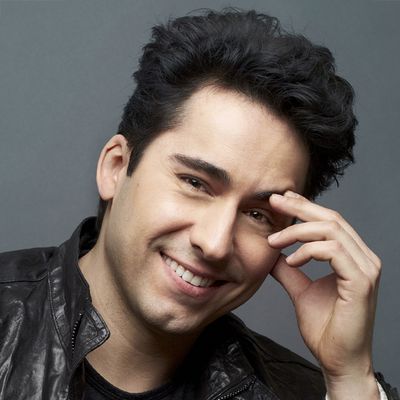
John Lloyd Young is a multi-award winning performer, who originated the role of Frankie Valli in Broadway’s Jersey Boys. He is the only American actor to date to have received a Lead Actor in a Musical Tony Award, Drama Desk Award, Outer Critics Circle Award and Theatre World Award for a Broadway debut. John also starred in Jersey Boys on London’s West End, and was hand-picked by director Clint Eastwood to reprise his role in the Warner Bros. film adaptation. As a concert artist he has played to sold-out crowds at the Hollywood Bowl and has appeared at Carnegie Hall, the White House, the Kennedy Center, Lincoln Center, Radio City Music Hall, Café Carlyle, and with the National Symphony Orchestra conducted by Marvin Hamlisch. John served as a member of the President’s Committee on the Arts and Humanities, appointed by Barack Obama, and as a member of the Committee, Young represented the United States on the first U.S. Cultural Mission to the Republic of Cuba. John’s five-star-rated solo album of classic R&B, My Turn..., debuted as a best-seller on Amazon. And next up, he can be seen online when his concert “John Lloyd Young’s Broadway” streams live from The Space in Las Vegas on October 3rd.
Throughout our conversation, John comes back to the importance of and the reverence he has always had for what he believes to be the most important element of a Broadway show - the audience. What he has learned to be true is if you invest in your audience, they’ll stay and be with you even in hard times. John shares how he found other creative outlets in the “dicey years” after Jersey Boys ended, and hopes that when the smoke from the pandemic clears, and audiences and performers alike are allowed back inside theatres, “hopefully we’ll be a little more humble and appreciate the privilege” of being able to be creative for a living.
In this episode, we talk about:
- Working on the President’s Committee on the Arts and Humanities under Barack Obama
- The importance of investing in your audience as a performer
- What he’d like his return to Broadway to look like
- The choices you have when you get pigeon-holed as a particular role
- The moment when he knew Jersey Boys would be a hit
- The lessons he hopes creatives will take away from this pandemic
- His visual arts career
Connect with JLY:
- IG @JohnLloydYoung
- Twitter: @GenuineJLY
- JohnLLoydYoung.com/live (to get tix to his events!)
Connect with The Theatre Podcast:
- Support us on Patreon: Patreon.com/TheTheatrePodcast
- Twitter & Instagram: @theatre_podcast
- Facebook.com/OfficialTheatrePodcast
- TheTheatrePodcast.com
- Alan's personal Instagram: @alanseales
- Email me at feedback@thetheatrepodcast.com. I want to know what you think.
A very special thanks to our patrons who help make this podcast possible!
Cheryl Hodges-Selden, Paul Seales, David Seales
If you would like to see your name in this show notes or get a shout out on the pod itself, visit ttp.fm/patreon to become a member and show your support!
Transcript
This transcript was automatically generated and might contain errors.
[0:00] Alan Seales: Welcome to the Theatre Podcast, intimate personal conversations with theatre's biggest names. I'm your host, Alan Seales, and this episode is with Frankie Valli himself, John Lloyd Young.
[0:18] Before I get any farther, I just want you to go to his website, johnlloydyoung.com/live and get tickets to his upcoming concert happening on October 3rd, streamed live from Las Vegas over your favorite interwebs. Art needs to continue. I'm so happy he's doing this. I'm happy that we have the opportunity to watch him. Also, at some point in this interview, he tells me about some of the other art that he is involved with, and he actually is like, he makes physical art. I don't know how best to describe it. I think it's just best for you to see it. So I took two screenshots while we were talking as he was showing me the items and they are on my Instagram page, theatre underscore podcast.
So head over there and check out those pictures as you're listening. One of the most interesting stories we cover in this episode is basically his words. He says he was shot out of a cannon and then fell like a lead balloon regarding Jersey Boys before and after. Jersey Boys is his only Broadway credit, but he seems to not want it any other way. This is exactly what he dreamt of as a kid. He wanted to originate a role, win a Tony Award and do the movie specifically for Warner Brothers, which is exactly what happened. I don't want to give any more away before we get into this. As always, please visit me online at thetheatrepodcast.com. Follow me on Instagram and Twitter at theatre underscore podcast. Please leave a rating and a review. Just tap those five stars if you feel so inclined. And now everybody, please enjoy this episode with John Lloyd Young.
[1:59] My guest today is the Tony and Grammy Award winning star from the original Broadway cast of Jersey Boys, as well as Clint Eastwood's Warner Brothers movie adaptation. He is the only American actor to date to have received all four major lead actor honors in a Broadway musical, which are the Tony, the Drama Desk, the Outer Critics Circle, and Theatre World Awards. He has performed concerts at the White House, Carnegie Hall, New Year's Eve in Times Square, the Kennedy Center, Lincoln Center, the Hollywood Bowl, as well as all of the top concert venues in New York City. He has served as a member of the President's Committee on the Arts and Humanities appointed by President Barack Obama. And now his live concert coming up this October 3rd, 2020, will be streaming live from Las Vegas. John Lloyd Young, welcome to the Theatre Podcast.
[2:49] John Lloyd Young: All right. Thanks for having me.
[2:51] Alan Seales: You were the first person I've talked to in over 100 episodes now that's like had the presidential tie-in. So I think that's a really good place to start serving as on the President's Committee for the Arts and Humanities. So for those who don't know, tell us about what that committee does and what it is.
[3:05] John Lloyd Young: Okay, well, what it was, because Ronald Reagan conceived of this committee, okay, by executive order every two years since Reagan was reinstated. And it was an umbrella committee through the White House to basically engage the White House with the arts agencies, like the Institute for Museum and Library Sciences, the National Endowment for the Arts, National Endowment for the Humanities. So it's basically the way that the White House could communicate its specific administration's agendas to the arts agencies. It was an umbrella kind of thing. So for example, like when you would see the Presidential Medal of the Arts or the Presidential Medal of the Humanities, who a lot of people that we revere and, you know, the Broadway world have received, like John Kander, for example, etc., etc. That would be administered by the President's Committee on the Arts and Humanities.
And, you know, every administration, their personality kind of dictated how important the President's Committee would be. And a lot of times with like, you know, they made the joke that the reason that Reagan conceived of it is because Nancy Reagan wanted Frank Sinatra to be on the committee, hang out with Frank Sinatra. Anyway, so, you know, clearly certain administrations are more involved and engaged with the arts than others.
[4:36] And sometimes the committee would, in the past, consist of just people who are like arts administrators, or people gave a lot of money to the campaign or whatever. Our committee was led by the late Margo Lion, you may know who she was. She was the Broadway producer of Angels in America, and Hairspray was her biggest hit, probably, of her career. But she also did Jelly's Last Jam. Anyway, she was a personal friend of mine. She had nothing to do with my getting on the committee. She was a personal friend of mine. But you know, like, when you say personal friend, it's like a Broadway personal friend. So she was a producer, and I was an actor, and we both had egos. So there was, like, love-hate relationship there, you know, some tension, like, who's this whippersnapper, that kind of relationship.
But when I was a baby college intern, working up in the Jujamson Theatres complex for Elizabeth Williams, who is another, she produced Crazy for You. That was her big hit, and she still does stuff. Margo Lion was right across the hall, and I kind of had, like, a crush on her, you know, like a cougar kind of crush on her. And so I was fascinated with her, but also kind of, like, you know, intimidated. Anyway, all these years later, she, for Barack Obama, she and George Stevens Jr. George Stevens was the director of Giant. He was a famous Hollywood director for people outside of, you know, sometimes us Broadway people very sort of Broadway focused. So that was even news for me. Anyway, he wrote Thurgood, that was a play on Broadway, George Stevens Jr., and he also conceived of the Kennedy Center Honors, okay. So George Stevens Jr., he and Margo ran the arts, you know, part of the campaign for Barack Obama.
[6:31] And when Obama won, he appointed them co-chairs of this committee. And under their leadership, they decided it wouldn't be a bunch of ladies who lunch, that their committee would include arts leaders and people, you know, titans like people like Anna Wintour or George C. Wolfe, but also would include artists. So we had Kerry Washington on the committee and Cal Penn and Alfre Woodard, Chuck Close, the painter, and Kerry James Marshall, the painter. So their idea was to expand it out and to have artists on the committee. So our committee actually was very, very, a very activist committee. They went to Haiti, went after the earthquake, and made sure to protect the artifacts, you know, that might have been lost.
You know, they're actually a Smithsonian Institution, was also part of what the committee, they also worked with the Smithsonian Institution. So anyway, so our committee under Obama, surprise, surprise, was very activist. And again, like I'd said, and a big part of it, Margo Lyons started her career as a teacher, a big part of it was bringing the arts into the poorest schools in the country. And that's something I did a lot of going into elementary schools and as an artist and working on things with little kids. It was called Turnaround Arts. And that was started under Michelle Obama, the first lady or the first spouse, depending on what happens in the future, was always the honorary chair of the committee. So we worked really closely with the White House. And our agendas were very Obama-like, you know, so working with kids, Title I schools were, that was a big deal for us.
[8:22] And then some of us, about half of us stayed on, because when you're appointed to a committee like this, you serve at the pleasure of the president. So just because an administration ends doesn't mean that you're done. So just because an administration ends doesn't mean that you're done. So some of us bravely decided to stay on to keep the arts at a national level. You know, we were naive about that. I was naive about that. But to keep the arts at a national level and arts in the schools and all this thing at the top of the national agenda. And when Trump came in, about half of us had stayed and had not resigned. We stayed to kind of fight. And then Charlottesville happened. And he made those comments about the Nazis and everything, you know, good people on both sides.
And the membership just started dropping like flat, people just did not want to be there. I wanted to write a letter of censure from us and sort of dare him to dissolve us, you know, vindictively, which he's proven to do over and over again. But instead, the majority of the leadership of the committee that was remaining decided that they wanted to resign en masse. So we all resigned. And I was in Hawaii when all of this was going down. So I was finding out everything like hours and hours after everyone made decisions. I thought we were all going to stay there and fight, but we decided to resign. So we resigned, and then he dissolved the committee. So all of these presidents from Reagan who had reinstated this committee every two years by executive order, you know, Trump just threw it away.
He could have repopulated it with people that, you know, like Ted Nugent. You know, he does not care about the arts. He does not care about the arts. And the arts are hostile to him. And you know how he is when he feels someone doesn't like him. So for, you know, it's the first time since the conception of the Kennedy Center Honors that the president doesn't attend. You know, this is a, we can't expect national leadership on the arts with this president. So short story long, it was an important sort of part of White House arts initiatives, and Trump trashed it. But what was great was that before he did, we had some foresight. Everyone thought that the Democrats were going to win. You know, everyone was surprised, especially in the arts.
Even so, just in case, we took that signature program of Michelle Obama's, the turnaround arts of the arts in the schools. We made sure it was fully funded for four years after the Obama administration ended, and we migrated it over to the education department at the Kennedy Center. So it still exists, and it's still going. And that's an Obama, you know, legacy that we protected.
[11:22] Alan Seales: Tell me then, like, what is it about you that turns you into this activist? You know, I guess, take me back, you know, little John, you're growing up, where were you born? You were born in Sacramento, I think?
[11:38] John Lloyd Young: Yeah, I was born in California on an Air Force base. It's now a VA hospital. So then, Air Force to Broadway, like, not normally a trajectory that a lot of people have. And then, obviously, thrown in there as a little political activism. So, like, at what point did you start performing? And then at what point had this grown into something bigger than you imagined?
[12:04] John Lloyd Young: For me, the arts, for me, Broadway was always mythology in my house, because, you know, modern family, you know, I had three sets of grandparents because of step parents, that kind of stuff. So three sets of grandparents I grew up with, all war era, you know, grandparents. And two of the three sets were New Yorkers. And so Broadway and Broadway shows were a big deal for them, you know.
[12:38] John Lloyd Young: In the early 50s and mid-50s when Broadway was the center of entertainment in our nation. Broadway shows were on Ed Sullivan. Broadway shows were part of the center of the culture. It was like what Rosie O'Donnell did for Broadway shows. That was normal back then. So, my grandparents had seen these major iconic performances. Yul Brynner in The King and I and Jerry Orbach in 42nd Street and these sort of things. These were stories around the dinner table and things people talked about with reverence and love. I was a kid moving around following my father's Air Force career. This is way before the internet. I would go to public libraries and I would check out Broadway LPs. So, Broadway was a very exciting place for me.
And when I was in New York and seeing Broadway shows, it's because I was visiting my grandparents and I was in the big city. I was living in places like Omaha, Nebraska as a kid. So, trips to New York to see Broadway shows were a big deal for me and I was taken by it from a really young age and always followed it as well as I could, watched the Tony Awards. My great-grandparents were immigrants to New York from Sicily, helped build the city. My great-grandfather was a potato farmer in Queens, helped feed the people building the bridges and tunnels that we all use, that New Yorkers use. So, New York was a part of my family legacy and I always wanted to be a part of it. And so, I had an eye on New York and Broadway from a very, very early age.
[14:20] Alan Seales: What was it about the performing and the Broadway side of it, though, that attracted you? Because you could have come to New York and been in finance or been, you know, there's so many things you can do once you come to New York, but why was it always theater? Was it singing, acting, dancing, in particular, or just like, I just want to be on Broadway?
[14:30] John Lloyd Young: It was an exciting, you know, once you're on the inside, you see it for what it is. It's more of a business and it's the, depending on who you end up working with, you know, some producers are bastards and some are great, you know, that's kind of luck of the draw. But from the outside, there's this mythology. It's so exciting. It's part of the heartbeat of New York City. And I wanted to be a part of the heartbeat of New York City. And I was also good at stuff that qualified me to be someone who would be on Broadway. And I was a good singer and I was good with an audience. And especially for live performance in New York, this has obviously changed and might have to change going forward, if at least in the short term.
But I was also very good at dealing with the public. Part of, I think, not everybody agrees with this, but I was a little kid going, I mean, not every performer agrees with this, but I think it's deeply important what I'm about to say. When I was a little kid going into Broadway shows and you see a show and you see the live person up there in front of you, and you're taken by their performance, and you don't want the fantasy to end, and you wait at the stage door for them to come out, and you're so excited to meet that actor or whatever, and then they're an asshole to you, you know? That I never understood. So, when I finally got my chance to star on Broadway, I think this is so important. Your audience is your customer, right?
And if they love what you're doing, why would you ever insult them or snub them? There is no Broadway without an audience. Look at what's happening right now. I mean, your job as an actor is to kill your audience, but not literally, you know? So, right now, an audience is going to stay away because they don't want to sit next to a stranger and die just to see a Broadway show, right? So, this is more of a reminder than ever before that the most important element is that audience. And I was a member of that audience, and I wanted that fantasy to continue. So, when I was starring on Broadway, and I walked out that stage door, I held on to a little bit of that Frankie Valli energy for a little while.
I stood there and stayed there until everyone was gone, and then I let the character and that energy or whatever, that stuff kind of melt away as I, you know, had made distance from the theater. But I always saw that as an integral part of my job to keep the ball up in the air, even as I leave that stage door. And the other thing, too, is if you're a kind of performer who doesn't agree with that, or you're not thinking of that, my opinion, you should. When times are tough, which they always will be in the life of an artist, there is always going to be times that are tough. If you make that investment in your audience early on, look at Lin-Manuel Miranda with the Ham for Ham. If you make that investment with that audience when they are paying attention to you, then they'll stay with you, and they'll be there for you in the hard times.
You will hold that audience. And in my case, Jersey Boys was such a runaway thing that I haven't needed to do another Broadway show to have an audience. I've got the audience. I still have them. It's 15 years later. Now even more because of the movie, but I don't think that would have happened if I hadn't made that investment in the audience back then. It's the most important investment you can make.
[18:15] Alan Seales: Do you want to return to Broadway on stage when the COVID's over?
[18:20] John Lloyd Young: Yes, but I wanted to on my terms. Who was it? It's like Helen Hayes or something. I'm much younger than she was when she said this, but they were like, what's your ideal Broadway? What's your ideal return to Broadway? And she said something like, I want to make my entrance the last 10 minutes of Act One and then come back three quarters into Act Two. I don't want to work my ass off as hard as I did last time with Frankie Valli. That was so impossibly hard. But I was also just turning 30, and it was my Broadway debut. I had the adrenaline and the will to do it.
[19:04] Alan Seales: Well, obviously, you've chosen to focus on other things like concerts. So the concert is John Lloyd Young's Broadway, which that's the title of it. October 3rd, 2020. It's at The Space in Las Vegas. And for those listening, if you want to go and get tickets now, it's at johnlloydyoung.com/live is the best way to get it. But tell us about that concert in the middle of a pandemic, in the middle of social distancing.
[19:23] John Lloyd Young: I started off as a kid loving Broadway, but my big Broadway smash was Jersey Boys was doing 60s music. I can guarantee you that if somebody is like hiring Leslie Odom Jr. to do a concert, they're not going to want him to sing a whole Rodgers and Hammerstein. They're going to want to hear Hamilton. So when I get hired, or in the years after Jersey Boys was this big hit, I would get hired to sing 60s music or adjacent music. So I had to ride the horse in the direction it was going in that direction. So most of my concerts are not Broadway songs. When I can fit a few in, I'll do it. Because I love Broadway, but my audience base has mostly been people who came to Broadway because they were attracted in by Jersey Boys.
Sometimes they're not even Broadway fans. However, I am. And this live stream is in partnership now with Broadway World, which is going to start, you know, presenting live streams. And so I'm playing right into that community that I love. And my fans who are already following me will enjoy this concert because it's something different for them. But also it's another, it's like, what do you call it, it's an olive branch, or just a reconnection to my community that I was initially attracted to. And that and the reason I was available and able to do a show like Jersey Boys because I was a Broadway aspirant, I wasn't looking to do a jukebox musical, though I didn't have any problem with Jersey Boys was fantastic script of its genre.
It's like the gold standard. But, but, but I was, you know, I came out of Brown University having played like every lead you could play in Sondheim musical for four years, you know, I came to New York wanting to do Sondheim, you know, or something or thinking and I would do something like that. Or this is my original heart and soul, these music, these songs. And this is classic Broadway, like what made me want to be on Broadway when I so do the math, I'm 45 years old. So from when I was a kid, growing up and wanting to be on Broadway. So there's, you know, like, what were the shows that attracted me to New York and Broadway, Little Shop of Horrors, Les Mis, A Chorus Line, you know, West Side Story, all the movie musicals, because when I was a kid, I wasn't able to be in New York.
And there was no internet where you could live vicariously. It was the Tony Awards once a year. And it was the public library and LPs and cassette tapes, you know, and reading about things. I used to subscribe to Playbill magazine, the one that don't have all the news and stuff about Broadway that would come every month, you know. So my rambling answer is that this, this actually my heart and soul that what initially attracted me to Broadway to begin with. And these are the songs that I'm going to be sharing and in this concert, and which and I've done it before under the radar in private, you know, ticket sale concerts at places like Feinstein's 54 Below, or the, you know, one of those Playbill cruises.
This one is just because of COVID. It's anyone from anywhere in the world can watch it. So you don't have to go to New York City or, you know, be in a little club or, you know, in a sense, it's, it's a debut of something. And I just have a lot of experience with this set. A lot of people watching will, you know, will not have seen it before, but I'll have done it a lot of times before.
[23:01] Alan Seales: Do you get tired of the genre and get tired of these songs over and over again? I asked, I was talking to Adam Pascal the other day, and I asked him the same thing. I said, do you ever get tired of being asked about Rent or getting asked to sing one song Glory or anything? And he's like, you know, I did. For a while, I hated it. And then, like, it's made him, given him his career, it's made him who he is. And I always wonder other people who have been kind of pigeonholed, or I always wonder if other people feel like they've been pigeonholed in a similar fashion for something, they're known for something as iconic as this.
[23:37] John Lloyd Young: There's two ways that, there's two ways you could think about it. One is you could think you're pigeonholed, and you're upset because you can't do the wide plethora of things you know you can do, you know, because they don't see you that way, or the audience, you know. Another thing, too, is the audience pigeonholes you. That any actor you can think of does two or three things really well. Just analyze it sometime. Think about Jack Nicholson, think about what kind of energy does he put off? Then think about Bradley Cooper, and then think about, like, I don't know, Liza Minnelli. Two or three, two or three major things that those people put off, okay? An audience wants, likes to see you a certain way.
Once you figure out what that way is that the audience likes to see you, then that's your, one of your saleable products, right? It's like the Gap would close if there were, well, they're not doing great now, but like, let's think, like, back in the 90s when we were, when everyone was buying their clothes at the Gap for high school, t-shirts and jeans, if they didn't sell those, they wouldn't close, right? Okay, so Frankie Valli for me is the t-shirts and jeans that keeps the shop open. If I don't get another part ever, so there's two ways, what I was going to say, there's two ways of thinking of it. If I don't get another part ever, well, maybe that's the price I pay for having originated a role that's kind of widely known, iconic all over the world. There's a movie that people have seen all over the world. Most people think of Robert Preston, if they even do, as the music man or Yul Brynner as the king in The King and I.
[25:16] John Lloyd Young: If you're able to get an iconic role, you are so lucky. And then you have your own problems that people who are always working on Broadway shows but are not known for any one role, that they don't have to deal with. There have been times where I think, God, such and such was always working. And I'm not always working, but such and such is not whatever, you know, known for an iconic role. So, you can have either or. And I can't, I don't have the choice now of having either or. I have what I have, and I choose to love it. At what point, I guess, did you realize that Jersey Boys was this runaway hit? At the time when Jersey Boys arose, those two or three seasons right around that time when Jersey Boys came onto the scene, they were trying to make Jukebox musicals successful.
Mamma Mia was a runaway hit. It wasn't the same kind of a bio musical, right? And then years before that, they had tried that with Buddy or with like, Beatlemania, you know, these biography musicals. But none of them had really succeeded like this until Jersey Boys. But there were a lot of misfires that, you know, around that time, if you remember. So, Jersey Boys is really the one that shattered all the expectations. But people were kind of sick of the Jukebox trend when we started previews. And you know how there can be a dark side to the community, right? We had that dark side in the first three, four, five rows when we started our previews. Crossed arms and stone cold faces. You know the types that come to hate the show.
Yeah, they want to hate it. Oh my god, the energy was palpable, you know. And by the end of that first week of previews, those crossed arms had gone to their laps and those stone cold faces had melted and they were awestruck. You know, their mouths were open and they were happy and blown away and enjoying it. And then standing in the middle of an act to like applaud a show, a number, you know. I saw us overcome that cynicism and that negativity that is just endemic to Broadway. Maybe it'll be nicer after the fog lifts of this COVID. Maybe for a while there'll be a jubilee of kindness and benevolence. That's when I knew we were going to be a hit. And you know, I'm not the only one who noticed those things.
Our producers, for as tough a reputation as they have, I remember years later when Jersey Boys was, you know, 10 years old or something, one of the lead producers making some commentary or whatever. This is years after we were, you know, an incontrovertible like runaway hit. There was no doubt about it that we had changed the landscape, at least for shows of that type. And he was making some remarks and he said, some of our producing colleagues who wouldn't even talk to us a month before Jersey Boys and then everyone wanted to be our friend. You know, people remember those things for years and years, like the snubs and all that stuff. I would hope that we evolve out of that when the fog lifts.
I think that to work on stage, especially when you've loved it your whole life, is such a privilege. And especially to have done something that becomes iconic, whether your performance is iconic or not is immaterial. If the show you were in and you're the original cast of something that's iconic, you're golden. How many people would you say in a mainstream worldwide audience who knows like JLo, how many people would know like, I don't know, Wayne Solento, right? But he can do no wrong by me because he was, I can do that. He was in the original cast of A Chorus Line. Some of these Broadway actors who I listened to on cast albums my whole life, they might not be well known by world standards or they may not be well known like Zendaya, who just won an Emmy yesterday.
But she's just starting out. Let's see if she becomes an icon. But to me, Donna McKechnie is an icon. And if she had only ever done A Chorus Line, she always would be. So I kind of, Colm Wilkinson, Les Mis, how many dozens and dozens and dozens of actors have done that role great justice, but there's only one Colm Wilkinson, there's only one original. And I love that stuff. I love, you know, Wilson Jermaine Herrera and Adam Pascal, Anthony Rapp, those guys were like, they're like five years older than me. So they're the equivalent when I was starting out in New York, they were the toast of the town. They're like, you know, your older brother who was a senior and leaves high school and you come in as a freshman and he's a legend, you know, I still look up to those guys that way.
And I had my big hit show too. You know, I made the movie for Warner Brothers too, just like they did. I want a Tony, you know, you know, so and I still get nervous around them. Because I love it so much, and to be one of those figures, I don't need to do it. Look, as long as I'm not sucking eggs now, like temping in a bank, you know, luckily, I don't. Luckily, I don't have to. Luckily, I don't have to. And I'll tell you one thing, you know, you want to laugh. Everything that happens to you, if you have the right attitude, can be said to have happened to you for the right reason. Okay? What felt to me like a real takedown and really hard to handle, you know, temping in banks and transcribing, to my mind at that point, such dull IPO, initial public offering memorandums and all that stuff, okay?
When you look at how the dots connected, only five, six years later, when I was starring on Broadway, and I realized I was in a hit, I started investing in Apple. And I knew about that stuff. Do the math. Start investing in Apple in 2006. Wow. Okay? So, my starting out in investment banks saved my ass. Because then, you know, I became pigeonholed, or whatever you want to say. And also that I had a different problem than someone like maybe like, I don't know who you want to talk about who gets like, Yul Brynner or whatever, okay? I had a different problem than him. Yul Brynner eventually ended up owning the rights to The King and I, to the point that at one point, he was a star of The King and I, he was doing a tour, and Richard Rodgers tried to give him a note from the audience, and he said, be quiet, this is my show, to Richard Rodgers, okay?
Wow. That's never going to happen with something like Jersey Boys, right? Because Frankie Valli is still alive and still performing. He's a real person. He's not Alexander Hamilton, who's been dead for centuries. He's not like, you know, Roger and Rent, who's a fictional character. He's a real guy. It's not appropriate for the guy playing Frankie Valli to become bigger than Frankie Valli, at least in the few years after that, no one would want that to happen. Right? So, you know, I knew I was in for a tricky situation when I broke out in that role. And when they started to make it into a franchise, right? If I were Frankie Valli, I would want there to be 12 Frankie Vallis across the world, you know, paying into my, in these Jersey Boys productions, which did happen, paying into my annuity every year, you know, in my retirement.
What a great retirement. The project of Jersey Boys was to lionize Frankie Valli in the four seasons, not to lionize John Lloyd Young. I just pushed really hard to get some crumb from that table of joy. And, you know, and I knew that I would have a tricky, a tricky path on the other side of it. But luckily, I knew my history. And I knew that there were some figures who, look, I love Neil Brinner more than almost any other titan of Broadway. I love him more than like some other actors that you could say have a great Broadway resume.
[33:40] Alan Seales: You've given me so much food for thought. Can I interrupt you?
[33:43] John Lloyd Young: Yeah, yeah.
[33:44] John Lloyd Young: Speaking of food for thought, one of my ways of surviving those really dicey years after I left Jersey Boys was I had always wanted to be, or to engage in visual art. And you know, I have a whole visual art career. And my first art show was called Food for Thought. So I've been doing this for 10 years. This is another whole other career I had. When you are in the arts, it's good to have insurance. And so when I'm not working as an actor, or whatever, I have this whole visual art career. And that's basically what I've been doing during COVID. You want to see my COVID inspired art piece?
[34:16] Alan Seales: Yeah.
[34:17] John Lloyd Young: This one is called Hindsight 2020. And it's expression of my, it's a first of all, it's my time capsule of what we've been going through. And I think it's an expression of, I think that you see this, and you know exactly what's going on. Okay? Exactly the message I'm sending with this. Hindsight 2020.
[34:44] Alan Seales: Since this is audio only, I'll just take a screenshot here. And I'll post it on my Instagram account, theater underscore podcast, everybody head over there to have a look at what I'm seeing right now.
[34:55] John Lloyd Young: You know, so one of the wonderful, magical things that came out of this, hitting a wall, I knew, which I knew would happen, because I knew the history. And I knew I wasn't gonna be Yul Brynner, where I owned Jersey Boys, no way on earth that I would own the rights to Jersey Boys ever. You know, plus, I don't want to do the Jersey Boys rest of my life. Frankie Valley's Frankie Valley. I got to do other things. Kafka said, and I'm kind of like, paraphrasing him. Sometimes the most direct way to something you want is by taking a deliberate leap in the opposite direction. Okay? Look, Jersey Boys is a big hit is all over the world. It had been proven that other guys could play Frankie Valley. What was I going to do with myself?
I waited around until the movie, but that still wasn't an assured thing. So I went into art. And I went so into art, that I was, and I was so comfortable there, that it was almost like, when the movie happened, Frankie Valley, who has a nice ego, healthy ego, was able to pluck this poor guy out of obscurity, and give him a shot. You know, if I had become Justin Bieber, or whatever, after Jersey Boys, Frankie Valley might have been threatened. But he was able to save me and let me do the movie, you know? So actually going into artwork, just like Kafka said, got me to one of my lifelong dreams, kind of more directly than if I had just kept going, and doing other Broadway shows and stuff.
[36:29] John Lloyd Young: Yeah, I mean, because my Broadway dream was to... I'm not kidding when I tell you this. My Broadway dream was to be like Yul Brynner, Joel Grey, Robert Preston, originate a Broadway show, win a Tony Award, do the movie, and specifically for Warner Brothers. And that happened. So now what? Specifically, because I loved the music man so much. And I knew that Robert Preston had been opposed by the head of Warner Brothers, but Jack Warner, and Meredith Wilson insisted on him. And that he got to... And the reason that I was able to enjoy what Robert Preston might have been like, in the show that my grandparents loved and talked about all the time, was because I could watch that Warner Brothers movie as much as I wanted, and consume Robert Preston in his iconic role, still kind of close to the age that he played it, you know, that was my dream from when I was an eight-year-old kid.
And I did it against really stiff odds, because I had no leverage. Believe me, those guys who are in control of Jersey Boys, are the ones who want to be in control. And they're not going to cede their control to some actor, especially some actor who was like, their intern grabbing them coffee when he was in coffee.
[38:53] John Lloyd Young: It's like, it's, you know, sink or swim, dude. We have to pivot sometimes. Look, COVID, you have to pivot sometimes. Luckily for me, this COVID thing, I had to, I had no choice. I had to learn that lesson years before all of us had to. Now we're all in the same boat. Those of us who are going from Broadway show to Broadway show to Broadway show, you start to feel like there's something special about you because of that. I didn't have that option. I was in a really politically difficult situation after Jersey Boys. I had to pivot into something else. So when COVID happened, I spent three days like freaking out. And then on the fourth day, I went to Art Storage and I got all my materials out and started doing that again.
I'd already been down this road before, you know, just for different reasons. So this is a good, if you are still able to keep your shirt, this is a great time to pivot, to learn another skill, to develop something else that you want to do, to find another way to make income. And if you're still standing when it comes back, let's be nicer to each other this time, please. Please.
[40:01] Alan Seales: I enjoy that. That is very good advice. What I was going to say was, you haven't mentioned training in Spain. You also know fluent Spanish, Mandarin, you sing several languages, including Spanish, Mandarin, Hebrew, Italian. Um, you've trained the world with Chinese Shaolin monks, and you hold a brown belt in temple style Kung Fu, and you're a practitioner of Chan Buddhism. I mean, like, I had a lot of time on my hands, Alan. And I expect to live a full life, even if I can't get what I think I want. What, you know, I'm the least spoiled of all the Broadway stars you'll ever talk to, because I, I shot out of a cannon, and fell like a lead cannonball onto the ground, and couldn't figure out what to do next.
So I did stuff I wanted to do, you know, it's couldn't have been great to have gone into, you know, other Broadway shows, whatever. Yeah, but when I look back, and I think of the history since then, I don't know which Broadway shows I should have been in. So I so yeah, so I did things I wanted to do. And you know, I was a rounded person before I came in. That's why that's why sometimes the patronizing nature of the business is so frustrating. Because if you're a deep person, and you have a lot of interests and a lot of skills, but a lot of them don't translate to the marketplace of Broadway, you're not a loser, just because you don't write your own show. You know, if you're interested in learning Mandarin, you learn Mandarin.
Yeah, I can't take that to market in the Broadway marketplace. But I don't think that makes me less interesting. I think it makes me more interesting. It makes me more interested in life. And then when I can't get a job, I'm not sitting around like, I've literally seen Broadway stars, like before all this hit, you know, on social media, where they kind of like they're visiting a nephew or something. And you can tell they're miserable to be like in Kentucky visiting family, they want to be on a Broadway stage, they can't be happy unless they are. The best thing that ever happened to me was not getting exactly what I wanted when I wanted it. Wherever you go, there you are. And I think you've got experience.
[42:10] John Lloyd Young: What I was gonna say is, is that when you're in Kentucky visiting your nephew, you're not getting that validation, you're not getting the applause, you're not feeling the audience tell you you're a good person. And what I think has happened to you is, as you've described it, you've had a lot of time not working after Jersey Boys. And so, you found you're one of the few, especially, you know, talking about Buddhism and working with Shaolin monks and everything that you found peace with yourself. And... I mean, at Pains, it was hard. It was hard. Because once you know you can enthrall an audience at the highest level, I'm talking world class performing, right? There's no doubt about it. I don't have to feel insecure and say, oh, I gave a mediocre performance.
I know that that performance of Jersey Boys is a world class performance. You know why I can say that without any hesitation? Because I haven't gotten to do it again on Broadway over and over and over again. So, I'm gonna claim the one thing I know I have dominion over, okay? And I'm not gonna feel ashamed about it. So, when you see that you can do that, you know, yeah, you want to do it again. But one of the toughest lessons to learn is enjoying that afternoon with that nephew. And not needing to have thousands of strangers applaud you, but to teach a little five-year-old how to tie his shoes. I'm not saying that I'm there entirely, right? You know, people don't go into show business because they're enthralled by those simplicities, you know?
But the practice of trying to be certainly makes the periods of instability, which are inevitable in this profession, much more easier to take. And then you come out on the other side, and when I get to do another Broadway show and enthrall an audience again, a live audience, I will appreciate it so deeply. Because I know how, what a privilege that is.
[44:14] John Lloyd Young: And right now with the streaming and specifically this concert that's coming up, I get to be totally geek out and be the Broadway fan that I was when I was 14. And didn't know which was a good movie or a successful movie or a failed movie or whatever. I just, I didn't know the whiz ruined Diana Ross's career in movies. I thought it was amazing. I loved that movie. You know, when you're 13, you don't have that, you're not discerning in that way. And I certainly know what the critics had said or how much it made in its opening weekend. I just loved it. Same thing with a chorus line, the movie, you know, Terrence Mann is an icon to me because he was, you know, because I remember him as a kid, the chorus line, a chorus line.
And I wanted to be one of those people, you know, struggling to make it in New York. And then I did. And then I didn't. And maybe I will again. And we'll see when Broadway comes back and what it'll be like, but there's always going to be people want to put on a show and there's always going to be people want to see one. So, we just gotta, we just gotta soldier through. In the meantime, let's see how much we can enjoy watching and giving these, these live stream concerts. Art will always find a way, it has to. It's a form of expression and people right now, especially locked in their homes for six months or more now, they need to express themselves more than anything, especially, you know, someone like yourself who just relies on being an artist and having multiple outlets.
[45:41] John Lloyd Young: We had to keep our dreams alive, you know, and one of the greatest things about theater and movies and television, especially the scripted stuff, is that it feeds our dream life. And that and, and especially a time like this, it's so constricting in so many ways, like, it's dangerous to even leave your house or to breathe the air next to someone. I mean, do you ever think you'd see that in your lifetime? And yet, you know, so, but we have to believe that we can expand ourselves again, like we used to be able to and engage and, and come together to dream together, you know. Thank God for this technology or else we'd be really, we'd be in really bad shape, we'd be so isolated. And this is the best we can do right now.
So, you know, I think, as a Buddhist, I would say you always should try to make the best of every situation, even a disaster. What do they say on the thing I see on the internet all the time? Sometimes God sends a storm to clear your path. So, who knows what that means. But, you know, maybe COVID is our, it forces us to practice that enjoying that afternoon with the nephew teaching him to tie his shoes, right? We have no other choice, you know, so, you know, make the best of it. Enjoy your kids, enjoy your, your own life, you read the book that you don't have time to read, because you're doing quick changes and commuting back and forth to the theater and doing publicity and all these exciting things, you know.
[47:22] Alan Seales: Well, I think that is a wonderful place to pivot to our three standard closing questions that I ask everybody on the podcast here. The first one very simply is what motivates you?
[47:27] John Lloyd Young: The pursuit of happiness. And it's a very patriotic American thing to say, but that's, that's, and not just mine, but in general, like the key to how you keep that volleyball up in the air, not let it fall to the ground.
[47:45] Alan Seales: Alright, so then what advice would you give to your younger self and younger people listening now starting out down a similar path?
[47:52] John Lloyd Young: To ignore the naysayers. Obviously, you can't be exceptional without being the exception. And when you're offbeat, people are not going to understand you. And sometimes that means that they're going to push back against you, or ostracize you or ridicule you. If you have a vision, just keep on keeping on, you'll find your people.
[48:15] Alan Seales: I like that. And then last question, if you can only see one show for the rest of your life, but you can see it as many times as you want, what would you see?
[48:19] John Lloyd Young: A chorus line.
[48:24] Alan Seales: Original cast.
[48:26] John Lloyd Young: It doesn't matter to me. Yeah, like I said, yeah, original cast. Okay, yeah. If I could go back in time and see the original cast over and over, just that elusive, heartbreaking, persistent pursuit of I think what they call flow, where your talents and your activities overlap. That doesn't happen all the time. And that's chorus lines all about that. Wanting that flow, wanting that job, wanting to be a part of it. I never get tired of that. That heartbreaking and inspiring story. Great show.
[49:04] Alan Seales: So everybody, please go to johnloydyoung.com. Go to johnloydyoung.com live to get tickets to his upcoming show live streamed from Las Vegas on October 3, it's going to be available on demand afterwards for a little while as well. And where can we find you on social media as well?
[49:20] John Lloyd Young: All of my links to social media at the bottom of every page of my website johnloydyoung.com. But those are Instagram johnloydyoung, no spaces. Little sunglasses after that, johnloydyoung. And Twitter is genuine jly. And I think also YouTube is genuine jly. The links are at the bottom of every page of my website johnloydyoung.com. And you have some wonderful music actually on your on your website as well. We can hear you.
[49:46] Alan Seales: Thank you work very hard on that. You can get more of me at the theater podcast.com. I'm on Instagram and Twitter theater underscore podcast, Facebook slash official theater podcast, please leave a rating review it helps. And thank you to jukebox the ghost for the intro and outro music and john Lloyd Young. Thank you so much. You just like totally zenned out my afternoon here. I I've had a great conversation.
[50:06] John Lloyd Young: I'm glad because I'm just trying to survive, dude.
[50:20] Alan Seales: You know, attitude is everything, right? So that's my constant daily practice is trying to just keep a great attitude. Deep breath make the world a little colorful.
© Broadway Podcast Network, All Rights Reserved