

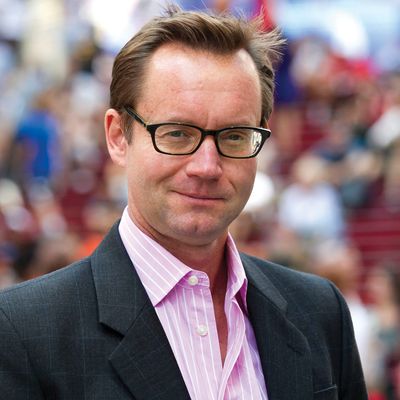
Michael Riedel is an American theater critic, broadcaster, and columnist. He has been a controversial yet very influential Broadway columnist in the NY post for over 20 years. Michael is also the co-host of “Len Berman and Michael Riedel in the Morning” on 710 WOR in New York City, weekdays from 6-10am... Read More
From the show: The Theatre Podcast with Alan Seales
Guests
Featured Shows
About
Michael Riedel is an American theater critic, broadcaster, and columnist. He has been a controversial yet very influential Broadway columnist in the NY post for over 20 years. Michael is also the co-host of “Len Berman and Michael Riedel in the Morning” on 710 WOR in New York City, weekdays from 6-10am. Michael’s book Razzle Dazzle: The Battle for Broadway won the 2015 Marfield Prize for arts writing and is widely considered to be the successor to The Season, William Goldman's classic 1967 book about Broadway. His next book, Singular Sensation: The Triumph of Broadway, arrived November 10, 2020. Get the book here: https://amzn.to/3jXpHhz.
During our conversation, Michael shares how he carved a unique path for himself as both a critic and columnist - how he managed to be a reporter, as well as get his opinion out there. Being a traditional critic, seeing show after show and writing reports, never appealed to him. Rather, he enjoyed hanging out with theater people and getting to know them, “collecting the gossip, and putting it all together”. After life as a columnist, or a “sprinter” in his words, Michael opens up about the initial doubts and panic he had about writing his first book. And that it was during all of the research and interviews when he discovered the narrative he wanted to share, and found joy in putting together all the pieces of the puzzle. Razzle Dazzle: The Battle for Broadway has since received interest from TV networks. Michael also takes us through the inspiration and story behind his newest book "Singular Sensation: The Triumph of Broadway", chronicling Broadway through the 90’s and its recovery after September 11th, 2001 - illustrating how Broadway rallied and “showed the world that New York could not be brought to its knees”.
In this episode, we talk about:
- The story behind Singular Sensation: The Triumph of Broadway, and the forward he added in light of COVID-19
- How Rent ushered in a new era of broadway after years of British dominance
- Fixing Alan Rickman’s air conditioner while working for Elizabeth I. McCann
- Maintaining friendships and relationships with people you’ve written about
- How he conducted interviews for his newest book
- Seeing The Lion King for the first time, recalling “pandemonium” in the theater
- His writing process
Connect with The Theatre Podcast:
- Support us on Patreon: Patreon.com/TheTheatrePodcast
- Twitter & Instagram: @theatre_podcast
- Facebook.com/OfficialTheatrePodcast
- TheTheatrePodcast.com
- Alan's personal Instagram: @alanseales
- Email me at feedback@thetheatrepodcast.com. I want to know what you think.
A very special thanks to our patrons who help make this podcast possible!
Cheryl Hodges-Selden, Paul Seales, David Seales
If you would like to see your name in this show notes or get a shout out on the pod itself, visit ttp.fm/patreon to become a member and show your support!
Transcript
This transcript was automatically generated and might contain errors.
[0:00] Alan Seales: Welcome back to The Theatre Podcast. Intimate personal conversations with theater's biggest names. I'm your host, Alan Seales, and this interview today is with Michael Riedel, who, if you don't know about him, he's a legend in the journalistic capacity within the Broadway and theater community. He's had a column and written reviews and done criticisms of shows for over 20 years, and the Riedel column has been looked forward to by many for a long, long time. His answer actually really surprised me when I asked him about being a journalist and a critic and still having these great relationships with amazing, amazing people. How do people trust him if they're just going to tell their stories to him and he's going to go out and publish them?
And he was saying that his unique style of reporting is basically transparent for his guests and he's honest while not pulling any punches. So he'll call them up and he'll say, hey, I'm talking about this, subject ABC. What do you think about it? And here's your chance to tell your side of it. And he doesn't pull any bait and switch. He just tells people exactly what he's going to write about and then he does it. So he sticks by his own code of ethics, which is very admirable. He has a global perspective on Broadway, especially from the creative side that's just so fascinating to me. I always love how things are put together and how a show comes to be. And he's just got decades of being besties with all of these creatives and divas and stars and everything.
And he knows the insides of feuds and why producers like to work with each other and why they don't. And it's just fascinating. His new book, Singular Sensation, The Triumph of Broadway, tells all about a lot of this. It starts with Sunset Boulevard and transitions into Rent, which if you've been following any of Broadway history was kind of a turning point in the way that Broadway did shows because it was sort of the end of the British invasion with the Andrew Lloyd Webber shows and the Cameron McIntosh shows. And it started out with this American that nobody knew of that was writing the show. Nobody heard of Jonathan Larson. The show is capitalized for $100,000, which is way less than Phantom or Cats or Les Mis or anything else of that nature that had been traditional Broadway at the time.
And the story he tells, the way he tells the story is just fascinating. So check the show notes, get the book. There's an audio version that's going to be coming out soon as well. Do not wait. As always, before we get into it, I'll switch this up a little bit. Leave me a rating first. Leave a review. Then go over to Instagram and Twitter. Follow me at theater underscore podcast or on facebook.com slash official theater podcast. Please help support the podcast. Help keep it going. Keep the transcriptions going at ttp.fm slash Patreon. P-A-T-R-E-O-N. And now everybody, please enjoy this episode with Michael Riedel.
[3:02] Alan Seales: My guest today is an American theater critic, broadcaster, and columnist. He's the co-host of Len Berman and Michael Riedel in the Morning on 710WOR in New York City weekdays from 6 to 10 a.m. But he's been a controversial yet very influential Broadway columnist in the New York Post for over 20 years. His next book, Singular Sensation, The Triumph of Broadway, will be released today, November 10th, 2020, which is the follow-up to his 2016 book, Razzle Dazzle, The Battle for Broadway. Michael Riedel, welcome to The Theatre Podcast.
[3:41] Michael Riedel: Good to be with you. Good to be with you, Alan. What's going on?
[3:45] Alan Seales: Oh, you know, we're actually recording this the day after Election Day, so November 4th, so energy's a little weird. And without getting into politics and all this, I want to get into your book right away because the title, Singular Sensation, The Triumph of Broadway, it seems very apropos because we're in the middle of a pandemic where Broadway is shut down and we don't know the future of Broadway. But did the title come before the pandemic or what was the sequencing there?
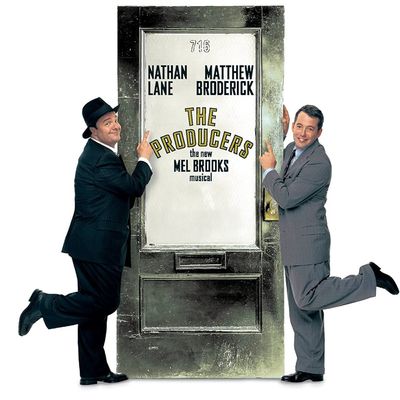
[4:20] Michael Riedel: Well, I never intended the subtitle, The Triumph of Broadway, to be ironic, but it turned out that way. I mean, the idea for the book was I wanted to write about the 90s on Broadway, which was a very important decade in the history of the American theater because it was the time when Broadway went from being still kind of in the backwaters of the entertainment business to becoming really, once again, part of a mainstream American popular culture with such shows as Rent, Chicago, Angels in America, The Lion King, and The Producers. Those shows at the time were as well-known, as famous, as popular as any TV show or movie of that era. And it really showed you that Broadway was back in business in a big, big way.
And I was trying to figure out, well, all right, so I can build Broadway up through the 90s, where do I end it? And then, of course, the obvious ending, really, it occurred to me, I was looking at my window one day and I thought, you know, once upon a time, I used to look out my window down here in the West Village and I would see the World Trade Center. And in fact, I saw the planes fly into the Trade Center and I saw the Trade Center collapse. And I watched Broadway really, really rally for the sake of the city and come back and come back in a really moving but vigorous way. And I thought, you know what? That's where I end the book. I showed just at Broadway's at its height and then boom, what we thought was the existential crisis.
And remember, I mean, I was around back then. We had no idea if Broadway was ever going to be able to open again. We had no idea what was going on in the city. You know, I mean, we didn't know there could have been more terrorists here. Broadway, the Times Square was on Rudy Giuliani, then the mayor, what he was saying, his top 10 list of terrorist targets. In Moscow, a year before, terrorists had taken over a theater and killed 200 people in the theater. So there was real fear about the survival of the theater in the city and frankly, the survival of the city. We just did not know what was going to happen back then. But you know, two days after the attack on the World Trade Center, September 13th, after Giuliani called all the Broadway producers and said, you guys got to go on, the show has to go on, on Thursday night to show the world that New York will not be brought to its knees.
And God love theater people, they pulled it together and they got that show up. And I went to see The Producers that night with Mel Brooks and Anne Bancroft and we stood at the back of the house. And it was maybe half full. People were scared. It was the hottest show in the world right then. We stood at the back of the house and in the beginning it was a little tentative, but then the laughs started to come and they got bigger and they got bigger. And then at the end of the show, Matthew Broderick and Nathan Lane, they led half a full theater of the St. James singing God Bless America through tears. And through a combination of strategies that I outlined in the book, that I show in the book, Broadway was in nine months from the attack on the World Trade Center, Broadway was back to posting record grosses.
So that's why I called it the triumph of Broadway, because at this moment where we really thought, and you probably are too young to have lived through it, but it's easy to say right now that, oh yeah, we recovered from 9-11 so quickly. That was not the perception that we had, those of us who lived through it. We did not know where the city or where this business was headed at that time. We just did not know. But Broadway rallied and Broadway came back and showed the world that New York could not be brought to its knees. So I finished the book in February, I turned in a manuscript to Simon & Schuster, and I went on a skiing vacation. And I was in Zermatt, Switzerland, and one day it was beautiful and I skied over the mountaintop, right at the foot of the Matterhorn into Italy, skied through Italy, had a wonderful day, stopped and had lunch and a glass of wine.
And I took a picture of my wine glass with a Matterhorn in the background and I sent it to my girlfriend. And she said, where are you? And I said, I'm in Italy. She said, do you have any clue what's going on? Frankly, I had not because I was skiing and I was on holiday. I was not paying too much attention. I was more interested in who was going to be Bernie Sanders or Joe Biden was going to win the Democratic primary then. And she said, there's this coronavirus thing, which I was vaguely aware of, frankly, she said, and it's breaking out all over Italy. And two days after I got back from Trevinia, where I was skiing, they shut down the ski resort that I was in because they had an outbreak of the coronavirus.
Wow. I came back to New York the second week of March and all of Broadway shut down. And I thought, oh my God, I've just written this book, Singular Sensation, The Triumph of Broadway and Broadway's shutting down. We thought when it was shutting down, it was going to shut down for two weeks. I remember talking to a whole bunch of producers and they said, it's going to be two weeks. We'll sort it out. Two weeks, we'll be back. Well, I remember that. Eight months later, we're not back. So I thought, well, what do I do? I mean, I can't throw up the whole scheme of the book. I can't tack on a COVID-19 ending. That seems a little fake. So I talked to my editor at Simon & Schuster and said, look, just write it forward.
That kind of puts things in context. So that's what I did. I mean, basically what I told you, the idea for the book was that Broadway was big and survived this existential crisis. And now it's facing its new one. And frankly, right now we have no idea what the end is going to look like for this new crisis that Broadway has faced.
[9:46] Alan Seales: Yeah, there's a level of awareness and communication and straight up technology advancements, obviously, that we have now that we didn't have before. And now because it's been going on for so long, it's the new normal. People are writing performances for Zoom. There's radio plays in podcast form, of course, coming out, recorded, written entirely in quarantine. And I think one of the silver linings to all of this is that it's forcing theater owners and producers to upgrade local systems, right? So you hear all these conversations about HVAC systems being upgraded and the theaters figuring out ways to get more people in safely, which is great. Because the running joke of serious Broadway performances is that their allergies always kick in with the mold in the theater, right?
When they're working, they have all mold problems. So hopefully all that gets fixed. But with all that aside, though, I moved to the city in 2007, and what got me into theater was Rent. And that's why I love basically in Singular Sensation here that that was kind of like where this part of your story picked up. And I feel like you've got a trilogy on your hands, right? So you've got Razzle Dazzle. And then now Singular Sensation, which is all through the 90s and pre-rent and post-rent or everything that's post-rent. And so in the book jacket, it says that you were thinking you were going to end with Hamilton, but you're not even there. You're not even there yet. So you've got, I guess, these moments in time and you've been involved in theater.
I want to go back, we will go back in a second to what got you involved in theater. But in your timeline, in your history of what you've cared about in your career, I feel like the 80s, there was the AIDS crisis in the 80s. Rent sort of changed things in the 90s. Hamilton has now changed things. There's been these major, major milestones that have just flipped Broadway on its head and brought a new audience that didn't previously exist. Am I off base?
[11:57] Michael Riedel: No, I mean, that was kind of the whole idea for Singular Sensation, the new book, was I thought, okay, I came to New York in 1985. So I saw all the Andrew Lloyd Webber, Cameron McIntosh shows, Cats, Les Miserables, Phantom of the Opera. I started covering Broadway in 1989, so I saw Miss Saigon 1991 or 90, I think it opened. And they really dominated Broadway then. I mean, it was the British, it was Cameron and Andrew. And those shows were enormous. I mean, no one had seen the kind of ticket sales that those shows did. And those shows really helped push Broadway more and more into more mainstream popular culture in a way. And then I remember Sunset Boulevard, 94, 95. And that show was, it was fascinating to me at the time.
And it's why I opened the book with Sunset Boulevard, because that was the last of the big British shows. And at the time it opened, Andrew was at the height of his power. And everything on Broadway had to be big. You had to have a chandelier, you had to have a helicopter, you had to have a barricade. And the case of Sunset Boulevard, you had to have Norma Desmond's eerie mansion that, you know, flew over the stage. Everything had to be lavish and expensive with special effects.
[13:18] Alan Seales: Tell us a little bit of the story, I want to interject real quick, that it was flying in and out randomly.
[13:22] Michael Riedel: Yeah, well, you know, in London, when Patti, Patti, I interviewed Patti for the book, and Patti LuPone, when she was doing London, she said, for some reason, the frequency that the IBM computers that were specifically designed, IBM actually designed special computers for Sunset Boulevard. Their frequency was shared with cab drivers in London. So at the time, if the cab drivers would get a dispatch, the mansion might move to the right or to the left. You know, they couldn't control it. You know, the technology at its height back in those days. Anyway, go ahead.
[13:55] Michael Riedel: But the thing was, though, I remember seeing Sunset Boulevard, I went to, I went to a preview. And not that I'm a prognosticator at all, but I remember just thinking, wow, this is kind of an intimate story. It's really a triangle. It's Norma, Joe Gillis.
[14:13] Michael Riedel: And Max the butler, just those three people with a little bit of the girlfriend who pops in and out from time to time. It's a small, it's a chamber piece. And I happen to think of this score as one of Andrew's best. I love, uh, as if we never said goodbye, I think is a terrific musical theater song and the perfect year is beautiful too. But I remember just having this feeling that, man, for a show that is so intimate, this is one expensive, heavy production, but they were still living in that era where everything had to be big. The bigger, the better, you know, the more money you spend, let's fly the mansion. Now, if you think about it dramatically, there is no reason why a house should fly unless you're doing the Wizard of Oz and the tornado comes and lifts it up.
But why dramatically, how does it make sense that Norma Desmond's mansion flies? It's just, there's no point other than the fact that we have to have a big, spectacular set. And I just remembered the whole thing felt heavy. And then sure enough, as the saga of Sunset Boulevard plays out as I show in my book, the whole thing got heavy. And Andrew had his fights with Patti LuPone and he fired her and she sued him. He had his fight with Faye Dunaway and she sued him. He had a fight with Glenn Close, who was the star of the show. And it just seemed to be a ribbon by backstage feuding and fighting. And it became not, the publicity was not about the show anymore. It was about Andrew Lloyd Webber is, you know, alienating his leading ladies.
Everybody's unhappy. And if you look closely at the ticket sales, once Glenn Close left the show on Broadway, they began to fall. And I remember thinking back and I think this has gone too far, this era of the British spectacle. It's just, it's not really working anymore. And I could see softness in the show. And indeed, at the end of the day, the Sunset Boulevard played in many productions around the world and every single one of them went down without making any money. It had overreached itself. Now, I had no idea what was going to come next. It's not like I'm thinking back then, oh, something else will change. You know, you don't know, you don't know. But when I write a book like this and I begin to try to put the pieces of the jigsaw puzzle together, you say, okay, so Sunset Boulevard wins the Tony Award in 1995.
And its only competition that year is Smokey Joe's Cafe, which is a review, right? So Sunset wins score and book without even a race. You know, there's no race. It just automatically gets it because Smokey Joe's Cafe doesn't have a book and it doesn't have an original score. And it wins Best Musical. So as I was kind of plotting out this book, I thought, right, and I'd forgotten this. I said, so what was the show that won the Tony Award after Sunset Boulevard, 96? And it was Rent. And Andrew Lloyd Webber presented the Tony Award for Best Musical posthumously to Jonathan Larson for Rent. And then I thought, there's a change. Because when Andrew was at his height with Sunset Boulevard, and we were all writing about that, there was this kid that none of us had ever heard of before, writing this little show that nobody was paying attention to, that the New York Theater Workshop, that was this kind of nice little off-Broadway company that nobody was not on anybody's radar back in those days.
And I remember I got a call from Richard Kornberg, who was the publicist for the New York Theater Workshop. And he said, oh, Michael, I have some sad news. And I said, what, Richard? I was at the Daily News then as a reporter. He said, Jonathan Larson died last night. And I said, well, who's Jonathan Larson? I said, well, he wrote the show called Rent. And I said, Richard, what is that? I've never heard of this show. Well, it's this new musical we're doing down here at the New York Theater Workshop. And I said, listen, Richard, I'm sorry the poor kid died. But I mean, no one knows who he is. So, you know, I think I gave you about one inch, you know, isn't it sad that this young, struggling artist wrote a show and he died last night?
And that was it. But what we didn't know was that Jonathan Larson had, he had cracked it all. Because what he did was he looked at all those Andrew Lloyd Webber shows, which some of which he admired, by the way, especially Jesus Christ Superstar, which had a profound influence on him. But he said, you know what, this musical theater is not for someone my age. You know, all these shows are set in fantasy worlds. Paris Opera House of the 19th century, you know, Vietnam, that was a long time ago. Les Miserables, 1848 revolution. Norma Desmond in her mansion in 1920s Hollywood. You know, cats, I couldn't tell you where cats are set. I know it's like a tiger in the smoke, but it's that simple. And Jonathan said, these shows, they're not what I am living in my life right now.
And he wrote Rent, which was a show that one was young, one was contemporary, one was happening right here and now, dealing with those issues such as gentrification, and AIDS, and poverty, and the struggle of young artists. And he was writing in a new vernacular, which combined early hip hop, there's a little bit of that in there, rock music, although I would always argue that Jonathan wrote musical theater songs very well disguised as rock songs, because the score to Rent is fundamentally a musical theater score. And it cost $100,000 to produce at the New York Theater Workshop.
[19:44] Michael Riedel: Which is nothing. And then when that show exploded, that to me was, that's how the book begins. You start with the end of the Andrew Lloyd Webber era. It gets so big, yet it implodes. What comes next? Boom, this kid you've never heard of, an American, by the way, it's no longer British. Broadway is no longer dominated by the British. It's an American kid who writes the show that is contemporary, that is young, that is current. And then you layer onto that the awful, awful tragedy that the night before his dress rehearsal, when he was being interviewed by the New York Times, which for him was a huge thrill, because he'd grown up reading the New York Times. He couldn't believe that the New York Times was interviewing him.
And when that interview was over, he went back to his apartment, 408 Greenwich Street, not too far from where I live. And he put the teak out of line and he dropped dead of an aneurysm. And he'd never see what Rent achieved. But that's a shift, that's a change. And that's how the whole book begins. Because then after Rent, the British are gone and the Americans are back in business on Broadway.
[20:47] Alan Seales: Well, it's, I mean, we'll get to the end of the book, I guess at the end of the interview, because this whole timeline, it's such a fascinating story to me. Because you've got people like Lin-Manuel who have claimed to have seen Rent over 30 times on stage, which influenced who he is. And then Tom Kitt came out of that influence. And there's all these modern people and speaking.
[21:08] Michael Riedel: Yeah, yeah. And you've got all these shows now. And I don't want to get into this yet, but I want to tease this, that you've got Percy Jackson and your Beetlejuices and your Be More Chills and these things that are trying to do well and are skewing towards an even younger audience. But now they're having the problem of catering to the audience who doesn't have the disposable income to support them on Broadway. But think about that, file that away. I want to get back to you. What got you into theater? Where did you grow up?
[21:41] Michael Riedel: Well, I grew up in Geneseo, New York, a small town outside of Rochester. And I was not really a theater kid, I have to say. I was more of a bookish kid. I loved reading Agatha Christie mysteries and Ian Fleming James Bond books. And to this day, I guess I'm a writer because I have a couple of books under my belt. I've been writing for my living for a long time. But whenever I teach a class about writing, I say the best two writers you can read to learn how to write are Agatha Christie and Ian Fleming, because they drive the narrative. They make you want to turn each page, what's going to happen next? What's going to happen next? There's not a lot of fuss, there's not a lot of fancy descriptions of things here and there.
It's just driving dialogue and driving narrative. I always say I learned how to write by reading Agatha Christie and Ian Fleming. They're considered popular writers. So the snooty people would look down their noses on them. But I'm telling you, as a kid, they were the big discovery for me. I mean, I spent hours in my bedroom reading through everything Agatha Christie wrote and everything Ian Fleming wrote. Loved it. But I never set out to be a writer and didn't really set out to be in the theater at all. I mean, I went to Columbia as a history major, and I was going to be a lawyer. And then one summer, I wanted to stay in New York. And my father said, okay, but you're going to have to help shoulder the cost of paying for the dormitory for the summer.
We pay it for the semester when you're there, but if you want to stay in the summer, you got to help figure out a way to pay for it. So I went to the, back in those days, you had the career services or the, I can't remember what it was called. And there was a little thing on the billboard that said, wanted a position in a Broadway producer office, Elizabeth I. McCann. And I mean, I knew a little bit about the theater, being here in New York, I had some friends in the theater. Dan Futterman was a friend of mine at college who went on to write Capote and had a good career in theater and movies and television. So I was kind of around it in a little bit, but I thought, well, it sounds kind of fun, Broadway producer working in an office there.
So I went and I got the job with Liz McCann, who's since become a dear, dear friend of mine. Although to this day, she says she has no memory that I ever worked for her that summer of 1987. When I give speeches now and Liz is there and I said, Elizabeth McCann gave me my start in the theater. She said, Jesus Christ, don't say that. People are going to hate me because I got you started. But I was, I was, I may have told this, I don't think you were on a call when I told the story, so I'll tell it to you.
[24:27] Michael Riedel: Um, but it really began my theatrical career, so to speak. So my one or two days on the job, Liz is working on this show that's about to open on Broadway. That's brought in from England from the Royal Shakespeare Company. And I go to the office and she's there, she said, kid, she always called me kid, kid, this goddamn actor in this show, we put him in this apartment and he's complaining that the air conditioning unit doesn't work. So go over there and fix it. I was like, okay, excuse me. I'm, I'm a history major at Columbia and don't know much about the air conditioning or plumbing, but just go fix it. He's a pain in the ass. I remember she said, it's a pain in the ass. Okay. So I'm going to leave the office there, 42nd Street and 9th Avenue.
I thought, well, I got to fix an air conditioning unit. How do I fix an air conditioning unit? So I stopped at a, there was a Black and Decker hardware store and I bought a screwdriver. So I, I mean, I know what I'm doing here, you know? So I go to this and I have to say, it was kind of a, they did not, let's say they did not put the actors in the best accommodations back in those days in the 1980s. It was a slightly kind of a sleazy, I don't know, apartment, quasi homeless shelter where they put them. So I knock on the door and this, it opens very slowly and this elongated, I can only describe him as this elongated man. He was the tallest person I'd ever seen in my life. He had this beard and he had these like very sleepy eyes. I said, yes. I said, and I had my little screwdriver. I said, I'm from Liz McCann's office. I'm here to fix your air conditioning unit. He said, oh, it's beastly hot in here. Beastly hot. Come in.
[26:21] Michael Riedel: So I go in and I, I see the air conditioning unit over, over in the window and I walk by a bed and I see this very attractive, I must say, female calf legs sticking out from under the covers of this guy's bed. And he's going, it's beastly hot in here. And then just covers go up from over the head of this blonde girl and she looks up, she's so hot in here, so hot in here, so hot. And the covers go back. What is, these people are bonkers, right? What am I going to do? So I go over the air conditioning unit and I, I put the screwdriver in and I just started like moving it around and the air conditioning unit started. It went on. Oh, thank you. It's so beastly hot. Oh, it's so hot. It's so hot in here.
Beastly hot. Goodbye. I get out of there. Well, that elongated actor was one Alan Rickman. And the girl in the bed was one BD Edney, who was the ingenue in the show. And Alan were having a jolly old time back in the day. And so that was my entree into the theater world. If I could fix, if I could fix the air conditioning unit for Alan Rickman, I could probably fix somebody's play. And that's why I became a critic, I guess.
[27:48] Alan Seales: Well, screwdriver, not a pen. So the foray into being a critic, I feel like that is, I mean, a fun job and like one of the best jobs and one of the worst jobs, because you've got to say things. I guess you can't be worried about what people think of you, or maybe you do, and it's just constant internal turmoil and anxiety. But like as someone who is, like for people pleasers, you can't, I guess, can you be a people pleaser and be a critic? Or do you word things like you've got your reputations of people like Ben Brantley, right, who's just.
[28:27] Michael Riedel: No matter what he says, it's all going to be trash. But there have been critics, especially, like you outlined some of the stories in your book, critics who have helped change, they've given reviews of Out of Towns or whatnot, and helped change the course of things to make them that much better.
[28:44] Yeah, I developed this kind of weird thing that hadn't existed before. I was never a critic in the traditional sense of Ben Brownlee, because I was a columnist. So I was a reporter at the same time I was getting my opinion out there. And I never wanted to be a critic in the traditional sense, because I thought that would be boring. Just to go night after night to the theater and then go home and write book reports was just not interesting to me. What was more fun for me was getting to know theater people and hanging out with them, collecting the gossip, putting the gossip together, and then saying, okay, all right, I've got all this great dirt on Spider-Man, Turn Off the Dark, the Julie Taymor debacle, and then I can kind of weave that into a kind of critical assessment of the show.
So I could have the one-two punch. All right, I can tell you the show sucks. And now here's all that juicy backstage gossip about how bad things are. So that was kind of the formula that I created. But it was too much fun for me to hang out with theater people, as opposed to being just a traditional critic who, as I say, just goes to the theater and writes little book reports after. So I guess in some ways I changed the formula, and I don't think anyone else has done it since, the kind of critic columnist at the same time. But it wasn't anything that I invented. I mean, that was the way, if you go back, and I did when I first got my job at the Daily News as a Broadway columnist. I went back and I read all the great Broadway columnists of the past, Walter Winchell and Dorothy Kilgallen, Alexander Wolcott, Louis Funk, all these great guys, and they had the same kind of thing.
You could tell where they stood on a show. If they loved it, they were promoting it in ways. If they hated it, they were dishing the dirt on it. And I thought that's a kind of a form that's been lost, that was very big in the newspapers of the 20s, 30s, 40s, going into the 50s. And so I just kind of stole from those people and made it my own kind of a thing. So I was the hybrid of the gossip columnist and the critic at the same time.
[30:44] So in the book, you've got so many quotes and stories, first-hand accounts and stories from people who were there. I mean, how did you continue to dish secrets and do your job in that respect while now, 20-plus years later, still being great friends with these people who I have assumed you've put some negative things out about?
[31:12] Yeah, I think the way I always approached things was, I was never duplicitous. So when I called people, I would say, look, here's what I know. Okay, I heard this, I heard that. This I have confirmed. And you can talk to me, and we can massage things, and you can give me a quote, and you can give me your perspective. And that will be reflected fairly in my column. And I always told people, I said, but you know, if you give me a no comment, a no comment from my perspective is a license to kill, because I have the goods. And if you don't want to talk about it, I'm just going to fire away, and you have no defense. Whereas if you talk to me and give me an interview, then I can hear your perspective, and maybe things that I think are exactly right, you have a different take on them, and I have to reconsider that.
And so things can be moderated, and we can come to some kind of compromise about what a column is going to be, as opposed to just a hit job. And I do think over the years that most of the people I've dealt with in theater felt that I was always fair. I was never one of the reporters. And there have been some, some very famous ones who are still around, by the way, who would do the old bait and switch. Hey, I'm calling about this, but then they would actually write about something else. And they take your quote out of context, and you look like an idiot the next day, because you thought you were talking about one thing, and they were using it for something else. I never ever played that game.
So I think over the years, as tough as I could be, people thought, all right, at least I'm going to get a fair shake with him. At least I'll have a hearing with him. He will hear me out, and he will reflect my point of view, my perspective in his column. And it's kind of funny. I mean, a lot of the people that I really roasted in my column became great sources for my books, and people that to this day I'm still friendly with. But I think it was just a matter of laying your cards on the table and say, hey, this is what I know. I'm a good reporter. I know what's going on. But what I don't know is your perspective of it. I haven't heard your side of things. So I'm going to write this column, whether you talk to me or not.
But if you talk to me, your perspective will be put into that column. And I think that kind of trust that people had in me, knowing that I wasn't going to screw them, and I was always honest. I said, this is what I know, and this is the column I am going to write. Now let's talk about it, and let's figure out what you want to say in the context of what I'm going to write. And sometimes they tell you things you didn't know, and that has to shift your point of view. Because I'm not there. I'm just gathering the information. I'm not in the room where people are having a fight or somebody storms off. I'm just hearing this secondhand. So I would rather have the eyewitness account of what happened.
[34:03] So when I set out to write, I mean, Razzle Dazzle, my first book, was different because a lot of the people were dead. So I was relying on people's memories of people who are no longer with us and a lot of research and old newspaper articles and books and magazines trying to piece that together. But with Singular Sensation, most of the people I'm writing about are alive. But because of my relationships with them, and I was determined, I said, this book is not going to be a collection of my columns, and it's not going to be a memoir. It's not going to be Michael Riedel's take on the 1990s. I went back and I interviewed everybody who was involved in all the shows and the events that I covered.
And I said to them, I said, I want you to tell me what happened, what you were thinking at the time. Don't project ahead. Don't say, we know the show is going to be a hit because you didn't. We knew we're going to have trouble with this because you weren't sure. I just want you to tell me, what was that first, the first time you read that script, what was the impact it had on you? That first dress rehearsal, what was that like? The first time you put The Lion King up in front of 1800 people who paid for their tickets at the Orpheum Theater in Minneapolis, what was that experience like? Take me back to those moments because, you know, in a book like Singular Sensation, we know Rent's a hit, okay?
We know Chicago's going to be a hit. We know The Lion King's going to be a hit. But Jonathan Larson, who did Rent, Frannie Berry Weissler, who produced Chicago, and Disney that did The Lion King, at that time, they did not know that those shows were going to succeed. They did not know. So I wanted to capture that sense of what do we have and is it going to work? And the only way I know how to do that is to go back and interview those people and say, don't tell me what your life is like now with your money and your success. Tell me what your life was like back then and the struggles you had to get that show on. And as you know, every show is a struggle to get on.
[36:01] Absolutely. I enjoy the spotlight that you shine on, on the production side of everything because a lot, especially even in this podcast, the focus a lot of times is on the celebrity, the front end, the glitzy actor who steps into the role after the audience doesn't know it may have been this close to never getting funding. Or the behind the scenes feuds. How many people, how many kids these days know about the Andrew Lloyd Webber, Patti LuPone feud because they're only 14 or 15 years old right now? Or anything along those lines. There's so much that goes into the production and the formation and just who holds the rights to a story and the song and the music. And there's all these different angles to everything.
And I absolutely love how that's the focus. It's the production. It's like you're outlining Broadway as a whole production. I mean, it is the industry of Broadway. It's the show business. It's business of show business. But the way that one thing influences the next, which influences the people who make the next thing, which influences the young fans that grow up and create the next generation. Just, I mean, listening to you talk here too, it's very obvious that you're a very good storyteller. You pause, you make me lean in, you get my attention and then you keep going.
[37:38] Well, I'll tell you this. You want to know how you learn how to tell stories the short stories of Somerset Maugham, one of my favorite writers, a great writer. And he just knows how to build a story. And then he gives you that little kind of twist at the end that is unexpected. But that's the great thing about writing about Broadway, because everything is unexpected. If I had said to you, okay, I've got this idea, Alan, for a musical. I'm going to take this 1000 page novel that was written in the 19th century. And by the way, it's in French. I'm going to make it into a musical. You'd be thinking, well, you're insane. Well, that idea was Les Miserables, which has grossed $7 billion around the world.
It is always, and the great thing about covering theater, it's always the unexpected. Everything that they say that looks good on paper. Hey, we have got the rights to Spider-Man, the biggest franchise movie, Marvel Comics or DC, whatever it is in the world. We got Bono and the Edge writing the score. We got Julie Taymor directing it. Cannot miss, cannot miss. It's a total and complete disaster. But then you take Disney in 1997. Disney has Beauty and the Beast on Broadway that nobody liked. And everyone's thinking Disney is like, oh my God, the theme park has arrived on Broadway. It's the end of the musical theater as we know it. This company is bigfooted itself on Broadway. They're going to do shows that are better off on a cruise ship.
This is what we're going to have to live with on Broadway. And they say, well, you know what, we're going to hire Julie Taymor to direct The Lion King. And then if you're me, you're thinking, as I did think, wait a minute, this makes no sense. All right. This family-friendly company, Disney, producing these theme park shows is hiring this brilliant avant-garde director whose stuff is interesting, but weird. I mean, you know, Wanderian, a carnival mass, or as Julie would say, Wanderian, a carnival mass. You think, this is not a show for families. I'm telling you. I remember seeing Wanderian, a carnival mass, and like a woman is holding this lion cub puppet and she's breastfeeding it. It's not a family-friendly show going on here.
And you thought there was no way these two entities, Julie Taymor and Disney, can possibly work. It does not make any sense. And so I went out to the Orpheum Theater in Minneapolis to see an early preview of The Lion King. I was trying to get out of town. And I kid you not, I mean, I sat there with my arms crossed and I was like, all right, this is going to be a total and complete disaster. And I cannot wait. I cannot wait to destroy this thing. And then all of a sudden, you know, you hear CeeDee LaLoca singing, ah, bonanza. And this papier-mâché sun is rising up. And then this cougar puppet with a woman manipulating it comes out. And then these giraffe puppets. I mean, the people were in the puppets of the giraffes.
They come loping out. And I was sitting there thinking, whoa, whoa, whoa. Now, I'm confused here because what I'm seeing is unbelievably beautiful. And it's not what I expected in any way. And by the end of that opening number, The Circle of Life, I remember looking up and I felt something brush up against me because I was on the aisle. I looked up and this life-size elephant puppet was walking by. By the end of that number, there was pandemonium, pandemonium in the theater. And everybody, they were standing on their seats cheering and screaming and applauding. And to my dismay as a tough old critic, I found myself standing on my seat cheering and applauding because it was so completely unexpected.
And, you know, that is fundamentally what theater does that very little else can do. As Hal Prince once said to me years ago, he said, you know, Michael, in our business, the theater business, you can't give people what they want. You have to give them what they couldn't even have imagined. And all of the shows that I chronicled in this book, Rent, Chicago, The Lion King, Angels in America, the producers, it's not something that people wanted. There was no formula for these shows. It just gave people something that they didn't even know that they wanted, that they didn't even know could exist. And then they see it and they love it. And that really can only happen in the theater.
[42:28] Well, that I think has the tendency to go either way. You're obviously talking about the things that succeeded, but I'm sure that could be multiple books written on things that tried to do.
[42:47] Alan Seales: Well, that's what Michael Eisner said. There was a moment during The Lion King, which I put in the book, where they did a workshop of Julie's puppetry, and Michael Eisner and all the people who came in from California to see it, they were like, what is this? We don't get it. I mean, there were these things on the head, you look at the actress' face, you look at the thing on the head, and it was done in a rehearsal room, you know, it wasn't lit, the costumes weren't really painted. And they were like, this is ridiculous. I mean, this is not going to work. And they were about to pull the plug on the show, but it was Peter Schneider and Tom Schumacher, the producers of The Lion King, who said to Julie, they said, you know, Julie, we failed you.
We did not present your designs in the right way. We have to get this back in front of Michael Eisner. And so they redid another workshop, just for Michael Eisner, at the Palace Theater, and now you had Don Holder's brilliant lighting, Julie had finished all the designs of the puppetry, and they did a series of different kind of puppets. And you know, the first series was like, they looked like they were from Cats, you know, tights and fur and this kind of stuff. And then Julie did a kind of a hybrid of her original vision and the kind of furry thing. And then the last one she did was her vision of her kind of unique puppetry. And Michael Eisner sat there, and he looked at it, and he said, you know what, the bigger the risk, the bigger the reward. Let's go with your vision, Julie. And that reward turned out to be a show that has grossed $9 billion around the world.
[44:15] Michael Riedel: That's insane. That's insane. Yeah, yeah. I mean, I think this is a really good segue to go back to the question I teased earlier is, you know, what's coming next then? What's the new generation? And why do you think, well, there's things that I've seen tried that didn't quite work, like Network with Bryan Cranston had the whole like, TV on film, but live outside the theater. And that was cool, but didn't quite work the way that I think the director originally intended it to. And you've got things like Be More Chill and you know, Beetlejuice, of course, pushed the limit, but then it hit and then it didn't, then it did again. And then there's the whole like, behind the scenes, oh, God, I would love to know what you know about Music Man versus Beetlejuice.
But yeah, I mean, listen, I feel that I have pretty much done my time on Broadway. I mean, I wrote two books about it, and I've lived through it for 30 years. And I don't want to be one of those old critics that I knew who used to cling on to the job, even though the world was changing and tastes were changing, and they couldn't get with it. And I realized for me, where I was really out of touch was Hamilton. I mean, no secret that I was not a big fan of Hamilton. To me, it was like, you know, fifth grade history lesson, in very obvious ways about the founding fathers. And, you know, it was all done in this rhyme, rhyme, rhyme, this, that, and the other thing. And, you know, I come from the world of Larry Hart and Stephen Sondheim, where the rhymes are really, really clever.
And in Hamilton's like, my name is Aaron Burr, sir. People go, oh my God, it's brilliant, brilliant. It's not for me. It's not for me. And Hamilton wasn't for me. But you have to recognize that, listen, my niece and my nephew, and they're 10 and 12, they love Hamilton. And I recognize that Hamilton is hugely popular, but I can't fake it. And I do know some of the aging critics at the time were not as crazy about Hamilton as they would lead you to believe in their reviews, but they did not want to seem out of touch, and that they weren't with it, because they didn't like Hamilton. So I kind of think I don't, I'm not the best person to ask is what's going to come next. My tastes are my tastes, and they're not going to change very much.
Frankly, most of the new musicals I see, well, when there was a Broadway, I wasn't that interested in. I think Ivo van Hoover, Vacuum Cleaner, whatever his name is there, is overrated. I thought Network was not good, because he fundamentally does not understand the component of that story that makes it compelling, which is it's really not about Howard Beale, the guy who goes crazy. It's really about, in the movie, William Holden, and how his life is really upended by everything, and how his marriage is destroyed, because in the movie, he falls in love with Faye Dunaway. And Howard Beale is the supporting player when the movie is really about the William Holden character. And Ivo van Hoover turned it into this whole Howard Beale thing.
But Howard Beale doesn't get you anywhere, because Howard Beale just goes crazy, and that's the end of it. He goes crazy. Whereas in Network, the Paddy Chayefsky script, it's really about William Holden, a man who does not know he's having a midlife crisis until he sees his friend crack up, and then he has his own particular kind of crisis. And that's where the meat, and that's where the heart of the story really is. And you can tack on all the bells and whistles with your videos and your cameras and all that stuff that Ivo van Hoover does, but he's failed to understand the fundamental premise of the story, which it's not about Howard Beale. It's about Howard Beale's producer. And that's what really moves you in the movie, and that was missing from this production in Network.
So I can't really go down that path with those avant-garde directors. And I saw The Crucible, and I remember he had the girls flying at one point. And I said, well, this defeats the whole point of the play, because there's no such thing as witches. They don't exist. But these crazy people in the community believe they do exist. But if you start having the girls levitate and fly, then you're saying, well, the witches do exist. Then you have to say, all right, the people in the community are right. They are witches, and they should be killed. So it just kind of goes against the whole point of it, with all these bells and whistles that he does.
[48:43] Alan Seales: So Network, Crucible, you mentioned Spider-Man, just this multi, multi, multi-million dollar tragedy and missed opportunity. Personal opinion on Hamilton aside then, I guess it sounds to me like you're saying that the future of Broadway, that the change has to be about, there still has to be story. There still has to be heart. There still has to be strong characters in drive, right? Because I think where a lot of producers now, judging from what you've just said, is that some people now are trying to cover up a lack of a story with a lot of spectacular, a lot of spectacle, a lot of technology. I mean, if you analyze all the shows that have endured, the really great ones, you will see at their fundamental level, when you scrape everything away, there is some kind of story that touches an audience.
So I always would say the Phantom of the Opera, yeah, people say, oh my God, it's got the chandelier, it's got all these special effects, it's got the boat that goes in, the candelabra that comes, and all those are beautiful, wonderful stagecraft. But at the end of the day, what makes the Phantom work is that you root for this man who's been so shunned by the world, who has fallen in love for the very first time. And he's almost like a child, because he's never known love before. He's never known what it is to be in love with somebody. And he loves Christine so much, he's willing to give up everything for her. And you begin with a man who's a murderer, but at the end of that show, every single woman in that audience is like, oh God, I wish I had someone like the Phantom in my life who loves me the way he loves Christine.
But it's true, I mean, that was Andrew's genius. You know, Andrew, in Razzle Dazzle, I interviewed Andrew, and I said, you know, you got to tell me, how did you hit on the idea of the Phantom of the Opera? Because in my mind, the Phantom of the Opera was Lon Chaney, and it was a horror movie, it was always a horror movie. And Andrew happened to pick up, he was walking down Fifth Avenue, and he happened to pick up, there used to be a bookstall on Fifth Avenue that I used to go to, and he just picked up for a dollar Gaston LaRue's The Phantom of the Opera, and he read the book, he had time to kill and he read it. And he did not see the horror, he saw the romance. Wow. And that's, the Phantom is not popular because it's a horror story, it's popular because it's a romantic story, right?
[51:10] Michael Riedel: Yeah. So you take, you take Wicked. Wicked has a lot of special effects in it, right? You know, I mean, they fly, and this, and the big sets, and all that. But what is it fundamentally about? It's about the girl who everybody makes fun of. About being bullied. It's about the girl who's, before we even had a, probably the term's bullying, all that kind of stuff. It's about the girl who's different. She's different. And nobody accepts her. And then the genius of Wicked is that the girl who is popular, they do have a kind of relationship. The unpopular girl and the popular girl do have a bond in some way, and that drives the show. So you have these kind of fundamental storytelling bits that if you lose sight of them, I don't care, you know, how much money you spend on your production values, without that thing that just grabs an audience and makes them want to care about the characters, you're not going to have anything ultimately.
I mean, why does the producers work? The movie, the movie's great, but the movie's, the movie's great in a cult kind of way. Now, why did it work as a Broadway show? Because it is a love story. It's a heterosexual love story. Max Bialystok and Leo Bloom, they fall in love with each other during the course of the show. And how does Mel Brooks and Tom Meehan's producers end? They literally walk off arm-in-arm into the sunset, showing all the new shows they're going to do together. That's, that, I mean, these are simple things, but they're hard to, they're hard to get across in a compelling way. But without that, without that heart, without that soul, without that fundamental storytelling, everything else is immaterial.
[52:55] Alan Seales: You have such an innate sense for knowing what will make something work and obviously what does not, and obviously can write, you can tell a story. What is the next phase for you? Have you ever thought about starting your own script and producing your own show or are you getting more into this author realm of life?
[53:10] Michael Riedel: Well, I mean, the phase for me now is, you know, I've become a radio host. I host the morning radio show on 710WOR. And I can't say the paycheck is, paycheck's pretty good. So I'm on that for a while. I don't know. I mean, I found, to be honest with you, when I set out to write my first book, Razzle Dazzle, I had, I had a lot of doubts about my ability to write it because as a writer, I was a columnist. So I was a sprinter, you know, I'm a newspaper man. So it's like, oh my God, where's Regal's column? It's four o'clock. Where's your column? And I was like, uh, well, I haven't really gotten around to it yet because, you know, I've been fooling around all day. And then you just sort of focus for a second, you know, all right, bang it out, knock it out, pull it over, you know, this thing.
Send it off, it's done. 700 words, 1,000 words, easy, done. So when I got the contract to write Razzle Dazzle, I thought, oh my God, this is actually, this is a book, which means it's longer than a 700 word column that I write every Friday. And how do I, how do I do that? So I had this kind of panic. I thought, I don't really know if I'm capable of writing a book. I mean, a book seems like a lot of work and I couldn't figure out how to get into it and how to do it. And then I called my old friend, Martin Gottfried. Some of your listeners may know him. He wrote some wonderful books, a great book, a coffee table book called Broadway Musicals, wrote a wonderful biography of Bob Fosse. He was a good friend of mine.
And I remember saying, I said, Martin, you know, I'm a newspaper man. I mean, I could knock out a thousand words on my lamppost if you needed it and with no sweat. But now this is a book. I mean, it's like a thing that's got a lot of pages, a lot of stuff in there. Well, how do I, how do I write this kind of stuff? And he said, don't even think about writing. He said, you have to do the research. You have to interview everybody. You have to read all the old newspaper clips. You have to read a whole bunch of old books you've never even heard of before. Don't even think about doing the writing until you've done the research. And once you do the research, in the course of doing the research, you're going to find your narrative in your book.
And he was absolutely right. As I began to interview people for Razzle Dazzle, and they would tell me these stories, stories that, you know, nobody knew, stories that had been lost in time. I thought, that's amazing. That's interesting. And then, you know, this person would tell you about this moment, and then you'd interview someone else and then say, well, yeah, that happened, but this also happened. And then the joy of a book is you have all these pieces of a puzzle that it's up to you to put together. So at the end of the day, it all comes together in one click. You think, that's the story I was trying to tell. But you can only do that with the research.
[56:15] Alan Seales: I imagine you have a wall in your apartment somewhere that looks like a conspiracy theorist wall with a bunch of pictures and clippings and, you know, the pushpins with strings all over the place.
[56:19] Michael Riedel: No, that's not how I work. Somehow I keep it all together in my head, but when I'm writing, my apartment is a total mess because I have transcripts from all the interviews I've done with people and all the books and articles I've read. So when I'm focusing on a chapter, I will have laid out all the transcripts of all the characters in the chapter, which have all been marked up because I've read them and I've circled things. Oh, this is great. This is a story. This is a quote. But then I got the magazine that came out in, you know, 1976 from New York Magazine that covered the show I want to use.
[56:54] Michael Riedel: And I have this old clip here from the New York Times that I found, and this old clip from the New York Post. And it's the pieces of the jigsaw puzzle. And then you sort of think, okay, I've got all this stuff in my mind, and it's all right here around me. Because I write on the floor. I write, I'm sitting at my coffee table on the floor as I am now. And it's like a semi-circle of material. And then I just begin to say, I remember that is there, and that is there. And then you start writing, and it does, in a weird way it kind of works. And you think, oh yeah, this links up with that. This leads into that. This moves the story along here. Oh, now I see where I'm going to go. I know how I'm going to end this chapter, but I need to build it up in such a way that the reader does not quite know where it's going to go until I get there.
And to me, that's the joy of the research and the writing. But I will tell you, it's exhausting. I mean, I'm a pretty fast writer, but I'm good for about, when I'm in the midst of a book, I'm good for about four or five hours. Straight work. I mean, when I sit down to write, if I sit down at noon to write, I can go to four or five o'clock with all that stuff going on in my mind and making sense of it. And then you just hit a certain point, you think, ah, that's right, and then you're exhausted. And you go to bed.
[58:19] Alan Seales: What about TV and film? Because the way that you've laid this out, it's a very linear story in the way that it's told. And a lot of things happened and you circle back and happen in parallel, those things you come back to. But what about turning this into a TV series or a movie about the 80s of Broadway, the 90s of Broadway, the today of Broadway?
[58:43] Michael Riedel: Well, I mean, I have a very good editor at Simon & Schuster, Ben Lunen. And when I set out to write my first book, I said, I don't know what I'm doing. Can you give me some advice? And he said, write scenes. Think of everything as a scene. I thought, that's good. Because I come from the theater world, so I know what scenes are. Don't explain things. Just write a scene. And an early mistake I made when I was writing my first book, I would write a really good scene, but then I would say, and then it means this. In the context of everything, it amounts to this. And Ben, a great editor, would take his red pen and say, we don't care what you think it's going to mean. Let the reader set the scene.
And the reader can say, oh, yeah, I can see what it's going to mean. You don't have to explain everything. So my writing has gotten better, I think, with his editing, because I just pare everything down. Set the scene. Set the scene. Set the scene. I'm flattered by the fact that my book had been optioned. Razzle Dazzle was optioned to be made into a TV series. And Doug McGrath, who wrote beautiful The Carole King Musical, did a very fine pilot episode for it, a script that he did. But the problem was when he did that and when it was optioned, it was kind of right after, this is back in 2015, when Smash had been on NBC. And Smash was a failure. So there was a sense that shows about theater are not going to work.
So that never went anywhere. Since then, I do have some offers for Razzle Dazzle to be made into a TV series again. So when I've signed the contracts, I'll let you know. But I will tell you this, though. The people who are interested in turning that book into a series are first-class top people. And they're much better at that stuff than I am. I write columns and I write books. I'm not a screenwriter. I'm not a teleplay writer. But I have asked my agent to put into the contract that I can be around so I can see how they do it, so I can learn something new, so that this old dog might have one or two more tricks left. And I would not be surprised, perhaps, if things come together, that I might try my hand at writing my own episode of a chapter from my own book at some point. And then we'll see what happens. Who knows? I would love to see that. So let's put that out in the universe.
[1:01:24] Alan Seales: All right. So we'll wrap up here with the three standard closing questions that I ask everyone on the podcast. The first one is, what motivates you?
[1:01:34] Michael Riedel: Money. Fair enough.
[1:01:40] Michael Riedel: I was never a writer. It was like, oh, I want to be a writer. I don't write a word unless I'm paid for it. I had to figure out a way to... I had no money in New York when I graduated from college, and I had to figure out a way to make a living, and I somehow was able to do it by writing. So what motivates me is, they call me up, and they say, oh, could you write an article about this? Could you write an article about that? I say, yeah, I could. How much do you pay? Here's my word count, and here's the amount I get paid for each word. For me, writing is... it's a joy, and it's fun. But for me, it's a business, because that's how... for many years of my life, I made my living.
[1:02:21] Alan Seales: So then the next question is, what advice would you give to your younger self and younger people listening now starting out down a similar path?
[1:02:32] Michael Riedel: Follow the money.
[1:02:37] Michael Riedel: I was like, do I add on to that by changing that to follow the opportunity? No. I'm a capitalist. My fundamental belief is, you can be an artist, you can be a writer, you can be an actor, you can be a painter, you can be a broadcaster, you can be this, you can be that. But until someone pays you for what you want to do, you are not a professional. You're an amateur. So if you love the arts, find a way to get paid for it. Because other than that, you're just going to be an amateur for the rest of your life. You're never a professional until you cash a check that somebody said, whatever you did, that painting, that article, that bit of acting you did, that piece of music you wrote, it does not count until somebody says, I like it enough to pay for it. So go for the money.
[1:03:36] Alan Seales: Okay. So the final question then, and I think this might, well, maybe it'll be hard because you've seen a lot of shows. But the question is, if you can only see one show for the rest of your life, but you can see it as many times as you want, what would you see?
[1:03:44] Michael Riedel: I would see an endless loop of the best of theater talk with Michael Riedel.
[1:04:06] Michael Riedel: Although sometimes late at night, like Norma Desmond, I do watch myself on old VHS tapes of the early days of theater talk that I used to host on PBS. If I had to see one show over and over again, I'd have to say it would probably be, well, can I give you two? Can I give you a play on a musical? Sure. Sure. Right. If I were to give you a play would be Who's Afraid of Virginia Woolf, which I think is the great American play. And I've had the good fortune to get to know Edward Albee pretty well. And in fact, in my book, Singular Sensation, I have a whole chapter on Edward's comeback when he was in the wilderness and he came back with a wonderful play, Three Tall Women. I loved that. Actually, that chapter on Edward called Who's Afraid of Edward Albee is my favorite chapter in the book because I knew him well and I knew him when he was totally forgotten and cast aside.
And I just saw his amazing comeback. So that's the chapter I enjoyed the most. And Who's Afraid of Virginia Woolf was a play where, and this is how I met Edward. I was a kid at Columbia and he was teaching a class there. And I'd kind of fallen in love with this girl who wanted to be an actress. And she was going to take this theater class with Edward Albee, who I'd never heard of before. And I thought, well, if she's going to take it, I'm going to take it too because I want to be around her. And I remember thinking, okay, well, Edward Albee is teaching this class and I have to do a monologue for him. You have to audition with a monologue. I don't even know what a monologue is. So I went to the Barnes and Noble there at Columbia and I went to the drama section and they actually had a little thing of monologues.
And I took this thing out. It was a Dylan Thomas monologue. And I read it. It made no sense to me whatsoever, but I did read that Dylan Thomas was Welsh. So I thought, well, I mean, I didn't know what Welsh was, but I knew it was somewhere in England. So I did an English accent like this when I read the thing. So I'm walking on the stage and this guy comes out in a leather jacket, leather jacket and this gunslinger, you know, eighties mustache comes out. Frankly, I was a little scared, to be honest with you. This guy's weird. And then I, um, I read my little monologue in English. I said, and as we conclude the lecture today, I will now draw on the chalkboard a line that will take you to the place you need to be.
I remember Edward looking at me with a mustache and he said, do that again without the accent. So I did it without the accent, just like me. He said, okay, you're in the class. I said, well, thank you, Mr. Albee. I thought, well, now I need to know who this guy is. So I went to the library, I went to the stacks at Columbia. Let me just go to the library. I said, all right, Edward Albee, who's afraid of Virginia Woolf? I'm 18 years old. And I take the thing out and I sat there on the floor and I started reading it. And I remember reading Jesus H. Christ, what a dump, Martha's first line. And I read that play. I sat there in the stacks of the Columbia library and I read that play and I thought, oh my God, I have never read anything like this in my life.
And then I took down A Delicate Balance and Tiny Alice and I read all those plays over the weekend. I thought that my life is going to be changed here. And then, you know, we became pretty good, pretty good friends over the years. So yeah, for me, Who's Afraid of Virginia Woolf? That would be the play I could see again and again and again. It's a brilliant, brilliant play. And he was a brilliant, brilliant man. As Terrence McNally says in my book, he was the least theatrical theater person I've ever met. Edward did not care about the gossip, the whole politics of the theater. He was a pure artist. He wrote what he wanted to write. And if you liked it, fine. If you didn't, he didn't care. He just went his own way.
And that I admire tremendously. And as per musical, I would have to go for My Fair Lady. I do think that's the perfect musical. I think somehow the Shaw play, Pygmalion, is a wonderful play. And Alan Jay Lerner and Fritz Lowe, they captured the spirit of that, of a man who thinks he cannot love, who is not interested in falling in love, for whom love means nothing. And then at the last moment, he realizes he has fallen in love. And that just touches the heart.
[1:09:11] Alan Seales: I love that answer. That is beautiful. So obviously, if you're listening now, check the show notes. And I'll have a link for where to get Singular Sensation, The Triumph of Broadway. And then, Michael, where else can we find you online?
[1:09:25] Michael Riedel: Well, you can listen to me at 710WOR on the radio, on my podcast, Len Berman and Michael Riedel in the Morning. And I'm not a social media person, so I don't do, I don't tweet. I don't do Instagram. I don't do any of that stuff. I'm too old for that nonsense. Sadly, I have too many friends who've gotten in trouble by tweeting things they should not have tweeted and Instagramming things they should not have Instagrammed. So I don't go down that path. But you can listen to me on 710WOR, Len Berman and Michael Riedel in the Morning. You can check out our podcast, 710WOR.com slash Len and Michael. And you can get more of me at thetheaterpodcast.com. I am on Instagram and Twitter and Facebook. Please leave a rating and a review.
This is edited by Matthew Hendershot. Thank you to Jukebox the Ghost for the intro and outro music. And Michael, thank you most of all to you. I, I just can't get over all these stories. There's people I know now in my career at this point that I've just never been able to sit down with them and, and know where they came from, because I'm just experiencing them in the current state, like Jack Vertel, for example. Right, like all over the book. And I know him now because I've been working with him now in the last year, year and a half. No idea the history that you've exposed me to. So anyway, I need to end this episode. It's been going on, but it's so, it's just so good. Everybody, please get Singular Sensation, The Triumph of Broadway. It is such a good book. Again, Michael, thank you.
[1:10:56] Michael Riedel: Thank you very much. My pleasure, Alan. Anytime. Thanks.
© Broadway Podcast Network, All Rights Reserved