

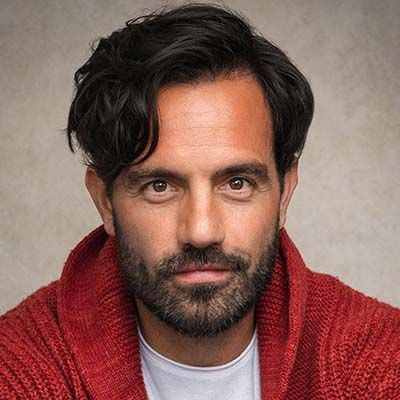
From Iran to Italy to Canada and finally to London, this performer forged a path uniquely his own, knowing the only failure is not trying... Read More
From the show: The Theatre Podcast with Alan Seales
Guests
Featured Shows

About
From Iran to Italy to Canada and finally to London, this performer forged a path uniquely his own, knowing the only failure is not trying. “When someone puts a seed in my head, I'll dive in not knowing how deep it is, but I'll just go for it and just see what happens.”
Ramin Karimloo is an Olivier and Tony Award nominee who made his name in the early 2000’s starring in some of the West End's most enduring productions, notably Phantom of the Opera and Les Misérables, after becoming the youngest actor ever to play the Phantom in 2007. Ramin later originated the role of Phantom in the 2010 sequel Love Never Dies, and made his Broadway debut in the 2014 revival of Les Misérables as Valjean (earning a Tony Award nomination for Best Actor in a Musical). Throughout his career he has released two EP’s and two albums as an independent recording artist, including his 2019 album From Now On which landed on the Billboard Heatseekers chart. Ramin now hosts his own podcast called “The Hang” on the Broadway Podcast Network, and in addition to playing the dreamy Dr. Kian Madani in Holby City on the BBC, he can be heard playing the dreamy Stavros in “As The Curtain Rises”, Broadway’s first original podcast soap opera.
Shortly after his birth in Iran during the Iranian Revolution, Ramin’s family escaped the country and found themselves in Italy. After several years in Italy, and relocating to a small town in Ontario, it was a 7th grade field trip to see Phantom of the Opera when things changed for Ramin. He left the theater that day thinking, “I want to make people feel like this…”.
During our conversation, Ramin chronicles his journey from high school, to cruise ships, to London - a journey fueled by his endless pursuit of the goals he set for himself as a teenager. Ramin emphasizes the impact encouragement from others can have on your life, and speaks fondly of the bar owner/father figure who championed his dream of one day playing the Phantom. He also revisits the initial impact of COVID-19 on his creative pursuits, and shares details about his most recent creations - a clothing line, a production company, a podcast, and more.
In this episode, we talk about:
- His family’s journey from Iran, to Italy, to Canada
- Being inspired by Colm Wilkinson
- Shadowing Phantom Peter Karie in Toronto when he was 16
- Life lessons from Mike Nelson, bar owner/dean of the school of life
- The serendipity of meeting his first agent in London
- His passion projects, and their challenges
Connect with Ramin:
- Twitter: @raminkarimloo
- IG: @raminkarimloo & 8xCommunity
- https://www.raminkarimloo.com/
- YouTube @ARoamingIranian
Connect with The Theatre Podcast:
- Support us on Patreon: Patreon.com/TheTheatrePodcast
- Twitter & Instagram: @theatre_podcast
- Facebook.com/OfficialTheatrePodcast
- TheTheatrePodcast.com
- Alan's personal Instagram: @alanseales
- Email me at feedback@thetheatrepodcast.com. I want to know what you think.
Thank you to our friends Jukebox The Ghost for our intro and outro music. You can find them on Instagram, Twitter, and Facebook @jukeboxtheghost or via the web via jukeboxtheghost.com.
A very special thanks to our patrons who help make this podcast possible!
Cheryl Hodges-Selden, Paul Seales, David Seales
If you would like to see your name in this show notes or get a shout out on the pod itself, visit ttp.fm/patreon to become a member and show your support!
Transcript
This transcript was automatically generated and might contain errors.
[0:00] Alan Seales: Welcome back to The Theatre Podcast, intimate, personal conversations with the industry's biggest names. This episode is with Ramin Karimloo, who is a star of stage and screen and TV, and you might know him as a hunky doctor on Holby City in the BBC, or he can be seen on the West End or on Broadway. This guy is all over the place, intensely genuine, intensely nice. He has an amazing origin story that I'm not even going to touch in this introduction because it's just best if you hear it from him. And just warning, we actually did continue talking after the credits, so after we wrap up the episode, just continue on to listen for a few minutes because some of the best gems are right there at the end.
Before we get into this, as always, please find me online at theatre underscore podcast on Instagram and Twitter. You can find me on the web at thetheatrepodcast.com. Please leave a rating and a review wherever you are listening now. Everybody, please enjoy this episode with Ramin Karimloo.
[1:19] Alan Seales: Today's guest is an Olivier and Tony Award nominee who made his name in the early 2000s in some of the West End's most enduring productions, most notably Phantom of the Opera, of course, and Les Misérables. He originated the role of Phantom in the Phantom of the Opera sequel, Love Never Dies, in 2010 before making his Broadway debut in 2014 in the revival of Les Misérables. In 2007, though, he became the youngest actor ever to play the Phantom and has released multiple albums throughout the years as an independent recording artist. He hosts his own podcast called The Hang, also on the Broadway Podcast Network, and in addition to playing the dreamy Dr. Kian Madani in Holby City on the BBC, he can be heard playing the dreamy Stavros in As the Curtain Rises, Broadway's first original podcast soap opera. Ramin Karimloo, welcome to The Theatre Podcast.
[2:10] Ramin Karimloo: Hey, buddy. How are you, Alan?
[2:12] Alan Seales: I am good. I'm good. And I want to dive right in to your past because you have one of the most interesting origin stories that I have ever read about. And, you know, we've been talking, we've been texting for a while now. And we've never gotten into just like due to pandemic and COVID times, we have not had the opportunity to sit down and have a beer and get to know each other on a deeply personal level. And side note, I hope that happens very soon. So everyone, please wear your masks. But I want to hear, I want you to tell the listeners now your story, because it's incredible. It's one of those, you know, rags to riches sort of things.
[3:00] Ramin Karimloo: Well, still got a few of the rags. We're getting to the words of riches hopefully one day. What would you want to know? Like, where do we begin? You know, born in Iran during a revolution, which, you know, history is cyclical, as they say, I think we all see it over and over again, unfortunately, during the turnover of the Shah, like many Iranians and people around that time and around the area. So in '78, when I was born, it's a story that I'm careful how much I say out of respect to my father and our family and whatnot. But it's something we're exploring that we're writing now as to maybe develop into something very cool. But I want to flip it on its head, try and find the innocence of the situation because there's one story of a family member that I've just sat down and finally, like I recorded the FaceTime conversation.
And I said, Just tell me what you remember. It's ridiculous. He's like, I kept saying to him, this is not true. It's insane what he went through. And it's something that we're obviously very sensitive of how we develop it because we want to do it properly. It's one of many that happened during that time. But look, to make a short story long, we escaped from Iran. It wasn't just like you leave. We had to be cunning on how we had to leave and then move to Italy just outside of Rome. It was an actual escape. 100% fake passports, the whole. Wow. Wow. I even now as I'm saying that I feel nervous. I feel like my father or someone saying shut up. It's not a story for everyone. But I'll get his permission if we ever tell the full story.
I don't think I'd be alive if we stayed. Yeah, yeah. I don't think our family would. We were in a situation where specifically we had to get out. So our first port of call was Italy outside of Rome. And I was I moved there when I was months old. And first couple years getting that taste of fine Italian food, you know, my first solids were Italian. I think that's why I've got this affinity for anything Italian. And then we from there ended up in a small town in Ontario called Peterborough. Massive culture shock. And I look back on it now I couldn't think of a better place.
[5:12] Ramin Karimloo: How did you go from Italy to Canada? Where did that change come from?
[5:16] Ramin Karimloo: Well, that's what I said to my father. I'm like, we're born in this beautiful, you know, Iran at that time, Persia is just stunning, you know, like, and it still is. It's a great, you know, put aside the political issues, as a country is stunning. And obviously, Italy is too. And I said, How do you go from that to Peterborough, Ontario? And I know, no disrespect, and I can't think of a better place I've grown up. But at the time, I said, What were our options? And it was Australia, LA, France, there was somewhere else. But then I said, somebody in that room must have suggested Peterborough, Ontario. And how did you not question he goes, I did, but the fact that it was so obscure to him and away from what he felt was the political unrest, and just a whole new start, like a blank page, I'm assuming that was his thinking, because I knew he wanted just to get away from all that we experienced.
And so we did. And there we are ended up in the, at that time, never experienced cold like that. And my father was like, the snow that Peterborough would get, he's like, What, what is going on over here?
[6:24] Ramin Karimloo: Wow. Oh, so okay, born in Iran, moved to Italy, two months old, you live there for two years, moved to Canada, and then at age 12, saw Colm Wilkinson in a touring production of Phantom.
[6:36] Ramin Karimloo: No, it was a sit down production.
[6:38] Alan Seales: Oh, the sit down? Really?
[6:40] Ramin Karimloo: Oh yeah. I think it was meant to be. From what, now that I know Colm, I remember he said to me, I was meant to do it for six months. Five years later, he finally leaves the show. But the production lasted, I forget how long, I think it surpassed 16, 17 years. It's a long time. I think what stopped the production and many productions in Toronto at the time, funny enough, was a virus, the SARS virus.
[7:06] Alan Seales: Oh, right. Right.
[7:09] Ramin Karimloo: I remember back then, it was Broadway Sister. You know, so many shows started there, Fosse, Ragtime, Showboat. Now, not so much.
[7:18] Alan Seales: So that was your, that was sort of your awakening. And I sort of imagine, you know, you sound like you're close with your family. And I suspect that your parents at the time were, told you the story of escaping Iran and moving to Italy and why you came to Canada and all of that. And as a 12-year-old kid, I suspect that you're probably sort of, I mean, that's a time when you're sort of starting to find your identity anyway, as a teenage person or an almost teenage person. And then you see Colm Wilkinson as, you know, in this amazing production that has become, like you're just associated with Phantom. And I know that you are so much more than that. And we'll get to that in a bit. But what was it about the production? What was it? Was it Colm specifically? Was it Phantom specifically? What was it that was like, this clicks with me, this makes me want to change my life?
[8:18] Ramin Karimloo: It would have been a marriage of the two, the production itself. At that point, music was speaking to me. And I remember having records of Johnny Cash, Ray Charles, Tracy Chapman, cassette tapes of the Tragically Hip. And there was something about these voices that had some sort of history in them, an emotion, a story that would speak to my heart. And so then when you get Colm, with such a unique voice, it's different from anyone on that stage. And at this point, I know nothing about music theater, apart from hearing the original production, because in grade seven, part of our English teacher, part of the lessons, we studied the Phantom. I had no idea what it was, but she printed off the script, and we're listening to the music, talking about the part and whatnot.
And I thought, this sounds pretty cool. So we got to a trip to go see it. And the only reason I went was because it's day off school, you go on a trip. But I was never thinking, I want to go see theater. I was a hockey player. We were playing hockey all the time. We would get into fights, and I was just a typical boisterous young guy. But when I saw that performance, that part, I think I got my mother's emotion in me, because I'm a very emotional guy, even though I wanted to be a tough guy, or I acted like one. I'm probably overcompensating, because I was so super emotional. I remember being floored by the story, by this character, so flawed, but it's that nature versus nurture thing. And then you have this such a unique voice, that calm's voice just picks your soul up for those two and a half hours, and then drops them off when he feels, I'm done.
And I remember thinking, I want to do that. I want to first of all, as a 12-year-old, I want to walk through a mirror. I want to be up in an angel and do all these cool things. And then I also had that thing of, I want to make people feel like this. So I left that day thinking, maybe I want to do that. And then at 16, I was in, and I don't know why, I was in an enriched English class, because I was terrible at school. But I daydreamed so much. And doing this enriched English class was perfect. I may not have got the grades, but the theme of the year was vocation. And for one of our projects, it was about, what's your vocation? In life, sometimes you don't end up doing your vocation. And I said, well, I want to be an actor.
If I had to choose, I want to play the Phantom in the oddest way. And she's like, well, maybe you should go job shadow him. I said, sure. Then I'm thinking, who do I call? What do I do? Somehow I ended up phoning to the production company. And this is a kid, I don't know anything about how to go about doing this. But somehow I knew to phone a really useful company. Whoever I spoke to, I said, I'm Ramin, 16 years old. I'm in high school at Alexander Mackenzie High School in Richmond Hill. I want to job shadow the Phantom for a project. And it must have been my lucky day because they seemed to like the idea. And they connected it with the Toronto Star so they can do a piece on it, make it a promotional thing.
But again, all this is going on my head. I don't care who's there. I just want to hang with the Phantom and figure out how do you do this? And I ended up doing that. And we spent the whole day and watched the makeup process. We talked for ages. At that point, the Phantom was Peter Carey, a Welsh Phantom, electrifying he was. And so different from Colm in his own way and just did his own thing. And he was so kind to me that day. And he gave me some cool advice. But the one thing I'll never forget. So there I am, 16. And he says, Ramin, it's going to take up to 15 years. By that point, if you're still sticking around doing it, it'll happen. And he goes, he had a theory of it, the 15 years that it separates those who will and those who won't. And then at 26, when I got the part, I beat the timeline.
[12:25] Alan Seales: Yeah, I think it just speaks to the drive. We've said before on the podcast so many times that if you can see yourself doing anything else, do that. Do that other thing because you need the drive, you need the perseverance because it's not a happy business when you're starting out. And even when you're in a job, in a contract, you're looking for your next job. At any moment, your current show you're having fun with and is paying your health insurance could just close. And or a global pandemic could come. Obviously, that's going to be few and far between. But there are reasons things close all the time or financing falls through or whatever. But it is it's super, super tough. And I think, well, you skipped over a little bit on maybe you didn't actually got haven't gotten there yet.
I didn't know this stuff about 16. And then 18 dropped out of school of high school, right, and got a job on a cruise ship. And that brought you back into Well, okay, connect the dots for me. So you're talking, you're in Phantom, you're at 16. You're in that mode. And then cruise ship world is a much different place.
[13:40] Ramin Karimloo: I'm being the Phantom too. At 16, when I did the job shadow thing, my buddy, my best friend in high school, we ended up making a bet that I'd become the Phantom. And I said, I want to be a young Phantom too. Because in my head, I remember talking to one of my uncles who ended up grilling me about the story and asked me questions. And for me, I found that odd, especially as an Iranian kid. My father's like, you're gonna be a doctor. I'm like, have you seen my grades? I remember him questioning me about that, and about love and why he did the things he did, and why he turned out the way he did, not necessarily aesthetically, but his actions, thinking, what if he was young? And this is just a 16-year-old teenager thinking about it out loud.
And I thought, well, let me try and get him to play young. And maybe I can do that, be that guy. So that was the bet I made. And I remember I was working in a sports bar as a cook and dishwasher, doing all that. But that was my best life lessons, because the bar owner, Mike Nelson, he was like an older brother slash father figure as well. He taught me so much about life, the school of life. He was the dean, you know, from anything at that point, from girls to fighting. He taught me how to fight. He taught me, we play sports, about working, taking care of your mom, being respectful and being just a decent human being, based on a lot of his experiences. Staying in trouble, but out of trouble at the same time, you know, like, he wanted me to enjoy life, but there's certain enjoyments that he says, if I ever catch you doing such and such, I'm gonna kick your ass.
And to this day, I'll always remember that. And I believed it, because we were around certain things, exposed to certain things in life. And he just wanted to make sure, not hide me from it, but choose not to go down those roads. And I learned a lot by seeing, working in that bar till it closed, and seeing some of the stories that were still there at certain times of the night. And he would just say, don't be like this. When he introduced me to his girl, he would go, and when I grew up, they called me Raman. He goes, Raman, tell Emeril what you want to do for a living. I said, no, what are you talking about? He goes, no, tell him. He goes, he wants to be the Phantom of the Opera. How cool is that?
And I remember thinking, oh, if Mikey thinks that's cool, then it is cool. I'm going to do it. But it's amazing how when somebody encourages you or puts that drive into you to chase your passion. And I remember when I was thinking of taking some sort of course, he goes, why do you want to do that? You want to be the Phantom. I said, well, it's just a fallback thing. He goes, if you take a fallback thing, you're going to fall back. And I guess he was right. Now, it's scary advice. That's why I don't do workshops. I don't offer myself to do workshops, because I probably give the worst advice. But at that point, what do I have to lose? You might as well just go for it, keep chasing your passions.
I think you should always chase your passions. But at 16 and 18 and 20, when you got no responsibility, so keep at least try to get that thing you want to do. Yeah, yeah. What's the worst at that point? I have nothing to begin with. I'll remain with that. But at least I've got this experience and this effort. You know, I guess failure comes from not—it's not about not succeeding. Failure is not trying.
[17:08] Alan Seales: So after the cruise ship, the cruise ship life, you came back to London, though, when if you're going to be acting, I guess, why London versus New York? Or was I guess the Phantom was already in London, right? So it wasn't in New York at this point yet. Is that why you went back there? Like, find your life that specifically?
[17:30] Ramin Karimloo: Well, the home of Phantom is Her Majesty's Theatre here in London. Do you know what brought me here? Besides, you know, I always say I came for the work and I stayed for the girl. But I was working on a cruise ship. And I was enjoying life on a cruise ship. Let me tell you, a single dude singing and just seeing the world. There was a guest act on there who had done some leading West End work. And he gave me grief on. He probably didn't. I don't know if he didn't like me or was jealous of me because I was getting attention. But I'm thinking, I'm not just a kid. You're an adult. Smart enough. You know, it's like, what's your problem? You're saying you'll never make it. You need to do such and such to make it because that's the route he took.
And I think, I don't fucking care what you did. I don't. I think that's great. You've done great. That was your road. This is my road. During the day, as much as I've seen the world, I also had a ton of books on anything. I would read so much on acting and I would—if Pacino mentioned something in an interview about Uta Hagen or Lee Strasberg, I'd go get those books because, well, if they read it, I should read it because I want to be even half as good as them. That's my goal, you know. And I learned that there's always several roads you can take to reach a destination. And I remember he gave me such grief that it did affect me in a way. I'll never forget it because he specifically said, you need a good agent.
Like, you know, there's people like Michael Garrett. That name stuck in my head. And I thought, well, if he's done leading roles in the West End and I didn't rate him, but I don't want to talk bad about anyone, whether I like what they do or not. I don't lead with hate. No one in this world I'll never hate on because I don't want that on my heart. All I thought was if he can get leading roles, I know I can go get even the smallest role and just learn. That was all my ambition was, just to get on stage. So I moved to England because at that point I met Mandy, who was my boss, now my wife. And I thought, well, let's give it a go in England. I was in a dance studio taking some dance lessons. I thought, well, I got to learn, do something.
And there's a big board of like, learn some songs for auditions. I said, I should learn some songs. So I just did that, took this number, went to this guy's house, started singing. And he was like, how long have you been training? I said, I've never had singing lessons. And he liked the rawness and the range. So he goes, come back next week. My friend's an agent and I want you to sing for him. And I'm like, oh, here we go. Because I'm also—Wow, that fast. Yeah. But at this point, I'm not thinking this is bona fide. I think he's probably talking shit. Right. So I go back next week because I got nothing else to do. He goes, this is my friend who's an agent. I said, hi, I'm Ramin. He goes, hi, I'm Michael Garrett.
Whoa. Yeah. That's the guy. And I was like, two years ago, that guy told me this is never going to happen. Now you're here. And we hit it off. And I loved what he said. He goes, I dig what you do. And I can't promise you anything, but I definitely would try and get you auditions. I said, perfect. That's all I need because the rest is up to me. To this day, we're still mates. We're no longer my agent, but I have nothing bad to say about him. I think he's one of the better agents out there. We had seven great years. He started things off for me and I couldn't think of like—I was like, wow, it all sort of lined up.
[21:07] Alan Seales: That's really, really cool. And I mean, the rest of your career and a lot of it is very public and I want to skip over—not public, it's just—and then it's exposed and it's being like it's well known. So I want to skip over the stuff that anyone else can already read about.
[21:19] Ramin Karimloo: Well, I'm glad you do that.
[21:24] Alan Seales: Well, there's—yeah, I want to get something different. We're going to take a short break. Stay tuned for more of the episode.
[21:38] Ramin Karimloo: You actually—you wanted to talk about your company that you started. So tell me about that.
[21:42] Ramin Karimloo: Well, that's what I decided to think. When this pandemic hit, the first three or four months, for many reasons, was just crazy. The world got turned upside down for so many different reasons. Like the year started with—what did they say? Like 20% of the world's oxygen on fire with the Brazil forest fires. And then the first three, four months, man, I just—all I cared about was my kids. I didn't care about anything else. I just want to make sure they're all right. Blood is thicker than water, man. My only concern was get them through it. Make sure they're okay. Make sure their heart is okay. Make sure mentally they're okay. Because that's the most important thing. I certainly don't apologize for that.
And then after a while, I started thinking, well, I've got to do something. I've got to practice or be creative. And as the year went on, there's things we started doing online. All that started popping up. And some things were—you can see how people were trying to create. Because it's also in our blood. It's what we love to do. It doesn't define who I am. I don't put any value necessarily as when people go, who's Ramin? I no longer say, well, part of who I am is an actor. It's not. It's what I do. But I love doing it. And I want to keep doing it. So I was thinking, how can we start doing things? And at that point, I also wanted to start a little side passion project, a clothing line, 8X Apparel, which is inspired by doing eight shows a week.
But when the pandemic hit, I shelved it because I thought, well, now's not a good time to offer something like that because I don't want to—people's got to hold on to their money. So I shelved it. I waited a year. And now we're rolling it out now, even though the pandemic's going on. But at some point, we just got to start. And what will be, will be. I decided to finally do a stream with my band. And we did a couple prior to that. And I really enjoyed doing it. But based on those experiences, the third one, I was like, I know what I want to do with this. But I want to do it on my own. One of my agents, Alexandra, who's like a business partner now, she's amazing. Her twin brothers are a film crew.
So I went, met with them, talked my ideas. And they said, why don't you have your own company? You should be producing yourself. I said, I don't even know what that means. From that moment, again, when someone puts a seed in my head, I'll dive in, not knowing how deep it is, but I'll just go for it and just see what happens. Within 48 hours, I had a new business manager, a company, a production company, a merchandise company. And I thought, OK. Now, what I want to do with both is, obviously, the well is empty. Nobody drinks. You fill the well, everybody drinks. So I want to just try and fill the well and then try and use what, if there's profits from one, what can we do next? And sort of like one for me, one for them, one for me, one for them.
So with this production company, we did an amazing stream that I'm super proud of. It was successful to a certain extent. So now I'm working with someone else to try and get her album made, a stream of her passion. Her passion is to make a gospel album. So I'm like, well, let's see if I can help. So we're discussing and doing that. And I'm learning how to produce that on the fly. But I think if I'm in any position to help create things, one, it's fun. It fulfills my passion. Because I don't know, sometimes I have days where I'm like, maybe I don't want to sing or be on stage anymore, but I want to do something else. And I love the idea of like, if this actually gets someone else one of their dreams come true, that would be amazing as well.
And I would be fulfilled doing that too. So that's the idea. And that's that sprung out of being sat around thinking, well, I don't want to just sing for my supper anymore. You know, I want to create. I want to, you know, I've always done what I want to do. I guess I'll continue to do that because we get one life. And if there's ways we can do it with friends and support each other and encourage each other, empower each other, then give it a go at least.
[25:39] Alan Seales: Well, that is really great to take us into actually your podcast, The Hang, because it started pre-pandemic, you paused it at the beginning of the pandemic. And as you said, you know, you focused on your family and your children. And now, in the middle of the pandemic, you've picked it back up again. And it's been some of—listening to it myself, it's been some of the most just real and authentic conversations that I've heard from anybody. And social media and the internet is really good about bringing people together and giving us access to people that, you know, even a decade ago, we wouldn't be able to have access to. And just, you know, as the kids say, you slip into the DMs, and all of a sudden, you've got a great relationship with somebody.
And it's really, really cool how stuff plays out. But you know, to hear how your friendships with these people have evolved and how things have been going on. And I personally, I feel you're probably the same way that I personally continue to do this podcast as difficult as it is not being in a physical studio face to face. Because it's for me, it's a bit of a catharsis. It's a bit of a therapy session because we can be real. And I, similar to what you just said, I get so much satisfaction out of bringing stories and happiness to people. And the feedback we get from people listening to these episodes of just hearing these personal stories from people that they've never heard these stories from before, is incredible.
And it's fulfilling to me. And that's why I do it. And so I'm projecting a little bit because I think you're sort of the same way as that, you know, as hard as the podcast is—podcasting ain't easy—that you feel it's a personal satisfaction, you feel good about just connecting with your friends when you can't physically be with them anyway, but then be.
[27:21] Ramin Karimloo: It is a production of the British Television Association.
[27:22] Alan Seales: The podcast is available in English, Spanish and Spanish.
[27:23] Ramin Karimloo: All information on Alan Seales is available at www.alanseales.com.
[27:24] Alan Seales: Thank you for watching.
[27:25] Ramin Karimloo: If you enjoyed this episode, please like and subscribe.
[27:26] Alan Seales: If you have any questions, please leave them in the comments.
[27:27] Ramin Karimloo: Also, if you would like to be notified when a new episode is uploaded, please leave a comment.
[27:28] Alan Seales: Also, if you would like to receive a free copy of The Bachelorette, please send it to us at info.bachelorette.com.
[27:29] Ramin Karimloo: Thank you for watching.
[27:30] Alan Seales: We'll see you next week.
[27:31] Ramin Karimloo: Bye.
[27:32] Alan Seales: Bye.
[27:33] Ramin Karimloo: Bye.
[27:34] Alan Seales: Bye.
[27:35] Ramin Karimloo: Bye.
[27:36] Alan Seales: Bye.
[27:37] Ramin Karimloo: Bye.
[27:38] Alan Seales: Bye.
[27:39] Ramin Karimloo: Bye.
[27:40] Alan Seales: Bye.
[27:41] Ramin Karimloo: Bye.
[27:42] Alan Seales: Bye.
[27:43] Ramin Karimloo: Bye.
[27:44] Alan Seales: Bye.
[27:45] Ramin Karimloo: Bye.
[27:46] Alan Seales: Bye.
[27:47] Ramin Karimloo: Bye.
[27:48] Alan Seales: Bye.
[27:49] Ramin Karimloo: Bye.
[27:50] Alan Seales: Bye.
[27:51] Ramin Karimloo: Bye.
[27:52] Alan Seales: Bye.
[27:53] Ramin Karimloo: Bye.
[27:54] Alan Seales: Bye.
[27:55] Ramin Karimloo: Bye.
[27:56] Alan Seales: Bye.
[27:57] Ramin Karimloo: Bye.
[27:58] Alan Seales: Bye.
[27:59] Ramin Karimloo: Bye.
[28:00] Alan Seales: Bye.
[28:01] Ramin Karimloo: Bye.
[28:02] Alan Seales: Bye.
[28:03] Ramin Karimloo: Bye.
[28:04] Alan Seales: Bye.
[28:05] Ramin Karimloo: Bye.
[28:06] Alan Seales: Bye.
[28:07] Ramin Karimloo: Bye.
[28:08] Alan Seales: Bye.
[28:09] Ramin Karimloo: Bye.
[28:10] Alan Seales: Bye.
[28:11] Ramin Karimloo: Bye.
[28:12] Alan Seales: Bye.
[28:13] Ramin Karimloo: Bye.
[28:14] Alan Seales: Bye.
[28:15] Ramin Karimloo: Bye.
[28:16] Alan Seales: Bye.
[28:17] Ramin Karimloo: Bye.
[28:18] Alan Seales: Bye.
[28:19] Ramin Karimloo: Bye.
[28:20] Alan Seales: Bye.
[28:21] Ramin Karimloo: Bye.
[28:22] Alan Seales: Bye.
[28:23] Ramin Karimloo: Bye.
[28:24] Alan Seales: Bye.
[28:25] Ramin Karimloo: Bye.
[28:26] Alan Seales: Bye.
[28:27] Ramin Karimloo: Bye.
[28:28] Alan Seales: Bye.
[28:29] Ramin Karimloo: Bye.
[28:30] Alan Seales: Bye.
[28:31] Ramin Karimloo: Bye.
[28:32] Alan Seales: Bye.
[28:33] Ramin Karimloo: Bye.
[28:34] Alan Seales: Bye.
[28:35] Ramin Karimloo: Bye.
[28:36] Alan Seales: Bye.
[28:37] Ramin Karimloo: Bye.
[28:38] Alan Seales: Bye.
[28:39] Ramin Karimloo: Bye.
[28:40] Alan Seales: Bye.
[28:41] Ramin Karimloo: Bye.
[28:42] Alan Seales: Wake up.
[28:43] Ramin Karimloo: Wake up.
[28:44] Alan Seales: I love you.
[28:45] Ramin Karimloo: We're here to win an interview with Leslie Odom Jr.
[28:46] Alan Seales: When I see stuff like that, it makes me go, what am I doing a podcast for?
[28:49] Ramin Karimloo: That was so in-depth and you had some really emotionally beautiful moments too.
[28:56] Alan Seales: I don't know if you can plan for that because you vibe off of each other, it's like an improv, right? And just see where it goes.
[29:05] Ramin Karimloo: That's why some of my favorite podcasts are when Simon Bailey spoke, Ken McGraw, and there were some new ones coming out of Rachel John, who I've just done.
[29:17] Alan Seales: The idea of thinking for some crazy reason, I got a lot of supporters on my Instagram, so the idea of thinking, oh, they're going to meet these people for the first time brings me joy because I know how much my friend brings me joy and now he's going to bring that to everyone.
[29:35] Ramin Karimloo: Earl Carpenter, his podcast that he did on The Hang was amazing and the reaction because he was so candid about mental health and his position in this industry and what he's going through, and I did not expect that at all.
[29:49] Alan Seales: It was cool to facilitate that because that has nothing to do with me.
[29:53] Ramin Karimloo: That's Earl. BPN have backed me to do a podcast and half the time, some of my jobs, even Valjean, I didn't want to do it, but when other people encourage you so much and think it's a good idea, even if I don't, I think, well, why do they think it's such a good idea?
[30:07] Alan Seales: I think I should, let me just go to this party and see what happens because when people have more faith in you than you have in yourself, you should explore that.
[30:16] Ramin Karimloo: Yeah, completely.
[30:17] Alan Seales: I completely can relate to that and like you said, it's just listening.
[30:22] Ramin Karimloo: It's giving them the opportunity and people are itching to talk about this stuff sometimes.
[30:27] Alan Seales: They want the medium and I think podcasting is a great platform for this because you're disarming, you talk with the people, you're friends with these people and realistically, it's just the two of you having this conversation.
[30:40] Ramin Karimloo: I mean, there might be an engineer in the room if you're in a physical studio or they're monitoring or whatever, but you're having a private conversation that just happens to be recorded and shared with the world later.
[30:48] Alan Seales: But in the moment, you talk about losing yourself in the moment earlier.
[30:53] Ramin Karimloo: I think that's part of your success on stage too is that you're just one of these people that when they see you, they want to talk to you because you're authentically listening.
[31:06] Alan Seales: In your eyes, I'm looking at you right now, you're hearing what I'm saying and it makes people want to talk and being disarmed, being accepting, being non-judgmental, it goes a very long way into far beyond what a lot of people understand, I think, on a surface level and can put into words.
[31:25] Ramin Karimloo: So podcast host to host, I think you're doing a very good job.
[31:29] Alan Seales: I guess that's what I'm trying to say.
[31:32] Ramin Karimloo: Thanks, man.
[31:33] Alan Seales: Well, I get nervous though because I don't think because of my lack of education, I'm not the smartest guy and I don't feel I speak well.
[31:44] Ramin Karimloo: That's why I like to act or sing other people's words.
[31:46] Alan Seales: It's easier when they tell me what to say.
[31:48] Ramin Karimloo: So it was a slight exercise for myself to have a live conversation even though I still edit it.
[31:57] Alan Seales: I get nervous talking.
[31:58] Ramin Karimloo: That's why I do less and less interviews.
[32:00] Alan Seales: That's why I don't do many podcasts as the guest.
[32:03] Ramin Karimloo: But yeah, it's great to use that platform for people I look up to as well and people I love.
[32:10] Alan Seales: When you talk about before we got into all this, you were like, well, if there's anything that we've talked about before that I've personally talked about that they can find online, let them find online.
[32:18] Ramin Karimloo: That's why I don't really talk about Phantom anymore.
[32:20] Alan Seales: I don't know what more I can say.
[32:21] Ramin Karimloo: I haven't done the part in over 10 years.
[32:23] Alan Seales: So it's sort of like everything I'm willing to share about my time with that, I've said it.
[32:28] Ramin Karimloo: Anything that's been left, that's from my memories.
[32:31] Alan Seales: So that's why when people talk about Phantom heavily in interviews, I'm like, I'm going to start making stuff up just to keep it interesting for myself.
[32:41] Ramin Karimloo: So what I mean by sharing that, it's like I don't want to really self-promote anymore unless it's a new product, a new show, the clothing line which will be fun, any upcoming concerts.
[32:53] Alan Seales: But I'm not doing that all the time right now.
[32:54] Ramin Karimloo: There's only so many workout videos I can post.
[32:57] Alan Seales: I'm slowly deleting my social media.
[33:00] Ramin Karimloo: I've come off Twitter and my friends are like, don't come off Instagram, you've got to promote.
[33:04] Alan Seales: It's part of your career.
[33:05] Ramin Karimloo: I'm like, it's not.
[33:06] Alan Seales: I do my stage as part of my career.
[33:07] Ramin Karimloo: But it's a good billboard and that's how I see Instagram.
[33:10] Alan Seales: I don't see it as changing the world.
[33:13] Ramin Karimloo: I think what you do in your life changes the world, not what you say on Instagram.
[33:18] Alan Seales: I agree.
[33:19] Ramin Karimloo: And that is a rare breed though.
[33:21] Alan Seales: I'm never going to use it for that.
[33:25] Ramin Karimloo: I'm not publicly politically driven.
[33:30] Alan Seales: Social media is not about reasoned and nuanced conversation.
[33:35] Ramin Karimloo: And I'm not there to shock people.
[33:37] Alan Seales: I'm there to try and dive into joy, grace, and community.
[33:43] Ramin Karimloo: And I think if that upsets people, that is not enough, unfollow me.
[33:49] Alan Seales: Don't come see me in the shows.
[33:51] Ramin Karimloo: My intention is to keep growing myself and growing with people.
[33:55] Alan Seales: That's wonderful.
[33:56] Ramin Karimloo: A rising tide lifts all ships.
[33:57] Alan Seales: A similar phrase to what you said earlier of what everybody drinks when the teapot's full or something.
[34:03] Ramin Karimloo: It sounds like the British version of that.
[34:07] Alan Seales: When the well is dry, nobody drinks.
[34:11] Ramin Karimloo: I made it British by making it a teapot.
[34:16] Alan Seales: I grew up with certain values and whatnot.
[34:21] Ramin Karimloo: I remember one thing I learned was also, and it's hard because you want for certain things for people to be aware of, but it's a thing of like if more than two people know of your charitable efforts, you're probably doing it for the wrong reasons too.
[34:36] Alan Seales: And I believe there's a lot of truth in that, but I guess it's navigating getting a good message out rather than patting yourself on the back.
[34:47] Ramin Karimloo: If the accolades come to you through others because you're doing a good job, it's different from you going out on a platform and saying, look how great I am.
[34:54] Alan Seales: In all walks of life, if that is the reason you're doing it, you're not going to move the needle.
[34:59] Ramin Karimloo: And I think that's, as a friend told me once, it's the difference of ego versus essence.
[35:07] Alan Seales: If you're doing it for your ego, that's a completely different thing than if you're doing it because it's who you are and it's who you want to be.
[35:14] Ramin Karimloo: So I know you are short on time and I want to get to our three standard closing questions that I ask everybody to wrap up the episodes.
[35:21] Alan Seales: The first one, very simply, what motivates you?
[35:24] Ramin Karimloo: Learning.
[35:25] Alan Seales: All right.
[35:26] Ramin Karimloo: What advice would you give to your younger self and younger people listening now starting out down a similar path?
[35:32] Alan Seales: Don't make decisions based on emotion slash panic.
[35:37] Ramin Karimloo: Oh, I like that.
[35:40] Alan Seales: Okay.
[35:41] Ramin Karimloo: That's different.
[35:42] Alan Seales: I like it.
[35:43] Ramin Karimloo: Last question.
[35:44] Alan Seales: This is the hardest one.
[35:45] Ramin Karimloo: If you could only see one show for the rest of your life, but you could see it as many times as you want, what would you see?
[35:53] Alan Seales: It's like I'm fighting to say what's literally here, but I guess it would have to be Les Mis because it's so generational.
[36:00] Ramin Karimloo: And the only thing, the way I'll explain that is I remember I came out when I was doing Valjean in Toronto and there was literally a family at St-Georges of four or five different generations.
[36:14] Alan Seales: And I remember I looked at each one and they were all in chronological order.
[36:19] Ramin Karimloo: I was like, who's your favorite character?
[36:22] Alan Seales: And each one gave me a different one because of where they were in their lives and what they related to.
[36:28] Ramin Karimloo: And I remembered when I was a kid and I first heard Les Mis, my heart and spirit went to a certain character.
[36:35] Alan Seales: It no longer does that because of the age I'm at.
[36:37] Ramin Karimloo: I'm a father now.
[36:38] Alan Seales: So through the years, it went to different characters.
[36:41] Ramin Karimloo: So I guess Les Mis is the gift that keeps on giving.
[36:44] Alan Seales: But I know there's so many equally beautiful shows out there.
[36:47] Ramin Karimloo: But for something to keep going back to because of that music as well, it's hard, man.
[36:54] Alan Seales: Our industry is full of incredible shows.
[36:56] Ramin Karimloo: I know.
[36:57] Alan Seales: I know.
[36:58] Ramin Karimloo: And the range of answers I've gotten for this question has been astronomical.
[37:02] Alan Seales: Number one by far, though, is Sweeney Todd and then everything else is like a tie for second.
[37:07] Ramin Karimloo: I know.
[37:08] Alan Seales: Yeah.
[37:09] Ramin Karimloo: All right.
[37:10] Alan Seales: So now, I know that you mentioned you're getting off of social media, but tell us where we can look up 8x.
[37:13] Ramin Karimloo: Tell us where we can listen to your music.
[37:17] Alan Seales: Where can we find you on Instagram?
[37:19] Ramin Karimloo: Where can we connect with you everywhere online?
[37:21] Alan Seales: Well, you say I said I'm going to get off social media.
[37:23] Ramin Karimloo: That's not going to age well because I probably won't, let's be honest, because it is a good tool.
[37:27] Alan Seales: And look, again, there's good, there's amazing things you can do for it.
[37:32] Ramin Karimloo: And if it brings joy and puts people in a happy place.
[37:36] Alan Seales: And also, we got messages to get out there, things to promote.
[37:40] Ramin Karimloo: Like I said, it's a billboard.
[37:42] Alan Seales: So Instagram, at Ramin Karimloo, 8x, my website, but I got to start updating that.
[37:51] Ramin Karimloo: Yeah, 8x community, that's on Instagram.
[37:55] Alan Seales: And it's not just about working out.
[37:57] Ramin Karimloo: It's about being better than yesterday.
[37:59] Alan Seales: It's about the ethics and sacrifices you take to do eight shows a week.
[38:03] Ramin Karimloo: People are in there helping each other, just checking in, being accountable for yourself.
[38:06] Alan Seales: I think that's great.
[38:08] Ramin Karimloo: And that's organically growing.
[38:09] Alan Seales: It's not like you don't have to buy anything to be there.
[38:12] Ramin Karimloo: It's not membership or anything like that.
[38:15] Alan Seales: What else am I on?
[38:16] Ramin Karimloo: I think there's a Facebook page I've got.
[38:20] Alan Seales: But YouTube, my YouTube is A Roaming Iranian, and I put a lot of music on there, which I'm going to start doing more again now that it's been crazy Christmas.
[38:31] Ramin Karimloo: I had COVID, and I've been still filming and doing stuff, so getting back into the swing of things.
[38:37] Alan Seales: Yep.
[38:38] Ramin Karimloo: And then, of course, The Hang, vpn.fm slash thehang.
[38:42] Alan Seales: And you can also subscribe to it.
[38:44] Ramin Karimloo: Of course.
[38:45] Alan Seales: Wherever you're listening now to this, there's As the Curtain Rises, which you are just incredible.
[38:50] Ramin Karimloo: I love, actually, for those little known fact, the final cut.
[38:56] Alan Seales: I don't know if you've listened to yourself in the episode yet, where you auditioned for the Avatar musical.
[39:01] Ramin Karimloo: But you were asking us, you know, Ramin to Alan and Dory, the director, you're asking us, you're like, well, okay, I sing the song.
[39:09] Alan Seales: So should I do it like a more phantom-y version?
[39:12] Ramin Karimloo: And then we had you sing it again, or you sang it again in your own way.
[39:16] Alan Seales: And all of that made it into the final cut.
[39:18] Ramin Karimloo: That's part of the public episode that wasn't released because we had you sing it the normal way.
[39:22] Alan Seales: And you're like, well, can I do like a phantom-y version?
[39:24] Ramin Karimloo: So that made it in, and it's brilliant.
[39:28] Alan Seales: Yeah, it was absolutely gorgeous.
[39:30] Ramin Karimloo: So there you go.
[39:31] Alan Seales: For those of you listening now, I believe it's episode seven.
[39:34] Ramin Karimloo: I have so much fun doing that, and I look forward to doing some more.
[39:37] Alan Seales: Like I'm already thinking, when's the next one's out that we have to record?
[39:40] Ramin Karimloo: That was super fun.
[39:41] Alan Seales: You can get more of me at thetheaterpodcast.com.
[39:44] Ramin Karimloo: Please help show your support for the podcast at thetheaterpodcast.com slash Patreon, P-A-T-R-E-O-N.
[39:51] Alan Seales: Find me on Instagram and Twitter at theater underscore podcast.
[39:54] Ramin Karimloo: I'm on Facebook slash official theater podcast.
[39:58] Alan Seales: Music by Jukebox the Ghost.
[40:00] Ramin Karimloo: Gosh, thank you so much for this conversation.
[40:04] Alan Seales: This has been absolutely incredible.
[40:06] Ramin Karimloo: Thank you for your time.
[40:07] Alan Seales: I didn't know you were that selective about interviews, so I'm very, very honored to have this conversation today.
[40:12] Ramin Karimloo: Oh, man, I appreciate that.
[40:15] Alan Seales: I adore what you guys do, and I think you're a great guy as well.
[40:18] Ramin Karimloo: I just hope I gave you something insightful, brother.
[40:20] Alan Seales: You did.
[40:22] Ramin Karimloo: It's just you.
[40:23] Alan Seales: It's all about you, man.
[40:24] Ramin Karimloo: I love it.
[40:25] Alan Seales: I'm not that interesting, bro.
[40:26] Ramin Karimloo: You'd be surprised.
[40:28] Alan Seales: People talk, and I think it's some of the most humble people that make it to greatness because they don't, like you said, they're not doing it for the ego.
[40:38] Ramin Karimloo: They're doing it because they want to do good.
[40:41] Alan Seales: You had to perform.
[40:42] Ramin Karimloo: You had to get on stage because that would make you whole, and now you've gotten there, and now you are a whole person, and now you're at this point that you want to be a bigger person.
[40:51] Alan Seales: You want to grow, and you want to be a better person, and then, as you keep saying, paying it forward.
[40:56] Ramin Karimloo: Take a deep breath, make the world a little colorful.
© Broadway Podcast Network, All Rights Reserved