

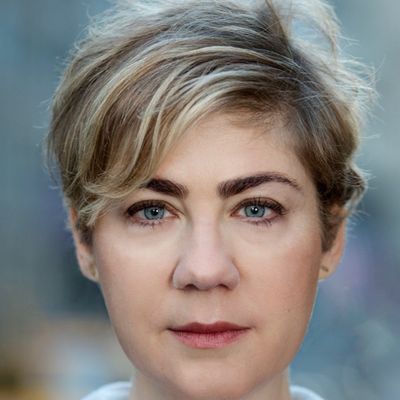
Jenny Steingart is a powerhouse producer for theater, film, and television. She has worked alongside some of the greatest names in the industry, including Tina Fey, Joel Grey, Sir Patrick Stewart, Josh Groban, and Lin Manuel Miranda... Read More
From the show: The Theatre Podcast with Alan Seales
Guests
Miniseries Inclusions
Featured Shows

About
Jenny Steingart is a powerhouse producer for theater, film, and television. She has worked alongside some of the greatest names in the industry, including Tina Fey, Joel Grey, Sir Patrick Stewart, Josh Groban, and Lin Manuel Miranda. Recent productions include Freestyle Love Supreme on Broadway, a limited engagement of Sir Patrick Stewart's A Christmas Carol, Fiddler on the Roof in Yiddish, Mean Girls and Natasha, Pierre & The Great Comet of 1812. She most recently produced the documentary We Are Freestyle Love Supreme, which premiered at the 2020 Sundance Film Festival. Jenny is the co-founder of Ars Nova, New York City’s premier theater for emerging artists and new work. She has also co-founded a Japanese animation studio called Ultra Super Pictures.
Jenny grew up in a creative household, where her mother, a singer and musician, and her father, a broadcaster, strongly encouraged her to pursue her passions. A theater kid, initially not able to conceive of doing anything else except acting, Jenny takes us back to her post college days when she realized performing was actually not going to be for her. She recounts her introduction to producer Margo Lion, for whom she became an assistant, and details how she began her own journey to producing. Jenny chats about the years she has happily devoted to the development and production of FreeStyle Love Supreme, and also candidly speaks about how the pain and grief of losing her brother became a catalyst for founding Ars Nova.
In this episode, we talk about:
- The advice her father always gave her
- Having powerhouse female producers as role models
- Her oldest son’s interest in the performing arts
- How failing is an essential part of any creative process
- Her favorite game in Freestyle Love Supreme
Connect with Jenny:
- IG: @jennysteingart
Connect with The Theatre Podcast:
- Support us on Patreon: Patreon.com/TheTheatrePodcast
- Twitter & Instagram: @theatre_podcast
- Facebook.com/OfficialTheatrePodcast
- TheTheatrePodcast.com
- Alan's personal Instagram: @alanseales
- Email me at feedback@thetheatrepodcast.com. I want to know what you think.
Thank you to our friends Jukebox The Ghost for our intro and outro music. You can find them on Instagram, Twitter, and Facebook @jukeboxtheghost or via the web via jukeboxtheghost.com.
Transcript
This transcript was automatically generated and might contain errors.
[0:00] Alan Seales: Welcome back to The Theatre Podcast, intimate personal conversations with the industry's biggest names. This episode is with producer Jenny Steingart, who is one of the ones ushering Broadway's wonderful, wonderful return with Freestyle Love Supreme reopening on Broadway at the beginning of October. I cannot wait to share her story with you. This is an absolutely incredible journey from intern into producing powerhouse, and she's helped create some of the greatest shows that have been on Broadway. This is also the beginning of a Freestyle Love Supreme takeover, so this episode and a couple to follow are going to be all cast and creatives from Freestyle Love Supreme, so make sure to keep coming back and checking the feed for more episodes throughout September and October.
Before we get into it, leave me a rating and a review wherever you are listening right now. Find me online on Instagram and Twitter at Theatre underscore Podcast or Facebook slash Official Theatre Podcast. Shout out, let me know you're listening. Now, please enjoy this episode with Jenny Steingart.
[1:23] Alan Seales: Today's guest is a special one having worked her way from intern to producing powerhouse. She now works alongside some of the greatest names in our industry, including Tina Fey, Joel Gray, Patrick Stewart, Josh Groban, and Lin-Manuel Miranda, just to name drop a few. After trying her hand as an actor, she quickly realized she felt most comfortable behind the curtain. She co-founded Ars Nova, co-founded a Japanese animation studio called Ultra Super Pictures, and this is just the tip of the iceberg. I am so happy to hear her story. Jenny Steingart, welcome to the Theatre Podcast.
[1:59] Jenny Steingart: Thank you very much. It's great to see you, Alan. I'm happy to be here.
[2:03] Alan Seales: There are so many stories, both in front of the camera, in front of the curtain, and behind the curtain, behind the stage, behind the camera, that are important, vitally important to making theatre happen, to making TV and film happen, to making animation happen. All of this stuff goes unnoticed and often unappreciated by your general fan of insert broadcast medium here. For you, you're about to reopen Freestyle Love Supreme on Broadway. I say you're about to reopen because you're one of the biggest producers of the show. Your past producing credits also include Fiddler on the Roof in Yiddish, Great Comet, but I want to back it all the way up. Tell me where little Jenny got her start.
[2:51] Jenny Steingart: Oh, I spend a lot of time communicating still with little Jenny. Little Jenny was a performer, for sure. I grew up in a pretty creative household. My mom went to performing arts and used to joke, she went to performing arts before they danced on cars. In the 50s, she was up the street on 46th Street going, and she was a musician. As a small child, my recollection, she was a stay-at-home mom, but my recollection of her was someone who not only played the piano and sang every day in our house for herself, as she had been a music teacher and a singer, she did voiceovers. We were always sort of around that. My father was a musician, a broadcaster. He actually started in advertising, doing ad sales for radio, but he founded a broadcasting company called Infinity Broadcasting, which was a very large radio company that grew.
My life changed a lot as we got older and as that company grew more and more. I was just always sort of surrounded by creative people. The messaging I got very strongly from my parents was to do something that I was passionate about. The focus was always on the passion. My dad used to say, do not ever make choices because of the money. He said, if you're really good at what you do and you're passionate about what you do, the money will follow. It will all fall into place, but be the best at what you care about. I grew up feeling very encouraged in that way. As did my brother. We were both just sort of did the things that felt aligned with who we were as people. At the time, I couldn't conceive of doing anything else except acting.
I was the theater kid. I was in every school play. I was in camp plays. I went to stage or a manor. I did a program in London. All of the stuff that you do growing up, if you're lucky enough to be in a position that you can do those kinds of programs and that kind of studying. What was interesting about it is I loved the world. I loved the life of it. However, I think there was always this little part of me, it didn't feel totally aligned with the way I'm wired. I am super type A. I like to think I present as type B, but I don't think I do. I needed more control over my destiny, I guess. It was very hard for me. I also was just one of those people that would sit when I was in a play, as I got a little bit older, when I was in something and the director would say something, I was naturally like, why is he saying that?
It was very hard for me to just kind of go with it. I grew up here in New York City. I ended up at NYU. Interestingly, not in Tisch. I was in the arts and science school. I was a philosophy major, but I was auditioning the whole time. I was studying outside of school. I wanted kind of a full college experience, but I also wanted the opportunity to still be able to audition. I was in acting class and I did all of that. As I was doing that while I was in school, it was fine. I worked a little bit. I did soap a little bit and some commercials. I mean, nothing substantial, but I was kind of in the game a little bit in my late teens, early twenties. When I graduated from college, it became really clear to me really quickly, this was not going to fly for me.
It just didn't align, but I couldn't imagine what else I was going to do in theater. I just thought, I can't leave this business. I love being in it, but I didn't know what the options were. Then there was this day that I was in 1501 Broadway. I don't remember. I think it was for an audition or there was something I was doing there. There was a casting director who had his office in the building. This was in the early nineties. His name was Leonard Finger. Really sweet guy. I went in thinking like, I got to schmooze. I need to work it. I walked in and I don't remember exactly what my state of mind was, but it must not have been great because I somehow told this casting director that I was coming into schmooze with that I was thinking of leaving.
Note to self, probably not a good way to get cast. He was so sweet. He said, I have a friend who is Rocco Landesman's assistant over at Jamson. Her name is Abigail Seymour. I always plug her, even though she's not in the business anymore, because she really changed my life. He called over and on the spot, he said, I have someone here and I think you should meet her. Would you mind taking her out for coffee and just telling her about what you do? She reached out to me or I reached out to her and we had coffee at the Polish Tea Room, which was then still here on the Edison Cafe. It was so transformative for me because she was explaining what she did. At the time, Rocco ran through Jamson and later ran the NEA under Obama.
Rocco was a huge supporter of women and really seeing people for who they were, not gender, any of it, it didn't matter. Anyway, she said to me at the end of our long coffee lunch, she said, I don't have anything that I can offer you right now, but if you're game to intern, we're doing an event. This was right when Clinton was running for president for the first time. She said, we're doing this huge event next month. I could really use some extra hands. P.S., I started interning and then I started kind of floating around Joo Jamson and whoever needed me. I ended up in the office. In those days, in the early 90s, there were two offices up at the Joo Jamson offices that were not Joo Jamson people per se.
They were folks who were affiliated with them, producers who they worked with and Rocco had given them a home in the Joo Jamson offices. Those two people were Margo Lion, who at the time was producing Jelly's Last Jam and soon would go on to produce Angels in America and Elizabeth Williams, who had just won the Tony for Crazy for You, was doing Secret Garden. I ended up in the office of Margo, Margo Lion's office and her assistant, Andrew Cato, who now runs the amazing theater in Jupiter. In those days, he was her assistant and he could not have been more loving and welcoming. I basically became the assistant to her assistant. He and I started working together and developing things, but it was pretty extraordinary for me because my perception of what it was to produce, there was never a question in my mind that women could produce because I was looking at these two badass women who were at the top of their game, being viewed as equals by Rocco.
Happily, from my home life, I'd grown up around parents and my father in particular who instilled in me a certain level of entitlement, not in a bad way, in a way of like, you deserve a seat at the table. The best idea deserves a seat at the table. You need to always keep your mouth shut and listen. Absolutely, if you have something to contribute, you have a right to contribute that. It didn't occur to me that other people were having other experiences because I was watching these women in the height of their power, in the height of their creativity. Also, they were both mothers and they had young children at the time. I was 22 years old watching them. I was far from being in that stage of my life, but certainly now as I'm older now than they were when I started with them, I recognize what a huge gift that was for me to witness that and see what was possible because it's allowed me, as I've gone on and figured out what works for me, what doesn't, because there really is no one way to do this and there's no right and wrong.
It's really about becoming aligned with your own core values and what is important to you, what you want to leave to the world, how much you want to be with your kids, how much you want to be at the office. All of those things, those are things we each have to decide and figure out what works. Young Jenny really transformed. I went from what I thought I wanted to do and figured out that my dad used to say, that's why they put erasers on pencils, that it's okay to think you're going to do something and say, yeah, that's maybe not working for me. Maybe I need to shift my perspective a little. It's been trial and error, figuring out the kinds of projects I want to bring into the world, what excites me, what I think I can contribute, what's my lane, what's not my lane, because that's a big part of it also, is knowing what you're not necessarily great at or what you don't enjoy and being okay with that. It's been a process to figure that out and get here.
[13:25] Alan Seales: That's amazing. I'm going to use that quote with my kids. That's why they put erasers on pencils.
[13:32] Jenny Steingart: You can always go back and change it.
[13:34] Alan Seales: You can always go back.
[13:36] Jenny Steingart: Maybe with today's cancel culture, not as easily, but in the early 90s, yes.
[15:45] Jenny Steingart: You know, there are like major, major great people who have bombed because they haven't found their process. But also bombing, failing is an essential part of the process. Absolutely. You must, I mean, you don't learn in life. We don't usually grow and learn from our successes. We learn from our failures. That is how we grow as human beings. That is true in every area of our lives. It's not to say you don't get information from your success, but that is not where the good stuff is. That is not where we really transform as people. And it's so interesting. I've been talking to some friends about this. I saw an interview, I don't remember where it was, but it was with the woman who started the company Spanx.
And one of the questions of hers was, were you afraid of failing? Like what did you think when you were starting this and the fear of the failure? And she, it was so awesome. She was like, oh yeah, I didn't even think about that. And he said, oh really, well why? And she said, well, you know, when I was growing up, my dad every day would ask us, my brothers and sisters and me, they would ask us, what did you fail at today? And he normalized failing. And it wasn't even just that it was normalized, it was encouraged. So I would tell him something that I failed at and he'd high five me. And he's like, all right, way to go. Because if you're not pursuing something and you're not failing, you're not really out of your comfort zone and you're not growing and you're not stretching.
And she said it became so normal for her that it didn't occur to her to ever be nervous about failing when she was launching a business. And it's so funny, I've mentioned that to a couple of friends who have younger kids than I do because I was like, oh, I really regret that I didn't have time to do that with my kids. Like I didn't know this when they were little. Because what did you do? I'm totally gonna do this now, by the way. Well so, and one of my friends said that is her new thing. At dinner, she'll say to her son, so honey, what did you fail at today? And then he tells her and she's like, way to go. Let's fail some more. And I think it's great. I think it's great because these are the things that we need to normalize and embrace and it's also the faster you fail, the quicker you can succeed.
That's the faster you can get there is when you, oh, that didn't work, I'll try this. That didn't work, I'll try this. You just keep, you keep going. So I feel like it's such an important, I think it's important in every facet of our lives. It's not just about work. It's about as human beings.
[19:53] Alan Seales: We're gonna take a short break. Stay tuned for more of the episode.
[20:03] Alan Seales: Do you have a moment in your career that you look back on and in the moment it was like, oh my God, I can't believe I failed? Like I don't know how to recover from this. And now looking back on it, it was one of those pivotal times where you're like, oh, that was great. I learned so much.
[20:20] Jenny Steingart: I have a moment about that, but it's not from failure. It's from, and this is a big piece of who I am as a human being and who I am as a producer. I have moments that I've experienced tremendous pain or loss or grief and used that to pivot into something beautiful. And so on the other side of the grief or the pain, I can look back. So like as an example, the origin story of Ars Nova came out of my brother's unexpected death. He had a brain aneurysm. And we can go into that in a moment if you want. But I realized the loss of my brother, which was the greatest pain I'd ever experienced over 20 years later, as I look back at Ars Nova and all of the beautiful art that's been made and the artists who've come through there.
At the time, you never would have told me that anything good was gonna come from losing my brother. And would I give it all up to have him back? Of course I would, but I can't do that. So I can choose to make meaning out of the pain or the loss or the failure. I mean, that's really it. You know, if we're gonna have to go through this anyway, if you have to go through the pain anyway, then you better get something out of it on the other side. You better be growing on the other side. And to me, I really look, you know, it's like leaning into the sharp edges of it. Like our instinct as human beings is to run away from the pain because it's painful. Who wants to sit in pain? However, when we lean into loss and failure and something that isn't successful, that is really where the growth happens and where we can take it to another level and then on the other side of it, look back and say, oh my God, look at what came out of that.
So I try to remind myself of that when I'm in the middle of the very uncomfortable places saying, nope, it's gonna be okay on the other side. Let's just figure out what's here. What can we mine from this experience? So it's kind of how I lead my life and how I lead artistically and creatively as a producer.
[22:53] Alan Seales: Well, let's talk about Ars Nova then. So tell me about, well, for those who are listening who don't know about it, tell us what it is and then my question was gonna be how it started, but you answered, or I guess technically how it started. Do we have, yeah. But yeah, so let's get into that.
[23:09] Jenny Steingart: So I had been producing for several years at the point, 1997, which is when my younger brother, he was 26, he passed away unexpectedly. He had worked, he was a really interesting guy and I mean, makes me really look like a slouch. Like he was just on fire and had started at a very young age. He had been a music major at Columbia and was passionate about early music in particular, classical music, but early music. And he started a classical record label dedicated to early music called PGM, Pro Gloria Musicae for the glory of music. And he had just purchased where Ars Nova sits now on 54th between 10th and 11th. In the mid nineties, he had purchased, it was like these guys, it was an accounting office or something and they had gone bankrupt.
And in those days, he'd gotten it for like a song and that our neighborhood where Ars Nova is and was particularly at that time where all music was being done, power station, hit factory, like it was all right there, Sony. And so he was gonna have a mastering studio and he mastered, he did all of these amazing things and he was a musicologist. And so he had just purchased this land and was beginning construction on what this new mastering facility was going to be and he died. And I was, aside from the obvious grief of it all, he was my best friend, he was my partner in crime, he was the witness to my childhood, he was all of those things. That loss was enormous, but I was also, I was still in my twenties myself.
And so I was having this complete existential crisis of a young person in the middle of starting their life and just being gone. And I was very conflicted about how I was going to move forward in terms of like I was on my own path and I felt that Gabe had been struck down in the middle of his ascension into his career and I felt like I needed to honor that and how was I gonna keep his dream alive? And I was really just torn up over how I was going to keep his business going and his music and his label and it just made no sense, of course, but I couldn't wrap my head around it. Anyway, so here's an example of leaning into the pain of it. So the first week after he died, we sat Shiva and at the end of Shiva, the end of the week, it was at my parents' house and there were so many people that had come, they had catered the Shiva.
So at the end of the week, the head waiter who'd been there all week came over to me and he whispered in my ear and he said, one of the servers has asked if she could speak with you in the kitchen. So I remember thinking like, okay. I just couldn't even imagine what it was gonna be. And so I went back into the kitchen and there was this girl there and she introduced herself and she said, I just wanted to tell you I've been here all week. I'm the same age as your brother was. I've been listening to everyone talk about Gabe and I'm so sorry for your loss. I'm 26 also and in my real life, I'm a fine artist. I'm a painter. And I have been so moved being here, listening to everyone talk about your brother that every night after I've left here, I've gone home and I've painted.
And I painted a whole new series of work this week and I wanted to share it with you. And so she took out this giant portfolio that she had brought to Shiva and been sitting there all day, obviously, hoping she was gonna show it to me.
[27:30] Jenny Steingart: And she went over to the kitchen table and she opened this huge portfolio and she showed me these beautiful paintings that she had created. And I'm telling you, Alan, like the penny dropped and I thought, oh my God, you know, Gabe, his life, she didn't know him and his life and his death had inspired art in a totally different form. It wasn't music, it wasn't, and I thought, oh my God, I don't have to carry on in exactly the way Gabe would have. I can pursue my love, my dream, my passion, but with this PO, through this lens, through the lens of how do we do what we are meant to and how could I allow other people to have that experience that Gabe ultimately didn't get to finish. And so that was how we started.
And Ars Nova became a place that was about championing and encouraging young emerging artists who were just starting out and the only barrier of entry was talent and treating them with respect. And so we, you know, in the early days, I mean, if I tell you it was as Mickey and Judy as it comes, I mean, it was definitely like my dad's got a barn, I'll do the costumes. I mean, we were, you know, taking tickets and we didn't know the first thing about starting a not-for-profit. And in fact, in those days, when we first launched Ars Nova, it was not a not-for-profit. We didn't know what the hell it was going to be. With the help of my family, my dad was very involved in it as well. It was truly, you know, when people have said like, what was the business model?
I'm always like, there was no business model. It was truly a grief reaction, which I am so grateful for. I mean, I have no regrets because, you know, it was a little like a fever dream when we came out of it. It was like a couple of years after and I would look back one day, I'm like, what the hell did we do? Like, we started a not-for-profit company. But in those days, it was like, we just did it. We just did it. And it was coming from such a pure place. And it is now happily morphed into like an actual company that has a budget and, you know, all of those really nifty little things that help run an organization. Now it's, you know, it's obviously a very different place than in year one when we were starting and didn't know what we were doing.
But it was always, and I actually do believe the success of the theater has really come from how deeply baked into the DNA the mission has always been. I mean, the origin story is such an authentic one and it comes from such a real place. And God love those folks over there. They have stayed so true to it. I mean, whenever there is a question and has ever been a question of, should we do this or should we do that? And if this is slightly off mission, but maybe we cheat a little because it's in the best interest of like financially in our best interest, we always arrive back to where we should be, which is, nope, we're not going to make that choice because this is what we were meant. We were set up to operate a particular way and to encourage art and to bring it into the world.
It's like being a midwife. And so we've stayed very true to that. And so I think that that is why Ars Nova has remained a really special place and unique. And I wish there were more like that out there, but it's, I mean, it's a very challenging, it's a challenging place. The world is challenging for organizations like this, but we have tried really hard to sort of stay on mission and to support as many artists as possible.
[31:02] Alan Seales: That's so cool. And I love that this is not only, you know, it's obviously a legacy for Gabe, but, and this is also becoming a legacy for you because it's going to be something that hopefully is going to last long, long beyond all of us and usher in new art. And there's got to be though, going back to the business side of this, because you are a producer, right? There's the Ars Nova is not for profit. It's like the beginnings of art. It's ushering in new art. And then there's the other end of it. Like you've got your Freestyle Love Supremes, you've got your Great Comets, you've got your Fiddlers in Yiddish, and those are millions of dollars of capitalization that you need to run, or you need to raise.
[32:30] Jenny Steingart: Yes. And so Great Comet actually came out of Ars Nova, right? So, I guess there's two things I want to get into is one is the actual process of the big stuff, the big Broadway, the big marquee lights and the musicals, right? And then, are you specifically looking for anything that you can bring into the next phase? Or is it just sort of like, we're just gonna, this is going to be one entity of my life, one compartment, and this will be another compartment?
[33:06] Jenny Steingart: So it's a great question. And, you know, there are even from a legal perspective, we're super, super careful, because there, we have to be careful that there's no conflict of interest in terms of what happens at Ars Nova, the not for profit. And then we have Ars Nova Entertainment, which is separate, they both share the same name, because John and I did both, but they are separate. And so we are really mindful of and do not cherry pick from the theater, what's happened at the theater. So there are a couple of exceptions, which I'll speak about. You know, like Great Comet was, someone else was the lead producer on that. And I don't even know if it would have been kosher if we had been the lead producers, because it would have just come out of Ars Nova.
Certainly, if time goes by, and I, because, because of my connection there, I have close relationships with many of the artists who come through there. Those are relationships then that we can develop in and say, like, oh, let's work on this together, or oh, they'll bring me something. That certainly can happen and happens. In terms of taking something, you know, fresh out of its run at Ars Nova, and moving it, that's, that is more delicate. Because again, we want people, first of all, everyone should have the ability to entertain working with lots of different producers. And so that's part one. Part two, is the exception to that rule has been the freestyle guys, working with freestyle. And part of that is because when they first came to the theater, we were still a for profit venture.
So we, I don't know had they started with us when we had already said, you know, we're not going to just move things coming out of Ars Nova, whether we would have been able to do it or not. But it worked out that right after freestyle came to us, we just, John and I, and John, in particular, for many years, really has been leading the charge from our office. Anyway, there, we obviously have partners. But we had always, we had always been passionate about that project. We really, I mean, I can't speak highly enough of the human beings involved in freestyle, there is not a bad one in the bunch. They are not just enormous talents, but the kindest, menschiest human beings. They are just like all of the good things they look like they are, they really are.
It's one of those things like I can't sing their praises enough, and then have people meet them and go, I don't know, I don't see it. Like they're just magical creatures, all of them. And it's been as such a joy. So we were for years, touring them. Early on, you know, they all did, we did like a teach, they were teaching artists, and we'd bring them to schools in Brooklyn, and they'd work with kids. And it's so funny now that I think back, a couple of different events that we did with them, I guarantee those folks did not know looking back all of these years later that like Lin-Manuel Miranda was like in their classroom. Or, you know, it's just hilarious. And I'm like, they didn't even realize who was with them, teaching them.
But we have always, that particular project has just been one that we commercially have produced from day one. But other than that, you know, I really, I think I am guided by the aesthetic that is at Ars Nova. I'm, I am most excited by artists who are maybe more on the emerging side. It's not to say, of course, that I don't work with really established folks and in slightly more traditional things, too. Usually, though, the more traditional piece, like a Fiddler, there's a twist. So the Yiddish was a twist. But for me, it was also beyond the Yiddish of it, which was incredibly powerful. It was right around the time when the refugee crisis under Trump and kids in cages and all of that. It was right around the same moment in time.
And so I focused for that production. I was the person who was really, we had a small team we put together, Ross Yoder and Catherine Markowitz and I from my office were putting together work around World Refugee Day, the year that Fiddler was out, one of the years it was out. We got the entire theater underwritten. It was like $80,000 to buy the theater out. And we filled it with 500 refugees who watched Fiddler on the Roof in Yiddish. It must have been 30 countries represented. And it was, it's so funny. I was just saying to someone, I was looking at a clip, I guess I must have been interviewed that day or something. And I was looking at the clip and I was like, oh my God, I look awful. And I realized the reason I looked awful is I looked like a dishrag because I and everyone else had been sobbing all day.
It was so moving watching these refugees, watching the ultimate refugee story in Yiddish. I was just a mass of tears the entire day. So I was like, all right, it's okay. That's normal. It's always finding what is the storytelling and what is the metaphor that we can take away that is beyond the story? What is the universal story here? So I'm attracted to that. I'm attracted to narrative that has a universality that is resonant for us as human beings, as well as just wanting to be entertained. Entertaining is great. And don't get me wrong, I'm absolutely down for that. But if there's something on top of that, that can be layered in, that opens a window in some way, as they say, theater is both, is it a window or a mirror? And I think the answer is it's both, if it's done right. So I think I'm always looking for the window and the mirror.
[39:44] Jenny Steingart: That goes back to what your dad was saying. Find something that you're passionate about. That's what you want to do. And it's going to make you want to do it because when the work gets hard, when the work is seemingly unbearable, if you love what you're doing, too, it's still going to not totally feel like work. And that's absolutely...
[40:07] Alan Seales: We're going to take a short break. Stay tuned for more of the episode.
[40:14] Alan Seales: Going back to the FLS guys, the Freestyle, Love Supreme, which also, by the way, you're producing FLS Academy, which everybody needs to go check out because you can all still take classes and be part of the whole movement. But when you were still a for-profit and you brought them in, but where was the connection? How did you even discover young Lynn, young Tommy, young Chris Jackson? Where did all of this come from? This is before any of them were, we'll put it in air quotes, real success, right?
[41:04] Jenny Steingart: Oh, yeah. No, they were right out of... I mean, they were just a few years out of college. A bunch of them had gone. Lynn and Anthony and Tommy had gone to Wesleyan together. And there may have been one other member of the group at Wesleyan, too, that I'm blanking on. But yeah, they were... And Lynn was a substitute teacher at Hunter where he had gone to high school. And it was so cute because we used to get little groupies that they would come and...
[41:15] Jenny Steingart: After the show, I was like, Mr. Miranda, you were awesome. It was so cute and sweet. He really had like a bunch of groupies, but they were his students. A friend of ours had seen them and called John, my husband and partner, and said, you need to see these guys. And they went, I don't remember whether it was the drama bookshop or I think it was the pit, actually, it may have been the pit. But anyway, they went wherever they went to see and John walked in and he's like, holy moly, yes. And Jill Furman, who is our partner on Freestyle all these years, and one of the producers of Hamilton and In the Heights as well. Jill had found them not long before we saw this show or John saw this show. And she had aligned herself with them and had been came on as their producer.
And so right after this, and I don't know how long after Jill had first met them, we found each other, but we all found each other. And they came over to the office and we decided to work together. And after that, I mean, it's truly been from that moment on, it's been family. I mean, we have all grown up together and went on, you know, and obviously, we know how it certainly turned out with In the Heights and Hamilton that went, you know, and Jill really was, I really think responsible for bringing those folks to into the world. And obviously, you know, other wonderful people have come on and, you know, worked on Hamilton and In the Heights and all of those things. But, you know, a big shout out to Jill Furman, because she really had the vision early on.
And then I was really so thrilled that we were lucky enough that John was lucky enough to see them and recognize that there was so much there. And we've all just kind of been figuring it out as we go along. Because in the beginning, it's not that every, no one ever saw those guys and said, like, what are you talking about? I mean, it was very clear how talented they were. Absolutely. But I don't know, in the early days, I think people didn't know what to do with them. So, we got that a lot, which is they're really talented, but like, what do we do? And we just all felt for I mean, it's we're going on close to 20 years of this, we just were like, it's we're just going to keep doing this. We believe in them.
We believe in the show. We believe in the power of the show, because, you know, for anyone who hasn't seen it, it's different every night. And it's because it merges improv and comedy and music, and it's and freestyle. And it's all topical, because the audience throws out words in the vein of, you know, yes, and of comedy, throws out ideas. And so, in a given, you know, no show is the same. In addition to the fact that you're getting different words every night. But it's, it's also that, like, whatever's happened in the world that day, the group can reflect upon in the moment. And so, it's incredibly resonant. And it feels really special. It feels really special. And to me, it also feels a bit like a throwback to what theater used to be before you had your phone up and people were sneaking, because it was really like the only experience.
And the first, the first time around, when we did it on Broadway, and when we did it off Broadway, as well, you know, we put the yonder packs where you put your phone into a bag, so you can't use your phone. And although, on one hand, it, yes, it protects the performers from having it out on the internet. I actually feel like it was such a gift of real presence, where you are squarely in your seat, experiencing theater with the other people in the room. And those are the only people who can who bear witness to what is on stage at that moment. That's what it used to be like, not like that anymore. And boy, it feels really good to go back. I mean, now during COVID, we can't do that the yonder piece of it.
But I actually hope all Broadway shows start doing that in the future, because it feels really special to be experiencing something where you're not so busy thinking, I gotta get this on my phone. You're with the performers, you're in the moment, you're taking the journey. And it has been really the gift of a lifetime to work on this show, and to see where it's come after all of these years.
[46:04] Alan Seales: I am so impressed with that. And you're right, the guys, the topicalness of it, everything's topical, everything's real. And it's authentic, because you were talking about all of the people specifically are just, they embody what you see. They're not different people in real life, because you have to be as good and as talented as they are. You have to be that and real and authentic and open and receptive in real life. And on stage too, like True is one of my favorite. That's my all time favorite.
[46:40] Jenny Steingart: Yeah, favorite. Is it a game? Is it a number?
[46:45] Alan Seales: It's a game.
[46:45] Jenny Steingart: Okay, it's called a game.
[46:46] Alan Seales: No, like, yeah, it's a game.
[46:47] Jenny Steingart: Okay, so True, one of my favorite games that they play is, they take suggestions, and then they tell true stories from their lives, in freestyle. And every time I see any of them do it, it's just like, I have so much respect for the amount of honesty that all of them are putting forward. And they are learning about each other. They've known each other for decades, but they're still learning new things about each other. And they're presenting it to a room full of strangers. And the amount of just, again, authenticity, and respect that that takes and honesty is it's so impressive. And I can see why the show has just continued on like it has.
[47:27] Jenny Steingart: It's funny, that's my favorite game also. And if you're ever lucky enough to witness, they're all I mean, everyone who does that, that game is just top of top of their game. But I will say personally, if you are ever lucky enough to hear Chris Jackson do True, there has never been a time that I have not cried, if Chris does it and I mean, and he the word there was one. There was one word one year one performance, the word was tampon. I kid you not, Chris Jackson still had me in tears. Still did it. So it's it's really something the way they bring it around and just end up you know, what is seemingly going to be something light and fluffy and not they bring it around to something where it is all of our stories. It is about love. It is about like, whatever that is. It's really powerful.
[48:28] Alan Seales: Yeah, yeah, I the first time I ever saw the show was with Chris with C jack. And you're right, it was amazing. And that it was him. And in this first time I ever saw Anissa folds to who is one of the new kids on the block and in every way, as talented as everybody else. She's incredible. And Kayla m'lady. Oh my god, they're incredible. The new the new the new blood the new infusion into those ladies are fire. They are so good. They are so good. I want to shift in in the final minutes we've got here. I want to shift in a little bit. Tell me about ultra super pictures because it seems so so different.
[49:04] Jenny Steingart: A part of this is is my husband's where he kind of comes in. He comes out of a comedy, a comedy background and having worked in Los Angeles forever before we ended up meeting and working together. And one of the projects that we have done and he he had already done some TV and film when we started working together and did Ars Nova. But one of the films that we produced over the years was about 11 years ago now called black dynamite. And it's a black exploitation film it was shot on. It was actually shot on film that was from the 70s. And the was mixed on analog. It was all like it was as if it is a 1970 whatever film. And it became really kind of like a cult classic. It's very it was a very popular.
It didn't have tremendous reach when it was it was a theatrical release at the time. But subsequently, it has become like this cult film. And right after it came out, we ended up doing an animated series for Adult Swim, a couple of seasons of black dynamite. And during the process of animation, and John had always been fascinated with animation. We met some amazing folks. And there's a company in Japan that we started working with and became close with the owner of the company and this ultra super pictures and so it has four studios under it. One of them, the one that most people in America would know would be trigger. But it's, you know, lots of really extraordinary things that are happening.
And I think, you know, we are interested in being a part of interesting things with interesting people who are doing really fascinating work, moving the ball down the field in various areas. It's again, it's about storytelling. To me, like whatever, you know, I am working in film and television as well. And been working on a documentary and various things that are things that we're passionate about. I mean, you know, look, at the end of the day, Alan, it's like life is, this is our ride. This is where you want to spend time being engaged in the things that are important to you. And as much as people are concerned about what people are going to think, and, you know, people really aren't spending that much time thinking about what you're doing.
The truth is, no one's keeping score. I don't need to say, you know, it's only going to be this, it's only going to be that it's I'm going to say, like, what do I want to do today? And if it falls in or out of what people think is, you know, what we should be doing or not be doing, I don't really care. I really care about the things and so like, Ultra Super Pictures was an opportunity to be a part of something where we said, you know, we don't know how it's going to turn out. This is not our lane necessarily, but we'll learn about it. And we'll get to know awesome people doing amazing things, which is what's happened. And, and we'll go from there. And so I think there are a bunch of projects like that, that we are engaged, engaged in.
Freestyle Academy is a huge area of also a focus for us as we are growing that company and making scholarships available to people. Because again, you know, these are things that are a metaphor, really, right? Like most people who go to Freestyle Academy are not expecting to have a life as a freestyler, or they want to get on stage. Now some people do, but I'm going to say most of the folks who come through there want to unlock something in themselves, something creative, takes tremendous bravery to do. And like, what can we do to facilitate that experience for other people? And what can we do to bring enjoyment in another form? So animation is just one of those things. But, you know, they're really, it's about finding projects and things that are exciting and light us up inside.
Because I think that that really, and that's what I tell my kids all the time is, you need to do the thing that lights you up. Because as you said, so aptly earlier, there are days that are just crap days where every bit of work feels like work. But if you are, and so it does not mean if you find your, I always say it's like a merger of passion and purpose. If you find that passion and that purpose, it does not mean every day is going to be walking on clouds. There are days that are going to be crappy days. If you're aligned with who you, what you're passionate about, and what you really want to do in the world, then those crappy days are okay. They're bearable, because you're working towards a larger goal. It can't just be about, you know, every moment being fantastic.
[54:31] Alan Seales: To go back and plug FLS Academy real quick, and the benefits you can get, even if you don't want to do it professionally. I talked with it with Anthony Veneziale months ago, before the original Broadway run, and he's got an episode on the podcast here. At the time, and I actually want to follow up with him and see what's come out of this, but he was working with a professor to go into an fMRI machine and have his brain scanned while he was freestyling and whatnot. And so he's worked with this
[55:00] Jenny Steingart: I think that the most important thing is to be open to the process and to be willing to fail. I mean, I think that’s something that I’ve learned over the years, that failure is just a part of the creative process. It’s not something to be afraid of; it’s something to embrace.
[55:30] Jenny Steingart: My father always told me that if you’re not failing, you’re not trying hard enough. And I think that that’s really resonated with me throughout my career. It’s important to take risks and to push yourself beyond your comfort zone.
[56:00] Jenny Steingart: I remember when I first started producing, I was terrified. I had no idea what I was doing, but I just jumped in and learned as I went. And I think that’s a big part of it too—just being willing to learn and grow.
[56:10] Jenny Steingart: I’ve had some incredible mentors along the way, and I think that’s made a huge difference. Having strong female producers as role models has been particularly inspiring for me. They’ve shown me what’s possible and how to navigate this industry.
[56:20] Jenny Steingart: My oldest son is also interested in the performing arts, and it’s been really fun to watch him explore that world. I think it’s important to encourage young people to pursue their passions, whatever they may be.
[56:30] Jenny Steingart: In Freestyle Love Supreme, we play a game called “The Alphabet Game,” where we have to come up with words that start with each letter of the alphabet. It’s a great way to get the creative juices flowing and to have fun with language.
[57:00] Jenny Steingart: I think that the collaborative nature of theater is what makes it so special. You’re working with a group of people who are all passionate about the same thing, and that energy is contagious.
[57:30] Jenny Steingart: I’ve been fortunate to work with some amazing artists, and I’ve learned so much from each of them. It’s always inspiring to see how different people approach their craft.
[58:00] Jenny Steingart: Losing my brother was one of the hardest things I’ve ever gone through, but it also became a catalyst for founding Ars Nova. I wanted to create a space where emerging artists could thrive and have their voices heard.
[58:10] Jenny Steingart: I think that grief can be a powerful motivator. It pushed me to take action and to create something meaningful in his memory.
[58:20] Jenny Steingart: At Ars Nova, we focus on new work and giving artists the resources they need to develop their projects. It’s all about fostering creativity and innovation.
[58:30] Jenny Steingart: I’ve seen so many incredible shows come out of Ars Nova, and it’s been amazing to be a part of that journey. I love being able to support artists in their creative endeavors.
[58:40] Jenny Steingart: I think that the future of theater is bright, especially with so many new voices and perspectives emerging. It’s an exciting time to be in the industry.
[58:50] Jenny Steingart: I’m always looking for new ways to push the boundaries of what theater can be. I think that’s what keeps it fresh and relevant.
[59:20] Jenny Steingart: I’m really proud of the work we’ve done with Freestyle Love Supreme. It’s been a labor of love, and I think it resonates with audiences in a unique way.
[59:50] Jenny Steingart: The documentary we produced, We Are Freestyle Love Supreme, really captures the spirit of the show and the journey we’ve been on. It’s a celebration of creativity and collaboration.
[1:00:20] Jenny Steingart: I think that storytelling is at the heart of everything we do in theater. It’s about connecting with people and sharing experiences.
[1:00:50] Jenny Steingart: I’m excited to see where the future takes me and the projects I’ll be involved in. There’s always something new on the horizon.
[1:01:20] Jenny Steingart: I believe that the best is yet to come, and I’m looking forward to continuing to support artists and create meaningful work.
[1:01:30] Jenny Steingart: Thank you for having me on the podcast. It’s been a pleasure to share my journey and insights with you.
[1:01:40] Jenny Steingart: I hope that listeners feel inspired to pursue their own creative passions and to embrace the journey, no matter where it takes them.
[1:02:00] Jenny Steingart: Remember, it’s all about the process and the connections we make along the way.
[1:02:20] Jenny Steingart: Thank you again for this opportunity. I really appreciate it.
[1:02:40] Jenny Steingart: I’m looking forward to seeing what the future holds for all of us in the theater community.
[1:03:00] Jenny Steingart: Let’s keep pushing the boundaries and creating amazing work together.
[1:03:20] Jenny Steingart: I’m excited to continue this journey and to see where it leads.
[1:03:40] Jenny Steingart: Thank you for listening, and I hope you all have a wonderful day.
[1:04:00] Jenny Steingart: Keep dreaming big and never stop creating.
[1:04:20] Jenny Steingart: The world needs your voice and your stories.
[1:04:40] Jenny Steingart: Let’s make magic happen together.
[1:05:10] Jenny Steingart: I can’t wait to see what’s next for all of us.
[1:05:30] Jenny Steingart: Thank you for being a part of this conversation.
[1:05:50] Jenny Steingart: Until next time, take care and keep shining.
[1:06:10] Jenny Steingart: I’m grateful for the opportunity to share my experiences with you.
[1:06:30] Jenny Steingart: Let’s continue to support one another in this incredible journey.
[1:06:50] Jenny Steingart: Thank you for your time and attention.
[1:07:10] Jenny Steingart: I appreciate each and every one of you.
[1:07:30] Jenny Steingart: Let’s keep the conversation going.
[1:07:50] Jenny Steingart: I’m excited to see what the future holds for us all.
[1:08:10] Jenny Steingart: Thank you once again for having me on the podcast.
[1:08:40] Jenny Steingart: It’s been a true pleasure.
© Broadway Podcast Network, All Rights Reserved