

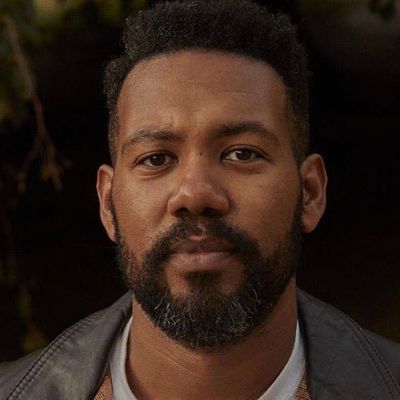
Tarik Davis is an actor and writer based in New York City with a 20 year history of acting, performing improv and writing comedy. Past experience includes performing for The Upright Citizens Brigade in NY, Boom Chicago in Amsterdam, and The Second City in Chicago... Read More
From the show: The Theatre Podcast with Alan Seales
Guests
Miniseries Inclusions

Featured Shows

About
Tarik Davis is an actor and writer based in New York City with a 20 year history of acting, performing improv and writing comedy. Past experience includes performing for The Upright Citizens Brigade in NY, Boom Chicago in Amsterdam, and The Second City in Chicago. He is a member of the longest running improv team at The PIT, The Baldwins, and also performs with Baby Wants Candy and Shamilton at UCB in Hell's Kitchen. Tarik is a founding member of the monthly improv show Comedy People’s Time that features writers and performers from shows like Late Night with Seth Meyers and Full Frontal with Samantha Bee. He made his Broadway debut in Freestyle Love Supreme, which just returned to Broadway on October 7th, and is well known as the sidekick and announcer on The Amber Ruffin show on Peacock.
A self proclaimed theater nerd, Tarik reflects on his recent Tony Award’s performance with Freestyle Love Supreme, calling it one of the best days of his life. He describes the fill circle moment he experienced as he held hands with Wayne Brady on the Tony’s stage, and shares that it was Brady’s performance on Whose Line Is It Anyway? that encouraged him to stick with improv years ago. Tarik opens up about the high’s and low’s of imposter syndrome, and learning to embrace life as an improviser, and say “yes”. He also takes us behind the scenes of his audition for Freestyle Love Supreme, how it played out, and what made it different from other auditions.
In this episode, we talk about:
- How the FLS Tony Awards performance was crafted
- When he realized 20 years of improv had prepared him for FLS
- What he learned from years of small black box performances in NYC
- Following your passion, and betting on yourself
- The importance of comedy
Connect with Tarik:
- IG: @tarikdavis
- Twitter: @tarikdavis
- Get tickets to Freestyle Love Supreme
Connect with The Theatre Podcast:
- Support us on Patreon: Patreon.com/TheTheatrePodcast
- Twitter & Instagram: @theatre_podcast
- Facebook.com/OfficialTheatrePodcast
- TheTheatrePodcast.com
- Alan's personal Instagram: @alanseales
- Email me at feedback@thetheatrepodcast.com. I want to know what you think.
Thank you to our friends Jukebox The Ghost for our intro and outro music. You can find them on Instagram, Twitter, and Facebook @jukeboxtheghost or via the web via jukeboxtheghost.com.
Transcript
This transcript was automatically generated and might contain errors.
[0:00] Alan Seales: Welcome to The Theatre Podcast. Intimate personal conversations with the industry's biggest names. I'm your host, Alan Seales, and our guest today is Tarik Davis, who is helping us finish off the Freestyle Love Supreme takeover here on the podcast. If you watched the Tony Awards the other night, of course, it was a little bit strange being behind a paywall at first, but then their performances came out near the end and it was publicly broadcast. The whole night was closed out by Freestyle Love Supreme, including Tarik. And in this episode, we get into his imposter syndrome a little bit, which is really, really fun to talk about because everybody's got it and nobody wants to talk about it. But he was next to Wayne Brady and Lin-Manuel and Idina Menzel and Kristen Chenoweth and all these other people that he's looked up to in the community for years, and they were feeling the same nervousness and the same anxiety about performing live that he was feeling.
And it was a really reassuring thing he was talking about, showing that kind of everybody just needs to embrace the fact that we all get nervous. Sometimes we all reach a point and we're like, how did we get here? But if you're there in the room, his advice is just go with it. That's the improv yes and. He's got 20 years of acting and improv experience. Freestyle Love Supreme finally made him realize that he's best in his career, in his auditions, when he brings his authentic self, when he brings himself to the table. And now, as they say, his career is taking off. The rest is history. Please leave your rating and a review wherever you're listening now. Find me online. Give me a shout out. Let me know you're listening. And now, everybody, please enjoy this episode with Tarik Davis.
[1:50] Alan Seales: Today's guest is an actor and writer based in New York City with a 20 year history of acting, performing improv and writing comedy. Past experiences include performing for the Upright Citizens Brigade here in New York, Boom Chicago in Amsterdam and The Second City in Chicago. He's a member of the longest running improv team at The PIT called The Baldwins and also performs with Baby Wants Candy and Shamilton at UCB in Hell's Kitchen. He's a founding member of the monthly improv show Comedy People's Time and made his Broadway debut in Freestyle Love Supreme, which just returned to Broadway on October 7th. Tarik Davis, welcome to The Theatre Podcast. How are you doing? How are you doing? You're coming off of the Tony Awards.
[2:36] Tarik Davis: Yes, yes, we are coming off the Tonys. That was it was a dream. It was it. I, I can't imagine. It was just an absolute dream. It was one of the best days of my life. It's, you know, filled with nerves and anxiety. Absolutely. But you know, I can't really I'm having struggling trying to put into words of like what it's like to be in a room. And like, you know, Wayne Brady's right here. And Wayne Brady is responsible for me doing what I do. Like I saw him and I had a chance to tell Wayne Brady this like, back in 2019. We that was my first time being with FLS. You know, I hadn't auditioned. It was a whirlwind audition. And you know, Tommy Kail is like, you know, after the callback, you know, you got the job, right?
You know, it's very, very cool. But when he talks to you is very intimate. So he gets like, you know, you got the job, right? And I was like, Oh, and he's like, So what are you doing this weekend? And I was like, I don't know what am I doing this weekend. And they told me they were doing freestyle was doing a week of shows at the Kennedy Center. And this is the summer of So like, two days later, I'm on a train to DC. And I'm like, Wow, I've never done the show before. I, I will be learning the show and doing it on the fly, which is kind of the ethos of what we do. And you know, I'm coming out of my hotel room. And I see down the hall coming out of his hotel room, Wayne Brady. And I know when Brady's doing the show.
I know he's doing the show. He has no idea who I am. No idea that we're going walking to the same place walking in the same elevator. So he gets in and I'm like, Hey, man, I don't know if you know this, but we're going to the same rehearsal. I'm be doing some shows with you. And he was very gracious and nice. And it's all great. Awesome. We gets back to that awkward silence as you know, happens in the elevator. And then I finally go like, look, man, I just got to tell you, I started doing improv in the 90s. Kind of like, just as a thing of in lieu of like finding a show to, you know, to do thinking they're like, yeah, this is fun, but I'm an actor and I need to wait until there's an audition for me to actually have something to do.
And not knowing that there'd be a future. And then I saw him. I saw him on TV, being incredible and amazing. And I was like, on whose line is it anyway, and it was incredible to see that, not to see him, but see him as a black man in something that at the time, and still I think today, but I think those, you know, whatever mental barriers are breaking, that people assume that improv is a white art. It is an art for everybody, just like hip hop is. And seeing Wayne Brady be fully authentic, fully himself, fully hilarious. I was like, oh, that's it. Well, maybe I'll stick with this thing. Never in my wildest imagining thinking, one, I get to do a show with him at the Kennedy Center. And then imagine, again, my surprise, here I am in the room and waiting to perform at the closing act of the Tonys.
And, you know, we finished and me and Wayne are holding hands, jumping up and down, going, we're at the Tonys! We're at the Tonys! He's just as excited as I am. This is, oh my God. Like, I could have flown, man. I could have flown right after that. It was beautiful. I actually, I want to, I don't know if you're allowed to talk about the process that went into writing that closing number, because obviously you had to know, well, I don't know how much advance notice you got of who the winners were. Were you writing it backstage and sort of rehearsing things in real time as the winners were being announced?
[7:23] Tarik Davis: Yes, it was very, so Lynn and our director, Tommy Kail, they were like, it was a mixture of things. Like there were some things like we knew, all right, we're gonna, we know people are going to be singing these numbers. So we will be like, you know, we know that Tina Turner is going to be singing. We know that. But like, you don't know what the acceptance speeches are going to be. You don't know what the funny moments are going to happen in the show. So we are all, we were locked in, all upstairs, all, the whole Looney Tunes gaggle of us, glued to the TV. And like Tommy and Lynn would be like, we're looking at every acceptance speech being like, all right, what's the funny moment? What do we repeat?
What can we mine for gold? And that's kind of how it worked. And it was very quick and frantic. And like nobody knowing, like, it's a very different process for us because, you know, everything we do is completely improvised. This was a bit of a mesh of stuff. Rehearsed, like we were all joking, we've rehearsed more than we ever have for this four minutes. And it turned out all right. It turned out to still have the spontaneity of what we do. And I hope it worked out. We had fun, regardless. You had four minutes on the clock. So obviously, it was a plan four minutes. But how many times did you run through that four minutes?
[9:08] Tarik Davis: We ran through it a bunch of the day. Like, you know, just like the beats, the beats that we were going to sing. Like, that was to me, the most anxiety driven. Like, I sing, but like, I'm not. You know, I'm on stage with James Monroe, Englehart, and Chris Jackson, and Anissa Foles, and Wayne Braid, like, sangers, sangers. And like, and we have the great Ian Weinberger, who's like, you know, a musical director. And he's, you know, he's, he does Hamilton. And he's rehearsing with me. He's like, all right, I'm going to hit this key. And, you know, don't drag here. And I'm like, fam, I literally do comedy bits. But it's also, I'm like, so appreciative that like, all right, you're gonna invest the seriousness in me. I'm gonna take this seriously. And if I get to sing a duet with James Monroe, Englehart, and nobody blanks an eye, all right, I'm not going to be the one to squeak out. Hey, has anybody realized that I'm not supposed to be here?
[10:28] Alan Seales: Well, how do you actually dive into this? Because the crew of FLS is like, they've known each other for years. It's I got your back, right? That's what that's the mantra. I got your back. I got your back. So even now, where you are now, you performed with them in 2019. Tommy Kail's like, you know, you got the job, right? Like, it's an it's like, it's obvious when you walked in, you got the job. And so it sounds though, as you're talking about this last night, as we're recording this, it was last night that you still have a little bit of imposter syndrome, for lack of better.
[11:04] Tarik Davis: Yeah, that's it. And I openly talk about it. You know, therapy about it. It is a real, a real thing with me. However, I will say like, like, last night was definitely, you know, even it's, you know, it's this weird mental bridge of like, Oh, no, this is my goofy family. This is my tribe. And I felt that way. Instantly. I felt that way in 2019. At the Kennedy Center. I felt that way. I felt that way during our Broadway run. When I made my debut and like I got to do that. But Jelly, you know, Andrew Bancroft, Jelly Donut, we were joking. And I think I'm not alone is the best thing like, again, seeing Wayne Brady get nervous.
[12:06] Tarik Davis: Get anxious and excited and giddy. You know, I think it was James Monroe who asked me, like, you know, we rehearsed in the Winter Garden for the first time. And James Monroe, we're in the waiting in the wings to start. And he whispers to Wayne, like, you ever get tired of this? And Wayne goes, never. I just laugh and laugh and laugh and laugh. And I was like, right. We're all theater nerds. We're all we were all like theater nerds in high school. We're all still theater nerds. And everybody is coming from that place of when they hit that stage. And I see and you see it and not just I see it definitely in the FLS fam. And I'm getting a little misty about it. But you see it like I'm watching, you know, all these incredible performers rehearse.
And you see them still like, rehearsing. Like, I may not get it. Let me try my best. And that's when I you know, and it even the you know, it just makes you realize like all of us still feel like, on some level, I hope they like me. I hope I belong here. And the answer is you always do. As soon as you find yourself into that space, and this is the teacher and me talking to anybody listening to this, you always belong there. Especially if you're working and doing everything you can to make sure that you bring whatever you bring to that space. But that imposter syndrome, that other voice is always going to be there too. And for me, he's very loud. He is always looking into the audience and always like, Oh my god, there is Bernadette Peters.
You've had a crush on her since you were five. Look into the audience. And oh my god, there's Black Thought. One of the best rappers ever. Oh my god, there's John Legend. You're about to imitate him. Do not look at him. You know, it's part of it's part of the beauty of being human. And I and I'm also very grateful that in our show we get to and and also in our the academy we teach that dealing with that aspect in a healthy way. Processing it, talking about it, we do it in the show. And that has been very helpful for me. The revolution, I think the thing that snaps me out of it is, you know, I'm not on stage playing someone else. It's Derrick Davis. And that was the big, you know, FLS changed my life.
For 20 years, I've been doing this. And for 20 years before I met FLS, it was, you know, you do your slate. And you try to pretend for someone else that you are worthy of approval. And when I auditioned for FLS, that first day, James Monroe was in the room. And it was helping with the audition. And it was instantly it like instantly click like, Oh, I've been improvising for 20 years to get here. I've been improvising for 20 years. And I don't have to pretend anymore. I can just play. Oh my god, I can just play. I didn't even care about the outcome. And it like it, you know, that was weird and beautiful. I'd never experienced anything like that. And it was the same for the callback and David and James were there and like, they played with us.
They laughed with us. We were just playing. And if you get the job, awesome. But like, the fact that like, it was like going over, you know, a friend's house and just playing with their toys. I'm like, Oh, all right. Yes. Cool. You know, my, my mom said, you know, I had to come over here. I didn't know what I was gonna expect. But we both fucking love He-Man. Awesome. Um, and then like, you know, then it was like, yeah, no, just keep playing He-Man with us. That changed my life. And I realized afterwards, like, you know, then my friend, my, my sister, Amber, you know, comes along that same year, she does a show with us. And, you know, we do that show, freestyle show, and like, we're holding our hands for the bow, and we get a standing O. And Amber is not an outwardly emotional person all the time.
Like when she cries, it really, you've done something. And so I look over and she's misty, and I get misty. And we're taking this bow, and it dawns on us like, yo, we've done so many terrible improv shows. We've been booed, and people have walked out. And here we are, years later, getting a standing O on Broadway, and it was her Broadway debut. And so we go to a diner afterwards, and she tells me like, well, you know, she's doing the show. And I'm like, so yeah, what's it gonna be? And she's like, I don't know. It would probably be me, our head writer and producer Jenny Hagel. She was like, it would probably be me, Jenny, and you figuring it out. And I thought like, alright, whatever, Amber, sure.
Yeah, I'll be whatever. And two weeks before we start rolling, she gives me a call like, so you're free on Fridays. And she brought me in as Tarik Davis. Again, here I am as myself, 20 years trying to be an actor, and my two biggest breaks are me. So like, even when I have that imposter syndrome, the reality is a little too overwhelming for even me to deny. I'm like, alright, well, these are two very reputable institutions that have vouched for you. Don't deny it. Be a supervisor and say yes.
[19:25] Alan Seales: I love that story. That is beautiful. And so you've got a 20 year history of acting and performing improv and whatnot in the city. Have you always tried to go the comedy route, the improv route? Or were you ever trying to do like, you know, put in air quotes, the serious actor type?
[19:44] Tarik Davis: Yeah, no, I was totally trying to that was the type I was going for. Like, that was where I always wanted to go. And, you know, life. I feel like, you know, life, like music or like improv or anything like, you know, you got to stick with the beat. You got to stick with the groove. And even in high school, my, you know, all my successes, or my biggest successes in high school, all my biggest like, thing indicators of like, oh, this is a direction to go in. We're comedic. But I was like, but you know, Shakespeare, I really want to show people I can act. And, you know, I had those chances, and would do well at them. But I think this, you know, now here I am trying to, you know, be a little bit more self-reflective about this experience that I'm experiencing currently.
And, you know, as I just said, like, you know, my biggest successes are about me being me. And me being me like, comedy, alleviating, like, you know, alleviating the pain of reality. And trying to elevate those moments still be truthful and authentic, but, you know, elevate us. I'm like, All right, well, I, if that's if that's more me, then I shouldn't deny that either. But I still Yeah, I did. I did so many bad plays in New York.
[21:32] Alan Seales: So right of passage.
[21:34] Tarik Davis: Yeah, I did. I mean, I love it. And like, I'm so grateful for all of them. I shouldn't call them bad plays, but like, you know, plays that, you know, and like, you know, there are these amazing black box theaters that if you're a New Yorker, you know about them. Some people I'm sure don't, but like under St. Mark's, The Brick in Brooklyn, like, every theater I've been at and I've done like, I did a play about giant dogs. I did a really cool piece called Elephant Dreams, which tried to combine aspects of the Elephant Man and Dumbo. And it was like a, it was a weird, surreal dance piece. And I played Dr. Treves and I've done Shakespeare, like, in the off park. And all of those help fortify help build, you meet friends, you meet family.
You find out your, you know, where you can excel, you can find out where your limitations are. And so like doing that, in New York was very, very educational, very helpful. And yeah, I, if I get, you know, if the opportunities ever arose to, you know, to do something that wasn't comedic, sure. But you know, I'm right now I'm very in the space of like, you know, I tell, I tell when I'm teaching, I tell people like, you know, look for your fit. FLS was the fit for me, I had to search for it for a long time. But it was a fit and made perfect sense. That's I think, as an actor, I think that's what you want. You know, I think there's some actors who can like, you know, you look at someone like Daniel Day-Lewis and Nicole Kidman, who can completely become different people, right?
That's fascinating. I don't think I'm that dude. I think wherever I go everyone's like, but you're that goofy guy, right? And I'm like, I am. And so you want to find the fit that fits with that. And then you can.
[24:41] Tarik Davis: Every person is such like a wealth of information and experiences. Why invent? You know, just share what you got. And I think acting is share what you got with like barbecue sauce. Like, you know, it's like, Oh, that is an amazing chicken dish. Oh, what if we put it in the Wild West? Yeah, you can put Mesquite barbecue sauce. I would be Tarik in the Wild West. I'll just be Goofy in the Wild West. But that's how I see it right now. Like, yeah, share what you got. You have everything you already need. There was me in that movie. I forget what it's called with Seth MacFarlane and Charlize Theron. Oh, yeah. I forget what the title of it is, but that is Goofy in the Wild West. And that is just the two of them being friends and saying, like, let's make a movie together.
Let's make a movie together. Yeah. And Liam Neeson. Yes. Yeah. No, like that. But that's what this all it's just, you know, I know. Try not to be facetious about it because, you know, you see like the investment. Like that was also another thing. Tony is just like seeing the investment of like, wow, look at this theater. Look at the crew. Everyone is like top of their game. And it's important and you appreciate it and you want to honor that. You don't want to waste anybody's money or time. But then there's another part. It's like, you know, I'm a kid of the 80s. Right. So I'm like, I reduce everything to like, you know, let's play G.I. Joe's like we get somebody to pay with this. And like, hands off to Seth MacFarlane and be like, yeah, I want to just do a Western with my buddies and have fun and goofy and like that stuff is needed.
That stuff like helps, you know, life. This world is not easy. We were just joking about like some of the pangs of reality. Right. So like before we got on and if you can get together and manifest a dream, a joke a bit and make it happen and have fun, I bet that's going to help somebody somewhere like forget about whatever they're dealing with. That's it's full circle because literally you started telling the story about Wayne Brady. So I don't know if Wayne's ever talked about if he's got things to deal with. He turned to comedy that attracted him and inspired you or inspired probably countless others. Right. Yeah. And but specifically, we're talking to you. He inspired you. You're here now and now people are going to come and they're going to see FLS.
They're going to go to FLS Academy. They're going to take lessons. They're going to watch the shows and they're going to see, oh, I can I can. Oh, that man on stage. I can be just like that. I want to be like that. Yeah, I want to be like that. I can be just like that. And even when you don't think you can, if you follow your passion, follow your bliss, as Joseph Campbell would say, sometimes life will, even if you're not fully convinced, life will be like, well, we are and take you there. So be ready. But yeah, like that to me, like there's nothing it's it's corny, but it's very magical. Oh, absolutely. And that's that's the whole appeal, I think, of theater in general, because it's it's people's chosen families.
It's a it's a tribe of sorts. It's a way to sometimes it's a way to seek validation. Sometimes it's a way to deal with trauma or a way to deal with lack of love or, you know, an abundance of one thing or under abundance of another. There's something about the arts and performing that attracts everybody. And then you take that one step further, I think, with improv and especially the love and the respect that the FLS crew has for each other and put it all together into this pretty package where there there are no mistakes. You cannot make a mistake when you're on stage with you guys. No, no, you can't. And whatever you like considered to be a mistake or a trip up is where the gold is. And that and it presents itself in the finding opportunities in those mistakes and finding, oh, yeah, there really are any and constantly being surprised.
Constantly being surprised. To me, that was the biggest lesson of the Tonys of seeing, yeah, seeing heroes, people who I literally. As a young as a kid, young man, grown man, you know, I did not know Lynn before FLS. I knew of him. I knew of FLS like we were doing stuff around the same time. And I'm sure we've I'm pretty sure I met all these guys, but we know, you know what I mean? But you never really connect. And here I am, like, you know, I'm like joking and doing bits with Lynn, like we're joking about movies and in like, you know, just like old pals. And then it dawns on me, I'm like, you know, only a few years ago I was on a bus. Broke. Listening to Hamilton and crying my eyes out. Being like, this is the most beautiful thing I've ever heard.
You know, I got to meet who wrote this. Not knowing very shortly, I won't have a chance to audition for it. And then that leading to FLS. And performing alongside that person on one of the greatest stages ever. Right. Right. We're going to take a short break. Stay tuned for more of the episode.
[30:54] Alan Seales: OK, so take me back then to to the audition for FLS, because what how did you find out about it? How did you get connected? And like, tell me about what is the audition? They just give you random words and play, play the games like they say, OK, here's how you play cipher. Let's get let's go. Right.
[31:02] Tarik Davis: Well, the audition was. If I can remember it, I mean, it's tell me all the secrets because I'm prepping myself here. Yeah, no, totally. It started out with the cipher. And I got to say, I did not. I did not. I was not confident as my as a freestyler. I've done it because I had to do it. I don't believe into how I got the audition, but we started out with the cipher. And then just some. After that, we broke into kind of just like some improv scenes that would, you know, kind of disease, musical improv scenes or like, all right, so here's the scene. You know, these two people, it's a mother and her son. And, you know, you're going to rap about how, you know, you feel like, you know, about the situation.
I'm doing a very bad job of trying to describe and I'm realizing it was all a blur. But and like, you know, Tommy was there, you know, Daveed and James. And I knew some of the people in the room. And so you're doing these scenes after this after this amazing warm vibe of the cipher, which carried on for a while. And like after and like the the beautiful thing about starting an audition that way is it didn't feel like an audition. It just felt like a warm cipher and everybody starts hyping each other up like, oh, oh. And like that energy feeds into confidence and confidence. You know, a big secret of freestyle and improv is just getting past yourself, not blocking yourself, saying yes to yourself.
And the warmer you can get in your body and your brain and your voice, the less roadblocks appear on the road. And then the next thing you know, like everything starts stringing together and like, oh, did I just string that perfect like that perfect bar? Wasn't perfect. Perfect. But like. It's better than I ever thought I'd do. And then I did another one. Oh, because that, you know, the person who I'm rapping with is giving me that energy. And it's. That's this, that was the secret sauce that FLS put into that audition, like James is jumping to the cipher, David is jumping into the cipher, everyone, it's a roundtable, you know, it's King Arthur. Everyone's on the same ground. Everyone will very possibly has an opportunity to play.
You know what, though? This escaped me idea, and I don't know if anyone's ever done this, but if you ever go off or say when you go off and start your own serious theater troupe to showcase, have the have the creative team or like the people you've already cast there in the room to jump up into the scene with the people you're reading with to give them that real energy. Because how many times have you walked into an audition space pumped up, ready to go? And your reader, you can tell your reader just hates being there.
[34:41] Alan Seales: Yeah. Yeah. No, that's it. You nailed it. Like it was. You know, I've had some. In these years of in this in this in my career of like looking back and seeing like some of the hard, hard days and valleys. You get an opportunity for a big audition. Right. And I would get a few of these. And you said you get pumped up. And I got auditioned for a very big science fiction movie years ago. Very big science fiction. That's all I'll say. It takes place in space. And I'm a I'm a nerd. So I was all about this. And so I got ready. I was ready. And I go in and my reader was like. Skipping lines, not looking at me and your heart sinks and you realize like you feel like you've been tricked. I did not feel tricked. And that I think is even if you don't have an intention. I think that is what can cause so many people. And the more I think about it, I'm like, I don't know if there's anything worse than if someone has a dream.
[36:46] Tarik Davis: Everyone. Make everyone feel welcome. Make everyone feel important. Make everyone feel the possibility is real and be genuine about that. And FLS did that for me. And I felt like they did that for everyone in the room. No one walked away feeling like they lost.
[37:05] Alan Seales: That's gotta be nearly impossible as a casting director. Maybe they get used to it. I don't know. I was gonna say near impossible to see past when a reader brings somebody else down, brings somebody else that you're interested in. And then maybe it was, you know, John Boyega who had a good reader.
[37:26] Tarik Davis: I mean, I think you figured it out. Yeah, yeah. That was that was crazy. But John, like I saw it and I was like, Oh, he's perfect for that. But yeah, it was it was crazy. It was. It's also, you know, you know, this is a game where, you know, John Boyega had a full feature-length film under his belt, Attack of the Block, which people slept on. And I was like, Yo, that movie is dope. And luckily, the casting directors thought so too. But yeah, I, you know, you know, you're going to prove something. And so yeah, I think it is beholden for us moving forward to try to alleviate actors of that burden. You don't have to prove anything. You just got to be who you are.
[38:22] Alan Seales: Is it easier for you to take an outline and make some comedy out of that sort of like what happened on the Tonys? Or is it easier to start from scratch, like complete improv? Okay, give me a word from the audience. We're going to do a game.
[38:40] Tarik Davis: I think for me, it's easier from scratch, just because that's my trend. Like, that's my bread and butter, figuring it out on the fly. As opposed to, all right, well, there, you know, I think about it, like, you know, my brain works in movies and cartoons. So I think about Indiana Jones, like trying to spell the name of God. You know, like half the floor is real, half the floor is not like I give me no floor. Let me take a leap of faith. I that's what I've been doing for a bunch of times. If there's a half floor, like, oh, man, I'm gonna mess up the name. That was my analogy to try to answer your question. But I want to answer so about how I got the audition.
[39:22] Alan Seales: Oh, yes, yes.
[39:53] Tarik Davis: And so Jamie was in New York and was like, Hey, come with me to see the show. And this, this was right before they were on Broadway. They were in the Greenwich House theater. I saw it and I was like, Oh, this show is dope. It reminds me a lot of the show we did in Amsterdam production. And like the fact that it's like a, it's an improv show, but like a show. Like, it's got very tight guardrails, very tight guardrails. Like we are performing. We know you paid money to see us. You will be entertained.
[40:21] Alan Seales: You will be entertained.
[40:23] Tarik Davis: Yeah, I really appreciate that. And so I see it. I'm like, super impressed. And then I hang out with Anthony afterwards. And Jamie is telling Anthony about me as a teacher, like, "Tax a great improv teacher," and I found out that they were building the academy. And me and Anthony hit it off immediately. And then we realized like, he brings up one name. And I'm like, Oh, that's my really good buddy. And he went through a list of like, 10-15 names. And I was like, Wait a minute, that's my dude. How do we not know each other? And we're convinced we've either done improv together and like did a bad show at some point and like you just like locked it out, locked it out. And then we like reconnected. And yeah, a few weeks later, he calls me was like, Yeah, we're having these auditions. Come on up. And the rest, as they say, is something that they say.
[41:23] Alan Seales: Yeah. Tommy did the same thing. James was telling me James Monroe was telling me that he and Utkarsh auditioned at the same time 15 years ago. And it was Tommy was like, All right, everybody except James and Utkarsh. Please leave the room and then door shut. And then he's like, Alright, so he just started talking business and next shows and James is like, Wait, hold on. Wait, does this mean we do we get the job? He's like, Well, yeah, of course, you got the job. And then Tommy went back to talking about the next show. Like, just happens. That's Tommy.
[42:01] Tarik Davis: That's Tommy. Yeah.
[42:03] Alan Seales: So let's wrap up here with the three standard closing questions that I use on every episode. The first one very simply is just what motivates you?
[42:12] Tarik Davis: Oh, what motivates me? Um, I think something that motivates me is the, I really the idea of trying to be better every day. The fact of continuing to learn, continuing to be a student and like, you know, I saw, you know, I saw people tap dancing. And Gregory Hines is like my hero, but I don't tap dance. And I was like, Alright, I gotta learn to tap dance. Someone wanted to do I gotta learn to do it. And the fact that like, I'm, it's a I'm still able to do that. You know, I can I'm alive. All right, let's do it. That's another form of magic.
[42:58] Alan Seales: I don't know if Daniel J. Watts gives lessons, but that dude can tap.
[43:01] Tarik Davis: Yes, he can.
[43:02] Alan Seales: That dude can tap.
[43:04] Tarik Davis: He can. That's a hoofer.
[43:07] Alan Seales: All right. So the next question is, what advice would you give to your younger self and younger people listening now starting out down a similar path?
[43:14] Tarik Davis: The advice I give to my younger self is you're good enough. You're good enough. You got everything. You know, you are good enough. You will always be good enough. There's never a moment when you are not good enough. Even when you're like, I don't know how to do this. You're good enough. That's the advice I'd give to my younger self and anybody out here. Doubt is a monster and it's important in some aspects. It's very important to have doubt, but to doubt yourself when your dreams are in reach can be really detrimental. And trying to move that block, I think, is the work.
[44:01] Tarik Davis: There was something that I wanted to say. I just remembered that I forgot to say it earlier when you were talking about something similar is that a lot of success, a lot of successful people become successful because they tried something they didn't know was hard before they started.
[44:23] Alan Seales: Right.
[44:25] Tarik Davis: And so to tie that to what you just said, if you get out of your own way, then I think you can be a lot more successful in general. Because speaking from experience myself and the people around me, and it sounds like you've got experience with this too, that you start to go down a path that's good and you're like, well, it's probably going to get hard. I think I want to pull back and wait for the sure thing. And then that's when the opportunity is lost.
[44:51] Tarik Davis: Yeah. No, you have to embrace the... I did not want to rap. I did not want to. The job I had in Amsterdam, we would close with freestyle raps. I hated it. I was not good at it. And it was a whole thing. And so I would do everything I can to throw a wrench in it. I'd do everything I can to not do that. And I remember when I first got that job, that gig, Colton Dunn. I don't know if you know, he was on NBC Superstore. Super funny dude. He's the one who signed me up for Boom Chicago. And he's like, so you know, you're gonna have to freestyle rap, right? What? Look, here it is. Almost 20 years later, where I make my living. I make my Tony's debut. Doing that. So embrace the challenge. Embrace the thing that scares you. It's what I'm hearing. Especially if you're hearing a lot of people say that, there's something to it.
[46:05] Alan Seales: All right. So the last question, then this is super hard. If you could only see one show for the rest of your life, but you could see it as many times as you want, what would you see?
[46:14] Tarik Davis: Live show? Yes. Oh, one show for the rest of my life, but it's the one show I could see. I'd have to say. I'd have to say Jelly's Last Jam with Gregory Hines. Jelly's Jam. Yeah, I'd have to see that live. That would be the thing I would want to see. I don't think I'd ever get tired of seeing that.
[46:46] Alan Seales: So if I hadn't said live show, what would you see?
[46:48] Tarik Davis: If it was a live show, what would I see?
[46:50] Alan Seales: If it wasn't a live show.
[46:52] Tarik Davis: If it wasn't. Oh, that's even that's a hard question. There's so much stuff that I.
[46:58] Alan Seales: You know, I love that movie. I think that should be a live musical. I just don't know how you do it without Gregory.
[47:19] Tarik Davis: Listen, it sounds like you've got to learn to tap. I think that's if I took nothing else out of this interview, it's that you you've got to learn to tap.
[47:26] Tarik Davis: Yeah, no, it seems to be. Yeah, it's calling me. So I got to put the shoes on and find some wood.
[47:32] Alan Seales: Just do it. All right. Where can we find you online?
[47:34] Tarik Davis: You can find me on Twitter and Instagram at Tarek R. Davis. Those are my handles. And yeah, those are the places to find me doing what I'm doing.
[47:45] Alan Seales: Tarek with a K-T-A-R-I-K. You can find me on the theater podcast dot com on Instagram and Twitter at theater underscore podcast on Facebook slash official theater podcast. Leave a rating and review wherever you are listening. This has been edited by Well-Rounded Hoodlum Productions.
[48:01] Alan Seales: Thank you to Jukebox the Ghost for the intro and outro music. And thank you to Tarek for the extremely amazing conversation.
[48:08] Tarik Davis: Thank you. I've had a blast. So much fun.
[48:14] Alan Seales: Take a deep breath, make the world a little colorful.
© Broadway Podcast Network, All Rights Reserved