

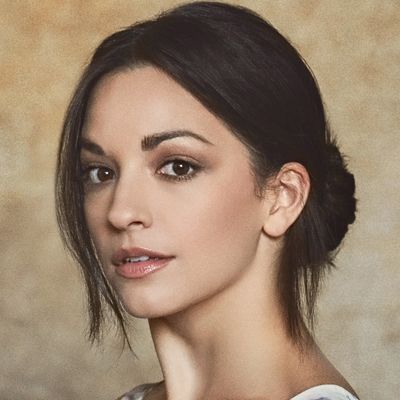
Ana Villafañe is an Outer Critics Circle Award, Astaire Awards, and two-time Drama League Award nominated actress and singer best known for originating the role of Gloria Estefan in On Your Feet!, and starring in the hit musical throughout its entire run on Broadway... Read More
From the show: The Theatre Podcast with Alan Seales
Guests
Featured Shows
About
Ana Villafañe is an Outer Critics Circle Award, Astaire Awards, and two-time Drama League Award nominated actress and singer best known for originating the role of Gloria Estefan in On Your Feet!, and starring in the hit musical throughout its entire run on Broadway. She was named one of the New York Times 30 Under 30, and has been honored by the National Hispanic Foundation for the Arts for trailblazing Latin representation in entertainment. Her TV credits include Mozart in the Jungle, South Beach, New Amsterdam and Younger, among many others, and she will soon appear as a series regular in the upcoming NBC series Night Court, a sequel to the classic sitcom. Ana is now helping to usher in the return of Broadway starring as Roxie Hart in Chicago, the Broadway classic.
Ana was a kid with a lot of energy, and performed in her first musical at a regional theater in Miami when she was nine years old. She opens up about being diagnosed with juvenile rheumatoid arthritis when she was 7, being confined to a wheelchair frequently as a result, and how her struggle with the illness growing up shaped her approach to life and her career. Ana recalls finding out about the open call for On Your Feet!, feeling “magnetically drawn” and called to audition, and what a life changing experience the show was for her. She also speaks candidly about embracing her inner dancer, and joining the well-established company of Chicago on Broadway as Roxie Hart.
In this episode, we talk about:
- Moving to LA by herself at 18 years old
- Being an empath
- Learning the importance of discipline and self-care after burning out
- Landing the role of Gloria Estefan
- Being the daughter of immigrants
- Being on the set of Night Court with John Larroquette
Connect with Ana:
- IG: @anavillafaneofficial
- Twitter: @aanavee
Connect with The Theatre Podcast:
- Support us on Patreon: Patreon.com/TheTheatrePodcast
- Twitter & Instagram: @theatre_podcast
- Facebook.com/OfficialTheatrePodcast
- TheTheatrePodcast.com
- Alan's personal Instagram: @alanseales
- Email me at feedback@thetheatrepodcast.com. I want to know what you think.
Thank you to our friends Jukebox The Ghost for our intro and outro music. You can find them on Instagram, Twitter, and Facebook @jukeboxtheghost or via the web via jukeboxtheghost.com.
Transcript
This transcript was automatically generated and might contain errors.
[0:00] Alan Seales: Welcome to the Theatre Podcast. Intimate personal conversations with the industry's biggest names. I'm Alan Seales and your guest is Ana Villafañe. She was discovered when she was still in high school in a production of Cats, was signed before her 18th birthday, moved from Miami to LA, ended up coming to New York, was scouted by Gloria Estefan, led the Broadway production of On Your Feet. Just this incredible story. And she's still so young. I cannot wait for you to hear this episode. But before we get into it, find me online on Instagram and Twitter. Leave me a rating and a review. Hit me up in your stories. Let me know you're listening. Find past episodes at thetheatrepodcast.com. And everybody, please enjoy this episode with Ana Villafañe.
[0:59] Alan Seales: Today's guest was named one of the New York Times 30 under 30 and has been honored by the National Hispanic Foundation for the Arts for trailblazing Latin representation in entertainment. She originated the role of Gloria Estefan in On Your Feet and starred in the hit musical throughout its entire run on Broadway. Her TV credits include Mozart in the Jungle, South Beach, New Amsterdam, and Younger. Among many others, she is now helping to usher in the return of Broadway, starring as Roxy Hart in Chicago, the musical. Ana Villafañe, welcome to the Theatre Podcast.
[1:37] Ana Villafañe: Thank you. I'm so excited. I also like, I was listening to you just say all those things and I'm like, wow, it's so weird that that is true.
[1:50] Alan Seales: Well let's, I think that's a great place to start. Let's dive in there because you were discovered when you were in high school in a production of Cats. And in today's day age of social media and whatnot, you sort of, I guess, don't hear a lot of, I was just walking down the street and this person came up to me and offered me a contract and made my career. Like that doesn't happen anymore, but it seems like it sort of happened for you. And you're still very young in the grand terms of the business. And yes, you have done a lot and you're very fortunate. So walk me through how it all started.
[2:31] Ana Villafañe: I mean, wow. Well, it all started really by, I guess me, I was a kid with like a lot of energy. And I started painting, which then I started singing. And then when you're nine years old and can belt like, you know, a lot, you dive into musical theatre. So I did my first musical when I was nine at a regional theatre in Miami. And it was a complete like just after school activity. You know, some kids play soccer, some kids, whatever. And so my parents had a friend who is a professional actor and he convinced them to let me audition because he knew that I could sing. And so that was it. I kind of learned that you can become somebody else and tell these stories and embody or inhabit another human's point of view. And I just like fell in love. And that show was Joseph and the Amazing Technicolor Dreamcoat.
[3:35] Ana Villafañe: You were Joseph, obviously.
[3:36] Ana Villafañe: Obviously. No, it was like, you know, they have like a children's chorus.
[3:37] Alan Seales: Yes, I remember.
[3:38] Ana Villafañe: So I was like wearing a teal t-shirt and khakis and working in fourth grade. And like my school went to see the show on a field trip. And I was like, I can get used to this. I like this. This is good. I was kind of a nerd. I was a very sick kid. So like it gave me something that for the first time, my classmates and like my peers at school would see me as something other than the sick kid or the like girl who couldn't run in PE or the girl who, you know, would miss school a lot because she was always at the doctor. And so I found a lot of power and strength in that. And I just held on for dear life. And I think I still do. So it's that was the beginning and the end at the same time.
[4:35] Alan Seales: That's awesome. So then you continue, I guess you're continuing with your middle school, high school and whatnot. And like, what was the discovery process like? Because Dolphin Entertainment?
[4:43] Ana Villafañe: Yes. I was so I go to I went to a school, a high school that my parents made me go to. They didn't let me go to the magnet school for performing arts. And I was forced to go to this all girl Catholic high school run by nuns, just like my sister. And I was determined regardless to keep performing. And so I would do shows in school and out of school. I remember like my mom would like shuttle me between rehearsals for the school play and like a play on the other side of town and all these things. I was a part time student my freshman year working at the same theater where I did Joseph as a kid. So I always like my priorities were always already kind of falling into place. And then senior year, we didn't have a theater even in my school. It was we would use the cafeteria. There was like a stage in the cafeteria.
[5:37] Alan Seales: Yep, I had one of those.
[5:38] Ana Villafañe: The gymnatorium, if you will.
[5:40] Alan Seales: The gymnatorium, yes.
[5:42] Ana Villafañe: Yes, exactly. Very, very fancy. And we did an all female production of Cats, you know, unitards and all. And I played Grizabella. And little did I know that then my first manager was in the audience and they had me come in to audition for a Lifetime movie. And then they flew me out to L.A. and I got signed immediately. And so then I moved to L.A. without knowing anybody on the West Coast. I was 18 and I moved over there right after high school and I started working and it was just like the hustle of every Taco Bell commercial. I was killed by gangs on like every procedural or I did an America's Most Wanted episode. It's like one of the reenactments. I was the victim. And just, you know, doing all of the things, pretty much just trying to make it happen.
[6:42] Ana Villafañe: And then I heard about On Your Feet. I had already graduated from college. I got a degree in opera. And one of my friends who's a news anchor in Miami, she was covering the open calls because they saw like thousands of girls around the world to find the, you know, to cast the role of Gloria. And I received this phone call from my friend, Laura, who was covering the auditions. She said, you really need to audition for this. So I tell my then team and they were like, well, you're not a Broadway girl. Like you don't have a BFA in musical theater. People don't just roll up to Broadway auditions. I really feel like it's calling me. I don't know how to explain it to you. I'm not vain enough to be like, trust me, I'm going to get it. But I said that to them. I was like, get me in the room. I can't explain this to you. I'm being magnetically drawn to this for some reason that is way bigger than myself. And historically, I was right.
[7:54] Ana Villafañe: Because then it was actually seven years ago yesterday that the production flew me to New York. I auditioned exactly seven years ago yesterday for Jerry Mitchell, had the callback exactly seven years ago today, and got the job today, September 30th of 2014.
[8:20] Alan Seales: Do you consider yourself an empath?
[8:22] Ana Villafañe: Oh, yes, very much so. I'm like a little sponge. I feel everybody's feelings and too much. They call me. Yeah, my family always makes fun of me for it. I care too much about everything. That's always been something that I personally struggled with. And only in the last couple of years have I really been like, you know what, this gut feeling that is nagging at me, I'm going to stop trying to analyze it. Because I have a highly analytical mind. And I want to stop trying to analyze it. And I want to just let the feeling happen. And that's really strange for me. And it sounds like that's exactly what happened, though, for you with On Your Feet. You're like, I just got to do this. I'm being pulled to do this.
[9:01] Ana Villafañe: Yeah, fully. And then it was the matter of diving in and trusting that I was enough. Because I'm also very much an empath, but also like the imposter syndrome is very real. And I think, you know, I'm somebody who I really believe in work ethic and all this stuff. But it's like, who am I to be in this position, especially when I did get On Your Feet and when I did move to New York, and I didn't know anything about New York itself as a city, but also about like the ins and outs of the Broadway industry. I had a lot to learn and like, they want a rehearsal when they're like, who's non equity? And I was like, I didn't know what that meant. So I was just like, I mean, I'm just here because I got this job like, but it was a very, it was like a crash course in all things Broadway and in all things legit theater and, and just like the ins and outs.
I mean, I remember when I came to New York for the audition, Lin had heard about me because of the On Your Feet audition. And they were casting Hamilton at the time. And I get a phone call from Bernie Telsey's office from the casting office for On Your Feet and for Hamilton, they're like, Lin wants to see you. And I was like, who's Lin?
[10:24] Alan Seales: That little guy, he's done a few things.
[10:29] Ana Villafañe: Literally. And so then, and I was obsessed with being the Heights soundtrack at the time. But again, I moved to New York in the Broadway schedule. So it's not like I like grew up, I didn't really grow up with like a family that came to see theater every year, you know, like it was like, not the way. So I learned a lot very quickly and was expected to be a star in this like, in this community that I've always idolized and wanted to be a part of. And like, you almost don't believe that that can happen to you and then it happens to you. And so then I cut to moving here and, and having this incredible fairy tale of a job and this responsibility and so much to prove as well. Because like, you know, then you have like the feeling sometimes that, who is this girl? What is she going to do? Like, is she actually going to be good enough? And so it was, it was amazing, but literally life changing experience.
[11:31] Alan Seales: Well, yeah, obviously. And I guess you're coming to New York for the show and not previously. I mean, I've said on the podcast so many times here that Broadway actors are the Olympians of theater, because you have to do, you have to just throw yourself in, it's mind and body and eight shows a week, et cetera, et cetera. So coming from LA, coming from not a rigorous performance schedule beforehand, did you struggle with the eight show schedule, like at a basic level?
[11:59] Ana Villafañe: So I think because I had no point of comparison and no time to think about it, I didn't. It wasn't until eight months into the Broadway run. So after Chicago, after everything, I didn't call out until eight months in when I injured my voice and was just so burnt out and like, you know, firing on all cylinders and again, the expectations and then any day off was press and all of those things. Social media had like kind of just become like a bigger deal. So like, I was, I was just, I, the concept of rest was not a thing. And since I moved here for the show and didn't have other friends or anybody really to ground me or to center me, my entire life was the show. So I would be on vocal rest and then only speak pretty much either as Gloria or about playing Gloria in press.
So Anna became less and less and less and less existent. And it took eight months of that schedule and that grind for my body to kind of shut down and psychosomatically, like my voice was just like, nope, you need to, you need to take a step back and you need to remember that Anna.
[13:25] Ana Villafañe: Chicago, On Your Feet, Mozart in the Jungle.
[13:56] Ana Villafañe: But more in a balanced way, where it's like, make sure you eat. Acupuncture, vocal health, like don't wait until you're injured to see an ENT or to do all these things. So I'm a lot more empowered because I know what I'm doing. But it wasn't, truthfully, I always describe it as like, if I'm pouring out from myself, like if I'm a glass of water and I'm pouring out, the thing about loving what you do is that it pours back in while you're pouring out. So it's hard to tell when you're tired, even because the adrenaline and the feelings and, you know, every time I'm, if I'm, if I was tired or even still, and I think about if there's one person in the audience whose life you could potentially or day you could potentially change just from doing what you're doing and what a privilege it is to get to do what we're doing.
It's, that kind of regenerates the energy for me. And, and that's why I'm also very careful, especially as I've gotten older, what I say yes to, because I don't want to set myself up to burnout or to, you know, like I always said with On Your Feet, for example, I was singing 17 songs per show. And I was never like, now in Chicago, there are three times in the show that I can go to the bathroom. That is wild to me because it was like, you can't even think straight because it was, you're on stage the entire time. I think there was one scene that I was not on stage for. So, so it is a little bit different and it's a little bit more balanced, but I didn't, I didn't know the difference. I didn't, it's almost like it's perfect for them, for producers and for the Estefans.
It was kind of perfect that I had no point of comparison because I was like, oh, this is super normal. My entire life is dedicated to them. And if I didn't love them, and if I didn't love her and respect her, it wouldn't have been sustainable. Like that, one of the best lessons in my debut being On Your Feet was that it can't be about me. And so going into it with that sense of humility, where I am genuinely, my role is to honor this human being who then became my friend, is that kind of also added to the equation where I was able to subtract myself enough and surrender to the show.
[16:32] Alan Seales: Did you ever talk to Gloria about what the ultimate, was there an ultimate moment where she and the other people in charge of casting were like, this is it. Like, Ana is the one who's going to represent me and here's why. Because I feel like if it was, you know, if you were telling your life story, you would want the person playing you on stage to be so special.
[16:53] Ana Villafañe: You know, I mean, I've never asked like what it was that made, because they have been extremely kind and generous and love, like their family, you know, and they tell the story all the time. And so I can't even, like, I can't describe how many times we've been, whether it's in press or at work or at a dinner or like just bottles of wine deep that we're just like hanging out somewhere. And they'll just tell a story over and over about how as soon as I walked out, they all turned to each other, the entire table. It was like them in the middle. And then all the producers, the entire creative team, Jerry Mitchell, Sergio, you know, it was so scary. And they all just turned to each other and was like, that it was apparently 100% clear.
And she does mention one moment where in between scenes, I put my hair in a ponytail. And that she watched it and was like, that that is the person which I don't know, of all the things, mind you, I'm like, it wasn't my voice. It wasn't my talent. It was my ponytail. But she always talks about that. And then she did say, and she chronically for seven years, always reminds me and says that it was written in the stars. She's like, this was meant for you. And then the show closing when I said that I was going to leave was almost like validation of that.
[18:34] Alan Seales: Wow, wow. That's so interesting. Acting in general is very much about listening and about reacting, right? So it's interesting that it was the act of not speaking, not performing, that was the moment for her because it was who you are.
[18:55] Ana Villafañe: Yeah, maybe it's like that. I go back to the empath to empath sort of thing, right? It's just like, sort of, who you are, spoke to who she is. And she was like, oh, yeah, okay, like there was that moment when there was no wall and there was no performance when there were no nerves. And like who you are, this came through, just putting up your hair. So I totally see that. I can see how that worked.
[19:17] Alan Seales: Yeah, I can too. Now that you put it that way, I can too. Because I always like laugh about it in my own mind. I do know that with Jerry, the day before, so from the initial audition, my only question was, was whether the songs, some of them are as a concert, and some of them are through musical theater, like storytelling. To like move the book forward. And so in terms of like the performance of them, and, and I remember him being like, that's a really smart question. And I was like, well, it completely informs how I'm going to sing these songs. If anything for you is me as an actor singing anything for you, like story wise, like musical theater, then that's one thing. But if I'm performing in a concert, that's another thing. And so, um, so that was the distinction that I remember. Was like, quite a game changer in terms of the audition room itself, as well.
[20:17] Alan Seales: I'm going to change gears slightly here, because as I'm, as I'm observing you and how you're presenting yourself and talking about all these things, you've, you've got a, it's so cliche to say, to say the old soul, right? You've got an air of, of humility, I want to say, because you were saying you were belting when you were nine, you said that. And all of a sudden, you know, Grizabella and Cats and you're surrounded by talent, go out to LA, still go to college, which is amazing. And then come out in and are leading a Broadway show, having almost no professional theater experience. And then you're still asking, like, well, how do I approach this? And, and you don't, and you have the work ethic to not want to call out for eight months or, and all this stuff. And so I know you're the youngest or not youngest, you're one of four, right? You're in the middle of four siblings.
[21:16] Ana Villafañe: Yes, I'm the second of four.
[21:19] Alan Seales: Second of four. So is, is it your, is it the family life that kind of instilled this, this attitude on you? Or where do you think you get this attitude of just being like, listen, I'm here to work, and I'm taking it seriously. I'm gonna take myself seriously, because being, being who you are, most kids your age, most people your age, you're not a kid, most people your age would just be like, I'm just gonna go out and drink all night. Woo, I'm living in New York City, right?
[21:45] Ana Villafañe: I do that too, don't worry. I think my mom is, she should have seen me on Tuesday night. But I mean, I think it's a mixture of things. I definitely, you know, I've, I've won the lottery in terms of parents, grandparents, support system, family, my sister, honestly, she'll be the first one to be like, get it together, get your feet on the ground. Like, she'll, she will put me in my place fast. But also, I think, I think, culturally, there's something to that. I think the work ethic, my dad came from El Salvador when he was 16. Like, you know, when I think of like, the American dream, I think of him, I think of my grandfather, who's from Cuba, and my mom, who grew up here, but always kind of yearning.
And representing the Cuba that will never exist anymore. Um, I think, so I think the immigrant experience definitely informs that as well. I also just think I'm, I'm, I've always been like mischievous, like, I love to like prove people wrong or like surprise people, or even surprise myself, to be honest with you, as I've gotten older, it's less and less about other people and more and more about like, wait, I can do Flossie? Okay. You know what I mean? Like, so like, it's, it's, it's fun to think outside the box of my own, I guess, limits. And then that's the last piece of the puzzle for me, again, goes back to growing up as like a sick kid. I was diagnosed with juvenile rheumatoid arthritis when I was seven years old.
So I was confined to a wheelchair a lot as a kid. And, you know, had to be homeschooled sometimes and was hospitalized a lot. And like, there's no, there's no way that I can like approach life and just take it as like complacent, just if that makes sense. So, so it's almost like being a performer is almost like the only option for me, because A, I get to do it all, I get to experience so many things. And B, it is a never ending challenge and a never ending kind of surprise party of a career. And that's kind of how I've always lived. Like I, I, growing up with like, just the set of circumstances that I grew up with, it's, um, it has lent itself to a mentality of like, perseverance and enjoying things for what they are also like, yes, because work, hard work is important. But like, I, at the end of the day, like, I just want to get in bed and be like, proud of myself and happy.
[24:36] Alan Seales: We're going to take a short break. Stay tuned for more of the episode.
[24:40] Alan Seales: Well, I want to acknowledge and take this opportunity for a second, because you're on stage now eight shows a week, Roxy Hart, doing Fosse and, and, have, have this diagnosis. Was it junior rheumatoid arthritis?
[25:06] Ana Villafañe: No, rheumatoid arthritis, which also dates me because now it's called, now they call it something else in terms, in the world of pediatric rheumatology. But, um, but yeah, I've had it since, since I was seven years old. So every day, I mean, I take my medication, I give myself my injection every 10 days and, and we make the best of it.
[25:28] Alan Seales: Well, so what I was going to say was that not all disabilities are visible. So I want to take this, this opportunity for everybody listening to say like, not everything you can, you can not see everything that people are going through. But do you ever, like with the, I was going to ask, coming back to Chicago and Roxy Hart, and you mentioned like, I'm doing Fosse now, which is amazing. In telling me about your history, dance wasn't a part of it. So how did this come about? And you were like, wait, me, Chicago, that's dancing. I, that's not me. Was, did you ever go through any of this?
[26:05] Ana Villafañe: Um, so like, you're like, screw it. I'm, I'm in. I'm all in. I don't care what you say.
[26:10] Ana Villafañe: Well, you know, it's interesting, because I, it's like, I have like the soul of a dancer. But like, I was like, you know, I have this body that's a little faulty sometimes and whatever. And it took many years of therapy and figuring out that I'm not this like damaged good, right. And so, um, I always felt a freedom when it comes to music in general, right. And dance, because I came from a place as a child of like, not being able bodied all the time.
[26:52] Ana Villafañe: I have almost like a very, very deep respect and admiration for it. That's almost like otherworldly, like I can just watch dancers move and cry. And I do often. So I think that there's an element of that where I just really, really appreciate movement and dance in such a deep way because I have, I know what it's like to not be able to use my legs or my body. And something happens and I can't, I speak about this at like, especially, I do a lot of work with the Arthritis Foundation for kids with chronic conditions and I meet performers and I meet their parents and they tell me that like, they've heard me say that something happens sometimes where like, being another person, playing a character, going deep into the psyche of somebody else, the escape from what it is that I was going through as a kid, especially, was a very big therapy for me and a very big healer for me.
And something about when I'm singing or when I'm dancing that sometimes I forget that I have this condition and that I have this pain or this mobility issue. And that's something that I've found and I want to get more into the research of this because I've heard other kids say that when they've heard me say that, they're like, yes. And I've had mothers cry to me and fathers and people say that like, that they've heard their kids say that, but that they kind of like, you know, like, how do you believe that? And it's true, there is something, I think there's such a, like, otherworldly sanctity to the arts that can transport you and transcend reality in that way, even if it's just for a second.
And dance specifically has always done that for me. And I was not a technically trained dancer because how could I be as a kid? But I love dancing and I love music. And so for me, it started more like Latin dancing. And so when I moved to LA, I would go every single Monday night, go just social dancing. And I wasn't good. I wasn't doing all the spins. I wasn't like, you know, fancy, but I can move and I can let the moment take over me. And like from dancing with different people, I would learn more and more styles. And I actually got really good at it, cut to On Your Feet. And I was like, oh, I can do this now. So again, one of those moments where you're surprised by your own capacity, but then having Sergio teach me and not hold me to a lower standard because of my, you know, because of my physicality.
And I was frustrated and I was like, I can't do this. And I can't compare or compete with these girls, with Nina Lafarga, Tenere Vazquez, Marielis Molina, these incredible dancers. And he was like, I am going to hold you to this standard because I know that you can. And that was Sergio. And then now having Greg Butler with Chicago, with these nuanced, different, very different type of dancing and David Bushman, our dance captain, who was like, go take a ballet class. So I've been in more classes. I've ordered my little ballet slippers and like, and I can try and I can, I can learn and I can, I can imitate. So like, as much as I'm not a technical dancer and I don't know all the terms and I can't spin and whatever, give me the time and I will, I will put it in.
Like, I will find a way to, to do it. And they've given me the opportunity and the tools that I needed. So it's, it's been really, really special, to be honest with you. That's, that's so much fun. I, I enjoy hearing stories about, I mean, about how the arts are like transporting. And I've said at the beginning of the pandemic, like we need to bring the arts back because the arts can heal and they are a unification factor. And there's so much that happens. It's kind of funny that with all the essential workers, right? What's the first thing everybody did when, when we were locked up in quarantine, we went to TV and movies and music and artists, actors. And then yet the arts and the artists were the last ones to be recognized as essential workers, if they even still are. But that's, that's just my soapbox.
[31:14] Alan Seales: Well, when you think about the fact that this, the, you know, the art form itself, like let's just even say theater has been around for ever, you know, like, and there's a reason for that. Otherwise, like we wouldn't still be here talking about this if it weren't integral, in my opinion, to the very fabric and fiber of society. You know, what's very timely that you bring this up is, do you know, do you know who Ben Folds is?
[31:46] Ana Villafañe: Yes. Yeah, of course.
[31:48] Alan Seales: So Ben Folds has a podcast called Lightning Bugs. And one of his recent interviews I was listening to with Bill Shatner, William Shatner, and the both of them highly philosophical, deep, deep thinking kind of guys. And Bill says, like, so think about who, who created music? How was music created? Like someone had to invent instruments and realize that you can put a reed in something and it vibrates and makes a noise. And like, I'm gonna kill this cat and take its gut out and make a cat gut instrument. And there, there's people like, where did this all come from? There is an inherent need in our brains to tell stories. And then someone at some point said, let's put this to music, but what is music? Okay, let's invent this thing and call it music.
[32:39] Ana Villafañe: Yeah. I think that kind of stuff all the time.
[32:41] Alan Seales: Do you really? Because I think about it, I'm like, why am I not thinking to myself, oh, why don't I blow into this random thing and see if it makes a cute sound? Why would I invent a musical instrument for like strumming? Who thought to put strings on a, on something with a hole? You know what I mean? Like it's so incredible.
[33:04] Ana Villafañe: Yeah. It's, it's a conversation they were going down. It's, it's so much fun because they were like, well, what was the first instrument? You think it was like people doing vocalizations? Was it a cappella? Was it singing? Was it percussionist? Probably a little bit of percussion and everything because it's easy to bang on things. You can bang rocks together, bang sticks together. And all of a sudden you've got a rhythm and yeah, that whole, that whole fascinating, that, that conversation was fascinating to me. I love that I'm not alone in this way of thinking.
[33:30] Alan Seales: Yeah. But then the, the ability to tell stories actually, when you're listening to a story, like right now we're looking at each other, you're leaning in, there's body language, there, there's an, there's a physical interest in a conversation. And when you're telling a story, when you're listening and engaged in a conversation and listening to a story, there's chemicals released, the happy chemicals that make you bonded to that story and bonded to the group and bonded to, to, uh, everybody telling the story. And so that's why I, I said it before that, that I think there's, um, an amount of light trauma that you, that you get, um, that you go through to put up a show, especially a Broadway show, because it's, it's long hours and it's hard and it's strenuous and you might be, uh, emotionally tired because of imposter syndrome or nervous for opening night or what, you know, whatever the case is, you can have stage fright, you can have panic attacks in the middle of your solo.
This happens to everybody. And all of this, uh, bonds you to your cast and bonds you to the stories and then overall bonds you to the art form. All at the same time, you are presenting you and your cast as a unified entity are presenting this to a room of strangers, taking them on a journey they didn't know they needed to go on.
[34:51] Ana Villafañe: Yeah, correct. Correct.
[34:53] Alan Seales: So when you are on stage now, I mean, so you've got, you've got kind of, um, two sides of the same coin. So you've led a show, uh, that was an original and now you're coming into Chicago, which is a staple of American theater, literally in international theater too. So are you approaching Roxy differently? Are you, are you, um, I guess because Chicago was already a well-oiled machine, right? How was this experience different from your previous experiences?
[35:31] Ana Villafañe: Um, well, it's different because I, because I, I was starting new where a lot of, where most of the company is not, there are four of us who started new, um, and who have been added into the preexisting, just alchemy of the group. Right. So like, we have like our like little group texts, like we call ourselves the new kids on the block. I don't get it. We need a meeting or like on Sunday nights before the final show, we'll like have some champagne. Um, but it's, it's, so that's been, that's been interesting because like you want to fit in, but you also want to bring what you are bringing to the table, um, and respectfully and without stepping on anybody's toes and, and you're learning the politics and all the personalities and whatever.
And also, again, as an empath, these are people who were forced to leave their job for so many months that for me, it felt like a, um, a calling to be a grounding or at least to help ground the experience because I didn't have a preexisting relationship with the space and with the theater. I have it with like the concept of any theater. So like, yes, I wept when I got on stage the first day, but it wasn't because there's memories attached to it or because it felt mine in any way. I very much felt like, like a guest at like a very important moment. Like if, you know, somebody invites you to their house for Thanksgiving that like, you want to bring a gift and you want to be respectful, but you also want to eat, you know?
Um, and so, so it's, it's interesting to be, especially, I take very seriously the idea of like, um, of leadership within these very, uh, beautiful families that get built for a show. Um, and I think that comes from Jerry actually, because when we started On Your Feet, we were out drunk one night in Chicago during our out of town. And he said to me, he's like the fish rocks from the head down. You are going into something where it's not just about the notes. It's not about the choreography. It's not about five, six, seven, eight. It's not about the lines. It's not about the press. It's not about a red carpet. It's about the group. And you just remember that, that standing at zero comes with its, with its own different set of responsibilities.
Um, and, and I, and I took that to heart because he's a great leader. And so I was like, well, I want to make sure that I, that I do that justice as well. So, um, so I'm applying that more than anything to Chicago right now, because these are people who are, I mean, so well-established in this industry, people who are so incredibly talented, people who are older than me, people who have families and kids and, and, and, you know, and we've been with the show, some of them for like 10 years. And there's such a rich history to that. And I respect that because I understand what it's like to be with a show for a long time. I understand what it's like to like, for that to be kind of your, your, your life.
Right. So coming in new, it's, it's given me the opportunity of, with my own freshness and my own perspective and my own energy to, to help facilitate them coming back to work. Like that for me has been like a big part of the puzzle because like, I can understand, listen, if On Your Feet had still been running and the shutdown had happened, I would have been inconsolable, inconsolable. Like I would have been a mess during this entire pandemic situation. Um, so I can, I know what that's like, or I can at least imagine what that's like. And so being part of it and from again, a leadership position, but being new, it's, it's that negotiation of like, you, you tell me I am the new one, but I'm also going to show up.
Is there any amount of, of what am I doing here? That's going through your mind too, because there are so many people that have, that have been part of this legacy. And now you are the latest to add your mark on the legacy that is this show. Like this is Broadway. This is the pinnacle. So you are playing a lead of a staple that has had so many amazing people come before you, you know.
[40:21] Ana Villafañe: I mean, at least once a day. I'm pretty, I guess the word is not even superstitious, just I would say aware. And like, even in my dressing room, like there are moments like it sounds super weird and like I will thank Anne Rankine when I leave. Like it is everything is the shoulders we stand on, right? And I attribute a lot of my outlook on that stuff to Andrea Burns, who played my mom in On Your Feet. Like she was always very, very a very good mentor in terms of like that mentality of like respecting the shoulders we stand on. And I am a product of that. And I know that. I mean, look, I'm standing next to Bianca Madroquin playing Velma, who played Roxy for like 20 years off and on. And because she did what she did, I can do what I'm doing.
Because I know that, you know what I mean? And again, it goes back to even the Gloria of it all. Like I, it really takes away from the ego when you can look around and say, look at all of the people that had to do this before I get to. And like kind of giving homage to that and then and then letting that be part of where I get even the energy. Because it's like all of their work allowed me to even think about dreaming about this. Like even the 10-year-old girl, the nine-year-old girl doing musicals in Miami, that is all because of all of these people who have done it first. So it exists for me because they made it. And so now it's kind of like my turn to make it exist for other people.
[42:22] Alan Seales: And in addition to all of this, you're still doing TV projects because it was announced recently that you're gonna be in the remake of Night Court. This is true.
[42:27] Ana Villafañe: Which I wanna touch on before we wrap up because I watched Night Court when I was a kid. I watched the original.
[42:33] Alan Seales: Of course. I watched reruns of the original.
[42:38] Ana Villafañe: Right. I'm not that old. But first of all, I didn't know that you're bringing that back. So amazing. I can't wait for that. But when does that start? Are you gonna be able to juggle both theater and the TV filming?
[42:50] Ana Villafañe: Oh, yes. That is very much the plan. It is kind of amazing to be able to be at a point right now where, again, right when I got back from shooting Night Court was when I got the offer for Chicago. So it's like very, very...
[43:08] Alan Seales: It's already shot.
[43:09] Ana Villafañe: Huh? It's already in the can?
[43:15] Ana Villafañe: Well, the pilot.
[43:16] Alan Seales: Okay. Right.
[43:17] Ana Villafañe: Which was shot in July. And it's wild because John Larroquette, when he... So he's coming back to the show. His character... Because it's not a reboot, it's technically like a sequel. The first day that we met when we were on set at the Warner Brothers lot, he was like, we have some downtime. And I was so starstruck, mostly because of the movie Richie Rich, mind you, because he played the villain in Richie Rich. But I was like, I didn't know what to say to him. He's this icon. And he turns to me, he's like, where did you live when you were on Broadway? And I was like, I cannot believe that I have that in common with this man. First of all, all the walls kind of came down. And I was like, I felt so validated and seen.
I was like, first of all, why do you know that I was on Broadway? Why do you know anything about me? And second of all, yeah, no, I lived in Midtown. We were just talking about our experiences on Broadway. And what an incredible truth. How I think about my life. And to your point, even a little bit ago, I'm still excited that this is all happening. I hope I never get to the point where I'm just like, oh, well, just another day in the life. I'm still like, oh yeah, we got into the club. So it's all very exciting. And just to be able to say that, yes, I'm, first of all, starring in my second Broadway show, which in and of itself would have been enough. The first time would have been enough. And then to also have all these other projects and all these other things that I can't even talk about yet that are happening and that are real. And it is very, very much a humility pill, but also like a gratitude pill. Because I didn't, I keep surprising myself, I guess. And that feels good.
[45:23] Ana Villafañe: It's very, very, very yes and.
[45:28] Alan Seales: Yes, yes, yes, yes.
[45:29] Ana Villafañe: To just take what comes at you.
[45:31] Alan Seales: Exactly.
[45:32] Ana Villafañe: Takes what comes at you and do it to the best you can. And then people are going to notice. And the advice I always give when asked is be the person people want to work with the next time. And that is a fact. This is such an understatement. It's almost not talked about enough. People want to work with people that they want to work with. Again, if you're not good in the room, it doesn't matter if you can belt a high C. That's not the important part. The important part is that we have to be in it together when you're in a studio, when you're on stage. Because things happen. And Lilius White recently started in her announcement at the top of Act 2, because Mama kind of re-announces that the show is back and we need to push in their seats.
And so she's added, turn off your cell phones and stuff like that. It is a very human industry. And I think gone are the days where the stars act a certain way and have this mystique and this air of just like, I don't know, ego and whatnot. It's not like that. And more and more, you're seeing the emphasis being on the whole human. And that's what gets the job. And that's what secures also your career. Because you can get a job and then never work again. If you have a bad reputation or if you were a pain in the ass to work with or whatever. So it really is the whole human.
[47:08] Alan Seales: Do you think that's because of the accessibility of social media? Or is it something else?
[47:13] Ana Villafañe: I think there's more accountability, for sure, due to social media. I recently got an email. In fact, when it was announced that I booked Chicago, I got an email from a producer who I've never worked with, but who is an acquaintance, a work acquaintance through the world of it all. When you go to these events and you see the same people and whatnot. And then I did a reading with this producer, I want to say in 2019, and it was great, whatever. It was a play. And he sent me this email that was so bizarre and congratulating me on the role. But then going into how he's the one that made the phone call for me to do that reading and that he didn't feel like I was showing enough gratitude or that I should have been a little bit more grateful.
And first of all, my gratitude is... I was grateful. But the best way for any actor to be grateful is to show up on time, show up with integrity, show up prepared, do their job. But I don't owe you anything else. I don't owe you to go to drinks. I don't owe you to go to dinner. I do not owe you anything other than doing my job. And your job is to make phone calls. So if you're upset that I didn't do enough to thank you, you are part of the problem. And so it's interesting because I think more and more accountability is really important. And I think more and more people are respecting themselves and demanding respect from employers. You look at Hamilton, the cast, making sure that they were getting compensated for their work.
You look at all these reforms that I hope are really going to land in terms of representation, in terms of just the whole show must go on mentality. I'm very, very proud because the Weisslers have been listening. We had Breaking Bias workshops during the rehearsal process for Chicago before reopening. We had a workshop where producers wanted to listen to past and present cast company members on how they can do better. And one of the biggest things was like the work-life balance and whatnot. And they are really, I'm watching these changes happen in real time. And I'm watching people really try to be the best that they can be. And I think that's huge. And I think that that's the only way that we can move forward.
There's no going back to normal. There's not even a new normal. It's just we have to keep evolving. Otherwise, we're staying stagnant and there's no growth. I think that as an industry, as we individually do that, we are also collectively doing that. And I'm proud to say that I am actually noticing some noticeable differences.
[50:18] Alan Seales: Do you hear that? That's the sound of the mic dropping.
[50:28] Ana Villafañe: Yes. Yes. And on that, let's wrap up with the three standard closing questions I ask everybody. The first one just very simply is what motivates you?
[50:36] Ana Villafañe: Purpose.
[50:41] Alan Seales: I like that.
[50:41] Ana Villafañe: Like you said it too. It's very introspective.
[50:45] Alan Seales: What advice would you give for your younger self and younger people listening now starting out down a similar path?
[50:45] Ana Villafañe: Trust. You don't always see from the beginning why something is happening or how something is happening. But the clarity on the other side, I would tell myself to just trust a little bit more because I think there's a lot of time and energy that I spent with a lot of anxiety and which is warranted and human and fair. But yeah, just to trust.
[51:19] Alan Seales: Last question then. Hardest one. If you could only see one show for the rest of your life, but you could see it as many times as you want, what would you see?
[51:23] Ana Villafañe: Oh my gosh. I don't know. I mean, I'm on such a Hadestown train right now. I'm obsessed with Hadestown. I think it's my favorite show after Rent.
[51:45] Ana Villafañe: I guess I would say Hadestown. Beautiful show. It's so good. I want to see it again. I have to text Ava because I really, really want to go the following week. But yeah.
[52:01] Alan Seales: Okay. So where can we find you online on social media?
[52:11] Ana Villafañe: Social media. So on Twitter, I'm at Anna V-A-N-A-V-E-E. But recently, I forget I have a Twitter until two in the morning and I just have so many drafts.
[52:17] Ana Villafañe: Things you wanted to say one day. Why would I say that publicly? But just all these things. Like for example, last night I drafted a tweet that I did not send because I was laying in bed and it was two in the morning and I couldn't fall asleep and I was just thinking about the fact that my dad growing up in El Salvador had a pet raccoon named Ringo Starr. But that's what I was thinking about. So anyway, so that's Twitter.
[52:37] Alan Seales: You should make your Twitter feed just like, here's what I'm thinking right now.
[52:41] Ana Villafañe: That's your profile bio. All this is, is what I'm thinking right now. Just non sequiturs, random thoughts.
[52:49] Alan Seales: Yes. Yes. And then on Instagram, Anna V-A-N-A-O-F-I-C-I-A-L. And I don't know that I want to teach myself another app. So I don't know about TikTok to be honest with you. I'm like, girl, leave that to the children. Leave that to the young ones.
[53:07] Ana Villafañe: I'm not on TikTok. I don't know.
[53:10] Alan Seales: All right. You can get more of me at the theaterpodcast.com. I'm on Instagram and Twitter at theater underscore podcast. Facebook.com slash official theater podcast. Please leave a rating and a review wherever you are listening. This has been edited by Well Rounded Hoodlum Productions. Thank you to Jukebox the Ghost for the intro and outro music. And thank you to Ana for the lovely conversation.
[53:30] Ana Villafañe: Thank you.
© Broadway Podcast Network, All Rights Reserved