

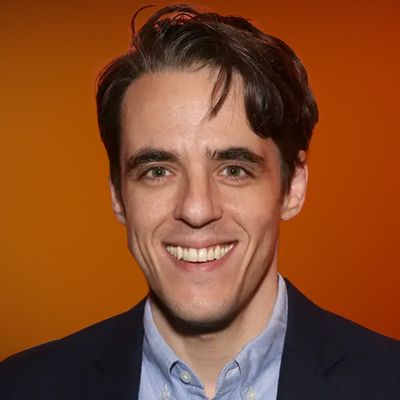
Stephen Levenson is a Tony award winning playwright and screenwriter who famously won his Best Book of a Musical Tony for Dear Evan Hansen. He later adapted the script for the film adaptation. Stephen has numerous Off-Broadway credits, as well as a resume boasting TV and film... Read More
From the show: The Theatre Podcast with Alan Seales
Guests
Featured Shows
About
Stephen Levenson is a Tony award winning playwright and screenwriter who famously won his Best Book of a Musical Tony for Dear Evan Hansen. He later adapted the script for the film adaptation. Stephen has numerous Off-Broadway credits, as well as a resume boasting TV and film. He was a writer for the Showtime series Masters of Sex, and served as show runner for the miniseries Fosse/Verdon. Most recently Stephen penned the screenplay for Lin-Manuel Miranda’s film adaptation of Jonathan Larson’s biographical musical tick, tick… Boom!, starring Andrew Garfield and available now on Netflix.
Stephen shares an inside look to all aspects of his newest project, from the research, to the writing, to casting, through production. He recalls acting in a production of tick, tick… Boom! in college, already having reverence for Jonathon Larson, and how desperately he wanted to be involved in 2017 when he heard Lin-Manuel would be directing a film adaptation. Stephen talks about the impact of COVID on filming, which shut down the production after only 10 days in March 2020, and how the pandemic gave the film a new urgency once shooting resumed. He also opens up about the weight and responsibility he felt telling someone else’s story in tick,tick… Boom!, versus writing a script with his own original thoughts and ideas in Dear Evan Hansen.
In this episode, we talk about:
- The extensive research and process behind the script for tick, tick… Boom!
- Having Julie Larson on board and in the room
- Andrew Garfield’s progression from non-singer, to musical theater performer
- Workshopping the film as if it were a stage production
- Working with Netflix versus a traditional big studio
Watch the Tick... Tick... Boom! trailer: https://youtu.be/YJserno8tyU
Connect with The Theatre Podcast:
- Support us on Patreon: Patreon.com/TheTheatrePodcast
- Twitter & Instagram: @theatre_podcast
- Facebook.com/OfficialTheatrePodcast
- TheTheatrePodcast.com
- Alan's personal Instagram: @alanseales
- Email me at feedback@thetheatrepodcast.com. I want to know what you think.
Thank you to our friends Jukebox The Ghost for our intro and outro music. You can find them on Instagram, Twitter, and Facebook @jukeboxtheghost or via the web via jukeboxtheghost.com.
Transcript
This transcript was automatically generated and might contain errors.
[0:00] Alan Seales: Welcome to The Theatre Podcast. Intimate, personal conversations with the industry's biggest names. This guest is no different. We have Steven Levenson today, who won the Tony for the book of Dear Evan Hansen, and now he's back. He wrote the screenplay for the Tick... Tick... Boom! movie that just came out with his partnership with Lin-Manuel Miranda. I don't know if you've read any of the reviews. Maybe some of you have already seen the movie by the time you're listening to this episode, but you have got to go see this movie. In the world of movie adaptations, everything that's coming out now, all of these pro shots and everything, we are having so much Broadway being brought to our small screens, which is making it accessible to so many people.
But I digress. My point being that this sits head and shoulders above the rest, I have got to say. I mean, anything Lin does seems to turn to gold, kind of. And with his partnership with Steven Levenson, oh my gosh, the film is just amazing. I'm very excited for you to listen to this episode. Please leave a rating and a review wherever you are listening to this podcast right now. Find me on Instagram and Twitter. Connect. Let me know you're listening. And everybody, please enjoy this episode with Steven Levenson.
[1:21] Alan Seales: Today's guest is a Tony Award winning playwright, TV and screenwriter who famously won his Tony Award for the book of Dear Evan Hansen. He has written for Masters of Sex, Fosse/Verdon and of course the Dear Evan Hansen movie and has now added the recently released Tick Tick Boom screenplay to his amazing resume. Steven Levenson, welcome to the Theatre Podcast.
[1:51] Steven Levenson: Thank you so much for having me. I'm so happy to be here.
[1:53] Alan Seales: A fellow Brooklyn resident, we were just talking about that. And I think that's great to bring this back to New York right away because Tick Tick Boom is all about Steven Larson. It's semi-autobiographical, the original play that he wrote, right? And so now this movie that just came out. Phenomenal cast. And you've obviously had your hand in it with, of course, creating it, adapting it into a movie form, a long form movie with Lin, Lin-Manuel Miranda, which he's this up and coming guy. Keep your eye on him. So talk to me about how you got involved with this and how long it kind of has been circulating or percolating, I guess, in your life.
[2:42] Steven Levenson: Well, I first heard about it in 2017. I heard that Lin was going to direct an adaptation of Tick Tick Boom. And I mean, like so many people, like almost all the people of my generation to do anything tangentially related to theater, Rent was such a touchstone for me. Rent was the thing. I saw it when I was 12 years old. And it just, it changed my life. And it has stuck with me as one of those moments that really changed everything. And then I was in Tick Tick Boom as an actor in college. Yes, we did. Two friends and I did this tiny little upstairs production of Tick Tick Boom, like with a piano. So I knew the show very well. And obviously, I had heard of Lin-Manuel Miranda. I had heard a little of him, about him.
And I was just, I just was desperate to be involved with this. I love this story. I love this score. And I felt like there was so much here to be explored. It began Tick Tick Boom as a rock monologue, is what John called it. And it was really kind of bare bones. Obviously, it was just John at a piano with a band behind him. And then David Auburn obviously adapted it in 2001 for the three-person version. But it felt like there was something in that original rock monologue that felt so right for expanding and pulling apart. And there was something very cinematic about John's vision and John's lyrics and his music. It just felt like a natural fit. And the thing about Lin, which sort of goes without saying, is he's such a lover of theater and a lover of film.
And so this was always going to be an homage to theater and an homage to what we all love so much about live performance. And yet also, I think, a tribute to music on film and what that can do. All of which is a long way of saying I was just so desperate to be involved with this project and so excited to get to come on board and be part of it.
[5:02] Alan Seales: Well, 2017, you said you heard of it and obviously could not have predicted global pandemic and an 18-month Broadway shutdown at that point.
[5:14] Steven Levenson: That's right. And I feel like the timing, gosh, I don't want to want to be happy that we had a global pandemic, right? But if I'm trying to pull a silver lining out of all of this, it's Broadway is returning. I'm not going to say it's back because we still have a long way to go. Broadway is returning. This seems to be a brand new dawn because of the shutdown, a brand new dawn of movie musicals and pro shots. And I guess because you were saying you heard about this 2017, obviously it takes a couple years in most cases for these things.
[5:53] Alan Seales: Yes. From your experience, how did COVID affect things? Because were you like, oh, this is not the time to do it or because we're shut down, we especially have to do it?
[6:06] Steven Levenson: Yeah. Well, it really it came straight smack in the middle of making the movie. We started pre-production on the movie in 2019, the very end of 2019. And then we were, I think we were 10 days into shooting the film in March 2020, when we were told that we were going to take a two week break. That was that was the, you know, it was those early moments with nobody really had any idea what was happening or what was going to happen. And it was, it was terrifying, obviously, for a lot of reasons. But I just remember in those subsequent weeks, we started to have a pretty, pretty soon, maybe a month later, we started to have these Zooms to talk about what we were going to do when the movie came back and how it was going to come back.
And it all just felt so imaginary to me. I just couldn't believe that anything would ever happen again. It just felt so unlikely that we would ever be able to be in the same room with other people doing anything, let alone that this movie would come back in a matter of months. It was sort of like, well, what does that even mean? And yet it kept going and we kept having more Zoom meetings and then there were schedules and then suddenly we were shooting again last fall pre-vaccine with incredibly intense safety and health protocols. And the movie took on a new urgency, I would say. It felt like this movie has always had a weightiness about it. I think for all of us, because the person that created the story isn't here.
We're so aware of that. And so aware of the fact that he doesn't get to be a part of making this. And the pandemic really added to that feeling of responsibility and a really kind of practical everyday responsibility of we're on this set together. We have to keep each other healthy. We have to be safe and be careful. And how lucky are we to be at work right now? How lucky are we to get to be telling this story? And how lucky are we in the midst, as you're saying, of this Broadway shutdown to get to experience these performances up close with actors who aren't wearing masks, even if we're all wearing masks and face shields and the whole nine yards. It felt like a tremendous gift to be able to do that.
And this story to me is just so life-affirming and so creativity-affirming. And it is, after all, the story of making art in the time of a plague in some ways. And so I just couldn't imagine telling a story that felt more vital or more soul-nourishing than this. And just all the way from Lynn down, just everyone who was part of this had that gratitude and had that sense of just how important this was. And so it's just a beautiful, beautiful place to go to work every day.
[9:09] Alan Seales: So while you were working on Tick, Tick, Boom, this movie adaptation, and side note, I don't know if you want to touch on this at all, but there's no final draft. There's no final script of the original, right? But you were also working on the Dear Evan Hansen screenplay at the same time?
[9:19] Steven Levenson: Yes. So how was that timing working out?
[9:26] Steven Levenson: It was really kind of wild. They were really great projects to work on side by side in a lot of ways because Dear Evan Hansen is so personal to me. And so it's very hard for me to separate myself from it. Obviously at this point, it's been a part of my life for so long. And this story has been a part of my life for so long. And what was so wonderful about getting to do that was obviously getting to go back into that story and be part of that world. But what's great about this, about Tick, Tick, Boom, was that it never felt like my story. It always felt like at best, my job was to be a vessel for Jonathan and for the story that he wanted to tell. And that was a lovely feeling, I have to say, as a writer to get to kind of take my ego out of it a bit.
And feel like my job was to try to divine as best as I could, with the incredible team around me, of course, what Jonathan might have wanted. And there was no final draft of the script. What we found at the Library of Congress, when Lynn and I went, were basically a bunch of different disparate drafts of the show. Sometimes it was Tick, Tick, Boom. Sometimes it was called Boho Days. And there weren't any dates on the drafts either. Because this was before computers, really. I mean, it wasn't before computers, but it wasn't carefully digitized. So these were just printouts of scripts. And we kind of had to do our best guesswork of which came first and which came later. And talking to people who had seen different versions and been involved in different versions.
And figuring out, well, why did certain songs get taken out and why did certain songs get put back in? And then ultimately making a judgment call as to what's going to serve our version of this story best. That was a super fun and exciting and fascinating process. It's the same with Superbia, too, which we found multiple drafts of. Superbia is kind of infamous for the fact that, you know, because people will ask me, well, shouldn't people do a revival of Superbia? Wouldn't that be amazing? And it's like, which Superbia? I mean, they are so different. There are several drafts and they are just radically different from each other. Changed so much over eight years. And that was really fun, too, was getting to look at those and trying to figure out, well, what changed and why possibly was John making the changes that he was making?
[12:05] Alan Seales: Right. Does that give you more pressure or less to, you said you take your ego out of it, so comparing it to Dear Evan Hansen, right? Is that, that is you, your embodiment, your complete original script, your thoughts and ideas. Is that less pressure or more pressure than trying to pay homage to the wonderful, great Jonathan Larson and assuming what he would have wanted or done?
[12:27] Steven Levenson: I would say it's more pressure. Doing my own story was more pressure, but I think only because with this, Lynn was obviously the captain and my partner from the beginning. And I felt such confidence and trust in him. And we had Julie Larson was involved from the very beginning, and not to mention all of the other people. And it just felt like they're not going to let me mess this up. Somebody else might mess it up, but they're not going to let me mess it up. And so that felt, I felt like there was a real safety net there and a real gut check always, especially with Julie Larson, who just always felt like the best reader and audience member and person who knows this story obviously better than anyone else.
[13:50] Steven Levenson: On this trip to DC, she was the one, otherwise it would have taken us multiple days, but she kind of led us to where we needed to go and walked us through it and played us songs that we'd never heard. And then all along the way was reading drafts and giving thoughts. And so we just had this incredible brain trust. And then Lynn was very smart and shared early cuts of the film with John's friends and family and collaborators. And we just got little bits of wisdom and advice along the way that I think made me feel like we were always moving in the right direction.
[14:45] Alan Seales: Were you involved with the casting process? I mean, it's, it's, gosh, it's, you know, Andrew Garfield, Alexander Shipp, Vanessa Hudgens, Jordan Fisher, Robin de Jesus, Judith Light, Bradley Whitford. I mean, the cast is absolutely incredible. These legends of theater. And I want to, I want to put Andrew Garfield in there because the dude can actually perform in a theatrical sense. He's known for film, but obviously like...
[15:09] Steven Levenson: No, I take no credit for the casting other than saying, yeah, that's a good idea. Andrew was such a, you know, Andrew was someone, we did a reading of the scripts, just like a round table, bare bones read. I guess we did a, it was like a week long workshop, but, but without anything except for tables and music stands. And Andrew was there for that in 2018. This is the first time we'd ever heard it. And Andrew wasn't a singer. He didn't sing. He couldn't sing according to him. And he had just, he finished Angels in America the week before. So he was like exhausted and like, but this is the only time we could do it or he could do it. I forget exactly where it had to be this week. And from the beginning, he had made it clear that he wasn't going to sing this week, no matter what, because he couldn't sing.
He would sort of feel it out, but like he was not going to sing. And then we watched as like slowly, but surely as the week went on, he started to sing like a line here and a line there. And then by the end, I think he sang all of 3090. And it was like, oh, this guy can sing. This guy actually can sing. Which Lynn from the beginning was like, I believe in Andrew's talent and his tenacity. And he's going to be able to learn how to sing like a professional singer, which I don't know, I couldn't do. But basically over the next year between that and then like the next series of workshops and then into pre-production, Andrew took voice lessons and piano lessons and became a bonafide musical theater performer, I would say.
I mean, I showed up on set, I remember, and there was playback of the track. You know, you sort of play it while you're filming. And I was like, who's singing this? Like who? I couldn't place the singer. It was really great. But I was like, who's singing? I was like, oh, that's Andrew, obviously. And I was like, that's Andrew? Just because he could, like you knew from the beginning that he could carry a tune, which is more than many, if not most people can do. But his confidence and his power and his athleticism, I mean, all of that, none of that is, you know, stuff that most people can do. And he tapped into it. And yeah, it was so fun to watch.
[17:33] Alan Seales: That's so much fun. And you described the rehearsal process. It was workshopping and multiple things. But that's what you do for a theater production, not for a movie.
[17:43] Steven Levenson: Well, that was something that Lynn, from the beginning, you know, I think, and he was very clear. He was like, I've never made a movie before, but I've made a lot of musicals. And this is how the process has helped me. And so we did a number of workshops. I think three, I want to say, that were really like 29-hour readings, you know, of a Broadway musical. And for me, obviously, that was very comfortable and really fun and getting to work with the actors. And this movie had so much rehearsal time because of that and so much time to craft it and hone it. That was such a luxury for me as the writer. You never get that opportunity in film and TV to actually be in there in the room with actors before the cameras start rolling to get to work on the text and to get to wrestle with it together. And so that was amazing.
[18:39] Alan Seales: Were you trying to film as sequentially as possible, too? Or was it more traditional movie style where you would just film everything in a location and move on?
[18:47] Steven Levenson: Yeah, it was more that. It was not sequential, unfortunately. It was pretty catch-as-catch-can. But I feel like, though, because you had all the time, the prep, the workshops, the rehearsals, everything, it becomes sort of muscle memory to an extent where you can just immediately tap into that part of your brain or access that part of the character because you and the cast have been doing this already for literally months, which that kind of, again, rehearsal time for a movie just doesn't happen.
[19:18] Alan Seales: Oh, absolutely. And it allows the actors to show up on set without needing to worry about that stuff. They know that we've gone through the scene enough. We've beaten it up enough times together that what's there really works and is what we're going to do. And so you just show up and it's like, there are 100 other variables, but that's not going to be one of them.
[19:39] Steven Levenson: I love that. And so you've done a couple of projects now written for TV and obviously made these screenplays and now working with Netflix. This is the final real question I'll ask before we get into the closing questions. So working with Netflix, I always wonder, for somebody who was involved with the production side of life before the rise of streaming services, how you've seen sort of the access to projects change for you as a creative, but also as a consumer. Is what you write affected by a streaming service producing it versus your traditional studio?
[20:09] Steven Levenson: Well, I would say the amazing thing with Netflix is we developed this screenplay before working with Netflix. We developed it with Julio, the producer, and Imagine and kind of wrote the script and then brought it to a number of studios to see if anyone wanted to make it. And Netflix, from the beginning, this is a niche film in a lot of ways. It's a small story. It's a story of a musical theater composer trying to get a workshop of his show going. And Netflix, from the beginning, was all in and was never like, well, how do we make this accessible? Or how do we dilute this? How do we reach more people? The movie business has been dominated for a long time by tentpoles and blockbusters and opening weekends, which is all great.
But it's so incredible that Netflix can come along and bring the same resources, if not more resources, and say, you guys make what you want to make. And so that, to me, has been the great gift of Netflix, has been their trust in us as artists. And that was there from the beginning, and there was never a sense of how do we make this movie something that it isn't?
[21:30] Alan Seales: Hmm. And I guess, so reading between the lines there with the big budget studios, there's often the execs that come in and say, let's not do that.
[21:38] Steven Levenson: Well, it's hard. It's become a more and more difficult business. It's just so brutal. And it's so hard to get visibility. There's so much out there, and it's so loud. So I get it. And Netflix has the luxury of not having to deal with that, which is amazing.
[22:00] Alan Seales: So then prediction, when's TikTok going to start financing big budget movies?
[22:04] Steven Levenson: Oh, totally. Yes, absolutely. I hope soon. Bridgerton the musical, financed by TikTok.
[22:10] Alan Seales: Absolutely, yes.
[22:13] Steven Levenson: The three closing questions that I ask everybody to wrap up the episodes here. The first one is, what motivates you?
[22:19] Steven Levenson: Oh, that's a really great question. I think what motivates me is, I like new challenges and new things I haven't done before. I hate it, but I think fear motivates me a lot. The unknown and not being quite sure what I'm doing keeps me hungry and keeps me wanting to know more. And yeah, I think that the excitement of learning and the excitement of taking on new challenges.
[22:49] Alan Seales: Oh, so great. Okay. So the next question is then, if you could give advice to your younger self and younger people listening now, starting out down a similar path, what would you say?
[22:56] Steven Levenson: I would say, the thing that was most important to me and the thing that I'm really grateful for was that I had the opportunity to see a lot of things and read a lot of things. And that was an incredible privilege. And I was very lucky to be able to do that, to spend... When I first got to New York, I temped for a long time. I struggled to pay rent like everybody else. And I took every free ticket I could get. I read every play that I could get my hands on. And I think seeing as much as you can, absorbing as much as you can, and really trying to just be open to as much as you can is such an amazing thing, especially when you're young and not totally formed. And just to take in as much as you can.
That for me was everything. It was just getting to develop my taste, really, and what I loved and find my place in it. And worry. I think I worried a lot at the beginning of what is my place in all of this? And how am I going to be heard and how I'm going to get my voice out? And maybe I would have told myself to worry less about that and more about, why don't you slow down and take in the world and see what you love? Find what you love and follow that.
[24:27] Alan Seales: Oh, I love that. Last question, then. If you could only see one show for the rest of your life, but you can see it as many times as you want, what would you see?
[24:30] Steven Levenson: That is such a great question. I mean, I have like 20 answers, but I'll try to come up with one of them. I might say West Side Story, actually, of a musical. Maybe because it was something that was so resonant. For me, when I was a kid, I used to want to rent that movie all the time. I just loved that score and that story. And yeah, I wonder if that's the one because it feels like it has everything. But then I have like 100 other answers that are in my head, too. Sorry, my answer to that is Rent, actually.
[25:19] Alan Seales: That's a pretty good one, too.
[25:21] Steven Levenson: Apropos to this conversation. Rent is another show that is so heavy with so much. It has so much in it, so dense, and yet has so much joy and heart and light. So yeah, I like that answer. It's great because it was one of the ones for me, when I look back, that got me into theater, which is why I want to see it over and over again. It's part of the nostalgic factor that I love so much about it. And it changed the game, similar to what Hamilton did for this generation. Right. So now it's all with Lynn creating Hamilton. Now Lynn is doing Tick, Tick, Boom, which is about Jonathan Larson, who wrote Rent. It's all come full circle.
[26:00] Steven Levenson: Absolutely.
[26:01] Alan Seales: The universe can now go to bed happily.
[26:04] Steven Levenson: Yeah, that's the goal.
[26:05] Alan Seales: All right. So everybody, please check the show notes for the link on where to watch the movie on Netflix. And where can we find you on social media?
[26:13] Steven Levenson: I'm not really on social media, to be honest.
[26:16] Alan Seales: Good for you.
[26:17] Steven Levenson: Yes, I know. I'm a little bit healthier because of it.
[26:20] Alan Seales: Great, great. God bless all of you. Enjoy.
[26:24] Steven Levenson: Well, thank you so, so much for this. This has been an incredible, incredibly fun chat.
[26:28] Alan Seales: Awesome. Yes, for me, too. Thank you.
© Broadway Podcast Network, All Rights Reserved