

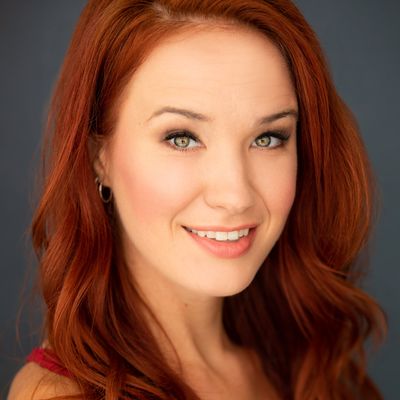
Broadway and West End stars Sierra Boggess and Julian Ovenden have reunited with a new album of classic and contemporary Broadway duets. Sierra Boggess is best known for originating the role of Ariel in The Little Mermaid on Broadway, as well as for multiple appearances as Christine in The Phantom of the Opera... Read More
From the show: The Theatre Podcast with Alan Seales
Guests
Featured Shows
About
Broadway and West End stars Sierra Boggess and Julian Ovenden have reunited with a new album of classic and contemporary Broadway duets. Sierra Boggess is best known for originating the role of Ariel in The Little Mermaid on Broadway, as well as for multiple appearances as Christine in The Phantom of the Opera. Other credits include West Side Story, The Pirates of Penzance, The Boy Friend, and Sweet Charity. Julian Ovenden has starred on Broadway and West End stages, as well as television series and films both in the U.K. and U.S. Theatre credits include Merrily We Roll Along, Grand Hotel, Annie Get Your Gun, Sunday in the Park with George, among others, while TV credits include Downton Abbey, Smash, Person of Interest, and Bridgerton. Recorded remotely during the pandemic, “Together At A Distance” features iconic musical theatre hits from legendary Broadway composers, including Andrew Lloyd Webber, Rodgers & Hammerstein, Lerner & Loewe, Leonard Bernstein, Stephen Sondheim, Jason Robert Brown and more.
Sierra and Julian take us back to how they met while singing together at The Proms (short for promenade) at the Royal Albert Hall, a concert series founded in August 1895, and one which Julian calls “the biggest classical music festival in the world”. They speak about their love for classical singing, classic musical theatre, and how they share the same type of musical language. They dive into what sparked the idea to create their new album, noting a need for connection, healing, and making music during the pandemic, and also detail how they went about recording remotely and apart from one another.
In this episode, we talk about:
- The Proms concerts at Royal Albert Hall
- Creating improvised home studios to record their album
- Why and how they were drawn to particular duets
- How people responded once they began releasing tracks
- What this project has meant to them
Connect with Sierra and Julian:
- Listen to Together At A Distance: https://found.ee/TogetherAtADistance
- IG: @officialsierraboggess and @julianovenden
Connect with The Theatre Podcast:
- Support us on Patreon: Patreon.com/TheTheatrePodcast
- Twitter & Instagram: @theatre_podcast
- Facebook.com/OfficialTheatrePodcast
- TheTheatrePodcast.com
- Alan's personal Instagram: @alanseales
- Email me at feedback@thetheatrepodcast.com. I want to know what you think.
Thank you to our friends Jukebox The Ghost for our intro and outro music. You can find them on Instagram, Twitter, and Facebook @jukeboxtheghost or via the web via jukeboxtheghost.com.
Transcript
This transcript was automatically generated and might contain errors.
[0:00] Alan Seales: Welcome back to the Theatre Podcast. Intimate personal conversations with the industry's biggest names. We have two guests today that have a wonderfully great friendship that helped each other during the pandemic. This album that they are talking about today started as a passion project because they are two close friends that have worked together for years and just use each other to create and support and help each other out in a very odd time when everything just seemed to be shut down and Broadway and West End didn't exist. They have an obvious love for classical theatre music and their covers throughout this album are just absolutely incredible. So everybody please make sure to check out Together At A Distance.
And now everybody please enjoy this episode with Sierra Boggess and Julian Ovenden. Today we have two guests who have performed together in concerts on both sides of the Atlantic including BBC's proms at Royal Albert Hall with the John Wilson Orchestra in both 2010 and 2012 and at Carnegie Hall with the New York Pops in 2015. Sierra Boggess is best known for originating the role of Ariel in The Little Mermaid on Broadway and for her multiple appearances as Christine Daae in The Phantom of the Opera. Julian Ovenden is an English actor and singer. He starred on Broadway and West End stages and television series both in the United Kingdom and in the United States in films and performed internationally as a concert and recording artist.
These two have done so much. Let's dive right in. Sierra and Julian, welcome to the Theatre Podcast. You two are here today because you are longtime friends and I want to get into the friendship because you've both just released this amazing, amazing album. I mean, it spans seven decades of musical theatres, iconic hits from Andy Webb's, Lord Andy Webb's, Rodger Hammerstein, Lerner and Lowe, Leonard Bernstein, Stephen Sondheim. I cannot speak today. So this is going to be a really great interview. Jason Robert Brown and Roar. So you've performed together for a long time. Tell me how the two of you met.
[2:16] Sierra Boggess: We met when I was doing a show in London called Love Never Dies.
[2:19] Julian Ovenden: I've heard of it.
[2:20] Sierra Boggess: Yes. And Julian and I were asked separately by a conductor over there named John Wilson to sing together at the Proms, which is this fabulous thing that Americans never seem to know about.
[2:35] Julian Ovenden: It's the biggest classical music festival in the world.
[2:38] Sierra Boggess: The Proms?
[2:39] Julian Ovenden: Yeah. And yet Americans don't know about it.
[2:42] Sierra Boggess: It's at the Royal Albert Hall, which is this big, wonderful venue, huge venue in the middle of London. And it's started about 70 or 80 years ago now, I think, or maybe even more. Maybe a hundred years ago. No, maybe. I don't know. But anyway, it's about 70 or 80 concerts during the summer. And it's called the Prom Concerts. It's short for promenade. And they take out all the seats in the middle of the auditorium and people stand. So I guess it's the closest classical music or, you know, yes, generally classical music concerts get to a kind of pop feel because you've got a sea of people in front of you and you're performing as quite as classical.
[3:17] Julian Ovenden: Do you ever have classical music mosh pits?
[3:18] Sierra Boggess: Yes, it's a little bit, you know, it's kind of those sort of musical theatre nerds. What's the equivalent in musical theatre? I don't know, of a mosh pit.
[3:26] Julian Ovenden: A Six concert?
[3:28] Sierra Boggess: A Six concert, exactly. That's exactly what it is. Yes. We've done a track from Six, actually. We've re-recorded them all as very musical theatre standards.
[3:36] Julian Ovenden: Yeah, anyway, so that's where we met. This guy, John Wilson, is an extraordinary man. He's recreated all the original film orchestrations of the great musicals of the golden age of Broadway. And okay, the difference between the orchestration of Oklahoma for the stage, which is about 30 players, and on the film, you get about 110. So it's like when you're singing with that kind of, and these orchestra players, they're all the best players from around Europe. So the leader of the Berlin Philharmonic, the leader of the London Symphony Orchestra. It's like, it's like the Royals Royce of orchestras playing this kind of music and it is, to perform with them is a thrilling, thrilling experience. And we love that kind of music. And that's where we kind of first met. And subsequently, we've done a whole range of that kind of, those kind of concerts around the world. And, you know, it's brought us here.
[4:36] Alan Seales: So you've got the album now, I guess it's called Together at a Distance, which obviously, I suspect is a reference to the fact that we're just coming out of a pandemic in theory, right? I think we're coming out of it.
[4:48] Sierra Boggess: We hope.
[4:49] Julian Ovenden: We hope, fingers crossed. So you've been, you're staying together, you're creating music. And so much on this podcast that I talk about is about mental health and maintaining the success of, the stress of being successful, right? And so the constant need for, for creation and for expression. And even when you're in the middle of your amazing job, you're still looking for your next one. And so you've got all of this surrounding, surrounding you. And then when you're working and then you take it all away and it's, you're in the middle of a pandemic, right? And so now through all of this, what are the two, when did the two of you connect? And you're like, we need to create, we need to do something. What, what is the need?
[5:30] Sierra Boggess: Well, exactly what you just described. That was the need is that we, when, when we created this, this was smack dab in the beginning of the pandemic. We didn't still know what was going on. We didn't know when we were going to get to even travel at this point. So Julian and I missed singing together, like just what Jules brilliantly described of the way that we have, the way that we met in the style that we got to sing in with the size of orchestra, with the caliber of music and orchestra, it's just, we missed that. And so we wanted to create something with each other and also provide some type of relief and maybe joy and healing for people that were watching and listening all around the world, truly, because everything was done online. So this really was born out of that need for connection and healing and making music again together.
[6:27] Julian Ovenden: The connections, the connection is really interesting because you recorded isolated, right? You didn't, you weren't together when you were recording.
[6:33] Sierra Boggess: No, the whole project was done remotely. So let me just talk you through the sort of practicality of that. We have no expertise with engineering or like even plugging in a cable, I find that stressful. So my son, who was 11 at the time, walked me through the sort of basic premise of GarageBand and we bought some microphones. We installed one in, well, Sierra installed hers in her shoe closet.
[7:11] Julian Ovenden: And often reuse space these days.
[7:15] Sierra Boggess: Yes. I put one of mine in my sort of attic room, but it's not like a studio. I mean, you know, you can hear my daughter kind of complaining about doing her homework through some of the music.
[7:26] Julian Ovenden: You can hear my cats.
[7:29] Sierra Boggess: Cats, everything. It was very much a bootleg kind of, you know.
[7:34] Julian Ovenden: How it started.
[7:35] Sierra Boggess: Yeah. And I sort of learned on the job, really learned how to put it all together. So I made the track and then sent it to Sierra. Sierra, she would put her version down and then I would do my version. Then we'd talk about it and then we'd rejig it. And that's how we, and then on top of that, we decided that, you know, as Sierra said, we started it as just a little kind of, you know, a sideshow really. It was just like a conversation through music over, you know, over three and a half thousand miles. But then we thought, well, maybe we can share it. Maybe we can, you know, put it out there to a wider audience. She's a bit more social media savvy than I am. So she, we made some videos, some video content, on the YouTube. Yeah. And then, yeah. And so that kind of started that whole thing and that's how we kind of started to release these, these, these songs.
[8:31] Sierra Boggess: And then we had, then we got a producer and somebody who actually knows how to do this. And so they made it into the album that now everybody can buy and listen to. So it's been amazing listening to our tracks transformed from what Julian and I were doing, out of like desperation and then turning it now into something that's like, we're so proud of it, of what it's turned into.
[8:59] Julian Ovenden: Yeah. So you still get, you know, we've got symphony orchestras playing on the album. So a lot of it is full orchestra, very, very, you know, kind of loyal to the original music. But also we wanted to, to retain some tracks that kept the intimate feel of some of the songs that we recorded. So for example, Till There Was You from The Music Man is just me on the piano. I think there's another one.
[9:23] Sierra Boggess: Uh, Heather on the Hill.
[9:24] Julian Ovenden: Oh, Heather on the Hill. Those are literally the two that I, that I just listened to before I was coming up here. And I was like, it's, it's, I love the intimacy of, yeah, like, I feel like I'm with you in your attic, literally.
[9:37] Sierra Boggess: That's sort of what we kind of, you know, and I think that, you know, we, we all struggled to a, to a greater or lesser extent during this period. And one of the, what I love about the fact that what we've done is like, it's a lovely, positive, um, souvenir, I suppose, of that time. And that, um, that people have really enjoyed it. And that we, that something good came out of, you know, a period that was so, for artists, especially for people who rely on an audience or rely on creativity, collaboration with other people in the same room. Um, you know, that something, that something positive and, um, and worthwhile came out of it.
[10:25] Alan Seales: Is this the first time that two of you have put together a formal project, like on your own? I know you said you work together.
[10:30] Sierra Boggess: Yes, I think it is. I mean, we'd love to do a, you know, a show. We haven't had the chance yet.
[10:36] Julian Ovenden: But we'd always wanted to record together. We always wanted to do an album like this, but there just never was any time. And so of course, life took care of that for us. These are all, uh, as, as, you know, the intro was saying that it's, it, they're, they're musical theater standards. So we've got, you know, Make Believe from Show Boat, All I Ask of You, of course, from Phantom, something that you're very known for, Sierra. Um, Too Many Mornings from Follies, Tonight from West Side Story. I mean, the list goes on. These are amazing tracks that everybody probably knows every word to. Why, why go the route of, of musical theater, of this classical sort of stuff when so much of, of what we're seeing now coming to Broadway is Six, right? We talked about Six, it's Poppy or Moulin Rouge, which is all just a medley of pop songs for the most part, right?
[11:29] Julian Ovenden: Well, because, um, I mean, without being too blunt.
[11:34] Sierra Boggess: Oh, please be blunt.
[11:35] Julian Ovenden: Um, look, there's obviously a space for that kind of music, for pop music and for jukebox musicals. Um, they, they're bringing people into the theater that wouldn't be there otherwise, which is a good thing. They're good for the economy. They're entertaining. But the music that we're doing are from shows, which are, you know, they were, they were conceived as, as, you know, theatrical pieces. Um, and they're serious craft. They're not shoehorned. They're not someone's back catalog shoehorned into a, into a fairly, you know, kind of shallow storyline.
[12:12] Sierra Boggess: Into a moneymaker.
[12:13] Julian Ovenden: Into a moneymaker. It's, it's, it's people who have spent their lives honing craft. And I think what we do generally, we've been, um, exposed to, um, high quality work. Um, I think we're, we're, we're demanding of ourselves in terms of what we do and the products, projects we take on generally speaking.
[12:37] Julian Ovenden: And we wanted to do something that was, that sounded expensive. It sounded like, it sounded, it sounded good. And you can't get better than Bernstein. You can't get better than Rodgers and Hammerstein. You can't, you just can't get better than Sondheim. I don't think in this world of musical writing, I think, you know, maybe there will be a new generation. I'm sure there will be a new generation of writers. But at the moment, I think we're in a bit of a flux and a bit of limbo land because we don't know what is next. And people have turned away from character-driven work into, you know.
[13:18] Sierra Boggess: Money.
[13:19] Julian Ovenden: Yeah, who's, you know, which band can we plunder songs from, et cetera, et cetera. I think also it's all of that. And it's what you said, when musicals now have this sort of sound, I think that's also why we wanted to do the sound that you were describing, the pop and all that. There's a place for then this type of music that Julian and I love to sing. This is how we love to sing. These songs are what made me want to do this in the first place. This is what I listen to. This is how I sing. This is how Julian sings. And so I think, you know, as opposed to we're trying to do something that's like that isn't within our integrity.
[14:06] Julian Ovenden: Yeah, it's authentic. I mean, we both do a fair amount of working with young singers, masterclasses or workshops and stuff like that. Whenever I'm talking to young singer students or people coming into the business or wanting to be in the business, I say, use what you have. Don't try and be someone else. Don't try and sound like someone else. Of course, we all imitate. That's part of understanding who we are as an identity, as an artist. You know, we steal. I'm stealing all the time from people. But the bottom line is, if you want to have an original, authentic voice, you have to be yourself and sound like yourself. And it happens that I think our authentic selves as singers seem to kind of chime together and match.
[14:53] Sierra Boggess: Yeah.
[14:54] Julian Ovenden: But it's not just exclusively, you know, 1947.
[15:00] Sierra Boggess: Yeah. It's, you know, we wanted to make it, you know, some of the other contemporary stuff like Jason Robert Brown or Claude Michel or Andrew's music or Lucy Simon's Secret Garden. It's, you know, it still feels fresh, it still feels contemporary, but it's sung in a kind of in our way.
[15:22] Julian Ovenden: Whatever way that is.
[15:25] Alan Seales: Time is up. We're going to take a short break. Stay tuned for more of the episode.
[15:44] Julian Ovenden: The training then, where did this type of music is? I guess I was going to say like certain voices lend themselves to certain types of music, of course. But I guess it was Wes Taylor that told me that what made him good at comedy was learning Shakespeare classics.
[16:01] Sierra Boggess: Right.
[16:02] Julian Ovenden: So there's a lot of there's not a lot. There's several people I know that started in training for opera. That's that sort of not what you would would consider a traditional musical theater type of voice.
[16:14] Sierra Boggess: Sure.
[16:15] Julian Ovenden: Like an opera trained singer that made their way into musical theater. So for the two of you, it sounds like I mean, and I can hear in both of it. You both have that that operatic sound, but obviously you can kind of switch it and flip it a little bit.
[16:29] Sierra Boggess: And we were trained classically. I started so I majored in musical theater, but they always they trained me classically because they could hear my voice sounded like that. And they the music department always tried to get me to switch my major to vocal performance. I wasn't interested in in doing that. But I do I've I love opera. I love listening to it and trying to even sing it for myself just because I think that that also is just a really incredible art form. And so that's I think also how Julian and I bonded so well is because you don't usually find people in our that that are singing the kind of music that we do. And like this, I always talk about Julian's musicianship. You don't also find people necessarily in musical theater that are such trained musicians. And it just makes it so much easier to sing with someone if you have the same type of musical language and then just and you enjoy them as well.
[17:31] Julian Ovenden: I mean, I like to defy classification. I think it's much more as an artist. I think it's much more interesting. You know, Kristin Chenoweth, you know, she's she could be an opera singer. Tom Jones, he could have been an opera singer.
[17:43] Sierra Boggess: Yeah.
[17:44] Julian Ovenden: You know, I mean, you know, you listen to his voice. He could have gone a whole different way. An amazingly powerful tenor. He could have, you know, incredible. But I think that what we try and bring is, you know, technical, some kind of technical expertise or, you know, try and and interpretation, you know, so I didn't know anything about musical theater until I was 20. I had no really not really. I had no I wasn't like a nerd. You know, I didn't come from that world. So I've been sort of discovering this this music like a child, I suppose, over the last 20 years. And and, you know, kind of exploring it myself. And so that's why I sing the way I do, because I don't I don't I'm not trying to be.
[18:39] Sierra Boggess: I don't know.
[18:40] Alan Seales: Well, you've got you've got a lot of credits on TV. Right. So like Sir Henry Granville and Bridgerton and Charles Blake and Downton Abbey. So you like the acting side of things are very solidified. And then have you do you do you try to also add in the musical theater and the performing as well? Or is that kind of like when the opportunity presents itself? You're you just kind of dive into it in sort of an improvisational universal.
[19:07] Julian Ovenden: Yes. And right. Like, oh, great. I'll make an album now. Or do you have a specific sort of direction that you want to take yourself next?
[19:14] Julian Ovenden: I wish it was sort of I wish I had the opportunity to kind of control things a bit more. Maybe if I was Hugh Jackman, I'd be able to kind of be a little bit more. Well, now I'm going to do this and I'm going to do that. But even Hugh Jackman, I'm sure, is, you know, kind of suffers from suffers from obstacles and hindrances and all the rest of it. I think what excites me is doing lots of different things, collaborating with brilliant people. I've been lucky enough to work, you know, here and in in London, Europe and all over the place, really doing lots of different things. And that keeps me fresh. It keeps me learning, keeps me challenged. Maybe I'd be more successful if I just sort of concentrated on one thing and sort of did that. That's boring. But it's like, you know, you get one life and I I love doing different doing different things. And, you know, like doing this, which was a kind of started as a sidebar. Just being here is kind of like it's cool.
[20:17] Sierra Boggess: You created something from scratch.
[20:20] Julian Ovenden: Yeah. Like it's yours, which I feel like is also a little bit of a pressure for me. It would be a pressure of like, this is mine. I can't if it fails. It's it's on me. But if it succeeds, it's also on me.
[20:31] Sierra Boggess: I hear what you're saying, but I think that there has been a shift and there certainly has in my mind because of the pandemic. You know, I'm always trying to find why things happened. And there is a gift of the pandemic, which is to try to not allow our thoughts to go that like if this fails, because what is failure anymore? Because the whole world shut down for that year. And we there is no way that this is a failure just by the fact that we created something and we didn't we created out of integrity. We didn't create it out of any other reason. I mean, truly. I mean, you don't fail. You only fail if you don't try as far as I'm concerned. If you're trying, then you're succeeding. You know, as performers, as actors, every day you're faced with with a selection of different no's and reasons why not.
And that teaches you, I suppose, to be resilient and to be, I suppose, you know, create something that you're in control of, I suppose. However, whatever small part of your life that you can do that in. And this was one of those choices that we made to thought, well, who cares what people think in a way? And it's like this is just for us. And if people like it, then great. People don't like it, then that's fine as well.
[21:55] Julian Ovenden: Yeah. Yeah. And it turns out they liked it and it and it helped. I mean, people were writing us because we started to put tracks out like once every two weeks or once a month sometimes. And people would wait. I mean, they would wait for it to drop because it gave them some type of it was something to look forward to. And they absolutely loved it. It must have it gave hope also. Like it all can it sounds kind of cheesy, but it's all the absolute truth. That is what was happening. People were were looking forward to having a track from Julian and I come out, see a video that's like something silly and some beautiful music. And also we're we feel like Jules and I are reintroducing the classics in a way that's like, don't forget about these as we are moving into this pop world and stuff. Don't don't count these out because these are awesome.
[22:53] Sierra Boggess: You know, I love that. That's very it's I love the reintroduction because you're right. There's so many people now that get even now are getting introduced to musical theater through TikTok.
[23:04] Julian Ovenden: Right. Roll your eyes at that. It makes me sad.
[23:08] Sierra Boggess: You want to talk to me? Yes. What are you doing? What are you doing?
[23:13] Julian Ovenden: I'm not good on that. I know.
[23:20] Sierra Boggess: But that is sad. I mean, well, I was going to say, I think it's a good thing in a way that it's bringing it's making it more accessible to people.
[23:31] Julian Ovenden: Yes. To kids and adults that may not, you know, want to get into it in any other way or hear about it in any other way. But but you're right there. There is an art form to to the classics and the stories.
[23:45] Julian Ovenden: Yeah. And, you know, there's, you know, the social media thing. Look, we used of it. We used it to get the thing out there. But the whole narcissistic sort of vanity side of things is just a total. Anathema to art, it really is this whole look at me. So this look at me kind of it really is not what art is about. And what I like about the art project is it's a duet. Project, it's two people conversing and communicating. And actually, I guess in, you know, that's that's that's a kind of old fashioned idea. I mean, I know that we have there are duets like, you know, there'll be like there's that Elton John song that's just like covered by Dua Lipa. What is it? Daughter plays it incessantly in the car on the school run.
But, you know, like, you know, like you'll get pop artists dueting in inverted commas. Yeah. But there's not duet. That's not duetting. Come on. It's like these these a lot of most of these things, these tracks that we chose, they're about, you know, call and response. There's you know, it's about it's about a conversation.
[25:00] Sierra Boggess: About relationships.
[25:01] Julian Ovenden: Exactly. And and there's real worth in that. And there's real depth, hopefully.
[25:13] Alan Seales: They are all about caring for each other, and they are duets, and they are about relationships. And in coming out of the pandemic, we are in a time now where connection is more important, I think, than it has been in a very long time. And art heals, theater, musical theater. I mean, there's a vibration to singing, and all the world is a vibration, and all the world is energy, in one form or another. And we are all, you know, connected machines in some form, whether, you know, on what level you believe of a higher power, or, you know, I'm kind of, I'm just spitballing here. But I feel like there is a very concrete way that certain songs can bring certain types of people together. And I'm looking at the two of you, and I'm watching you here in person.
We are in person for this interview, by the way, people, which is amazing. Looking at the two of you, and the way that you bounce off each other, and you're interacting with each other, like, there's a certain type of person, and people that are connected to each other in certain ways that are unspoken. And on a musicality level, like you were saying, when you all of a sudden, you just click with somebody, and you know that you want to perform with them, you want to sing with them, or your voices are exactly the same, you know, sort of vibrating at the same way, sometimes literally, sometimes metaphorically. So this album for the two of you, like, has it been any sort of catharsis on that level of just being able to strengthen each other, know that you have a friend, know that you have a bond with somebody, even though you're across the Atlantic Ocean from each other most of the time?
[26:47] Sierra Boggess: Yeah. Oh, for sure. For me, it helped me so much, just in the beginning, I didn't really want to sing anymore. It's not like I was going to give it up completely, but I just didn't crave singing. I wasn't singing, I wasn't doing, I wasn't singing. And then when Jules and I were texting about doing something, once I started singing this exact type of music again with Julian, that reignited my desire to start singing, and it gave me something to look forward to, to be able to sing with him. And when he would send me through his track, I would literally, there was times that it's just like, oh, thank God. I don't have to micromanage this, it's just done. It's like, he's so, I trust how he sings, how he interprets something.
Then I can also, it is like a conversation, because then I'm trying to match what his phrasing is, because that's the hardest thing, I think, about doing this remotely is, when we're singing together, we can just watch each other. I can watch when he's breathing, he can watch when I'm breathing. We can tell if we're going to take a breath or not. And it also helped me listen better, because I have to really, really listen to what and why he's interpreted it like this. Why are we phrasing it like this, so that I can then match it. And it is, it strengthened that. And then also just like the desire, it strengthened the desire to sing with him in person again. So yesterday, we sang together for the first time, and literally, we were just like, ah, like kids. Because it's like, this, we have missed just being able to, it's easier. Now it's easier.
[28:37] Julian Ovenden: I don't know. I never really thought about the difference in singing before and singing now. I mean, I love singing, I love doing duets, because it's just, in a way, it takes the pressure off yourself, and you're listening to someone else. And that's where your focus is, in a way. And with Ciara, I knew immediately when I first started working with her, that she was just a really exciting performer, and someone I felt like I just immediately responded to. And I, you know, but also in terms of her character, who she is as a person, because obviously that shines through. She's goofy. She's got a good sense of humor. She doesn't take herself too seriously. I like all those qualities. And, you know, I think we just have, we have fun doing it. And, you know, that's the most important thing.
[29:37] Alan Seales: Yeah. I love that. Okay. So this is a wonderful place to stop. Everybody get Together At A Distance, and it's streaming everywhere. You get your music. This is amazing. We're going to end with three questions that I ask everybody to close out the podcast. They're not hard. Don't worry. It's not a test. It's fine. Okay. The first one, very simply, and Ciara, let's start with you. What motivates you?
[29:59] Sierra Boggess: Oh, very simply. Yeah. Very simply. What motivates you? I don't know. I feel so unmotivated. How do I answer? I don't know how to answer that. What motivates me? What are you thinking? Do you have an answer? I was going to go to Julian while you have it.
[30:21] Julian Ovenden: I do know. Okay. Okay. The question that I ask myself lately is how may I serve instead of what may I get? So how can I serve actually really does motivate me to get something out there, to get up and do something. How may I serve? I like that phrasing. That's nice. What about you, Julian?
[30:39] Julian Ovenden: Yeah, that's a good question. I mean, I think we're surrounded by, we've sort of touched on it already, but we're surrounded by, you know, streaming services saying, you know, the world is more connected when it actually, you know, it's not. We're all in our own little spheres of whatever it is. Cell phones. Yes, exactly. Even when you're talking to someone on your FaceTime, you know, most people are looking at their face rather than the other person's face. So I guess, certainly my daughter is. So I would guess connection, real connection. Is what I would, you know, really listening, really listening to people and looking at people, like looking and listening. That's what I would say. As someone personally who has not allowed themselves to really listen or to have real connection to the last few years, and thank you, therapy for that.
That's, I completely, completely, completely can feel that because it's just so important to be able to sit down and make a connection with somebody, especially if you don't know them. There's just look up for a second and talk to the person next to you because you don't know anything about them. You don't know anything about where they came from or how you can serve them to your point of view.
[32:03] Sierra Boggess: Well, especially if you live in a big city. I mean, someone just strangers just talking to you on the subway or on the tube in London. I mean, you just think that's strange and like you move away. It's like, well, but I guess that's why we do what we do. And I want to bring that as much into my own life as possible.
[32:21] Alan Seales: All right, so Jules, let's start with you for the next question. What advice would you give to your younger self and younger people listening now?
[32:26] Julian Ovenden: Christ. Oh, God. Well, I suppose, yeah, I mean, I've touched on it a little bit. Again, I just be just think that you are that, you know, what you have is enough, really. You don't have to be someone else. It's totally natural to want to be someone else, to be someone that you're a fan of or you idolize. But the real value in life is to look inwards and know that you have enough. It's tough. People don't like what they see in there. That's fine. That's part of it. But it's that accepting what's there. I think, you know, it's not and being honest with what's there because it's nowhere near as bad for other people what you see. I don't know. I mean, I don't know. But that's what I think. And that's what I say to people.
I mean, I love working with young people who are starting out. One of the great joys, the other great joy I had during the pandemic was I kind of proposed to them saying, you know, if anyone, students want to do some singing or coaching or whatever during this time, a few people reached out. And I did a little bit of teaching and coaching. And it was just really nice to be able to talk with people. I certainly don't have all the answers. We're talking to people who are getting into the profession or wanting to do it, just sing for fun and just reinforce that what they have inside of them is the raw material. There is no other receptacle that they need to visit.
[34:15] Sierra Boggess: Sarah, what about you?
[34:17] Sierra Boggess: I would say don't let anyone take your love of performing or what you do, whatever that is, away from you. Don't let anybody steal your joy of what you do. Don't lose the desire. That's what I would definitely go back and tell my younger self. And it's what I always tell kids when I teach masterclass.
[34:43] Alan Seales: I feel like there's a deeper story there that we will dive into probably some other time, I hope. OK, so the last question, then, if you could only see one show for the rest of your life, but you can see it as many times as you want, what would you see, Sierra?
[34:52] Sierra Boggess: Well, something starring Barbra Streisand. So I would either watch her in Funny Girl or her in Hello, Dolly! over and over and over again. It's about the performer for me. Anybody who knows me knows it's Barbra Streisand all day, every day. So it's that.
[35:12] Julian Ovenden: All right. Jules, what about you?
[35:14] Julian Ovenden: Six.
[35:17] Alan Seales: Well done.
[35:20] Julian Ovenden: I just did a production of South Pacific in England, and we were rehearsing at the same time as Six were doing a cast change, and they were in the next door studio. My God, what a racket. If you're in that show, you must be wearing ear defenders or whatever. You must be. I mean, like, you'll be deaf after that.
[35:43] Sierra Boggess: They've got in-ears.
[35:44] Julian Ovenden: Yeah, they've got in-ears.
[35:45] Sierra Boggess: Oh, that makes sense.
[35:46] Alan Seales: The show that I would, I think, well, Sunday in the Park with George. I think that's genius.
[35:57] Julian Ovenden: Anna Lee Jake, that cast?
[36:00] Sierra Boggess: I didn't see that production.
[36:01] Julian Ovenden: No?
[36:02] Sierra Boggess: No.
[36:03] Julian Ovenden: Bernadette Peters, Manny Patinkin.
[36:05] Sierra Boggess: I guess so. I mean, I'm not so, yeah, I mean, I didn't see that production either. I mean, I've seen it on screen.
[36:10] Julian Ovenden: It's just a beautiful show.
[36:15] Sierra Boggess: It's amazing.
[36:16] Alan Seales: Yeah. All right. Well, where can we find you online? You said you didn't do social media much.
[36:21] Julian Ovenden: Oh, no, I'm like, I'm fully into it. I rarely do anything else. You can find me online at all the relevant address, relevant sites at Julian Ovenden. And Sierra is at?
[36:37] Sierra Boggess: Official Sierra Boggess on Instagram.
[36:40] Alan Seales: Is there an unofficial Sierra Boggess? Is that why you?
[36:42] Sierra Boggess: It's because the only reason I joined Instagram actually was because somebody was pretending to be me. So that's why I had to be official because.
[36:51] Alan Seales: I want that. How do I get that? I like people. I like that sort of.
[36:56] Sierra Boggess: Do you want someone to be you, Jules? I'll do it. I created a fan account of you.
[37:04] Alan Seales: That is so cool. All right, everybody, please go listen to Together at a Distance and Sierra and Julian. Thank you so much. This has been a really wonderful conversation.
[37:13] Sierra Boggess: Yes, thanks so much.
[37:14] Julian Ovenden: Thank you.
[37:15] Alan Seales: You can get more of me at thetheaterpodcast.com. Show your support, help the transcriptions get created at thetheaterpodcast.com slash Patreon B-A-T-R-E-O-N. Find me on Instagram and Twitter at theater underscore podcast at Facebook dot com slash official theater podcast. Leave a rating, leave a review wherever you are listening. This has been edited by Well-Rounded Hoodlum Productions. Thank you to Jukebox the Ghost for the intro and outro music. Take a deep breath, make the world a little colorful.
© Broadway Podcast Network, All Rights Reserved