

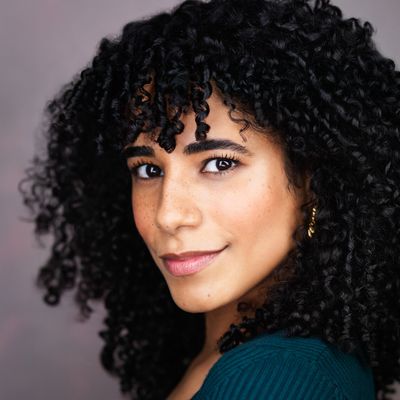
Ilda Mason is a Panamanian actress, singer, and dancer who began her career in productions including Peter Pan, The Beauty and the Beast, A Chorus Line, Hello Dolly, and Legally Blonde... Read More
From the show: The Theatre Podcast with Alan Seales
Guests
Featured Shows
About
Ilda Mason is a Panamanian actress, singer, and dancer who began her career in productions including Peter Pan, The Beauty and the Beast, A Chorus Line, Hello Dolly, and Legally Blonde. She performed as a professional dancer on Panama’s Dancing with the Stars for two seasons, and made her Broadway debut in Ivo van Hove’s adaption of West Side Story in 2020. Ilda has also performed in two other productions of West Side Story: at Signature Theatre in Arlington, VA, and at Paper Mill Playhouse. Ilda can now be seen as Luz (a Shark) in Steven Spielberg’s film adaptation and remake of West Side Story, now in theatres.
Born and raised in Panama, Ilda talks about moving to NYC 8 years ago to study musical theater and acting for film, and the “feeling” she had in high school that even though she didn’t know how she was going to do it, she was going to be a performer. She details how she found out about auditions for Steven Spielberg’s West Side Story, the audition process, and booking the role of Luz without an agent or a manager. Ilda also opens up about why acting matters to her, and why it is her dream.
In this episode, we talk about:
- Studying structural architecture as a plan B
- Writing imaginary essays to Steven Speilberg
- Taking stock of her accomplishments, and enjoying the moment
- Her love for movie trailers
- Working with Stephen Sondheim
- “The Movies That Made Us” series, and Jurassic Park
Connect with Ilda:
- IG: @IldaMason
- Twitter: @liveMariana
Connect with The Theatre Podcast:
- Support us on Patreon: Patreon.com/TheTheatrePodcast
- Twitter & Instagram: @theatre_podcast
- Facebook.com/OfficialTheatrePodcast
- TheTheatrePodcast.com
- Alan's personal Instagram: @alanseales
- Email me at feedback@thetheatrepodcast.com. I want to know what you think.
Thank you to our friends Jukebox The Ghost for our intro and outro music. You can find them on Instagram, Twitter, and Facebook @jukeboxtheghost or via the web via jukeboxtheghost.com.
Transcript
This transcript was automatically generated and might contain errors.
[0:00] Alan Seales: Welcome back to The Theatre Podcast. Intimate personal conversations with the industry's biggest names. I'm your host, Alan Seales, and your guest today is Ilda Mason. She is making her feature film debut right now in this little movie called West Side Story, directed by this up-and-coming director named Steven Spielberg. Oh, my gosh. She's over the moon excited. She's such a fun and caring person and just being thrown into this world of major motion pictures and having worked with Steven Sondheim, of course, because this is West Side Story. He was with them through the whole creative process, the stories that she has working with Sondheim and Spielberg and the rest of the phenomenal cast. It's just amazing.
This is a great episode. And Ilda, of course, is, oh, my gosh, she is just such a delight to talk to. I really hope you enjoy this episode as much as I do. Please leave a rating and a review wherever you are listening now. And everybody, please enjoy this episode with Ilda Mason.
[1:09] Alan Seales: Today's guest is having a whirlwind of a ride lately. She is a Panama native, won Panama's second season of Dancing with the Stars, made her Broadway debut in 2020 in the revival of West Side Story, and in a strange twist of fate, is now making her feature film debut starring as Luz in the Steven Spielberg adaptation of West Side Story. Ilda Mason, welcome to The Theatre Podcast.
[1:41] Ilda Mason: Thank you so much for having me, Alan.
[1:45] Alan Seales: I am so excited to talk to you. You are just like getting shot out of a cannon. I love how, I guess, gosh, with this movie or I guess with the recent string of movies that have come out in terms of either pro shots of theater, of Broadway films or sorry, pro shots of Broadway shows or the movie adaptations of these stories, everything all of a sudden like coming out of COVID is just making theater and the arts so accessible to people. And I am so excited that people like yourself, not necessarily that have major history of, I guess, like, it's not stunt casting, right? You're not every single person doesn't need to be a known entity. And so I want to get into your past because I feel like you have such a unique history and have been bringing such a different kind of, I guess, persona to the screen. So you grew up in Panama. Let's start there.
[2:56] Ilda Mason: Yes, I was born and raised in Panama. I actually moved here to New York eight years ago to study musical theater and acting for film. Since I was in high school, I knew that I wanted to do this, that I wanted to do film, TV, musical theater. I fell in love with it. I had this feeling that even though I did not know how I was going to do it, I just like, I'm going to go abroad. I didn't even know which city, which school, nothing. I was like, I'm going to go abroad and I'm going to do this. And yes, I studied actually structural architecture.
[3:31] Alan Seales: I was going to ask about that. You got a degree in structural architecture, which does not seem to lend itself to theater, film or dance.
[3:37] Ilda Mason: Correct. I studied it as a plan B just to have something because I knew like this is a very competitive career. So I was like, well, in between gigs, I can work as an architect. Wrong. I didn't have the, you know, the perfect work here in the United States. And because my skills are more like, I don't know, I like to work with my hands. So like I couldn't even work virtually, remotely, you know, but that's fine. That's okay. Those four years actually meant that I was able to work doing theater in Panama. That's where I like then did Dancing with the Stars in Panama. So it was huge because when I got here, I realized that I need to, you know, apply for visas, green card, the whole thing. And I needed to have that solid resume from my home country. So everything happened for a reason.
[4:30] Alan Seales: Oh, that's interesting. I feel like this is probably another instance of if you knew how hard it was going to be, you wouldn't have done it. So like because of ignorance, so many people are where they are because they started trying things not knowing how hard that path was going to be.
[4:46] Ilda Mason: You know what, that's one of the things I was just talking to a friend of mine about it, like kids and babies, they just try stuff. They just learn stuff. They just do it without knowing, you know, like learning languages, anything that kids do is just out of curiosity. They don't know what they can't do. You know, they don't have these notions of, oh, it's so hard. It's going to take me how long? No, no, no, no, no, no, I could never. So it's a good mentality to go, you know, out and about. What in the world? English.
[5:19] Alan Seales: In Panama then, when did you start really dancing and what got you into movies and theater in the first place?
[5:27] Ilda Mason: Well, I started dancing when I was like four or five. I think I was like five. And I did it on and off. I started with ballet and did it on and off because I was very fortunate. My parents allowed me to explore many different, you know, things and arts and stuff. I did like tap for a month. I was just drawn to it. So I got to paint, play instruments, dance, like I got to do a bit of everything. And then I realized how much I missed being on stage. Specifically, I remember that feeling. And that's when it all started clicking in my brain. And that year I also was able to do my first musical. It was Grease in high school. And it was a high school production and I was living my best life. I don't know. I knew that that's what I wanted to do. Yeah.
[6:22] Alan Seales: Well, okay. So then you're in performing arts and there's a lot that I think is worth mentioning in terms of everything that's been happening in the last couple of years in terms of COVID and the pandemic and the racial, social awakening and everything that's been going on with representation, or lack thereof, and calling attention to it. And there's so many times when you just hear people or me, I've heard people in my career path, it's people like, if you can see it, you can be it. And I want to kind of dive into or shine a spotlight on sort of how you got to where you are because there are so many people, young people right now that still in 2021, as we are recording this, are not seeing themselves represented on stage, in movies or whatever the case is.
So what was it about this for you that you're like, I don't even, like, did you not notice it? Was it, I guess, I guess there's two parts of the question. What was it that brought you to it and did representation matter or lack thereof? But then now that you are in this movie that is highlighting this amazing culture and bringing Latinx representation to a Steven Spielberg level movie, how does, you know, what is the responsibility that goes along with that? So two parts of that question.
[7:45] Ilda Mason: Okay. So, you know, I think I was very lucky that when I got here, I was put into this box of like, and it was a beautiful box to be in. It was like, oh, you're Latina. So you should be in West Side Story. You should be in In the Heights. You should be in these projects that I, you know, I did not know West Side Story before I got here, which is terrible, but I just didn't grow up with it, you know, in Panama. So it was such a gift to get here. And my first job was West Side Story in Signature Theatre. It was a beautiful production. It was, you know, I've never been so proud to be Latina. In Panama, I just was. And until I came to this country, then it was like, what are you? I was like, what do you mean?
What am I? Oh, you're, you know, I was classified kind of, but that worked in my favor because of where I come from, the language I speak and who I am. I was able to authentically tell these stories. I mean, West Side Story is a masterpiece. And yeah, basically I was just very, I think, fortunate to have been welcomed into this because it's such beautiful work, you know, if that makes sense. It could have been like, oh, I felt alienated. I felt, you know, I missed my home, but I just always felt very welcomed because of it. And now being a part of it, it's a huge honor and yes, a huge responsibility, but I was so hungry for it. I have pages upon pages upon pages on my journal when I was auditioning for it.
I was just like, please let me do this. I can do this. Let me tell my story, you know? I wrote imaginary essays to Steven Spielberg in case they were to ask, why should we cast you? And it was just like, come on. I don't want to go see the movie and then have someone who is not a true representation of our culture. And I'm so happy that it is. You will see every color of the rainbow in the movie and the spectrum of what it is to be a Latinx person. I love that.
[10:06] Alan Seales: It's really beautiful. And I cannot wait to see the reaction when we're recording this the day before it's released publicly. So it's December 9th when we're recording this. So the reviews are out already. They're phenomenal. Everything is going great. The personal connection to me, I've known Ari for a long time from her So You Think You Can Dance days. So coming into all of this and seeing everyone's trajectory and there's like Mike Feist in the movie and all of these just amazing Broadway people that it makes sense, right? Because it's a dancing movie, but then you merge it with the Steven Spielbergs and you like me, right? Grew up on Jurassic Park and E.T. and all of these other movies and to then be alongside literally you're standing next to dancing with and working with these icons that you have just been watching your entire life. You are grinning and nodding so hard right now.
[11:14] Ilda Mason: Yes, I am. My cheeks hurt as you're describing this because that's exactly it. It was pretty unbelievable. I have a photo of the whole cast with Steven Spielberg, Justin Peck, everyone is there. And I just cannot believe it. And to be surrounded by such, not even, the word is not to be surrounded with, like to be working with them, like alongside them is like, Ariana is like so fierce and Rachel is such an angel. The talent of the whole cast, Mike Feist, my God, I like saw him and I could barely speak when I saw the film because I was just like, I can't, I don't even, I don't, I don't, you were, you know, he's incredible. And I did not play it cool. No pun intended. When I told him, I was like, sir, I love your work.
I love Jurassic Park. I gave him a card. I saw this pop-up card that had a, it was literally a Jurassic Park card. It was black with like, the logo wasn't gold. And when you open it, it was a golden T-Rex inside. I was like, I need to, I need to get this for him. I wanted it for myself, but I was like, who else would love a dinosaur card? It's, it was, this all feels like a dream. This is a dream come true.
[12:39] Alan Seales: Well, walk me, walk me through how you fell into this dream because I heard a little bit of the story, but I want you to tell it again here because I feel like in it to summarize that basically you, through an open call, you beat 30,000 other people.
[12:55] Ilda Mason: Long story short. Wow. When you put it that way, it's like, whoop. But it was, yeah, like I got this audition. I didn't have an agent, a manager, nothing, nothing.
[13:08] Alan Seales: Were you still in Panama or were you here?
[13:10] Ilda Mason: So I was here. However, I went to Panama to visit my parents. So I was there for like two weeks and I, friends started sending me this, this poster on like Facebook, Instagram, all these things. They're like, you need to audition for this. You need to be in this. Like, oh, what is this? I couldn't believe it. Like, my God. But my friends were so like, you have, you're perfect. You're going to be in this. It was like that actually. It was like, you're going to be in this, send the video. I'm like, okay. Okay. And so I was in Panama and that was the first and only audition I had done in front of my parents. You know, I've now done many stealth tapes, but that one I was.
[13:49] Ilda Mason: At home, no setup. I had no lights, no anything. No tripod, I think. My dad was present playing the music, the piano. My mom was watering the plants. I had to be like, "Mom, I can hear the water. You need to stop." She's like, "What? What are you doing?" I'm doing an audition. "What? Stop watering the plants." Did that and then got a call back a couple weeks later. Got to go in for Anita, got to read. And then months later, they were doing dance auditions across the country. And I was touring with the Gloria Estefan Broadway show On Your Feet. So I wasn't allowed to leave because I needed to be in the show. I was a swing. So I was very lucky when finally I was allowed to leave for the last of the auditions.
It was in Miami. So I flew across the country for this. And I mean, as many people did, I'm sure. It was two days of dancing. We got to dance, sing, act. Then later I got an email that said, "Dear Ilda, Steven Spielberg loved your audition and would love to bring you into work more with him." I was like, there was a moment that I thought it was a joke. I was like, this could not be real. This is not real. Actually, we went in, met him and the whole team. Got to sing, again, dance, read. I was like, please just be normal. Be a normal person. It's so tattooed in my brain. And then I did not hear for six months. For six months, I didn't hear a word.
[15:29] Alan Seales: Wow.
[15:31] Ilda Mason: So the first audition I sent in February 2018, and I heard back April 2019, a week before I was starting rehearsals for the movie.
[15:42] Alan Seales: Wow, I thought that this happened years prior. Okay, so it's April 2019. You start, then immediately go into rehearsals. And I know that photography wrapped in 2019, right? Before COVID ever hit.
[15:59] Ilda Mason: Yeah, in September, we wrapped.
[16:01] Alan Seales: So April to September, then, was full rehearsal to filming, through filming?
[16:05] Ilda Mason: Yeah.
[16:06] Alan Seales: Wow.
[16:07] Ilda Mason: The best summer of my life.
[16:08] Alan Seales: I guess, yeah, and you didn't have to go anywhere. It was here in New York.
[16:13] Ilda Mason: How beautiful.
[16:14] Alan Seales: Oh, that's great. And then, I guess, knowing what you put together, knowing, I mean, not allowed to talk about all of this in the moment, right? It's all super secret. And there's a couple things leaking out here and there. And obviously, being in New York, that there's photos that leak all over the place. But I guess, when COVID hit, the movie was supposed to come out earlier, right?
[16:38] Ilda Mason: Yes.
[16:39] Alan Seales: So then, COVID hit, and what were you told from the inside? Like, did Steven just, you know, Mr. Stevie, did he just text you, and were like, "Oh, all right, listen, I'm sorry. The movie's going to be postponed," or like, what happened at that point?
[16:56] Ilda Mason: Well, Steven Spielberg certainly did not text me. No, but we were told by the production just how they were planning to postpone it, because it deserves such a cinematic release. The message was really beautiful, because he was like, "We worked really hard on this, you worked really hard on this, and we want it to be experienced, and we will be able to celebrate how it should be celebrated." So I was super chill when I got those news, because first of all, they know what they're doing. And two, I agreed. I was like, "I don't want to watch this on TV. I want to go to the movie theaters. This is my first ever movie. I want to do exactly what I'm doing right now. My parents are here. They flew from Panama to come watch the movie with me.
We're going tomorrow, have tickets. It's going to be a cry fest. We had two premieres. I can't even process it still. The LA premiere was beyond, beyond. I'm looking back thinking, did I even pay attention to everything? Because it was so big, so overwhelming, so unbelievable."
[18:12] Alan Seales: There are several shows that I feel like looking back at the canon of theater history that changed the game for everything. And now in this year, this time frame, it's like the Hamiltons and the Sixes. So Hamilton brought in a whole new style of music and storytelling into what is now could be called traditional Broadway musical theater storytelling. And what got me involved in theater years and years ago was Rent. So that was another one of those game changers. And before that, of course, there was Phantom and there was Chicago. And then you keep going back. And West Side Story was one of the... Actually, I just said Rent got me into it. Rent was the first Broadway show I saw that made me realize that I wanted to be involved. But when I was a teeny weeny little boy, I wore out the VHS tape of West Side Story. And because it got my parents, that show got my parents into musical theater, which then they were watching and then I was. That got me into it.
[19:25] Ilda Mason: Oh, how beautiful.
[19:27] Alan Seales: And it's this full circle sort of thing. And now you are part of this, of what's going to become another legacy. Because when you attach a story like this, written by a great man like Stephen Sondheim, which I want to touch on too, and directed by someone with a history of making things that are just phenomenal, Steven Spielberg, with a cast like you've got, this is going to be... I mean, God, what a first movie to find yourself in.
[20:02] Ilda Mason: Yes. Everything after this is going to be terrible.
[20:07] Alan Seales: It's only up from here. Only going up from here.
[20:11] Ilda Mason: Thank you. Thank you. But do you look at, do you step back? And have you reflected on this yet? I mean, the movie isn't even publicly out yet. Tomorrow is the public release. But have you looked yet to feel, to see like, "Holy shit, what just happened to me?"
[20:27] Ilda Mason: Yeah, there are a few moments in which, because it's so much, if I really were to stop, think about it, I would just start sobbing. And I've realized that I'm not one of those people that cry and can speak. I'm just like... But yeah, the other day I was singing, I was looking for a new song and it was... Oh my God, "It's a Quiet Thing." And it's such a simple song. And I started singing it, rehearsing it, and had to stop and started just sobbing because that's how this feels. When it all comes through just the way you planned, you'd think you'd hear a choir sing, but it's a quiet thing. It's like, you'd think there would be fireworks. Where's the roaring of the crowd? And it's like, no, it's very quiet.
It's inside. And I started crying just because I couldn't believe that I'm here. I left Panama eight years ago with this dream. My parents were like, "Yes, we believe in you. Go do it." People here welcomed me with open arms and supported me to be able to obtain my visa, my green card. It's taken so much more than people even can think of because I'm not from here. And it is a cliché to say a dream come true, but this is a dream come true. This is something that I would have never... I jokingly had said to my parents, "Oh, take a photo with me and my future boss, Steven Spielberg at the wax museum, Madame Tussauds wax museum." But I didn't actually believe it. And now after doing this, I realized that nothing is actually impossible.
I have that feeling just like that kids have of like, "Well, nothing is impossible. I can do anything." That's how I felt while doing this movie. And I am so... It's so funny when you were saying, and I'm sorry if I'm jumping ahead, but the feeling of what you don't talk about, like, so auditioning, what's next? At the same time that I'm so grateful and so excited, I'm also a little anxious because I'm like, "Okay, how can I continue? How can I make sure that I make the most out of this moment, learn what I need to learn and keep going?" Because this is, like I said, I moved here to do this. So I'm just so hungry for it. I want to keep acting and I'm not afraid to work my way up to this level again, because this is so out of this world.
This is so ginormous. I didn't actually understand the proportion of it all until I was at the premiere and watching the movie and seeing the whole event. It's like, this is... And also, you cannot walk a block in New York City without seeing the advertisement for the movie. It's crazy. But yeah, it's just, it's a bunch of feelings all together.
[23:31] Alan Seales: We're going to take a short break. Stay tuned for more of the episode.
[23:35] Ilda Mason: It's interesting. I keep going back to Andre De Shields' Tony acceptance speech a couple years ago, when an older gentleman, been in this business forever, won his first Tony finally after just an incredible career of accolades. And he's just like, the top of one mountain is the bottom of the next. And that's bittersweet, because you work hard and you work hard and you keep climbing and you keep climbing. And you get to the top of your mountain and then realize you're never at the top. And that can either be depending on how you look at it. And this is where the mental health thing comes into play. Because speaking from personal experience, I climbed to the top of my mountain, realized that there's an infinite number of other mountains I haven't climbed yet.
And in the past, I've gotten really overwhelmed. I've gotten really discouraged. Because I'm like, "Why am I climbing any mountain when I'm never going to reach the top? There is no top." But then the more that I go on, and I'm fortunate to say I've had a little bit of success, I guess, in various things. And it's deciding what's important to you and remembering the outcome, the flip side of the aftermath of the downsides. So instead of saying, "Oh, I'm so sad right now. I needed to go away. I need to be better again." Now it's, "I'm going to sit in this. I'm going to acknowledge it. My little dark passenger, it's here. Let me talk to it for a second. And then I'm going to focus on knowing that, based on past experience, that I'm going to have something positive that's going to happen again to offset this later. But in the moment, it really stinks."
[25:46] Ilda Mason: Yes. Yes. It's truly a balance now. And you're absolutely right. It depends on how you look at it. Because, and this is where I think exactly mental health, investing in our mental health comes into play. Also being surrounded by the right people and people who support you and that you support, it's a healthy relationship, comes in. Because I went to LA and got to hang out with one of my beautiful closest friends. And he was like, "You need to enjoy it right now, because you don't know what's going to happen tomorrow. And you cannot just only think about, okay, how can I continue to do this? You need to enjoy this right now because it is happening right now." And it sounds so simple. And yet it isn't, because we are not just one emotion.
It's not just like, it takes the work, the mental work of, okay, sit here and whatever is happening is happening. Live in it, whether it is this huge high or what in our minds may feel like the ultimate low or I don't know. But I have found, I was just before talking to you, I found myself thinking, did I actually enjoy it as much as I could have? It was just happening all so fast. And it feels like it happened too fast. But at the same time, it was a whole thing.
[27:18] Ilda Mason: The emotions are so larger than life because it is so larger than life. But it's important to enjoy the moment. I agree. I agree 100%. And when you're in the moment and you think back on it, even as a child,
[27:38] Ilda Mason: I think back to this one particular summer camp that I had when I was probably second, third, fourth grade, maybe. And literally, it was only a week. As an adult, I'm like, it was a week. The week goes by in the blink of an eye. But it was the longest, one of the most enjoyable, one of the most happy times I've ever had as a child. And in my mind, it seems like one of the longest things I have ever done. But it was literally like five days. Right? And so, when you're thinking about the rehearsal process seems like two weeks, two weeks for a rehearsal process, or two months, or whatever it is, depending on what the show is, or what the movie is, or what the case is. It's going by so fast, because in the moment, you're concentrating on, at least speaking for myself here, am I good enough?
Am I doing what they need? Am I learning my lines? Do I need to move here? Am I kicking high enough? What if I hurt myself? All of these things are going through your head, right? But that at one point, at what point do you remember to just say, you know what, stop and look around. I'm at the top of this mountain right now. I need to stop and enjoy the view for a second. Yeah, yeah. It requires that moment of like, as if you, you know, when you're at a place, you're like, oh, I want to take a photo to remember this forever. It needs to be exactly that. I need to stop for a second. And it's not about the photo. It's about you mentally capturing it, like Pam in The Office. I was going to say that, where they're like, click, click.
What are you doing? I'm taking mental photos. Yes. It's wild how life is so short, and it just happens like this. It's like big moments, small moments. A day can feel so, so big and so life changing. I remember exactly what the sky looked like after my dance audition in Miami. After the audition, I went to the beach, and it was beautiful. It was like lilac and purple and pink and a little bit of orange in it. It was the most magical sky I had ever seen. And I don't know, those are the things that you keep forever. This is something I don't know if I'll ever be able to express in words fully.
[30:01] Alan Seales: I'm going to get existential for a moment and ask you, why does all of this matter to you? Why not just be a structural architect? Why not just do something like the plan B job? Why does this matter? Why was this your dream?
[30:20] Ilda Mason: Okay, so I've been thinking about this lately. There's... I got here and it was like, there's nothing else I want to do. And I know that we are more than just one thing. I'm sure I can find other things that I would be good at, that I would enjoy doing. But this is what my heart not only wants, it longs for this. I go to the movies, and I love the trailers because the experience I get from the trailers makes me almost forget the movie that I'm going to watch. I get chills. I get so inspired by watching these projects and thinking, wow, what was it like to do that? I would love to do that. What did it take to do that? How can I be a part of something like that? Now being really existential, I would... I find myself longing to live a very long life or come back to live many other lives because I want to see what happens in the future.
I want to see what happens. I want to see what's going on a thousand years from now. And I think acting is a way to do that, to live many lives. Doing movies. Imagine Matthew McConaughey. He went to space in Interstellar and then played such a real... Think of any celebrity that's done... In the range of characters that they have portrayed, they are allowed... They can see themselves doing possible things. I want to be able to do that. I want to go to space. That is a huge goal of mine. I want to be in a space movie, like a good space movie, like Christopher Nolan, Denis Villeneuve type of like, what is going on? The ones that are like, what is happening? You're like, no one knows, but we're doing it.
That and the opposite, like super day-to-day life, real world, like marriage story types of projects. I want to be able to live those many, many lives in a way. Yeah, that's what I... I want to do that in this one lifetime.
[32:23] Alan Seales: No one has ever put that so eloquently before, I think. And what you said was you want to live multiple lifetimes and acting allows you to live multiple lives in a single lifetime. That is so brilliantly explained. I want to get that tattooed on my butt now.
[32:46] Ilda Mason: Thank you for the butt placement. What are you doing? I'm living multiple lives. I'm showing you my butt. No, it's true though, because I think there's so much to going on, and I said this so many times on this podcast, going on an emotional journey with strangers in a room, like in a theater or in a movie theater or in a stage theater. You're going in this journey, you're experiencing, you're activating the empathetic portion of your brain that you can't experience, can't have practice having empathy without actually going through it. There's a difference between imagining what people are going through and actually seeing it, and that's what theater and art allows you to do. We're storytelling animals, and so that's part of why we're so, as a species, we're so attracted to it.
[33:41] Alan Seales: And it's interesting because you were saying that you're feeling all these things when you're watching the trailers, and I wonder if it's different for different people, but some people are so unable to express themselves in real life that the only way they know how is through acting or through watching people act, watching these stories. And then on the flip side of that, some people wear their emotions so high, so much on their sleeves, so high out in the world, that that's the only way they know how to relate. They have to be on stage because normal society that doesn't emote like they can, or that they do, won't necessarily accept them. So they get on stage and they can just emote and have all of this expression pour out of them, and that's their way of feeling normal at the end of the day.
[34:33] Ilda Mason: Isn't that beautiful? How art is so, it touches and changes lives. How, like I, when you were just saying that, I can think of dancer friends who just like, oh, it just oozes out of them. It's something so special. It feels magical. It feels like they were touched by an angel almost. In the same way, like, or thinking about how a project, let's say a movie that was made years ago, will touch someone's lives, not even today when the movie, or tomorrow when the movie comes out, but years, years later, someone might see it for the first time and feel something because of it. That's the truth with every movie that is out there. We haven't seen, well, I haven't seen all the movies that exist. So I'm going to watch a movie one day soon that I have never watched, and people have already been inspired by it, and I'm going to, that's not eloquent at all, but I'm just trying to say how beautiful and touching this art form is, theater and film and TV.
[35:44] Alan Seales: Well, it's interesting what you said. We're talking about the acting side of it, the performing side of it, but there's so much to TV, film, theater, that's not just actors, right? Because you look at someone like Steven Spielberg is an artist. He's not in front of the camera, but he's creating. And then the director of photography and the props person and the costume designer and the set designer and the art designer, and this is creating an atmosphere and an environment that all has to work together. And if one thing's out of place, the whole thing doesn't really work. So there's tons of ways to be involved and tons of ways to express yourself. Some people love, they have to create, but they can't sing, they can't act, they don't want to sing, they don't want to act for whatever reason, right?
So they end up creating, they're creating drawings, which get turned into costumes, or they're creating models, like they love working with their hands. So they take the models, they get turned into the set pieces that the carpenters have to build because they love to build. So there's all these different aspects of the industry, and I know we are just like all over the place, but I love talking about this stuff.
[36:52] Ilda Mason: No, me too. And you know, editing trailers, there are people whose job it is just to edit a trailer together. So the way you edit a trailer affects you, affects other people. There's so much that can be done. Wait, can I say something just because you said trailers?
[37:12] Alan Seales: Please do.
[37:16] Ilda Mason: So I was looking for trailers, a friend was asking me for like, oh, can you send me one that you're in? And I was like, yeah, yeah, yeah. And I was like, I don't remember, there's so many. And I went back to the very first one, the one that was shown at the Oscars this year, and watched it. And it gave me goosebumps again. Like I was glued to it. I have seen the movie now three times. I was part of it. I have seen the trailers, many trailers to the point that I, there was a point watching the movies that I was like, oh, that's right. This is in the movie. I had watched so many trailers that the trailers have become the movie in my mind. No pun intended again, but I love it. Musical theater references, but just that, like that trailer was so good. And the music, the music, let's not even talk about the music of it all. And it's, I have no words, goosebumps, just like from watching it again, that one, first glimpse of it all.
[38:17] Alan Seales: What about, so we mentioned Sondheim recently. So he just died a couple of weeks ago after Thanksgiving. And was he part of the pre-production of the production at all when you guys were filming?
[38:29] Ilda Mason: Oh yes, he was very much a part of it the whole time.
[38:33] Alan Seales: Really?
[38:34] Ilda Mason: He was in the recording studio always. And we were so lucky that we got to have a session. It was him, Tony Kushner, Steven Spielberg, just talking to us as a cast and what it was like.
[38:48] Alan Seales: Legend.
[38:49] Ilda Mason: I know. I was like, we were all freaking out. And to just see how, how they spoke about this project. I mean, I cannot imagine what it must've felt to Steven Sondheim to have the work that he did in his mid-twenties, transcend life, everything, that 64 years later is still as perfect, relevant, as ever. That is a genius. And that he was a gift to humanity, not just theater. Because even people who are not theater geeks, I am sure they have been touched by one of his shows, by one of these lyrics, even if they don't know where it comes from.
[39:53] Alan Seales: Well, it's what we were talking about near the beginning, right? West Side Story specifically has influenced so many people. And whether it was West Side Story or one of his other shows, there are so many people that are in the industry or have been influenced by somebody else in the industry, whatever the case is, because they got influenced by a Sondheim or a Kushner or a Spielberg. And to put them all together for this project, I just, this has got to be one of the most perfect movies ever made because of everything that has gone into it and the care and the love and the fact that, like you said, it's this story that still resonates today as much as it did when he originally wrote it in his 20s. That's both sad and nice, but when you're talking about the racist aspect, it's not good that that's still here.
[40:51] Ilda Mason: Exactly. Not good. But it's good that we're calling attention to it again in a way that I think is going to be very productive. I hope it will be.
[40:56] Alan Seales: Yes. I hope that it sparks conversation. And I think that's what art does in a way in theater and in film. It's a work that is done. You experience it and you interpret it however way you do. And if we can get people thinking about, hey, yeah, that's not, but that's what's happening right now. There is one thing, one scene that I'm really, really excited for people to see because it's different than the original.
[41:28] Ilda Mason: And it is so about today and what's happening. But at the same time, it isn't what it is. And it's just incredible how this art form can be shared with the whole world, with millions of people. It's very accessible also. And I love that you said that it's made with so much love and care, because that is all I can say about this film. It was made with so much love and care. So much research was put into it to make it as authentic as possible. There were consultants from every single aspect of, you know, what you said, the many things that need to take place in a movie or a show. I think you can see it, actually. I think when you see the film, you can see there is a lot of love and care into it.
[42:27] Alan Seales: Right. That's what I think makes a great movie. And again, there's so many pieces of it. There's the sound design and the editing and this and that. But when you get somebody like a Sondheim story with a Spielberg film, and these are two people that don't put out something they don't love. They research and they refine and they refine and they refine. And to your point earlier about when the production team called and said, we're not going to release this now. This deserves to be seen on a big screen. That just speaks to the fact that it's not a money grab. It's not meeting production deadlines. It's not trying to recoup. It's making a product that is going to be delivered exactly how it should be. And the world changes and they have to adapt. And I respect that so much.
[43:24] Ilda Mason: Me too. Me too. There are so much more. There's so many things that are so much more important than money, even though money rules the world. It takes big guts to be like, we're not going to do this for the money. And I know that can be done in smaller levels too. It's like, I'm not going to do this because I don't believe in this. And I know producer, the things that these people stand for, the story, it can be many things. Have you seen the movies that made us?
[44:01] Alan Seales: Yes. Yes.
[44:03] Ilda Mason: There's the one thing that I have learned from it all, from that series is that when you do something with love, great things come out of when you do things. You do something with love. You can see how these people made these classics that when they had no money, no budget, no anything, how Jurassic Park came to be and how the digital T-Rex was introduced. It's all just people believing in themselves and what they can do, what they can bring to the table. And not because I'm going to be paid a lot of money. No, it's because the love shows. It just does.
[44:40] Ilda Mason: I love that episode of the movies made us about Jurassic Park because they originally were going to use claymation, stop motion. And then somebody, after being told not to, went and animated a T-Rex anyway. And that's the model of the computer. That was the first time computer graphics had ever been put into a movie like that. Yeah, that just takes guts and that takes believing and believing you can do it. It's an incredible story. So everybody, yes, watch that episode or watch the whole series. The whole series is great, but particularly that episode.
[45:12] Alan Seales: Yes. And you see the movie today and you're like, that T-Rex is there. It's there. It's there. I cannot believe it. That was in, why am I God? Yeah. It really does just believing in yourself and almost not thinking too much ahead of yourself. Just go to the one step that is in front of you. Okay, what's next? And believing that the next one is going to appear in front of it. Because if we stop to think about it, it's too daunting. It's too much. You're going to say, how could I possibly ever? And that's where you stop yourself from even starting.
[46:00] Ilda Mason: I believe that inspiration comes from people to people or projects from everywhere. But my biggest example of inspiration I've had is my best friend. I met her in the Non-Equity tour of Cinderella. And at that moment, she booked the Miss Saigon Broadway show, the revival. And we had just met and by her just booking that job, I was like, wait a minute, it is possible. Because she, just like me, she is an immigrant. She's from Malaysia. She did not have a green card. She was Non-Equity. And till that day, I had stopped myself from going to these Broadway auditions just because I was like, I don't have an agent. I'm Non-Equity. I know that I have so many steps to become equity. I need to get a green card.
I know blah, blah, blah, blah, blah. How could I possibly ever be? How could they choose me above someone else? And I realized if you don't go to the audition, you're not going to get the job, girl. You need to go. You need to try. And later, I remember that was specifically for Cats and Chicago. Those are two auditions that I was like, I think I could never. And thinking of the people that would be better than me. And years later, then there I am with cast members from those shows, doing a movie together, doing another Broadway show together. You were stopping yourself. We do that so much. We need to stop it. I need to stop it.
[47:36] Alan Seales: No, that's exactly right. Because if you don't try, you'll never know. And what do they say about the business? It's a third talent, a third drive, and a third luck, which is being at the right place at the right time. So yeah, aside from just being talented, which of course you need to be anyway, but a lot of it is just a numbers game. Because if you don't go to the auditions, you're never going to have the chance. And you learn from others. You learn from what you do wrong. People, you need to go and you need to fail. And failure is good. And again, going back to what we were talking about earlier was acknowledging the bad feelings when they come, but realizing there's going to be a next time.
There's going to be a better time. You're going to keep on moving because that's life. So if you defeat yourself before you ever get started, that's one of my biggest frustrations with people sometimes. I see so much talent. And I say, well, all you got to do is, in my mind, I think all you got to do is just go ABC, or just go over there and do one, two, three. And they're like, no, I'm just not. I'm not even going to try because I don't want to make the time because I just won't get it. I'm like, well, you're definitely not going to get it if you don't even leave the house.
[49:02] Ilda Mason: Definitely. Exactly. For sure. 10 out of 10, not going to get it. Nothing in this business is guaranteed except if you don't go, you're not going to get it.
[49:05] Alan Seales: Yeah, exactly. We are still not Meryl Streep and getting the calls and being like, hey Meryl, do you want to be in this movie? Okay, sure.
[49:15] Ilda Mason: Meryl Streep is good for almost every movie, probably not West Side Story.
[49:22] Alan Seales: Who knows? Let's see an alternate universe in which she's like a character. I assure you, it might be like, oh my God, who knew? Let's do a gender-swapped West Side Story one day and she can be Riff.
[49:34] Ilda Mason: Exactly. The best-selling movie of all time. Oh God, now this will be. So let's wrap up here with three standard closing questions that I ask everyone to wrap up the episodes. The first one is just what motivates you?
[49:48] Ilda Mason: Wow. Oh God, such a simple question. What motivates me? My parents, they believed in me. They sacrificed a lot for me to be here. Wow. And I just want to make them proud. I want to be able to provide for them how they did for me for so many years. I want to take care of them. That is such a non-American way of thinking. It's like, I want to grow. I want to get successful so I can take care of my parents because they took care of me. You don't hear American kids say that.
[50:32] Alan Seales: Oh God, thank you. Americans, such entitled little people we are. Okay, so next question. What advice would you give to your younger self and younger people listening now starting out down a similar path?
[50:38] Ilda Mason: Do not try to be someone else. I know people say this a lot, be yourself. So I said, do not try to be someone else. I changed it. But it's true because I found myself doing that so much. And still I'm just like, I found myself being like, oh, I wish I could sing like this person, sound like this person, dance like this person. And that's not where the magic comes from. I have been on auditions observing and listening to people. And I'm like, I have been on auditions observing and seeing, witnessing how someone coming in with, it's a je ne sais quoi. They just have a something. And it's very much them. There's no like, oh, it reminds me of, no, no, no. When someone is truly, fully themselves, I think it's like a new level unlocked.
You glow, you really do shine. And it's a very powerful thing to not try to, then we're all just versions, like washed down versions of ourselves. If we're just trying to be like someone else. I know this is not, you've heard this before, but it's, I emphasize it because I say that to myself still. I'm like, no, you're you, you are you. If you try to be somebody else, you're a washed down version of yourself.
[51:58] Alan Seales: That is, that's going tattooed on the other butt cheek.
[52:01] Ilda Mason: Oh, beautiful, beautiful. I don't know how much space you'll have because I feel like you have many quotes. So I'm very honored that you have put out two of the quotes.
[52:16] Alan Seales: All right. So the last question then, this is, this is super hard. If you can only see one show for the rest of your life, but you can see it as many times as you want, what would you see?
[52:24] Ilda Mason: It has to be a show. It cannot be a movie. It has to be a show. Interpret as you will. I'm making it hard.
[52:31] Alan Seales: Okay. Okay. My gut goes to Jurassic Park.
[52:40] Ilda Mason: Oh, wait, wait. Okay. Show. I'm going to say the office. I'm going to say the office. This is a TV show. I know, but it's just so feel good. You can learn so much from it. I think powerful things are achieved through laughter. And I don't know. They're just wonderful characters that make me smile. So I'm going to say the office. I know it's not very theater, but there is an office off-Broadway parody.
[53:12] Alan Seales: There we go. There we go.
[53:14] Ilda Mason: There you go. There you go.
[53:18] Alan Seales: Where can we find you online?
[53:18] Ilda Mason: I'm at Ildamason on Instagram or Ildamason.com, which no one sees. And everyone go see West Side Story. It is phenomenal. Oh, we didn't even cover you're an artist in residence at the Abingdon Theater in Long Island City. So give them a plug real quick.
[53:36] Ilda Mason: Oh my God. I am so excited because I am going to be working. So I am an artist in residence with the Abingdon Theater Company. And I'm so excited because we're working on this passion project. I cannot say much, but I'm very excited because it also talks about some important topics of today. I am so excited to be a part of it. So thank you to the Abingdon Theater Company for having me. This is huge. It's so huge. I'm so excited.
[54:02] Alan Seales: That's so cool. I am so happy. Your enthusiasm is like pouring out of the computer screen here. And it's like falling all over me and making me feel so good.
[54:11] Ilda Mason: Thank you. Thank you for sharing everything. You can get more of me at the theater.com. I'm on Instagram and Twitter at theater underscore podcast. Leave a rating and a review wherever you are listening. Now, this has been edited by well-rounded hoodlum productions. Thank you to jukebox the ghost for the intro and the outro music that is being played right now underneath us. And Ilda, thank you so much. I cannot wait to meet you in person one day. You are just like this shining beacon of happiness. And I am so excited to see what's going to happen for you. You are so immensely talented.
[54:45] Ilda Mason: Thank you so much, Alan. I also look forward to meeting you in person, giving you a big, big, big hug. I am. Yeah, can't wait to see you in person soon. And thank you for this beautiful, wonderful chat. I've had the best time talking to you.
[54:58] Alan Seales: You're welcome. My cheeks hurt.
[55:00] Ilda Mason: What a time to be alive.
© Broadway Podcast Network, All Rights Reserved